
 Worksheets
Inflamação aguda Robbins
Total questions: 61
Worksheet time: 31mins

What is inflammation primarily described as?
A harmful reaction to cell damage
A process of delivering leukocytes and molecules of host defense
A condition that always leads to infection
A reaction that only occurs in the presence of bacteria
What is the role of phagocytic leukocytes in inflammation?
To cause cell damage
To eliminate offending agents
To increase vascular permeability
To reduce blood flow
Which of the following is NOT a typical outcome of inflammation?
Permanent festering sores
Rapid response to threats
Elimination of harmful substances
Activation of resident cells
What is the initiating stimulus for inflammation?
Recognition of the noxious agent
Recruitment of leukocytes
Repair of damaged tissue
Regulation of the response
What is the role of phagocytes in the inflammatory response?
They repair damaged tissue
They ingest and destroy microbes and dead cells
They increase vascular permeability
They produce plasma proteins
What happens during the repair phase of inflammation?
Blood vessels dilate
Leukocytes are recruited
Injured tissue is replaced with connective tissue
Noxious agents are recognized
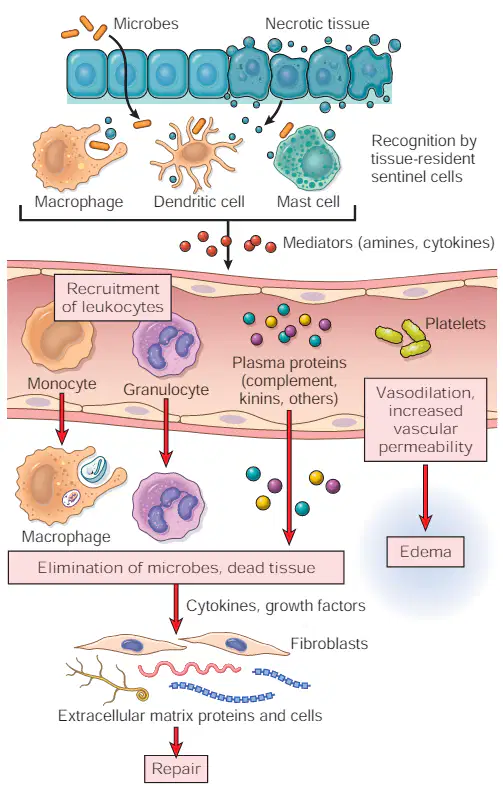
What is the function of leukocytes in the inflammatory response?
They regulate the response
They adhere and migrate into tissues
They produce mediators of inflammation
They form extracellular matrix proteins
Which cells are primarily involved in acute respiratory distress syndrome according to Table 3.1?
Eosinophils
Neutrophils
Macrophages
Lymphocytes
What is a hallmark of acute inflammation as described in the text?
Slow onset
Loss of function
Exudation of fluid and plasma proteins
Formation of granulomas
According to Table 3.2, what is a characteristic of chronic inflammation?
Fast onset
Mainly neutrophils
Often severe and progressive
Prominent local signs
Who first listed the four cardinal signs of inflammation?
Rudolf Virchow
Celsus
George Bernard Shaw
Elie Metchnikoff
What is the primary difference between acute and chronic inflammation as mentioned in the text?
Type of cells involved
Duration and response to stimuli
Presence of antibodies
Severity of symptoms
What is the primary role of tissue necrosis in inflammation?
To repair damaged tissues
To elicit inflammatory responses
To prevent infections
To promote cell growth
Which of the following substances can cause inflammation by themselves?
Foreign bodies
Antibodies
Enzymes
Hormones
What is the role of the inflammasome in the inflammatory process?
To suppress leukocyte activity
To induce the production of interleukin-1
To repair damaged DNA
To decrease cytokine production
Which receptors are critical for recognizing microbes and products of cell damage?
Hormone receptors
Cellular receptors for microbes
Neurotransmitter receptors
Pain receptors
What is the function of Toll-like receptors (TLRs) in the immune system?
To produce antibodies
To recognize foreign invaders
To transport nutrients
To repair tissues
What are the three major components of acute inflammation?
Dilation of small vessels, increased permeability, and migration of leukocytes
Constriction of small vessels, decreased permeability, and migration of leukocytes
Dilation of small vessels, decreased permeability, and migration of red blood cells
Constriction of small vessels, increased permeability, and migration of red blood cells
What is the role of vasodilation in acute inflammation?
It decreases blood flow and causes tissue cooling
It increases blood flow and causes redness
It decreases blood flow and causes swelling
It increases blood flow and causes tissue hardening
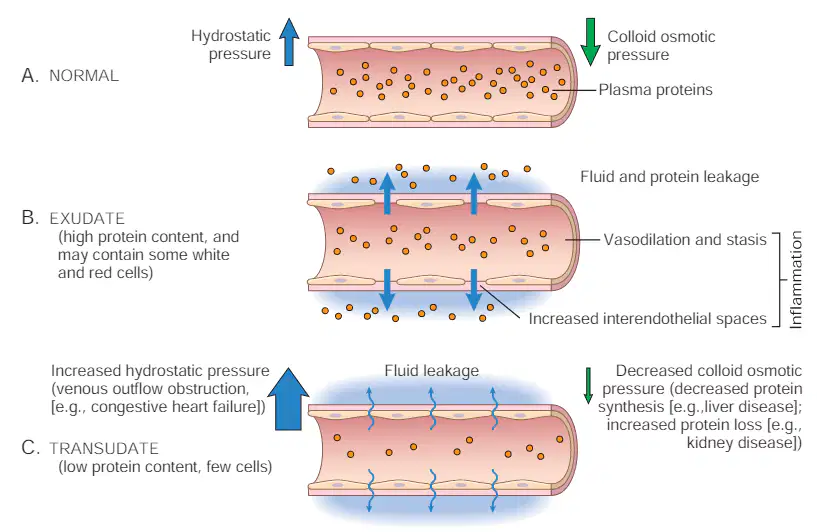
What is an exudate in the context of acute inflammation?
A fluid with low protein concentration and no cellular debris
A fluid with high protein concentration and cellular debris
A fluid with low protein concentration and cellular debris
A fluid with high protein concentration and no cellular debris
What is the most common mechanism of increased vascular permeability in acute inflammation?
Endothelial cell proliferation
Retraction of endothelial cells
Increased blood pressure
Decreased leukocyte activity
Which chemical mediators are responsible for the retraction of endothelial cells?
Histamine and bradykinin
Adrenaline and cortisol
Insulin and glucagon
Dopamine and serotonin
What is a classic example of damage that results in late-appearing vascular leakage?
Frostbite
Sunburn
Chemical burns
Radiation exposure
What role do lymphatic vessels play in acute inflammation?
They decrease blood flow
They filter and drain extravascular fluid
They produce antibodies
They increase blood pressure
What is the primary function of leukocytes in inflammatory reactions?
To produce antibodies
To ingest and destroy bacteria and other microbes
To transport oxygen
To produce hormones
Which process describes the redistribution of leukocytes to the endothelial surface in blood vessels?
Transmigration
Phagocytosis
Margination
Chemotaxis
What role do macrophages play in the process of inflammation?
They produce growth factors that aid in repair
They transport leukocytes to the site of inflammation
They decrease vascular permeability
They produce antibodies
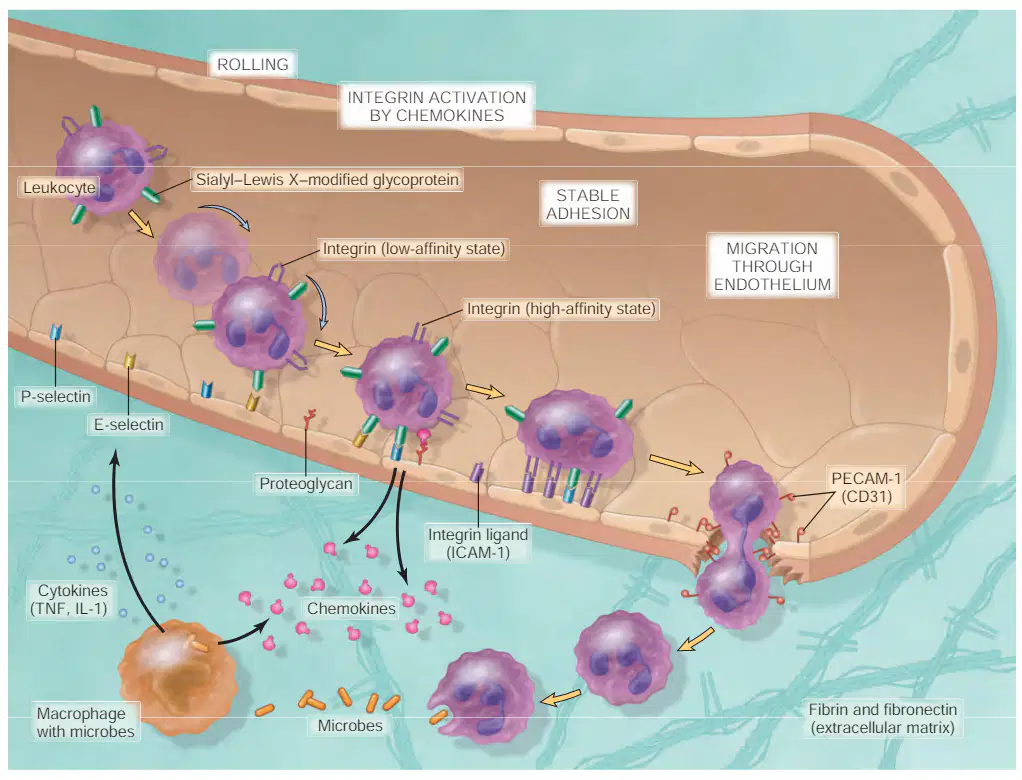
What is the sequence of phases in leukocyte recruitment to sites of inflammation?
Rolling, adhesion, migration
Migration, rolling, adhesion
Adhesion, rolling, migration
Rolling, migration, adhesion
What is the primary function of adhesion molecules in leukocyte recruitment?
To increase blood flow
To mediate leukocyte attachment to endothelial cells
To produce antibodies
To destroy pathogens
Which cytokines are involved in the expression of selectins on leukocytes?
Interleukin-4 and Interleukin-6
Tumor necrosis factor (TNF) and Interleukin-1 (IL-1)
Interleukin-10 and Interleukin-12
Interleukin-2 and Interleukin-8
What role do integrins play in leukocyte adhesion?
They increase the speed of leukocyte migration
They slow down leukocytes and mediate firm adhesion
They destroy endothelial cells
They produce cytokines
Which selectin is expressed on platelets and endothelial cells?
L-selectin
E-selectin
P-selectin
Q-selectin
What is the process called when leukocytes migrate through intact endothelium?
Phagocytosis
Transmigration or diapedesis
Apoptosis
Endocytosis
What is the process called when leukocytes move in the tissues toward the site of injury by a chemical gradient?
Chemotaxis
Phagocytosis
Apoptosis
Endocytosis
Which molecule is a member of the immunoglobulin superfamily involved in leukocyte migration?
CD31
CD4
CD8
CD20
What is the main cell type that predominates in the inflammatory infiltrate during the first 6 to 24 hours of acute inflammation?
Neutrophils
Lymphocytes
Eosinophils
Basophils
Which of the following is NOT an endogenous chemoattractant for leukocytes?
Cytokines
Bacterial products
Complement system components
Arachidonic acid metabolites
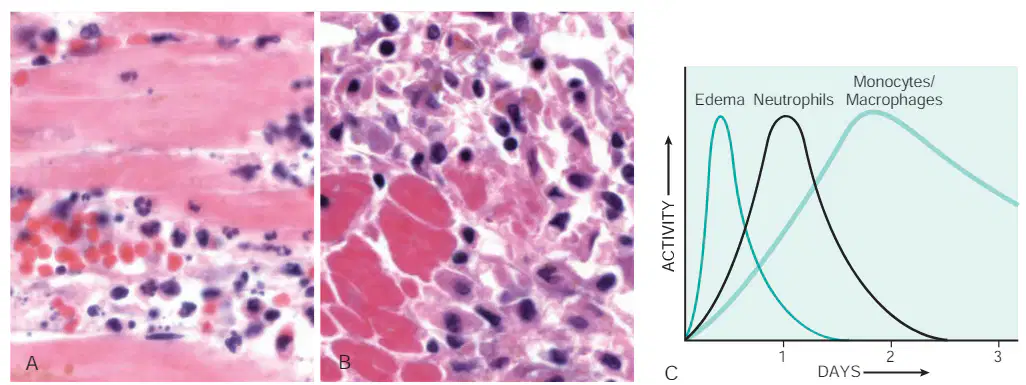
Which of the following is a step involved in phagocytosis?
Recognition and attachment of the particle by the leukocyte
Release of cytokines into the bloodstream
Formation of antibodies
Activation of T-cells
What is the role of mannose receptors in phagocytosis?
They bind to and ingest microbes.
They release histamines.
They produce antibodies.
They activate T-cells.
Which cells are the two major phagocytes mentioned in the text?
Neutrophils and macrophages
T-cells and B-cells
Eosinophils and basophils
Red blood cells and platelets
What is the function of scavenger receptors in phagocytosis?
They bind and mediate endocytosis of oxidized LDL particles.
They release cytokines.
They produce antibodies.
They activate T-cells.
What is the origin of neutrophils?
HSCs in bone marrow
HSCs in liver
Stem cells in yolk sac
Tissue-resident macrophages
How long is the lifespan of macrophages in tissues?
Several days
Weeks or months
Days or weeks
Years
Which of the following is a response to activating stimuli in neutrophils?
Slow, dependent on new gene transcription
Rapid, short-lived, mostly degranulation
Induced by transcriptional activation of iNOS
No response
What is the role of reactive oxygen species (ROS) in intracellular destruction?
They promote cell division
They kill microbes
They repair DNA
They inhibit enzyme activity
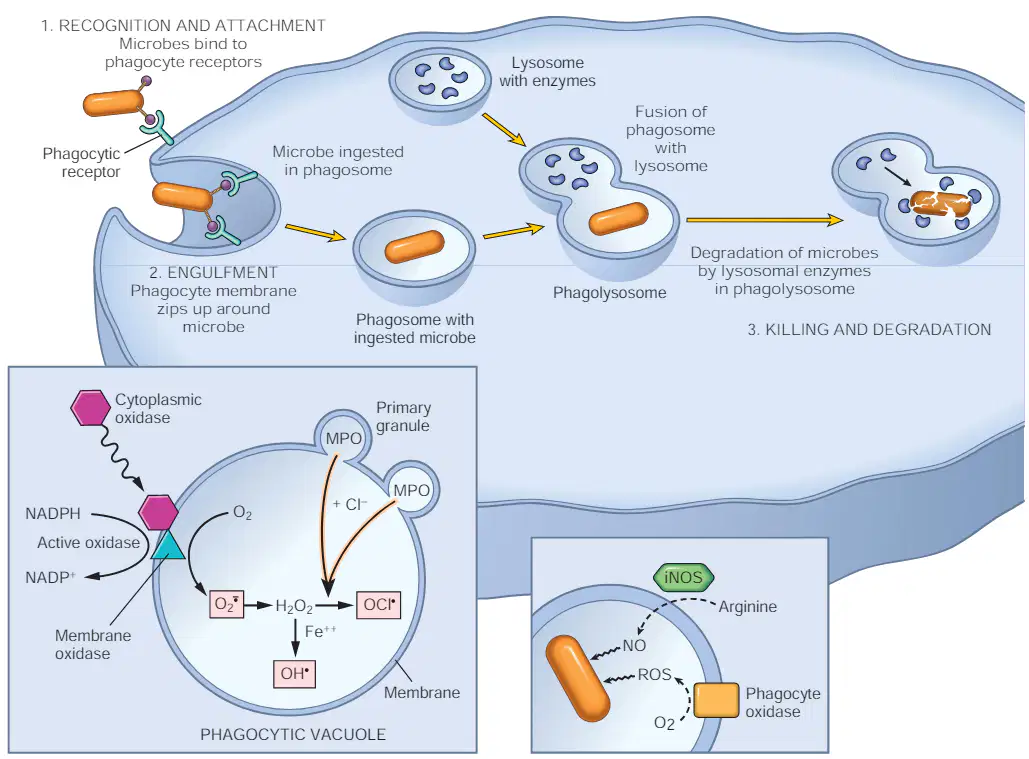
What is the final step in the elimination of infectious agents and necrotic cells?
Recognition and attachment
Engulfment
Killing and degradation
Fusion with lysosome
What triggers the oxidative reaction in neutrophils during phagocytosis?
Activation of lysosomal enzymes
Activation of signaling pathways
Activation of phagocyte receptors
Activation of cytoplasmic oxidase
Which enzyme complex is responsible for producing reactive oxygen species (ROS) in neutrophils?
Lysosomal enzyme complex
Phagocyte receptor complex
NADPH oxidase complex
MPO enzyme complex
What is the role of myeloperoxidase (MPO) in the bactericidal system of neutrophils?
Converts H₂O₂ to water
Converts H₂O₂ to hypochlorite
Converts O₂ to superoxide
Converts NO to nitrate
Which enzyme is responsible for converting hydrogen peroxide (H₂O₂) into water and oxygen?
Superoxide dismutase
Catalase
Glutathione peroxidase
Nitric oxide synthase
What is the role of nitric oxide (NO) in the vascular reactions of acute inflammation?
It acts as a vasoconstrictor
It promotes vasodilation
It inhibits smooth muscle relaxation
It decreases blood flow
Which type of granules in neutrophils contain myeloperoxidase (MPO) and bactericidal proteins?
Secondary granules
Tertiary granules
Primary granules
Lysosomal granules
What is the main function of neutrophil extracellular traps (NETs)?
To promote bacterial growth
To concentrate antimicrobial substances at infection sites
To enhance tissue inflammation
To inhibit neutrophil activity
Which enzyme is involved in the conversion of arginine to nitric oxide (NO)?
Nitric oxide synthase (NOS)
Superoxide dismutase
Catalase
Glutathione peroxidase
What is the role of leukocytes in tissue injury?
They only protect against infections.
They contribute to tissue injury under certain circumstances.
They are always beneficial to the host.
They never release harmful substances.
What happens when leukocytes are activated?
They only target harmful microbes.
They can damage host tissues as well.
They become inactive.
They only release beneficial substances.
What is a potential consequence of leukocyte-mediated tissue injury?
It always leads to healing.
It can cause chronic inflammation.
It never affects the host negatively.
It only occurs in the presence of bacteria.
Which cells are critical in the termination of the acute inflammatory response due to their short half-lives?
Neutrophils
Lymphocytes
Erythrocytes
Platelets
What is the role of cytokines in the inflammatory response?
They increase blood sugar levels.
They cause vasodilation and pain.
They regulate leukocyte adhesion and activation.
They produce antibodies.
Which mediator is responsible for increased vascular permeability and chemotaxis?
Histamine
Prostaglandins
Leukotrienes
Cytokines
What is the function of anti-inflammatory mediators in the acute inflammatory response?
To initiate the inflammatory response
To prolong the inflammatory response
To terminate the acute inflammatory reaction
To increase the production of leukocytes

