
Font size
 Worksheets
Pregnancy
Total questions: 59
Worksheet time: 30mins

Look at the image and explain what the phrase 'i'm so crafty, i make people.' means in the context of pregnancy.
It means the person is good at making crafts.
It refers to the creative process of making babies during pregnancy.
It means the person likes to make friends.
It refers to making people laugh.
If you accidentally become pregnant, what is one of the first thoughts that might run through your head?
What should I do next?
What will I have for dinner?
Where is my phone?
What time is it?
Imagine you have accidentally become pregnant... Flash your life forward 1-3 years. What is your life like?
Busy with parenting responsibilities
Unchanged from before
Focused on career advancement
Traveling frequently
Which of the following is NOT typically part of preparing for a baby?
Picking out furniture
Getting clothing
Coming up with names
Learning to drive a car
How did people treat you when they found out you were pregnant?
In a good way
In a bad way
No change
It varied depending on the person
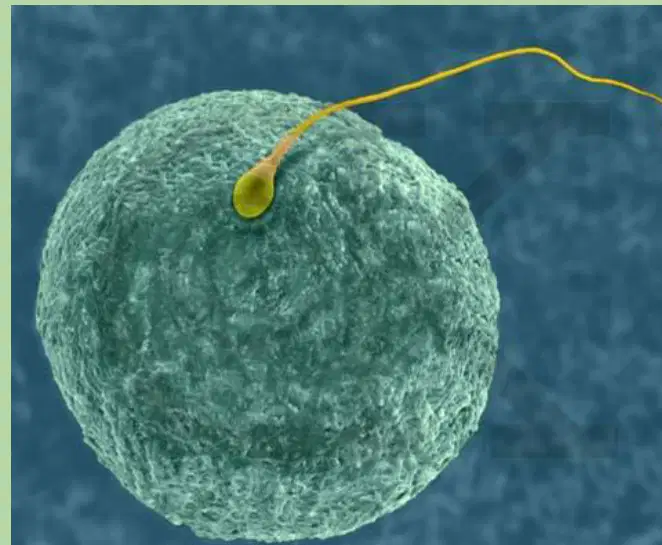
Fertilization/Conception: The union of the egg and sperm that takes place in the _________?
Fallopian tube
Ovary
Uterus
Cervix
Fill in the blank: The genetic material of the egg and sperm ______ to form one cell.
combine
separate
disappear
multiply
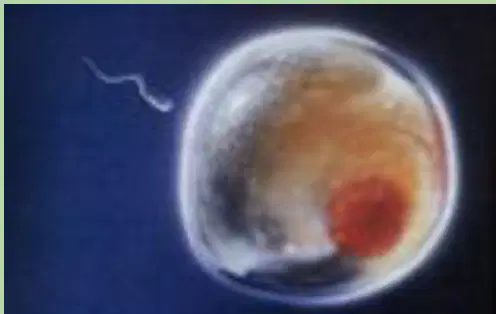
What is shown in the diagram below?
Zygote
Neuron
Red blood cell
Muscle cell
What is implantation? Fill in the blank: Implantation is the attachment of the ________ to the uterus.
fertilized egg
ovary
sperm
placenta
Where does the egg attach during implantation? Fill in the blank: The egg attaches to one of the walls in the ________ of the uterus.
upper 1/3
lower 1/3
middle 1/3
cervical end
How long after fertilization does implantation happen? Fill in the blank: Implantation happens within ________ days of fertilization.
3 to 5
1 to 2
6 to 8
10 to 12
Once implantation has happened, a woman is said to be pregnant.
True
False
Refer to the diagram of implantation. What is the correct order of stages after fertilization?
2-cell stage → 4-cell stage → 8-cell stage → Blastocyst
8-cell stage → 4-cell stage → 2-cell stage → Blastocyst
Blastocyst → 2-cell stage → 4-cell stage → 8-cell stage
2-cell stage → Blastocyst → 4-cell stage → 8-cell stage
Refer to the diagram of implantation. The process where the fertilized egg attaches to the endometrium is called ________.
Implantation
Ovulation
Fertilization
Menstruation
Refer to the diagram of implantation. Which structure releases the egg that can be fertilized?
Uterus
Ovary
Endometrium
Blastocyst
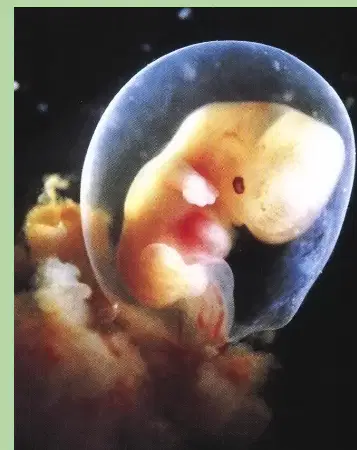
Fill in the blank: The term for a developing pregnancy from fertilization to the end of week eight is called _______.
Embryo
Fetus
Zygote
Neonate
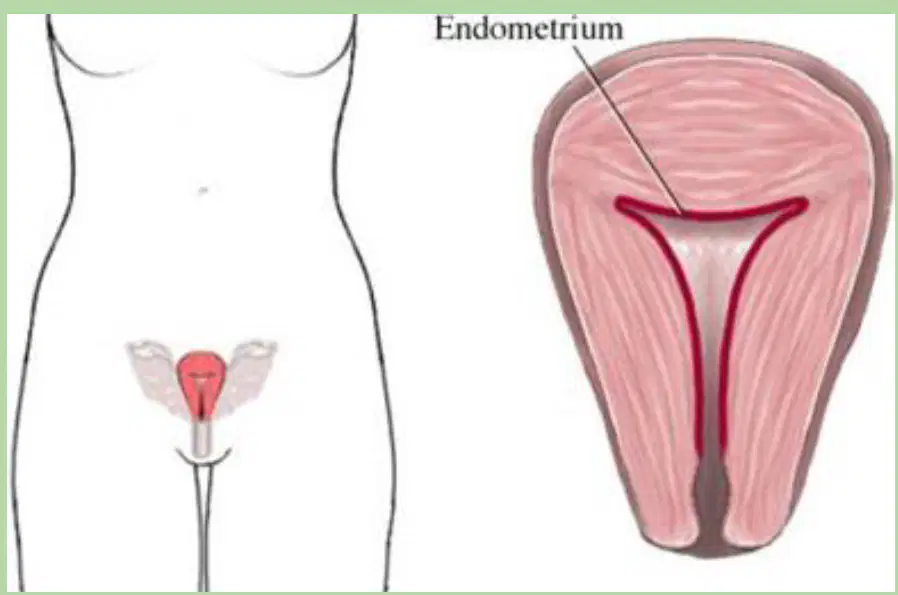
What is the endometrium? (Fill in the blank: The endometrium is the ______ of the uterus.)
lining
muscle
outer layer
cavity
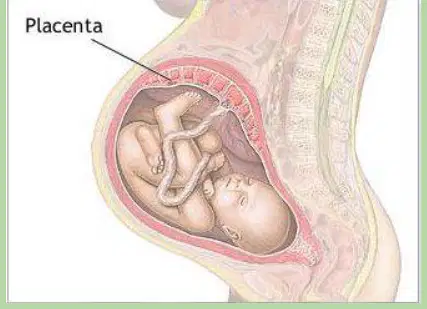
What is the placenta?
A muscle in the uterus
An organ that develops in the uterus during pregnancy
A type of hormone
A bone in the pelvis
The placenta provides ______ and oxygen to the growing baby and removes waste.
nourishment
carbon dioxide
antibodies
hormones
The placenta is sometimes called the afterbirth because it is excreted from the body following the birth of the baby.
True
False
Most substances are passed from the mother to the baby through the ______.
placenta
esophagus
trachea
intestine
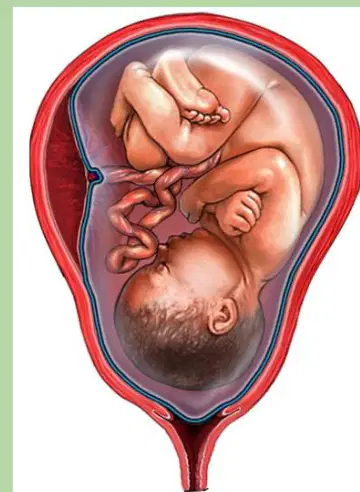
What is the watery substance that surrounds the growing fetus during its time in the womb called?
Blood
Amniotic fluid
Saliva
Lymph
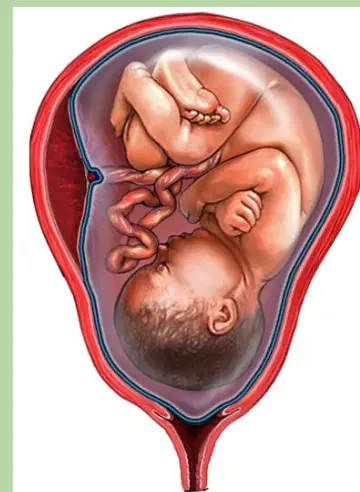
What is one function of amniotic fluid?
It helps to cushion the baby from outside force
It provides oxygen to the baby
It helps the baby to digest food
It forms the baby's bones
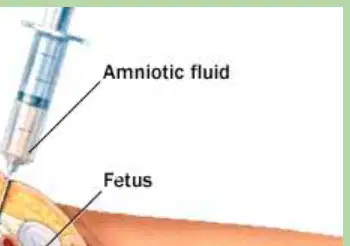
What is amniocentesis?
A medical procedure used for prenatal diagnosis, in which a small amount of amniotic fluid is extracted from the amniotic fluid around a developing fetus
A surgical procedure to remove the fetus
A test to measure blood pressure in pregnant women
A method to deliver nutrients to the fetus
Amniocentesis is usually offered when there may be an increased risk for _______ in the pregnancy.
genetic defects
high blood pressure
gestational diabetes
preterm labor
Early amniocentesis can be performed as early as how many weeks gestation?
8 weeks
10 weeks
13 weeks
20 weeks
Amniocentesis is typically performed between _______ and _______ weeks gestation.
15 and 20
10 and 14
21 and 26
8 and 12
Amniocentesis involves extracting a small amount of amniotic fluid from around a developing fetus.
True
False
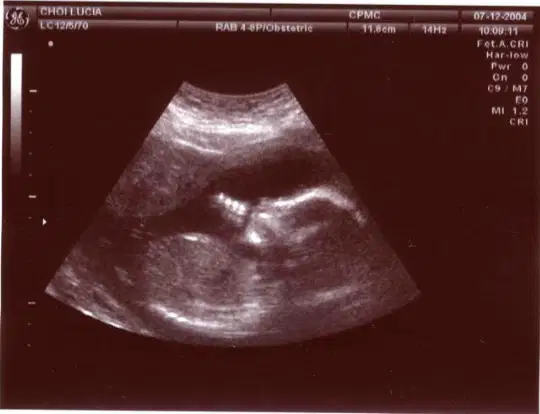
What is the primary use of ultrasound in prenatal care?
To visualize the embryo or fetus in its mother's uterus
To measure blood pressure
To check the mother's weight
To monitor heart rate
Fill in the blank: Ultrasound is often a standard part of ________ care, as it yields a variety of information regarding the health of the mother and fetus.
prenatal
postnatal
geriatric
pediatric
Ultrasound provides information regarding the progress of pregnancy as well as the health of the mother and fetus.
True
False
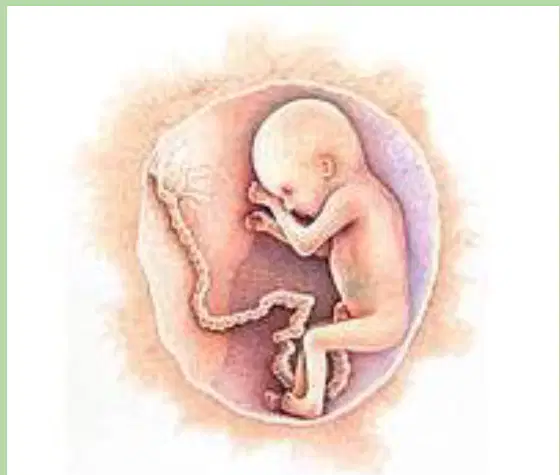
What is the function of the umbilical cord?
It connects the embryo to the placenta
It connects the baby to the mother’s heart
It provides food directly to the baby
It protects the baby from infections
Fill in the blank: The placenta carries _______ and oxygen to the baby and takes waste away.
nutrients
hormones
enzymes
antibodies
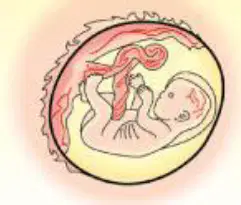
How many weeks does the first trimester of pregnancy last?
10 weeks
14 weeks
20 weeks
9 weeks
First Trimester: Why is the first trimester considered the most important trimester?
Because the baby is born
Because the vital structures are forming
Because the baby starts to walk
Because the mother feels movement
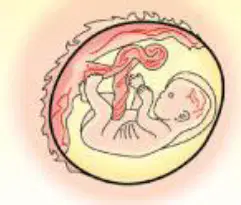
First Trimester: The embryo develops all of its organs and grows to about ____ inches.
1.5
0.5
3
5
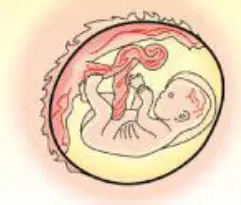
First Trimester: Which of the following organs and body parts have formed by the end of the first trimester?
Heart, brain, lungs, eyes, arms, and legs
Only the heart
Only the brain and lungs
Only the arms and legs
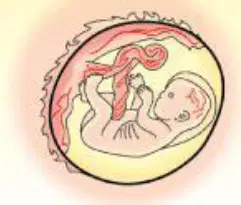
What two structures are also formed during the first trimester?
Placenta and umbilical cord
Lungs and heart
Brain and eyes
Arms and legs
During which months of pregnancy does the second trimester occur?
Months 4-6
Months 1-3
Months 7-9
Months 2-4
By which month can movement of the fetus be felt during the second trimester?
By month 4
By month 2
By month 6
By month 8
What can be heard during the second trimester of pregnancy?
The heartbeat
The baby's first words
The baby's laughter
The baby's crying
What does the fetus begin to recognize and grow during the second trimester?
The fetus recognizes voices and it grows hair and nails
The fetus starts to walk and talk
The fetus begins to eat solid food
The fetus develops teeth and can see clearly
By the end of the second trimester, how long is the fetus and how much does it weigh?
About 14-15 inches long and about 2 pounds
About 8-9 inches long and about 1 pound
About 20-22 inches long and about 6 pounds
About 10-11 inches long and about 3 pounds

During which months of pregnancy does the third trimester occur?
Months 7-9
Months 1-3
Months 4-6
Months 2-4
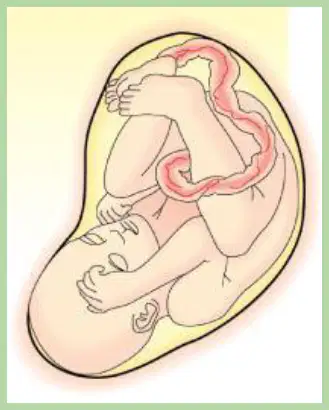
What are some developments that occur in the fetus during the third trimester?
A) Gains most of its weight
B) Begins to develop fingers
C) Is able to grasp objects
D) Is able to open and close its eyes

At how many days does Stage 1 (Zygote) of human development occur?
1 day
4 days
15 days
31 days

Stage 7 of human development occurs at how many days?
3-4 days
15-17 days
26-30 days
44-48 days

Stage 18 of human development occurs at ___ days.
44-48 days
20-24 days
60-64 days
80-84 days

Fill in the blank: A ______ is a developing human, from the start of the ninth week of pregnancy until delivery.
fetus
embryo
zygote
infant
What is the culmination of a human pregnancy with the emergence of a newborn infant/s from the mother's uterus called?
Labor/Natural Birth
Menstruation
Ovulation
Conception
What is the most common way a baby is delivered in a natural birth?
Through the abdomen
Through the vagina
Through the mouth
Through the nose
What is the first stage of labor/natural birth?
Delivery
Placenta/afterbirth
Contractions/dilation
Recovery
What is the second stage of labor/natural birth?
Delivery
Conception
Implantation
Fertilization
What is the third stage of labor/natural birth?
Placenta/afterbirth
Dilation of cervix
Expulsion of fetus
Rupture of membranes
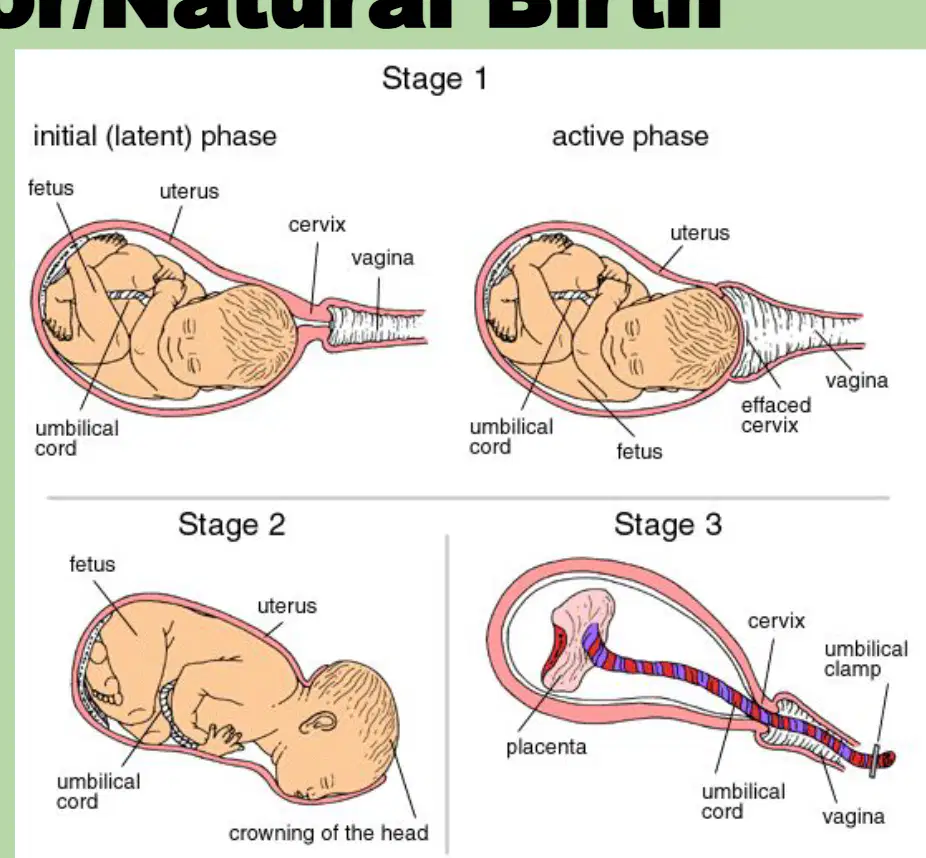
Refer to the diagram of Labor/Natural Birth. What is the correct order of the stages of labor shown in the diagram?
A) Stage 1, Stage 2, Stage 3
B) Stage 2, Stage 1, Stage 3
C) Stage 3, Stage 2, Stage 1
D) Stage 1, Stage 3, Stage 2

In which stage does the crowning of the head occur?
Stage 2
Stage 1
Stage 3
Stage 4
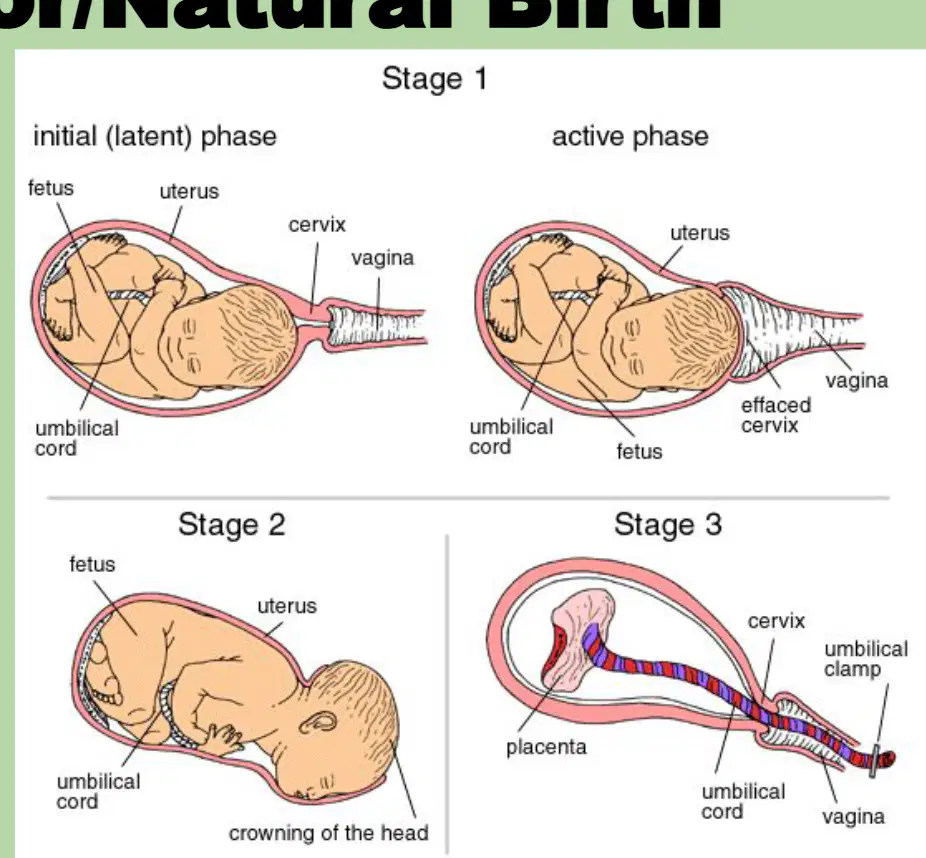
Refer to the diagram of Labor/Natural Birth. What is expelled from the uterus during Stage 3?
Fetus
Placenta
Umbilical cord
Cervix
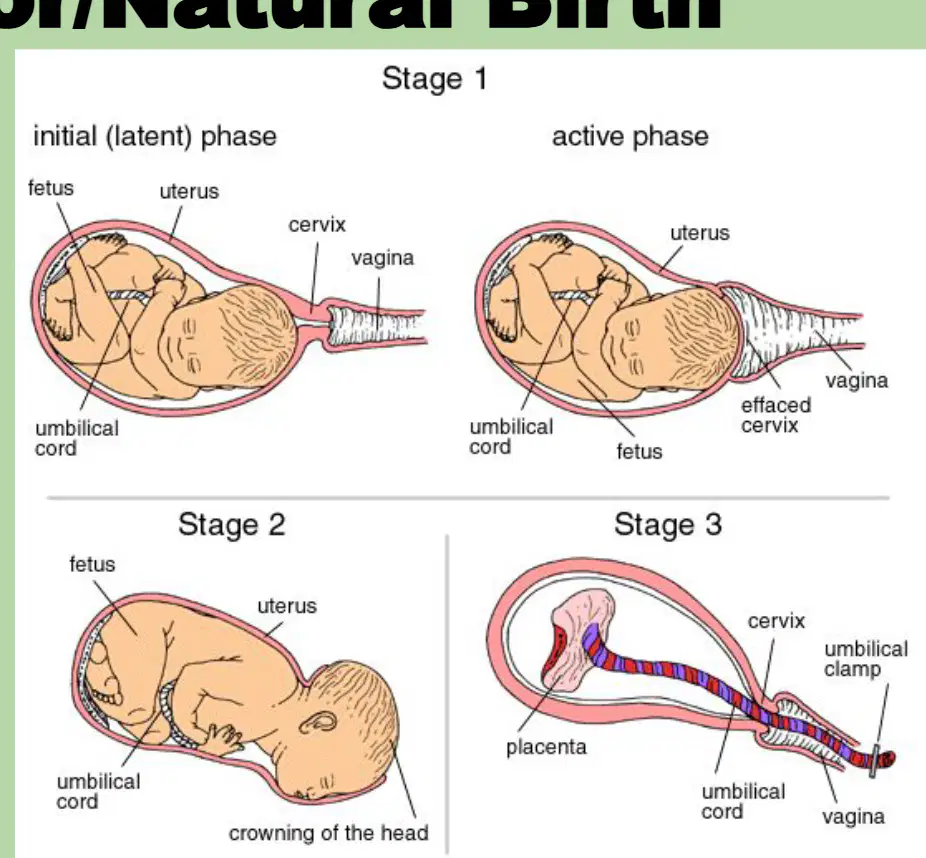
Refer to the diagram of Labor/Natural Birth. The umbilical cord is clamped during which stage?
Stage 1
Stage 2
Stage 3
None of the above
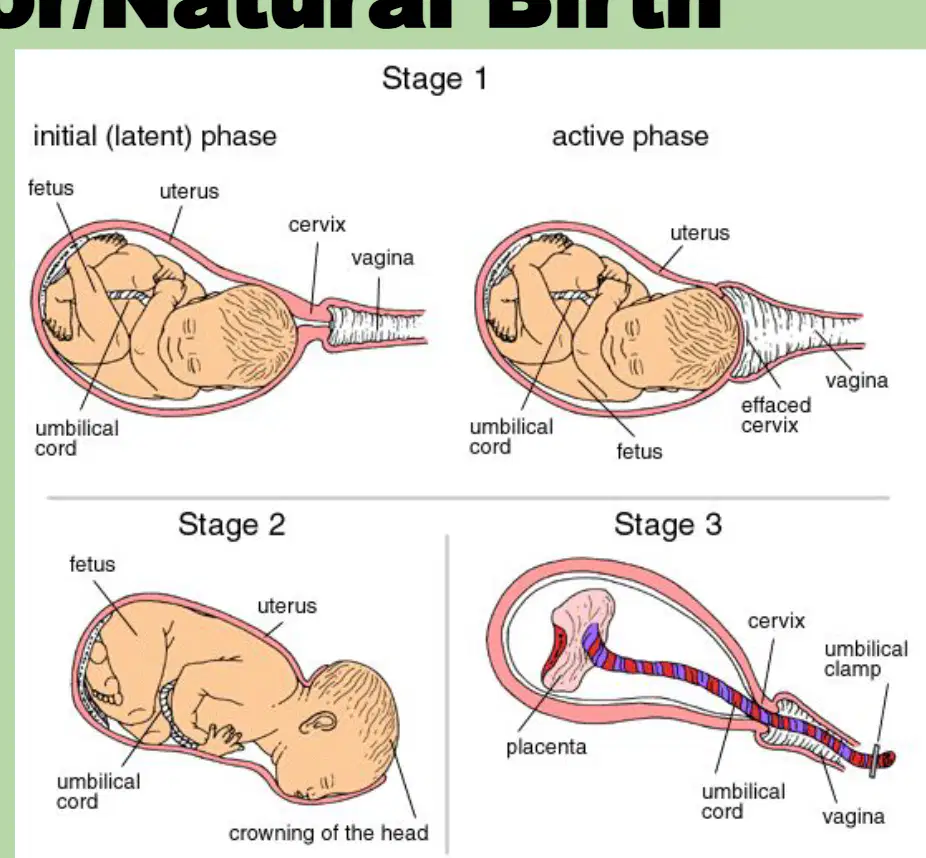
Refer to the diagram of Labor/Natural Birth. Fill in the blank: During Stage 1, the cervix becomes _________.
effaced
contracted
ruptured
dilated

