
 Worksheets
FINAL EXAM BIOLOGY 6/25
Total questions: 104
Worksheet time: 2hrs 44mins
What type of selection would most likely result in a higher and narrower peak in a trait distribution graph?
A) Directional selection
B) Disruptive selection
C) Stabilizing selection
D) Sexual selection
Which best explains why only snakes in regions that overlap with toxic newts developed resistance?
A) The snakes learned to avoid the newts and passed this behavior to their offspring
B) Resistant snakes migrated to the habitats of the newts
C) All snakes originally had resistance, but those outside newt areas lost it
D) Randomly resistant snakes survived and passed on the trait
Which study would provide the best evidence that pack hunting in wolves is advantageous?
Compare the hunting skills of wolves of different ages
Observe the types of prey hunted by individuals versus packs
Measure the ratio of males to females in hunting packs
Compare the survival rates of pups in different pack sizes
How could lizards adapt to increased predation by raccoons at the entrances of their burrows?
Switch to daytime hunting
Dig more interconnected burrows
Feed on underground plant roots
Develop group living behaviors
How do altruistic genes increase in guard bees that do not reproduce within the population?
A) Altruism genes are dominant
B) The large size of the colony compensates for individual losses
If 35% of the fish have the SS genotype, 15% have ss, and 60% have Ss, what percentage have stripes?
85%
90%
95%
100%
Which factor is least likely to cause the extinction of a population?
Extensive flooding
Decrease in dissolved oxygen in a lake
Decrease in predator species
Extreme drought
What is the main cost for an individual meerkat when acting as a sentinel?
Energy
Opportunity
Risk
Resources
Which of the following changes is an example of sexual selection?
A) A nucleic acid sequence incorrectly copied during DNA replication
B) The average size of individuals decreases due to predation
C) Female frogs select males with the deepest croaks
D) A population adapting to colder temperatures
Which of the following is not an example of innate behavior?
Spiders of a certain species making similar web patterns
A turtle crawling toward the ocean after hatching
A cheetah learning to hunt by observing its mother
Male penguins caring for eggs without prior observation
In the evolution of heat-tolerant fruit flies, what would most likely happen first?
Fruit flies migrate to warmer regions
Fruit flies with heat tolerance survive and reproduce
There is variation in heat tolerance in the original population
The offspring inherit the heat tolerance traits
Why would a smaller population of lizards be more affected by the bottleneck effect after a storm?
Smaller populations have less genetic diversity to begin with
The storm would kill more individuals in a smaller population
Smaller populations recover more slowly
The habitat would be more severely damaged for a smaller population
How could climate change cause changes in the frequencies of fur color in rabbits?
By directly causing mutations in the DNA of rabbits
By changing the amount of snow cover, affecting the effectiveness of camouflage
By altering the reproductive patterns of rabbits
By introducing new predator species into the area
What does the experiment with starlings suggest about grouping behavior in nature?
Grouping provides no benefit against predators
Grouping increases individual vigilance
Grouping reduces individual risk through shared vigilance
Grouping attracts more predators
According to the data on fish population and CO₂, which statement is most accurate?
The increase in CO₂ definitely caused the decrease in the fish population
There is a correlation between the increase in CO₂ and the decrease in the fish population
Reducing CO₂ will immediately restore the fish population
The decrease in the fish population is not related to environmental changes

Process by which individuals that are better adapted to their environment survive and reproduce more successfully; also called natural selection. (a)
Natural Selection
Adaptation
Survival of the Fittest
Evolution

The mechanism that causes evolution is (a) .
natural selection
biogeography
vestigial structures
homologous structures

What does the image represent?
Founder effect
Mutations
Bottleneck effect
Gene flow
(a) is when a change in allele frequencies occurs due to a random event.
Genetic drift
evolution
Gradualism
Divergent evolution
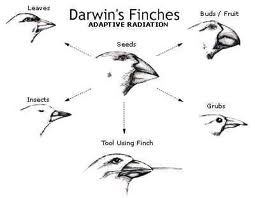
Formation of new species. (a)
Speciation
Adaptation
Diversification
Extinction
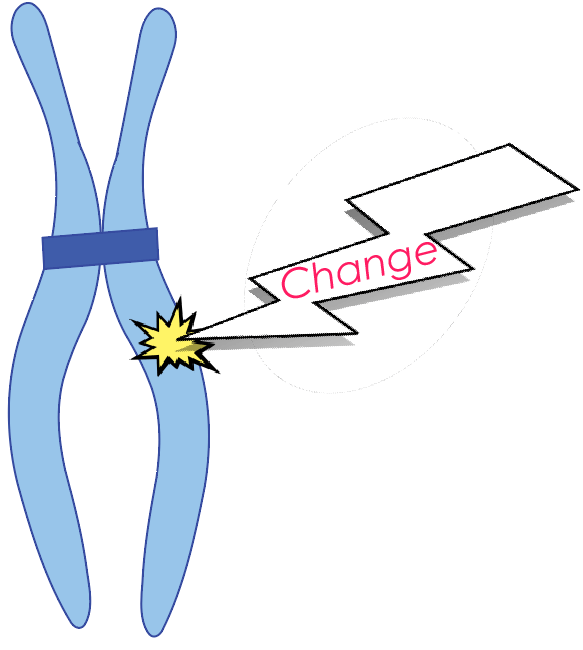
A change in a gene, group of genes, or chromosome that results in a change in proteins
Replication
Mutations
Translation
Transcription
The errors or changes that occur in the DNA sequence are called....
adaptations
Darwinism
mutations
natural selection

Genetic variation can arise from a random change in the DNA of a gene. This change is called
mutation
gene flow
gene pool
allele
Which enzyme is responsible for unwinding the DNA double helix during DNA replication?
Ligase
Helicase
Primase
DNA polymerase
What is the main purpose of transcription in the process of gene expression?
Copy DNA into mRNA
Synthesize proteins from amino acids
Assemble ribosomes
Replicate the entire genome
During translation, which molecule carries amino acids to the ribosome?
DNA
rRNA
mRNA
tRNA
DNA replication results in two DNA molecules,
each with two original strands
each with two new strands
each with one new strand and one original strand
one with two new strands and the other with two original strands
Which enzyme joins the Okazaki fragments?
Helicase
Polymerase
Ligase
Primase
Which enzyme is responsible for adding nucleotides?
Helicase
DNA polymerase
Ligase
Primase

According to the diagram, the enzyme (represented in gray) is most likely...
DNA polymerase
Ligase
Primase
Helicase
Okazaki fragments are found on the _______________ strand
Leading
Lagging
DNA replication occurs during which phase of the cell cycle?
G 1 phase
S phase
G 2 phase
Mitotic phase
DNA is built in this direction
5' to 3' (new nucleotides are added to the 3' end)
3' to 5' (new nucleotides are added to the 5' end)
3' to 5' (new nucleotides are added to the 3' end)
5' to 3' (new nucleotides are added to the 5' end)
The two DNA strands are held together by
covalent bonds
hydrogen bonds
nothing
The DNA sequence is TTA CCG. What is the complementary sequence?
TTA CCG
AAT GGC
GGC AAT
The DNA sequence is ATG. What is the complementary sequence?
ATG
GTA
TAC
What is a difference between DNA and RNA?
RNA is double-stranded
RNA is not made up of nucleotides
RNA contains uracil instead of thymine
RNA does not contain a sugar
With which RNA bases would TACGAA pair during transcription?
AUGCUU
ATGCTT
GCATCC
GCAUCC
What happens to the mRNA sequence after it has been synthesized?
it remains in the nucleus
it leaves the cell
it leaves the nucleus
it breaks into smaller pieces
What does tRNA do?
provides DNA information to the ribosomes
transfers amino acids to the ribosomes
is part of the ribosomes
builds proteins
Where are proteins made?
ER
nucleus
cytoplasm
mitochondria

What does this image represent?
amino acid
base pairing
nucleotide
the DNA molecule
What will be the resulting mRNA from this DNA sequence:
GAT-TAC-AGA-TTA-CAT?
CTA-ATG-TCT-AAT-GTA
GAU-UAG-UGA-UUA-GUT
CUA-AUG-UCU-AAU-GUA
CAT-ACA-TAC-ATA-TAG
Which enzyme is used in transcription?
DNA polymerase
ligase
RNA polymerase
helicase
Which of these bases does not exist in RNA?
C
T
U
A

Using the codon, identify the amino acid sequence:
AUG-CCA-GUA-GGG-UAA
MET-HIS-ALA-GLY-STOP
MET-PRO-GLY-VAL-STOP
MET-PRO-VAL-GLY-STOP
MET-THR-SER-ASP-STOP

Which amino acid is formed from the RNA codon UUA?
Phenylalanine
Leucine
Serine
Tyrosine
Which combination is Homozygous Dominant?
HH
Hh
hh
hH
The following genotypes are (a) : Tt, Mm and Gg
heterozygous
homozygous
The following physical descriptions are (a) hair color, eye color, height.
phenotypes
genotypes
If your genotype is Bb, then you can only pass a B or b to your child but you can't pass both.
Law of Dominance
Law of Segregation
Law of Independent Assortment
Different traits are inherited independently of each other
Law of independent assortment
Genetics law
Sex chromosomes are different in male and female. Which statement is correct?
Males are XX and Females are XY.
Males are ii and Females are XX.
Males are XY and Females are XX.
Males are XY and Females are ii.
Polygenic traits are controlled by more than 1 pair of genes. Give an example.
Freckles
Eye Color
Dimples
Widows Peak
Which type of allele is masked or hidden in this example: Hh
The dominant one
The homozygous one
The heterozygous one
The recessive one
Why do sex-linked disorders carried on the X chromosome impact males more than females?
Because males only get one X and if it's affected, they automatically get the disorder.
Because males have a weaker immune system.
Because males have 2 X chromosomes.
Because males are more likely to get bad X chromosomes from their Dad.
Monohybrid means...
the trait has one dominant and one recessive allele
the trait has many dominant and recessive alleles
the trait will always be homozygous
the trait is going to cause a disorder
Incomplete Dominance: white flowers (Cw, Cw) and red flowers (Cr, Cr) make pink flowers (Cr,Cw). If a red and pink flower mated, what is the probability of having a pink flower?
25%
50%
75%
100%

A= Dimples
a= No dimples
What is true about both parents?
Both parents are homozygous and have dimples.
Both parents are homozygous and don't have dimples.
Both parents are heterozygous and don't have dimples.
Both parents are heterozygous and have dimples.
A= Dimples
a= No dimples
What is true about the offspring?
There are 3 different genotypes possible.
There are 3 different phenotypes possible.
50% will not have dimples.
25% will have dimples.
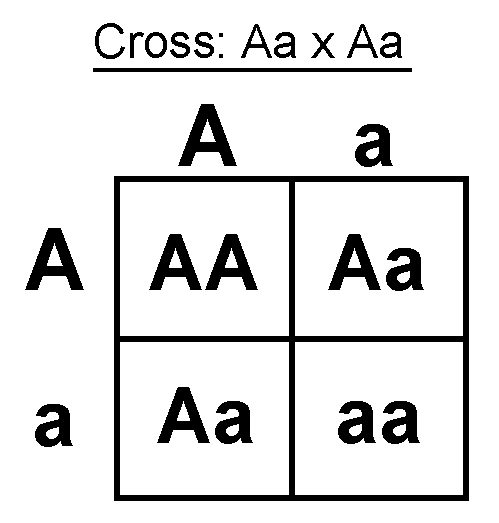
What are the phenotype percentages of the offspring?
(A-Brown fur color; a-white fur color)
50 % Brown fur and 50% White fur
25 % Brown fur and 75% White fur
75 % Brown fur and 25% White fur
0% Brown fur and 100% White fur


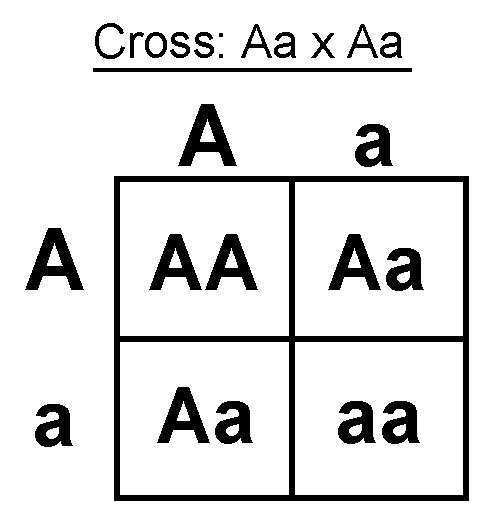
What is the genotypic ratio of the offspring?
3:1
1:3
1:2:1
2:2

Based on the karyotype, what is the sex of this person?
Male
Female

Is this trait dominant or recessive
Dominant
Recessive
Human Genome Project
a biomolecule comprised of amino acid residues joined together by peptide bonds
scientific research project with the goal of determining the base pairs that make up human DNA
a change in the DNA sequence of an organism
a technology that can be used to edit genes and, as such, will likely change the world

What is the scientific term that refers to sex cells?
autosome
gamete
karyotype
chromosome

The exchange of genetic information that insures that every gamete is unique is referred to as
mitosis
meiosis
reduction division
crossing over

How many times does a sex cell undergo mitosis?
1
2
3
4

What is another term for body cells?
somatic cells
gamete
stem cell
neural cell

How many cells are created at the end of Meiosis I?
2 haploid cells
4 haploid cells
2 diploid cells
4 diploid cells
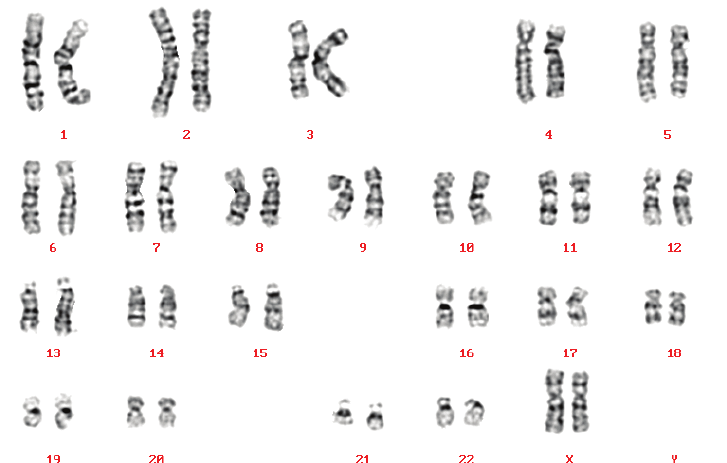
By looking at the chromosomes how can you tell that this person is biologically female?
Because there are two X chromosomes
Because there are more chromosomes than in a male
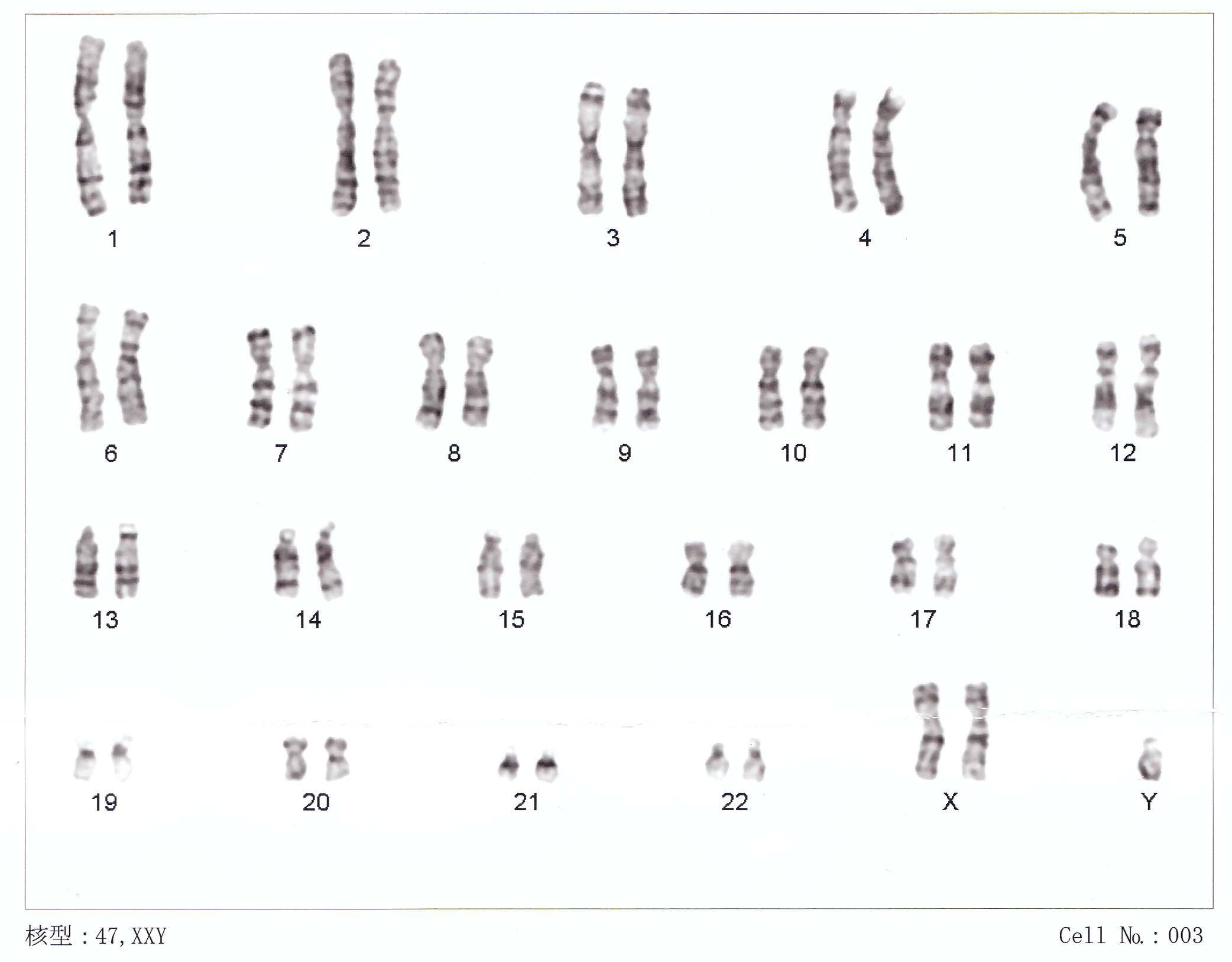
These are the chromosomes of someone with Kleinfelters syndrome. What is different about their chromosomes?
There is only one Y chromosome
One of the 5th chromosomes is too curved
There is an extra X chromosome
There are too few chromosomes
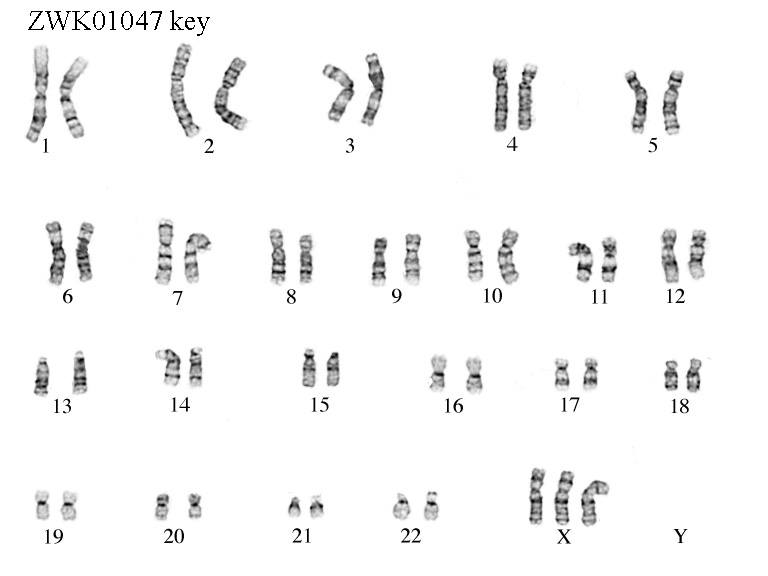
Based on the karyotype, can you guess the name of this genetic disorder?
Curvy 3
Jacob's syndrome
Triple X
Superwoman syndrome

On which chromosome is the mutation?
21
18
7
All

Which one would represent a country that has a high birth rate and death rate?
A
B
C
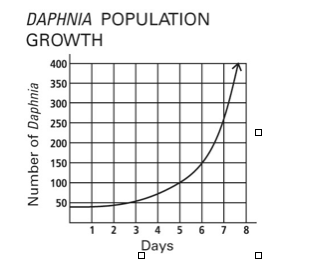
What is primary succession?
Primary succession is the ecological succession that occurs in an area with established vegetation.
Primary succession is the ecological succession that occurs in an area with no water.
Primary succession is the ecological succession that occurs in an area with no soil.
Primary succession is the ecological succession that occurs in an area with abundant soil.
Describe the concept of climax community in ecological succession.
The climax community is constantly changing in species composition.
The climax community is the stable, mature community that undergoes little or no change in species over time.
The climax community is characterized by high species turnover.
The climax community is the initial stage of ecological succession.


What was the first major human breakthrough that enabled our species' survival?
Agriculture
Urbanization
Industrialization
Genetic modification
What is the main concern raised by Thomas Malthus in 1798?
Rapid expansion of humans
Technological innovation for human population
Overpopulation outstripping the planet's food supply
Decreasing human life expectancy
What is a major negative impact of deforestation?
Decrease in pollution
An increase in carbon dioxide in the atmosphere
Increase in biodiversity
More space for development and farming
What is the BEST solution to pollution?
Clean up
Prevention
Alternative fuel sources
Planting more trees

What are some causes of water pollution?
Chemical fertilizers and pesticides
Accidental oil spills
Sewage and wastewater
Industrial waste
All of the above

Global warming could cause the polar ice caps to melt increasing the amount of fresh water in the ocean and disrupting the flow of natural currents that cycle heat around the world. This change would most likely result in which of the following?
An increase in climate change
The collision of tectonic plates
An increase in producer populations
The reduction of ocean sediments

What is the making of gametes called?
Spermatogenesis
Egg Generator
Oogenesis
Gametogenesis
Which of the following describes the fate of most polar bodies formed during oogenesis?
No polar bodies are formed during oogenesis.
They will help correct mutations in ovum.
They will be fertilized by a sperm and result in fraternal twins.
They will die/decompose.

