
 Worksheets
(Spanish)EOY Exam(Practice)
Total questions: 100
Worksheet time: 2hrs 2mins
¿Dónde se forman las masas de aire MARÍTIMAS?
Sobre el agua
Sobre la tierra
¿Dónde se forman las masas de aire CONTINENTALES?
Sobre el agua
Sobre la tierra
¿Qué tipo de masa de aire trae TIEMPO FRÍO y SECO?
Marítima Polar (mP)
Marítima Tropical (mT)
Continental Polar (cP)
Continental Tropical (cT)

¿Qué masa de aire se clasificaría como Marítima Polar (mP)?
púrpura
verde
azul
amarillo
rojo
¿Qué masa de aire se clasificaría como Continental Tropical (cT)?
púrpura
verde
azul
amarillo
rojo

¿Qué tipo de masa de aire está representada en la letra "C" (noreste de EE. UU., alrededor de Nueva York)?
Continental polar
Continental tropical
Marítima polar
Marítima tropical

Este es el símbolo de un frente meteorológico _____________ .
Frío
Cálido
Estacionario
Ocluido

Un frente meteorológico _____________ ocurre cuando una masa de aire frío avanza, empujando hacia arriba a la masa de aire cálido.
Frío
Cálido
Estacionario
Ocluido
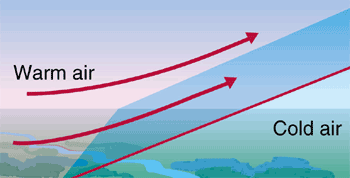
¿Por qué el aire cálido asciende sobre el aire frío?
El aire cálido es menos denso
El aire cálido es más denso
El aire frío es más fuerte que el aire cálido

¿Qué símbolo es este?
frente cálido
frente frío
frente estacionario
frente ocluido

¿Qué tipo de frente hay sobre Texas?
frente cálido
frente frío
frente estacionario
frente ocluido
¿Qué tipo de clima trae un sistema de alta presión a una zona?
clima feliz, soleado y despejado
clima desagradable, frío y lluvioso
niebla, mucha niebla
relámpagos
¿Qué tipo de clima trae un sistema de baja presión?
clima feliz, soleado y despejado
clima desagradable, frío y lluvioso
relámpagos
arcoíris y unicornios
Un sistema de baja presión en un mapa meteorológico es una letra mayúscula ____.
A
H
L
P
Un sistema de alta presión es una ______ mayúscula en un mapa meteorológico.
A
H
L
P

aire más pesado, descendente
alta presión
baja presión
aire más ligero, ascendiendo
alta presión
baja presión

La imagen muestra un mapa meteorológico con diferentes sistemas de presión. ¿Qué tipo de clima estaría teniendo Texas en este momento?
clima despejado, soleado y seco
clima lluvioso, nublado y tormentoso

La siguiente imagen muestra un mapa meteorológico de Virginia. ¿Qué tipo de clima está teniendo Virginia en este mapa?
clima nublado y lluvioso
clima soleado, seco y despejado

¿Cuál es el genotipo de un individuo de ojos azules?
BB
Bb
bb
BB o Bb
¿Cuál es el genotipo de una persona con cabello negro?
HH
Hh
hh
HH o Hh
¿Cuál es el genotipo de un individuo con pecas?
FF
Ff
ff
FF o Ff
¿Cuál es el fenotipo de un individuo mm?
Muggle
Mago
Squib
¿Cuál es el fenotipo de un individuo Mm?
Muggle
Mago
Squib
¿Cuál es el fenotipo de un individuo Bb?
Ojos azules
Ojos marrones
Pelo rojo
¿Cuál es el fenotipo de un individuo MM?
Muggle
Mago
Squib
Un mago con pelo rojo, ojos azules y pecas son todos ejemplos de _____.
fenotipo
genotipo
Ron Weasley (aunque esto es técnicamente correcto, por favor selecciona una de las otras dos respuestas.)
¿Cuál es el genotipo de una persona pelirroja?
HH
Hh
hh
HH, Bb, mm, ff son todos ejemplos de
fenotipo
genotipo
El genotipo mm también se conoce como ____.
Homocigoto dominante
Homocigoto recesivo
Heterocigoto
El genotipo Mm también se conoce como ____.
De raza pura
Híbrido
El genotipo Mm también se conoce como ____.
Homocigoto dominante
Homocigoto recesivo
Heterocigoto
El genotipo mm también se conoce como ____.
De raza pura
Híbrido

Having a Widow's Peak is dominant (P) over not (p). If parent A (PP) and parent B (pp) have a child, what is the likelihood that--
The child will have a widow's peak
100%
The child will not have a widow's peak
0%
The genotype of these children
Pp

Los dedos palmeados (F) son dominantes sobre los dedos no palmeados (f). Si el progenitor A (Ff) y el progenitor B (Ff) tienen hijos, ¿cuáles de las siguientes opciones son correctas? Selecciona los resultados correctos de Genotipo y Fenotipo.
Fenotipos: 75% de probabilidad de tener dedos palmeados y 25% de no tenerlos.
Fenotipos: 100% de probabilidad de tener dedos palmeados y 0% de no tenerlos.
Fenotipos: 25% de probabilidad de tener dedos palmeados y 75% de no tenerlos.
Genotipos: FF 25%, Ff 50%, ff 25%
Genotipos: FF 75%, Ff 50%, ff 25%
For a certain plant: G = green, g = yellow
GG
Gg
gg

Los ojos marrones (B) tienden a ser dominantes mientras que los ojos azules (b) tienden a ser recesivos. Unos padres con genes heterocigotos quieren saber: ¿cuál es la probabilidad de que tengan un hijo con ojos azules?
0%
25%
75%
100%

¿Cuál de las siguientes opciones completaría este cuadro de Punnett?
aa
AA
Aa
Se cruzan dos plantas de guisante altas heterocigotas (Tt). La altura alta (T) es dominante. La baja (t) es recesiva. ¿Cuál es la probabilidad de cada fenotipo?
50% altas y 50% bajas
75% altas y 25% bajas
100% bajas

Los ojos marrones son dominantes (B) sobre los ojos azules (b). Si el Progenitor A (bb) y el Progenitor B (Bb) tienen un hijo, ¿cuál es la probabilidad de que el hijo tenga ojos marrones?
25%
50%
75%
100%

Selecciona DOS respuestas. ¿Cuáles son las partes que faltan?
BB
bb
Bb

¿Cuál de los siguientes debe ser el genotipo del padre?
RR
Rr
rr

Si el padre es homocigoto recesivo para los hoyuelos, ¿qué debe ser la madre para este cuadro de Punnett?
Dd (Heterocigoto)
DD (Homocigoto dominante)
dd (Homocigoto recesivo)
Mutaciones buenas vs. malas
Las mutaciones pueden ser buenas así como malas
El mismo gen
Pueden ser perjudiciales
Variación
SON DIFERENTES FORMAS DEL MISMO GÉNERO
ALGO QUE SÉ
LAS MUTACIONES PUEDEN SER BUENAS
ALGO EN NOSOTROS

Esta persona tiene trisomía ___.
13
18
21
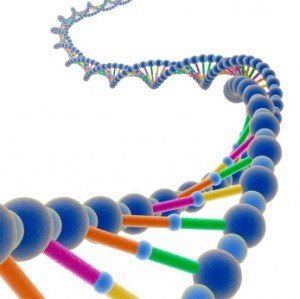
¿Cuál de las siguientes opciones describe mejor una molécula de ADN?
doble hélice
contiene ribosa
compuesta de aminoácidos
contiene uracilo
¿Con qué se empareja la Citosina (C)?
Guanina (G)
Citosina (C)
Adenina (A)
Timina
¿Con qué se empareja la Guanina (G)?
Adenina (A)
Timina (T)
Citosina (C)
Guanina (G)
¿Con qué se empareja la Timina (T)?
Adenina (A)
Timina (T)
Guanina (G)
Citosina (C)
¿Con qué se empareja la Adenina (A)?
Guanina (G)
Citosina (C)
Adenina (A)
Timina (T)
¿Todas las mutaciones son malas?
Sí
No

Is this individual male or female?
Male
Female

What is an organized picture of all of an organism’s homologous chromosome pairs lined up with each other?
Pedigree
Karyotype
Homologous chromosome pairs are a combination of how many chromosomes from each parent?
1 from each parent
2 from each parent
Which type of chromosome determines if someone will be male or female?
autosomes
sex chromosomes
Which set of chromosomes represents a male?
XX
XY
Which set of chromosomes represents a female?
XX
XY
How many pairs of sex chromosomes do human cells contain?
22
1
46
How many pairs of autosomes do human cells contain?
22
1
46
How many pairs of chromosomes do human cells contain?
23
46
How do you "win" at natural selection?
survive
go extinct
survive & reproduce
What word describes a trait that helps an organism survive in its environment?
natural selection
mutation
camouflage
adaptation
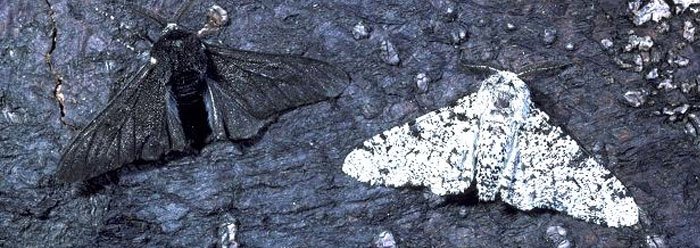
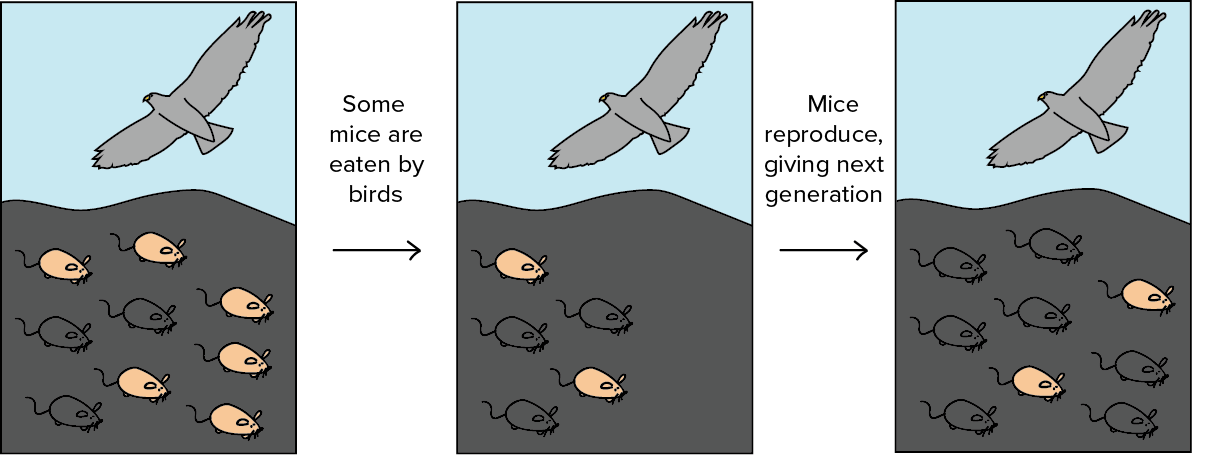
Natural selection results in change in a population's _____________ traits over time.
inherited
acquired


Which letter represents the most recent common ancestor of sponges and mushrooms?
A
B
C
D
E

According to the cladogram, which organism is most distantly related to the chimpanzee?
salmon
salamander
lizard
hamster

Using the cladogram, which two organisms are more closely related Lizards and Newts OR Lamreys and Sharks
Newts and Lizards
Lampreys and Sharks

Two blocks of equal mass are dragged across different surfaces. Which will experience the greater Normal force?
Box A
Box B
Equal
Two blocks of equal mass are dragged across different surfaces. Which will experience the greater Gravity force?
Box A
Box B
Equal

Is the object in equillibrium?
Yes
No
Not enough information

If the object in this picture is in equilibrium, What is the force of friction?
0
12
8
4

Is the object in equillibrium?
Yes
No
Not enough information

A card sliding across a table at a constant speed
Unbalanced force
Balanced force
Applied forces on an object are unequal in size but are the same or opposite in direction
Unbalanced force
Balanced force
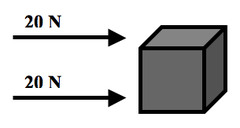
Which of the following is an example of an unbalanced force?


According to Newton's Second Law, How do you calculate mass?
Multiply mass and acceleration
Divide force by acceleration
Divide acceleration by mass
Divide force by mass
According to Newton's Second Law, How do you calculate force?
Multiply mass and acceleration
Divide mass by acceleration
Divide acceleration by mass
Divide force by mass


According to Newton's Second Law, How do you calculate acceleration?
Multiply mass and acceleration
Divide force by acceleration
Divide acceleration by mass
Divide force by mass
What is the net force on a car with a mass of 1000kg, if it accelerates at 35 m/s2?
f = m×a
1000 x 35 = 35,000 N
1000/35 = 28.6 N
35/100 = 0.035 N
Not enough information is provided to answer this question correctly.
If the mass of an object is 5 kg, and the acceleration is 2 m/s2. What is the force?
10 N
7 N
3 N
12 N
I the mass of an object is 10 kg. And the acceleration is 10 m/s2, what is the force on the object?
1000 N
20 N
10 N
100 N

