
 Worksheets
Index Topics
Total questions: 150
Worksheet time: 2hrs 40mins
The Particle Model of Matter states that:
Matter is made up of tiny particles that are in constant motion.
Matter is continuous and not made of particles.
Particles in matter are always stationary.
Matter cannot change its state.
Classify substances based on their composition.
Elements and compounds
Acids and bases
Metals and nonmetals
Organic and inorganic
Which of the following best distinguishes between pure substances, solutions, and mechanical mixtures?
Pure substances have only one type of particle, solutions are uniform mixtures of two or more substances, and mechanical mixtures are non-uniform mixtures.
Pure substances and solutions are both non-uniform, while mechanical mixtures are uniform.
Solutions and mechanical mixtures both have only one type of particle, while pure substances have multiple types.
Mechanical mixtures are uniform, solutions are non-uniform, and pure substances are mixtures.
All matter is composed of tiny particles called _______.
atoms
cells
molecules
ions
Atoms can combine together in different ways to form: What is the correct answer?
Elements
Molecules
Compounds
Mixtures
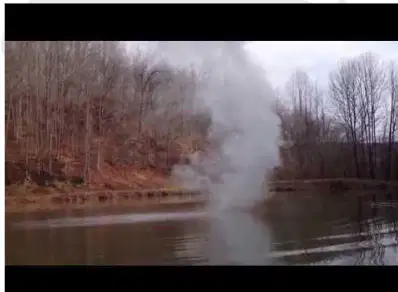
Based on the images and captions, which of the following statements is true?
Alkali metals are not reactive
Noble gases are extremely reactive
Alkali metals are extremely reactive
Both alkali metals and noble gases are extremely reactive
According to the Particle Model of Matter, all matter is made up of extremely ________ particles.
tiny
large
heavy
visible
According to the Particle Model of Matter, there are ________ between the particles.
spaces
bonds
forces
collisions
According to the Particle Model of Matter, particles are ________ to one another.
attracted
repelled
unrelated
indifferent
According to the Particle Model of Matter, particles are always ________.
moving
stationary
disappearing
growing
According to the Particle Model of Matter, particles move faster and farther apart when they ________ energy.
gain
lose
share
absorb less
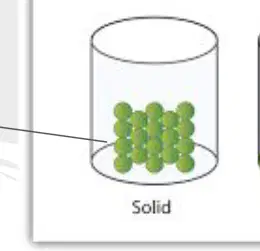
According to the particle model, which state of matter has particles that are very close together and do not move around much because they don’t have a lot of energy?
Solid
Liquid
Gas
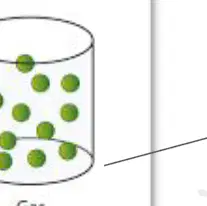
In which state of matter do particles move freely because they have a lot of energy and are very far apart?
Solid
Liquid
Gas
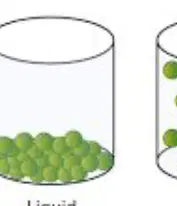
Fill in the blank: In liquids, particles are able to move past one another because they have some _______. Liquids thus take the shape of the container they are in.
energy
weight
color
volume
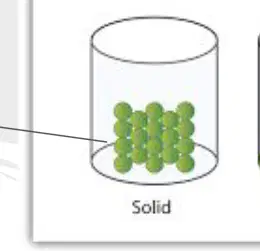
True or False: Solids maintain their shape in a given container because their particles have a lot of energy.
True
False
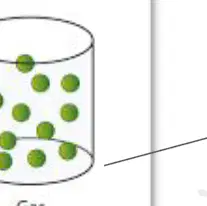
Which state of matter expands until it fills the container it is in?
Solid
Liquid
Gas
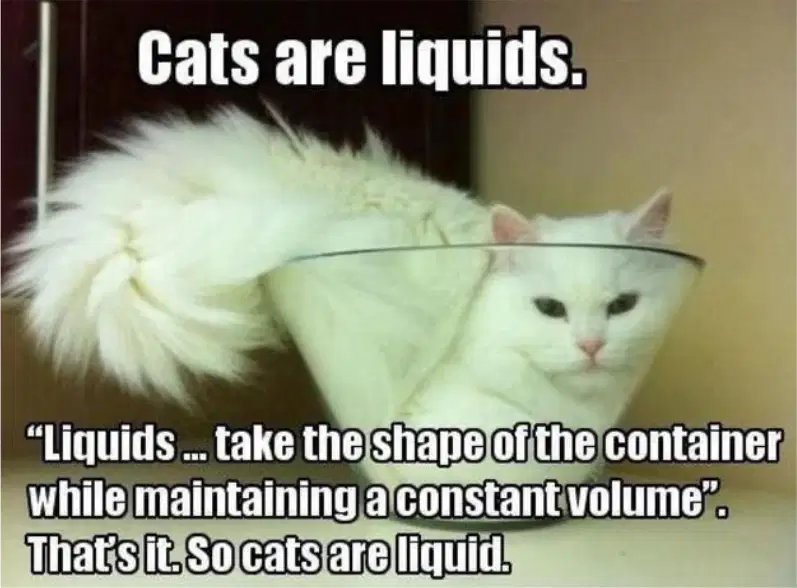
According to the image, why are cats considered liquids?
Because they are made of water
Because they take the shape of the container while maintaining a constant volume
Because they can evaporate
Because they are always moving
If states of matter are dependent on how much energy particles have, can one substance gain or lose energy to become a different state of matter?
Yes, a substance can change its state by gaining or losing energy.
No, a substance cannot change its state by gaining or losing energy.
Only gases can change state by gaining or losing energy.
Only solids can change state by gaining or losing energy.
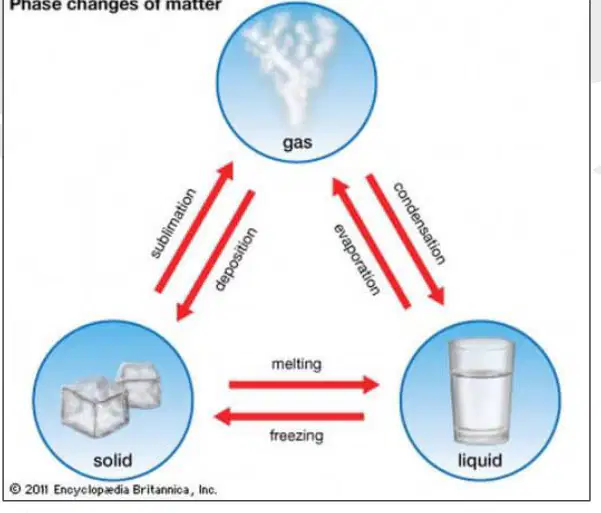
Which of the following are the three states of matter?
Solid, Liquid, Gas
Water, Ice, Steam
Earth, Wind, Fire
Metal, Wood, Plastic
Matter may exist in three states depending on how much ______ its particles contain.
energy
mass
volume
color
The gain or loss of energy results in a change in ______, or state of matter.
phase
temperature
volume
density
Phase changes are not indicative of a chemical reaction.
True
False
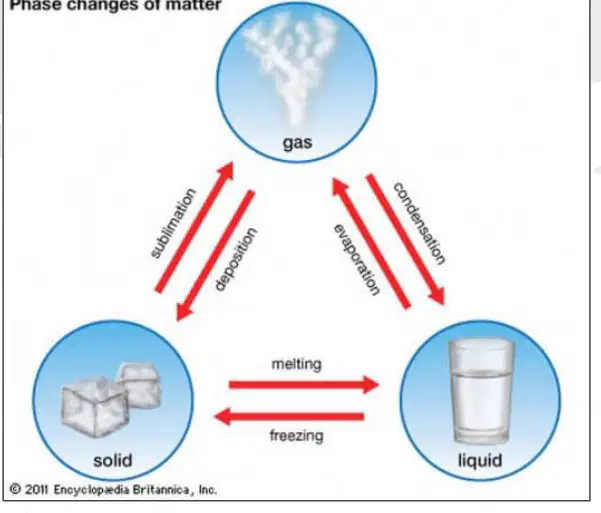
Match the phase change with the correct process:
Solid to Liquid
Melting
Liquid to Gas
Evaporation
Gas to Liquid
Condensation
Liquid to Solid
Freezing
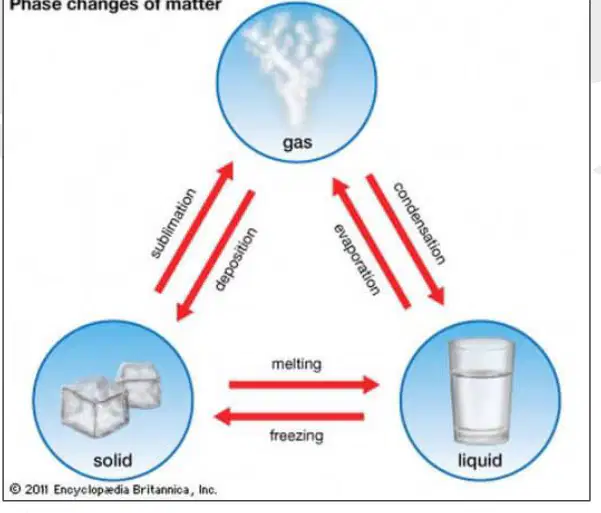
What is the process called when a solid turns directly into a gas?
Sublimation
Condensation
Melting
Evaporation
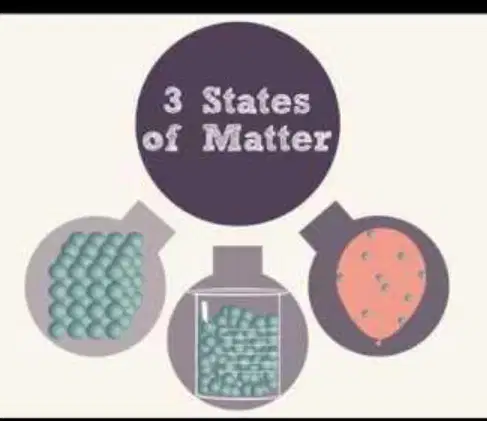
Refer to the diagram labeled '3 States of Matter'. Which of the following is NOT a state of matter?
Solid
Liquid
Gas
Plasma
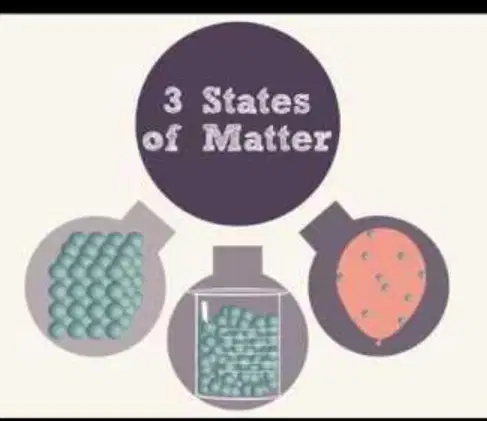
Refer to the diagram labeled '3 States of Matter'. Fill in the blank: The three states of matter shown are solid, liquid, and ____.
gas
metal
plasma
rock
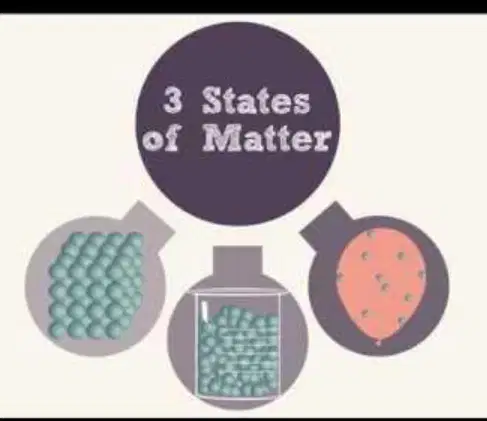
Refer to the diagram labeled '3 States of Matter'. When a solid changes to a gas and then back to a solid, what is this process called?
Sublimation and deposition
Melting and freezing
Condensation and evaporation
Boiling and condensation
Matter can be further classified as either a mixture or a pure substance: Mixtures contain ______ different types of particles.
two
one
four
five
Matter can be further classified as either a mixture or a pure substance: Pure substances contain only ______ type of particle.
one
two
three
four
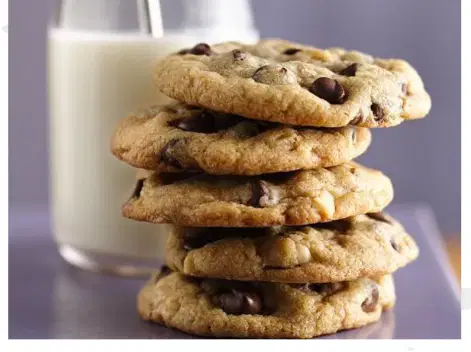
Which of the following are mixtures? Select the correct option(s).
A) Iron (Fe)
B) Glucose (C6H12O6)
C) Chocolate chip cookies and milk (no chemical formula)
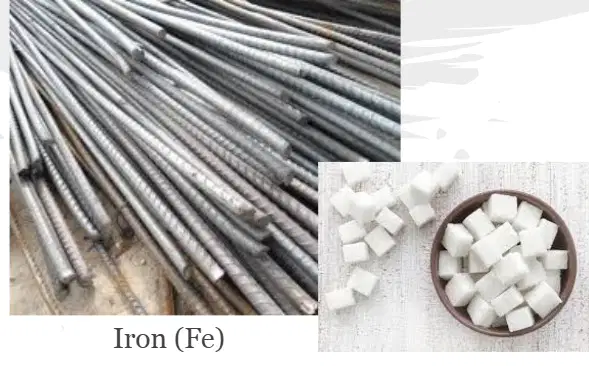
Which of the following are pure substances? Select the correct option(s).
Iron (Fe)
Glucose (C6H12O6)
Chocolate chip cookies and milk (no chemical formula)
Mixtures can be classified according to their properties. If the particles are uniformly scattered, the mixture is said to be _________.
homogenous
heterogenous
colloidal
suspension
Mixtures can be classified according to their properties. If the particles are not uniformly scattered, the mixture is said to be _________.
heterogeneous
homogeneous
colloidal
solution
Which of the following best describes a homogenous mixture?
The particles are not uniformly scattered
The mixture is usually clear and cannot be filtered to separate the particles
The mixture can be easily separated by filtration
The mixture is always opaque
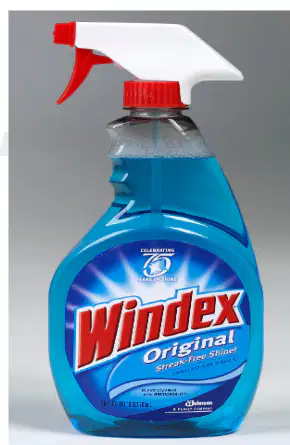
What type of mixture is Windex, as shown in the image?
Homogenous mixture
Heterogeneous mixture
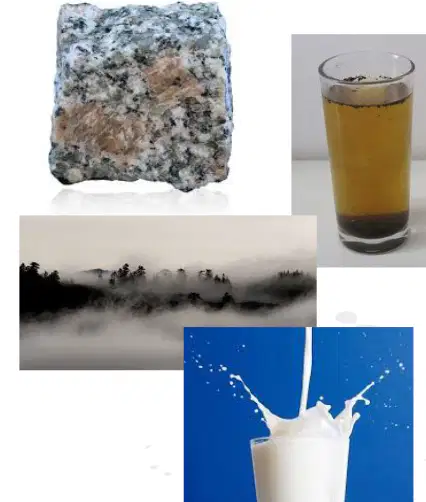
What is an ordinary mechanical mixture?
A mixture where the different parts are too small to see
A mixture where the different parts are big enough to see, and they stay mixed. E.g. granite
A mixture that cannot be separated
A mixture that dissolves completely
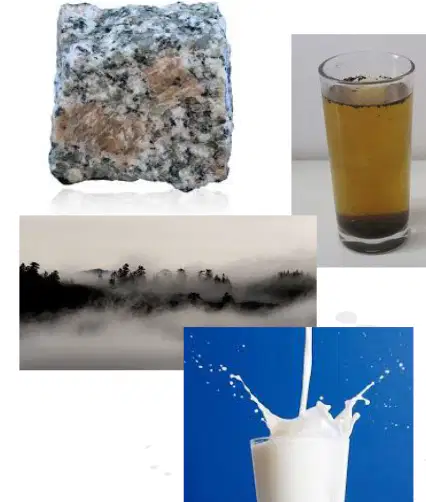
A suspension is a heterogeneous mixture made of large particles that are uniformly mixed but will settle if left undisturbed. What is an example of a suspension?
Milk
Clouds
Muddy water
Granite
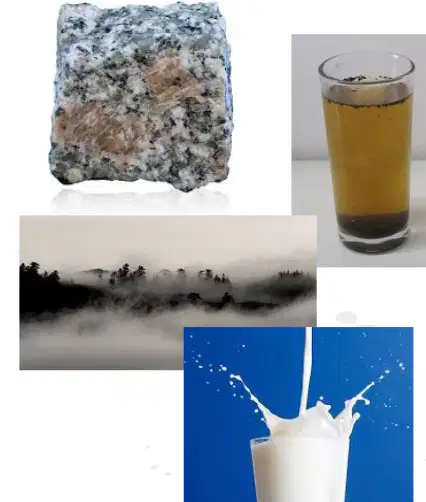
Fill in the blank: A colloid is a heterogeneous mixture composed of fine particles evenly distributed throughout a second substance. An example of a colloid is _________?
clouds
table salt
iron nail
diamond
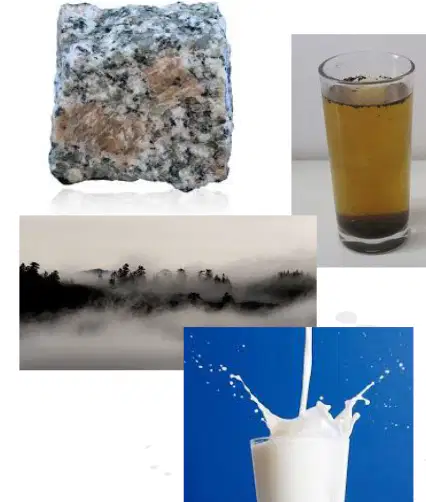
Emulsions are a type of colloid in which liquids are dispersed in liquids ("immiscible" liquids, or those which do not dissolve in one another). What is an example of an emulsion?
Muddy water
Milk
Granite
Clouds
Which of the following best distinguishes between a physical change and a chemical change?
A physical change alters the form of a substance without changing its identity, while a chemical change results in the formation of new substances.
A physical change always produces heat, while a chemical change does not.
A chemical change is always reversible, while a physical change is not.
A physical change involves a change in mass, while a chemical change does not.
Materials can be described in terms of their:
Physical and chemical properties
Color and size only
Shape and weight only
Age and origin
According to the passage, chemists classify changes in matter according to two categories. Fill in the blanks: 1) ________ change 2) ________ change.
Physical, Chemical
Physical, Biological
Mechanical, Chemical
Thermal, Electrical
According to the passage, what happens to ice when it gains energy?
Ice melts to form liquid water as it gains energy.
Ice turns into steam directly without becoming water.
Ice becomes colder and harder as it gains energy.
Ice remains unchanged even after gaining energy.
According to the passage, what does paper produce when it is burned?
Paper produces smoke when it is burned.
Paper produces water when it is burned.
Paper produces oil when it is burned.
Paper produces sand when it is burned.
Which of the following is a characteristic of a physical change?
Substance changes in form but not in chemical composition
New substances are formed
Change cannot be reversed
Substance changes in chemical composition
Fill in the blank: In a physical change, no _______ are formed.
new substances
energy changes
physical properties
mixtures
Which of the following statements about physical change is true?
Change can be reversed
Change cannot be reversed
New substances are always formed
Substance changes in chemical composition

The melting of ice to water, as shown in the image, is an example of which type of change?
A) Physical change
B) Chemical change

Tearing a piece of paper, as shown in the image, is an example of which type of change?
Physical change
Chemical change

Shaping clay on a potter's wheel, as shown in the image, is an example of which type of change?
Physical change
Chemical change

Blending fruits in a blender, as shown in the image, is an example of which type of change?
Physical change
Chemical change
Which of the following is a characteristic of a chemical change?
Substance changes in chemical composition
Substance changes in physical state only
No new substance is formed
Change can be easily reversed
Which of the following is true about a chemical change?
A new substance is formed
The original substance remains unchanged
The change can always be reversed
No energy is involved
Which of the following statements about chemical change is correct?
Change cannot be reversed
Change can always be reversed
No new substance is formed
Only the physical state changes

Look at the image of burning wood. Is this an example of a chemical change?
True
False

Look at the image of frying eggs. Is this an example of a chemical change?
True
False

Look at the image of rusting screws. Is this an example of a chemical change?
True
False

Look at the image of autumn leaves changing color. Is this an example of a chemical change?
True
False
According to the passage, one indicator that a chemical reaction has taken place is that heat is ________ or ________.
produced; absorbed
lost; gained
measured; calculated
stored; released
According to the passage, a change in ________ is an indicator that a chemical reaction has taken place.
pH
temperature
mass
volume
According to the passage, when the ________ is used up, it indicates a chemical reaction has taken place.
starting material
product
catalyst
solvent
According to the passage, a change in ________ is an indicator that a chemical reaction has taken place.
colour
shape
size
weight
According to the passage, the formation of ________ in a liquid is an indicator that a chemical reaction has taken place.
gas bubbles
ice crystals
solid metal
liquid oil
According to the passage, the formation of a ________ (solid) in a liquid is an indicator that a chemical reaction has taken place.
precipitate
solution
gas
mixture
Fill in the blank: Any property that can be observed or measured without forming a new substance is a ________ property (e.g. density).
physical
chemical
reactive
atomic
Any property that describes how a substance reacts with another substance is a ________ property (e.g. flammability).
chemical
physical
mechanical
thermal
Matter can also be classified according to its physical and chemical properties: Which of the following is an example of a physical property?
Flammability
Density
Reactivity
Rusting
Matter can also be classified according to its physical and chemical properties: Which of the following is an example of a chemical property?
A) Color
B) Melting point
C) Flammability
D) Mass
Which of the following is a chemical property?
Colour
Reactivity with other chemicals
Boiling point
Density
Which of the following is a physical property (qualitative)?
Combustibility
Texture
Solubility
Toxicity
Which of the following is a physical property (quantitative)?
pH (acidity/basicity)
Malleability
Mass
Stability
Fill in the blank: ______ is a chemical property related to how easily a substance catches fire.
Combustibility
Solubility
Density
Malleability
Fill in the blank: The ability of a substance to be hammered into thin sheets is called ______.
Malleability
Ductility
Solubility
Viscosity
Which property measures the amount of matter in an object?
Mass
Smell
Stability
Texture
Which property describes the ability of a substance to dissolve in another substance?
Solubility
Viscosity
Enthalpy of formation
Colour
Fill in the blank: ______ is a chemical property that describes how a substance interacts with other chemicals.
Reactivity with other chemicals
Melting point
Density
Color
Which of the following is a qualitative physical property?
State
Conductivity
Density
Enthalpy of formation
Which of the following is a quantitative physical property?
Smell
Boiling point
Toxicity
Texture
Fill in the blank: ______ is a chemical property that measures the harmful effects of a substance.
Toxicity
Solubility
Density
Conductivity
Which property is related to the resistance of a liquid to flow?
Viscosity
Stability
Colour
pH (acidity/basicity)
Fill in the blank: ______ is a chemical property that refers to the energy change when a compound is formed from its elements.
Enthalpy of formation
Activation energy
Lattice energy
Ionization energy
Which property describes how well a material allows electricity to flow through it?
Conductivity
Stability
Texture
Smell
Fill in the blank: ______ is a chemical property that indicates how resistant a substance is to change or decomposition.
Stability
Solubility
Density
Conductivity
Which property describes the taste or odor of a substance?
Smell
Density
Boiling point
pH (acidity/basicity)
Fill in the blank: ______ is a chemical property that measures whether a substance is acidic or basic.
pH (acidity/basicity)
Density
Boiling point
Solubility
What are quantitative properties?
Quantitative properties are those which can be defined by a precise measurement (a numerical value).
Quantitative properties are those which can only be described using words and not numbers.
Quantitative properties are properties that cannot be measured or compared.
Quantitative properties are those which are only related to color and texture.
What are qualitative properties?
Qualitative properties are those which can only be described.
Qualitative properties are those which can only be measured.
Qualitative properties are those which can only be counted.
Qualitative properties are those which can only be calculated.
Which of the following best explains the difference between an observation (a law) and a theory?
An observation (a law) describes what happens; a theory explains why it happens.
A theory describes what happens; an observation (a law) explains why it happens.
Both describe and explain why things happen.
Neither describes nor explains anything.
Which of the following best describes how models are used to explain observations and discusses past atomic models?
Models help explain observations by providing frameworks, and past atomic models include Dalton's, Thomson's, Rutherford's, and Bohr's models.
Models are only used for predicting weather, not for explaining scientific observations.
Atomic models have never changed over time and remain the same since Dalton.
Models are not important in science and do not help explain observations.
An element is defined, using our current understanding of the atom, as:
A substance made of only one type of atom
A mixture of different types of atoms
A substance that can be broken down into simpler substances
A compound formed by two or more elements
Identify the number of protons and electrons in a neutral atom.
They are equal
Protons are more than electrons
Electrons are more than protons
There are no electrons
According to the passage, what is a law used for in science?
To explain why something happens
To summarize an observation
To make predictions about the future
To create new experiments
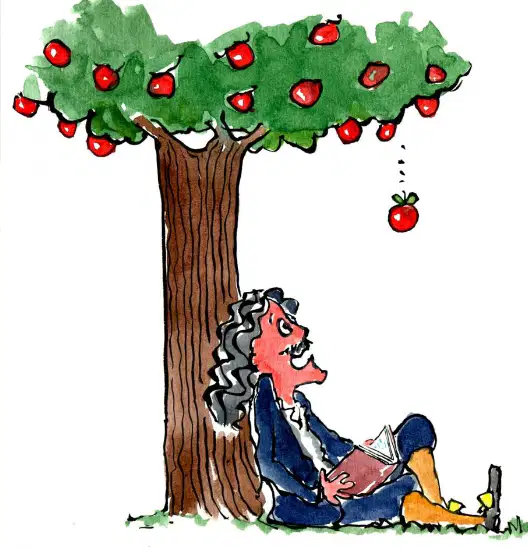
Fill in the blank: The observation that an object, when dropped, will fall to the ground each and every time is an example of a _________.
gravitational law
chemical reaction
magnetic force
photosynthesis
What happens to the particles in a solid when it is heated?
They move faster and spread apart
They become larger in size
They stop moving completely
They combine to form new substances
Which of the following best describes a heterogeneous mixture?
The mixture cannot be separated by physical means
The components are evenly distributed
The different parts can be easily seen and separated
The mixture has a uniform appearance

This could be the dot diagram of
Mg
Cl
C
O

This is a correct dot diagram for neon (Ne)
true
false
How many electrons should sodium, atomic number 11, have around its Lewis dot model?
1
2
3
4
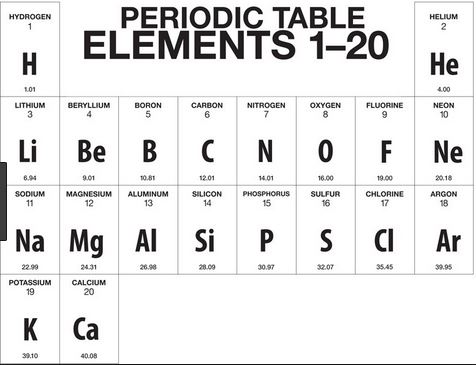
How many valence electrons does Aluminum Have?
1 Valence electron
2 Valence electron
3 Valence electron
4 Valence electron
5 Valence electron
How would you draw a Lewis dot diagram for Magnesium?


Which of the following shows a correct Lewis dot structure?


Which of these is correct?


What is the goal of the Lewis Dot Structure?
To determine the electron position.
To show the element's valence electrons & bonding capabilities.
To find the atomic mass of an element.
To search for the number of electrons in an individual atom.
How many valence electrons should Lithium have in its Lewis dot model?
1
2
3
4
How many valence electrons should Oxygen have in its Lewis dot model?
5
6
7
8
How many valence electrons should Magnesium have in its Lewis dot model?
1
2
3
4

This is a correct dot diagram for nitrogen (N)
true
false

This is a correct dot diagram for carbon (C)
true
false
Which of these is correct?


How many electrons should Boron have around its Lewis dot model?
1
2
3
4


What's a valence electron?
electrons in the second orbital
electrons in the outermost shell of an atom
the atomic number
electrons in the first energy level

This Bohr diagram shows 3 orbits (shells) with electrons. To which row of the Periodic Table does it belong?
1
2
3
4

Which row of the Periodic Table must this element come from?
1
2
3
4

How many electrons total?
5
6
7
8

How many valence electrons?
2
3
4
5

Which period is this element in?
1
2
3
4


Which element would be in group 16?
V
W
X
Y
Z

Which element would be in group 2?
V
W
X
Y
Z
This could be the dot diagram of
Mg
Cl
C
O


How many valence (outer) electrons does an Oxygen atom have?
2
6
8
16
A __________ is a subatomic particle with a negative charge.
proton
neutron
electron
nucleus

___________ simplify the Bohr Model by showing only the outer valence electrons used for bonding.
Lewis Dot Diagrams
Bohr Models
Electron Clouds
Periodic Tables

Name this element.
boron
sodium
magnesium
lithium
beryllium
What are the vertical columns on the periodic table called?
Groups
Periods
Elements
Valence electrons
Which group of elements have one valence electron(s)?
Group 13
Group 2
Group 18
Group 1
Which group of elements are the most reactive metals?
Group 2
Group 1
Group 13
Group 18
Which group of elements are the most reactive nonmetals?
Group 2
Group 1
Group 18
Group 17
Which group of elements are nonreactive due to already being chemically stable?
Group 17
Group 1
Group 2
Group 18
What are the horizontal rows on the periodic table called?
Valence electrons
Elements
Periods
Groups
Which classification of elements are shiny, silvery solids and good conductors of heat and electricity?
Transition metals
Metalloids
Nonmetals
Metals
Which classification of elements are gases or dull brittle solids and poor conductors?
Transition metals
Metals
Nonmetals
Metalloids
Which classification of elements are solids, semi-conductors, and have physical properties like metals and chemical properties like nonmetals?
Transition metals
Metalloids
Nonmetals
Metals
Match the following group names:
Group 1
Alkali metals
Group 2
Alkaline earth metals
Group 3
Rare earth metals
Group 17
Halogens
Group 18
Noble gases
Match the following group names
Group 13
Boron group
Group 14
Carbon group
Group 15
Nitrogen group
Group16
Oxygen group
Groups 3-12
Transition metals
Label the following periodic table
metals
nonmetals
matalloids
transition metals
shiny, silvery solids
good conductors of heat and electricity
malleable and ductile
located ot the left of the metalloids
gases, or dull brittle solids
poor conductors
right of the metalloids
solids
semi-conductors
physcial properties like metals
chemical properties like nonmetals
What is a Bohr Model
diagrams for funsies
simple diagrams that show the atomic structure of an atom
diagrams that show where it is at on the periodic table
not the answer
Match the following to the correct step when drawing a Bohr Model
Determine the number of p+ by the element's atomic #
1
Determine the number of n0 by subtracting mass # - atomic #
2
Place the p+ & n0 in the nucleus
3
Use the period number on the periodic table to determine the number of energy levels in the electron cloud
4
Put the electrons on each level, filling from inside out
5
All elements in the same group have the same number of valence electrons
Yes
No
How many valence electrons does group 2 have?
1
2
3
12
How many valence electrons does group 13 have?
1
2
3
12

