
 Worksheets
24/25 Final Gen 8 Sci Final
Total questions: 100
Worksheet time: 50mins
Name
Class
Date
1.
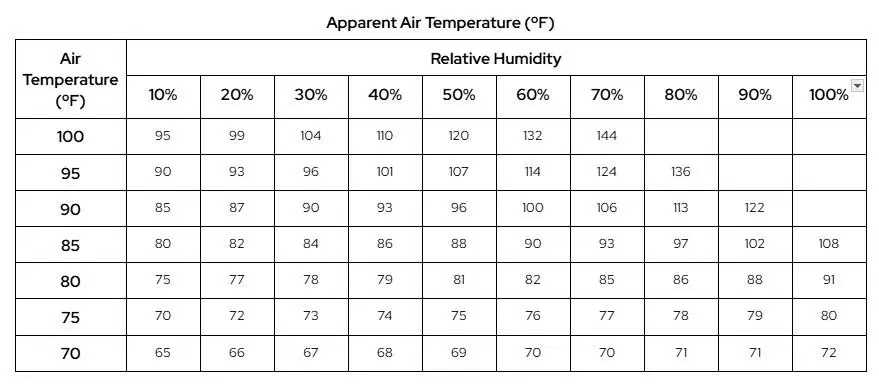
The data table below shows the apparent air temperature in degrees Fahrenheit (ºF). Apparent air temperature is how hot the air feels at different air temperatures and different relative humidities. If the air temperature is 90ºF and the relative humidity is 70ºF, the the apparent air temperature is
a)
20ºF
b)
71ºF
c)
106ºF
d)
113ºF
2.
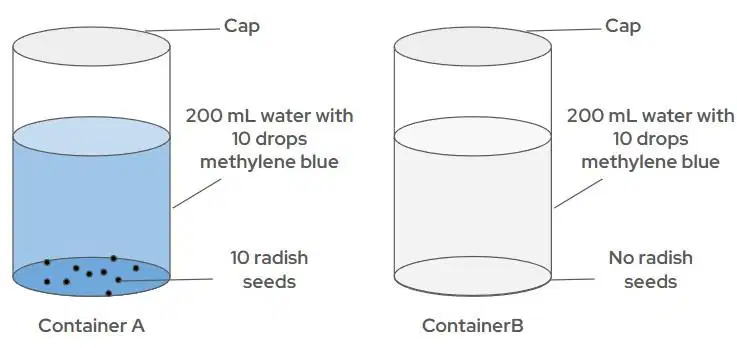
A student set up the experiment shown below to determine if radish seeds take in oxygen as they germinate. Methylene blue is a chemical that is blue when oxygen is present, but is colorless when oxygen is not present. Containers A and B each contained 200 mL of water and 10 drops of methylene blue. ten radish seeds were added to container A. Container B had no radish seeds. The purpose of container B in this experiment is to ...
a)
serve as the control container
b)
serve as the experimental container
c)
show that seeds do not give off oxygen
d)
show that seeds do not give off carbon dioxide
3.
Which statement is an inference?
a)
A thermometer shows that the air temperature is 56ºF
b)
A mineral sample of galena produced a gray-black streak when tested
c)
Based on previous data, ten hurricanes may occur in the year 2033
d)
A weather vane indicates the wind is coming from the west
4.
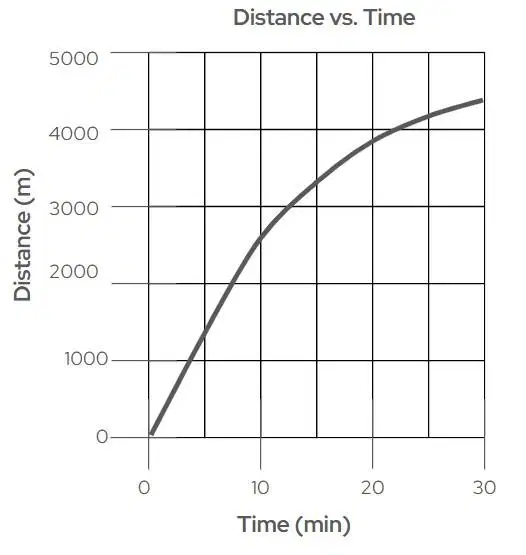
The graph below shows a runner's distance from the starting line during a 30 minute race. Distance was measured in meters (m). Time was measured in minutes (min). During which time interval was the runner moving at the greatest average speed?
a)
0-5 minutes
b)
10-15 minutes
c)
15-20 minutes
d)
25-30 minutes
5.
Which human organ system produces most of the hormones that regulate body functions?
a)
digestive
b)
nervous
c)
muscular
d)
endocrine
6.
The fur of the snowshoe rabbit changes to a lighter color in the winter. This allows the rabbit to blend in with its surroundings. This change is an example of ...
a)
extinction
b)
competition
c)
biological adaptation
d)
ecological succession
7.
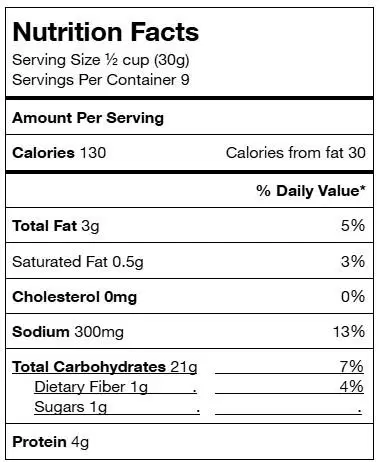
The label below shows the nutrition facts for a snack food. How many grams of fat would be consumed if a person ate the entire box of snack food?
a)
3 g
b)
27 g
c)
30 g
d)
65 g
8.
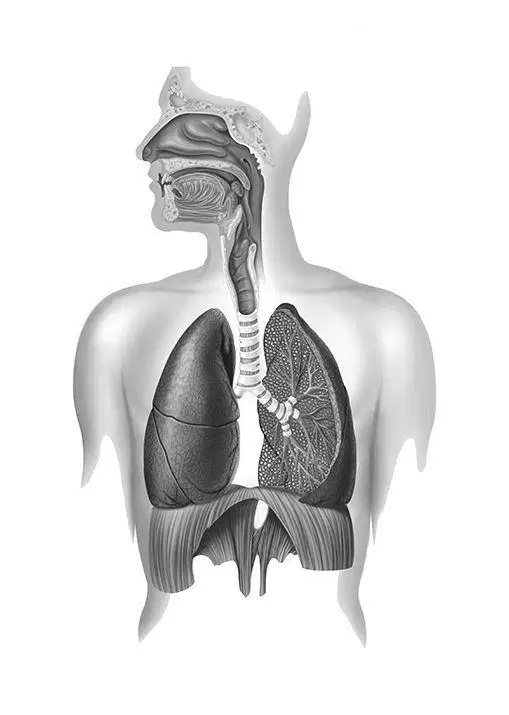
The diagram below shows a human organ system. Which human organ system is shown?
a)
nervous
b)
circulatory
c)
digestive
d)
respiratory
9.
In living things, traits are passed on from one generation to the next by the transfer of ...
a)
blood
b)
minerals
c)
Calories
d)
DNA
10.
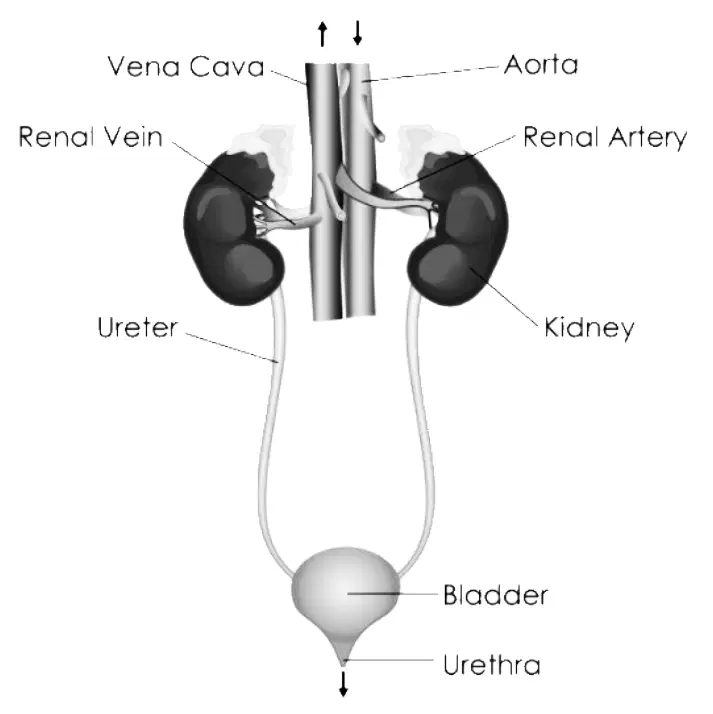
The diagram below shows part of the human excretory system. The structures shown are primarily involved in ...
a)
transporting blood
b)
producing sex cells
c)
removing wastes
d)
breaking down food
11.
Which health condition is an infectious disease?
a)
pneumonia caused by microgorganisms
b)
heart problem caused by a high-fat diet
c)
lung cancer caused by smoking
d)
eye damage caused by ultraviolet light
12.
A structure that carries a single unit of hereditary information is a ...
a)
gene
b)
tissue
c)
sex cell
d)
pedigree chart
13.
Which pair of terms describes the usual location for fertilization and the first stages of development in human reproduction?
a)
external fertilization and external development
b)
external fertilization and internal development
c)
internal fertilization and external development
d)
internal fertilization and internal development
14.
Abnormal cell division in humans may result in ...
a)
Cancer
b)
Fertilization
c)
Asexual reproduction
d)
Dynamic equilibrium
15.
Which process involves choosing certain organisms to reproduce with one another in order to pass on specific, desirable traits to their offspring?
a)
selective breeding
b)
asexual reproduction
c)
resource acquisition
d)
natural selection
16.
During which process do cells use oxygen to release stored energy?
a)
photosynthesis
b)
respiration
c)
circulation
d)
digestion
17.
The basic life functions of an organism are carried on by ...
a)
cells
b)
nutrients
c)
atoms
d)
hormones
18.
The sum of all chemical reactions that take place within an organism is known as ...
a)
evolution
b)
metabolism
c)
circulation
d)
reproduction
19.
Which factor would most likely limit the number of mice living in an area?
a)
plentiful resources
b)
stable climate
c)
more predators
d)
less competition
20.
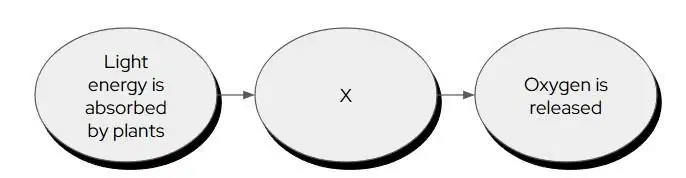
The flowchart below represents the process of photosynthesis. One step in the process is labeled X. Which activity occurs at X?
a)
Plant area eaten by animals for food
b)
Carbon dioxide and water are used to make sugar
c)
Plants release water into the soil
d)
Animals breathe out carbon dioxide
21.
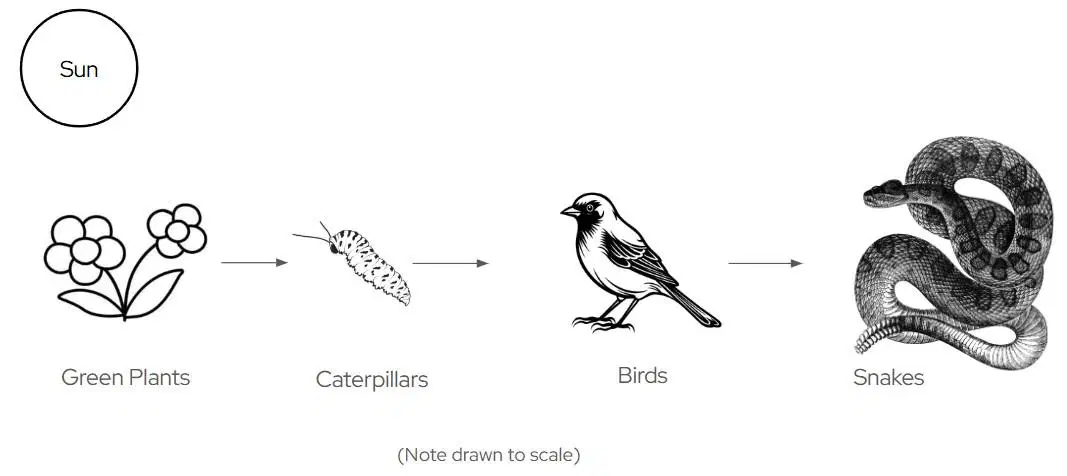
The diagram below shows a food chain. Which organisms in this food chain are herbivores?
a)
green plants
b)
caterpillars
c)
birds
d)
snakes
22.
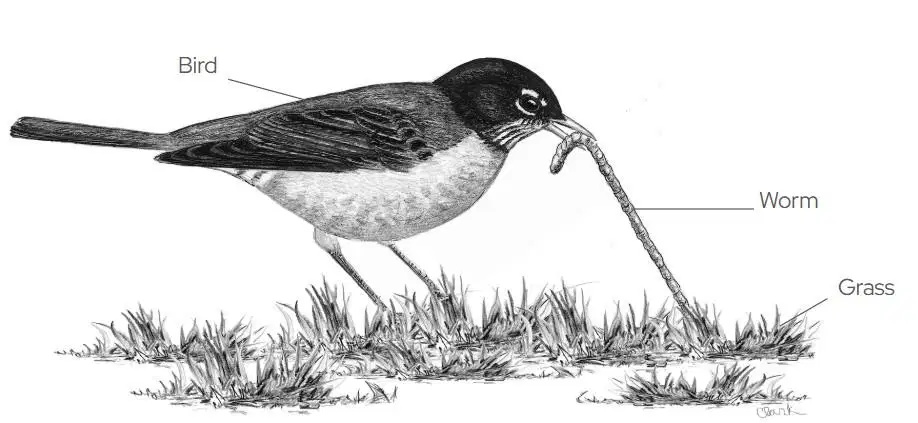
The diagram below shows several different organisms found in an area. The worms in the diagram represent ...
a)
a community
b)
an ecosystem
c)
a habitat
d)
a population
23.
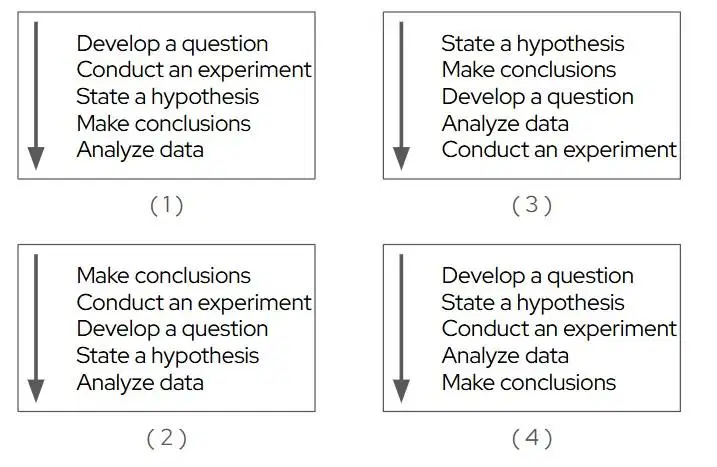
A student is trying to determine if a certain beetle will help control the population of a harmful plant species. Which sequence of steps would be best suited for this investigation?
a)
1
b)
2
c)
3
d)
4
24.
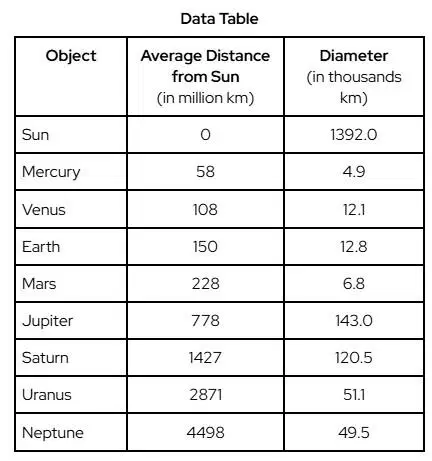
The data table below shows some data related to the Sun and the planets in our solar system. The distance between the Sun and Saturn is approximately six times the distance between the Sun and which other planet?
a)
Earth
b)
Jupiter
c)
Mars
d)
Venus
25.
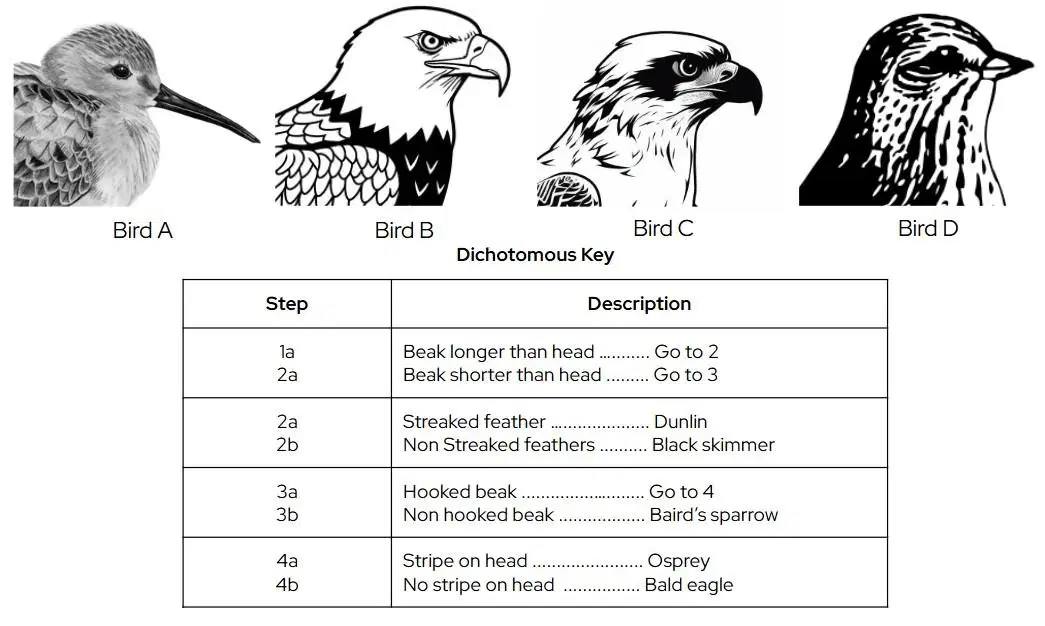
Based on the dichotomous key, which bird is Baird's sparrow?
a)
A
b)
B
c)
C
d)
D
26.
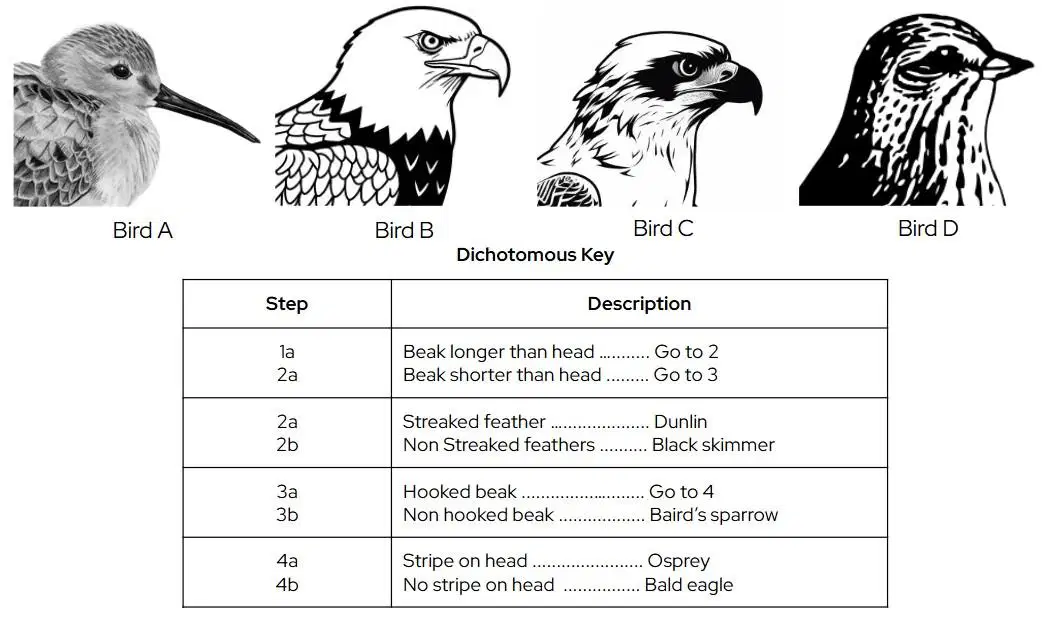
Which characteristic could best be used to distinguish between birds B and C?
a)
shape of eye
b)
beak length
c)
stripe on head
d)
beak shape
27.
What eventually happens to a species when the environment changes and the organisms do not adapt?
a)
classification
b)
development
c)
extinction
d)
regulation
28.
Which sequence represents the correct levels of organization for multicellular organisms?
a)
cell → tissue →organ →organ system
b)
tissue →organ →cell →organ system
c)
organ system →organ →cell →tissue
d)
cell →organ →tissue →organ system
29.
In which part of a plant cell does photosynthesis occur?
a)
nucleus
b)
chloroplast
c)
cell membrane
d)
cell wall
30.
Humans are protected from some infections by specialized cells which produce chemicals that ...
a)
destroy microbes
b)
recycle nutrients
c)
allow locomotion
d)
coordinate movement
31.
Which human body systems work directly together to allow locomotion?
a)
circulatory, excretory, and respiratory
b)
circulatory, endocrine, and reproductive
c)
skeletal, muscular, and nervous
d)
skeletal, digestive, and respiratory
32.
A dialysis machine can be used to remove waste from a patient's blood. Which human body system works in a similar way?
a)
reproductive
b)
digestive
c)
excretory
d)
endocrine
33.
Which gas is transported by the circulatory system in humans and is used by cells during respiration to release energy stored in food?
a)
Carbon dioxide
b)
Nitrogen
c)
Hydrogen
d)
Oxygen
34.
A cell's chromosomes contain ...
a)
Genes
b)
Chlorophyll
c)
Sperm
d)
Eggs
35.
The human respiratory system is responsible for removing ...
a)
fat from cells
b)
carbon dioxide from blood
c)
hormones from glands
d)
nutrients from food
36.
Which process is a cause of variation in a species?
a)
metamorphosis
b)
cellular respiration
c)
sexual reproduction
d)
regulation
37.
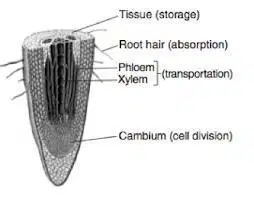
The diagram below shows a magnified view of a cross section of a plant root tip. Four parts of the root and the process that each performs are shown. Which process is directly responsible for root growth in plants?
a)
storage
b)
absorption
c)
transportation
d)
cell division
38.
Which pathway do most nutrients take after a person takes a bite of food?
a)
digestive system → circulatory system → body cells
b)
circulatory system → body cells → digestive system
c)
digestive system → body cells → circulatory system
d)
circulatory system → digestive system → body cells
39.
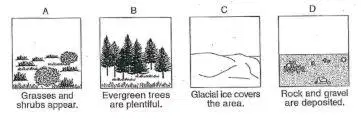
A glacier in Alaska has melted back a distance of 100 kilometers over the last 200 years. Four stages in this process are shown in diagrams A, B, C, and D. In which order should the diagrams be placed to represent the ecological succession that has taken place in the area?
a)
C→D→A→B
b)
C→D→B→A
c)
D→C→B→A
d)
D→C→A→B
40.
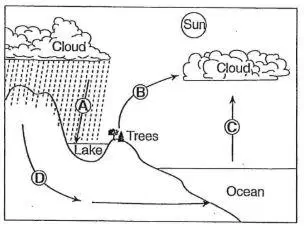
In the diagram, letters A,B,C, and D represent four different processes that occur during the water cycle. During which process is water release from land organisms into the atmosphere?
a)
A
b)
B
c)
C
d)
D
41.
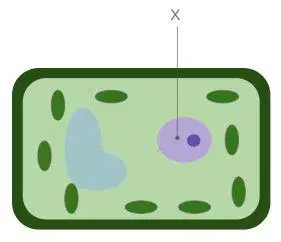
The diagram below represents a plant. Letter X represents a structure in the cell. Which cell structure is represented by X?
a)
Nucleus
b)
Cytoplasm
c)
Cell Wall
d)
Cell membrane
42.
A major function of plant's roots is to
a)
produce flowers
b)
release oxygen
c)
transport carbon dioxide
d)
take in water
43.
Warm air rising in the atmosphere is an example of heat being transferred by...
a)
absorption
b)
conduction
c)
convection
d)
radiation
44.
Which process releases energy from digested food?
a)
photosynthesis
b)
cellular respiration
c)
vitamin production
d)
fertilization
45.
Herbivores obtain most of their energy by
a)
consuming animals
b)
consuming plants
c)
producing sugar
d)
absorbing sunlight
46.
Which process results in the formation of a new cell with a full set of chromosomes?
a)
respiration
b)
digestion
c)
fertilization
d)
evolution
47.
If an ecosystem's balance is disturbed by a volcanic eruption, what will most likely occur?
a)
The ecosystem will not change from it original state
b)
The ecosystem will eventually become balanced again
c)
The consumers in the ecosystem will begin to consume carbon dioxide
d)
The consumers in the ecosystem will begin to produce more oxygen
48.
An organism that contains chloroplasts is able to produce food by the process of ...
a)
photosynthesis
b)
reproduction
c)
respiration
d)
digestion
49.
The transfer of a section of DNA from one organism into the DNA of another organism by scientists is called ...
a)
selective breeding
b)
genetic engineering
c)
natural selection
d)
internal fertilization
50.
A green plant absorbs light. A frog eats flies. These are both examples of how organisms ...
a)
obtain energy
b)
escape predators
c)
produce offspring
d)
excrete waste
51.
Abnormal cell division may result in ...
a)
disease prevention
b)
tissue repair
c)
metamorphosis
d)
cancer
52.
A main function of a plant's seed is to ...
a)
store food to be used during early development
b)
attract pollen to be used during development
c)
take in light energy to be used during photosynthesis
d)
produce chlorophyll to be used during photosynthesis
53.
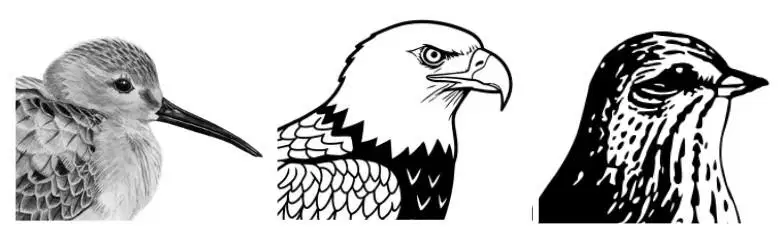
The drawings below represent three different birds. The beak shape makes it easy for each bird to obtain food in a different way. The differences in beak shape are examples of ...
a)
camouflage
b)
competition
c)
dynamic equilibrium
d)
biological adaptation
54.
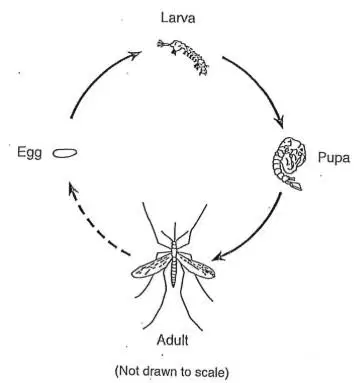
The diagram below represents the stages of development in a mosquito. Which process is represented by the four stages in this diagram?
a)
fertilization
b)
metabolism
c)
metamorphosis
d)
succession
55.
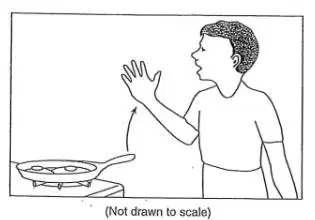
The diagram below represents a person cooking eggs on a stove. The person has touched the hot frying pan and pulled his hand away. Which title is the best one for the diagram?
a)
A Human Requires Oxygen to Survive
b)
Metabolism is Influenced by Diet
c)
All Living Things Require Energy
d)
A Human Responds to a Stimulus
56.
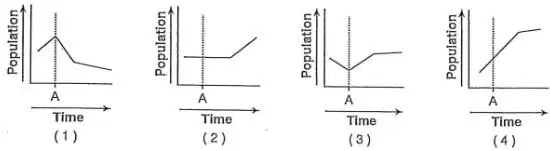
Which graph shows what most likely would happen to the population of a certain animal if a new predator were introduced at time A?
a)
1
b)
2
c)
3
d)
4
57.
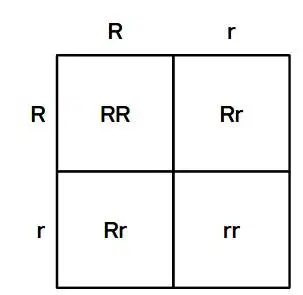
A Punnett square is shown below. The dominant trait is represented by R. The recessive trait is represented by r. What percentage of the offspring will most likely show the dominant trait?
a)
25%
b)
50%
c)
75%
d)
100%
58.
A fox with thick fur would have a survival advantage over other foxes if...
a)
there is more competition for food in the fox population
b)
the air temperature significantly decreases in winter
c)
a drought occurs, limiting the amount of water available
d)
a new disease appears that infects the foxes
59.
A student viewing a cell with a microscope observes a cell wall, a cell membrane, and a nucleus. The presence of these structures indicates that the student is looking at a cell from a ...
a)
rabbit
b)
worm
c)
carrot
d)
fly
60.
Dogs and cats are animals that have many similar body structures but do not mate with each other. These two animals are classified in ..
a)
the same kingdom and the same species
b)
the same kingdom, but different speceis
c)
difference kingdoms, but the same species
d)
different kingdoms and different species
61.
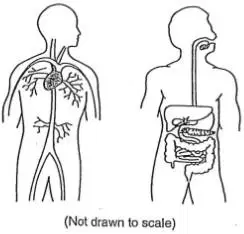
The diagrams below represent two systems of the human body. Which tow systems are represented in the diagrams?
a)
endocrine and skeletal
b)
endocrine and respiratory
c)
circulatory and respiratory
d)
circulatory and digestive
62.
Which process is responsible for the growth and repair of human tissue?
a)
evolution
b)
germination
c)
cell division
d)
natural selection
63.
The primary role of the endocrine system is to ...
a)
produce hormones that regulate body functions
b)
form chemicals that destroy microbes
c)
break down good to release nutrients
d)
supply red blood cells to carry oxygen
64.
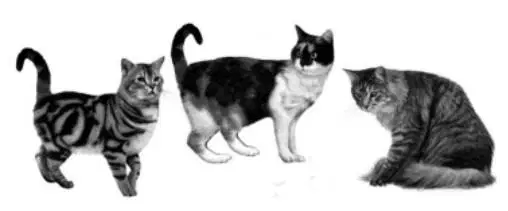
The photograph below shows three cats with differences in their fur length and patterns. These differences are most likely due to ...
a)
Dietary habits
b)
sexual reproduction
c)
habitat destruction
d)
damage from disease
65.
The hereditary material in corn plants can be altered by scientists so the plants produce more corn. Which term identifies this process?
a)
environmental degradation
b)
ecological succession
c)
natural selection
d)
genetic engineering
66.
What is the main factor that prevents the growth of tropical plants in the northern part of the United States?
a)
predators
b)
pollutants
c)
overpopulation
d)
climate
67.
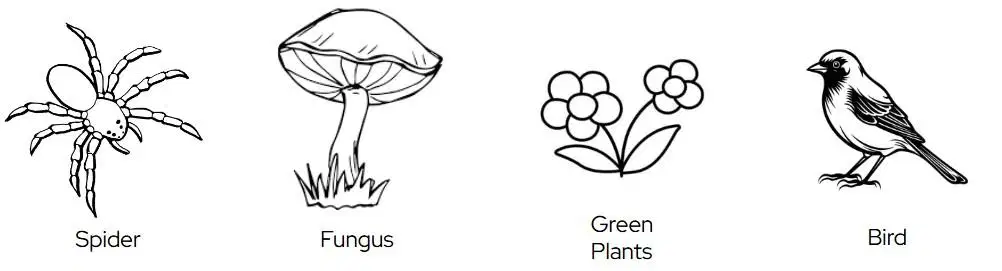
The diagram below represents four organisms. How many of the organisms represented are multicellular?
a)
1
b)
2
c)
3
d)
4
68.
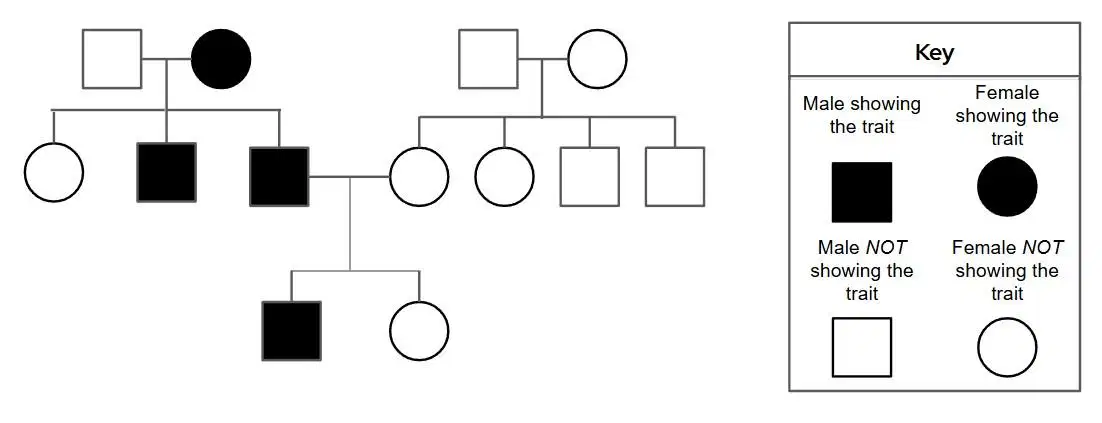
The model represents the transmission of a specific trait passed on from parents to their offspring. How many males in this model show the trait?
a)
1
b)
2
c)
3
d)
4
69.
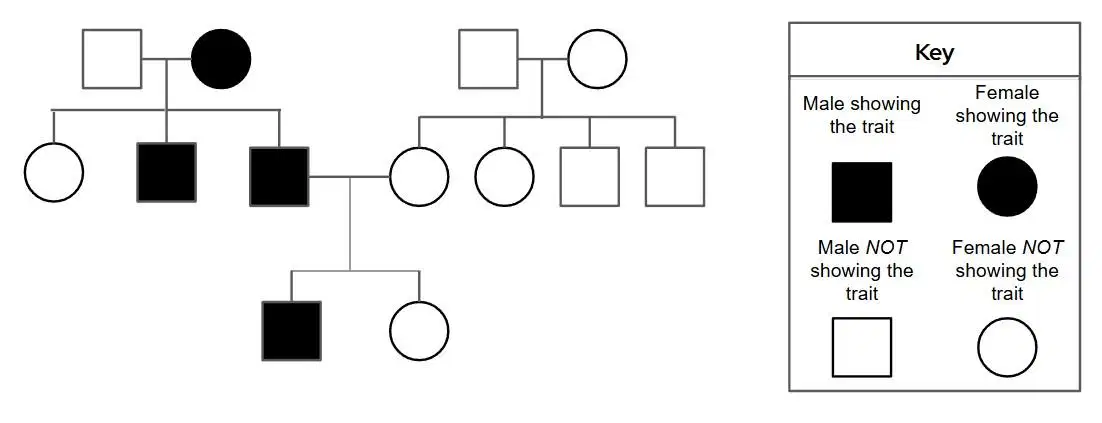
The model represents the transmission of a specific trait passed on from parents to their offspring. Which type of model is shown in the diagram?
a)
food chain
b)
pedigree chart
c)
feedback system
d)
life cycle
70.
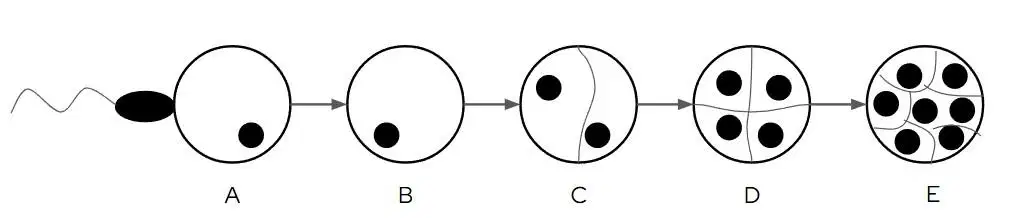
Diagrams A through E represent five stages in a simplified model of sexual reproduction and development. At which stage is fertilization occurring?
a)
A
b)
B
c)
C
d)
E
71.
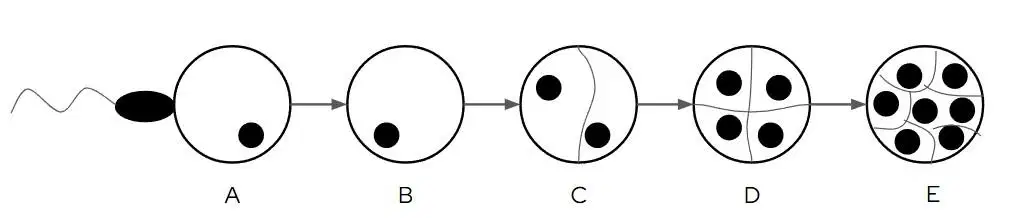
Diagrams A through E represent five stages in a simplified model of sexual reproduction and development. Between which two stages does cell division first occur?
a)
A and B
b)
B and C
c)
C and D
d)
D and E
72.
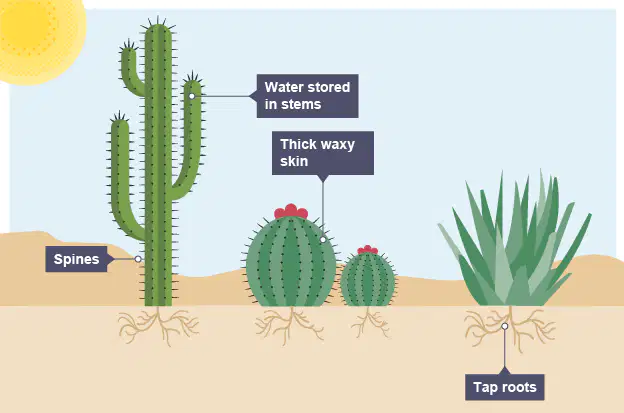
The photograph below shows cactus plants. Which feature helps a cactus plant prevent water loss in a hot, dry desert environment?
a)
green color
b)
flowers
c)
waxy surface
d)
branches
73.
Nutrients enter the bloodstream during the process of ...
a)
locomotion
b)
respiration
c)
elimination
d)
absroption
74.
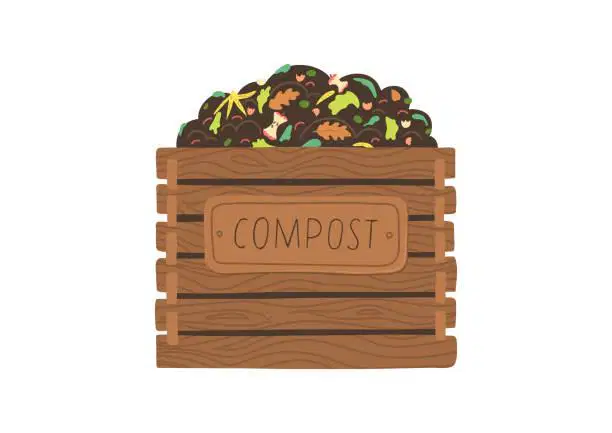
The diagram below represents a pile of decaying plant and animal materials. This process puts nutrients back in the soil. The bacteria and fungi that break down the plant and animal materials are classified as ...
a)
consumers
b)
predators
c)
decomposers
d)
producers
75.
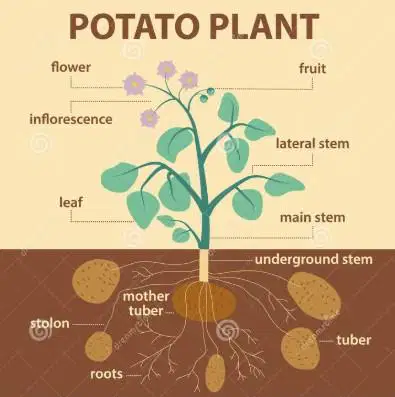
The diagram represents a potato plant. Several plant structures are labeled. What is the primary structure in the potato plant that converts lighter energy into chemical energy?
a)
leaves
b)
flower
c)
roots
d)
tuber
76.
Which type of organism converts wastes and dead materials into nutrients that can be used by plants?
a)
carnivore
b)
herbivore
c)
decomposer
d)
producer
77.
All of the different organisms interacting in a pond make up ...
a)
a community
b)
the water cycle
c)
a population
d)
the habitat
78.
Which factor is most likely to cause the number of rabbits living in an area to increase?
a)
less water
b)
fewer predators
c)
lack of shelter
d)
limited food
79.
One positive effect of recycling aluminum cans to manufacture new beverage containers is ...
a)
conserving Earth's resources
b)
creating acid rain
c)
warming Earth's atmosphere
d)
increasing the ozone
80.
A puggle is a type of dog first produced by mating two other types of dos, a pug and a beagle. This process is an example of ...
a)
asexual reproduction
b)
genetic engineering
c)
selective breeding
d)
natural selection
81.
The information below describes a relationship between a type of fish known as a goby and a species of blind shrimp.
The shrimp digs a hole that provides shelter for itself and the goby fish. The goby fish lives at the opening to the hole and watches for predators. When a predator swims by, both organisms quickly move farther into the hole for safety.
The relationship between these two organisms is best described as ...
a)
Competetitive
b)
Harmful
c)
Beneficial
d)
Predatory
82.
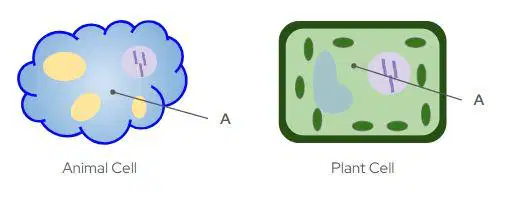
The diagram below represent two cells. Letter A represents a part of each cell. Which parts of the cell is labeled A in both diagrams?
a)
cell wall
b)
chromosome
c)
cytoplasm
d)
nucleus
83.
A group of organs working together to perform a certain function is called ...
a)
a system
b)
a tissue
c)
an organism
d)
a cell
84.
which structure's main function is to produce food (sugar) in a plant?
a)
flower
b)
leaf
c)
root
d)
seed
85.
Competition within a pack of wolves may increase if there is an increase in the ...
a)
amount of food available
b)
amount of oxygen available
c)
size of their population
d)
size of the area they inhabit
86.
Which sequence lists the hereditary material found inside cells from the smallest unit to the largest unit?
a)
chromosome→gene→nucleus
b)
chromosome→nucleus→gene
c)
gene→nucleus→chromosome
d)
gene→chromosome→nucleus
87.
A student added some sugar to a glass of water, but it did not dissolve quickly. What could the student do to increase the rate at which the sugar dissolves in the water?
a)
freeze the water
b)
heat the water
c)
add salt to the water
d)
filter the water
88.
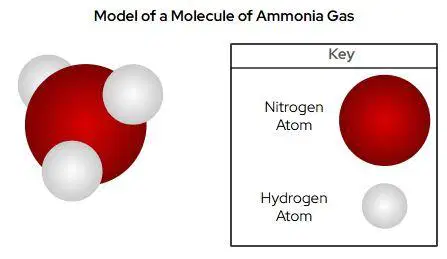
The model below represents a molecule of ammonia gas. Ammonia gas would be classified as ...
a)
a compound
b)
a mixture
c)
an element
d)
an atom
89.
The sum of all chemical reactions in an organism is called ...
a)
metabolism
b)
exercise
c)
adaptation
d)
respiration
90.
Organisms are classified as producers if they are able to ...
a)
remove oxygen from the air
b)
remove microbes from the soil
c)
make their own food
d)
make carbon dioxide
91.
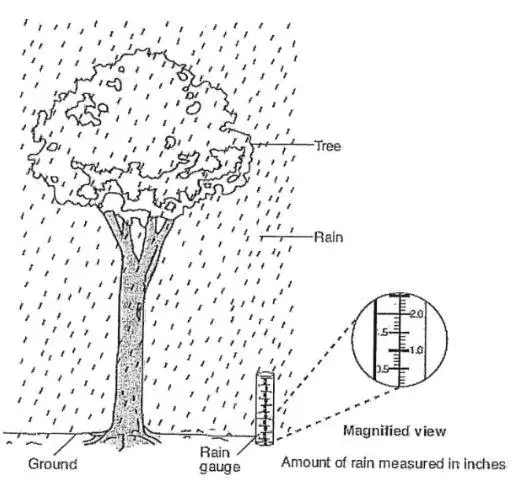
The diagram below represents a tree, rain, and a rain gauge as viewed by a student looking out of a classroom window. a magnified view of the rain gauge is shown. Is the following statement an observation or an inference? In two more hours, a total of 3.0 inches of rain will have fallen.
a)
Observation
b)
Inference
92.
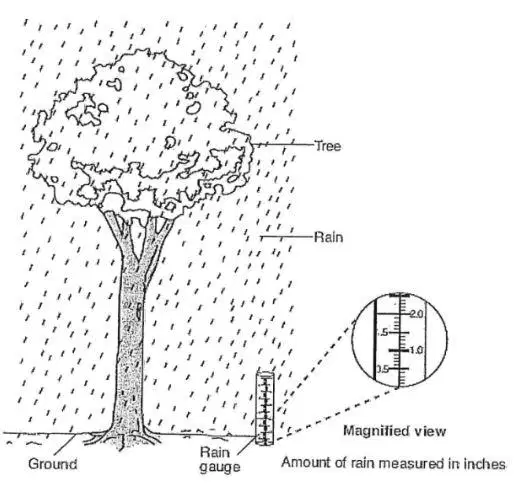
The diagram below represents a tree, rain, and a rain gauge as viewed by a student looking out of a classroom window. a magnified view of the rain gauge is shown. Is the following statement an observation or an inference? The rain is falling on the tree and ground.
a)
Observation
b)
Inference
93.
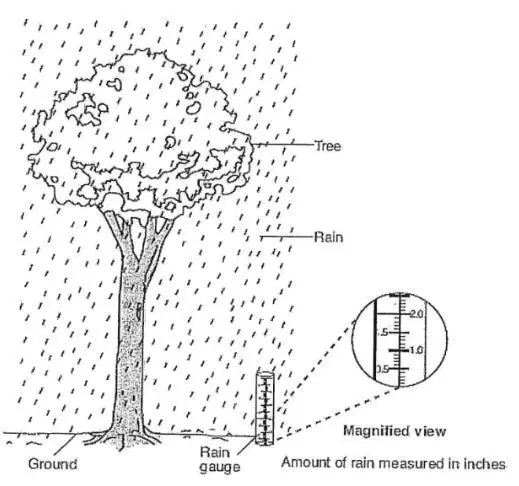
The diagram below represents a tree, rain, and a rain gauge as viewed by a student looking out of a classroom window. a magnified view of the rain gauge is shown. Is the following statement an observation or an inference? The rain gauge shows 2.0 inches.
a)
Observation
b)
Inference
94.
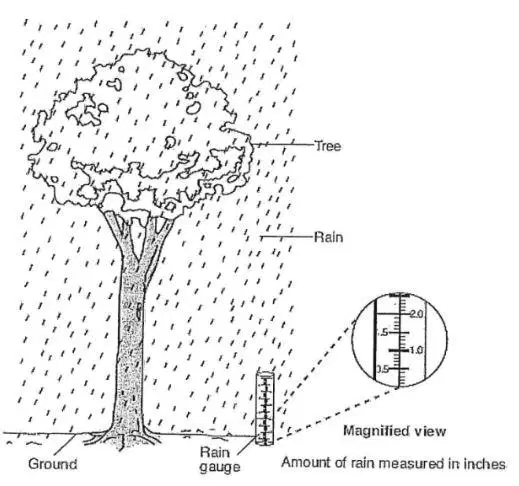
The diagram below represents a tree, rain, and a rain gauge as viewed by a student looking out of a classroom window. a magnified view of the rain gauge is shown. Is the following statement an observation or an inference? The air temperature is above freezing.
a)
Observation
b)
Inference
95.
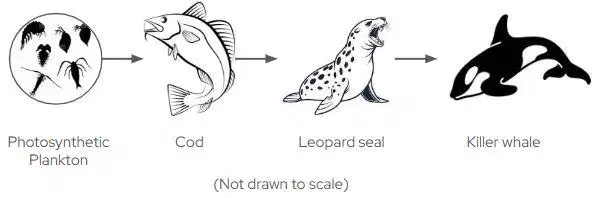
The diagram below shows a food chain. What do the arrows in the diagram represent?
a)
flow of energy
b)
one community replacing another
c)
life cycles stages
d)
renewable resources
96.
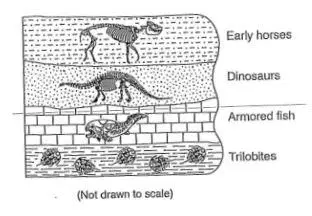
The diagram below represents a cross section of four sedimentary rock layers containing fossil remains. The layers have not been overturned. Which type of fossil is found in the most recently formed sedimentary rock layer?
a)
early horses
b)
dinosaurs
c)
armored fish
d)
trilobites
97.
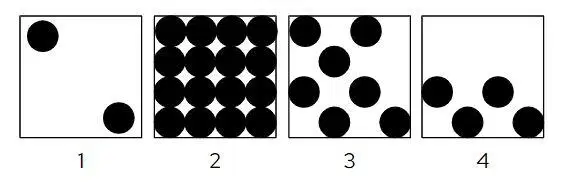
Which diagram best represents molecules of matter in the solid phase?
a)
1
b)
2
c)
3
d)
4
98.
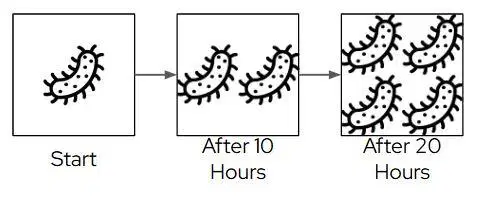
The series of diagrams below shows a single-celled organism and its offspring that resulted from cell division over a period of 20 hours. if the organism continue to reproduce asexually at this same rate, how many organisms will there be after 30 hours?
a)
6
b)
8
c)
7
d)
16
99.
A student examined a rock sample and described it as having particles of various colors that were 1 millimeter to 12 millimeters in size. The student was making ...
a)
an inference
b)
a prediction
c)
a hypothesis
d)
an observation
100.
Which structure is found in a plant cell but not in an animal cell.
a)
cell wall
b)
cytoplasm
c)
cell membrane
d)
nucleus
100 %

