wayground logo

Free Printable Worksheets

Font size

S
M
L
XL
Worksheets

Honors Final Exam Review

Total questions: 105

Worksheet time: 2hrs 47mins

Name
Class
Date
1.

Which has more organelles?

a)

Eukaryote

b)

Prokaryote

2.
Bacteria are a type of...
a)
Prokaryote
b)
Eukaryote
c)
both
3.

True or False: Both prokaryotes and eukaryotes have ribosomes and a plasma membrane.

a)

True

b)

False

4.

What type of cell is shown?

a)

Plant cell

b)

Prokaryotic cell

c)

Bacteria cell

d)

Eukaryotic cell

5.
How would light intensity generally affect the rate of photosynthesis?
a)
Increases the rate, up to a point
b)
Increases the rate
c)
Decreases the rate
d)
No relationship to the rate
6.
Why would temperature affect the rate of photosynthesis?
a)
Enzymatic activity is usually temperature dependent
b)
plant cells expand with temp, have greater surface area
c)
More CO2 dissolved in the water
d)
More glucose needed for respiration at higher temperatures
7.
How would the concentration of CO2 in water affect photosynthesis?
a)
The higher the CO2, the greater the rate
b)
The higher the CO2, the lower the rate
c)
CO2 concentration doesn't affect photosynthesis
d)
a greater rate of photosynthesis causes higher CO2 concentrations 
8.
At which distance is the rate of photosynthesis the highest?
a)
10cm
b)
20cm
c)
15cm
d)
12cm
9.
What is the pigment in chloroplasts that performs photosynthesis?
a)
Chlorosynthesis
b)
Chlorophyll
c)
ADP
d)
Electron Transport
10.
What is the correct equation for photosynthesis?
a)
C6H12O+ 6O--> 6CO2 + 6H2O
b)
6CO2 + 6O--> C6H12O + 6H2O
c)
 6CO+ 6O--> 6H2O + C6H12O6
d)
6CO2 + 6H2O  -->  6O+ C6H12O6
11.
Chlorophyll absorbs _____ and _______ light from the light.
a)
purple and green
b)
red and blue
c)
black and orange
d)
yellow and green
12.

Which organelle is responsible making food (Glucose) using sunlight?

a)

Cell Membrane

b)

Nucleus

c)

Chloroplast

d)

Mitochondria

13.

Which of the following is the word equation for cellular respiration?

a)

glucose + oxygen ---> ATP + carbon dioxide + water

b)

carbon dioxide + water ---> ATP + glucose + oxygen

c)

glucose + water ---> ATP + carbon dioxide + oxygen

d)

glucose + carbon dioxide ---> ATP + oxygen + water

14.
What is cellular respiration?
a)
the breakdown of glucose  to release ATP
b)
the breakdown of glucose to release NADH
c)
the breakdown of glucose to release FADH
d)
the breakdown of glucose to release carbon
15.

Which of the following is a reactant of cellular respiration

a)

Carbon Dioxide

b)

Water

c)

Oxygen

d)

ATP

16.

Which of the following is a product of cellular respiration?

a)

Glucose

b)

Carbon Dioxide

c)

Oxygen

d)

Radiant Energy

17.

Alcoholic Fermentation is different than Lactic Acid Fermentation in that it gives off

a)

ATP

b)

Carbon dioxide

c)

Oxygen

d)

ADP

18.

Yeast go through which type of fermentation to make bread and wine?

a)

Lactic Acid

b)

Alcoholic

19.

One cause of muscle soreness is

a)

the Krebs cycle

b)

glycolysis

c)

alcoholic fermentation

d)

lactic acid fermentation

20.

How many molecules of ATP are made (netted) in Glycolysis?

a)

2

b)

4

c)

6

d)

8

21.

Lactobacillus is a type of bacteria found in yogurt. Which type of fermentation would be responsible to create the yogurt?

a)

Lactic Acid

b)

Alcoholic

22.
During osmosis
a)
water moves from high to low concentration
b)
large or oddly shaped molecules move across a cell membrane
c)
water moves when energy is used
d)
proteins are built
23.
HYPO means...
a)
Low
b)
High
c)
Equal
d)
Fat
24.
ISO means...
a)
Low
b)
A lot
c)
Equal
d)
Mammal
25.
The picture is an example of...
a)
active tranport
b)
passive transport
c)
diffusion
d)
osmosis
26.
Sometimes, energy is required for ____ molecules to go in or out of the cell because they cannot fit into the membrane.
a)
big
b)
small
c)
crunchy
d)
water
27.

Law of Segregation

a)

Genes for different traits are inherited independently of each other

b)

Every organism has two alleles which seperate when gametes are produced.

c)

The way an organism looks and behaves.

28.

Law of Independent Assortment

a)

The way an organism looks and behaves

b)

Genes for different traits are inherited independently of each other

c)

Alleles for a trait are the same

29.

different traits are inherited independently of each other

a)

law of independent assortment

b)

law of segregation

c)

inheritance law

d)

law of gravity

30.

every individual has two alleles of each gene and when gametes are produced, each gamete receives one of these alleles

a)

law of independent assortment

b)

law of segregation

c)

law of gravity

d)

law of inertia

31.

If a dominant allele is present, the trait will always appear in the organism.

a)

Law of Segregation

b)

Law of Dominance

c)

Law of Independent Assortment

32.
T3 - Which of the following genotypes is homozygous recessive?
a)
Tt
b)
tt
c)
TT
d)
T
33.
T3 - What does heterozygous mean?
a)
An organism that has the same alleles for a trait (TT or tt)
b)
An organism that has different alleles for a trait (Tt)
c)
When neither allele is fully dominant; offspring is a mixture of both
d)
the different forms of a trait (hair color--> brown, blonde, red
34.
Phenotype refers to the ______________________ of an individual.
a)
genetic makeup
b)
actual physical appearance
c)
recessive alleles
35.
An allele is
a)
another word for a gene
b)
a homozygous genotype
c)
a heterozygous genotype
d)
one of several possible forms of a gene
36.

Which genotype do females have?

a)

XX

b)

XY

c)

AA

d)

Aa

37.

Who is more likely to inherit and be affected by sex-linked disorders?

a)

Males

b)

Females

c)

Equal chances

38.

What shape on a pedigree represents a female?

a)

Circle

b)

Triangle

c)

Square

d)

Star

39.

What shape on a pedigree represents a male?

a)

Circle

b)

Triangle

c)

Square

d)

Star

40.

If hemophilia is an X-linked recessive disorder, what genotype would a carrier female have?

a)

XH XH

b)

XH Xh

c)

Xh Xh

41.

If hemophilia is an X-linked recessive disorder, what genotype would a normal male have?

a)

XH XH

b)

XH Y

c)

Xh Xh

d)

Xh Y

42.

If hemophilia is an X-linked recessive disorder, what genotype would a female with hemophilia have?

a)

XH XH

b)

XH Xh

c)

Xh Xh

d)

Xh Y

43.

In a sex-linked dominant trait, which of the following would NOT have the trait?

a)

XH Xh

b)

Xh Xh

c)

XH Y

d)

XH XH

44.
_________ is the fact that organisms change over time and are related through common ancestors. 
a)
Theory of Natural Selection
b)
Theory of Need
c)
Theory of Use and Disuse
d)
Theory of Evolution
45.
_______ believed that organisms develop traits needed for survival and that traits that were unused would become weaker and gradually disappear. 
a)
Darwin
b)
Lamarck
c)
Mendel
d)
Watson
46.
____________ believed that those organisms that were best suited for their environment would survive and pass on their beneficial traits to their offspring. 
a)
Darwin
b)
Lamarck
c)
Watson
d)
Mendel
47.
Similar structures that are found in different species are called _____________. 
a)
Homologous Structures
b)
Vestigial Structures 
c)
Identical Structures
d)
Necessary Structures
48.
A structure or organ that seems to serve no purpose, but resembles structures with functional roles in other organisms are called ____________. 
a)
Necessary Structures
b)
Homologous Structures
c)
Vestigial Structures 
d)
Ancestry Structures
49.
Looking at the similarities in development between different organisms would be an example of which piece of evidence?
a)
Palentology
b)
Embryology
c)
Cytology
d)
Structure Analysis
50.
When analyzing fossils, where would the oldest fossils be found?
a)
Closest to the surface
b)
The lowest level 
c)
In the middle
51.

Domesticated dogs are an example of:

a)

natural selection

b)

artificial selection

c)

darwin selection

d)

lamarck selection

52.

Darwin's ship?

a)

HMS Finch

b)

HMS Beagle

53.

Charles Lyell's idea that the same natural laws and processes that shape the Earth today have shaped Earth in the past, and apply everywhere in the universe:

a)

Gradualism

b)

Uniformitarianism

c)

Theory of Evolution

d)

Natural Selection

54.

James Hutton's idea that changes to the Earth are slow and continuous in nature and happens over deep time (as opposed to in rapid, catastrophic steps):

a)

Gradualism

b)

Uniformitarianism

c)

Theory of Evolution

d)

Natural Selection

55.

According to the Theory of Inheritance of Acquired Characteristics, the development or loss of characteristics is related to that characteristic's

a)

use or disuse

b)

mutation

c)

selection

d)

creation

56.
Which of the following examples of RIMs depends on the timing of breeding to be compatible between mates? 
a)
Mechanical
b)
Temporal
c)
Behavioral
d)
Gametic
57.
Which of the following depends on reproductive structures being compatible between partners in breeding? 
a)
Mechanical
b)
Gametic
c)
Behavioral
d)
Temporal
58.
Which of the following RIMs depends on either songs or courtship dances of birds, or signaling between insects, or any other kind of learned or instinctual compatibility between mates?
a)
Mechanical
b)
Temporal
c)
Gametic
d)
Behaviroal
59.
A flash flood carried a raft of Amazon ants away from their original population. There is enough distance between the two groups, that they will never meet in nature again. What type of reproductive barrier is this?
a)
behavioral isolation
b)
temporal isolation 
c)
gametic isolation
d)
geographic isolation 
60.

Which mechanism of evolution refers to the changes in allele frequencies within a single population?

a)

Natural selection

b)

Genetic drift

c)

Mutations

d)

Gene flow

61.

Which of the following is an example of the bottleneck effect?

a)

A population of organisms experiencing a dramatic reduction in size, resulting in a change in allele frequency

b)

A small subgroup of a population migrating to a new area and changing allele frequencies

c)

Changes in the genetic material of a cell leading to new alleles in a population

d)

The movement of alleles from one population to another

62.

What is gene flow?

a)

The movement of alleles from one population to another

b)

The process of genetic material changing in a cell

c)

A random change in allele frequency caused by chance occurrences

d)

The change in allele frequencies following a reduction in population size

63.

What is the founder effect?

a)

A change in allele frequencies as a result of the migration of a small subgroup of a population

b)

A random change in allele frequency caused by chance occurrences

c)

The change in allele frequencies following a reduction in population size

d)

The process of genetic material changing in a cell

64.

Which of the following is an example of the founder effect?

a)

A small group of butterflies migrating to a new area and creating a new population

b)

A population of organisms experiencing a dramatic reduction in size, resulting in a change in allele frequency

c)

Changes in the genetic material of a cell leading to new alleles in a population

d)

The movement of alleles from one population to another

65.

Which mechanism of evolution involves changes in allele frequencies caused by the movement of alleles from one population to another?

a)

Natural selection

b)

Genetic drift

c)

Mutations

d)

Gene flow

66.

What type of selection is depicted in the picture?

a)

stabilizing

b)

directional

c)

disruptive

67.
What type of selection?
a)
Directional 
b)
Stabilizing
c)
Disruptive
68.
Which of the three graphs shows stabilizing selection?
a)
A
b)
B
c)
C
69.
Which of the three graphs shows disruptive selection?
a)
A
b)
B
c)
C
70.
Human babies don't do well if they are born too small. If they are too big complications can occur during birth. Baby size should then be selected for by which method?
a)
stabilizing
b)
directional
c)
disruptive
d)
Beyonce is having twins
71.
Body parts that function like each other, but are different in structure.
a)
embryos
b)
homologous structures
c)
analogous structures
d)
vestigial structures
72.
What is it called when humans decide which traits of an organism are the most desirable and only allow those organisms with the specific, desired traits to breed.
a)
biological evolution
b)
evolution by natural selection
c)
artificial selection
d)
inbreeding
73.

The three species pictured do not share a common ancestor, yet have evolved to have a similar anatomy and life style. This is an example of ?

a)

Homologous Structures

b)

Divergent Evolution

c)

Vestigial Organs

d)

Convergent Evolution

74.

The three species pictured share a common ancestor and have adapted so that each lives in a different environment. This is an example of

a)

Law of Superposition

b)

Evolutionary Arms Race

c)

Divergent Evolution

d)

Convergent Evolution

75.

Carbon-14 can be use to determine the _______ _______ of a fossil.

a)

Absolute age

b)

Relative age

c)

Vestigial organs

d)

Analogous structures

76.

The yucca moth depends on the small soap weed for food, and the small soap weed is only pollinated by the yucca moth. This is an example of

a)

Evolutionary Arms Race

b)

Convergent Evolution

c)

Coevolution

d)

Adaptive Radiation

77.
Which Hardy-Weinberg equation represents the genotype frequencies in a population?
a)
p + q = 1
b)
p2 + 2pq + q2 = 1
c)
p2 + pq2 + q2 = 1
d)
p + 2pq + q3 = 1
78.
Which Hardy-Weinberg factor represents the frequency of heterozygous individuals in a population?
a)
p2
b)
2pq
c)
q2
d)
p2 + 2pq
79.
In the Hardy-Weinberg Equation, q2 is the frequency of what?
a)
The recessive allele 
b)
the dominant allele
c)
the recessive genotype
d)
the dominant genotype
80.
Mutations are important because they bring about
a)
death of the organism in which they develop
b)
genetic variation needed for a population to evolve
c)
benefits for the individual, not for the population
d)
Hardey-Weinberg equilibrium within a population
81.

In a population of cats, short hair is dominant to long hair. If 16% of a breeder’s cats have long hair, what is the frequency of the dominant allele?

a)

0.16

b)

0.6

c)

0.4

d)

0.36

e)

.48

82.
If 98 out of 200 individuals in a population express the recessive phenotype, what percent of the population would you predict would be heterozygous?
a)
70%
b)
30%
c)
42%
d)
49%
83.
A population of 150 individuals has an allele frequency of 0.3 for the dominant allele (B) and a frequency of 0.7 for the recessive allele (b). Use the Hardy-Weinberg equation to determine freq.(Bb).
a)
0.09
b)
0.42
c)
0.49
d)
0.21
84.
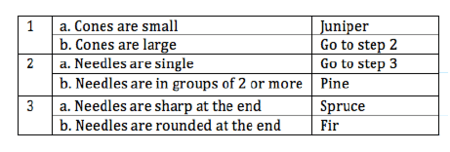
A dichotomous key for trees is provided. Hikers found a tree that has large brown cones and single sharp needles. What species of tree have the hikers found?
a)
Juniper
b)
Pine
c)
Spruce
d)
Fir
85.
The 8 levels of classification, most broad to most specific.
a)
Domain, Genus, Family, Order, Class, Phylum, Kingdom, Species
b)
Domain, Species, Kingdom, Genus, Phylum, Family, Class, Order
c)
Domain, Kingdom, Phylum, Class, Order, Family, Genus, Species
d)
Order, Kingdom, Species, Domain, Phylum, Family, Class, Genus
86.
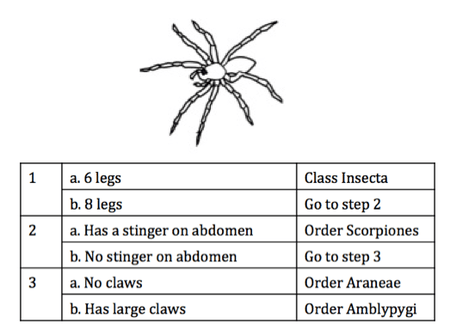
An illustration and a dichotomous key are given. What is the correct classification for this organism?
a)
Class Insecta
b)
Order Amblygygi
c)
Order Araneae
d)
Order Scorpiones
87.

Which letter represents the most recent common ancestor of sponges and mushrooms?

a)

A

b)

B

c)

C

d)

D

e)

E

88.

According to the cladogram, which organism is most distantly related to the chimpanzee?

a)

salmon

b)

salamander

c)

lizard

d)

hamster

89.

Which organism goes in the A position?

a)
b)
c)
d)
90.

Which organism goes in the B position?

a)
b)
c)
d)
91.

Which organism goes in the C position?

a)
b)
c)
d)
92.

Which organism goes in the D position?

a)
b)
c)
d)
93.

Which of the following is NOT one of the 3 domains of life?

a)

Bacteria

b)

Animal

c)

Archaea

d)

Eukarya

94.

If a cell lacks a nucleus, it is called a(n):

a)

Prokaryote

b)

Eukaryote

95.

If a cell contains a nucleus, it is called a(n):

a)

Prokaryote

b)

Eukaryote

96.

Which of the following is from the Bacteria domain?

a)

Dog

b)

Algae

c)

E. coli

d)

Rose

97.

Which domain includes prokaryotes that live in extreme environments?

a)

Bacteria

b)

Archaea

c)

Eukarya

98.

The term Archaea means ____________

a)

One

b)

True

c)

Ancient

d)

Life

99.

There are 4 kingdoms that fall under the domain Eukarya. Which one is NOT in the domain?

a)

Protist

b)

Fungi

c)

Plant

d)

Animal

e)

Bacteria

100.

This organism belongs to which domain?

a)

Bacteria

b)

Archaea

c)

Eukarya

101.

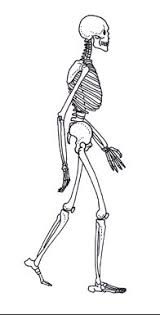
The ability to walk upright on two legs is called:

a)

bipedalism

b)

quadropedalism

c)

bicyclepedalism

d)

tripedalism

102.

Modern humans and their closest relatives belong to the same family. Members of this family are called:

a)

hominids

b)

primates

c)

homo sapiens

d)

Lucy

103.

Which hominid species is most closely related to Homo sapiens?

a)

Homo habilis

b)

Australopithecus afarensis

c)

Homo neanderthalensis

d)

Homo heidelbergensis

104.

What is the scientific name for modern day humans?

a)

Homo Habilis

b)

Homo Sapiens

c)

Homo Erectus

d)

Neanderthal

105.
Why was Homo Habilis nicknamed "Handy Man"?
a)
He helped other members of his group
b)
He knew how to build fires
c)
He made and used simple tools
d)
He was able to build shelters