
 Worksheets
Types of Wound Dressing
Total questions: 80
Worksheet time: 40mins
What is the primary purpose of covering a wound after it is closed?
To protect the wound and promote healing
To make the wound look better
To prevent the wound from closing
To avoid using any medical supplies
Which material is used to cleanse the surface of a closed wound before applying a dressing?
Moistened sterile gauze
Dry cotton balls
Alcohol wipes
Paper towels
After cleansing a closed wound, what should be applied to the wound?
A sterile dressing and a protective bandage
A piece of cloth and tape
A plastic wrap
Nothing, leave it open
Why is it important to use sterile materials when dressing a wound?
To prevent infection and promote proper healing
To make the wound look clean
To save on medical costs
To avoid using too many supplies
A patient has a closed wound. Describe the correct sequence of steps for covering the wound based on the information provided.
Cleanse the surface with moistened sterile gauze, then cover with a sterile dressing and a protective bandage
Apply a bandage first, then cleanse with water
Leave the wound open to air, then cover with a cloth
Cleanse with alcohol, then apply a non-sterile dressing
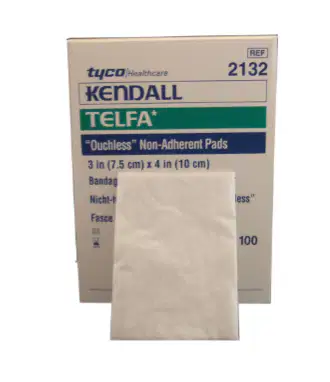
Which type of dressing is recommended for sutured or stapled wounds according to physician orders?
Nonadherent strip (e.g., Telfa)
Hydrocolloid dressing
Gauze soaked in saline
Adhesive bandage
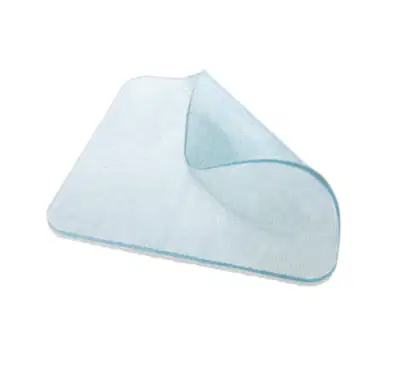
What is the primary purpose of using a colloidal water-based gel, such as Hydrogel, for skin tears?
To augment or replace a missing or incomplete skin flap
To disinfect the wound
To stop heavy bleeding
To provide pain relief only
After applying Hydrogel to a skin tear, what is the next step in wound care?
Apply a dressing and a protective bandage
Leave the wound open to air
Apply an antibiotic ointment only
Use only adhesive tape
Why might a medicated strip such as Xeroform Telfa be used on a wound?
To provide medication directly to the wound site
To increase bleeding
To dry out the wound
To prevent the wound from closing
Which type of ointment should NOT be applied to wounds that have been closed with adhesives?
Ointments containing corticosteroids
Antibiotic ointments
Ointments with tissue glue
Topical anesthetics
What is the primary purpose of a dressing when treating wounds?
To keep the wound warm and protected
To increase blood flow to the wound
To prevent the wound from closing
To dissolve tissue glue
Why are antibiotic ointments usually not used on a clean wound?
They are best used only on infected wounds
They slow down the healing process
They cause the wound to dry out
They dissolve tissue glue
Explain why dressings are important in the wound healing process, considering both their protective and absorptive functions.
Dressings keep the wound warm and protected, prevent drying out, and absorb excess fluid and exudate, which can slow healing.
Dressings only keep the wound dry and exposed to air.
Dressings are used to apply pressure and stop bleeding only.
Dressings are mainly for cosmetic purposes.
What is a dressing in the context of wound care?
Any covering applied to or over a wound
A type of antibiotic ointment
A surgical instrument
A type of adhesive used to close wounds
What effect do ointments containing corticosteroids have on wound healing?
They impede wound healing
They speed up wound healing
They have no effect on wound healing
They prevent infection
Which type of dressing should NOT be put over infected wounds?
Thick or impermeable dressings
Thin and breathable dressings
Transparent film dressings
Hydrocolloid dressings
What is the main purpose of the primary layer in a wound dressing?
To absorb excess drainage
To keep the wound moist
To protect the wound from bacteria
To allow water vapor to diffuse away
What is the function of the secondary dressing in wound care?
To keep the wound moist
To absorb excess drainage and protect the wound
To directly contact the wound surface
To encourage bacterial growth
Why should the full dressing allow water vapor to diffuse away from the wound?
To keep the wound dry and prevent infection
To allow bacteria to escape
To prevent the wound from healing
To make the dressing heavier
A wound dressing usually has how many layers?
One
Two
Three
Four
Explain why thick or impermeable dressings are not recommended for infected wounds.
They encourage bacterial growth by trapping moisture.
They allow too much air to reach the wound.
They dry out the wound too quickly.
They are too expensive to use.
A patient has a wound with significant drainage. Which layer of the dressing is most important for managing this drainage, and why?
The primary layer, because it absorbs drainage directly.
The secondary layer, because it absorbs excess drainage and protects the wound.
The full dressing, because it keeps the wound moist.
The outermost layer, because it allows bacteria to escape.
Which of the following is an example of a primary, nonadherent dressing used in traditional wound care?
Petrolatum gauze (e.g., Vaseline gauze or Adaptic)
Cotton bandage
Elastic wrap
Adhesive tape
Which type of dressing is specifically mentioned as being medicated for use as a primary dressing?
Medicated petrolatum gauze (e.g., Xeroform)
Water-based colloid (e.g., Aquaflo)
Dry cotton pads
Elastic bandage
What is a key consideration when choosing a dressing for a wound?
The type and amount of drainage
The color of the dressing
The brand name of the dressing
The size of the wound only
Why might moist sterile saline gauze (moist-to-moist) be used instead of wet-to-dry gauze?
It is especially useful if wound filler is needed
It is less expensive
It is more colorful
It is easier to apply
Explain why it is important to consider patient tolerance for dressing changes when selecting a wound dressing.
Some patients may experience discomfort or pain with frequent dressing changes, so tolerance should be considered to ensure compliance and promote healing.
Patient tolerance is not important in wound care.
Dressing changes should only be based on cost.
The type of wound does not affect dressing selection.
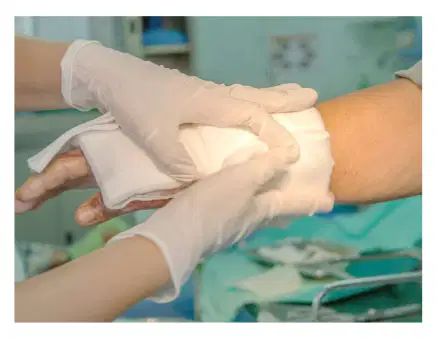
What is the purpose of a secondary dressing in wound care?
To provide a secondary layer of thick, dry sterile gauze over the primary dressing
To directly treat the wound with medication
To clean the wound before applying the primary dressing
To prevent the wound from healing
How is the whole dressing typically held in place when treating wounds?
By tape and/or rolled gauze depending on the contour of the body part
By using only adhesive bandages
By applying pressure with hands
By using a splint
What are self-adherent surgical dressings commonly called?
Island dressings
Foam dressings
Hydrogel dressings
Transparent dressings
Explain why self-adherent surgical dressings are referred to as "island dressings."
Because the primary dressing forms an island within the adhesive or secondary layer of dressing
Because they are only used on islands
Because they are shaped like islands
Because they are waterproof
A patient needs a dressing that combines both primary and secondary layers in one product. Which type of dressing would be most appropriate?
Self-adherent surgical dressing (island dressing)
Only a primary dressing
Only a secondary dressing
Transparent film dressing
Which of the following best describes a primary dressing in wound care?
A piece of gauze or dressing placed directly on top of the wound
A bandage wrapped around the wound for support
A liquid applied to clean the wound
A tape used to secure the dressing
What is the main function of secondary dressings in treating wounds?
To support the primary dressings and keep them securely in place
To absorb exudate from the wound
To clean the wound with antimicrobial liquid
To provide pain relief
Why are primary dressings made to be highly absorbent?
So they can absorb the exudate from the wound
To provide extra cushioning
To prevent infection
To make them easier to remove
Which of the following is NOT a function of a bandage in wound care?
Providing compression to reduce open space in a wound
Mechanically protecting a wound as an outer layer
Absorbing exudate directly from the wound
Holding the wound closure in place
How does the compression provided by a bandage benefit wound healing?
It reduces the open space (dead space) in a wound and discourages hematomas and edema
It increases the risk of infection
It makes the wound dry out faster
It prevents the need for primary dressings
A secondary dressing is designed to:
Hold the primary dressing in place with high adhesiveness
Absorb exudate from the wound
Be placed directly on the wound
Clean the wound with antimicrobial liquid
Explain how secondary dressings contribute to the healing environment of a wound.
They protect the wound site and provide an environment for optimum healing
They absorb all the exudate from the wound
They are only used to cover the wound for appearance
They are not necessary for wound healing
A patient has a wound with significant exudate. Which type of dressing should be used first and why?
A highly absorbent primary dressing to manage the exudate
A secondary dressing to provide compression
A bandage to cover the wound
An adhesive strip to close the wound
What is one of the main purposes of using bandages on a healing wound?
To increase the mobility of the wound area
To provide an additional layer of padding and reduce mobility
To expose the wound to air
To prevent the use of surgical pads
Which material can surgical bandages be made of?
Plastic sheets
Pads or cotton overlaid with tape
Metal strips
Rubber bands
On which part of the body are elastic wrap or gauze wrap bandages commonly used?
Head
Limbs
Chest
Abdomen
What is an important consideration when applying a bandage to a wound?
The bandage should be loose and wrinkled
The bandage should apply pressure equally across the wound
The bandage should be tied in a knot
The bandage should only cover half the wound
Why should you minimize the use of tape directly on the skin when securing a bandage?
Tape is not strong enough to hold the bandage
Tape can cause discomfort and should be avoided
Tape can irritate the skin, especially if the skin is fragile
Tape is more expensive than gauze
A patient with diabetes has fragile skin. What is the best way to secure a dressing for this patient?
Use a gauze roll rather than tape
Use extra tape for better security
Use a plastic wrap
Use a metal clip
If a bandage is applied too tightly, what is a possible consequence?
It will heal the wound faster
It may impede circulation
It will keep the wound cleaner
It will reduce pain
Which of the following is NOT a recommended practice when applying a bandage?
Make sure the bandage is smooth and unwrinkled
Apply pressure equally across the wound
Make the bandage so tight that it impedes circulation
Fix the bandage in place with tape
What is the primary reason for immobilizing a wound near a joint?
To slow wound healing and increase scar size
To prevent infection from spreading
To slow wound healing and reduce pain
To prevent movement that could slow healing and increase scar size
Which of the following materials can be used to splint a wound?
Plastic or aluminum
Wood or glass
Paper or cloth
Rubber or foam
Which of the following is NOT a type of joint immobilizer mentioned in the material?
Soft immobilizer like a sling
Rigid immobilizer like a knee brace
Elastic bandage
Plaster cast
Why might a plaster cast be needed when treating wounds?
To cover the wound and keep it clean
To provide rigid immobilization for proper healing
To reduce swelling in the area
To apply medication directly to the wound
A student is treating a nontrivial wound near the elbow. Which of the following actions best demonstrates the application of the concepts from the material?
Applying a bandage and allowing the patient to move the arm freely
Immobilizing the elbow by splinting the joint and minimizing movement
Applying ice and massaging the area to reduce pain
Cleaning the wound and leaving it uncovered
Which of the following is a primary reason for quickly mobilizing joints after splinting in wound treatment?
To increase blood flow to the wound
To prevent contractures or "frozen joints"
To reduce pain immediately
To avoid infection
Why is changing dressings important in wound care?
It helps to reduce the size of the wound
It provides the opportunity to assess the appropriateness of the dressing
It increases the healing speed automatically
It prevents the need for physical therapy
A patient has a wound with minimal drainage. According to the guidelines, how often might the dressing need to be changed?
Every hour
Once a day
Up to a week, depending on wound location and activity
Every two weeks
If a wound has significant drainage, what should be done to ensure proper wound care?
Use only a single thin dressing
Apply secondary dressings that are sufficiently absorbent
Leave the wound open to air
Change the dressing only once a month
Which of the following materials may be required for wounds with overflow of exudates?
Plastic sheets
Extra gauze pads, sponges, or cotton
Metal plates
Adhesive tape only
Why is it important for wounds to be at body temperature during the healing process?
To prevent infection
To slow down bleeding
To ensure proper healing
To reduce pain
What effect does changing a dressing or cleansing a wound have on the wound's temperature?
It increases the wound's temperature
It cools down the wound
It has no effect on the wound's temperature
It sterilizes the wound
According to the material, what may happen if a wound is cooled down during treatment?
The healing process may speed up
The wound may become infected
The healing process may slow down
The wound may close faster
If a wound is wide enough and has been unroofed, what is the recommended treatment?
Leave it open to air
Pack it open with moist sterile gauze
Cover it with a dry bandage
Apply ice to the wound
What should be done to a wound that is not wide enough to be packed?
Leave it uncovered
Cover it with a protective dressing
Apply heat directly
Wash it with alcohol
How soon should a wound be professionally reexamined after initial treatment?
In 1 day
In 2 to 3 days
In 1 week
In 5 to 7 days
Explain why it is important to minimize the time spent changing dressings or cleansing wounds, and how this practice impacts the healing process.
It prevents infection and increases pain
It keeps the wound at body temperature, which supports healing, as cooling the wound can slow the healing process
It reduces the need for professional reexamination
It allows the wound to dry out faster
According to general secondary wound care, how long should you wait before the first dressing change unless the dressing becomes saturated with wound exudate?
24 hours
48 hours
12 hours
72 hours
What should you do if a wound dressing becomes dirty or saturated with wound drainage after the first dressing change?
Leave it until the next scheduled change
Change the dressing immediately
Wait 24 hours before changing
Add another layer on top
Why is it generally recommended to change a wound dressing daily?
To prevent the wound from drying out
To assess the condition of the wound and progress of healing
To reduce the cost of wound care
To avoid using too many dressings
If there is a large amount of wound drainage or infection, how often can dressing changes be performed?
Only once a week
More often than daily
Every 48 hours
Only when the wound is completely healed
A patient’s wound dressing becomes saturated with exudate 24 hours after surgery. What is the most appropriate action?
Wait until 48 hours have passed to change the dressing
Change the dressing immediately due to saturation
Add a new dressing on top of the old one
Ignore the saturation and monitor for another day
What is necessary for a wound to heal or continue healing?
The wound must be exposed to air
The wound must be at body temperature
The wound must be kept dry at all times
The wound must be covered with ice
What is a potential consequence of frequent dressing changes on wound healing?
They speed up the healing process
They have no effect on healing
They slow the healing process by lowering wound temperature
They prevent infection completely
What should you do if a wound covering becomes saturated with drainage?
Leave it in place until the next scheduled change
Add another layer of dressing on top
Change the wound covering
Dry it with a towel and reuse it
Why might dressings over heavily draining wounds need to be changed frequently?
To keep the wound dry
To prevent the spread of microbes into the wound
To save on dressing supplies
To reduce pain for the patient
At what point can wounds be reassessed to update the type of dressing needed?
Only at the initial assessment
At any dressing change
Once a week
Only when the wound is fully healed
Imagine you are caring for a patient with a heavily draining wound. The dressing becomes saturated within a few hours. What steps should you take to ensure proper wound care and healing?
Leave the dressing until the next day and monitor for changes
Change the dressing immediately, reassess the wound, and get new orders for a more suitable dressing if needed
Cover the saturated dressing with a plastic sheet
Ignore the drainage and continue with the current dressing schedule
Which of the following is typically used to cleanse a wound during a dressing change?
Sterile water or normal 0.9% saline
Alcohol wipes
Hydrogen peroxide
Vinegar solution
What should you do if the dressing sticks to the wound during removal?
Leave the dressing on
Replace it with a less adherent type of primary dressing
Use more adhesive
Apply more pressure to remove it
Which of the following is NOT a step in a typical dressing change for treating wounds?
Gently removing the dressings
Cleansing the wound as ordered
Applying any skin protectant needed for peri-wound skin
Massaging the wound vigorously
Which step should be performed after cleansing and drying the wound during a dressing change?
Applying any skin protectant needed for peri-wound skin
Immediately covering with a bandage without drying
Applying ice to the wound
Leaving the wound open to air

