
 Worksheets
Life Processes
Total questions: 110
Worksheet time: 55mins
Name
Class
Date
1.
What is considered a common piece of evidence for being alive, according to the text?
a)
Sleeping
b)
Sitting still
c)
Movement, either growth-related or not
d)
The color green
2.
Why is using only visible movement not enough to define life?
a)
Because plants don't move at all
b)
Because some animals can breathe without visible movement and some plants grow very slowly
c)
Because sleeping animals show no movement
d)
Because molecules are not alive
3.
What type of invisible movement is considered necessary for life by professional biologists?
a)
Breathing
b)
Movements of molecules
c)
Blood circulation
d)
Cell division
4.
4. Why is there a controversy about whether viruses are truly alive?
a)
They are too small to be seen
b)
They do not show any molecular movement until they infect a cell
c)
They are not green
d)
They cannot grow
5.
5. What must living creatures do to counteract the environmental tendency for their organized structures to break down?
a)
They must sleep
b)
They must keep repairing and maintaining their structures
c)
They must change color
d)
They must stop moving
6.
6. What are the processes that together perform the maintenance functions in living organisms called?
a)
Growth
b)
Life processes
c)
Molecular movements
d)
Nutrition
7.
7. What is required to power the maintenance processes in living organisms?
a)
Sunlight
b)
Water
c)
Energy
d)
Sleep
8.
8. How do living organisms obtain the energy needed for maintenance?
a)
By breathing
b)
From outside the body in the form of food
c)
By drinking water
d)
Through molecular movement
9.
9. Most food sources are based on which element, reflecting the composition of life on Earth?
a)
Oxygen
b)
Nitrogen
c)
Carbon
d)
Hydrogen
10.
10. In multi-cellular organisms, why is simple diffusion insufficient to meet the needs of all cells?
a)
The cells are too small
b)
The environment lacks sufficient resources
c)
All cells may not be in direct contact with the surrounding environment
d)
Diffusion is too slow for any organism
11.
11. What is the mode of nutrition where organisms use simple inorganic materials to synthesize their own food?
a)
Heterotrophic nutrition
b)
Parasitic nutrition
c)
Autotrophic nutrition
d)
Saprotrophic nutrition
12.
12. Which of the following are examples of autotrophs?
a)
Animals and fungi
b)
Green plants and some bacteria
c)
Humans and animals
d)
Yeast and mushrooms
13.
13. What is the process by which autotrophs convert substances from the outside into stored forms of energy?
a)
Respiration
b)
Photosynthesis
c)
Transpiration
d)
Translocation
14.
14. What are the primary raw materials taken in by autotrophs for photosynthesis?
a)
Nitrogen and oxygen
b)
Sunlight and soil
c)
Carbon dioxide and water
d)
Carbohydrates and proteins
15.
15. What is the role of sunlight and chlorophyll in photosynthesis?
a)
They are the end products
b)
They provide the location for the reaction
c)
They are necessary conditions for converting CO2 and water into carbohydrates
d)
They are waste products
16.
16. How are carbohydrates that are not immediately used by the plant stored?
a)
As glycogen
b)
As starch
c)
As fat
d)
As protein
17.
17. In humans, what is the equivalent form of stored energy to starch in plants?
a)
Starch
b)
Cellulose
c)
Glycogen
d)
Glucose
18.
18. Which of these is the correct chemical equation for photosynthesis?
a)
C6H12O6+6O2→6CO2+6H2O
b)
6CO2+12H2OSunlightChlorophyllC6H12O6+6O2+6H2O
c)
6O2+6H2O→C6H12O6+6CO2
d)
C6H12O6→2C2H5OH+2CO2
19.
19. What is the first event that occurs during photosynthesis?
a)
Reduction of carbon dioxide
b)
Splitting of water molecules
c)
Absorption of light energy by chlorophyll
d)
Conversion of chemical energy to light energy
20.
20. What happens to light energy during photosynthesis?
a)
It is converted to kinetic energy
b)
It is converted to chemical energy
c)
It is destroyed
d)
It is stored as heat
21.
21. The reduction of carbon dioxide in photosynthesis leads to the formation of what?
a)
Oxygen
b)
Water
c)
Carbohydrates
d)
Chlorophyll
22.
22. How do desert plants adapt their photosynthetic process?
a)
They perform photosynthesis only at night
b)
They take up carbon dioxide at night and use energy from chlorophyll during the day
c)
They do not use chlorophyll
d)
They do not require water for photosynthesis
23.
23. What are the green dots observed in leaf cells under a microscope?
a)
Nuclei
b)
Vacuoles
c)
Chloroplasts
d)
Stomata
24.
24. What is the function of stomata, the tiny pores on the surface of leaves?
a)
Absorption of water
b)
Massive gaseous exchange for photosynthesis
c)
Anchoring the plant
d)
Storing starch
25.
25. What controls the opening and closing of the stomatal pore?
a)
Chloroplasts
b)
The amount of sunlight
c)
Guard cells
d)
The waxy cuticle
26.
26. How do guard cells open the stomatal pore?
a)
They shrink
b)
They swell when water flows into them
c)
They release carbon dioxide
d)
They absorb sunlight
27.
27. Besides leaves, where else can gaseous exchange occur in plants?
a)
Only in flowers
b)
Across the surface of stems and roots as well
c)
Nowhere else
d)
In the phloem tissue
28.
28. How do terrestrial plants obtain water for photosynthesis?
a)
From the air
b)
From the soil through the roots
c)
Through the leaves
d)
It is a byproduct of respiration
29.
29. Which essential element, used for synthesizing proteins, is taken up from the soil?
a)
Oxygen
b)
Carbon
c)
Nitrogen
d)
Sunlight
30.
30. How is nitrogen taken up by plants from the soil?
a)
Directly from the atmosphere
b)
In the form of inorganic nitrates or nitrites, or as organic compounds prepared by bacteria
c)
As pure nitrogen gas
d)
It is absorbed through the leaves
31.
31. What type of nutrition involves taking in complex material prepared by other organisms?
a)
Autotrophic
b)
Photosynthesis
c)
Heterotrophic
d)
Chemosynthesis
32.
32. Which organisms are examples of heterotrophs?
a)
Green plants and some bacteria
b)
Animals and fungi
c)
Only carnivores
d)
Only herbivores
33.
33. Heterotrophs' survival depends directly or indirectly on what group of organisms?
a)
Other heterotrophs
b)
Autotrophs
c)
Decomposers
d)
Parasites
34.
34. What are the bio-catalysts used by organisms to break down complex substances?
a)
Hormones
b)
Enzymes
c)
Acids
d)
Vitamins
35.
35. What is a key difference in the form of nutrition depending on the food source, like grass versus a deer?
a)
Whether the food is carbon-based or not
b)
The color of the food
c)
Whether the food source is stationary or mobile, which affects how it is accessed
d)
The time of day the food is consumed
36.
36. Which organisms break down food material outside their body and then absorb it?
a)
Amoeba and Paramecium
b)
Fungi like bread moulds, yeast, and mushrooms
c)
Lions and cows
d)
Humans and tigers
37.
37. What is the nutritive strategy used by organisms like cuscuta, ticks, and leeches?
a)
Saprotrophic
b)
Autotrophic
c)
Parasitic
d)
Holozoic
38.
38. How do single-celled organisms like Amoeba take in food?
a)
Through a specific mouth spot
b)
Using temporary finger-like extensions of the cell surface called pseudopodia
c)
By absorbing it through their entire surface via diffusion
d)
Using cilia to move food to a specific spot
39.
39. In Amoeba, what is formed when the pseudopodia fuse over a food particle?
a)
A nucleus
b)
A food vacuole
c)
A chloroplast
d)
A mitochondrion
40.
40. Where does the breakdown of complex substances into simpler ones occur inside an Amoeba?
a)
In the cytoplasm
b)
Inside the food vacuole
c)
At the cell surface
d)
In the nucleus
41.
41. How does an Amoeba get rid of undigested material?
a)
It is stored permanently in the vacuole
b)
It is moved to the surface of the cell and thrown out
c)
It diffuses into the surrounding water
d)
It is used to build the cell wall
42.
42. What distinguishes the way Paramecium takes in food from Amoeba?
a)
Paramecium uses pseudopodia
b)
Paramecium breaks down food outside its body
c)
Paramecium has a definite shape and takes in food at a specific spot
d)
Paramecium is an autotroph
43.
43. What cellular structures does Paramecium use to move food to its specific intake spot?
a)
Flagella
b)
Pseudopodia
c)
Cilia
d)
Tentacles
44.
44. The complexity of an organism's digestive system is related to what?
a)
The size of the organism only
b)
The complexity of the organism, leading to specialized parts for different functions
c)
The environment it lives in
d)
The time of day it eats
45.
45. Heterotrophic nutrition depends on the availability of what?
a)
Sunlight and water
b)
Food material and how it's obtained
c)
Inorganic materials
d)
Carbon dioxide
46.
46. What is the fundamental difference between how fungi and animals process food?
a)
Fungi eat plants, animals eat meat
b)
Fungi absorb nutrients, animals ingest them
c)
Fungi break down food externally, while animals break it down internally
d)
There is no difference
47.
47. What is the primary role of enzymes in heterotrophic nutrition?
a)
To transport nutrients
b)
To break down complex food substances into simpler ones
c)
To provide energy directly
d)
To store food
48.
48. In single-celled organisms, how may food be taken in if not by specialized structures?
a)
Through a mouth
b)
By the entire surface
c)
Only through pores
d)
They do not take in food
49.
49. After simpler substances are broken down in the Amoeba's food vacuole, where do they go?
a)
They are excreted immediately
b)
They diffuse into the cytoplasm
c)
They are stored in the nucleus
d)
They move to another vacuole
50.
50. Parasitic organisms derive nutrition from hosts without doing what?
a)
Touching them
b)
Killing them
c)
Helping them
d)
Living on them
51.
51. The human alimentary canal is a long tube extending from the mouth to the what?
a)
Stomach
b)
Small intestine
c)
Anus
d)
Liver
52.
52. What is the function of teeth in digestion?
a)
To wet the food
b)
To crush the food with our teeth
c)
To mix food with saliva
d)
To produce enzymes
53.
53. What is the fluid secreted by the salivary glands in the mouth?
a)
Mucus
b)
Hydrochloric acid
c)
Saliva
d)
Bile
54.
54. What enzyme is found in saliva and what does it break down?
a)
Pepsin; breaks down proteins
b)
Salivary amylase; breaks down starch
c)
Lipase; breaks down fats
d)
Trypsin; breaks down proteins
55.
55. What are the rhythmic contractions that push food forward along the gut called?
a)
Voluntary movements
b)
Peristaltic movements
c)
Diffusion
d)
Osmosis
56.
56. From the mouth, where does the food travel to reach the stomach?
a)
Through the small intestine
b)
Through the food-pipe or oesophagus
c)
Directly to the liver
d)
Through the large intestine
57.
57. What three substances are released by the gastric glands in the stomach wall?
a)
Saliva, pepsin, and mucus
b)
Hydrochloric acid, pepsin, and mucus
c)
Bile, trypsin, and lipase
d)
Amylase, hydrochloric acid, and bile
58.
58. What is the role of hydrochloric acid in the stomach?
a)
To digest fats
b)
To protect the stomach lining
c)
To create an acidic medium for the enzyme pepsin to act
d)
To neutralize the food
59.
59. What protects the inner lining of the stomach from the action of acid?
a)
Pepsin
b)
Mucus
c)
Bile
d)
The food itself
60.
60. What is the longest part of the alimentary canal?
a)
Stomach
b)
Large intestine
c)
Small intestine
d)
Oesophagus
61.
61. Why do herbivores that eat grass have a longer small intestine than carnivores?
a)
To absorb more water
b)
To allow the cellulose in grass to be digested
c)
Because meat is harder to digest
d)
To store more food
62.
62. The small intestine is the site for the complete digestion of which nutrients?
a)
Carbohydrates and proteins only
b)
Fats and proteins only
c)
Carbohydrates, proteins, and fats
d)
Water and minerals only
63.
63. The small intestine receives secretions from which two organs?
a)
Stomach and oesophagus
b)
Liver and pancreas
c)
Gall bladder and large intestine
d)
Salivary glands and stomach
64.
64. What is the function of bile juice from the liver?
a)
To digest proteins
b)
To make the food acidic
c)
To make the food alkaline and emulsify fats
d)
To digest carbohydrates
65.
65. What is the process of breaking down large fat globules into smaller ones by bile salts called?
a)
Peristalsis
b)
Emulsification
c)
Absorption
d)
Assimilation
66.
66. Which enzymes are contained in the pancreatic juice secreted by the pancreas?
a)
Pepsin and amylase
b)
Trypsin and lipase
c)
Bile and mucus
d)
Hydrochloric acid and pepsin
67.
67. What are the final products of carbohydrate, protein, and fat digestion?
a)
Amino acids, glucose, and starch
b)
Glucose, amino acids, and fatty acids/glycerol
c)
Fatty acids, glucose, and peptides
d)
Glycerol, starch, and amino acids
68.
68. What are the finger-like projections in the inner lining of the small intestine called?
a)
Cilia
b)
Alveoli
c)
Villi
d)
Nephrons
69.
69. What is the primary function of the villi in the small intestine?
a)
To move food along the intestine
b)
To increase the surface area for absorption
c)
To secrete digestive enzymes
d)
To help in the emulsification of fats
70.
70. Where is most of the water absorbed from the unabsorbed food?
a)
In the stomach
b)
In the large intestine
c)
In the small intestine
d)
In the liver
71.
71. What is the process of acquiring oxygen from outside the body and using it to break down food for cellular needs called?
a)
Nutrition
b)
Respiration
c)
Excretion
d)
Transportation
72.
72. What is the first step in the breakdown of glucose in all organisms?
a)
Conversion to ethanol
b)
Breakdown into pyruvate in the cytoplasm
c)
Breakdown in the mitochondria
d)
Conversion to lactic acid
73.
73. What is the end product of glucose breakdown in yeast during fermentation (anaerobic respiration)?
a)
Lactic acid and energy
b)
Carbon dioxide, water, and energy
c)
Ethanol, carbon dioxide, and energy
d)
Pyruvate and energy
74.
74. Where does the breakdown of pyruvate using oxygen (aerobic respiration) take place?
a)
Cytoplasm
b)
Mitochondria
c)
Muscle cells
d)
Yeast
75.
75. What are the products of aerobic respiration?
a)
Ethanol and carbon dioxide
b)
Lactic acid
c)
Carbon dioxide and water
d)
Pyruvate
76.
76. What causes cramps in our muscles during sudden activity?
a)
The build-up of ethanol
b)
The build-up of lactic acid due to a lack of oxygen
c)
The build-up of carbon dioxide
d)
The breakdown of ATP
77.
77. What is the "energy currency" for most cellular processes?
a)
Glucose
b)
ADP
c)
ATP
d)
Pyruvate
78.
78. Why is the rate of breathing in aquatic organisms much faster than in terrestrial organisms?
a)
They are more active
b)
Water is heavier than air
c)
The amount of dissolved oxygen in water is much lower than the amount of oxygen in the air
d)
They have smaller lungs
79.
79. In humans, what filters the air passing through the nostrils?
a)
Rings of cartilage
b)
Fine hairs and mucus
c)
The diaphragm
d)
The alveoli
80.
80. What is the primary respiratory pigment in human beings that transports oxygen?
a)
Chlorophyll
b)
Haemoglobin
c)
Myoglobin
d)
Cytochrome
81.
81. What are the main components of the transport system in human beings?
a)
Lungs, kidneys, and stomach
b)
Heart, blood, and blood vessels
c)
Xylem and phloem
d)
Alveoli and nephrons
82.
82. What is the fluid medium of blood in which cells are suspended?
a)
Lymph
b)
Water
c)
Plasma
d)
Hemoglobin
83.
83. Which component of blood carries oxygen?
a)
Plasma
b)
Platelets
c)
White blood cells
d)
Red blood corpuscles
84.
84. Why does the heart have different chambers?
a)
To pump blood faster
b)
To prevent oxygen-rich blood from mixing with carbon dioxide-rich blood
c)
To make the heart stronger
d)
To store blood
85.
85. Which chamber of the heart receives oxygen-rich blood from the lungs?
a)
Right atrium
b)
Left atrium
c)
Right ventricle
d)
Left ventricle
86.
86. Which chamber of the heart pumps oxygen-rich blood to the rest of the body?
a)
Right atrium
b)
Left atrium
c)
Right ventricle
d)
Left ventricle
87.
87. Why do ventricles have thicker muscular walls than atria?
a)
They are larger
b)
They receive blood from the body
c)
They have to pump blood into various organs, which requires more pressure
d)
They hold more blood
88.
88. What ensures that blood does not flow backward in the heart when the atria or ventricles contract?
a)
Thick walls
b)
Valves
c)
The septum
d)
Peristaltic movement
89.
89. What is double circulation?
a)
Blood flowing through the heart once during each cycle
b)
Blood flowing through two hearts
c)
Blood flowing through the heart twice during each cycle in other vertebrates
d)
The mixing of oxygenated and de-oxygenated blood
90.
90. Why is it necessary to separate oxygenated and deoxygenated blood in mammals and birds?
a)
It allows for a less efficient supply of oxygen
b)
It is useful for animals that do not maintain a constant body temperature
c)
It allows a highly efficient supply of oxygen needed for their high energy needs
d)
It helps them tolerate mixing of blood streams
91.
91. Which blood vessels carry blood away from the heart and have thick, elastic walls?
a)
Veins
b)
Capillaries
c)
Arteries
d)
Lymphatic vessels
92.
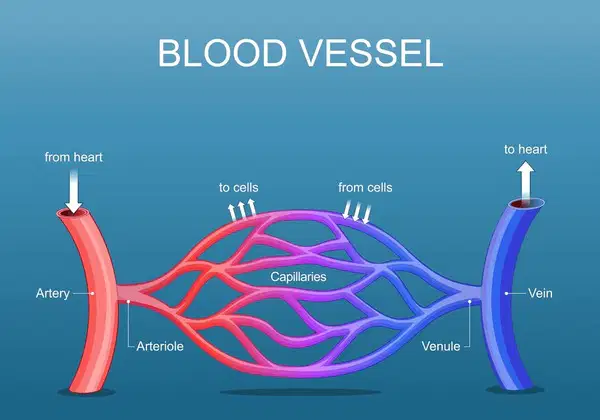
Which blood vessels have walls that are one-cell thick to allow for material exchange?
a)
Arteries
b)
Veins
c)
Capillaries
d)
Aorta
93.
93. What is the function of platelets in the blood?
a)
To carry oxygen
b)
To fight infection
c)
To plug leaks by helping to clot the blood at points of injury
d)
To transport carbon dioxide
94.
94. What is lymph?
a)
Another name for blood plasma
b)
A fluid similar to plasma but with less protein that is involved in transportation
c)
The waste product of cells
d)
A type of red blood cell
95.
95. What is the function of the xylem in plants?
a)
To transport products of photosynthesis
b)
To transport water and minerals from the soil
c)
To store food
d)
To transport amino acids
96.
96. What is the function of the phloem in plants?
a)
To transport water and minerals
b)
To transport products of photosynthesis from the leaves to other parts
c)
To provide structural support only
d)
To absorb sunlight
97.
97. What is the loss of water in the form of vapor from the aerial parts of a plant called?
a)
Translocation
b)
Transpiration
c)
Respiration
d)
Photosynthesis
98.
98. How does transpiration help in the transport of water in plants?
a)
It pushes water down from the leaves
b)
It creates a suction pull that moves water up through the xylem
c)
It converts water to energy
d)
It has no effect on water transport
99.
99. What is the transport of soluble products of photosynthesis in plants called?
a)
Transpiration
b)
Translocation
c)
Diffusion
d)
Root pressure
100.
100. How is material like sucrose transferred into phloem tissue?
a)
By simple physical forces only
b)
By using energy from ATP
c)
Through transpiration pull
d)
By gravity
101.
101. What is the biological process involved in the removal of harmful metabolic wastes from the body?
a)
Respiration
b)
Nutrition
c)
Excretion
d)
Transportation
102.
102. What does the excretory system of human beings include?
a)
A pair of lungs, a ureter, a bladder, and a urethra
b)
A pair of kidneys, a pair of ureters, a urinary bladder, and a urethra
c)
The liver, kidneys, and bladder
d)
The skin, lungs, and kidneys
103.
103. What is the main purpose of making urine?
a)
To filter out excess water from the body
b)
To remove carbon dioxide from the blood
c)
To filter out waste products like urea from the blood
d)
To store salts and amino acids
104.
104. What is the basic filtration unit in the kidneys called?
a)
Alveolus
b)
Nephron
c)
Villus
d)
Capillary
105.
105. What substances from the initial filtrate are selectively re-absorbed back into the body?
a)
Only urea and uric acid
b)
Only water
c)
Glucose, amino acids, salts, and a major amount of water
d)
All of the initial filtrate
106.
106. How does the amount of water reabsorbed in the kidneys vary?
a)
It is always a fixed amount
b)
It depends on how much excess water is in the body and the amount of dissolved waste to be excreted
c)
It depends on the amount of oxygen in the blood
d)
It is controlled by the liver
107.
107. Where is urine stored before it is released from the body?
a)
In the kidneys
b)
In the ureters
c)
In the urinary bladder
d)
In the urethra
108.
108. How do plants get rid of excess water?
a)
By storing it in their leaves
b)
By transpiration
c)
By excreting it into the soil
d)
By converting it to oxygen
109.
109. How do plants get rid of some waste products?
a)
By storing them in cellular vacuoles or in leaves that fall off
b)
By breathing them out
c)
By sending them to the flowers
d)
Plants do not produce waste products
110.
110. Other than storing in vacuoles or shedding leaves, how else are waste products stored in plants?
a)
As sugars in the fruit
b)
As resins and gums, especially in old xylem
c)
As chlorophyll in the leaves
d)
As water in the stem
100 %

