
 Worksheets
Components of Nutritional Assessment
Total questions: 100
Worksheet time: 50mins
What are the three main components of nutritional assessment?
History taking, Physical assessments, Laboratory data
Dietary supplements, Exercise routines, Sleep patterns
Genetic testing, Medication review, Family history
Body temperature, Blood pressure, Heart rate
Which of the following is NOT a part of history taking in nutritional assessment?
Dietary data
Socioeconomic data
Skinfold measurements
Medical data
Give two examples of data collected during history taking in nutritional assessment.
# of meals, fluid intake, food preferences, history of GI issues, allergies, taste, chewing/swallowing, appetite, elimination, medication use, activity, religious/cultural nutritional screening tools (any two)
Blood pressure and heart rate only
Height and weight only
Vision and hearing screening results
Physical assessments in nutritional assessment include anthropometric and clinical data.
True
False
BMI and skinfold measurements are examples of which component of nutritional assessment?
Physical assessments
Dietary assessments
Biochemical assessments
Clinical assessments
Laboratory data in nutritional assessment includes which of the following?
Protein status
Body vitamin status
Trace element status
All of the above
List any three laboratory data parameters used in nutritional assessment.
Cholesterol, triglycerides, hemoglobin, electrolytes, albumin, pre-albumin, transferrin, lymphocyte count, nitrogen balance (any three)
Blood pressure, heart rate, respiratory rate
Height, weight, BMI
Urine color, skin turgor, capillary refill
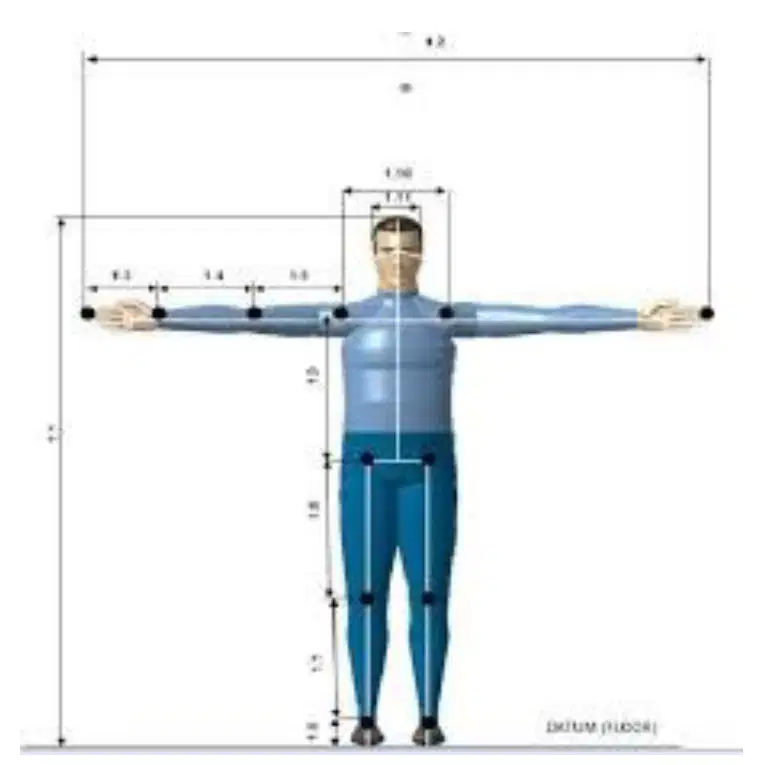
The diagram of the human figure with outstretched arms and labeled measurements is used for which purpose?
To illustrate the proportions of the human body
To show the internal organs of the body
To demonstrate different types of exercise
To display the nervous system layout
What is a possible mental effect of poor nutrition?
Mental status changes
Increased muscle mass
Improved vision
Faster wound healing
What physical symptom of poor nutrition involves feeling tired and lacking strength?
Weakness, fatigue
Increased appetite
Improved vision
Rapid hair growth
What is a visible sign of poor nutrition that affects the eyes and bones?
Sunken eyes, bony prominences
Bright, clear eyes and strong bones
Red, swollen gums and healthy teeth
Smooth skin and shiny hair
What are some skin and hair-related findings in a person with poor nutrition?
Poor skin turgor, dry skin, brittle nails, loss of hair
Oily skin, thick hair, strong nails, flushed cheeks
Rapid hair growth, smooth skin, rosy nails, increased sweating
Darkened skin, curly hair, long eyelashes, moist palms
What blood protein level is often low in individuals with poor nutrition? (Normal range: 3.5-5.5)
Albumin
Globulin
Fibrinogen
Hemoglobin
What is a possible effect of poor nutrition on muscles?
Flaccid muscles
Stronger bones
Improved vision
Increased energy levels
What dental issue can be a sign of poor nutrition?
Poor dental health and bleeding gums
Whiter teeth and fresh breath
Stronger enamel and no cavities
Perfectly aligned teeth
Fill in the blank: One way to promote appetite is to ________ with feeding.
assist
argue
ignore
delay
Fill in the blank: Creating ________ meal plans is a strategy to promote appetite.
individualized
random
restrictive
expensive
Fill in the blank: To promote appetite, provide after ________ snacks.
meal
exercise
school
work
Fill in the blank: ________ screening (nurse can order without MD order) is a way to promote appetite.
Dietary
Vision
Hearing
Blood pressure
Fill in the blank: Education on ________ choices helps promote appetite.
healthy
expensive
random
limited

Name one disease process that alters nutrition and requires careful monitoring.
CHF
Sprained ankle
Seasonal allergies
Mild sunburn
Name one disease process that alters nutrition and requires careful monitoring.
Stroke
Sprained ankle
Mild headache
Paper cut
Name one disease process that alters nutrition and requires careful monitoring.
GI bleed, ulcers, hiatal hernia
Sprained ankle
Seasonal allergies
Mild sunburn
Name one disease process that alters nutrition and requires careful monitoring.
DM
Asthma
Osteoarthritis
Conjunctivitis
Name one disease process that alters nutrition and requires careful monitoring.
Altered mental status
Hypertension
Asthma
Osteoarthritis
Name one disease process that alters nutrition and requires careful monitoring.
Respiratory compromised
Sprained ankle
Mild headache
Seasonal allergies
Name one disease process that alters nutrition and requires careful monitoring.
Oral cancers, lesions
Sprained ankle
Mild sunburn
Seasonal allergies
Fill in the blank: Teaching nutritional information involves providing __________.
appropriate diets
mathematical formulas
historical dates
musical notes
Fill in the blank: Monitoring __________ status is a key nursing intervention.
nutritional
emotional
financial
recreational
Which of the following are methods for stimulating appetite?
Oral hygiene
Favorite foods
Minimize environmental odors
All of the above
Fill in the blank: Assisting with eating involves __________.
promoting independence
restricting choices
feeding without consent
ignoring preferences
Fill in the blank: Providing __________ nutrition is a nursing intervention.
oral
visual
auditory
tactile
Fill in the blank: Providing long-term nutritional support involves __________.
individualized menu plans
short-term fasting
eliminating all carbohydrates
avoiding all fats
What does NPO (nil per os) mean?
Nothing by mouth
Take with food
Drink plenty of water
Take before bedtime
Which type of therapeutic diet consists of only clear liquids?
Clear liquids
Full liquids
Soft diet
Regular diet
Which therapeutic diet includes clear liquids, liquid dairy, and all juices?
Full liquids
Clear liquids
Soft diet
Low residue diet
Which therapeutic diet includes clear, full, and pureed meats, fruits, and scrambled eggs?
Pureed
Clear liquid
Low sodium
Diabetic
Which therapeutic diet includes clear, full, and diced or ground foods?
Mechanical soft
Ketogenic
Low sodium
Vegan
Which therapeutic diet is low in fiber and easy to digest, such as dairy, eggs, and ripe bananas?
Soft/low residue
High-protein
Ketogenic
Gluten-free
Which therapeutic diet includes whole grains, raw and dried fruits?
High fiber
Low sodium
Clear liquid
Low protein
What is the term for difficulty swallowing, which may require a special therapeutic diet?
Dysphagia
Dyspnea
Dyspepsia
Dysphasia
Which therapeutic diet involves no added salt or 1-2 g Na?
Low sodium
High protein
Gluten free
Low fat
Which therapeutic diet limits dietary cholesterol to no more than 300 mg/day?
Low cholesterol
High protein
Low sodium
Gluten free
Which therapeutic diet requires a balanced intake of protein, fats, and carbs of about 1800 calories?
Diabetic
Ketogenic
Gluten-free
Low-sodium
Fill in the blank: One way to prevent aspiration is to position the client in ______ position.
Fowlers
Supine
Prone
Trendelenburg
Fill in the blank: To help propel food down and prevent aspiration, have the client ______ their chin when swallowing.
tuck
raise
tilt back
turn
Fill in the blank: To prevent aspiration, avoid the use of ______ when feeding the client.
straws
spoons
cups
plates
Fill in the blank: When preventing aspiration, it is important to observe for ______ of food in the mouth.
pocketing
chewing
swallowing
tasting
Fill in the blank: Observe for indications of ______, such as coughing, gagging, drooling, or choking, to prevent aspiration.
dysphagia
hypertension
tachycardia
hypoglycemia
Fill in the blank: After eating, keep the client in a semi-fowlers position for at least ______ hour(s) to prevent aspiration.
1
2
0.5
3
Fill in the blank: To prevent aspiration, provide ______ hygiene after meals.
oral
hand
foot
ear
Fill in the blank: During stroke and dysphagia screening, the patient must be in _______ position.
Fowler’s
Prone
Supine
Trendelenburg
Fill in the blank: During stroke and dysphagia screening, the patient must be able to _______.
hold up head
close eyes tightly
move fingers rapidly
stand on one leg
Fill in the blank: During stroke and dysphagia screening, you must perform a _______.
dysphagia screening
blood pressure check
vision test
hearing assessment
During stroke and dysphagia screening, how much water should be used and should straws be allowed?
3 oz of water, no straws
8 oz of water, with straws
3 oz of water, with straws
8 oz of water, no straws
Fill in the blank: If a patient fails dysphagia screening, they need a _______ and swallowing test.
speech eval
blood pressure
vision
hearing
Fill in the blank: Patients who have dysphagia should use _______ and pureed foods.
thickened liquids
carbonated drinks
spicy sauces
crunchy snacks

The speech therapist performs a swallowing evaluation and assists the client in swallowing techniques to reduce the risk of aspiration.
True
False

What is the brand name of the instant food & beverage thickener shown in the image?
Hormel
Nestle
Thick-It
Ensure
Assess Patient for the following behavior: Wet, gurgle, voice quality. (Circle Yes or No)
Yes
No
Assess Patient for the following behavior: Excessive drooling or inability to handle saliva.
Yes
No
Assess Patient for the following behavior: Facial numbness or drooping.
Yes
No
Assess Patient for the following behavior: Consistent throat clearing. (Circle Yes or No)
Yes
No
Assess Patient for the following behavior: Weak, absent or delayed cough and/or swallowing.
Yes
No
Assess Patient for the following behavior: Whispered or slurred speech.
Yes
No
Assess Patient for the following behavior: Feeling of food stuck in throat.
Yes
No
Enter the date of the dysphagia screening: ____________
12/03/2023
01/01/2022
15/08/2021
23/11/2020
Enter the time of the dysphagia screening: ____________
08:30 AM
12:00 PM
03:45 PM
07:15 AM
Dysphagia Screen completed by: ____________
(To be filled by the user)
Patient
Family Member
Visitor
Receptionist

What type of nutritional support is provided through a tube inserted into the nose and down into the stomach?
Nasogastric tube
Intravenous line
Gastrostomy tube
Orogastric tube

Which type of nutritional support involves intravenous alimentation?
PPN and TPN
Enteral nutrition
Oral supplements
Nasogastric feeding

Name the tube that is inserted through the nose and ends in the duodenum for nutritional support.
Nasoduodenal tube
Nasogastric tube
Orogastric tube
Jejunostomy tube

Which tube is used for nutritional support and is inserted through the abdominal wall directly into the stomach?
Gastrostomy tube
Nasogastric tube
Endotracheal tube
Jejunostomy tube
Which of the following is NOT a type of tube used for enteral nutritional support?
Nasogastric tube
Jejunostomy tube
PPN
Gastrostomy tube

What is the name of the tube that is inserted through the nose and ends in the jejunum for nutritional support?
Nasojejunal tube
Nasogastric tube
Orogastric tube
Jejunostomy tube

Which tube is inserted directly into the jejunum for nutritional support?
Jejunostomy tube
Nasogastric tube
Gastrostomy tube
Orogastric tube
What are the two routes mentioned for short-term nutritional support?
Nasogastric or nasointestinal route
Oral or sublingual route
Intramuscular or subcutaneous route
Transdermal or rectal route
Which of the following is a method for confirming NG feeding tube placement?
Radiographic examination
Blood test
MRI scan
Ultrasound
Name one method for confirming NG feeding tube placement that involves measuring pH and visual assessment.
Measurement of aspirate pH and visual assessment of aspirate
Auscultation of air insufflation over the stomach
Observation of patient swallowing
Checking for tube length at nostril
What should be measured to confirm the placement of an NG feeding tube, according to the slide?
Measurement of tube length and tube marking
Patient's blood pressure
Respiratory rate
Urine output
Fill in the blank: Before feedings, it is important to confirm ______ placement.
tube
needle
catheter
stent
Fill in the blank: Elevate the head of the bed at least ____ degrees during feedings and maintain the client in this position for approximately 60 min following completion of the feeding.
30
10
45
60
Fill in the blank: Administer bolus feedings over a period of at least ____ min and according to client tolerance.
15
5
30
60
Fill in the blank: Flush the tubing with at least ____ mL of water every 4 hr for continuous infusion, after measuring gastric residual, before and after bolus feedings, and between each medication administration.
30
10
50
100
Fill in the blank: Unclog tubing using gentle pressure with 30 to 50 mL warm water in a ____ mL piston syringe.
60
10
20
100

Which part of the PEG catheter is in contact with the stomach wall?
External crossbar
Internal crossbar
Tubing clamp
Plug-in adapter
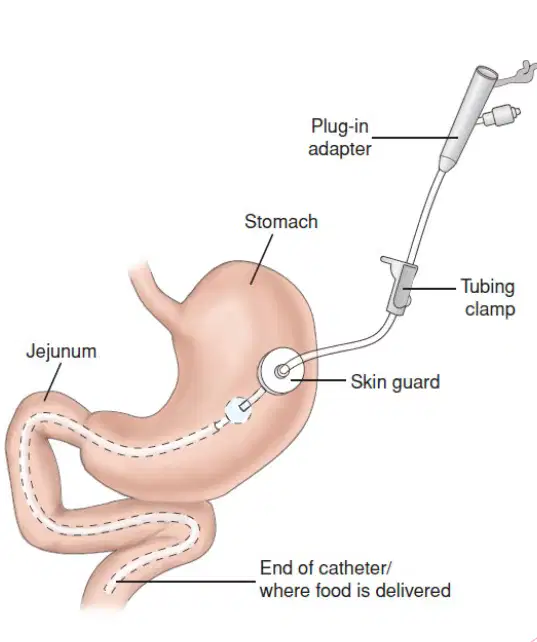
In the diagram showing the jejunal feeding tube, where is the end of the catheter located?
Stomach
Jejunum
Esophagus
Skin guard

Fill in the blank: The ________ is used to secure the feeding tube at the skin surface in both diagrams.
skin guard
catheter clamp
feeding port
insertion stylet
According to the instructions for gastric tube care, what should you connect to the feeding tube?
the feeding bag system
the oxygen mask
the blood pressure cuff
the stethoscope
If using a pump for tube feedings, what should you do?
Start the pump without programming
Program the instillation rate and set the total volume to instill
Only set the total volume
Do nothing
What is the next step after connecting the feeding bag system to the feeding tube?
Start the pump.
Disconnect the feeding tube.
Remove the feeding bag.
Shake the feeding tube vigorously.
How often should you flush the enteral tubing with at least 30 mL water and check tube placement again?
Every 4 to 6 hours
Every 8 to 10 hours
Once a day
Every 12 hours
What should be monitored and included in 24-hour totals during tube feedings?
Intake and output
Blood pressure readings
Respiratory rate
Body temperature
How often should capillary blood glucose be monitored until the client tolerates the maximum administration rate for 24 hours?
Every 6 hours
Every 2 hours
Every 12 hours
Every 24 hours
What type of pump should be used for intestinal tube feedings?
An infusion pump
A vacuum pump
A peristaltic pump
A centrifugal pump
According to the manufacturer's recommendations, what should be done with unused formula after 24 hours?
Refrigerate unused formula, and discard after 24 hours.
Freeze unused formula for later use.
Leave unused formula at room temperature for up to 48 hours.
Mix unused formula with fresh formula and use within 72 hours.
Some facilities require gastric residual volume checks every 4 to 6 hours. What should you check for specific actions to take for the amount of residual?
Check facility protocol
Always discard the residual
Increase the feeding rate
Ignore the residual amount
True or False: The skill of tube feeding should be delegated to assistive personnel.
True
False
Which type of nutritional support is administered through a central venous catheter?
TPN
PPN
Both
Neither
TPN solutions contain a high concentration of ______ and dextrose.
protein
lipids
calcium
potassium

