
 Worksheets
Body Organization
Total questions: 135
Worksheet time: 1hrs 11mins
Fill in the blank: A ______ is made up of organs and other body parts joined together to perform a particular function.
system
cell
atom
molecule
What do these systems working together help create?
The miracle called the human body
The animal kingdom
The plant system
The solar system
In anatomic position, the palms are facing which direction?
Forward
Backward
Inward
Downward
According to the passage, what are body planes? Body planes are __________ flat surfaces that divide the body into sections for anatomical study.
imaginary
visible
solid
liquid
Why are body planes important for doctors and surgeons?
They help describe the location and movements of body parts
They help in cooking
They help in painting
They help in singing
How can knowing different body planes help people design workout programs?
moving
eating
sleeping
reading
Fill in the blank: ________ are imaginary lines drawn through the body at various parts to separate the body into sections.
Body planes
Body tissues
Body fluids
Body organs
Fill in the blank: ________ refers to both sides of the body.
Bilateral
Unilateral
Posterior
Anterior
Fill in the blank: ________ refers to only one side of the body.
Unilateral
Bilateral
Multilateral
Contralateral

What does the transverse (or horizontal) plane do in the human body?
A) Divides the body into left and right portions
B) Divides the body into front and back portions
C) Divides the body into a top (superior) and bottom (inferior) portion
D) Divides the body into upper and lower limbs

Fill in the blank: The transverse plane is also called the __________ plane.
horizontal
sagittal
coronal
frontal

The transverse plane is the only horizontal plane in the human body.
True
False

What does the prefix 'trans-' mean in the context of the transverse plane?
Above
Across
Below
Beside

What does 'Unilateral' mean?
Involving both sides of the body
Involving one side of the body
Involving the head only
Involving the legs only
Fill in the blank: The prefix 'Uni' in 'Unilateral' means _____
One
Two
Many
Half

Fill in the blank: Superior means ______; toward the head.
Above
Below
Beside
Behind

Fill in the blank: Inferior means ______; away from the head.
Below
Above
Beside
Behind

Which of the following is associated with 'Superior'?
Skull
Floor
Arm
Foot

Which of the following is associated with 'Inferior'?
Skull
Floor
Hand
Heart
What is the name of the horizontal plane that divides the body into a top half and a bottom half?
Transverse plane
Sagittal plane
Coronal plane
Oblique plane
Which term describes body parts above other parts?
Superior
Inferior
Lateral
Anterior
Which term describes body parts below other parts?
Inferior
Superior
Anterior
Lateral
Fill in the blank: Body parts located near the head are called _______.
Cranial
Caudal
Distal
Ventral
Fill in the blank: Body parts located near the sacral region of the spinal column (also known as the “tail”) are called _______.
Caudal
Cranial
Distal
Proximal
Fill in the blank: The _______ divides the body into left and right sections.
Sagittal plane
Transverse plane
Coronal plane
Oblique plane

Fill in the blank: The term ______ means 'toward or nearer to the top of the head.'
superior
inferior
anterior
posterior

Fill in the blank: The term ______ means 'toward or nearer to the soles of the feet.'
inferior
superior
anterior
posterior

Fill in the blank: The term ______ (Head & Trunk only) means 'toward/nearer to the head.'
cranial
caudal
distal
ventral

Fill in the blank: The term ______ (Head & Trunk only) means 'toward/closer to the tail(bone).'
caudal
cranial
anterior
superior
The hip is ______ to the shoulder.
superior
inferior
cranial
caudal
The shoulder is ______ to the hip.
inferior
caudal
superior
cranial
The knee is ______ to the hip.
superior
inferior
cranial
caudal
The shoulder is ______ to the umbilicus.
caudal
cranial
inferior
superior

What anatomical plane is shown in the diagram?
Coronal Plane
Sagittal Plane
Transverse Plane
Oblique Plane
Fill in the blank: The sagittal plane that runs down the midline of the body and divides the body into equal halves is called the ________ or _________.
Midsagittal; median plane
Coronal; frontal plane
Transverse; horizontal plane
Oblique; diagonal plane
Fill in the blank: Body parts close to the midline are referred to as ________.
Medial
Lateral
Distal
Superior
Fill in the blank: Body parts away from the midline are referred to as ________.
Lateral
Medial
Proximal
Distal

The midsagittal plane divides the body into _________.
equal left and right halves
anterior and posterior sections
superior and inferior portions
unequal left and right parts

The midsagittal plane runs through the body's midline, passing through structures like the spine and navel.
True
False

Why is the midsagittal plane important for healthcare professionals?
It helps healthcare professionals understand the relative positions of different organs and tissues.
It is used to measure blood pressure accurately.
It determines the color of a patient's skin.
It is essential for diagnosing bone fractures.
Fill in the blank: The ________ or coronal plane divides the body into a front section and a back section.
Frontal
Sagittal
Transverse
Oblique
Fill in the blank: ________ or anterior refers to body parts in front of the plane, or on the front of the body.
Ventral
Dorsal
Posterior
Lateral
Fill in the blank: ________ or posterior refers to body parts on the back of the body.
Dorsal
Ventral
Lateral
Anterior

What does 'Anterior' refer to in anatomical terms?
Back; Toward the back of the body
Front; Toward the front of the body
Side; Toward the side of the body
Top; Toward the top of the body

What does 'Posterior' refer to in anatomical terms?
A) Front; Toward the front of the body
B) Back; Toward the back of the body
C) Side; Toward the side of the body
D) Bottom; Toward the bottom of the body

Which of the following is true?
A) Anterior = Dorsal
B) Posterior = Ventral
C) Anterior = Ventral
D) Posterior = Anterior


midsagittal/median

The heart is ________ compared to my ribcage.

Which TWO terms mean towards the head. (based on the photo)
Lateral, Posterior
Dorsal, Posterior
Anterior, Ventral
Cephalic, Superior
Anatomical terms that apply to the backside of the body when it is in anatomical position:
Ventral and Anterior
Back and Rear
Posterior and Dorsal
Cephalic and Lateral


The plane that passes from front to back and divides the body into right and left portions.
Sagittal (medial)
Transverse (Horizontal)
Frontal (coronal)


The plane that divides the body into anterior and posterior parts:
Sagittal (Medial)
Transverse (Horizontal)
Frontal (Coronal)

The plane that passes horizontally dividing the body into superior and inferior parts:
Sagittal (Medial)
Transverse (Horizontal)
Frontal (Coronal)

The plane of the body that divides the body into anterior and posterior.
sagittal plane
coronal plane
transverse plane
air plane

What plane is this?
transverse
sagittal
frontal
horizontal

What cut was used to get this view?
Frontal
Sagittal
Oblique
Transverse

What plane is this?
parasagittal
oblique
transverse
frontal

A group of organs working together to perform a certain task.
Cells
Tissues
Ogan
Organ Systems

What plane is this? When folded in half it has equal parts.
midsagittal
frontal
transverse
parasagittal

Which description best explains the structure of an organ
a group of the same cells working together
a group of the same tissues working together
a group of organisms working together
an organ system working together

Plane B
frontal
sagittal
transverse

What plane is this?
sagittal
frontal
transverse
coronal

Multiple tissues work together in organs such as the heart. Multiple organs work together in organ systems.
Select the statement that is true!
The smallest and simplest systems within organ systems are the organs
organ systems work independently from the rest of the body
cells, tissues, and organs all work together to make organ systems

What do you have when organ systems work together?
organs
organism
cells
tissue

The maintenance of a constant internal environment when outside conditions change is
homeostasis
infection
pathogenesis
none of these

The body has to maintain a body temperature of 98.6°F. This is an example of Homeostasis.
True
False

The main purpose of homeostasis is to...
Fight disease-causing organisms
Keep internal conditions stable
Produce offspring
Replicate DNA
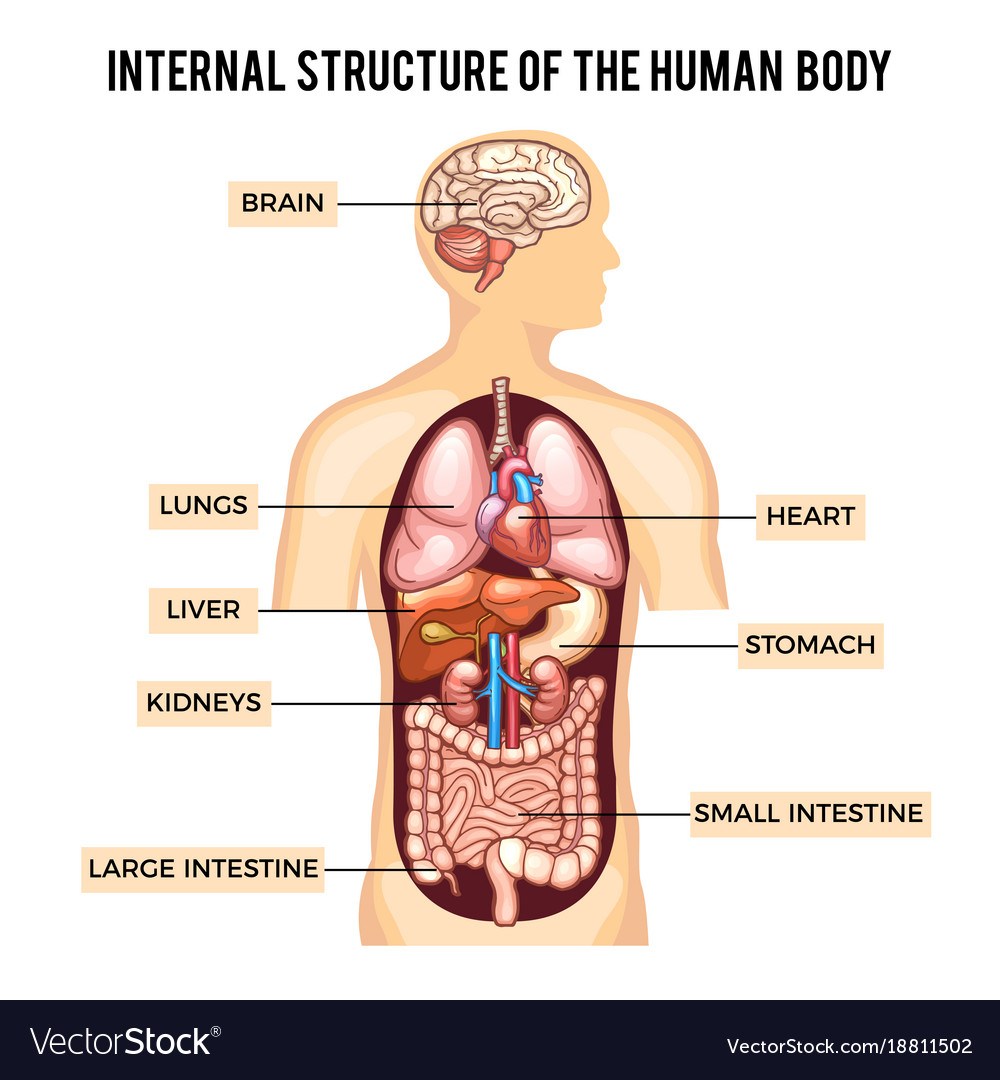
What is an organ?
A group of tissues that work together to perform closely related functions.
the network of nerve cells and fibers that transmits nerve impulses between parts of the body.
all of the bones and muscles in your body and responsible for body structure and movements.
responsible for providing your body with nutrients from food.

Many organs are part of more than one body system.
True
False


Which cavity houses the spinal cord?
Dorsal Body Cavity
Ventral Body Cavity
Abdominopelvic body cavity
Cranial Cavity

Which cavity houses the heart and lungs?
B
C
E
F
When we imagine a person exhibiting anatomical position, the palms of the hands are assumed to be facing ________.
to the side
forward
down
behind
The body's ability to maintain stable internal conditions is referred to as ________.
metabolism
homeostasis
catabolism
positive feedback
The cranial and spinal cavities are subdivisions of the ________ cavity.
dorsal
ventral
abdominopelvic
thoracic
The vertebral region is ________ to the sternal region.
lateral
dorsal
superior
ventral
Ventral is a directional term synonymous with ________ in humans.
anterior
posterior
inferior
superior
Which orientation and directional term means toward the midline of the body?
posterior
medial
anterior
lateral
The surgeon asked the surgical technician to help create an opening in the chest during
open heart surgery along a plane that equally separated the right and left halves of the thoracic cavity. This section is known as a(n) ________.
sagittal section
transverse section
frontal section
coronal section
Which of the following orientation and directional terms have the same meaning (in
humans)?
superior/caudal
inferior/cranial
anterior/ventral
anterior/dorsal

What abdominal region is #1?
Right Hypochondriac Region
Left Hypochondriac Region
Right Lumbar Region
Right Lumbar Region

What abdominal region is #6?
Hypogastric
Right Inguinal
Left Lumbar
Umbilical
What abdominal region is #2?
Hypogastric
Right Inguinal
Epigastric
Umbilical
What abdominal region is #4?
Right Lumbar
Left Hypochondriac Region
Epigastric
Umbilical
What abdominal region is #7?
Right Inguinal
Left Hypochondriac Region
Epigastric
Left Inguinal
What abdominal region is #8?
Right Inguinal
Left Hypochondriac Region
Epigastric
Hypogastric

What is a?
Right Upper Quadrant
Left Upper Quadrant
Right Lower Quadrant
Left Lower Quadrant
What is c ?
Right Upper Quadrant
Left Upper Quadrant
Right Lower Quadrant
Left Lower Quadrant
What is b?
Right Upper Quadrant
Left Upper Quadrant
Right Lower Quadrant
Left Lower Quadrant
What is d ?
Right Upper Quadrant
Left Upper Quadrant
Right Lower Quadrant
Left Lower Quadrant

Abdominal Cavity
Pericardial Cavity
Pelvic Cavity
Pleural Cavity

The cavity surrounded by a box is?
Abdominal Cavity
Pelvic Cavity
Pleural Cavity
Cranial Cavity

The cavity surrounded by a box is?
Cranial Cavity
Abdominal Cavity
Pelvic Cavity
Abdominopelvic Cavity

The cavity surrounded by a box is?
Pleural Cavity
Pericardial Cavity
Pelvic Cavity
Mediastynum

Cranial Cavity
Pleural Cavity
Pericardial Cavity
Vertebral Canal

The cavity surrounded by a box is?
Thoracic Cavity
Abdominal Cavity
Pelvic Cavity
Vertebral Canal

The cavity surrounded by a box is?
Abdominal Cavity
Pelvic Cavity
Thoracic Cavity
Pericardial Cavity

The cavity surrounded by a box is?
Pericardial Cavity
Pleural Cavity
Abdominal Cavity
Pelvic Cavity

The cavity surrounded by a box is?
Pleural Cavity
Pericardial Cavity
Abdominal Cavity
Mediastynum

What quadrant does number 1 Represent?
Right Upper
Right Lower
Left Upper
Left Lower

What quadrant does number 2 Represent?
Right Upper
Right Lower
Left Upper
Left Lower

What quadrant does number 3 Represent?
Right Upper
Left Upper
Right Lower
Left Lower

What is section 1?
Epigastric
Left Hypochondriac
Right Hypochondriac
Right iliac
What is section 2?
Epigastric
Left Hypochondriac
Right Hypochondriac
Right iliac
What is section 3?
Epigastric
Left Hypochondriac
Right Hypochondriac
Right iliac
What is section 7?
Epigastric
Left Hypochondriac
Right Hypochondriac
Right iliac
What is section 4?
Umbilical
Left lumbar
Right lumbar
Right iliac
What is section 5?
Umbilical
Left lumbar
Right lumbar
Right iliac
What is section 6?
Umbilical
Left lumbar
Right lumbar
Right iliac
What is section 8?
Hypogastric
Left iliac
Right iliac
Right lumbar
What is section 9?
Hypogastric
Left iliac
Right iliac
Right lumbar
What muscle structure helps separate the thoracic and abdominal cavities?
intestines
diaphram
buccal

Identify the abdominal area shaded in green:
RLQ
LLQ
epigastric

Identify what quadrant the green area shows:
LLQ
LUQ
RUQ

Which abdominal region is highlighted in green?
umbilical
epigastric

Identify the cavity in the diagram:
pericardial
pleural
ventral

Identify the cavity in the diagram:
vertebral
dorsal
thoracic

Identify the cavity on diagram:
abdominal
pleural
pelvic

Identify the cavity on diagram:
pleural
pericardial
cranial

Identify the cavity on diagram:
thoracic
abdominopelvic
ventral

Identify the cavity on diagram:
dorsal
ventral
thoracic

Identify the body cavity on the diagram:
pelvic
ventral
abdominal

Where is the left iliac region?
I
F
C
G

Where is the umbilical Region?
F
H
B
E

Which is the Right Hypochondriac Region
E
A
G
D

Which is the left lumbar region
D
E
F
G
The sagittal plane divides the body vertically into equal left and right sections.
True
False
A congenital condition is present at birth and may be caused by genetic or environmental factors.
True
False

