
 Worksheets
Intro to Anatomy Exam 1
Total questions: 94
Worksheet time: 49mins
What is homeostasis?
The process of breaking down food
Stability of the internal environment and the mechanisms that maintain the stability
The process of cell division
The process of photosynthesis
Fill in the blank: A ________ is maintained where the rate of loss balances out with the rate of gain.
dynamic equilibrium
static force
constant acceleration
steady increase
Which of the following is NOT a way organisms maintain homeostasis?
A) Detecting and responding to stimuli
B) Maintaining dynamic equilibrium
C) Ignoring changes in the environment
D) Regulation at the organ system and cellular level
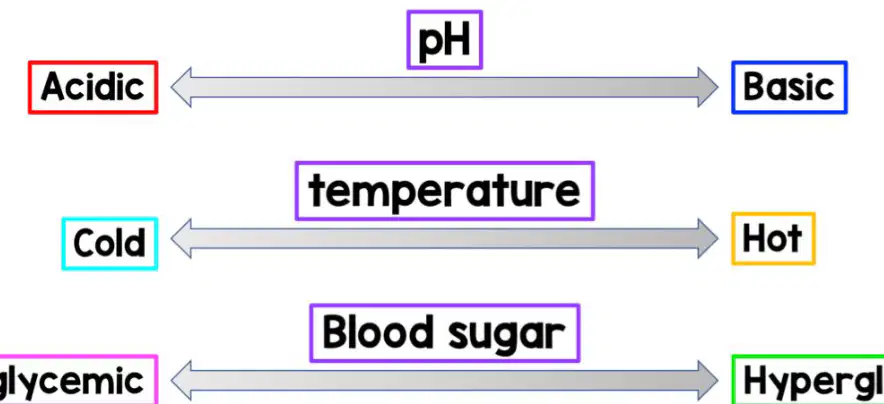
Match the following regulated variables with their extremes:
Acidic - Basic
pH
Cold - Hot
temperature
Hypoglycemic - Hyperglycemic
Blood sugar
What is the role of feedback mechanisms in organisms?
To help maintain homeostasis
To increase energy production
To decrease system response
To eliminate input signals
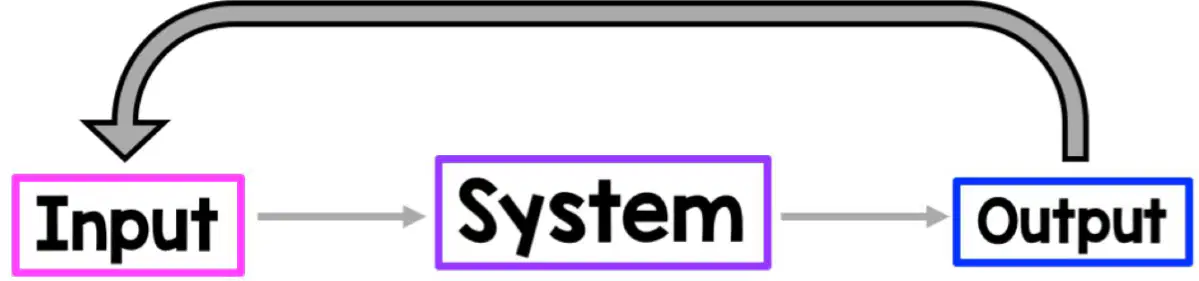
Refer to the diagram showing the flow from Input to System to Output. Fill in the blank: These loops use the ______ of a system to signal a change in input so that a system response can be stabilized or amplified.
output
energy
boundary
structure
Feedback mechanisms can be positive or negative.
True
False
What is a positive feedback loop?
The output of a system reduces the response
The output of a system intensifies the response
The input of a system is ignored
The system does not respond to any input
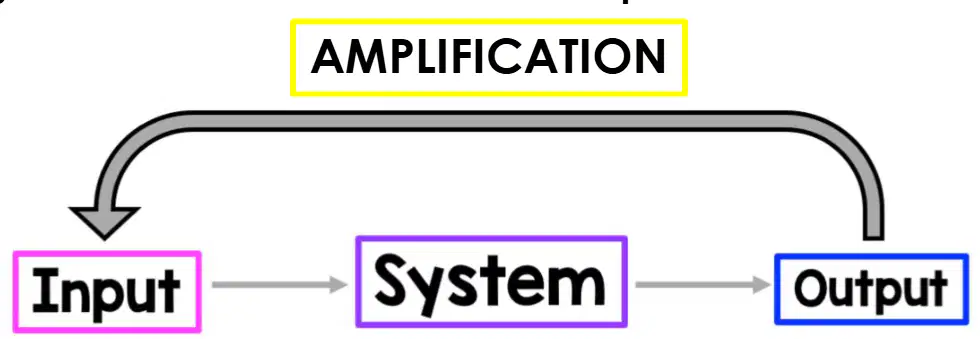
Refer to the diagram showing Input → System → Output with Amplification. What does the amplification in a positive feedback loop result in?
Decreased response
No change in response
Intensified response
Stopped response
Fill in the blank: In human childbirth, the release of more hormones leads to more ________ and more pressure.
contractions
relaxation
swelling
bleeding
Fill in the blank: In fruit ripening, the release of ethylene signals surrounding fruit to ________, causing neighboring fruit to release more ethylene.
ripen
wilt
freeze
shrink
What is a negative feedback loop?
The output of a system causes a counter response to return to a set point
The output of a system amplifies the original stimulus
The input and output are unrelated
The system never returns to a set point
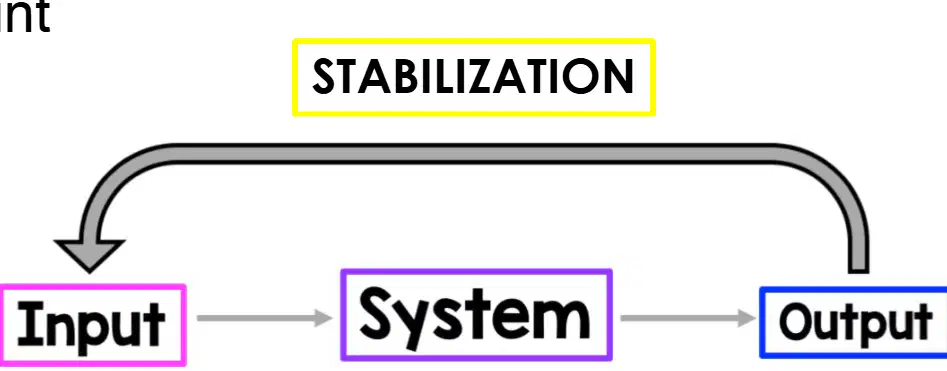
What is the main purpose of a negative feedback mechanism in this system?
Stabilization (to return the system to a set point)
Amplification (to increase the deviation from the set point)
Randomization (to introduce unpredictability)
Acceleration (to speed up the process)
Which of the following is an example of a negative feedback mechanism?
Human body temperature (thermoregulation)
Water concentration (osmoregulation)
Blood sugar regulation
All of the above
Fill in the blank: The regulation of water concentration in the body is known as __________.
osmoregulation
thermoregulation
homeostasis
excretion
Fill in the blank: The regulation of human body temperature is called __________.
thermoregulation
photosynthesis
respiration
digestion
Fill in the blank: A ________ is a sensory organ that receives the stimulus.
Receptor
Neuron
Effector
Hormone
Fill in the blank: A ________ is an action that evokes a response.
Stimulus
Organism
Reflex
Impulse
Fill in the blank: An ________ is an organ that does the response.
Effector
Neuron
Receptor
Hormone
Fill in the blank: A ________ is the effect, caused by the stimulus.
Response
Impulse
Receptor
Organ
Match the following terms with their correct definitions:
Receptor
Sensory organ that receives the stimulus
Stimulus
An action that evokes a response
Effector
An organ that does the response
Response
The effect, caused by the stimulus
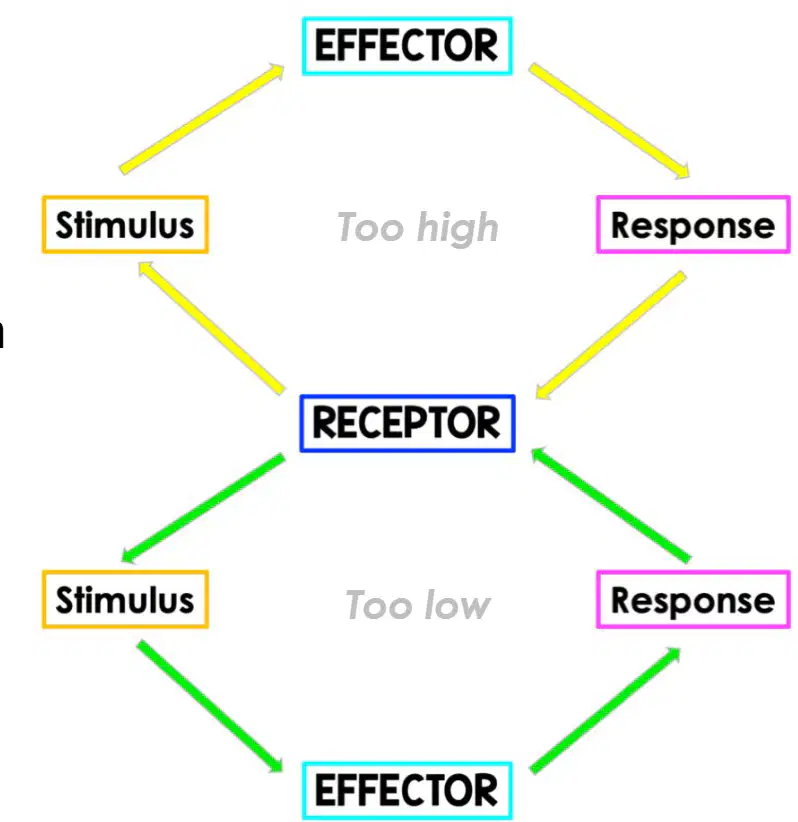
Based on the diagram, what is the correct sequence of components in a feedback loop when the stimulus is too high?
A) Effector → Stimulus → Receptor → Response
B) Receptor → Stimulus → Effector → Response
C) Stimulus → Receptor → Effector → Response
D) Effector → Response → Stimulus → Receptor
What is the role of catalysts in living systems?
They slow down reactions
They speed up reactions without being permanently altered
They are consumed in reactions
They stop reactions from occurring
Most biological catalysts are proteins called _______.
enzymes
hormones
lipids
carbohydrates
No catalyst makes a reaction occur that cannot otherwise occur.
True
False
Every step in a metabolic pathway is catalyzed by a specific _______.
enzyme
hormone
vitamin
substrate
Fill in the blank: Cells can regulate metabolism by controlling the ______ of an enzyme.
amount
color
location
shape
What is feedback inhibition?
The process of increasing enzyme activity
Output of a process is used as an input to control the behavior of the overall process itself, usually leading to inhibition of the process
The breakdown of enzymes by heat
The binding of inhibitors to enzymes
Fill in the blank: The ______ of an enzyme can also be regulated.
activity
color
weight
size
Chemical inhibitors can bind to enzymes and slow reaction rates.
True
False
Fill in the blank: ______ conditions play a role in enzyme function too. pH and temperature changes can lead to denaturation.
Environmental
Genetic
Mechanical
Electrical
What does the cell membrane consist of to control what goes in and out?
A) A solid wall
B) A selectively permeable phospholipid bilayer
C) A permeable protein layer
D) A rigid cellulose layer
Transport can be ________, requiring no extra energy as molecules move down the concentration gradient.
passive
active
facilitated
bulk
Transport that requires extra energy to move molecules against the gradient is called:
Passive transport
Active transport
Facilitated diffusion
Osmosis
Role of Cellular Transport and Signaling in Homeostasis: True or False: Passive transport requires extra energy to move molecules down the concentration gradient.
True
False
What is simple diffusion in the context of passive transport?
The movement of molecules against the concentration gradient
The spreading out of molecules across the membrane until equilibrium is reached
The movement of water only across the membrane
The active transport of ions
Simple diffusion involves a net movement from regions of ______ concentration to regions of ______ concentration.
greater; lesser
lesser; greater
equal; equal
lesser; lesser
Which of the following molecules can move across the membrane by simple diffusion?
Glucose
O2
CO2
Both B and C
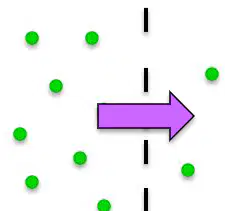
Refer to the diagram showing molecules moving across a membrane. What does the arrow indicate?
Movement from lesser to greater concentration
Movement from greater to lesser concentration
No movement
Active transport
What is the role of a transport protein in facilitated diffusion?
It helps molecules pass through the cell membrane that normally couldn't pass (large molecules and polar molecules)
It breaks down molecules
It produces energy
It stores molecules
Transport proteins can act as a ______ to allow specific molecules through (Ex. Ions like Ca+2).
channel
enzyme
receptor
pump
Transport proteins can also act as ______ that bind to substances to carry them across the membrane (Ex. Glucose).
carriers
channels
receptors
enzymes
Which of the following molecules would require facilitated diffusion to pass through the cell membrane?
Small nonpolar molecules
Large molecules and polar molecules
Water
Oxygen
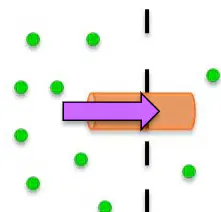
Refer to the diagram showing molecules moving through a channel protein over time. What process is being illustrated?
Active transport
Facilitated diffusion
Endocytosis
Exocytosis
What is osmosis?
The movement of solute across the cell membrane
The simple diffusion of water across the cell membrane
The active transport of water across the cell membrane
The movement of water from low to high water concentration
During osmosis, water moves from areas of ______ water concentration (meaning low solute) to areas of ______ water concentration (meaning high solute) until equilibrium is reached. Fill in the blanks.
high; low
low; high
high; high
low; low
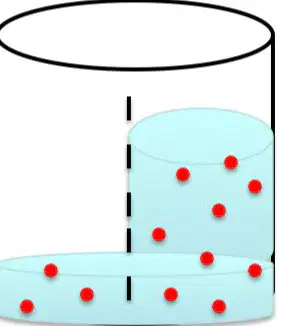
Refer to the diagram showing two beakers separated by a membrane. Over time, what happens to the water level on each side?
Water moves to the side with more solute
Water moves to the side with less solute
Water does not move
Solute moves to the other side
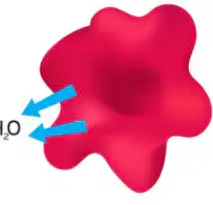
What happens to a cell when placed in a hypertonic solution?
Cell swells
Cell shrivels
Cell stays the same
Cell divides
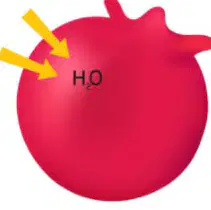
What is the effect of a hypotonic solution on a cell?
Cell shrivels
Cell swells
Cell stays the same
Cell dies
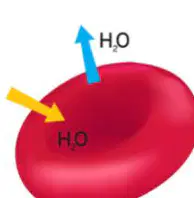
What happens to a cell in an isotonic solution?
Cell shrivels
Cell swells
Cell stays the same
Cell bursts
Match the type of solution to its effect on the cell:
Cell swells
hypotonic
Cell stays the same
Isotonic
Cell shrivels
hypertonic
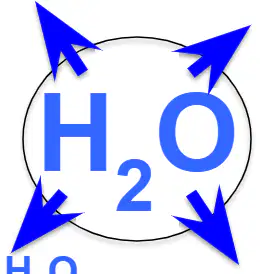
What happens to a cell in a hypertonic solution?
Cell swells
Cell shrivels
Cell stays the same
Cell divides
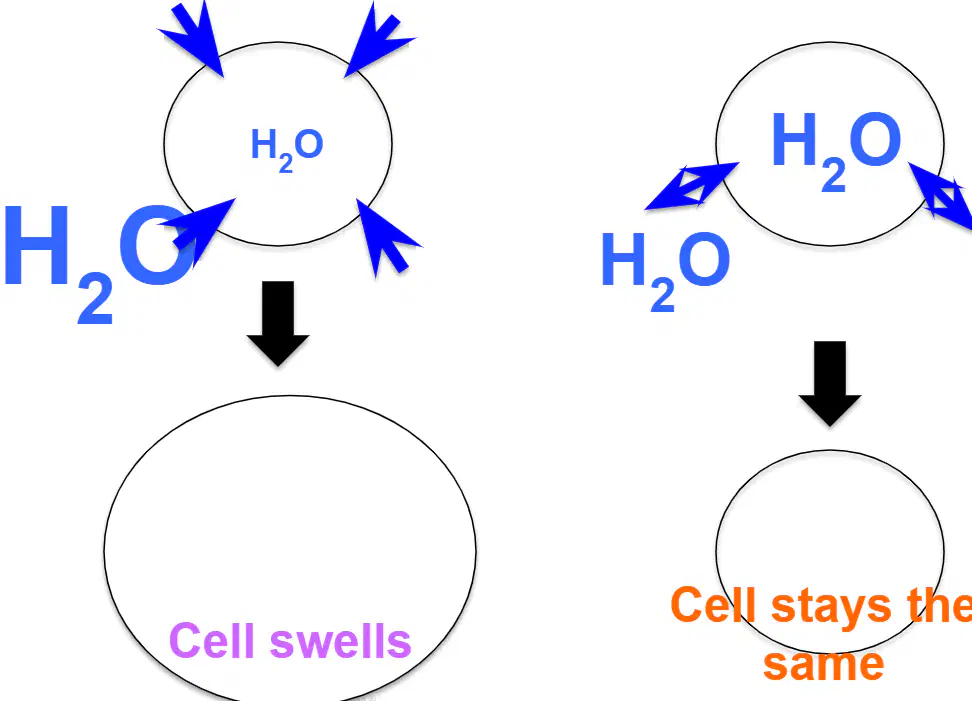
In which type of solution does the cell swell?
Hypertonic
Hypotonic
Isotonic
None of the above
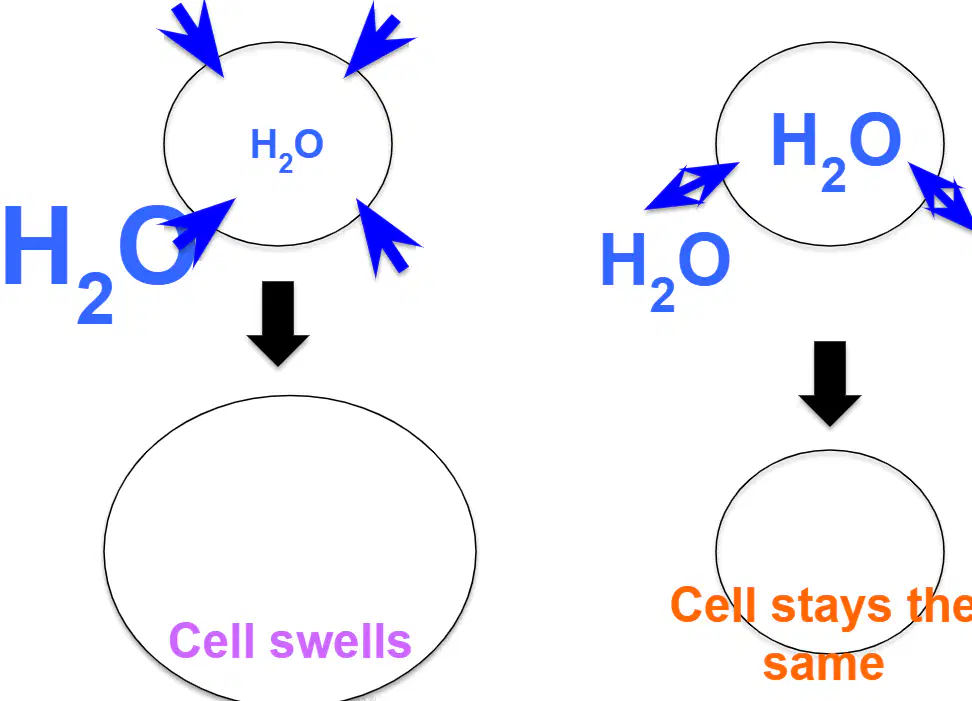
What happens to a cell in an isotonic solution?
Cell stays the same
Cell shrinks
Cell bursts
Cell divides
Refer to the diagram about Passive Transport and Osmosis. In a hypotonic solution, water moves (a) the cell.
into
out of
both into and out of
does not move
What is active transport? Choose the correct option.
Movement of molecules without energy
Movement of molecules with energy against the gradient through a protein channel
Movement of molecules with energy along the gradient
Movement of molecules without a protein channel
Fill in the blank: In the Sodium-Potassium pump, 1 molecule of ATP is used to move two ___ and three ___.
two K+ and three Na+
two Na+ and three K+
two Ca2+ and three Na+
two K+ and three Cl-
Which of the following is required for molecular pumps to move molecules across the membrane? Choose the correct option.
Water
Energy
Oxygen
Light
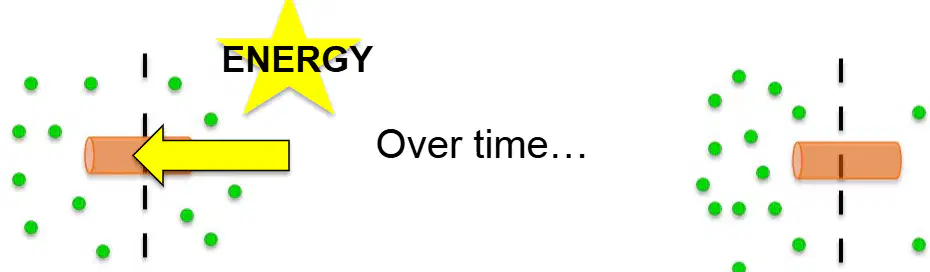
What does the diagram illustrate about active transport?
Molecules move passively across the membrane
Energy is used to move molecules against the gradient
Molecules move with the gradient
No movement occurs
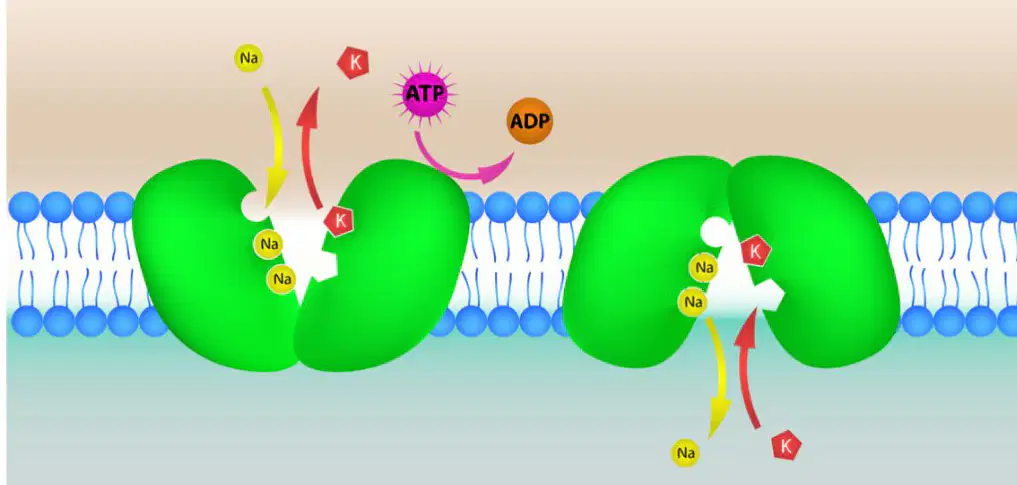
When a cell uses energy to pump molecules across the membrane, against the gradient, through a protein channel. What is the main source of energy used in this process?
Glucose
ATP
Oxygen
Water
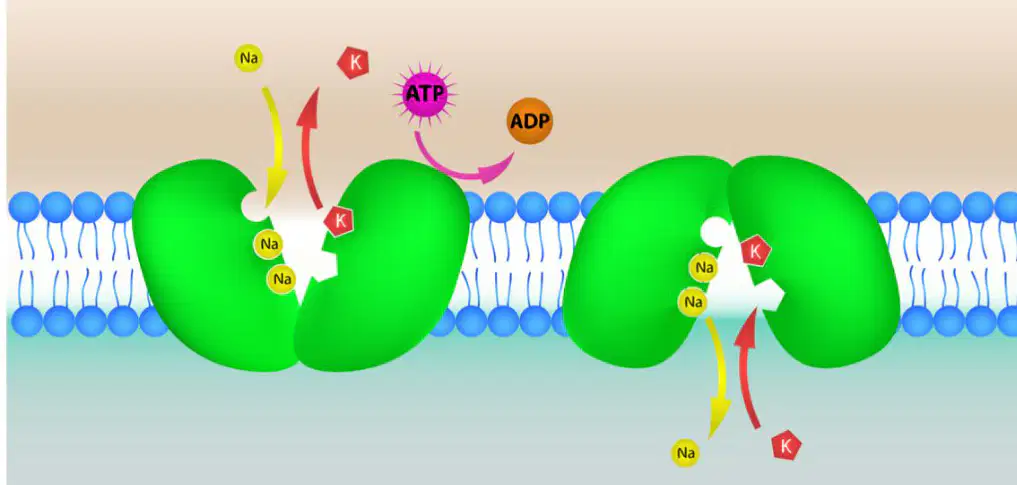
When a cell uses energy to pump molecules across the membrane, it moves molecules ______ the concentration gradient.
against
with
along
towards
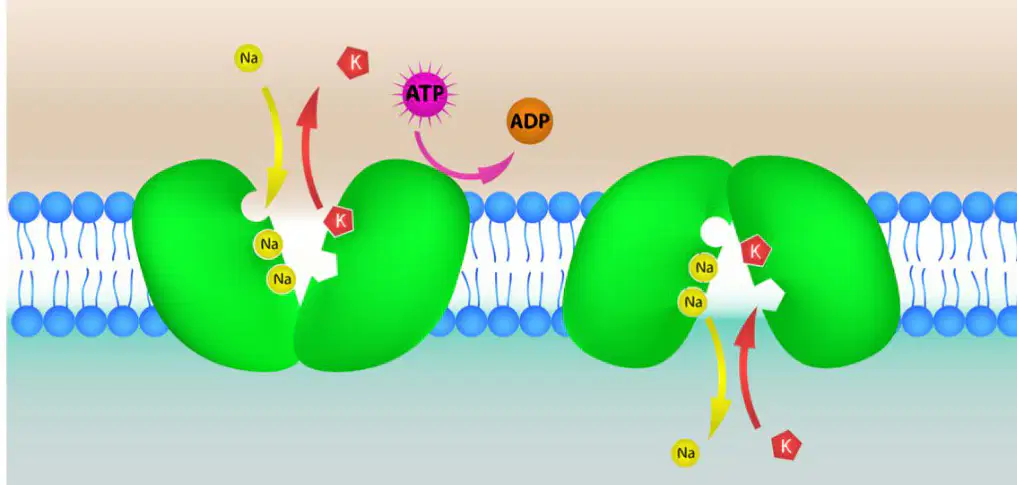
True or False: The Sodium-Potassium pump moves two K+ ions into the cell and three Na+ ions out of the cell using one molecule of ATP.
True
False
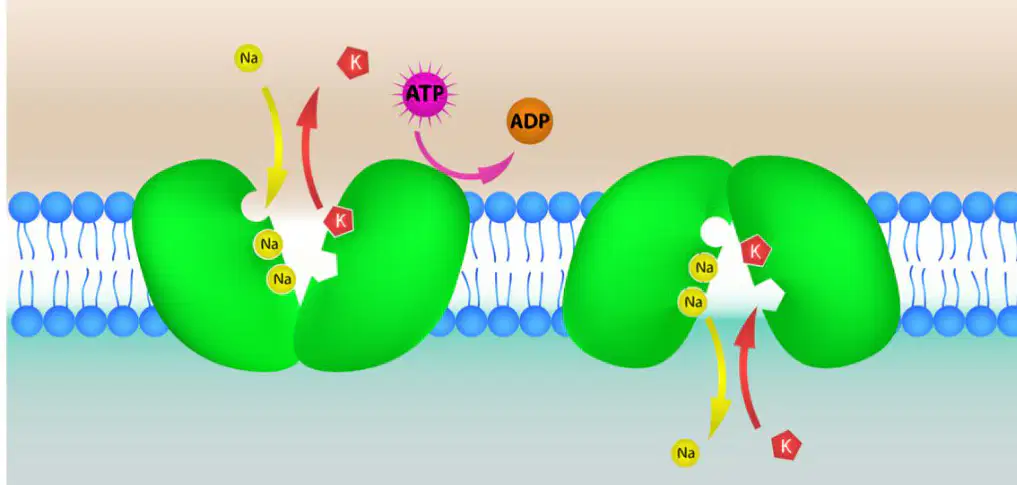
Which structure allows molecules to be pumped across the membrane during active transport?
Protein channel
Lipid bilayer
Ribosome
Mitochondria
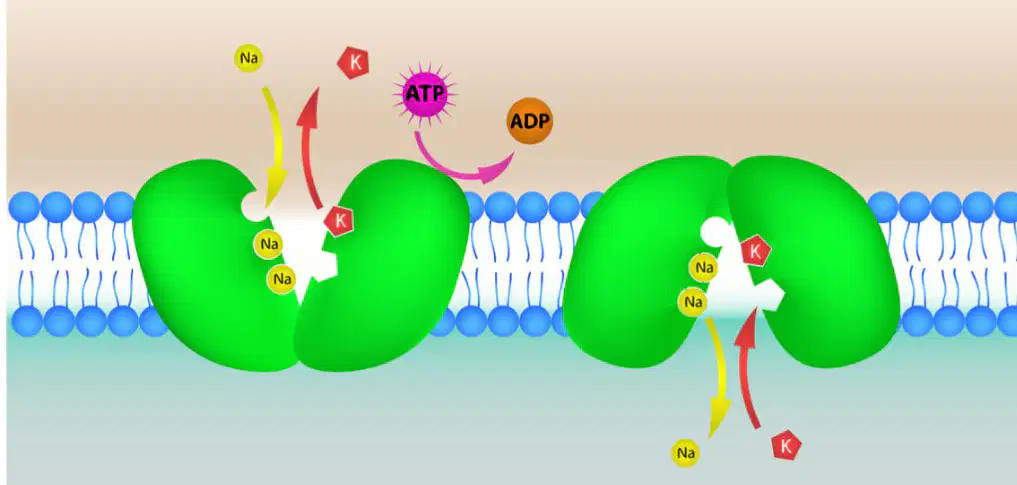
In the Sodium-Potassium pump, one molecule of ATP is used to move two ___ ions and three ___ ions.
two K+ ions and three Na+ ions
two Na+ ions and three K+ ions
two Ca2+ ions and three Na+ ions
two K+ ions and three Cl- ions
What is endocytosis?
The process of using vesicles to move large particles into the cell
The process of using vesicles to export materials out of the cell
The process of breaking down food in the cell
The process of making energy in the cell
What is exocytosis?
The process of using vesicles to move large particles into the cell
The process of using vesicles to export materials out of the cell
The process of breaking down food in the cell
The process of making energy in the cell
Fill in the blank: Endocytosis uses vesicles to move large particles ______ the cell.
into
out of
around
away from
Fill in the blank: Exocytosis uses vesicles to export materials ______ of the cell.
out
in
around
inside
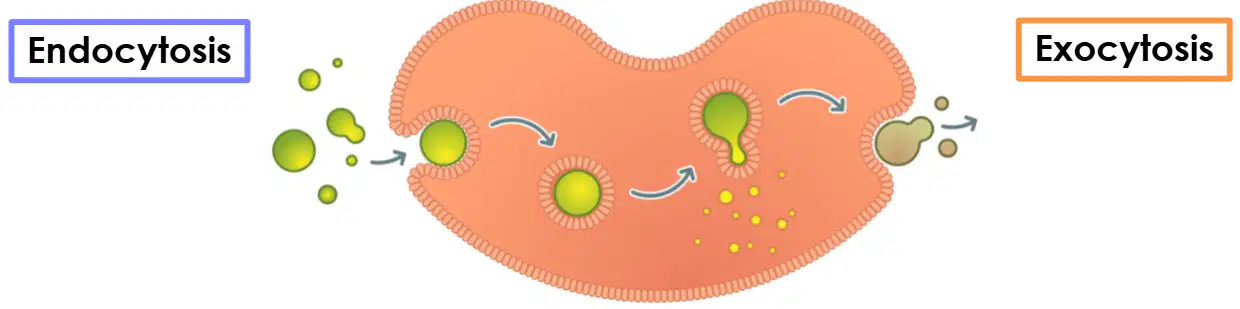
Which process is illustrated on the left side of the diagram, where particles are entering the cell?
Endocytosis
Exocytosis
Osmosis
Diffusion
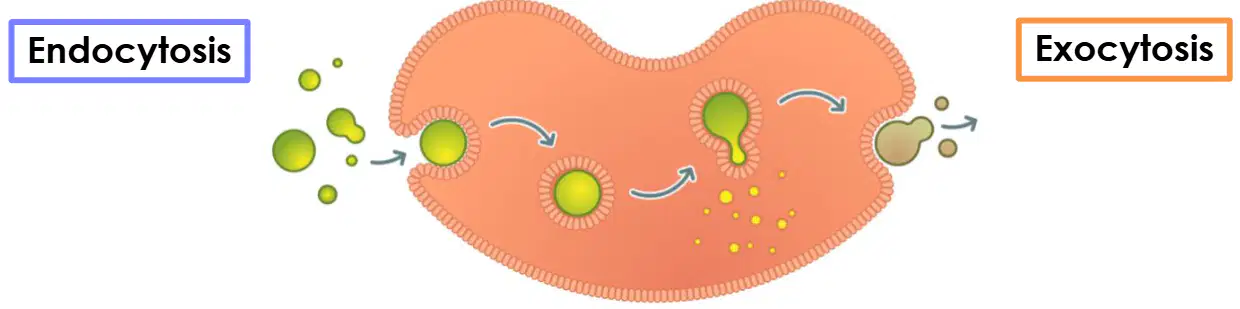
Which process is illustrated on the right side of the diagram, where materials are leaving the cell?
Exocytosis
Endocytosis
Osmosis
Diffusion
Which of the following is the best description of Biology?
The study of science and scientific theory
The study of the behavior and life of animals
The study of life
The study of the history of the Earth
This organelle digests worn out organelles, viruses, and waste materials.
vacuole
lysosome
chloroplast
nucleus
Which organelle controls what enters and leaves the cell?
cell wall
cell membrane
nucleus
lysosome
Which of the following is a golgi body?


What does this organelle do?
control the rest of the cell
makes energy
makes protein
store stuff

What type of cell is in the picture?
plant
fungi
animal
bacteria
Which of the following produces proteins and sends them through the cell?


Which organelle is pictured?
mitochondria
golgi body
nucleus
chloroplast

What is the function of the organelle shown?
control center of the cell
make energy
make proteins
make lipids
Which organelle uses energy from the sun to make sugar?


What is the organelle shown in blue in the image?
nucleus
rough er
golgi body
cytoplasm

What is the large organelle filled with water that is found in plant cells?
lysosome
vacuoles
central vacuole
cell wall

Which organelle surrounds the cell membrane in a plant cell?
central vacuole
cell wall
cell membrane
centrioles
Which organelle makes lipids and breaks down toxins?


What is found on the outside of the rough er?
vacuoles
lysosomes
ribosomes
rough er
Which organelle controls what enters and leaves the cell?
cell wall
cell membrane
nucleus
lysosome
This organelle digests worn out organelles, viruses, and waste materials.
vacuole
lysosome
chloroplast
nucleus

Which organelle digests worn out organelles and wastes?
12
1
9
6

Which organelle stores food, water, and waste?
13
9
10
6

Which type of cell is shown?
animal
plant

Which organelles are found in plant cells but not animal cells?
central vacuole
chloroplast
cell wall
all of the rest

What is the function of this organelle?
make protein
make sugar
make energy
hold the cell up

What is the function of the organelle shown?
produce proteins and ship them
break down viruses
package and ship "stuff" around the cell
control center

Which type of cell(s) have the following organelle? (Choose all that apply)
animal
plant
bacteria
all of the rest

