
Font size
 Worksheets
Practice Exam chapter 1 Language of Anatomy
Total questions: 61
Worksheet time: 42mins


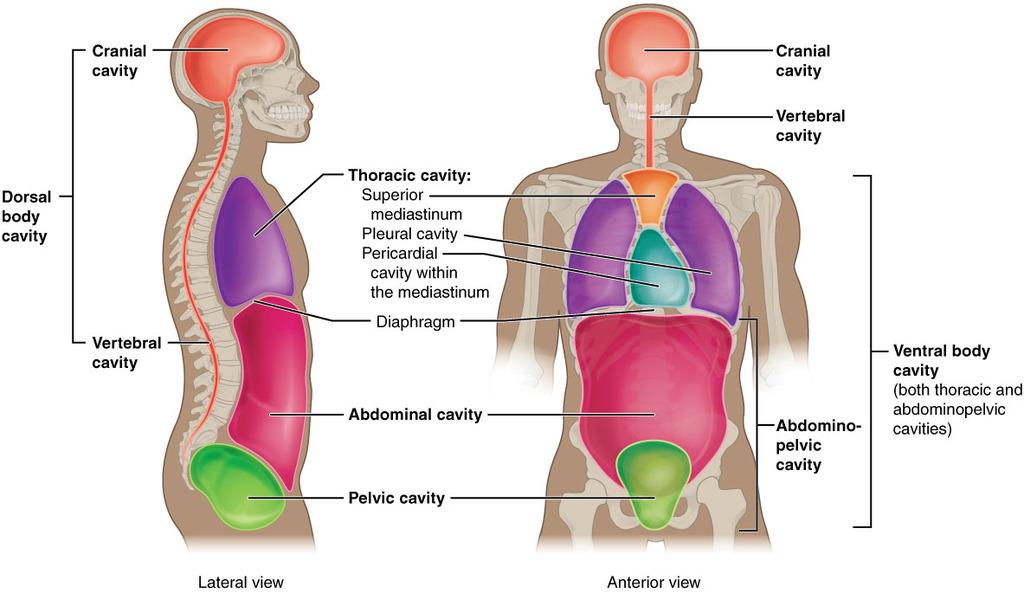
Which cavity houses the spinal cord?
Dorsal Body Cavity
Ventral Body Cavity
Abdominopelvic body cavity
Cranial Cavity
Closer to the head
Anterior
Proximal
Superior
Medial
Away from the head
Inferior
Lateral
Deep
Distal
Toward the front of the body
Superficial
Anterior
Inferior
Proximal
Another term for anterior
Dorsal
Distal
Lateral
Ventral

The heart is ______________ to my spinal cord.
Posterior
Anterior
inferior
superior
Your lungs are lateral to your heart.
True
False
A _____wound might require medical attention whereas a ____cut or scratch would just need basic bandages.
superficial, deep
deep, superficial
Toward the midline of the body
Inferior
Superficial
Proximal
Medial

Divides the body into left and right portions
Frontal
Transverse
Sagittal
Nonplanar

Divides the body into front and back portions
Sagittal
Frontal
Transverse
Nonplanar
armpit
axillary
brachial
umbilical
cephalic
In reference to the relationship between the patellar and popliteal regions, which of the following statements is correct?
The patellar region is superior to the popliteal region.
The patellar region is proximal to the popliteal region.
The patellar region is lateral to the popliteal region.
The patellar region is anterior to the popliteal region.
The surgeon asked the surgical technician to help create an opening in the chest during
open heart surgery along a plane that equally separated the right and left halves of the thoracic cavity. This section is known as a(n) ________.
sagittal section
transverse section
frontal section
coronal section

Which cavity houses the heart and lungs?
B
C
E
F
When we imagine a person exhibiting anatomical position, the palms of the hands are assumed to be facing ________.
to the side
forward
down
behind
What is an example of an organ?
Pancreas
Blood
Insulin
Knee
What is the main product of the endocrine system?
Bones
Blood
White blood cells
Hormones
Which of the following lists is in the order of increasing levels of complexity?
organelles - tissues - cells - organ systems - organs
organelles - cells - tissues - organs - organ systems
cells - macromolecules - tissues - body - organs
tissue - cell - organs - organelles - organ systems
The heart is an example of a(n)
cell
organ
organelle
organ segment
Anatomy =
"structure"
"function"
A group of cells make up
tissues
organs
organ systems
organisms
This system consists of the skin, hair, and nails.
Integumentary
Nervous
Skeletal
Muscular
The ______ system's function is gas exchange. It brings oxygen in and exhales carbon dioxide with the lungs, trachea, and diaphragm
endocrine
excretory
circulatory
respiratory
Lucy touched a mug of cocoa. The mug was very hot. She pulled her hand back quickly from the mug.Which body systems interacted to allow Lucy to interpret that the mug was hot and react by pulling her hand away?
nervous system and digestive system
nervous system and muscular system
circulatory system and skeletal system
circulatory system and respiratory system

lateral

medial

distal

proximal
Where is an organ that is toward the midline of the body?
medial
lateral
prone
supine

Which side is facing you?
Ventral
Dorsal
Lateral
Medial


What body position is considered the “starting point” for describing body positions?
SOFT Planes
Anatomical Position
Quadrants
Cavities
What body position is considered the “starting point” for describing body positions?
SOFT Planes
Anatomical Position
Quadrants
Cavities
Physiology means
The study of the form of all living things.
The study of the body.
The study of how living things work.
None of the above.
Which cavity contains the brain?
Oral
Cranial
Orbital
Abdominopelvic

Number 24 (located on the r leg) on the anatomy chart represents this region
patellar
mentis
digits
plantar

Area 14 (located on the L arm) in the image represents
the antecubital area
the femoral area
the antebrachial
the hallux area

Area 6 (located on the face) in the image represents this landmark
orbital
nasus
cervicis
buccal area

Region 25 (located on the r leg) in the image represents the
femoral region
the crural region
the calcaneus region
the inguinal region
This region includes the groin area of the body.
abdomen
tarsus
carpus
inguinal

Area 20 (located on the trunk) in the image is the __________ region
Axillary
abdominal
brachial
gluteal
abdominopelvic

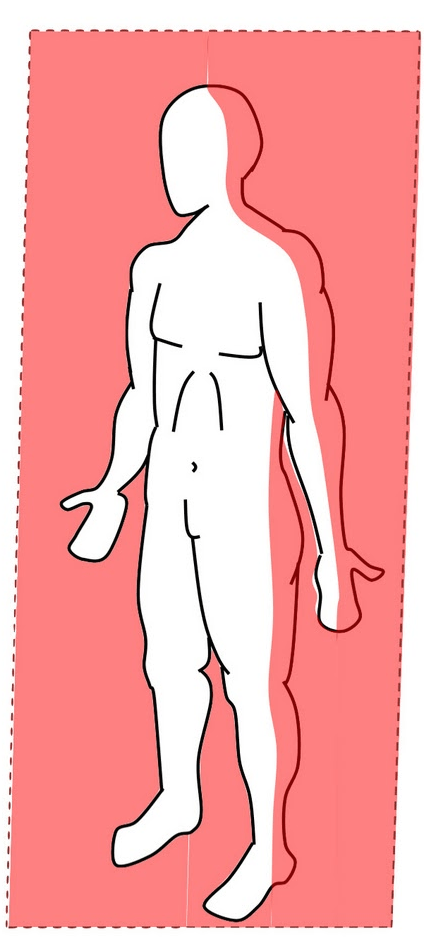
The blue plane in the image represents a
transverse plane
frontal plane
sagittal plane
midsagittal plane

The RED arrow is pointing to the ________side of the leg
anterior
posterior

Which type of section is this?
Coronal / Frontal
Sagittal
Transverse / Horizontal
Midsagittal

