
 Worksheets
ch. 2-5 BIO quizizz
Total questions: 115
Worksheet time: 2hrs 38mins
What are the elements that comprise 96% of living matter
Carbon
Nitrogen
Oxegyn
Hydrogen
Phosphorus
What are the elements that make up lipids and carbohydrates?
Carbon
Nitrogen
Oxegyn
Hydrogen
Phosphorus
What are the elements that make up proteins?
Carbon
Nitrogen
Oxegyn
Hydrogen
Phosphorus
What are the elements that make up nucleic acids?
Carbon
Nitrogen
Oxegyn
Hydrogen
Phosphorus
What subatomic particles are involved if 2 atoms come and interact with each other?
(a)
The capacity to cause change.
(a)
The energy that matter possesses because of its location or structure.
(a)
A bond between a partially charged HYDROGEN and a partially
negatively charged atom. A HYDROGEN atom covalently bonded to one electronegative atom is also attracted to another electronegative atom.
(a)
when an electron moves closer to the nucleus...
it loses energy
it gains energy
energy stays the same
cannot be determined
when an electron moves farther away from the nucleus...
it loses energy
it gains energy
energy stays the same
cannot be determined
The energy that matter possesses because of its motion.
(a)
The SHARING of a pair of valence electrons by 2 atoms (causes partially + or - charge)
(a)
The atoms share the electron EQUALLY.
(a)
A bond between oppositely charged ions (Na+ and Cl-) that the 2atoms are so unequal in attraction for valence electrons that the more electronegative atom strips electrons away from its partner.
(a)
One atom is more electronegative (one of the atoms pulls the electron harder towards itself). The atoms share the electron UNEQUALLY.
(a)
An atom’s attraction for the
electrons in a covalent bond.
(a)
Atoms that are very close together are attracted by fleeting charge differences (gecko’s toe hair and wall surface).
(a)
the farther away from the nucleus, the more (a) the electrons have
What are the main 4 bonds that take place in the tertiary structure of proteins
hydrogen bonds
van der waals interactions
hydrophobic and hydrophilic interactions
disulfide bonds
peptide bonds
what type of bond occurs between the oxygen of one water molecule and the hydrogen of another?
(a)
what bond occurs between the hydrogens and oxygen of one water molecule
(a)
Why can water form hydrogen bonds between other water molecules so easily?
the partial negative of the oxygen atom and partial negative of the hydrogen atom
the high heat capacity
water's versatility as a solvent
the adhesion and cohesion tendencies of water
what are the 4 properties of water
Cohesion and Adhesion
Ability to moderate temperature
Versatility as a solvent
Expansion from freezing
Ability to evaporate
the tendency of water molecules to stick together
(a)
tendency for water molecules to stick to other surfaces
(a)
water becomes (a) dense when frozen
water (a) when frozen (expands/shrinks)
the ability to absorb a large amount of heat energy without a significant temperature change, acting as a thermal buffer
(a)
a natural process where the evaporation of water absorbs heat from the air, thereby lowering the air temperature (ex: sweating)
(a)
What water property causes the cooling effect from sweating?
(a)
What is [OH-] if [H+] = 10-10
10?
(a)
If a solution has a pH value of 6, what is the [H+] concentration?
10?
(a)
If a solution’s [H+] concentration is 10-9 M, what is the pH value of the solution?
(a)
Solution A has a pH of 9 and solution B has a pH of 3, Which one has more hydrogen/H+ ions?
solution a
solution b
Solution A has a pH of 9 and solution B has a pH of 3, Which one is more acidic than the other?
solution a
solution b
Solution A has a pH of 9 and solution B has a pH of 3, Which one is more basic than the other?
solution a
solution b
monomer for carbohydrates
(a)
polymer for carbohydrates
(a)
type of bond between carbohydrates
(a)
monomer for proteins
(a)
polymer for proteins
(a)
type of bond between proteins
(a)
monomer of nucleic acids
(a)
polymer of nucleic acids
(a)
type of bond between nucleic acids
(a)
monomer for lipids
Not applicable
monosaccharides
amino acids
nucleotides
glycerol and phosphorus
polymer for lipids
Not applicable
monosaccharides
amino acids
nucleotides
glycerol and phosphorus
bond between lipid
Not applicable
monosaccharides
amino acids
nucleotides
ester
what makes RNA different from DNA
single stranded
double stranded
uracil
thymine
ribose not deoxyribose
what makes DNA different from RNA
single stranded
double stranded
uracil
thymine
deoxyribose not ribose
What mechanism links monomers together to form polymers and what is the by-product
dehydration synthesis
hydrolysis
condensation
water
hydroxyl
What mechanism disassembles polymers into monomers?
dehydration synthesis
hydrolysis
condensation
How many molecules of water will form after joining 10 monomers of a large molecule?
(a)
What is the monomer if glycogen is the polymer? (in general)
(a)
What is the monomer if insulin is the polymer? (in general)
(a)
What is the monomer if RNA is the polymer? (in general)
(a)
how does a cellulose's structure compare to a glycogen
linear
branched
not applicable
how does a glycogen's structure compare to a cellulose
linear
branched
not applicable
how does a amylose's structure compare to a amylopectin
linear
branched
not applicable
how does a amylopectin's structure compare to a amyose
linear
branched
not applicable
which structure is more branched?
cellulose
glucose
amylose
amylopectin
what causes the branching in amylopectin
(a)
What are the monomers in starch?
(a)
You determine that one of the samples has a linear, unbranched polymeric chain. Is this sample cellulose, or glycogen?
(a)
where is cellulose mainly found in cells
plant cell walls
animal cell walls
plant cell membranes
animal cell membranes
a majority of structures in all cells
Which of the samples, cellulose or glycogen, is obtained from an animal?
(a)
are alpha or beta glucose a helix
(a)
are alpha or beta glucose a sheet
(a)
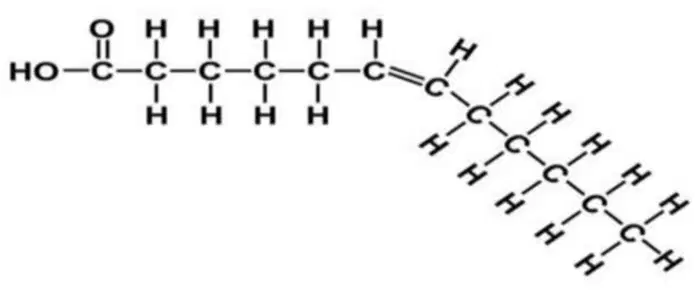
what is this
(a)

what is this
(a)
what state are unsaturated fats in at room temp
liquid
solid
plasma
depends on the substance
gas
what state are saturated fats in at room temp
liquid
solid
plasma
depends on the substance
gas
what is included in a phospholipid
hydrophobic fatty acid tails
hydrophilic head (phosphate and glycerol)
hydrophobic head (phosphate and glycerol)
hydrophilic fatty acid tails
levels of protein structure
primary
secondary
tertiary
quaternary
quinary
which level of proteins structure is this: simple chains of amino acids
(a)
which level of proteins structure is this: when amino acids twist into helixes or sheets
(a)
which level of proteins structure is this: when sheets or helixes fold into 3d structures and the main area of denaturation
(a)
which level of proteins structure is this: when multiple arrangements proteins form bonds between each other
(a)
how many common amino acids are there
(a)
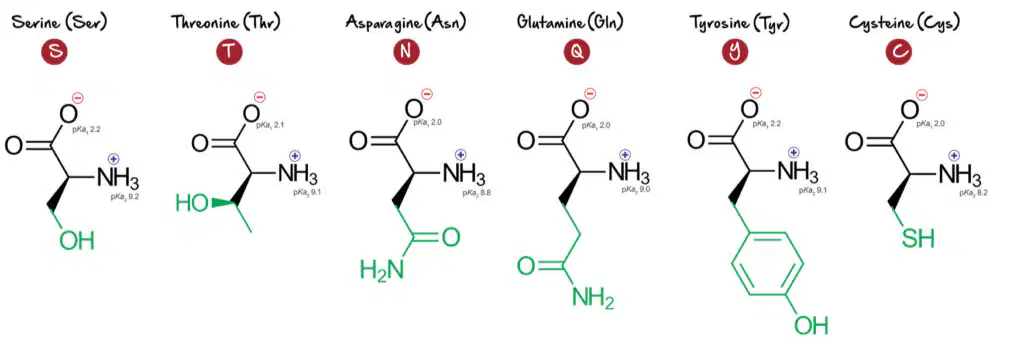
what is the polarity of these amino acids
nonpolar
polar
charged
unable to determine
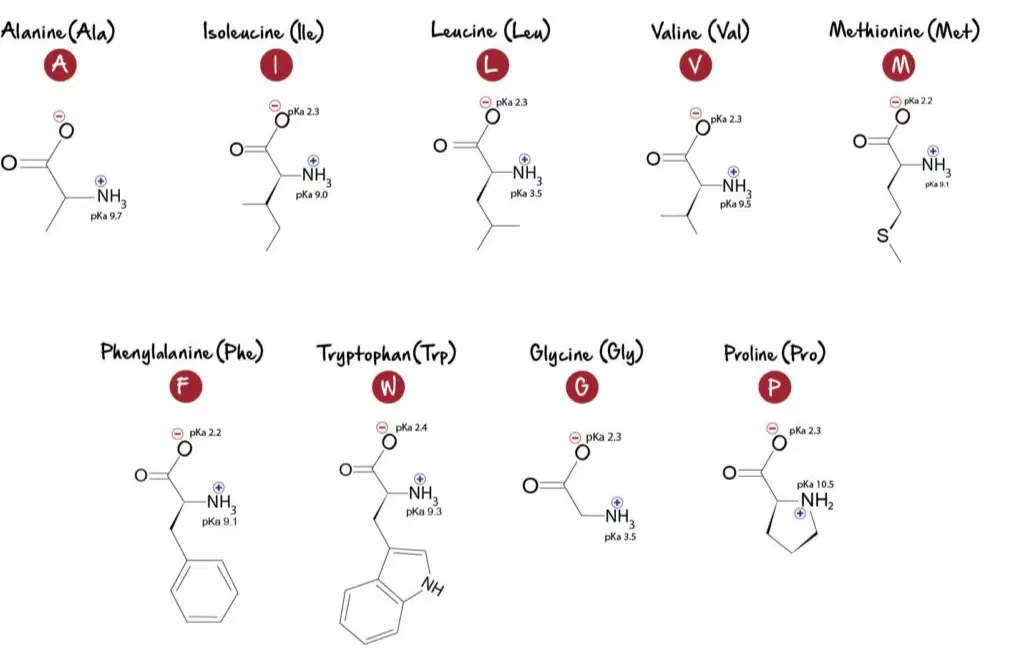
what is the polarity of these amino acids
nonpolar
polar
charged
unable to determine
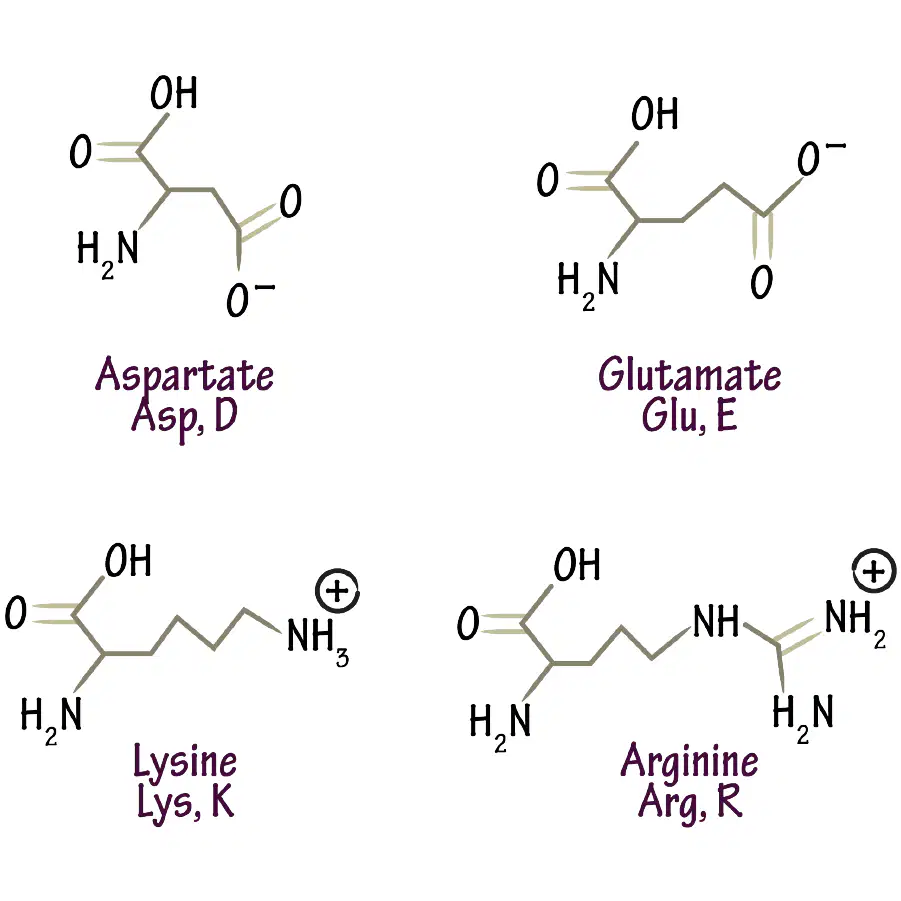
what is the polarity of these amino acids
nonpolar
polar
charged
unable to determine
If you have a nonpolar side chain, where is it going to be found in the protein
depends on the protein
inside
outside
fluctuating throughout the cell
If you have a polar side chain, where is it going to be found in the protein
depends on the protein
inside
outside
fluctuating throughout the cell
polar=
hydrophilic
hydrophobic
amphipathic
nonpolar=
hydrophilic
hydrophobic
amphipathic
charged=
hydrophilic
hydrophobic
amphipathic
which terminus is the amino group found on?
c-terminus
n-terminus
a-terminus
m-terminus
g-terminus
which terminus is the carboxyl group found on?
c-terminus
n-terminus
a-terminus
m-terminus
g-terminus
what group goes on the N-terminus
(a)
what group goes on the C-terminus
(a)
a specific group of atoms within a molecule that gives the molecule its characteristic chemical and physical properties, regardless of the rest of the molecule
(a)
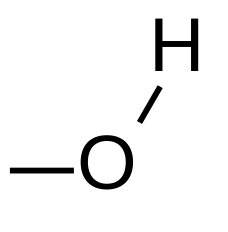
what is this functional group
(a)
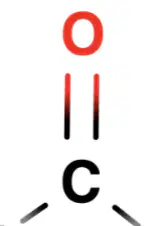
what is this functional group
(a)

what is this functional group
(a)
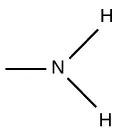
what is this functional group
(a)
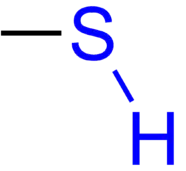
what is this functional group
(a)
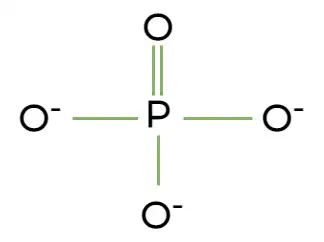
what is this functional group
(a)

what is this functional group
(a)
what is the ONLY functional group that is nonpolar
(a)
carbonyl group that is BETWEEN two carbons
(a)
carbonyl group that is AT THE END of two carbons
(a)
which functional group acts as an acid
(a)
which functional group acts as a base
(a)
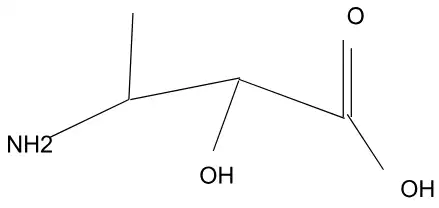
what functional groups are in this molecule?
two hydroxyls
hydroxyl
carboxyl
carbonyl
amino
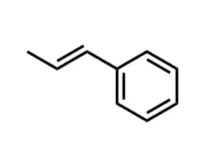
how many carbon are in this molecule
(a)
how many hydrogen are in this molecule
(a)
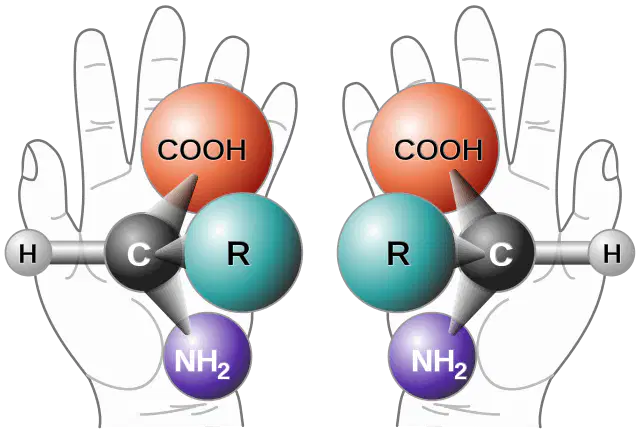
what kind of isomer is this
(a)
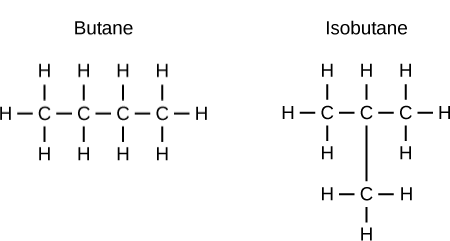
what kind of isomer is this
(a)

what kind of isomer is this
(a)
true or false: the molecular formula between structural isomers of the same molecule will not change
true
false
what isomer fits this description: Mirror images of each other (Have to have asymmetric carbon that has 4 different components attached to it)
(a)
what isomer fits this description: Different covalent
arrangements of their atoms.
(a)
what isomer fits this description: Same covalent arrangements but differ in spatial
arrangements
(a)
what category of isomers do cis-trans isomers fall under
(a)

