
 Worksheets
Roles and Terms in Court Cases Review
Total questions: 100
Worksheet time: 50mins
Imagine Harper and Emma are watching a courtroom drama. Who is the lawyer representing the government in a court case? What exciting role does the prosecutor play?
The person filing the lawsuit
The lawyer for the government
The person charged with a crime
The judge in the courtroom
Imagine Avery decides to sue Ethan in court. Who is the plaintiff in this case?
The government
The lawyer for the government
The person filing the lawsuit
The person charged with a crime
During a heated courtroom drama, Zoe turns to Abigail and asks, "Which term is used to refer to the government in this case?" What should Abigail answer?
Defendant
Plaintiff
Prosecution
Litigation
Imagine William is in court because he’s been charged with a crime. What is William called during the trial?
Plaintiff
Prosecutor
Defendant
Litigation
Grace and Benjamin are having a debate in class. Grace says "litigation" means the lawyer for the government, but Benjamin disagrees. Who is correct? What does "litigation" actually mean?
The lawyer for the government
The lawsuit
The person charged with a crime
The government
Emma and Arjun are in court for a cybercrime case. Emma is accused of the crime, while Arjun is just watching from the audience. What is Emma's legal title?
Plaintiff
Defendant
Prosecutor
Prosecution
Oliver is taking Noah to court because his hoverboard has gone missing! In this case, who is the plaintiff and who is the defendant?
The plaintiff is the government, and the defendant is the lawyer.
The plaintiff is the person filing the lawsuit, and the defendant is the person being sued.
The plaintiff is the lawyer for the government, and the defendant is the government.
The plaintiff is the judge, and the defendant is the person filing the lawsuit.
James and Scarlett are watching a detective show. Scarlett asks, "What is forensic science?" Can you help them out?
The study of plants and animals
The application of science to criminal and civil laws
The study of weather patterns
The application of art to history
Nora, Abigail, and Grace are curious about forensic science. Which of the following best describes what forensic science is all about?
Applying science to only criminal laws
Applying science to only civil laws
Applying science to both criminal and civil laws
Applying science to environmental laws only
Benjamin and Emma are having a debate! Benjamin says criminal law is about crimes against the state. Emma says civil law is about private disputes. Who is correct about the difference between criminal law and civil law?
Criminal law deals with private disputes, while civil law deals with crimes against the state.
Criminal law deals with crimes against the state, while civil law deals with private disputes.
Both criminal and civil law deal with the same types of cases.
Criminal law is only about traffic violations, while civil law is about theft.

Grace, Maya, and Olivia are trying to solve a mystery! They found this picture of law books and a gavel. What do you think this picture most likely represents?
The study of biology
The concept of law and justice
The process of cooking
The study of astronomy

Imagine Grace, Abigail, and Ava are living in a super high-tech city with robots and flying cars! Even with all this cool technology, why do you think their society still needs criminal laws?
To prevent citizens from intentionally harming each other
To resolve business disputes
To regulate international trade
To create new laws
Maya, Kai, and Scarlett are discussing different actions. Which of the following would most likely get one of them in trouble with criminal law?
Theft
Breach of contract
Property ownership
Divorce
Imagine Isla is watching a courtroom drama. In a criminal law case, who is the one that actually files the lawsuit?
The government (prosecution)
The victim
The defendant
A private company
Imagine Rohan, William, and Mason are learning about criminal law. Which of the following is NOT a possible punishment that a judge can give in a criminal case?
Incarceration in a jail or prison
Fine paid to the government
Death penalty in exceptional cases
Awarding money to the victim
Mason and Lily are debating in class: Why is it that in criminal law cases, it's the government (not the victim) who files the lawsuit? Who's right?
Because crimes are considered offenses against society as a whole
Because the government wants to collect fines
Because victims are not allowed in court
Because only the government knows the law
During a heated game of dodgeball, Aiden is found guilty of assault. Based on criminal law, what could happen to Aiden? (Hannah and Luna are watching!)
Incarceration in jail or prison
Forced to apologize
Given a community service award
Promoted at work

Ava and Aiden are having a debate! Ava thinks the type of law that helps people solve problems like commercial disagreements, personal injuries, or divorces is super important. Which type of law are they talking about?
Civil Law
Criminal Law
Constitutional Law
International Law
Aria claims that Emma’s use of technology caused her harm during a group project. In civil law, what is Aria most likely claiming?
That the other person’s actions caused him harm
That the other person broke a criminal law
That the other person committed a felony
That the other person is a government official
It’s the year 2125, and Isla finds herself as a defendant in a high-tech virtual civil court in the Metaverse, with Henry and Arjun watching the trial unfold! What could possibly happen to Isla in this futuristic courtroom?
Incarceration
Execution
Payment of damages
Community service
Imagine Scarlett is suing Benjamin in civil court. Why can't Benjamin end up in jail or face execution, no matter how the case goes? Use your knowledge of civil law to explain!
Because civil law only deals with financial penalties and not criminal punishment
Because civil law is not enforced by courts
Because civil law is only about government disputes
Because civil law always results in a settlement
Charlotte, Liam, and Daniel are discussing different types of crimes. Which type of crime could land someone in a high-security detention center for more than one year?
Felonies
Misdemeanors
Infractions
Violations
Priya, Abigail, and Olivia are playing a courtroom game! They need to know: What is the maximum possible sentence for a misdemeanor?
More than one year incarceration
Less than one year incarceration
Exactly one year incarceration
No incarceration

Imagine Maya, David, and Hannah are discussing what kind of crime could land someone in a high-security rehabilitation pod for two years. What type of crime do you think it would be?
Felony
Misdemeanor
Infraction
Civil offense
Emma, Abigail, and Aria stumble upon a mysterious book in the school library. What is the main focus of the subject discussed in this intriguing book?
The history of art in ancient civilizations
The application of science to criminal and civil laws enforced by police agencies
The development of modern technology
The study of animal behavior
Jackson, Hannah, and Anika are discussing the pioneers of forensic science. Which of the following was NOT a contributor to the origins of forensic science?
Bertillon
Galton
Newton
Goddard
Lily, Henry, and David are curious about the history of forensic science. Why are the contributions of Bertillon, Galton, Lattes, Goddard, Osborn, and Locard so important to this field?
They created new laws for police agencies
They developed principles and techniques to identify or compare physical evidence
They invented new types of police uniforms
They wrote novels about crime
David, Mason, and Anika are curious about how police use cool science and technology to crack tough cases. How does using advanced science and technology help police solve crimes and improve the justice system?
It helps police agencies enforce laws more effectively by providing scientific methods to analyze evidence.
It makes the laws more complicated for citizens to understand.
It reduces the need for police officers in the field.
It focuses only on solving civil disputes, not criminal cases.

Lily, Mia, and Abigail are working on a mystery science project! They stumble upon a clue about the "father of forensic toxicology." Can you help them solve the case by choosing the correct answer?
Alphonse Bertillion
Mathieu Orfila
Edmond Locard
Francis Galton

Kai, Abigail, and Jackson team up with an AI named Alphos, inspired by a legendary detective. Together, they set out to solve mysteries! What groundbreaking contribution does Alphos introduce to help crack the toughest cases?
Invented fingerprinting
Developed the first scientific system of personal identification
Discovered DNA profiling
Created the polygraph test

Benjamin, Avery, and David are on a detective quest! They discover an old photo (like the one above) and wonder: Which identification method, developed by Alphonse Bertillion, are they looking at?
Dactyloscopy
Anthropometry
Chromatography
Serology

Luna, Mason, and Harper are on a detective adventure! They discover that Alphonse Bertillion invented anthropometry, which changed the way people were identified in criminal investigations. How did this invention make forensic science more awesome and help future identification methods?
It allowed for the scientific measurement and recording of physical characteristics, improving the accuracy of personal identification in criminal investigations.
It introduced the use of blood analysis in crime scenes.
It replaced all other identification methods with fingerprinting.
It focused on psychological profiling of suspects.

Kai, Harper, and Anika are on a detective adventure! They want to know: Who wrote the legendary Sherlock Holmes books?
Sir Arthur Conan Doyle
Francis Galton
Agatha Christie
Charles Dickens
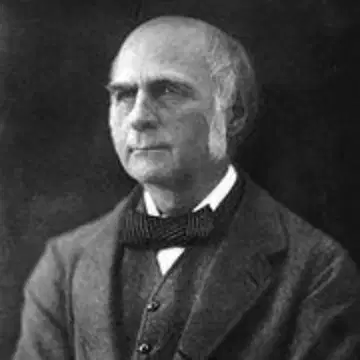
Anika, Evelyn, and Avery are curious about the science behind fingerprints! Which scientist conducted the first definitive study of fingerprints and their classification?
Francis Galton
Sir Arthur Conan Doyle
Isaac Newton
Albert Einstein
Hannah, Anika, and Mia are reading a mystery novel and wonder: How did Sir Arthur Conan Doyle help make forensics famous?
He popularized forensics through his Sherlock Holmes books.
He invented fingerprint analysis.
He discovered DNA.
He created the first police force.
Abigail and David are curious about famous pioneers in forensic science. Can you help them figure out why Francis Galton is considered a trailblazer in this field?
He conducted the first definitive study of fingerprints and their classification.
He wrote detective novels.
He invented the microscope.
He solved the first criminal case.

Imagine Lily, Anika, and Rohan are junior detectives trying to solve a mysterious case! How could Francis Galton’s work on fingerprints help them crack the case using advanced technology?
It would help you classify and compare fingerprints found at crime scenes.
It would help you write detective stories.
It would help you analyze handwriting.
It would help you study blood types.

Harper, Daniel, and Anika are on a detective adventure! They want to know: Who was the first to describe the application of scientific principles to criminal investigation?
Hans Gross
Karl Landsteiner
Albert Einstein
Gregor Mendel

Grace and Kai are curious about why people have different blood types. Which scientist made the amazing discovery that human blood comes in different types?
Hans Gross
Karl Landsteiner
Louis Pasteur
Alexander Fleming
Ethan, Avery, and Aria are learning about blood types in science class. Their teacher asks: Which of the following is NOT a human blood type identified by Karl Landsteiner?
A
B
AB
C

Noah, Anika, and Evelyn are learning about Karl Landsteiner’s discovery of different blood types. They wonder how this discovery could still be super important for blood transfusions in the future. What do you think?
It allows for safe blood transfusions by matching compatible blood types.
It prevents the need for blood transfusions.
It makes all blood types interchangeable.
It eliminates the need for blood testing.

Aiden and Aria are investigating a mysterious crime scene in their science class. Their teacher, Mr. Jackson, asks: Which scientist developed the famous Locard’s Exchange Principle, which states that every contact leaves a trace?
Edmond Locard
Leone Lattes
Albert Einstein
Francis Crick
Imagine Arjun and Anika are investigating a mysterious crime scene! According to Locard’s Exchange Principle, what happens when a criminal comes into contact with an object or person?
Evidence is always destroyed at a crime scene.
Criminals leave no trace behind.
Contact between a criminal and an object or person results in a cross-transfer of evidence.
Only fingerprints are transferred during a crime.

Scarlett, Grace, and Evelyn are working on a detective project and stumble upon some mysterious dried bloodstains. They wonder: Who was the brilliant scientist who first developed a procedure to determine blood type from dried bloodstains and used blood to identify people?
Edmond Locard
Leone Lattes
Gregor Mendel
Rosalind Franklin
Isla and Scarlett are investigating a mysterious crime scene! Why was Leone Lattes' method for determining blood type from dried bloodstains such a game-changer in forensic science?
It allowed for the identification of people using blood evidence.
It helped to clean crime scenes more efficiently.
It was the first method to detect fingerprints.
It was used to determine the age of a bloodstain.
Lily, Harper, and Luna are investigating a mysterious crime scene when they stumble upon some dried bloodstains. To crack the case and figure out whose blood it is, which famous forensic scientist’s method should they use to determine the blood type and possibly identify the person?
Edmond Locard
Leone Lattes
Isaac Newton
Charles Darwin

Elijah, Mason, and Evelyn are on a forensic science quest! They stumble upon a mysterious bullet and want to know who first used a comparison microscope to match bullets to guns, changing the world of forensic science forever. Can you help them solve the mystery?
Calvin Goddard
Albert Osborn
Francis Galton
Edmond Locard

Nora, Samuel, and Anika are on a forensic science scavenger hunt! They stumble upon a mysterious handwritten note and wonder which forensic pioneer made it possible to analyze such documents. What fundamental contribution did Albert Osborn make to forensic science?
Developed the principles of document examination
Invented the comparison microscope
Pioneered fingerprint analysis
Created the first crime lab

David and Emma are trying to solve a mystery! They want to find out if two bullets were fired from the same gun. Which tool, pioneered by Calvin Goddard, should they use to compare the bullets?
Comparison microscope
Magnifying glass
Spectrometer
DNA analyzer
David and Evelyn are curious about how forensic science became so advanced! How did Calvin Goddard and Albert Osborn's groundbreaking work help create the high-tech forensic evidence analysis tools we use today?
Goddard advanced ballistics with the comparison microscope, while Osborn established document examination principles, both improving evidence analysis in forensic science.
Goddard invented fingerprinting, and Osborn created DNA analysis, both unrelated to forensic science.
Goddard and Osborn both worked exclusively on crime scene photography.
Goddard and Osborn only contributed to police training manuals.
Who is known as the "Father of Modern Microscopy" for utilizing microscopy to examine evidence?
Walter McCrone
Sir Alec Jeffreys
Louis Pasteur
Gregor Mendel
What significant scientific test did Sir Alec Jeffreys develop in 1984?
The first DNA profiling test
The first electron microscope
The first vaccine for polio
The first X-ray machine
Why is Walter McCrone considered an important figure in forensic science?
He utilized microscopy to examine evidence, earning him the title "Father of Modern Microscopy."
He discovered penicillin.
He invented the polymerase chain reaction (PCR).
He developed the first DNA sequencing method.
How did the development of DNA profiling by Sir Alec Jeffreys in 1984 impact forensic science?
It allowed for the identification of individuals based on their unique DNA patterns.
It replaced the use of fingerprints in all investigations.
It made microscopes obsolete in forensic labs.
It was used only for medical research, not forensics.

Approximately how many public crime laboratories currently operate at various levels of government in the U.S.?
About 100
About 200
About 350
About 500
Which of the following is NOT a level of government at which public crime laboratories operate in the U.S.?
City
County
International
Federal
Over the last 40 years, what has happened to the number of crime labs in the U.S.?
The number has rapidly decreased
The number has remained the same
The number has rapidly increased
The number has slightly decreased
Why might it be important for crime labs to operate at different levels of government such as city, county, and federal?
To ensure that only federal crimes are investigated
To provide specialized services and coverage for different jurisdictions
To reduce the number of crime labs needed
To make crime labs less accessible to the public

Which of the following is NOT listed as a reason for the growth of crime labs in the U.S.?
More rules and greater emphasis on evidence
Increase in crime rate
Advances in computer technology
Drug abuse (use, sell, abuse)

What is one way DNA profiling has contributed to the growth of crime labs in the U.S.?
By allowing the analysis of hair, saliva, blood, skin cells, and semen
By increasing the number of police officers
By reducing the need for evidence
By making crime scenes less important
Explain how an increase in crime rate can lead to the growth of crime labs. Use reasoning to support your answer.
More crimes mean more evidence needs to be analyzed, requiring more crime labs.
Fewer crimes mean more labs are needed.
Crime rates do not affect the number of labs.
Crime labs only grow when there are fewer crimes.

Which of the following is typically associated with a crime lab in the U.S.?
Law enforcement agency
Grocery store
School library
Fire department
Why do small towns with low crime rates usually not have forensic facilities?
They have too many police officers
The low crime rate does not justify the expense
They have better technology
They do not need any law enforcement
What are two main factors that determine whether a jurisdiction has a crime lab?
Weather and geography
Funding and population
Number of schools and parks
Size of the police force and number of hospitals
Explain why large cities are more likely to have forensic facilities compared to small towns. Use evidence from the information provided.
Large cities have more schools
Large cities have a lot of crime, which justifies the expense of forensic facilities
Small towns have more advanced technology
Large cities have fewer law enforcement agencies
Which of the following units in a crime laboratory incorporates the principles of chemistry, physics, and geology to identify and compare physical evidence?
Physical Science Unit
Biology Unit
Toxicology Unit
Computer Science Unit
What is the main focus of the Biology Unit in a crime laboratory?
Investigating digital evidence
Analyzing blood samples, body fluids, hair, and fiber samples
Comparing handwriting samples
Studying geological formations
A crime laboratory receives a sample of hair found at a crime scene. Which unit would most likely handle this evidence, and why?
Physical Science Unit, because it deals with all types of evidence
Biology Unit, because it applies biological sciences to investigate samples like hair
Chemistry Unit, because hair is made of chemicals
Physics Unit, because hair can be measured physically
Which unit investigates discharged bullets, cartridge cases, shotgun shells, and ammunition?
Firearms Unit
Document Unit
Photographic Unit
Chemistry Unit
What is the primary function of the Document Unit?
To analyze handwriting and other questioned-document issues
To investigate discharged bullets
To apply photographic techniques
To analyze chemical substances
Which unit applies specialized photographic techniques for recording and examining physical evidence?
Firearms Unit
Document Unit
Photographic Unit
Toxicology Unit
A crime scene investigator needs to determine if a bullet found at a scene matches a suspect's gun. Which unit should they consult, and why?
Firearms Unit, because it investigates discharged bullets and ammunition.
Document Unit, because it analyzes handwriting.
Photographic Unit, because it records evidence.
Chemistry Unit, because it analyzes chemicals.
If a suspicious document is found and its authenticity is questioned, which unit would be responsible for its analysis, and what skills would they use?
Document Unit; handwriting analysis and questioned-document skills
Firearms Unit; bullet trajectory analysis
Photographic Unit; image enhancement
Chemistry Unit; ink composition analysis
Which unit examines body fluids and organs for the presence of drugs and poisons?
Latent Fingerprint Unit
Polygraph Unit
Toxicology Unit
Voiceprint Analysis Unit
What is the main function of the Latent Fingerprint Unit?
Conducts polygraph tests
Processes and examines evidence for latent fingerprints
Examines body fluids for drugs
Dispatches personnel to crime scenes
Which unit is responsible for conducting lie detector tests?
Evidence-Collection Unit
Polygraph Unit
Toxicology Unit
Voiceprint Analysis Unit
If investigators need to tie a recorded voice to a particular suspect, which unit would they contact?
Latent Fingerprint Unit
Polygraph Unit
Voiceprint Analysis Unit
Toxicology Unit
A crime scene requires the collection and preservation of physical evidence. Which unit is dispatched for this task?
Evidence-Collection Unit
Polygraph Unit
Toxicology Unit
Voiceprint Analysis Unit
A detective finds a suspicious powder at a crime scene and wants to know if it is a drug. Which unit should analyze the sample, and why?
Latent Fingerprint Unit, because they examine all types of evidence
Toxicology Unit, because they test for drugs and poisons in body fluids and organs
Polygraph Unit, because they can detect lies about the powder
Voiceprint Analysis Unit, because they analyze substances
Explain why the Evidence-Collection Unit is important in the process of solving crimes.
They conduct lie detector tests
They preserve physical evidence, which is crucial for investigations and court cases
They analyze fingerprints only
They match voices to suspects
Which branch of forensic science focuses on determining the cause of death by examining a corpse?
Forensic Pathology
Forensic Entomology
Forensic Odontology
Forensic Anthropology
What does forensic anthropology primarily study?
The cause of death by examining a corpse
Human remains using skeletal analysis and archaeology techniques
Bugs to estimate time of death
Teeth to identify victims
Which forensic science service involves studying bugs to help approximate the time of death?
Forensic Pathology
Forensic Anthropology
Forensic Entomology
Forensic Odontology
How can forensic odontology assist in an investigation?
By analyzing skeletal remains
By studying insects on a corpse
By providing information about the identity of victims through teeth and investigating bite marks
By determining the cause of death through internal organs
A body is found in an unrecognizable state. Which forensic science service would be most useful for identifying the victim?
Forensic Pathology
Forensic Odontology
Forensic Entomology
Forensic Anthropology
If an investigator needs to estimate the time of death using evidence from insects, which forensic science service should they consult?
Forensic Pathology
Forensic Anthropology
Forensic Entomology
Forensic Odontology
Explain how forensic anthropology and forensic odontology differ in their approach to identifying human remains.
Anthropology uses teeth, odontology uses bones
Anthropology uses skeletal analysis and archaeology, odontology uses teeth and bite marks
Both use bugs to estimate time of death
Both focus on internal organs
Which area of forensic science examines the relationship between human behavior and legal proceedings?
Forensic Psychiatry
Forensic Engineering
Forensic Computer Science
Forensic Biology
What is the main focus of forensic engineering?
Examination of digital evidence
Failure analysis, accident reconstruction, and causes and origins of fires or explosions
Relationship between human behavior and legal proceedings
Analysis of fingerprints
Forensic computer science is primarily concerned with which of the following?
Accident reconstruction
Examination of digital evidence
Human behavior analysis
Fire origin analysis
How do all provided, optional, and special technical support teams contribute to solving a crime?
They work independently
They work together
They compete with each other
They only provide advice

Which of the following is the first step in the scientific method?
Formulate a question worthy of investigation.
Test the hypothesis through experimentation.
Analyze the results.
Formulate a reasonable hypothesis.
What is the purpose of formulating a hypothesis in the scientific method?
To answer the question being investigated.
To collect data.
To draw a conclusion.
To organize information.
Which step comes immediately after testing the hypothesis through experimentation in the scientific method?
Analyze the results.
Formulate a question.
Construct a hypothesis.
Formulate a conclusion.
Why is validation of the hypothesis important in the scientific method?
It makes the hypothesis suitable as scientific evidence.
It helps to ask more questions.
It allows for more experiments.
It organizes the collected data.
A student wants to investigate why plants grow faster in sunlight. According to the scientific method, what should the student do after formulating a hypothesis?
Test the hypothesis through experimentation.
Formulate a conclusion.
Organize the information.
Ask a new question.
What is the main purpose of the Frye Standard as established in Frye v. United States?
To determine the admissibility of scientific evidence in court.
To decide the guilt or innocence of a defendant.
To set sentencing guidelines for criminal cases.
To establish rules for jury selection.
According to the Frye Standard, what must scientific evidence be in order to be admissible in court?
Generally accepted by the scientific community.
Approved by the judge.
Supported by eyewitness testimony.
Published in a scientific journal.
Why is the concept of "general acceptance" important in the context of the Frye Standard?
It ensures that only reliable scientific evidence is used in court.
It allows any new scientific method to be admitted.
It prioritizes the opinion of the defendant.
It eliminates the need for expert witnesses.

What type of evidence might be evaluated under the Frye Standard, as suggested by the image?
Polygraph (lie detector) test results.
Eyewitness accounts.
Character references.
Physical evidence like fingerprints.

