
 Worksheets
Cell Structure, Cell Membrane, Homeostasis
Total questions: 82
Worksheet time: 2hrs 57mins
Stomach cells produce a large amount of enzymes to digest food. What organelle do stomach cells have to perform their job?
ER
nucleus
golgi apparatus
ribosome
Pancreatic cells produce the hormone insulin. After the protein-based hormone is made, it is transported throughout the cell and eventually expelled into the environment through vesicles. What organelles do pancreatic cells have to perform their job?
vesicles
golgi
rough ER
smooth ER

phagocytosis
pinocytosis
exocytosis
endocytosis
active transport

osmosis
diffusion
facilitated diffusion
endocytosis
This scientist first discovered cells by looking at dead plant cells (cork)
Schleiden
Schwann
Hooke
Van Leeuwenhoek
Virchow

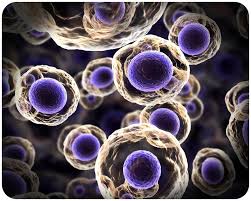


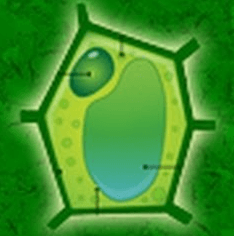

In what organelle is the genetic material found inside?
Endoplasmic Reticulum
Golgi Complex
Nucleolus
Nucleus
What is the function of the mitochondria?
Structure that manufactures ribosomes
Structures that converts nutrients to energy
Stack of membranes that packages chemicals
Structure that contains DNA and directs the cell

Where does photosynthesis occur?
mitochondria
stomata
xylem
chloroplast

I make proteins for the cell. What am I?
ribosome
mitochondria
chloroplast
lysosome

What organelle is the "jelly-like" substance that keeps all other organelles in place? It also helps keep the shape of the cell.
cytoplasm
cell membrane
ribosomes
cell wall
What organelle decides what goes in and out of the cell and also offers protection to the cell?
cell membrane
nucleus
cytoplasm
chloroplast
Which is true of prokaryotic and eukaryotic cells?
Prokaryotic cells are larger than eukaryotic cells.
Eukaryotic cells do not have nuclei, and prokaryotic cells do have nuclei.
Prokaryotic cells lack membrane-bound organelles, and eukaryotic cells contain membrane-bound organelles.
Eukaryotic cells are simpler than prokaryotic cells.
Which statement was NOT included in cell theory?
All living things are composed of cells.
Living cells come only from other living cells.
Each cell contains a cell membrane, cytoplasm, nucleus, mitochondria, and endoplasmic reticulum.
Cells are the smallest structure of living things that can perform the functions necessary for life.
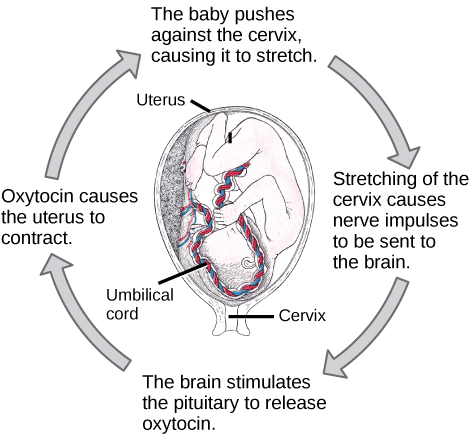
What is the point of a feedback loop?
To provide the body with more energy
To provide the body with more food
To make sure the conditions in the body are always changing
To make sure the conditions in the body remain stable
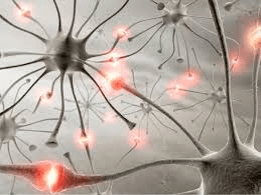
How does the body respond when more oxygen is required?
Decreasing heart rate
Increasing heart rate
Decreasing blood pressure
Increasing blood pressure
Identify the STIMULUS.
Scenario: A person begins to exercise which causes their body temperature to increase. The temperature change is noticed and the person begins to sweat and their body temperature decreases.
temperature change is noticed
person begins to sweat
body temperature decreases
person begins to exercise

What are the two types of cell transport?
Passive and Active
Active and Facilitated
Passive and Facilitated
None of the above

The picture is an example of...
active tranport
passive transport
diffusion
osmosis

What type of transport is this?
Endocytosis
Exocytosis
Diffusion
Sodium-Potassium Pump

Which illustration of transport across the membrane requires energy?
A
B
C
D
What is the primary structural component of the cell membrane?
Proteins
Phospholipids
Carbohydrates
Nucleic acids
Which of the following is a type of passive transport?
Endocytosis
Exocytosis
Osmosis
Sodium-potassium pump
What is the main difference between active and passive transport?
Active transport requires energy, while passive transport does not.
Passive transport requires energy, while active transport does not.
Both require energy.
Neither requires energy.
Which process involves the movement of water across a semipermeable membrane?
Diffusion
Osmosis
Active transport
Facilitated diffusion
What is the role of proteins in the cell membrane?
They form a rigid structure.
They act as channels and carriers for molecules.
They store genetic information.
They provide energy for the cell.
What happens during endocytosis?
The cell releases substances to the outside.
The cell takes in substances from the outside.
The cell divides into two.
The cell undergoes apoptosis.
Which of the following best describes exocytosis?
The process of a cell engulfing a solid particle.
The process of a cell releasing contents to the exterior.
The movement of water into a cell.
The movement of ions through a channel.
In which direction do molecules move during diffusion?
From low concentration to high concentration
From high concentration to low concentration
Randomly, with no specific direction
Against the concentration gradient
Which of the following is NOT a function of the cell membrane?
Providing structural support
Regulating the movement of substances in and out of the cell
Storing genetic information
Facilitating cell communication
Which of the following processes requires ATP?
Facilitated diffusion
Osmosis
Active transport
Simple diffusion
What is the primary function of the phospholipid bilayer in the cell membrane?
To store energy
To provide structural support
To act as a barrier to ions and molecules
To facilitate cell division
Which of the following processes is an example of passive transport?
Endocytosis
Facilitated diffusion
Sodium-potassium pump
Exocytosis
What is the primary function of carrier proteins in the cell membrane?
To provide structural support
To facilitate the transport of specific molecules across the membrane
To store energy
To act as receptors for signaling molecules
Match the following
With gradient
From high to low
Against gradient
From low to high
Maintaining a stable, balanced environment. Equilibrium
Homeostasis
A red blood cell placed in (a) will shrink.
Osmosis
Movement of water across a semipermeable membrane
Diffusion
Movement of moleules across a semipermeable membrane
Passive transport
Has three types of movement without the use of ATP
Diffusion is a form of __________ transport.
Passive
Active
Easy
Free

What type of solution is shown in the picture?
Hypertonic
Hypotonic
Isotonic

What type of solution is shown in the picture?
Hypertonic
Hypotonic
Isotonic

What type of solution is shown in the picture?
Hypertonic
Hypotonic
Isotonic

What type of solution is shown in the picture?
Hypertonic
Hypotonic
Isotonic


Osmosis is the movement of _____ across a membrane.
food
energy
oxygen
water
An animal cell that is surrounded by fresh water will burst because the water pressure causes
water to move into the cell.
water to move out of the cell.
solutes to move into the cell.
solutes to move out of the cell.

