
 Worksheets
QUIZ 200: Urban Design Quiz
Total questions: 154
Worksheet time: 1hrs 17mins
What is the primary focus of the pre-design/research phase in the urban design process?
Establishing vision and goals
Contextual analysis and stakeholder engagement
Phasing and prioritization
Design review and critique
Which phase of the urban design process involves refining masterplans and spatial organization?
Conceptualization Phase
Implementation Phase
Design Development Phase
Pre-Design/Research Phase
What is a key tool used in the urban design process for mapping and analysis?
SWOT analysis
Design frameworks
Phasing and prioritization
Stakeholder validation
Why is urban design considered more than just creating beautiful spaces?
It focuses solely on aesthetics
It involves designing cities that work for people, nature, and the economy
It only addresses infrastructure
It is limited to environmental concerns
What does the urban design process ensure in terms of city development?
Prioritization of profit over equity
Continuity and adaptability
Exclusive focus on infrastructure
Limitation to cultural shifts
Which scale is associated with the focus on land use, transport, economy, and housing?
Macro scale
Micro scale
Meso scale
Nano scale
Which of the following is NOT a key component of urban systems?
Physical
Social
Technological
Political
What does the interdisciplinary approach in urban design aim to achieve?
Focus on a single discipline for efficiency.
Integrate multiple disciplines for comprehensive solutions.
Eliminate the need for environmental considerations.
Prioritize economic factors over social ones.
In the context of urban design, what is the purpose of the pre-design or research phase?
To finalize the design without community input.
To establish a baseline understanding of the site and community.
To focus only on aesthetic aspects of the design.
To ignore existing conditions and focus on new developments.
What is involved in the site analysis during the contextual analysis phase?
Ignoring existing transport networks.
Examining physical characteristics and connectivity.
Focusing only on cultural practices.
Prioritizing economic factors over environmental ones.
What are the components of environmental analysis mentioned in the document?
Natural systems, hazards, green-blue networks
Economic trends, cultural symbols, stakeholder engagement
Public hearings, workshops, surveys
SWOT analysis, mapping, site surveys
Which stakeholders are considered primary in urban design projects?
Local government units, developers, NGOs
National agencies, investors, cultural institutions
Local residents, landowners, business owners
Environmental groups, informal settlers, civic organizations
What type of survey includes soil testing, water quality, and vegetation inventory?
Topographic survey
Built environment survey
Behavioral survey
Environmental survey
What does a vision statement in urban design aim to provide?
A detailed construction plan
A forward-looking image of the project's aspirations
A list of materials needed
A timeline for project completion
What does the Resilient Design Framework focus on?
Affordable housing
Disaster preparedness
Accessible boardwalks
Physical models
What type of models are used for immersive simulations for stakeholder consultation?
Cardboard models
VR/AR models
GIS-based models
Tactile paving models
Which of the following is NOT a component of land use and zoning refinement?
Clarifying land use allocations
Adjusting densities and intensities
Designing human-scaled street widths
Overlaying special designations
Which of the following is a phasing strategy mentioned in the document?
Immediate large-scale development
Incremental development
Delayed project initiation
Complete project overhaul
Which financing mechanism involves joint ventures where the private sector invests in infrastructure?
Public financing
Private financing
Public-Private Partnerships (PPPs)
Innovative financing
What is the role of the Intramuros Administration (IA) in Manila's historic core?
Overseeing transportation systems
Managing heritage conservation and tourism
Regulating commercial developments
Implementing disaster management plans
What is a key component of urban management according to the document?
Construction of new buildings
Maintenance of public realm
Increasing population density
Reducing green spaces
Which of the following is a Key Performance Indicator (KPI) for monitoring and evaluation in urban management?
Number of new businesses
Walkability index
Population growth rate
Number of schools
Why is the implementation phase crucial in urban design?
It allows for the construction of skyscrapers
It ensures urban designs are deliverable and feasible
It focuses on increasing the city's population
It reduces the need for public transportation
What is one application of Geographic Information Systems (GIS) in urban design?
Designing new fashion trends
Land suitability analysis
Increasing internet speeds
Developing new languages
What type of mapping is essential for visualizing spatial relationships in urban design?
Base maps
Weather maps
Political maps
Historical maps
What is the primary focus of place-making in urban design?
Creating large commercial spaces
Emphasizing cultural identity and community interaction
Building high-rise buildings
Developing industrial zones
Which technique is used in participatory design workshops to gather detailed insights on user needs?
Design charrettes
Participatory mapping
Focus group discussions (FGDs)
Tactical urbanism
What is an advantage of using physical models in urban design?
They are cost-effective
They are easy for non-technical stakeholders to understand
They require less time to create
They are more durable than digital models
How does virtual reality (VR) benefit stakeholders in urban design?
By reducing project costs
By providing immersive experiences to 'walk through' future developments
By simplifying the design process
By eliminating the need for physical models
Which tool is used to measure walkability in urban areas?
Traffic analysis software
Walk Score
Population density maps
Economic impact studies
What are paths in the context of urban design?
Channels for water flow
Areas designated for wildlife
Channels along which observers move
Spaces for public gatherings
Which of the following is NOT considered a path in urban design?
Streets
Walkways
Transit lines
Shopping malls
What role do paths play in the image of a city?
They are decorative elements
They arrange and relate other environmental elements
They serve as barriers
They are used for advertising
What are edges in the context of urban planning?
Points of convergence in a city
Linear elements denoting boundaries between phases
Central areas of a city
Open spaces for public gatherings
What is the function of nodes in a city?
To serve as barriers between regions
To act as open spaces for recreation
To be strategic points for intensive movement
To provide residential areas
What is a node in the context of city planning?
A type of public transportation
An area of concentration and junction
A residential neighborhood
A type of architectural style
How do nodes gain their importance in a city?
Through their architectural design
By being a residential area
From the use of physical character and as a focus point
By being a commercial center
What are landmarks typically used for in a city?
As a means of transportation
As external points of reference
As residential areas
As commercial centers
How are districts in a city generally recognized?
By their population size
By their common, identifying character
By their economic output
By their geographical location
What is a characteristic of a district's extent in a city?
It is three-dimensional
It is two-dimensional
It is four-dimensional
It is one-dimensional
Fill in the blank: Space is the raw material of urban design—more essential than ________ themselves because it defines how people live, move, and interact in cities.
buildings
streets
vehicles
parks
Fill in the blank: Good urban design ensures that spaces are not only functional but also ________, shaping people's experiences, memories, and sense of belonging.
meaningful
temporary
isolated
chaotic
Which of the following best describes the importance of space in urban design?
Space is less important than buildings
Space is the raw material of urban design and defines how people live, move, and interact in cities
Space is only for economic activities
Space is static and unchanging
Urban space enables which of the following activities?
Only social activities
Only economic activities
Social, cultural, and economic activities
Only cultural activities
What are public spaces in urban design?
Areas controlled by individuals
Open to everyone, such as parks, plazas, sidewalks, and streets
Leftover or unplanned spaces
Areas that connect public and private realms
Fill in the blank: Private spaces are controlled by ________ or institutions and include homes, offices, and malls.
individuals
governments
animals
machines
Which of the following best describes transition spaces in urban design?
Leftover or unplanned spaces
Areas that connect public and private realms, such as building entrances, courtyards, arcades, and verandas
Open to everyone
Controlled by institutions
Residual spaces in urban design refer to:
Planned parks and plazas
Leftover or unplanned spaces, such as under flyovers, vacant lots, or awkward corners
Areas for government functions
Private homes
The significance of transformed residual spaces in urban design is:
They provide opportunities for community engagement and improved urban functionality.
They are areas left unused and neglected in cities.
They are only used for commercial development.
They have no impact on the quality of urban life.
Which of the following is NOT a type of urban space mentioned in the text?
A) Squares and plazas
B) Parks
C) Beaches
D) Streets
Fill in the blank: Civic spaces are designed for ________, cultural, or religious functions.
government
recreational
commercial
residential
The main difference between commercial and recreational spaces in urban design is:
Commercial spaces are for business activities, while recreational spaces are for leisure and relaxation.
Commercial spaces are only found in rural areas, while recreational spaces are only in cities.
Recreational spaces are used for shopping, while commercial spaces are for sports.
Commercial spaces are designed for nature preservation, while recreational spaces are for industrial use.
Bonifacio High Street in Taguig, Philippines, is an example of an open-air commercial spine integrating retail, leisure, and green spaces.
True
False
The three key elements of urban aesthetics according to the text are:
Form, function, and meaning
Color, texture, and sound
Height, width, and depth
Population, economy, and culture
What is urban aesthetic?
Urban aesthetic refers to the visual and meaningful qualities of a city, including landmarks, skylines, and cultural imagery that shape identity and collective memory.
Urban aesthetic is the study of rural landscapes and agricultural practices.
Urban aesthetic is a type of architectural style found only in ancient villages.
Urban aesthetic refers to the economic policies used to manage city budgets.
Which of the following is a famous landmark in Peru?
Sydney Opera House
Machu Picchu
The Christ the Redeemer Statue
Pyramids of Giza
Fill in the blank: The ________ in Cairo, Egypt, are an example of a landmark that anchors a sense of place.
Pyramids of Giza
Eiffel Tower
Statue of Liberty
Great Wall of China
Skylines, such as those in Hong Kong and New York, become visual signatures recognizable worldwide.
True
False
What does cultural imagery in urban aesthetics help tie to local heritage and collective memory?
Cultural imagery ties aesthetics to local heritage and collective memory.
Cultural imagery disconnects aesthetics from local heritage and collective memory.
Cultural imagery ignores local heritage and focuses on modern trends.
Cultural imagery only represents individual experiences, not collective memory.
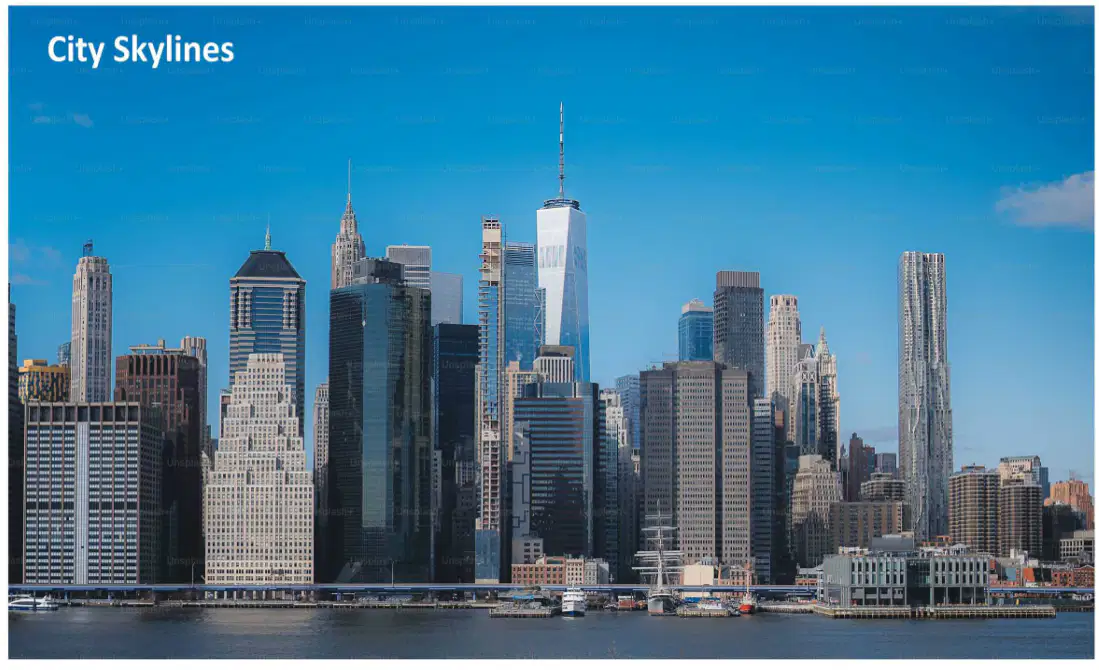
What does the skyline in the image represent in terms of urban aesthetics?
The skyline represents a visual signature of the city, contributing to its identity and collective memory.
The skyline is only important for air traffic control and has no aesthetic value.
The skyline is primarily used to determine the city's population density.
The skyline is a result of random building placements with no connection to urban aesthetics.

What is the repetition of elements such as streetlights, trees, or windows in an urban environment called?
Rhythm
Contrast
Balance
Emphasis
Which of the following best describes 'Proportion' in urban aesthetics?
The repetition of elements such as streetlights, trees, or windows
Relates building scale to human scale, ensuring comfort and usability
Balances variety with unity, integrating new structures with existing contexts
Avoids chaos while allowing diversity
In urban aesthetics, what does 'Harmony' refer to?
The repetition of elements
Relates building scale to human scale
Balances variety with unity, integrating new structures with existing contexts
The use of bright colors
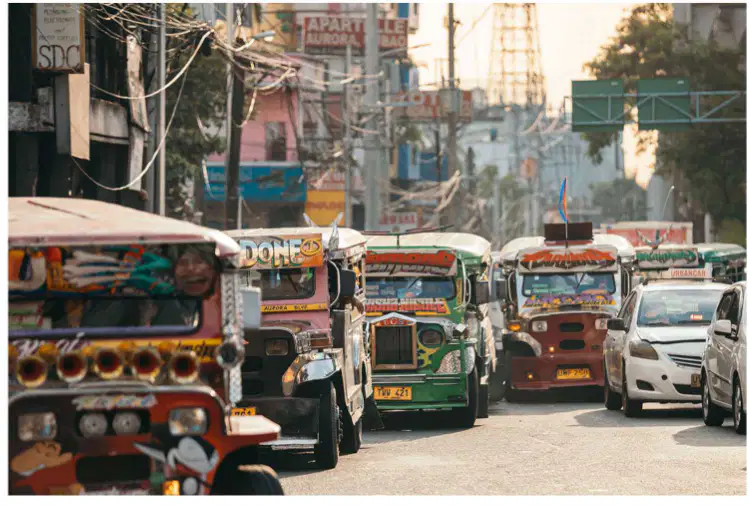
A visually coherent urban environment avoids chaos while allowing ________.
diversity
uniformity
monotony
rigidity
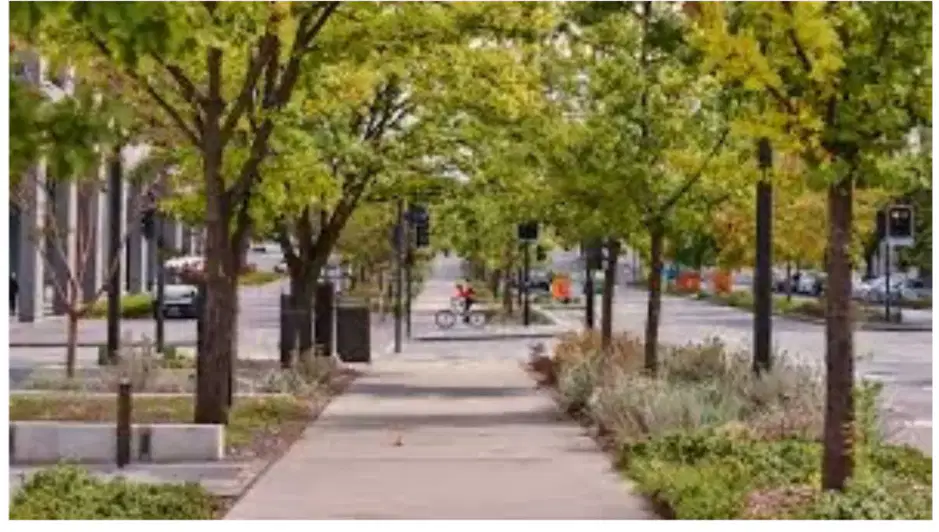
Which image best represents the concept of 'Urban Trees'?
The image of a sidewalk lined with trees
The image of a building with a grid of windows
The image of a building with diagonal window patterns
The image of a building with wavy window patterns
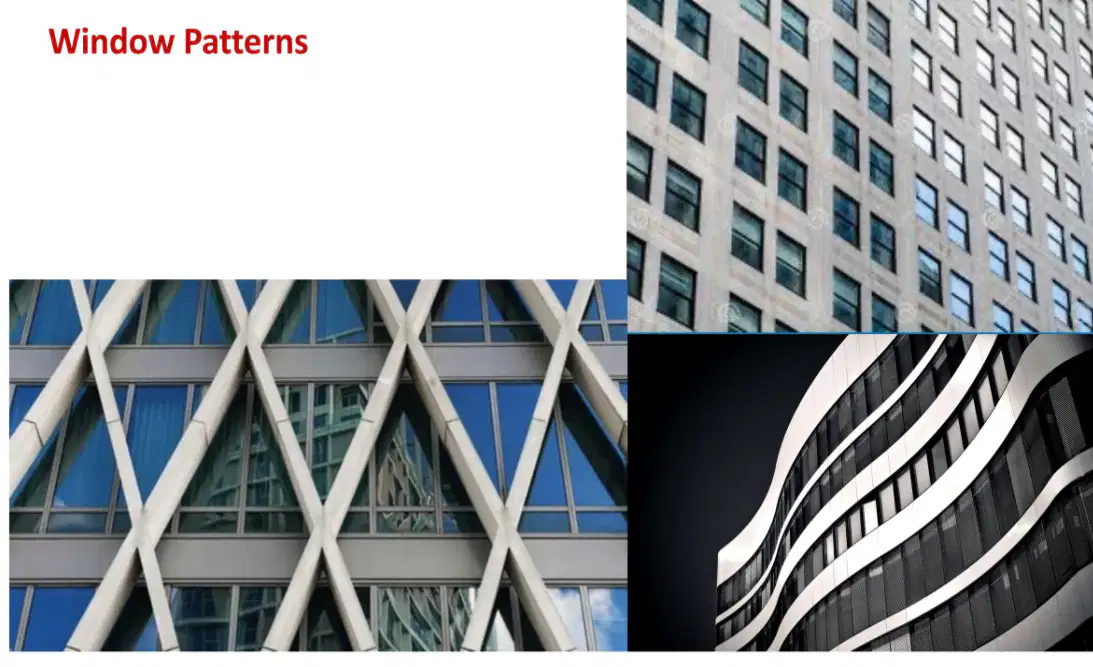
Which image best represents the concept of 'Window Patterns'?
The image of a sidewalk lined with trees
The image of a building with a grid of windows
The image of a building with diagonal window patterns
The image of a building with wavy window patterns
Fill in the blank: In architecture, ________ refers to the relationship between the size of different parts of a building or structure.
proportion
texture
color
material
Fill in the blank: In architecture, ________ refers to the pleasing arrangement of parts to create a sense of unity and wholeness.
harmony
contrast
texture
proportion
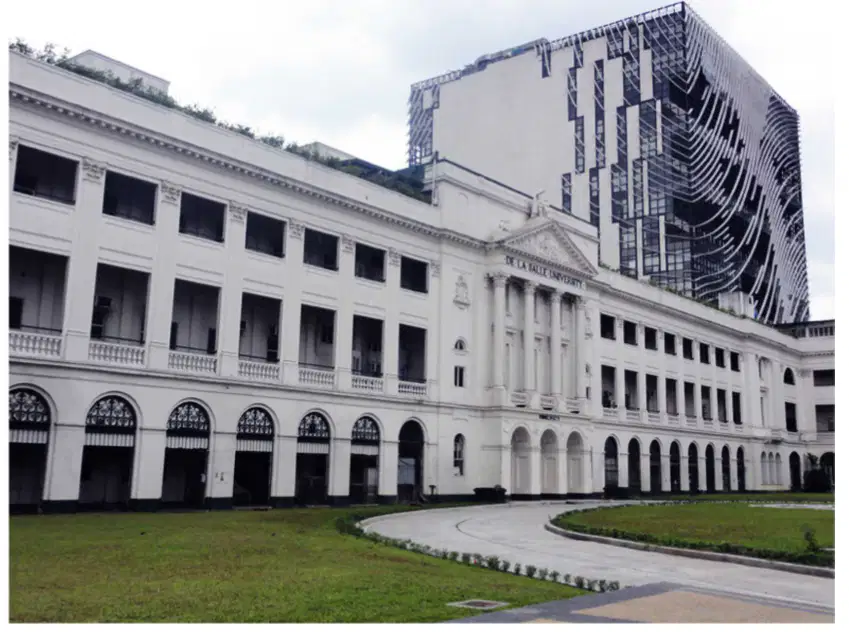
What are the materials used in urban design known to affect?
Atmosphere and perception
Only color
Only texture
Only landscape
Texture in urban design refers to:
The color of buildings
Rough vs. smooth, traditional vs. modern finishes, affecting tactility
The height of buildings
The amount of greenery
Fill in the blank: Color in urban design can unify or differentiate districts; vibrant colors may energize while ______ tones may calm.
neutral
metallic
fluorescent
striped
Which of the following is a benefit of landscape integration in urban design?
Increases urban hardness
Softens urban hardness and enhances livability
Reduces greenery
Increases pollution
Green spaces in urban areas help improve environmental quality by:
Increasing air pollution
Absorbing carbon and improving air quality
Reducing shade
Increasing runoff
Vegetation helps lower urban heat island effects by providing ______ and cooling through evapotranspiration.
shade
carbon dioxide
noise
wind
Landscaped areas absorb rainwater, reduce runoff, and mitigate flooding through ______ drainage systems.
sustainable
impervious
mechanical
synthetic
What is one benefit of green spaces in urban areas?
Increases pollution
Encourages walking, exercise, relaxation, and reduces stress levels
Decreases social interaction
Increases traffic congestion
Fill in the blank: Integrated landscapes with shaded walkways, bike paths, and green corridors promote ________ and cycling.
walking
driving
shopping
cooking
According to the text, what does respect for heritage buildings ensure?
Economic growth
Continuity of memory
Increased pollution
Modernization
Festive imagery contributes to urban aesthetics by:
adding vibrancy and color to public spaces
increasing traffic congestion
reducing the need for public lighting
discouraging community gatherings
Heritage conservation in cities is only about halting progress and preventing new development.
True
False
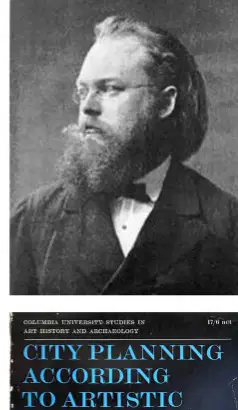
According to Camillo Sitte, what is one artistic principle in city design?
Overly geometric grids
Human-scaled plazas and streets
High-rise buildings
Large parking lots
The placement of ________ enhances spatial experience in city design, according to Camillo Sitte.
monuments
roads
markets
residential blocks
According to Gordon Cullen, what concept did he introduce to explain how people perceive the city while moving through it?
A) Serial vision
B) Urban sprawl
C) Grid planning
D) Zoning laws
Fill in the blank: Cullen's work emphasized the human experience of ______, not just abstract planning.
space
color
sound
technology
Which of the following is NOT a characteristic advocated by Gordon Cullen for urban aesthetics?
Visual variety
Framed views
Emphasis on static forms only
Surprises
What is serial vision in the context of urban aesthetics?
Serial vision refers to the changing perspectives and sequential views experienced as you move through space, explaining the unfolding visual experience as one journeys across a landscape.
Serial vision is the use of color schemes to enhance the visual appeal of urban buildings.
Serial vision is the process of designing city layouts based solely on aerial views.
Serial vision refers to the integration of public art installations in urban environments to create focal points.
The lesson from preserving historical fabric in Intramuros is that it strengthens collective identity while offering a distinctive aesthetic narrative.
True
False
What is the main lesson from Singapore's Marina Bay case study regarding urban aesthetics?
Aesthetic spectacle can drive global recognition while creating vibrant civic life.
Urban aesthetics are irrelevant to city planning.
Focusing on infrastructure alone ensures global recognition.
Limiting public spaces increases civic engagement.
What is the aesthetic character of Intramuros, Manila?
Colonial
Futuristic
Modern
Minimalist
Which of the following is a value reflected by Intramuros, Manila?
Advanced technology
Cultural heritage, national identity, and continuity of memory
Visual coherence and elegance
Spontaneity and adaptability
What lesson is associated with preserving historical fabric in Intramuros, Manila?
Preserving historical fabric strengthens collective identity while offering a distinctive aesthetic narrative.
Preserving historical fabric leads to rapid urbanization and loss of heritage.
Preserving historical fabric discourages tourism and economic growth.
Preserving historical fabric promotes modern architectural styles over traditional ones.
What is the aesthetic character of Singapore’s Marina Bay?
Colonial
Futuristic
Traditional
Minimalist
Which of the following is a value combined in Singapore’s Marina Bay?
Advanced technology, tourism, and symbolic national identity
Cultural heritage and memory
Visual coherence and elegance
Spontaneity and adaptability
What lesson is associated with the aesthetic spectacle of Marina Bay, Singapore?
Aesthetic spectacle can drive global recognition while creating vibrant civic life.
Aesthetic spectacle reduces tourism and economic growth.
Aesthetic spectacle discourages public engagement in urban spaces.
Aesthetic spectacle leads to environmental degradation without any benefits.
What is the aesthetic character of Parisian Boulevards & Skyline Preservation (France)?
Colonial
Futuristic
Haussmann’s
Minimalist
Urban pattern refers to the physical configuration of ________, plots, buildings, and open spaces that make up the fabric of a city.
streets
rivers
mountains
forests
Urban patterns influence accessibility, connectivity, density, and even social relationships.
True
False
What is the main characteristic of the Grid Pattern in urban street design?
A) Streets radiate from a central point
B) Streets intersect at right angles
C) Streets follow a transport corridor
D) Streets are irregular and unplanned
Which urban street pattern is described as streets radiating from a central point, often symbolic or monumental (e.g., Paris, Washington D.C.)?
Grid Pattern
Radial Pattern
Linear Pattern
Organic Pattern
The Linear Pattern in urban development is best described as:
Streets intersecting at right angles
Streets radiating from a central point
Development stretched along a transport corridor, river, or coastline
Irregular, unplanned street forms
Which pattern is often found in medieval towns or informal settlements and reflects adaptation to topography, social dynamics, or historical evolution?
Grid Pattern
Radial Pattern
Organic Pattern
Hybrid Pattern
Hybrid Pattern in urban street design refers to:
Only grid patterns
Only radial patterns
Combinations of grid, radial, and organic patterns
Only organic patterns
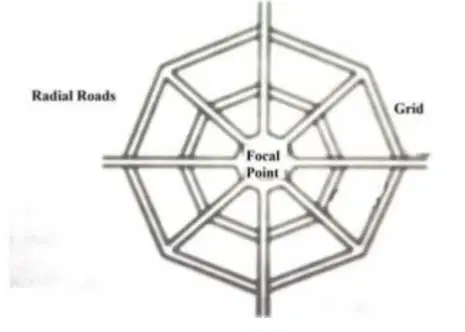
Identify the street pattern shown in the diagram labeled 'Radial (Star) and Grid Pattern'.
Radial (Star) and Grid Pattern
Linear Pattern
Circular Pattern
Irregular Pattern
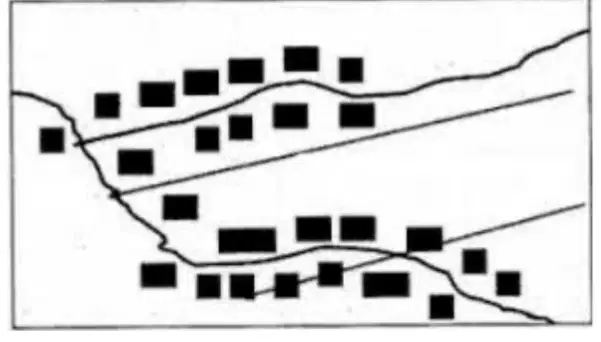
Identify the street pattern shown in the diagram labeled 'Linear Pattern'.
Linear Pattern
Radial Pattern
Grid Pattern
Circular Pattern
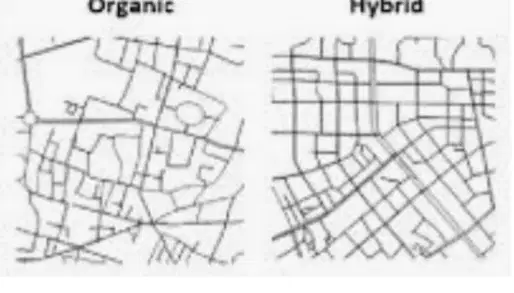
Refer to the diagram showing 'Organic' and 'Hybrid' street patterns. Which of the following best describes the 'Organic' pattern?
A) Planned grid layout
B) Incremental growth without formal planning
C) Radial and axial symmetry
D) Strict zoning
What is a key strength of Medieval Cities (Organic) street patterns?
Adaptability and human-scale intimacy
Strict grid alignment and uniformity
Wide boulevards for heavy traffic
Centralized planning with geometric precision
Which of the following is a weakness of Medieval Cities (Organic) street patterns?
Limited adaptability
Congestion, poor sanitation, and limited connectivity
Lack of monumental axes
Excessive zoning
Renaissance/Baroque Planning (Radial, Axial) is inspired by which of the following ideals?
Efficiency and speed
Order, geometry, and grandeur
Community-driven adaptability
Informal growth
Fill in the blank: Modernist Grids & Zoning emphasize efficiency, speed, land commodification, and ________ of functions.
separation
integration
expansion
combination
Which city is given as an example of Modernist Grids & Zoning?
Manhattan (1811 Commissioner's Plan)
Venice (Medieval Canals)
Athens (Ancient Agora)
Paris (Haussmann's Renovation)
According to Christopher Alexander, cities should be designed using a language of patterns that respond to ________ needs.
human
technological
aesthetic
economic
Space Syntax, developed by Bill Hillier, is primarily used to study:
The historical evolution of cities
The spatial configuration of cities and how street networks influence movement, accessibility, and social interaction
The symbolism of monumental axes
The implementation of colonial grid patterns
Informal Settlements (Organic, Unplanned Growth) are characterized by:
Regular grid patterns
Irregular plots, winding paths, and adaptive use of marginal lands
Monumental boulevards
Strict zoning
According to the passage, what are the three main elements that urban design interconnects?
Space, pattern, and aesthetics
Functionality, beauty, and symbolism
Streets, parks, and plazas
Residential, commercial, and cultural spaces
Fill in the blank: A _______ grid encourages walkable, intimate spaces, while a _______ plan emphasizes symbolic central spaces.
compact; radial
linear; concentric
sprawling; modular
fragmented; axial
Which of the following is NOT a dimension of holistic urban design mentioned in the passage?
Functionality
Beauty (Aesthetics)
Social Meaning
Economic Growth
In the case synthesis of Makati CBD (Philippines), what type of grid pattern is used?
Organic, irregular street networks
Planned grid with wide avenues
Radial plan
Mixed-use zoning
In Makati CBD, public open spaces such as _______ provide greenery amidst corporate blocks.
Ayala Triangle Gardens
SM Aura Skypark
Rizal Park
La Mesa Eco Park
According to the passage, Tokyo's urban aesthetic is best described as:
Uniform and monotonous
Layered—modern skyscrapers, neon-lit districts, and historic shrines
Focused only on residential areas
Lacking in cultural vibrancy
Which city is described as having a hybrid of planned grids in central districts and organic, irregular street networks in older neighborhoods?
Makati CBD
Tokyo
Bonifacio Global City
Alabang
Fill in the blank: The integration of space, aesthetics, and pattern demonstrates that cities cannot be understood through one lens alone. ______ provides structure. Space shapes daily life. Aesthetics conveys identity and meaning.
Pattern
Color
Culture
Economy
Which city is mentioned as an example of a planned grid and corporate aesthetic that creates a recognizable financial hub?
Tokyo
Makati
New York
Paris
Fill in the blank: Tokyo exemplifies how hybrid patterns and aesthetic layering produce a _______, resilient, and inclusive urban experience.
vibrant
monotonous
isolated
rigid
According to the passage, what must a successful city balance?
A successful city must balance functionality, beauty, and cultural meaning.
A successful city must balance population, weather, and geography.
A successful city must balance technology, sports, and entertainment.
A successful city must balance politics, finance, and agriculture.
Why is it important to document cities?
To increase tourism
To preserve historical data
To reduce pollution
To improve transportation
What is one of the main purposes of documentation in urban studies?
Entertainment
Systematic design and planning
Marketing
Reducing costs
Which of the following is a form of documentation?
Painting
Photography
Singing
Dancing
What does a charrette primarily focus on?
Individual work
Collaborative design
Financial planning
Marketing strategies
What is the role of analysis in documentation?
To create art
To interpret and understand data
To entertain
To advertise
What is a key component of a charrette session?
Solo brainstorming
Group collaboration
Silent meditation
Individual presentations
What is the purpose of archival research in documentation?
To create new trends
To preserve and understand historical context
To entertain
To promote products
What does the synthesis phase in documentation involve?
Gathering raw data
Combining and interpreting information
Ignoring data
Selling information
What is the main focus of community architecture?
Individual expression
Collective well-being
Profit maximization
Personal style
What is a visual survey used for in urban studies?
To create advertisements
To gather insights about urban environments
To entertain tourists
To sell real estate
What is the significance of urban layers in documentation?
They are decorative
They provide historical context
They are irrelevant
They are used for marketing
What is the first phase of a charrette?
Evaluation
Idea Generation
Marketing
Conclusion
What does the term 'systematic approach' in urban studies refer to?
Random planning
Organized and methodical planning
Spontaneous decisions
Unplanned development
What is the purpose of photographic documentation?
To create art
To capture and preserve visual information
To entertain
To sell products
What is the role of stakeholder identification in a charrette?
To ignore community input
To identify key participants and their roles
To focus on individual opinions
To avoid collaboration
Who is the author of "Responsive Environments"?
Alan Alcock
Ian Bentley
Paul Murrain
Sue McGlynn
What is the focus of design in a responsive environment?
Form-centered
People-centered
Aesthetic-centered
Technology-centered
What does permeability in an environment encourage?
Isolation
Crime
Route choices and exploration
Monotony
What is an example of a more permeable environment?
Cul-de-sac layout
Street grid
Single-use zoning
Superblock
What is the importance of permeability in urban design?
It limits exploration
It restricts movement
It encourages walking and exploration
It focuses on aesthetics
What does the book "Responsive Environments" critique?
Flexible urban environments
Rigid and exclusionary urban environments
Inclusive urban environments
Supportive urban environments
What is a potential criticism of the concept of responsiveness in urban design?
It overemphasizes design form.
It ignores the importance of landmarks.
It lacks consideration for visual cues.
It does not account for tactile experiences.
What is the importance of richness in urban design?
Enhances orientation, safety, and comfort.
Builds attachment, identity, and stewardship.
Stimulates the senses and creates memorable experiences.
Reduces dependency on cars.
What does "Robustness" refer to in urban design?
The ability of a place to support a wide range of activities over time.
The ease with which people can understand the layout and structure of a place.
The sensory experiences offered by an environment.
The range of activities and uses offered within an environment.
What is the definition of "Richness" in urban design?
The ability of a place to support a wide range of activities over time.
The ease with which people can understand the layout and structure of a place.
The sensory experiences offered by an environment.
The range of activities and uses offered within an environment.
What does Sustainable Urbanism emphasize?
Adaptability, mixed use, and sensory richness
Walkable communities
Spaces accessible to all users
Rigid functionalism
What is a truly responsive environment designed for?
People, not just for buildings
Buildings, not for people
Industrial purposes
Traditional architecture
Which design approach focuses on spaces accessible to all users?
Inclusive Design / Universal Design
New Urbanism
Sustainable Urbanism
Traditional Design
What is the emphasis of New Urbanism?
Mixed-use, walkable communities
Sensory richness
Rigid functionalism
Industrial design
What does a truly responsive environment need to be?
Flexible, inclusive, adaptable, legible, and deeply engaging
Rigid and functional
Traditional and industrial
Focused on buildings only

