
 Worksheets
Dermatology and Skin Disorders Quiz
Total questions: 100
Worksheet time: 50mins
What is the etiology of dermatitis?
It is caused by bacterial infections.
It is caused by fungal infections.
It is caused by genetic and environmental factors.
It is caused by viral infections.
Which of the following is a psychosocial intervention for a patient with psoriasis?
Prescribing antibiotics.
Providing emotional support and stress management techniques.
Administering antifungal medication.
Recommending surgical removal of affected skin.
What is a key difference between the treatment of fungal skin disorders and bacterial skin disorders?
Fungal skin disorders require antibiotics, while bacterial skin disorders require antifungal medication.
Fungal skin disorders are treated with antifungal medication, while bacterial skin disorders are treated with antibiotics.
Both fungal and bacterial skin disorders are treated with the same medication.
Fungal skin disorders require surgical intervention, while bacterial skin disorders do not.
Which nursing intervention is most appropriate for a patient with herpesvirus infection?
Administering antiviral medication.
Prescribing antibiotics.
Providing antifungal treatment.
Recommending dietary changes.
Which of the following is a type of skin condition that requires examination and treatment?
Acne
Psoriasis
Eczema
Rosacea
What is the primary focus when analyzing the care of an immobile patient to prevent pressure ulcers?
Ensuring proper hydration
Regular repositioning of the patient
Providing a high-protein diet
Administering pain medication
Which of the following is a characteristic of skin cancer that should be presented?
Rapid healing of wounds
Unusual changes in moles or skin lesions
Increased skin elasticity
Persistent dryness of the skin
What is the purpose of constructing a care plan for each stage of a pressure ulcer?
To ensure the patient receives the correct medication
To address the specific needs of the ulcer at each stage
To prevent the need for surgical intervention
To reduce the cost of treatment
Which of the following is an important assessment point for a patient who has sustained a burn?
Evaluating the patient's dietary preferences
Summarizing the patient's family history
Assessing the extent and depth of the burn
Measuring the patient's height and weight
What is the nurse's primary role in emergency burn care?
Administering vaccinations
Providing immediate wound care and pain management
Conducting psychological counseling sessions
Organizing recreational activities for the patient
Which of the following best explains the psychosocial needs of burn patients?
Ensuring they have access to physical therapy
Addressing emotional trauma and promoting self-esteem
Monitoring their vital signs regularly
Providing them with a balanced diet
What is the primary focus of rehabilitation for a patient with a major burn?
Improving the patient's mobility and functional independence
Reducing the patient's caloric intake
Preventing the patient from engaging in physical activity
Ensuring the patient avoids social interactions
What should a family be taught when scabies is present in a patient and their home?
How to assess the skin for signs of skin cancer
How to provide care for a stage III or stage IV pressure ulcer
How to maintain hygiene and prevent the spread of scabies
How to administer medication for diabetes
What is an important step in assessing the skin of family members?
Checking for signs of skin cancer
Identifying symptoms of scabies
Treating stage III pressure ulcers
Administering antibiotics
What type of care should be provided for a patient with a stage III or stage IV pressure ulcer?
Basic wound cleaning
Advanced wound care and monitoring
Skin cancer assessment
Scabies prevention education
What is the purpose of applying Standard Precautions and sterile techniques in burn care?
To reduce the risk of infection and promote healing.
To increase the patient's pain tolerance.
To prevent the need for surgical intervention.
To eliminate the need for medication.
What is the primary focus when observing the wound care of a patient in the acute stage of a major burn in a burn intensive care unit?
Understanding the patient's medical history.
Monitoring the use of sterile techniques and wound management.
Evaluating the patient's psychological state.
Assessing the nutritional needs of the patient.

Which type of dermatitis is characterized by local skin irritation, redness, swelling, and itching?
Atopic dermatitis
Contact dermatitis
Stasis dermatitis
Seborrheic dermatitis

What is another name for atopic dermatitis?
Psoriasis
Eczema
Rosacea
Urticaria

Which type of dermatitis is caused by venous stasis and is associated with redness, itching, and hyperpigmentation?
Contact dermatitis
Atopic dermatitis
Stasis dermatitis
Seborrheic dermatitis

What are the characteristic symptoms of seborrheic dermatitis?
Redness, swelling, and itching
Eczema and dryness
Scaly white or yellowing plaques and itching
Hyperpigmentation and swelling

Which type of dermatitis involves inflammation of the scalp and other areas?
Contact dermatitis
Atopic dermatitis
Stasis dermatitis
Seborrheic dermatitis

What is another name for eczema?
Psoriasis
Atopic dermatitis
Rosacea
Seborrheic dermatitis
Which factors are responsible for causing eczema?
Genetic and environmental factors
Bacterial and viral infections
Hormonal imbalances and poor diet
Lack of exercise and dehydration
Eczema is often associated with which of the following conditions?
Diabetes, hypertension, and obesity
Asthma, allergies, and hay fever
Arthritis, osteoporosis, and anemia
Depression, anxiety, and insomnia
What are common areas of the body affected by eczema?
Scalp, chest, and feet
Face, neck, inner elbows, behind knees, hands
Back, abdomen, and thighs
Shoulders, arms, and legs
What are severe cases of eczema likely to present with?
Redness and swelling
Oozing, crusting, or lichenification
Blisters and peeling skin
Bruising and bleeding
What should nurses examine the skin for during an eczema assessment?
Dryness, lesions, cracks, or infection
Bruising, swelling, or redness
Rashes, burns, or scars
Discoloration, moles, or freckles
Which of the following is NOT a trigger for eczema?
Soaps
Wool
Allergens
Exercise
What should nurses ask about during an eczema assessment?
Itch severity, sleep disturbances, and flare history
Diet, hydration levels, and exercise routine
Medication history, allergies, and family history
Skin color, texture, and temperature
What is one of the recommended interventions for managing eczema?
Apply moisturizers frequently, especially post-bathing
Use harsh cleansers to clean the skin
Avoid using any topical treatments
Take hot baths to soothe the skin
Which of the following should be avoided to prevent worsening eczema symptoms?
Irritants and harsh cleansers
Lukewarm baths
Gentle cleansers
Pat-dry techniques
What is the purpose of administering topical corticosteroids and antihistamines for eczema?
To hydrate the skin
To reduce inflammation and itching
To cleanse the skin
To avoid scratching
According to the NCLEX Tip, what is a key focus in teaching patients with eczema?
Using hot water for bathing
Hydrating the skin and avoiding scratching
Applying harsh cleansers to the affected area
Ignoring triggers and focusing only on treatment
Which of the following is a recommended treatment for dermatitis?
Avoidance of the contact irritant or allergen
Exposure to allergens to build immunity
Reduction in skin lubrication
Avoidance of moisturizing the skin
What is the role of corticosteroids in the treatment of dermatitis?
They are used to control inflammation and itching.
They are used to increase skin dryness.
They are used to expose the skin to allergens.
They are used to reduce skin lubrication.
Which of the following is NOT a part of dermatitis treatment?
Good skin lubrication
Preservation of skin moisture
Avoidance of moisturizing the skin
Control of inflammation and itching
How can corticosteroids be administered in severe episodes of dermatitis?
Topically, orally, or by injection
Only through inhalation
Exclusively through dietary supplements
By applying ice packs
What are the two primary types of lesions associated with acne as mentioned in the learning material?
Papules and pustules
Nodules and cysts
Blackheads and whiteheads
Scars and hyperpigmentation
Which of the following is NOT a treatment option for acne as per the learning material?
Retinoic acid (tretinoin)
Azelaic acid (Azelex)
Dermabrasion
Corticosteroids
What is the name of the gel mentioned as a treatment for acne in the learning material?
Retin-A
Veltin Gel
Benzoyl Peroxide Gel
Salicylic Acid Gel
Acne vulgaris and acne rosacea are categorized under which section in the learning material?
Diagnosis and treatment
Etiology, pathophysiology, signs, and symptoms
Prevention and management
Complications and prognosis
What is Psoriasis classified as?
A contagious skin disorder
A noncontagious, chronic, recurring skin disorder
A bacterial infection
A temporary allergic reaction
What is a common symptom of Psoriasis?
Inflamed, edematous skin lesions with adherent silvery white scales
Red spots that disappear within hours
Blisters filled with clear fluid
Itchy skin without visible lesions
Which of the following is NOT a treatment option for Psoriasis?
Steroid creams
Tar preparations
Antimetabolites
Antibiotics
What is the first step in diagnosing Psoriasis?
Blood tests
History and physical examination
Skin biopsy
Allergy testing
Which of the following best describes the nature of Psoriasis?
A temporary condition that resolves on its own
A chronic condition that recurs over time
A bacterial infection requiring antibiotics
A viral infection that spreads easily
What is the primary cause of psoriasis according to its pathophysiology?
Bacterial infection causing skin inflammation
Autoimmune disorder causing rapid skin cell turnover
Viral infection leading to skin lesions
Genetic mutation affecting skin pigmentation
Which of the following is a common clinical presentation of psoriasis?
Red, raised plaques with silvery-white scales
Fluid-filled blisters on the skin
Dark patches with uneven borders
Small, itchy bumps that spread rapidly
Where are psoriasis plaques most commonly found on the body?
Palms, soles, and neck
Scalp, elbows, knees, and back
Face, chest, and abdomen
Fingers, toes, and ears
What is a potential symptom of psoriatic arthritis associated with psoriasis?
Nail pitting or joint pain
Hair loss or brittle nails
Muscle weakness or fatigue
Swelling in the lymph nodes
What should a nursing assessment for psoriasis include?
Observing lesion size, location, and severity
Measuring blood pressure and heart rate
Checking for signs of dehydration
Assessing lung function and oxygen levels
Which of the following is an important intervention for managing psoriasis?
Administering topical and systemic medications as prescribed
Avoiding all forms of physical activity
Consuming a high-sugar diet to reduce symptoms
Using only herbal remedies for treatment
Why is it important to teach patients with psoriasis about moisturizing and avoiding triggers?
To prevent the condition from spreading to others
To reduce the risk of skin infections and flare-ups
To eliminate the need for medications
To cure the condition permanently
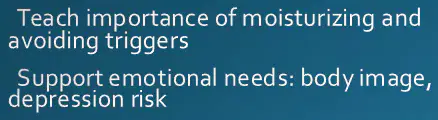
What emotional needs should be supported in patients with psoriasis?
Body image and depression risk
Anger management and social skills
Memory retention and cognitive function
Sleep patterns and dietary habits
What is Stevens-Johnson Syndrome primarily characterized by?
A bacterial infection with respiratory symptoms
An allergic reaction with skin manifestations
A viral infection causing fever and fatigue
A genetic disorder affecting the immune system
Which of the following drugs is associated with Stevens-Johnson Syndrome?
Ibuprofen
Carbamazepine (Tegretol)
Acetaminophen
Amoxicillin
What are the signs and symptoms of Stevens-Johnson Syndrome?
Fever and joint pain
Lesions with irregular borders and blistered, necrotic centers
Swelling of the lymph nodes
Persistent cough and difficulty breathing
What is the recommended treatment for Stevens-Johnson Syndrome?
Administer antibiotics immediately
Discontinue the drug and provide wound care
Prescribe antiviral medication
Increase fluid intake and rest
What is Stevens-Johnson Syndrome (SJS) primarily characterized by?
A mild skin rash
Severe mucocutaneous reaction involving skin and mucous membranes
Chronic joint pain
Respiratory distress
Which of the following is a common trigger for Stevens-Johnson Syndrome (SJS)?
Anticonvulsants
Vitamin supplements
Antihistamines
Herbal remedies
What type of infection is associated with Stevens-Johnson Syndrome (SJS)?
Mycoplasma pneumoniae
Influenza virus
Streptococcus bacteria
Hepatitis B virus
Which of the following is a symptom of Stevens-Johnson Syndrome (SJS)?
Joint pain
Painful red or purplish rash with blistering and peeling
Nausea and vomiting
Swelling of the lymph nodes
What areas of the body are commonly affected by mucosal involvement in Stevens-Johnson Syndrome (SJS)?
Hands, feet, and scalp
Eyes, mouth, and genitals
Arms, legs, and chest
Ears, nose, and throat
What is the risk associated with Stevens-Johnson Syndrome (SJS)?
Increased appetite
Secondary infection, fluid loss, and organ involvement
Muscle weakness
High blood pressure
How is Stevens-Johnson Syndrome (SJS) diagnosed?
Blood test
Skin biopsy
X-ray
MRI scan
What is the initial symptom of Stevens-Johnson Syndrome (SJS)?
Flu-like prodrome (fever, sore throat, malaise)
Severe headache
Nausea and vomiting
Joint pain
What is the basis for diagnosing Stevens-Johnson Syndrome (SJS)?
Genetic testing
Clinical appearance and history of drug exposure
Blood pressure monitoring
CT scan results
What is the primary treatment approach for Stevens-Johnson Syndrome (SJS)?
Immediate discontinuation of the causative agent
Administration of antibiotics without identifying the cause
Avoiding fluid and electrolyte management
Ignoring ophthalmology and dermatology consults
Which of the following is NOT a nursing consideration for Stevens-Johnson Syndrome (SJS)?
Monitoring for airway compromise, sepsis, and organ failure
Providing pain relief, wound care, and nutritional support
Ignoring psychosocial support for trauma and visible skin damage
Educating about medication allergy documentation to prevent recurrence
What is a common cause of Stevens-Johnson Syndrome (SJS)?
Allergic reaction to antibiotics like penicillin
Viral infections like the common cold
Excessive exposure to sunlight
Lack of hydration
Which of the following symptoms is characteristic of Stevens-Johnson Syndrome (SJS)?
Swelling mouth, throat, and lips with sores
Mild fever with no other symptoms
Increased appetite and energy levels
Clear skin with no visible damage
What is the mortality rate of Stevens-Johnson Syndrome (SJS) in women?
1%
5%
10%
15%
What happens in the last stage of Stevens-Johnson Syndrome (SJS)?
The body skin is removed
The patient recovers completely
The symptoms become mild and manageable
The disease stops progressing
Which of the following is a symptom that starts abruptly in Stevens-Johnson Syndrome (SJS)?
Fever and headache
Increased appetite
Improved skin condition
Enhanced energy levels
What is cellulitis?
A skin abscess of hair follicle
A collection of boils with multiple heads
An infection of dermis and tissue
A viral infection of the skin
Which of the following is a treatment for bacterial infections?
Cold compresses
Incision and drainage
Antiviral medications
Radiation therapy
What is the term for a collection of boils with multiple heads?
Furuncles
Cellulitis
Carbuncles
Abscesses
Which of the following is NOT a symptom of bacterial infections mentioned in the material?
Skin abscess of hair follicle
Infection of dermis and tissue
Collection of boils with multiple heads
Viral rash

What is the recommended treatment for furuncles?
Warm compresses, incision and drainage, systemic antibiotics
Radiation therapy and antiviral medications
Cold compresses and painkillers
Surgery and chemotherapy
Which type of herpes simplex virus is most often associated with genital herpes?
Herpes simplex virus type 1 (HSV-1)
Herpes simplex virus type 2 (HSV-2)
Herpes simplex virus type 3 (HSV-3)
Herpes simplex virus type 4 (HSV-4)
What type of herpes simplex virus lesions are primarily nongenital?
Herpes simplex virus type 1 (HSV-1)
Herpes simplex virus type 2 (HSV-2)
Herpes simplex virus type 3 (HSV-3)
Herpes simplex virus type 4 (HSV-4)
Which of the following is a natural remedy for cold sores?
Aloe vera
Lemon balm
Tea tree oil
Coconut oil
Which of the following is a preventive measure for the spread of herpes virus?
Avoiding contact with infected areas
Sharing personal items
Ignoring symptoms
Using cold compresses
What is the primary cause of Herpes Simplex Virus (HSV)?
Bacterial infection
Fungal infection
Herpes Simplex Virus
Parasitic infection
Which type of Herpes Simplex Virus is typically associated with oral cold sores?
HSV-1
HSV-2
HSV-3
HSV-4
What is the typical healing time for lesions caused by Herpes Simplex Virus?
3–5 days
7–10 days
14–20 days
1–2 days
Which of the following symptoms is commonly associated with Herpes Simplex Virus outbreaks?
Tingling, burning, or itching
Nausea and vomiting
Joint pain
Shortness of breath
What diagnostic methods are used to confirm Herpes Simplex Virus?
X-ray and CT scan
Tzanck smear, PCR, or viral culture
Blood pressure test
Ultrasound
Which of the following is NOT a common skin location for Herpes Simplex Virus lesions?
Lips
Genitals
Arms
Face
What symptoms may accompany Herpes Simplex Virus outbreaks?
Fever, malaise, lymphadenopathy
Headache, dizziness, nausea
Muscle pain, fatigue, rash
Cough, sore throat, runny nose
What type of vesicles are characteristic of Herpes Simplex Virus?
Grouped vesicles on erythematous base
Single vesicle on pale skin
Scattered vesicles on dry skin
Large blisters on normal skin
Which of the following is a common location for herpetic whitlow caused by Herpes Simplex Virus?
Fingers
Toes
Scalp
Chest
Which of the following antiviral medications is commonly used for the treatment of HSV (Herpes Simplex Virus)?
Ibuprofen
Acyclovir
Aspirin
Paracetamol
What is one of the recommended methods for pain relief in HSV treatment?
Antibiotics
NSAIDs and topical anesthetics
Antifungal creams
Vitamin supplements
What is an important nursing consideration when caring for a patient with active HSV lesions?
Avoid touching the lesions without gloves
Encourage the patient to avoid drinking water
Recommend stopping antiviral medications
Ignore the emotional state of the patient
Why is emotional support important for patients with HSV?
To help them manage physical pain
To address stigma and anxiety associated with the condition
To prevent the spread of the virus
To encourage them to take antiviral medications
What is the purpose of preventative therapy in HSV treatment?
To cure HSV completely
To reduce the frequency of outbreaks
To treat bacterial infections
To increase immunity against all viruses
What is the primary location where the Herpes Simplex virus is embedded?
In the bloodstream
In a nerve ganglion that innervates the site of the lesion
In the lymph nodes
In the skin cells only
Which of the following is a common symptom of Herpes Simplex?
Systemic fever and chills
Painful lesions on the lips and nares
Swelling of the lymph nodes
Persistent cough

