
 Worksheets
Cell Biology Quiz
Total questions: 126
Worksheet time: 3hrs 43mins
Cells are considered the (a) of life.
Cells can come in a variety of (a) and have different features as well.
All living things, or (a) , are made up of basic units called cells.
Red blood cells, onion skin cells, and E. coli are examples of different (a) of cells.
Most cells are so small that we need a (a) to see them.
In multicellular organisms, some cells absorb (a) , while others transmit information or defend against bacteria.
Cells with different (a) and functions come together to form larger organisms.
There are three parts of the cell theory. Which is NOT one of these parts?
All organisms are composed of one or more cells.
The cell is the basic unit of structure and organization in organisms.
Cells spontaneously arise from carbon and nutrients in the environment.
All cells come from pre-existing cells.
How did Anton van Leeuwenhoek discover bacteria?
Who named the cell?
Which scientist discovered, by studying samples under a microscope, that all plants are made up of cells?
Which scientist realized that, by studying samples under a microscope, all animals are made up of cells?
Every (a) is made up of cells.
Cells are so small that to see them, you almost always need a (a) .
All cells are made of (a) .
How does the size of an atom compare to the size of a cell?
What is another name for the cell membrane?
What are the tiny organs inside a cell called?
All organelles work together to keep the cell (a) .
Single-celled organisms are called (a) .
What is DNA?
In humans, animals, and plants, DNA is found in the (a) .
What do we call this type of cell?
Cells that do not have a nucleus are called (a) .
What is a protist?
What are bacteria?
Fill in the three statements of the modern cell theory.
On Earth, we can divide cells into two major groups:
What similarities and differences are found in plant and animal cell vacuoles?
What are two reasons why living organisms are constantly making new cells?
What type of division do simple organisms such as bacteria undergo?
What are the two types of cell division that allow complex organisms to produce new cells?

Which of these is NOT a part of the cell theory?
All cells are independent.
Cells are the basic unit of living things.
All living things are made up of one or more cells.
Cells come from other cells.

TRUE or FALSE: All living things are made of cells.
True
False

All living and non-living things are made up of cells.
True
False

Which scientist contributed to the cell theory by stating that all living things are made of cells?
Matthias Jakob Schleiden
Robert Virchow
Robert Hooke
Anton von Leeuwenhoek

Which of the following statements is not a part of the cell theory?
Cells are the basic unit of structure and function in all living things.
All cells are produced from other cells.
Only animal cells are composed of cells.
All living things are composed of cells.

What is one way in which all living things on Earth are alike?
All living things have hair.
All living things are made of cells and come from other cells.
The cells of all living things have chloroplasts.
All living things can move.

The three parts of the Cell Theory are...?
All living things are composed of cells.
Cells are the basic units of structure and function in living things.
All cells are produced from other cells.
All living things are composed of cells.
Cells are the basic units of dance and vibes in living things.
All cells are destroyed from other aliens.
All living things are composed of Jell-O.
Cells are the basic units of structure and function in living things.
All cells are produced from factories in Canada.
All living things are composed of cells.
Cells do karate and practice eating whole pies in their free time.
All cells are produced from other cells.

Which of these is NOT a part of the cell theory?
All cells are independent.
Cells are the basic unit of living things.
All living things are made up of one or more cells.
Cells come from other cells.

Which of these is NOT a part of the cell theory?
All cells work independently.
Cells are the basic unit of living things.
All living things are made up of one or more cells.
Cells come from other cells.

Which of the following is NOT a part of cell theory?
All cells come from existing cells.
All cells have a nucleus.
All living things are made of cells.
Cells are the basic unit of structure and function in living things.

A plant and an animal are both living things. According to the Cell Theory, what can you conclude about these two very different organisms?
Plants have cells, but animals do not.
They are both made of one or more cells.
They both come from the same kind of cell.
They both come from a non-living organism.

Which of the following is a part of Cell Theory?
DNA is the basic building block of life.
Cells are the basic building blocks of life.
All cells do the same thing.
All cells are the same size.

Check all the boxes that state the cell theory.
All organisms are composed of one or more cells.
All cells are the basic unit of life.
All cells are plant cells.
All cells come from pre-existing cells.
What are the three parts of the Cell Theory?
All living things are composed of cells.
Cells are the basic units of structure and function in living things.
All cells are produced from other cells.
All living things are composed of cells.
Cells are the basic units of dance and vibes in living things.
All cells are destroyed from other aliens.
All living things are composed of Jell-O.
Cells are the basic units of structure and function in living things.
All cells are produced from factories in Canada.
All living things are composed of cells.
Cells do karate and practice eating whole pies in their free time.
All cells are produced from other cells.
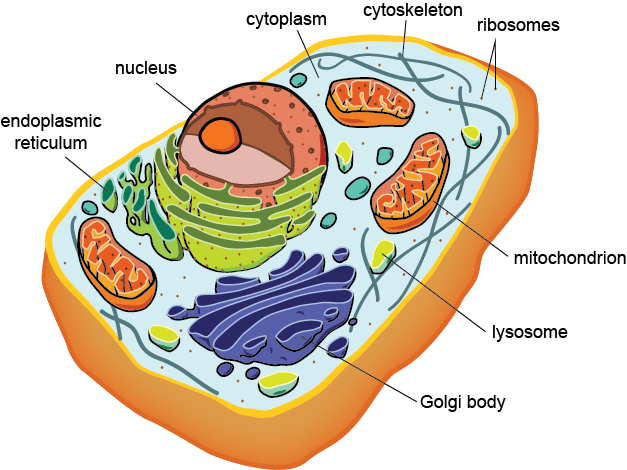
Which of the following statements is not part of the cell theory?
Cells are the basic unit of structure and function in all living things.
All cells are produced from other cells.
Only animal cells are composed of cells.
All living things are composed of cells.

According to cell theory, what do the objects in the image have in common?
All organisms are made up of one or more cells.
Cells are the basic unit of life.
All cells come from pre-existing cells.
What distinguishes a eukaryotic cell from a prokaryotic cell is the presence of a
(a)
Reorder the following levels of organization from least complex to most complex.
Cells
Tissues
Organs
Organ systems
Which of the following is NOT found in plant cells?
Cell Wall
Chloroplast
Centriole
Cytoplasm
Which of the following pairs of items are NOT found in animal cells?
Cell membrane, Ribosome
Nucleus, Mitochondria
Cell Wall, Chloroplast
Centriole, Chloroplast
Match the following cell parts and functions.
Cell membrane
Protect and support the cell
Ribosome
Assemble proteins
Chloroplast
Convert solar energy to chemical energy
Nucleus
Control Center, Contains DNA
Lysosomes
Break down and recycle macromolecules
The nucleus includes all of the following structures EXCEPT
cytoplasm
a nuclear envelope
DNA
a nucleolus
In eukaryotic cells, chromosomes carrying genetic information are found in the
ribosomes.
lysosomes.
nucleus.
cell membrane.
A tissue is composed of a group of
similar cells.
related organelles.
organ systems.
related organs.
To maintain (a) , unicellular organisms grow, respond to the environment, transform energy and reproduce.
What kind of cell has no nucleus and no membrane bound organelles?
eukaryotic
a plant or animal
dead cell
prokaryotic
Cells that have a nucleus are called
animal cells and are usually larger and more complex than plant cells.
eukaryotic cells and are usually larger and more complex than prokaryotic cells.
protist cells and are usually larger and more complex than fungal cells.
bacteria cells and are usually larger and more complex than protist cells.
Which of the following is NOT included in the characteristics of living things?
. All living things breathe in oxygen
All living things have the ability to reproduce.
All living things can react to stimuli in their environment
All living things get energy from taking and breaking down materials.
Based on cell theory, which is the lowest level of organization?
cell
organelle
molecule
tissue
The cell membrane controls what enters and exits the cell to maintain ____________________.
energy
photosynthesis
respiration
homeostasis
Vacuoles are cell structures that are sometimes compared to warehouses. They have the ability to store things such as water and nutrients, and in some cases provide rigidity for the cell. Certain types of cells utilize vacuoles more than others. In what type of cell would you expect to find the largest vacuole?
muchroom cell
a cactus cell
human cell
worm cell
Jaiden is trying to describe a specific cell structure to his friend, but he cannot remember its name. Jaiden says the structure is made of a gel-like substance and other structures and organelles are found within it. Which cell structure is Jaiden most likely describing?
nucleus
mitochondrion
chloroplast
cytoplasm
If cells were a school building, the cell membrane would most likely be represented by which of the following?
walls and doors
intercom
teachers and students
lockers
Which cell organelle is most responsible for supplying energy to the cell?
mitochondria
membrane
ribosome
nucleus
Unlike animal cells, plant cells contain a
mitochondrion to perform photosynthesis.
nucleus to perform photosynthesis
cellulose-based cytoplasm that makes these cells sturdy.
cellulose-based cell wall that makes these cells sturdy.
Which statement best explains how lysosomes contribute to the cycling of nutrients through a cell?
They transport food materials to the cell parts that need them
They break down food materials into forms the cell can use.
They turn light energy into food energy
They acquire food materials from the cell’s environment.
Plants gather the suns energy with lightabsorbing molecules. What are these molecules called?
glucose
thylakoids
pigments
chloroplasts
A tissue in a living organism is made up of one or more
types of cells, which work together cooperatively.
types of organs, which work independently of one another.
types of organ systems, which interact with one another to help an organism function.
types of acids, which maintain the integrity of a single cell membrane in an organism.
How does a cell membrane help both plant and animal cells?
By providing energy to the cells
By controlling the movement of substances in and out of the cells
By producing food for the cells
By storing genetic information
Why do plant cells need chloroplasts?
To store nutrients
To perform photosynthesis
To provide structural support
To transport water
Which two parts are found in plant cells but NOT in animal cells?
Chloroplasts and Cell Wall
Mitochondria and Ribosomes
Nucleus and Cytoplasm
Golgi Apparatus and Endoplasmic Reticulum
Which three parts do both plant and animal cells have in common?
Cell wall, chloroplast, and vacuole
Nucleus, mitochondria, and cell membrane
Ribosomes, lysosomes, and centrioles
Chloroplast, cell wall, and ribosomes
Fill in the blank: The cell wall gives plant cells a box-like shape, while animal cells are more ____.
rounded
square
triangular
hexagonal

In which organelle does photosynthesis take place?
Nucleus
Mitochondria
Chloroplast
Ribosome
If I wanted to communicate that I am in pain, which type of cells am I going to use?

red blood cell

nerve cell (dendrite)

muscle cell

skin cell

How would you describe this organism?
Bacteria, unicellular, autotroph
Animal, multicellular, heterotroph
Protist, unicellular, autotroph
Plant, multicellular, autotroph
If the cell wall is damaged, what will happen to the cell?
The cell will not be supported and protected
The cell will not be able to make its own food
The cell will not be able to dispose of waste
The cell will have no energy
What characteristic of the cell membrane allows liquids to enter and exit the cell?
It is selectively permeable
It is solid
It is green
It is impermeable
I am water trying to enter the cell. Which organelle should I use?
Cell wall
Vacuole
Cell membrane
Mitochondria
Circle the one statement that is FALSE:
a. All living things are unicellular
b. Cells are the smallest unit of life
c. Tissues come together to form organs
d. The lysosomes are in charge of disposal of waste and cleaning the cell
If a plant cell has issues with its chloroplast, how will this affect the plant?
It wouldn't be able to dispose of waste
It wouldn't be able to store waste
It wouldn't be able to make its own food
It wouldn't have any energy
If I have a cell with a cell wall that is able to make its own food, what type of cell is it?
Plant Cell
Animal Cell
Virus
Bacteria
Which of these are characteristics of living things?
Made of cells
Respond to stimuli
Obtain nutrients for energy
Reproduce, grow and develop
All of the above
What is the main purpose of the cell membrane?
To hold the organelles
To allow liquids and gases in and out of the cell
To get rid of waste and clean the cell
Stores the genetic material (DNA) and is the control center of the cell


Which is not true when comparing cells and atoms?
Know all facts about how cells and atoms are the same or different from below
cells are made of molecules, and molecules are made of atoms
cells and atoms are the same
atoms make up matter
cells are the smallest form of life, but a cell can be seen under our microscopes but an atom can't be seen under our microscopes

What is important to remember when using the microscope?
start with high objective, then adjust the arm until focused
start with small objective, use coarse then fine adjustment knob, move stage until focused
carry it by holding onto the stage
put the slide under the stage clips, move stage, then adjust the highest objective, bring into focus


Is this diagram correct?
Know how to compare plant and animal cells for the test.
Yes, it is correct
no, it is not correct
plant and animal cells do not share any organelles
plant and animal cells do not have organelles

What would be the correct answer to the questions of how hard will you study for this test?

Which question below is not a true fact about the comparison of plant and animal cells?
Know all facts that are true for the test
the one on the right is a plant cell, and the one on the left is an animal cell
the plant cell has green chloroplasts and the plant cell and animal both have vacuoles (light aqua blue) but the plant cell's vacuoles are much larger
they are both eukaryotes, and
the plant cell is rectangular, and the animal cell is round
the plant cell has a smaller vacuole


These cells HAVE a nucleus
Prokaryotic
Eukaryotic
Both
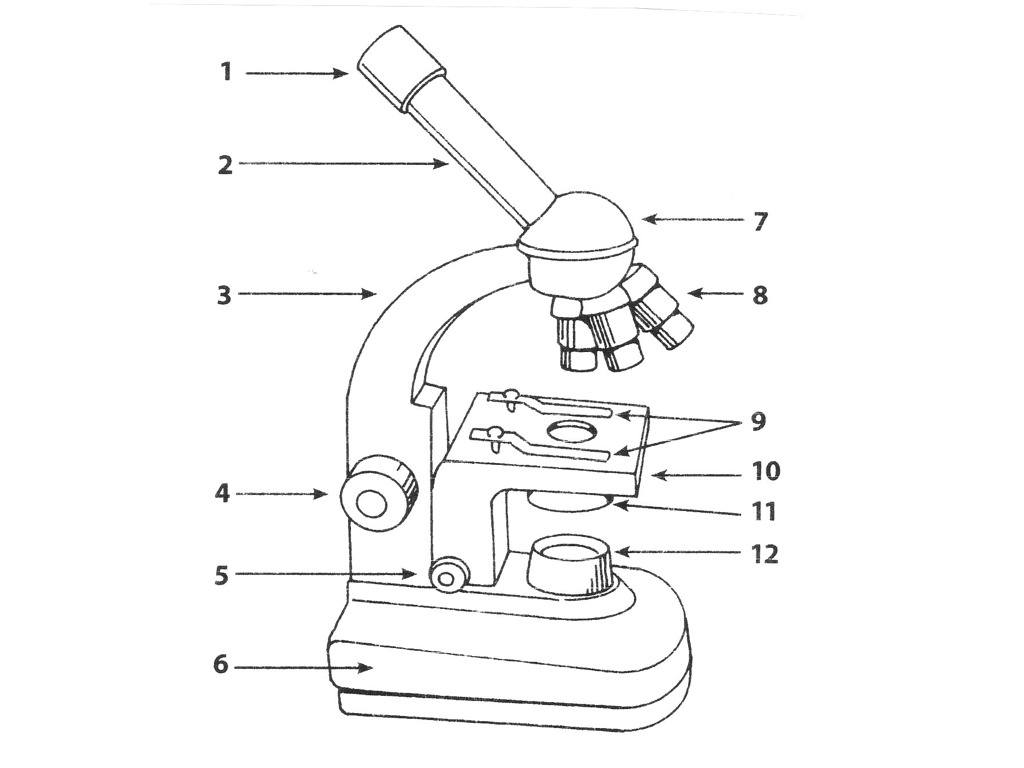

Match the following types of cells with their examples
Prokaryotic
Bacteria (like E. Coli)
Eukaryotic (animal)
Humans
Eukaryotic (plant)
Fruit (like mangos)

These diagrams demonstrate how cells can differ in:
size and densities
modes of locomotion
means of replication
cell structures
Within eukaryotic cells, there is an intricate network of ___ with unique functions.
organelles
molecules
tissues
atoms
Organelle that is much larger in plant cells than animal cells. It stores liquid in the cell
Mitochondria
Chloroplast
Vacuole
Nucleus
Organelles found in both plant cells and animal cells. It filters what goes in and out of the cell
Cell wall
Chloroplast
Mitochondria
Cell membrane
Select all the examples of a eukaryote:
Plant
Bacteria
Animal
Fungi
What is the jelly-like fluid that acts as a medium for organelles and chemical reactions.
Cytoplasm
Cell Wall
Plasma Membrane
Nucleus

What type of cell is pictured?
Prokaryotic Cell
Eukaryotic Cell
Animal Cell
Plant Cell
What is the only organelle is specific to animal cells?
Chloroplast
Vacuole
Centriole
Cell Wall

Which structure is referred to as "the guard" because it controls what substances move in and out of the cell?
cell wall
cell membrane
vacuole
nucleus

Which structure is referred to as "the storage tank" because it holds water, minerals, wastes and other substances in the cell? (Plant cells have a LARGE central one to store the extra water a plant needs.)
cell wall
cell membrane
vacuole
nucleus

Which structure is referred to as "the brain" because it holds the DNA, or instructions for making proteins in the cell and controls its major activities?
cell wall
cell membrane
vacuole
nucleus

Which structure is referred to as "the passageways" of the cell because it carries materials throughout the cell? (It can be rough or smooth.)
chloroplasts
endoplasmic reticulum (ER)
vacuole
mitochondria

Which structure is referred to as "the power plant" of the cell because it produces energy for the cell (in the form of ATP) using cellular respiration ?
chloroplasts
endoplasmic reticulum (ER)
vacuole
mitochondria

Which structure is referred to as "the solar power plant" of the cell because it produces energy for the cell using photosynthesis? (It is what makes plants green and able to produce food from the sun.)
chloroplasts
endoplasmic reticulum (ER)
vacuole
mitochondria

Which structure is referred to as "the city wall" of the cell because it gives extra support and structure to a plant cell?
chloroplasts
endoplasmic reticulum (ER)
cell wall
cell membrane

Which structure is referred to as "the jelly" of the cell because it holds all the organelles and substances inside the cell?
cytoplasm
vacuole
cell wall
cell membrane

