
Font size
 Worksheets
ECOLOGY UNIT test
Total questions: 125
Worksheet time: 2hrs 49mins
The study of interactions between organisms and their environment.
Chemistry
Physics
Oceanography
Ecology
Which of the following are LARGER than an organism in an ecosystem ? Choose ALL that apply
Population
Biological community
Ecosystem
Biome
Biosphere
Which of the following are examples of Biomes?
desert
rainforest
taiga
Disneyland
Tundra
Biotic factors are what kind of factors in an environment?
living
not living
bacterial
The particular place and roll that an organism plays in its environment is called its ________. No two organisms can have the exact same one.
Niche
Habitat
House
Casa
What are the four general cycles we spoke about? Check 4
Water
Uranium
Carbon and Oxygen
Nitrogen
Phosphorus
The carbon and oxygen cycle are ________ processes of each other, thanks to photosynthesis and cellular respiration.
Similar
exactly the same
opposite
Nitrogen gas cannot be used, it first needs to go through the process of nitrogen fixation. What organism helps "fix" nitrogen from the air, into the ground so it can be used by plants.
bacteria
viruses
cows
Post Malone
The air around us is mostly:
Nitrogen
Oxygen
Carbon Dioxide
Phosphorus
Organisms that specialize in eating dead/ decomposing/ rotting things are called: (Choose ALL that apply )
Herbivores
Carnivores
Detrivores
Decomposers
Where do maggots come from?
Fly larve
The ground
Bacteria
A cereal box
Name an example of an autotroph
Harry Styles
Selena Gomez
Shakira
Lemon Tree
How much energy is transferred from one organisms to the next when being eaten?
Hint: Was called the _______ % rule
100
90
50
10
These kind of factors are affected by population density. Examples would be: Disease and competition
Density dependent factors
density independent factors
What are some ways that a population could increase ? Choose all that apply
Birth
Emigration
Immigration
Death
Which two countries make up most of the worlds population?
India
United States
China
Mexico
Cattle egrets stand on the cattle's back and wait for them to stir up some insects when they walk. The cattle is neither helped or harmed. This is an example of:
Mutualism
Parasitism
Competition
Commensalism
A mosquito feeding on your blood is an example of
Mutualism
Competition
Parasitism
Commensalism
Climate is different than weather, it is the average: (check all that apply)
Temperature
Humidity
Atmospheric pressure
Wind
Precipitation (rain and snow)
An estuary has brackish water. What does this mean?
Salt water
Fresh water
A mix of fresh and salt
Frozen, it's ice
A heard of 1000 buffalo is considered a high biodiversity
True
False
What are some factors that threaten biodiversity ? choose all that apply
Extinction of species
overexploitation
habitat loss
pollution
invasive species
Harvesting species from the wild at rates faster than natural populations can recover is
Overexploitation
Biodiversity
Invasive species
Pollution
What are renewable sources of energy ? Choose all that apply
Wind
Fossil Fuels
Solar
Nuclear
Which of the following are LARGER than an organism in an ecosystem ? Choose ALL that apply
Population
Biological community
Ecosystem
Biome
Biosphere
Which of the following are examples of Biomes?
desert
rainforest
taiga
Disneyland
Tundra
Biotic factors are what kind of factors in an environment?
living
not living
bacterial
The particular place and roll that an organism plays in its environment is called its ________. No two organisms can have the exact same one.
Niche
Habitat
House
Casa
The carbon and oxygen cycle are ________ processes of each other, thanks to photosynthesis and cellular respiration.
Similar
exactly the same
opposite
Nitrogen gas cannot be used, it first needs to go through the process of nitrogen fixation. What organism helps "fix" nitrogen from the air, into the ground so it can be used by plants.
bacteria
viruses
cows
Post Malone
Organisms that specialize in eating dead/ decomposing/ rotting things are called: (Choose ALL that apply )
Herbivores
Carnivores
Detrivores
Decomposers
Name an example of an autotroph
Harry Styles
Selena Gomez
Shakira
Lemon Tree
How much energy is transferred from one organisms to the next when being eaten?
Hint: Was called the _______ % rule
100
90
50
10
Cattle egrets stand on the cattle's back and wait for them to stir up some insects when they walk. The cattle is neither helped or harmed. This is an example of:
Mutualism
Parasitism
Competition
Commensalism
A mosquito feeding on your blood is an example of
Mutualism
Competition
Parasitism
Commensalism
Harvesting species from the wild at rates faster than natural populations can recover is
Overexploitation
Biodiversity
Invasive species
Pollution

What is the relationship between the snake and the mouse in this food web?
The snake is a primary producer and the grasshopper is a tertiary consumer
The snake is a predator and the mouse is its prey
The mouse is a parasite and the snake is the host
The snake is a tertiary consumer and the mouse is a primary consumer

What is the relationship between the Polar Bear and the Orca in this food web?
They are producers
They are decomposers
They are competitors
Organisms that make their own food are called __________________.
producers
consumers
decomposers
Where does all the energy originate from in a food web?
All energy comes from the Sun.
All energy comes from the Moon.
All energy comes from your Face.
All energy comes from the Plants.
Blue whales live in oceans. What type of factors do they rely on for their existence?
Only biotic factors
Only abiotic factors
Both biotic and abiotic factors
Neither biotic nor abiotic factors
A certain type of mite is a parasite of honeybees. Which statement best describes the relationship between the mites and the bees?
The mites harm the bees by feeding on their blood.
The mites get honey in return for helping the bees stay healthy.
The mites help the bees find food but get nothing in return.
The mites live in the hive of the bees but do not interact with the bees.
What is the process of combining nitrogen gas with other elements to make nitrogen into usable compounds?
nitrogen composition
nitrogen fixation
ammonia
denitrification
Why are decomposers important in maintaining stability in an ecosystem?
Decomposers photosynthesize and make the energy for the ecosystem
Decomposers recycle nutrients needed by producers (plants)
Decomposers keep the herbivores in check in an ecosystem
Why is it important to have diversity in an ecosystem?
The more biodiversity in an ecosystem the more climate change can occur
The more biodiversity in an ecosystem the more poaching can benefit humans
The more biodiversity in an ecosystem the more people can live their
The more biodiversity in an ecosystem the more stability there is in that ecosystem.
What organisms are able to occupy more than one trophic level?
herbivores
carnivores
omnivores
producers
What is primary succession?
primary succession is the changes that occur in a brand new ecosystem.
primary succession is the changes that occur in an ecosystem that has been disturbed either by humans or by a natural disaster.
What process occurs when dead plant and animal matter decomposes and nitrogen is released back into the atmosphere?
Assimilation
Fixation
Ammonification
Denitrification
What is a pioneer species?
The first plant species to inhabit new land
The established plants and animals in an ecosystem
The first humans to inhabit new land
The first plants and animals that settled in the west
A symbiotic relationship in which one organism benefits while the other is not affected.
Mutualism
Parasitism
Commensalism
A symbiotic relationship in which both organisms benefit from the relationship.
Mutualism
Parasitism
Commensalism
A symbiotic relationship where one organism benefits, and the other is harmed.
Mutualism
Parasitism
Commensalism
Consumers...
Make their own food
Go through photosynthesis
Eat other organisms
Breathe in carbon dioxide
What is the producer in this food chain?
phytoplankton → krill → fish → shark
Phytoplankton
Krill
Fish
Shark
Arrows in a food web show the flow of
energy
protein
nutrients
glucose

What are the two REACTANTS in photosynthesis?
Carbon dioxide and oxygen
Water and sunlight
Water and carbon dioxide
Glucose and sunlight

What are the PRODUCTS in photosynthesis?
Sunlight and water
Carbon dioxide and water
Glucose and carbon dioxide
Glucose and oxygen


DTR: Leech sucking blood
Mutualism
Commensalism
Parasitism
Predation


In this food web...which of these would be the LEAST impacted if mangoes went extinct?
rat
fruit fly
thrush
dragonfly
frog

In this food web interspecific competition occurs between
dolphins and otters for pollock
eel grass for bacteria and little schools of fish
dolphins and seals for herring
orca for dolphins and seals

An organism that uses energy to make its own food from abiotic sources is know as....
Heterotroph
Detritovore
Consumer
Autotroph

Cattle egrets forage (feed) in fields among cattle. The egret gets easy access to flying insects stirred up by the cattle, and the cattle are unaware if they are there or not.
mutualism
commensalism
competition
parasitism
What does symbiosis mean?
Living separately, no relationship between 2 species
Living together, close relationship between 2 species
Living separately, long distance relationship between 2 species
When one species kills and eats another
A relationship between two organisms in which both organisms benefit
Mutualism
Competition
Parasitsm
Commensalism

Honeyguide birds find a bee hive, then chatter loudly to attract the Honey badger. They fly toward the hive making sure the badger is following. Upon arrival at the bee hive, the badger tears open the hive and feasts on the honey. Then the Honeyguide bird feeds on the remaining wax and larvae.
commensalism
mutualism
parasitism
predation

Gall Insects lays their eggs in the leaves or branches of Oak trees. Oak trees provide shelter and food to the insect larvae.
commensalism
mutualism
parasitism
predation

Hookworms can enter the body of animals or even humans. The hookworm attaches to the lining of the intestinal wall and feeds on blood. Its eggs are ejected into the digestive tract and the larvae (young hookworms) that hatch live off of the host’s blood. The host can suffer from blood loss, anemia and iron deficiency.
commensalism
mutualism
parasitism
predation


All of the populations that live in one area together
limiting factors
populations
community
speed limit

What is a resource?
Food
Shelter
Mates
Territory/Space
All of the above
True or False: When there are more resources the population will decrease.
True
False
The lion hunting and eating an antelope is an example of:
symbiosis
cooperation
predation
A mouse would be an example of:
an omnivore
a decomposer
a herbivore
an autotroph
Only 10% of energy is passed from one level to the next---what happens to the other 90%?
Stored as fat
Given off as heat
Makes carbohydrates
Eliminated as wastes
How do plants affect the air that animals and people breathe?
Plants use oxygen from the air to make their own food
Plants release pollution into the air
Plants take in carbon dioxide and release oxygen
Plants take in oxygen and release carbon dioxide


Elements like carbon and nitrogen are cycled through __________.
cells
species
organisms
ecosystems
What cycle does not has a gas phase?
carbon
nitrogen
phosphorus
water
Biotic factors affecting size of population
temperature
rainfall
number of predators
number of tornados

What event would negatively impact the black bear population the most?
salmon disease
large scale wildfire
another predator for rodents is introduced

Represents growth model with limited resources
exponential
logistic
the number of organisms an ecosystem can sustain
equilibrium
carrying load
carrying capacity

Pattern of growth shown by humans
exponential
logistic
A resource that is replenished as fast as it is used is called ____.
renewable
nonrenewable
obsolete
Which factor would INCREASE the carrying capacity for white-tailed deer in an Eastern temperate forest ecosystem?
introduce another predator
reintroduce fruit and nut bearing trees to the area
spray pesticides over the grass and weeds
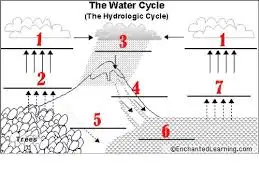
What is #1?
evaporation
condensation
transpiration
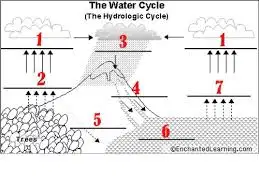
What is #7?
transpiration
evaporation
condensation
runoff
Two things that "fix" nitrogen so that plants and animals can use it. CHECK BOTH!
bacteria
worms
lightning
phosphorus
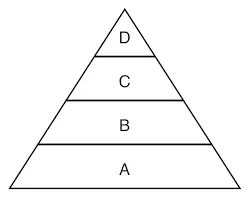
Which level has the most biomass
C. Secondary Consumer
B. Primary consumer
A. producer
D. Tertiary Consumer
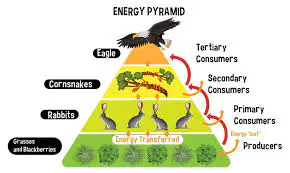
If producers have 10,000, how much energy is available at the SECONDARY CONSUMER level?
10,000
1000
100
10
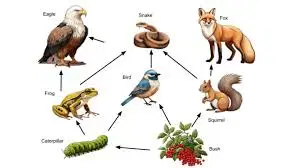
Describe the bird in this food web? CHECK ALL THAT APPLY
autotroph
heterotroph
omnivore
consumer
makes it own food
consumer
autotroph
heterotroph
primary consumer
organism cannot make its own food; MUST consume other organisms
producer
autotroph
heterotroph
plant
eats meat only
carnivore
omnivore
producer
autotroph
heterotroph
A mature stable forest with very little change
constant forest
climax community
pioneer forest
What is the main difference between primary and secondary succession?
Primary ends with climax community
Secondary begins with bare rock
Primary begins with bare rock
People burning fossil fuels will add more CO2 to the atmosphere and lead to
decreased overall temperatures
increased average temperatures; more trapped heat
no changess in overall temperature

