
Font size
 Worksheets
Headache Introduction
Total questions: 59
Worksheet time: 30mins
Which of the following best defines a headache?
Pain or discomfort in the head, scalp, or neck region
Pain only in the neck
Discomfort only in the scalp
Pain only in the head
Select all the regions where headache pain or discomfort can occur.
Head
Scalp
Neck
Shoulders
How can the severity of a headache affect a person's life?
It can range from mild discomfort to a severe and disabling condition that affects daily activities and quality of life
It only causes mild discomfort and does not affect daily activities
It always results in severe pain but does not impact quality of life
It only affects people for a short period and never impacts daily activities
Which of the following structures is pain-sensitive and can be responsible for the sensation of headache?
Blood vessels, meninges, cranial nerves, and scalp or neck muscles
Brain tissue itself, since it contains pain receptors
Only the scalp, because it is the most superficial structure
The spinal cord, as it is directly connected to the brain
Why does the pain in headache not originate from the brain tissue itself?
Because the brain lacks pain receptors
Because the brain is protected by the skull
Because the brain is not connected to pain pathways
Because the brain is always active
Which of the following can activate pain pathways leading to the sensation of headache?
Stimulation, inflammation, or tension in pain-sensitive areas
Only direct injury to the brain tissue
Exposure to loud noises
Dehydration alone
Select all statements that describe the clinical importance of headache.
It is a common cause of self-medication and analgesic overuse
It is a major reason for neurology OPD visits
It has a significant impact on quality of life and productivity
It rarely affects daily activities
Which of the following is a major reason for neurology OPD visits?
Headache
Fever
Cough
Skin rash
What is a significant impact of headache on individuals?
It affects quality of life and productivity
It only causes mild discomfort
It improves concentration
It increases physical strength
According to WHO estimates, what percentage of adults experience at least one episode of headache per year?
Approximately 40%
Approximately 10%
Approximately 80%
Less than 1%
Which type of headache is more common in women according to global prevalence data?
Migraine
Cluster headache
Tension-type headache
Sinus headache
What is the estimated lifetime prevalence of tension-type headache?
Up to 70-80%
Less than 1%
12-15%
About 40%
Cluster headache is more common in which gender?
Men
Women
Children
No difference between genders
Which of the following is classified as a primary headache disorder?
Migraine
Sinus headache with nasal congestion
Headache due to hypertension
Headache caused by TMJ disorders
Which symptom is most commonly associated with migraine headaches?
Recurrent, pulsating, unilateral headache often with nausea, vomiting, and light sensitivity
Severe, bilateral pain with nasal congestion and tearing
Dull, pressure-like pain related to poor posture
Multiple attacks per day for weeks with red eye
Tension-type headaches are best described as:
Dull, pressure-like pain that feels like a band around the head
Severe, unilateral pain in the orbital region
Recurrent, pulsating pain with light sensitivity
Pain that occurs in clusters with nasal congestion
Cluster headaches are characterized by which of the following features?
Severe, unilateral, orbital or temporal pain occurring in clusters and associated with tearing, nasal congestion, and red eye
Dull, pressure-like pain related to stress and anxiety
Recurrent, pulsating pain with vomiting
Bilateral pain with sensitivity to light
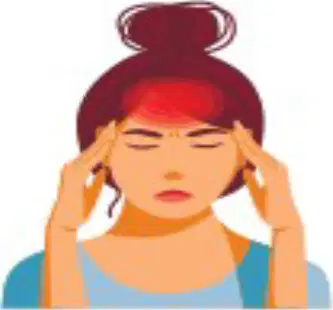
Refer to the diagram showing different types of headaches. Which headache type is depicted in the top center image under 'Primary headaches'?
Migraine
Tension headache
Cluster headache
Sinus headache
Which symptoms are commonly associated with cluster headaches? Select all that apply.
Tearing
Nasal congestion
Red eye
Vomiting
Sensitivity to light
Which of the following is a common cause of tension-type headaches?
Stress, anxiety, or poor posture
Multiple attacks per day for weeks
Nausea and vomiting
Tearing and red eye
What is the main difference between primary and secondary headaches?
Primary headaches occur by themselves and are not due to another cause, while secondary headaches result from another underlying condition.
Primary headaches are always more severe than secondary headaches.
Secondary headaches are only caused by stress and anxiety.
Primary headaches are only associated with nasal congestion.
Which of the following best describes a tension-type headache?
A unilateral, throbbing headache aggravated by physical activity
A bilateral, pressing or tightening headache that is mild to moderate in intensity and not aggravated by routine physical activity
A headache associated with visual aura and severe nausea
A headache that is always severe and worsens with movement
Which activity does NOT typically aggravate a tension-type headache?
Routine physical activity
Intense exercise
Reading for long periods
Exposure to bright lights
What is the most common type of primary headache?
Migraine
Cluster headache
Tension-type headache
Sinus headache
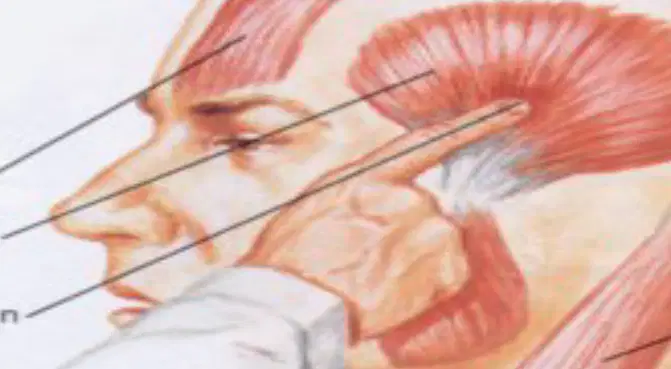
In tension-type headache, what effect does pressure on contracted muscle have?
It may increase pain
It relieves pain instantly
It causes visual disturbances
It has no effect on pain
Which statement best describes the pathophysiology of tension-type headache?
It involves both peripheral and central mechanisms.
It is caused only by psychological factors.
It is exclusively due to central nervous system dysfunction.
It results solely from muscle injury.
What is the primary effect of increased tension in pericranial muscles during the early phase of a tension-type headache?
It leads to local tenderness and dull pain.
It causes immediate sharp pain throughout the body.
It results in loss of muscle function.
It produces visual disturbances.
Which of the following are steps in the peripheral mechanism of tension-type headache? Select all that apply.
Increased tension in pericranial muscles
Muscle contraction leading to accumulation of pain mediators
Activation of myofascial nociceptors
Immediate central sensitization
Persistent nociceptive input from muscles in tension-type headache leads to which process in the brainstem and spinal cord?
Central sensitization
Peripheral inhibition
Muscle relaxation
Decreased pain perception
Which neurotransmitters are involved in the pain inhibitory pathways that may be dysfunctional in tension-type headache?
Serotonin and norepinephrine
Dopamine and acetylcholine
Glutamate and GABA
Histamine and melatonin
Which psychological factors can amplify the pain response in tension-type headache?
Stress, anxiety, and depression
Joy, excitement, and relaxation
Anger, surprise, and boredom
Curiosity, motivation, and hope
Which of the following best distinguishes peripheral mechanisms from central mechanisms in tension-type headache?
Peripheral mechanisms involve muscle tension and local pain, while central mechanisms involve increased pain perception and central sensitization.
Peripheral mechanisms are related to neurotransmitter dysfunction, while central mechanisms are due to muscle contraction.
Peripheral mechanisms are caused by psychological factors, while central mechanisms are caused by physical injury.
Peripheral mechanisms result in visual symptoms, while central mechanisms result in auditory symptoms.
Which symptoms are most likely associated with the central mechanisms of tension-type headache? Select all that apply.
Increased pain perception even with mild stimuli
Dysfunction of pain inhibitory pathways
Amplification of pain by psychological factors
Local tenderness and dull pain
Which of the following are recommended non-pharmacological management strategies for tension-type headache? Select all that apply.
Stress management and relaxation therapy
Biofeedback and cognitive behavioral therapy (CBT)
Physiotherapy or posture correction
Excessive caffeine consumption
Adequate sleep, hydration, and regular exercise
Which lifestyle modification is most important in the non-pharmacological management of tension-type headache?
Adequate sleep, hydration, and regular exercise
Increasing screen time
Skipping meals regularly
Consuming high amounts of caffeine
Which drug class is commonly used for acute (symptomatic) relief of tension-type headache?
Paracetamol (acetaminophen) and NSAIDs
Opioids and combination analgesics
Amitriptyline and venlafaxine
Muscle relaxants and anxiolytics
Which medication is commonly used as preventive therapy for frequent or chronic tension-type headache?
Amitriptyline (TCA)
Paracetamol (acetaminophen)
Ibuprofen
Opioids
Why should the use of paracetamol and NSAIDs for acute relief of tension-type headache be limited to 10 days per month?
To prevent medication-overuse headache
To avoid liver toxicity
To reduce risk of dependency
To enhance pain inhibition
Which of the following is considered an adjunct therapy for tension-type headache?
Muscle relaxants and anxiolytics (short term)
Opioids
Paracetamol
Venlafaxine
Which drugs should be avoided in the management of tension-type headache due to risk of dependency and rebound headache?
Opioids and combination analgesics
Paracetamol and NSAIDs
Amitriptyline and mirtazapine
Muscle relaxants
How do preventive therapies such as amitriptyline work in tension-type headache management?
By increasing serotonin and norepinephrine to enhance pain inhibition
By reducing liver toxicity
By limiting screen time
By increasing dependency risk
Which of the following is NOT recommended as a non-pharmacological management strategy for tension-type headache?
Avoiding excessive caffeine and long screen time
Biofeedback and cognitive behavioral therapy (CBT)
Increasing stress levels
Physiotherapy or posture correction
Select all drug classes that are used for acute (symptomatic) relief of tension-type headache.
Paracetamol (acetaminophen)
NSAIDs (e.g., ibuprofen, naproxen)
Opioids
Amitriptyline (TCA)
Which of the following best describes a migraine?
A recurrent, pulsating, unilateral headache often associated with nausea, vomiting, and sensitivity to light or sound.
A constant, bilateral headache with no associated symptoms.
A mild headache that occurs only in the elderly and is not linked to any other symptoms.
A headache that is always caused by infection and never involves sensitivity to light or sound.
Which system is involved in the neurovascular dysfunction that results in migraine?
Trigeminovascular system
Cardiovascular system
Respiratory system
Digestive system
Select all symptoms that are commonly associated with migraine.
Nausea
Vomiting
Sensitivity to light or sound
Persistent cough
What is the approximate percentage of the global population affected by migraine?
12%
25%
5%
50%
What is the typical female to male ratio for migraine prevalence?
3:1
1:1
1:3
2:1
Migraine commonly begins in which stage of life?
Adolescence or early adulthood
Infancy
Late adulthood
Childhood
A positive family history is present in approximately what percentage of migraine cases?
70%
30%
10%
90%
Which of the following is a reason for the higher prevalence of migraine in females compared to males?
Hormonal influence
Genetic mutations exclusive to females
Greater exposure to environmental toxins
Higher stress levels in females
Which type of migraine is most prevalent and occurs without warning?
Migraine without aura (common)
Migraine with aura (classic)
Chronic migraine
Menstrual migraine
Which of the following is a defining feature of migraine with aura (classic)?
Headache preceded by neurological symptoms such as visual, sensory, or speech disturbances.
Headache occurs without warning and is the most prevalent type.
Headache occurs ≥15 days per month for more than 3 months.
Headache occurs around menstruation due to estrogen drop.
Select all symptoms that may occur during the prodrome phase of a migraine.
Mood changes
Fatigue
Food craving
Unilateral, throbbing pain
Which phase of migraine is characterized by reversible neurological symptoms such as flashing lights and numbness?
Aura (in some patients)
Prodrome
Headache phase
Postdrome (recovery)
A patient experiences headaches for at least 15 days per month for more than 3 months. What type of migraine does this describe?
Chronic migraine
Migraine with aura (classic)
Migraine without aura (common)
Menstrual migraine
Which of the following best describes the headache phase of a migraine?
Unilateral, throbbing or pulsatile pain lasting 4–72 hours, moderate to severe intensity, worsens with movement.
Fatigue, mild headache, and concentration difficulty.
Mood changes, fatigue, and food craving.
Reversible neurological symptoms such as flashing lights and numbness.
Menstrual migraine is most closely associated with which physiological change?
Estrogen drop around menstruation
Increase in progesterone
Decrease in testosterone
Rise in cortisol levels
Which symptoms are commonly experienced during the postdrome (recovery) phase of a migraine?
Fatigue, mild headache, and concentration difficulty
Unilateral, throbbing pain
Mood changes and food craving
Flashing lights and numbness

