
 Worksheets
2.1 + 2.2 Quizziz
Total questions: 202
Worksheet time: 3hrs 4mins
Photosynthesis removes carbon from which reservoir?
Geosphere
Atmosphere
Hydrosphere
Biosphere
Combustion adds carbon into which reservoir?
Geosphere
Biosphere
Hydrosphere
Atmosphere
Carbon enters the soil through dead plant or animal matter.
Decomposition
Respiration
Photosynthesis
Diffusion
In the carbon cycle, animals can release carbon back into the cycle through __________ or through __________.
burning . . . photosynthesis
fixation . . . decomposition
decomposition . . . photosynthesis
respiration . . . decomposition
respiration . . . photosynthesis
What is the primary energy source that drives the Earth’s water cycle between the atmosphere, oceans, and land?
Wind
Sunlight
Ocean currents
Rotation of Earth
__________ occurs when water flows over the surface of land.
Runoff
Condensation
Precipitation
Transpiration
Transpiration is the
process by which grass grows in the summer months
process by which plants absorb water through their roots and then release it through the pores on their leaves
process by which water evaporates into the air through animals
process by which salt water is purified
Evaporation is...
the process in which water turns into a solid
the process by which the sun turns water into air
the process by which water changes from a liquid state into a gas
the process by which clouds form
Condensation is...
the process in which water vapor cools and becomes a liquid
the process by which water turns into a gas
the process by which the sun heats water and it turns into gas
the process by which clouds convert water into precipitation
precipitation is...
rain, snow, clouds, condensation
sand, dirt, mud, rain
rain, snow, ice, hail
hail, snow, sun, runoff
Hydrosphere is the...
The gas around earth
The air above earth
The land on earth
Water on earth
What is the process of combining nitrogen gas with other elements to make nitrogen into usable compounds?
nitrogen composition
nitrogen fixation
ammonia
denitrification
What process occurs when dead plant and animal matter decomposes and nitrogen is released back into the atmosphere?
Assimilation
Fixation
Ammonification
Denitrification
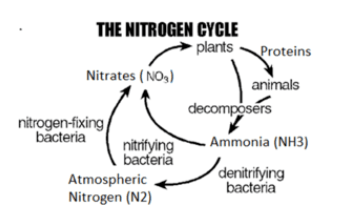
According to this diagram, plants absorb
nitrates
nitrogen fixing bacteria
animals
decomposers
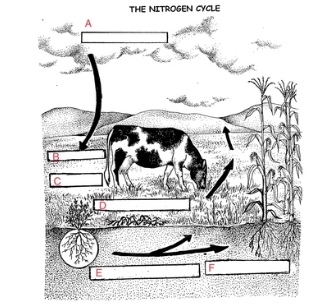
In the nitrogen cycle, what does label A in the diagram represent?
Gas
Clouds
Carbon dioxide in the atmosphere
Nitrogen in the atmosphere
Sun
Trees
Animal Respiration
Plant Respiration
Burning Fossil Fuel/Emissions
Dead Organisms
Fossils and Fossil Fuels


Coal, natural gas, and oil are examples of _________
the carbon cycle
products of photosynthesis
good fuels for barbecues
fossil fuels
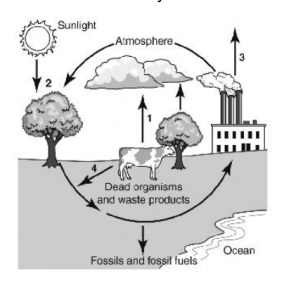

Photosynthesis is an important part of the ______ cycle
Carbon
Water
Phosphorus
Nitrogen

What biogeochemical cycle is occuring?
Water cycle
Carbon Cycle

What process does the purple arrow show?
Respiration
Photosynthesis
Combustion
Decomposition

According to the diagram, deforestation
Can release carbon dioxide gas back into the atmosphere.
Directly creates fossil fuels.
Fixes carbon atoms in the soil,
Removes dissolved carbon dioxide from lakes and rivers.

Carbon enters the soil through the ______ of dead plants or animals' matter.
Photosynthesis
Respiration
Decomposition
Diffusion
How do animals get carbon?
By eating plants and or other animals.
They absorb it from the atmosphere.
From the ground
They do not get carbon from anywhere.

Ammonification
production of ammonia during the decay of organic matter
Assimilation
absorbtion and incorportaion of nitrogen into plant and animal compounds
Denitrification
conversion of nitrate into nitrogen gas
Nitrification
production of nitrates from ammonia
Nitrogen Fixation
converts nitrogen gas into ammonia & nitrates
In the (a) , nitrogen moves (b) into the soil, (c) , & back to the air.


Is the human body an open, closed, or isolated system?
Open
Closed
Isolated

A collection of parts that work together to complete a purpose.
A piece of a whole that may serve a purpose.
A group that individually does work.

This type of system does not interact with anything around it. Matter and energy do not cross the boundary.
Closed System
Open System
Isolated System

A pressure cooker with a lid on it to keep in the steam is what type of system?
Closed System
Open System

An unopened can of vegetables is an example of which type of system?
Open System
Closed System
Isolated System
Broken System

This pond is an example of which type of system?
Open System
Closed System
Isolated System
Broken System

A lightbulb is an example of which type of system?
Open System
Closed System
Isolated System
Broken System
In a closed system...
Energy can enter and leave but matter cannot.
Both matter and energy can leave or enter.
Neither matter or energy can leave or enter.
Matter can enter and leave but energy cannot.
In an open system...
Energy can enter and leave but matter cannot.
Both matter and energy can cross the boundary.
Neither matter or energy can leave or enter.
Matter can cross the boundary but energy cannot.
volume
matter
energy
density

What should go in the box with a question mark?
An orange X
A green checkmark.
It should be blank
The word "open"

A sealed terrarium will allow which of the following to go in and out? (choose all that apply)
air
water
heat energy
radiant energy

An insulated Hydro Flask is an example of which type of system
Open System
Closed System
Isolated System
Broken System
An isolated system is characterized by:
Exchanging only energy with its surroundings
Exchanging only matter with its surroundings
Exchanging both matter and energy with its surroundings
Not exchanging matter or energy with its surroundings

The handle of a metal spoon warms up when it is placed in a hot bowl of soup because of ________.
convection
conduction
radiation

You get sunburned due to __________ from the sun.
conduction
convection
radiation

The type of heat transfer that creates currents in water is called ________.
conduction
convection
radiation

The warm air from the fire heats up the air around it. This makes it less dense and it rises.
Conduction
Radiation
Convection

A lava lamp contains colored liquids. These liquids form globs that break off and rise to the top of the liquid. The globs rise due to
Conduction
Convection
Radiation
Insulation
Which type of heat transfer (if any) would be possible in the vacuum of space?
Conduction
Convection
Radiation
No form of heat transfer can happen in space
What is one way that carbon enters the atmosphere?
Sunlight
Vehicle emissions/Exhaust
Ocean uptake
Rain
Click on the main process that adds CO2 to the atmosphere through an abiotic factor.
Click on the main process that removes CO2 from the atmosphere through a biotic factor.
Label the following Carbon cycle.

Photosynthesis
D
Combustion
C
Respiration
B


Label the following parts of the water cycle.
Evaporation
Transpiration
Condensation
Precipitation
Runoff

How is carbon recycled?
The carbon cycle
At the recycle plant
It can't be recycled
Through water
Which example is NOT a renewable resource?
Trees
Wind
Solar
Uranium (Nuclear)
What is one disadvantage of coal?
Coal produces air pollution.
There isn't a lot of coal left which makes it expensive.
The world isn't using a lot of coal which makes it an undesirable job.
You can only use it to roast hot dogs and cook hamburgers.
All are examples of Nonrenewable energy sources EXCEPT...
Coal
Petroleum
Hydropower
Uranium (Nuclear)
What is one disadvantage of renewable energy?
Electricity and power could become much cheaper.
Third world countries could have affordable energy.
Many people could become energy independent.
Most sources are expensive to get started.
Which of the following is a true statement about fossil fuels?
Burning them creates air pollution
There is an infinite supply of them within the earth's crust
They are very difficult to refine into usable fuel
They are not carbon-based
Renewable energy sources are
expensive and inefficient.
harmful to the environment.
restored naturally and not used up.
only available during certain times of the year.
Examples of renewable energy source include (pick 3)
coal power.
geothermal energy.
hydropower.
wind power.
Non-renewable energy sources
are more cost-effective.
can be refilled or reproduced in a short period of time.
are environmentally friendly.
cannot be refilled or reproduced in a short period of time.
Examples of non-renewable energy sources include (pick 3)
nuclear energy.
bio mass.
natural gas.
oil.
Renewable energy sources (pick 2)
are sustainable (always available) and help the environment.
have a negative impact on the environment.
can be unreliable and inconsistent (unpredictable).
are expensive and not cost-effective.
Renewable energy sources (pick 3)
require a large amount of land and space.
can be unreliable and inconsistent (unpredictable).
harm the environment.
can be expensive and not cost-effective.
Which of the following is a renewable source of energy?
Nuclear
Biomass
Coal
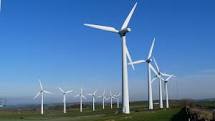
Growing populations can cause
Greater Demands on the environment
Less Demand on the environment
Less Pollution
Less Birth
Which of the following is NOT a disadvantage of non-renewable energy sources?
They can lead to environmental pollution.
They are finite and will eventually run out.
They can contribute to global warming.
They are easily replenished.
The clean, relatively low-cost energy source from the Sun is referred to as
solar energy.
magnetic energy.
energy efficient.
wind power.
The energy from moving water is called .
solar power.
hydroelectric power.
wind power.
fossil fuels .
Forests are
Renewable resource
Nonrenewable resource
Our main reasons for using fossil fuels are
Cheap
Expensive
Convenient
Clean
Inconvenient
Which one is a fossil fuel?
oil
biomass
wind
hydro

Water, sunlight, and trees are examples of this type of natural resource.

Fossil fuels are an example of this type of natural resource.
Renewable
Non-renewable

This type of alternative energy is energy from heat stored deep within the Earth.
Solar Energy
Geothermal Energy
Wind Energy

This type of alternative energy is formed from burning living things.
Biomass Energy
Geothermal Energy
Hydropower Energy
Renewable energy resources produce less_____________ than fossil fuels.
pollution
energy
wind
light
Sustainability is making sure that the planet and its resources can continue to provide life.
True
False
Which of these problems could happen if we don't look after the resources we have?
Loss of animal homes
Climate change
Increase in pollution
All of the above
Having enough managed resources to meet the needs of future generations is a good definition of
Renewable resource
Natural capital
Pollution
Sustainability
What does renewable mean?
to protect from loss
able to be replaced
to put money or resources toward something
to move forward
to increase to the greatest possible amount
Which is a picture of renewable energy source?


Growing populations can cause
Greater Demands on the environment
Less Demand on the environment
Less Pollution
Less Birth
Which of the following is a way to reduce energy?
Turn ON all the lights
Turn OFF all the lights
Turn ON the heater to high heat

Which is the best question to ask about the effects of the factory on AIR quality?
Does the factory recycle?
Where does the factory put their trash?
How much smoke does the factory create?
How many people work at the factory?
1. _______ is the contamination of air, land, and water.
Pesticides
Pollution
Landfills
Germicides
Which of the following is a waste management strategy?
Recycling
Burning trash
Dumping waste in rivers
Using single-use plastics
What is an advantage of Oil?
Chance of a spill
High amounts of gas released when burned
Nonrenewable
Inexpensive

The following picture is an example of what energy source?
Hydro
Solar
Coal
Nuclear
Which source of energy is not a renewable energy source?
Plants
Animals
Coal
Water
True or False: Water moves through a process called the water cycle. This process makes it renewable.
True
False
What are the benefits of renewable energy?
Reduces greenhouse gas emissions
Increases dependency on fossil fuels
Causes pollution
Is finite and non-sustainable
Why are trees considered natural resources?
They provide valuable shade that no other resource can provide.
Humans use them to produce paper, lumber, fuel, and other products.
They are an important source of firewood for campfires.
They grow back after they're cut down.

Falling or flowing water from a big river has a lot of energy. We can harness this by forcing the water through a pipe called a penstock. As the water flows through the pipe it turns the blades of a turbine which spins an electric generator. As long as the water is flowing, the generator will be able to provide electricity.
Biodiversity, aka biological diversity, usually refers to
the same species in a general location
the number of different species in a given area
the number of animal species in a given area
the number of plant species in a given area
Biodiversity, aka biological diversity, usually refers to
the same species in a general location
the number of different species in a given area
the number of animal species in a given area
the number of plant species in a given area
Materials and energy in nature that are essential or useful to humans.
Natural resources
Natural services
Natural capital
None of the above
Along with population growth, which of the following is a major root of the environmental problems caused by humans?
our sustainable development practices
or reforestation projects
our exploitation and consumptions of resources
our renewable energy initiatives
natural resources limited in supply that are not easily replaced and could one day be depleted
renewable resources
conservation
nonrenewable resources
recycle
Protecting and using natural resources wisely to ensure we have enough for the future, include recycling, reusing and reducing.
conservation
recycle
fossil fuels
reuse
To use again or more than once
reuse
landfill
deplete
alternative energy
To limit or use less in amount.
reduce
landfill
deplete
alternative energy
to use up all of the resources
landfill
alternative energy
deplete
reduce
All of the following are threats to biodiversity EXCEPT
biological magnification of toxic compounds.
habitat fragmentation.
invasive species.
species preservation.
Using wind power to make electricity is an example of
Heat Energy
Solar Energy
Wind Energy
Light Energy
The clean, relatively low-cost energy source from the Sun is referred to as
solar energy.
magnetic energy.
energy efficient.
wind power.
A resource is renewable because...
it cannot be replaced as fast as people use it.
it can be recycled.
it can easily be replaced as it is used.
it is available in limited supplies.

This natural resource pictured her is an example of a...
nonrenewable solar
renewable solar
nonrenewable wind
renewable water
The following are renewable sources of energy
wind and water
coal and natural gas
sunlight and petroleum
minerals and oil
Forests are
Renewable resource
Nonrenewable resource
Our main reasons for using fossil fuels are
Cheap
Expensive
Convenient
Clean
Inconvenient
Our main reason to use renewable resources are
Cheap
Expensive
Convenient
Clean
Limitless supply
To use or use up
Conservation
Consumption
Preservation
One ADVANTAGE of using fossil fuels is that:
They are better for the environment.
They can produce extremely high amounts of energy.
They contribute to the greenhouse effect.
They will never run out.
Which of the following is an example of thermal energy?
A light bulb
The movement of a car
The digestion of food
Heat from a fire
Which has more gravitational energy?
A snowboarder at the top of a mountain
A person laying on the beach
Energy that is stored is called...
Kinetic Energy
Potential Energy
Mechanical Energy
Thermal Energy
Which object shows an energy transformation from electrical to mechanical?




What sort of energy transformation is this?
Chemical to Thermal
Thermal to chemical
Kinetic to potential
Open to closed
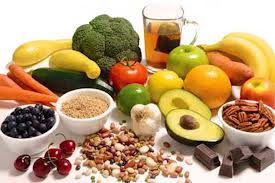
Which of the following is a form of kinetic energy?
gravitational
nuclear
chemical
thermal
Energy can only be
transformed or transferred
created
destroyed
both created and destroyed
Energy an object or substance has because of its position
electricity
gravitational energy
thermal energy
stored mechanical energy
Movement of energy through substances in the form of longitudinal/compression waves produced when a force causes an object or substance to vibrate.
gravitational energy
mechanical energy
radiant energy
sound energy
Caused by movement of tiny charged particles called electrons, usually moving through a wire.
radiant energy
electricity
chemical energy
nuclear energy

Energy produced from air vibrations
sound
light
heat
mechanical

Hitting a golf ball is an example of which form of energy?
thermal
mechanical
light
sound
Energy an object or substance has because of its position
electricity
gravitational energy
thermal energy
stored mechanical energy
Energy stored in an object by the application of force or tension that pushes or pulls on an object
mechanical energy
sound energy
kinetic energy
electricity
Energy stored in the bonds of atoms and molecules that holds molecules together
nuclear energy
radiant energy
chemical energy
thermal energy
Movement of energy through substances in the form of longitudinal/compression waves produced when a force causes an object or substance to vibrate.
gravitational energy
mechanical energy
radiant energy
sound energy
vibration and movement of the atoms and molecules within substances
thermal energy
sound energy
radiant energy
chemical energy
In the following example, identify the type of heat transfer.
You hold an ice cube in your hand and it begins to melt.
Radiation
Convection
Conduction
In the following example, identify the correct type of heat transfer:
You feel the warmth from the sun on your face.
Convection
Conduction
Radiation
This type of thermal energy helps regulate ocean currents and move heat throughout the atmosphere
conduction
radiation
convection
Which form is the energy of motion?
chemical
mechanical
electrical
sound
Food would be an example of which form of energy?
Chemical
Sound
Radiant
Thermal
What energy transformations take place when a battery operated radio is in use?
electrical to chemical to sound
thermal to nuclear to electrical
chemical to electrical to sound
chemical to sound to thermal

What type of system is shown in the picture?
open
close
isolated
Which of the following is an open system? Check all that apply.


What type of system is shown in the picture?
Open
Close
Isolated
What is a system?
Any group of interrelated parts designed collectively to achieve a desired goal
Any group of parts that connect end to end
Any group of interrelated parts that run off the same power source
A big stereo

What type of system is shown in the picture?
open
close
isolated
A plant turns thermal energy from the sun into chemical energy during photosynthesis. This is an example of a(n)...
Energy transformation
Matter transformation
Energy change
Physical Change
Which has the most kinetic energy?
A caught baseball
A turtle swimming
A parked car

The energy of electrons or electric charges
Chemical
Electrical
Electromagnetic
Mechanical

The energy of a compound as its atoms are rearranged (such as in food or a battery)
thermal
elastic potential
gravitational potential
chemical

Energy particles moving in form of heat
thermal
electrical
gravitational potential
chemical

Energy that travels in waves (electric and magnetic properties) - such as sunlight, xrays, and microwaves
Electrical
Chemical
Electromagnetic
Mechanical

Stored up energy based on relative position (the red ball in the photo)
mechanical
gravitational potential
thermal
electromagnetic
The ability to do work or cause change
mechanical
potential
matter
energy

energy of motion
mechanical
elastic potential
thermal
electromagnetic

The energy stored in a bow right before you release the arrow is called ______________________________
gravitational potential energy
elastic potential energy
chemical energy
kinetic energy
If a cotton ball and a brick are both held 30 feet above the ground, which object has more gravitational potential energy?
the cotton ball, because it has more mass
the cotton ball, because it has less mass
the brick, because it has more mass
the brick, because it has less mass
An 18-wheeler and a motorcycle are both traveling 60mph. Which one has more kinetic energy?
They both have the same amount
the 18-wheeler because it has more mass even though the speed is the same
the motorcycle because it has less mass

What form of energy allows you to see yourself in a mirror? (a)
Match the following forms of energy.

Sound

Electric

Mechanical

Thermal
The Law of (a) of Energy states that (b) cannot be (c) or destroyed, it can only be (d) (or converted).
Energy cannot be (a) or (b)
An example of chemical energy is a (a) , while an example of motion energy is a (b)

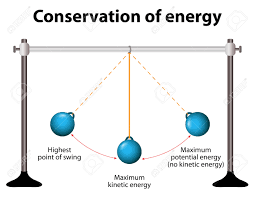

What type of energy is this?
Food energy
Chemical Energy
Food digestion is an example of...
Chemical Energy
Convection
Radiation
Sound energy
Mechanical energy is caused by (a)
Thermal energy is caused by (b)
Sound energy is caused by (c)
(a) is energy that an object has due to its motion.



