
 Worksheets
DNA Structure Function History
Total questions: 77
Worksheet time: 39mins

What does DNA stand for?
Deoxyribonucleic Acid
Dynamic Nucleic Acid
Double Nucleic Acid
Deoxyribose Acid

What is the primary function of DNA in living organisms?
To store genetic information
To provide energy for cells
To regulate body temperature
To transport oxygen in the blood
What is the shape of the DNA molecule?
Double helix
Single strand
Circular loop
Flat ribbon
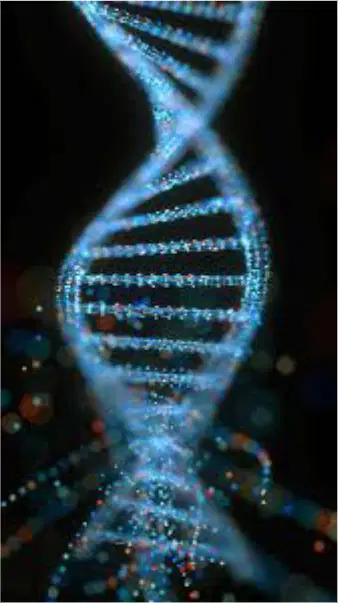
What does DNA stand for?
Deoxyribonucleic Acid
Deoxyriboprotein Acid
Deoxyribonucleic Base
Deoxyriboprotein Base
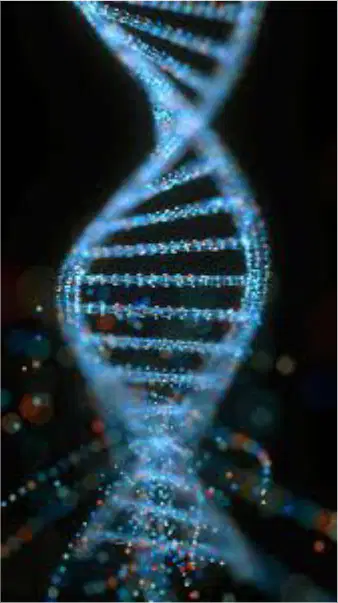
What is DNA often referred to as?
The blueprint of life
The code of health
The map of proteins
The structure of cells
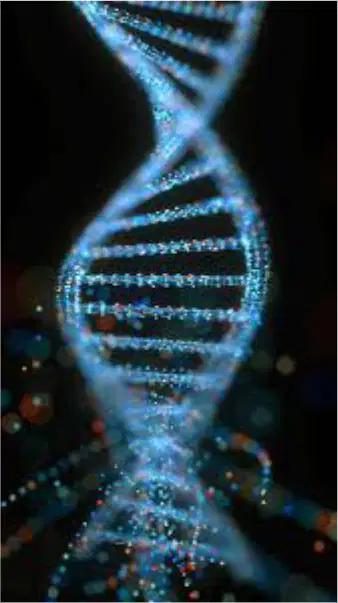
What do the tiny molecules in DNA code for?
Proteins in our body
Carbohydrates in our body
Lipids in our body
Vitamins in our body
What do proteins determine in humans?
What we look like, how we act, our health
Our energy levels and metabolism
Our ability to digest food
Our blood type and immunity
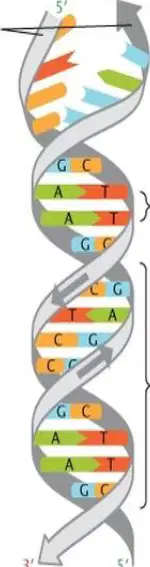
What is the structure of DNA described as?
Single-stranded and circular
Double-stranded and twisted into a double helix
Triple-stranded and linear
Single-stranded and ladder-like
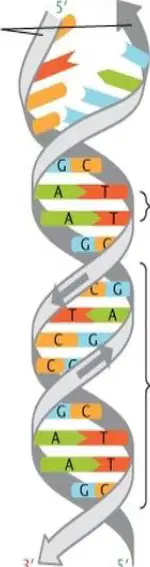
How are the chains in DNA arranged?
Randomly scattered
Arranged side-by-side like a ladder or zipper
Twisted into a circular shape
Arranged in a single straight line
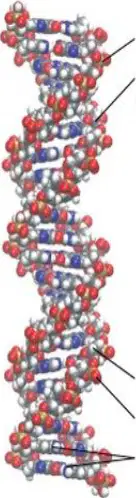
What forms the backbone of the DNA structure?
Protein molecules
Sugar-phosphate
Lipid chains
Nitrogen gas
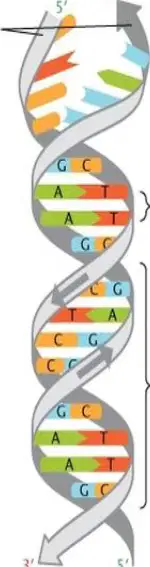
What is the approximate distance between base pairs in the DNA double helix?
1.5 nm
0.34 nm
3.4 nm
0.5 nm
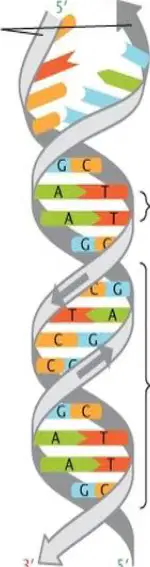
What is the approximate length of one complete turn of the DNA double helix?
0.34 nm
1.5 nm
3.4 nm
5 nm
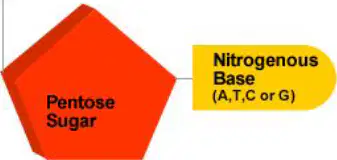
What is DNA made up of?
Proteins
Nucleotides
Lipids
Carbohydrates
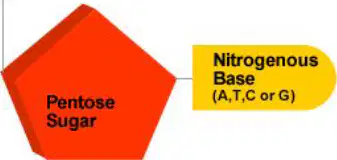
Which of the following is NOT a part of a nucleotide?
Sugar (deoxyribose)
Phosphate
Nitrogen base
Protein
What makes up the sides of the DNA 'ladder'?
Sugars and nitrogen bases
Sugars and phosphates
Phosphates and nitrogen bases
Proteins and sugars
What makes up the 'rungs' of the DNA ladder?
Sugars
Phosphates
Nitrogen bases
Proteins
What is the basic building block of DNA as shown in the diagram?
Amino acid
Nucleotide
Protein
Lipid
What are the four nitrogen bases found in DNA?
Adenine, Guanine, Thymine, Cytosine
Adenine, Guanine, Uracil, Cytosine
Adenine, Guanine, Thymine, Uracil
Adenine, Guanine, Cytosine, Uracil
Which nitrogen base always pairs with Thymine in DNA?
Guanine
Cytosine
Adenine
Uracil
Which nitrogen base always pairs with Cytosine in DNA?
Adenine
Guanine
Thymine
Uracil
What type of bond holds the nitrogen base pairs together in DNA?
Covalent bonds
Ionic bonds
Hydrogen bonds
Metallic bonds
What structure is created by the hydrogen bonds holding the nitrogen base pairs together?
Single strand
Double strand
Triple strand
Helical strand

What does DNA stand for?
Deoxyribonucleic Acid
Deoxyribose Acid
Ribonucleic Acid
Nucleic Acid
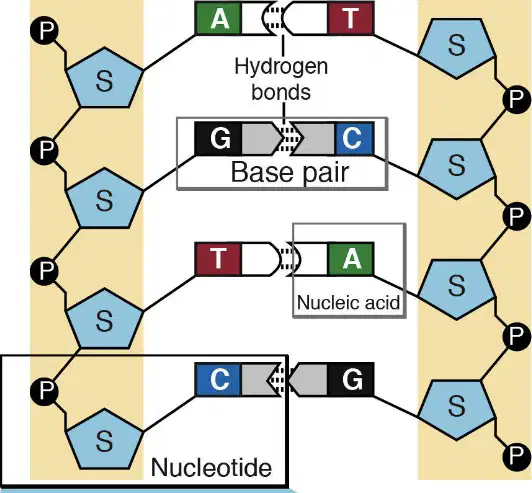
Which base pairs with Adenine (A) in DNA?
Cytosine (C)
Thymine (T)
Guanine (G)
Adenine (A)
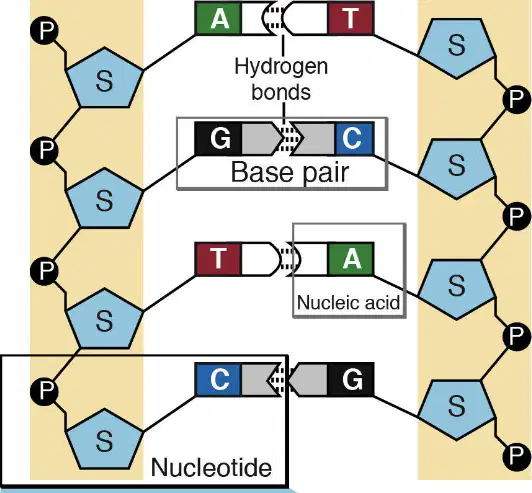
What type of bond holds the base pairs together in DNA?
Covalent bonds
Ionic bonds
Hydrogen bonds
Metallic bonds
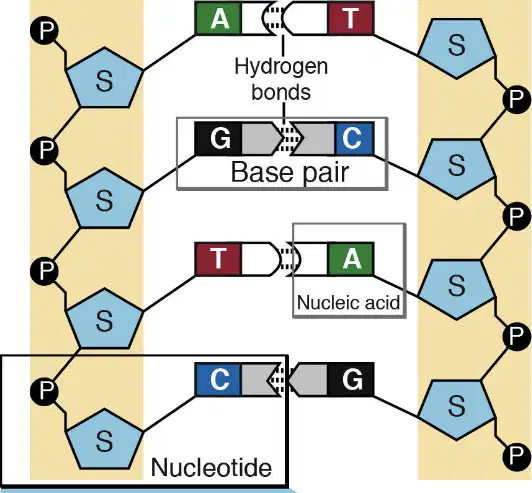
What are the components of a nucleotide in DNA?
Sugar, phosphate, and lipid
Sugar, phosphate, and base
Sugar, protein, and base
Sugar, lipid, and base
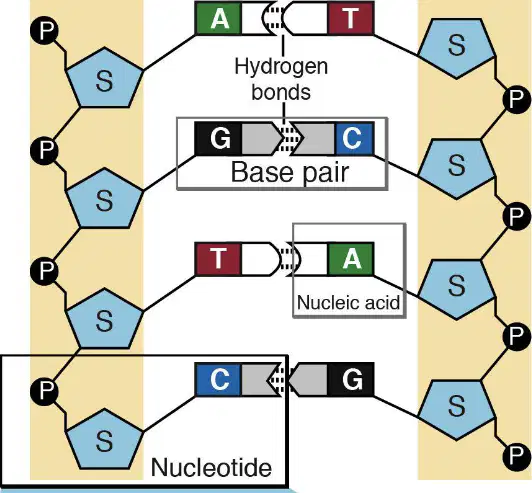
Which base pairs with Guanine (G) in DNA?
Adenine (A)
Thymine (T)
Cytosine (C)
Guanine (G)
What percentage similarity is observed between the gene sequences of the mouse and fly?
76.66%
50%
90%
100%
What is the similarity percentage of the proteins corresponding to the highlighted gene regions of the mouse and fly?
76.66%
100%
50%
90%
What does a higher similarity in gene sequences indicate about the relationship between organisms?
They are more closely related.
They are less closely related.
They are completely unrelated.
They are identical organisms.
What role do different gene sequences play in organisms?
They act as the 'blueprint' to make an organism unique.
They determine the organism's size.
They control the organism's lifespan.
They make organisms identical.
Based on the DNA sequences provided, which organism has the most differences compared to Organism #1?
Organism #1
Organism #2
Organism #3
All organisms are identical
How many differences are there between the DNA sequence of Organism #2 and Organism #1?
1
2
3
4
Which nucleotide is common at the 2nd position in all three organisms?
A
T
C
G
What is the total number of differences between Organism #3 and Organism #1?
2
3
4
5
What does the red section in the DNA comparison diagram represent?
Human-specific DNA sequence
Primate-specific DNA sequence
Ancient variant DNA sequence
Mouse-specific DNA sequence
Which species has the DNA sequence "ATGCACGCATGC" in the comparison?
Human
Chimpanzee
Gorilla
Mouse
What does the gray section in the DNA comparison diagram represent?
Human-specific DNA sequence
Primate-specific DNA sequence
Ancient variant DNA sequence
Donkey-specific DNA sequence
Which species has the DNA sequence "ATGCATGCACGC" in the comparison?
Horse
Mouse
Gorilla
Donkey
What does the blue section in the DNA comparison diagram represent?
Human-specific DNA sequence
Primate-specific DNA sequence
Ancient variant DNA sequence
Horse-specific DNA sequence
Which enzyme is responsible for breaking the hydrogen bonds and unzipping the DNA strand during replication?
DNA polymerase
Helicase
Ligase
RNA polymerase
What happens to the DNA after the enzyme helicase unzips the strand?
It forms a single strand of DNA
It forms two strands that act as templates for new DNA strands
It forms a protein structure
It forms RNA strands
Which enzyme helps free-floating nucleotides attach to a complementary strand during DNA replication?
Helicase
DNA polymerase
Ligase
RNA polymerase
What is the result of DNA replication?
Two identical strands to the original
One identical strand and one different strand
Two completely different strands
A single strand of RNA
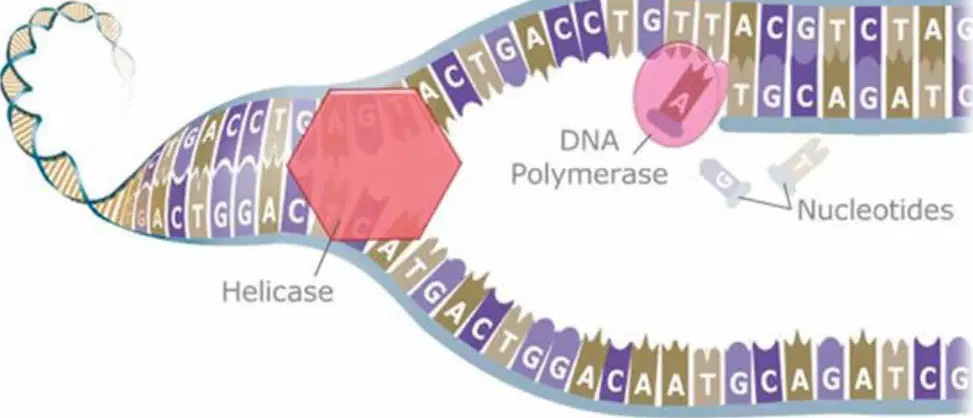
What is the role of helicase in DNA replication?
It adds nucleotides to the growing DNA strand.
It unwinds the DNA double helix.
It repairs damaged DNA.
It synthesizes RNA primers.
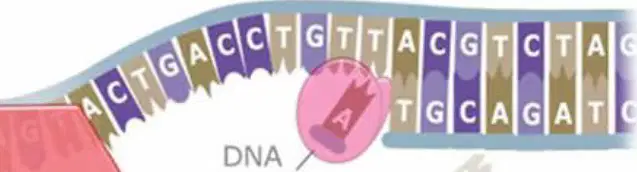
Which enzyme is responsible for adding nucleotides during DNA replication?
Helicase
DNA polymerase
Ligase
RNA polymerase
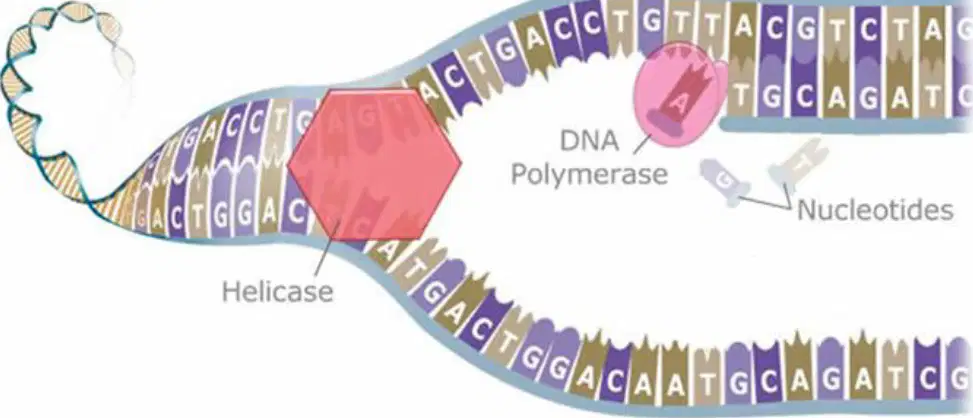
What are the building blocks of DNA called?
Amino acids
Nucleotides
Proteins
Lipids
Who conducted an experiment with mice and pneumonia in 1928 that led to the discovery of 'transformation'?
Louis Pasteur
Frederick Griffith
Alexander Fleming
Robert Koch
What is the term used to describe the ability of a cell to take in a part of another cell and express its characteristics?
Mutation
Transformation
Transcription
Translation
What did Frederick Griffith not know about the process of transformation?
The type of bacteria involved
The exact part of the cell/bacteria that was transferred
The year the experiment was conducted
The effect of pneumonia on mice
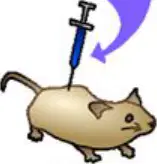
What happens when a mouse is injected with a rough strain (nonvirulent) of bacteria?
The mouse dies.
The mouse lives.
The mouse becomes sick but survives.
The mouse develops immunity.
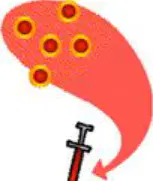
Which bacterial strain is responsible for killing the mouse when injected?
Rough strain (nonvirulent).
Smooth strain (virulent).
Heat-killed smooth strain.
Rough strain combined with heat-killed smooth strain.

What is the outcome when a mouse is injected with a combination of rough strain and heat-killed smooth strain?
The mouse lives.
The mouse dies.
The mouse becomes immune.
The mouse shows no reaction.

What does the experiment depicted in the diagram demonstrate about bacterial transformation?
Bacteria can mutate spontaneously.
Nonvirulent bacteria can acquire virulence from dead virulent bacteria.
Heat-killed bacteria are more dangerous than live bacteria.
Bacteria cannot transfer genetic material.
What was Oswald Avery's main contribution to Griffith's experiment?
He discovered the structure of DNA.
He found that destroying the DNA of bacteria prevents its transfer.
He identified the role of proteins in bacterial transfer.
He proved that bacteria cannot survive without RNA.
What did Oswald Avery's experimentation reveal about the transfer of pneumonia bacteria?
The transfer stops when the RNA is destroyed.
The transfer stops when the DNA is destroyed.
The transfer stops when the proteins are destroyed.
The transfer stops when the cell membrane is destroyed.
Which part of the cell did Oswald Avery identify as crucial for bacterial transfer?
RNA
Proteins
DNA
Cell membrane
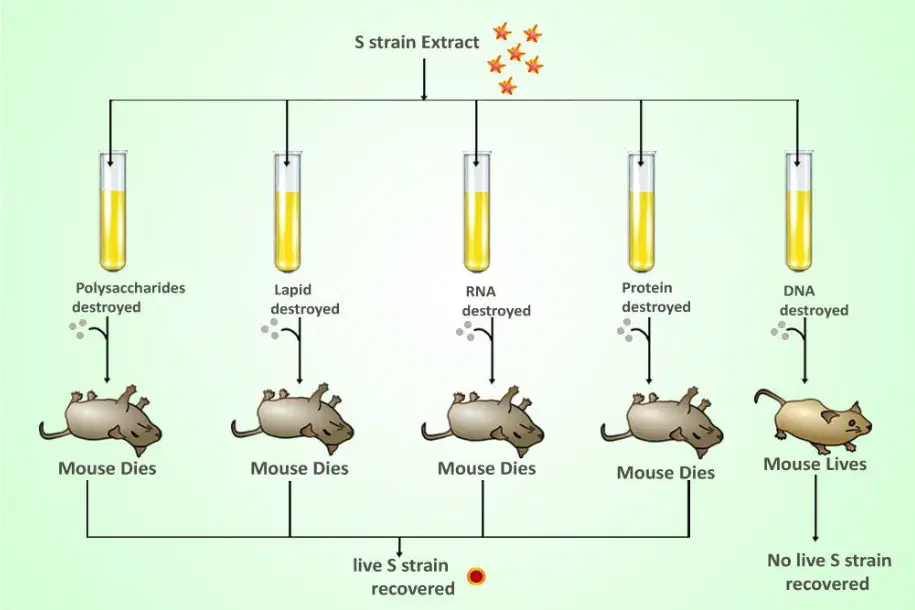
What was the conclusion of Avery's experiment when DNA was destroyed in the S strain extract?
The mouse died, and live S strain was recovered.
The mouse lived, and no live S strain was recovered.
The mouse died, but no live S strain was recovered.
The mouse lived, and live S strain was recovered.
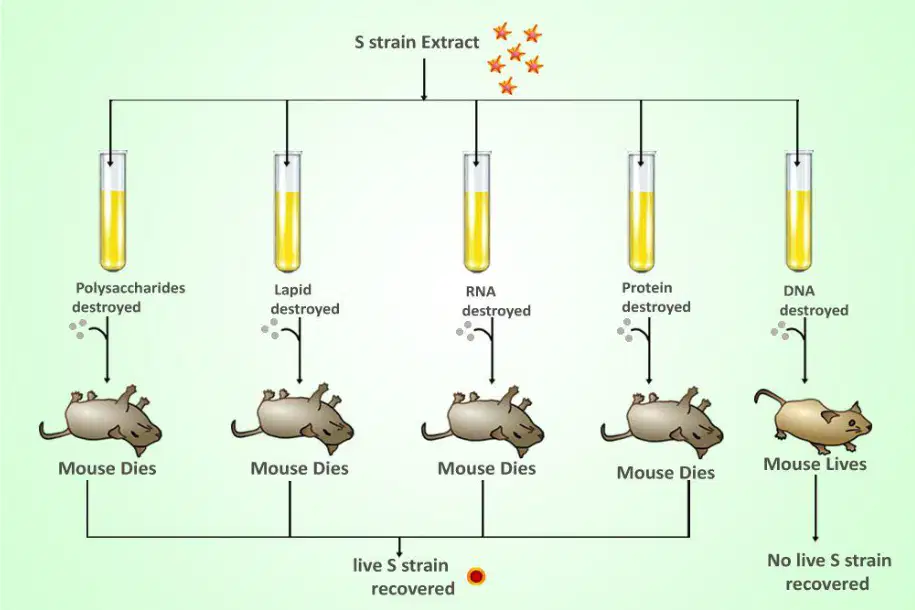
Which component of the S strain extract was identified as the genetic material in Avery's experiment?
Polysaccharides
Lipids
RNA
DNA
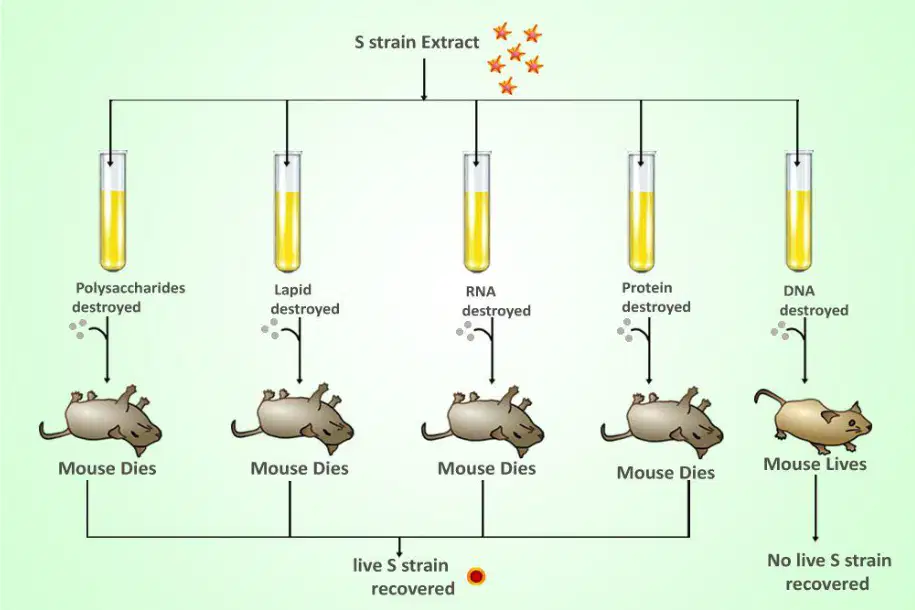
What happened to the mouse when RNA was destroyed in the S strain extract during Avery's experiment?
The mouse lived, and no live S strain was recovered.
The mouse died, and live S strain was recovered.
The mouse died, but no live S strain was recovered.
The mouse lived, and live S strain was recovered.

In Avery's experiment, what was the effect of destroying polysaccharides in the S strain extract?
The mouse lived, and no live S strain was recovered.
The mouse died, and live S strain was recovered.
The mouse died, but no live S strain was recovered.
The mouse lived, and live S strain was recovered.
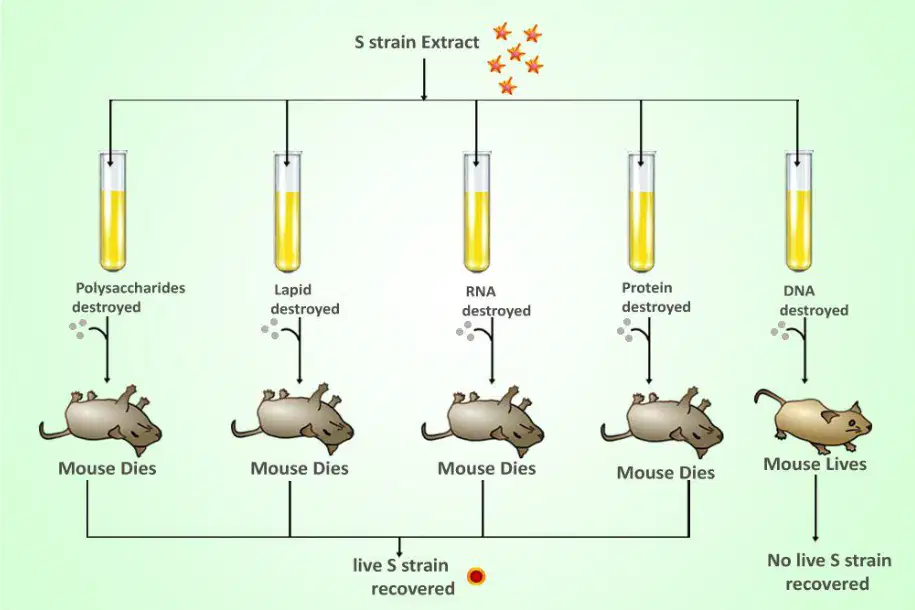
What was the purpose of Avery's experiment?
To identify the component responsible for causing disease in mice.
To study the effects of polysaccharides on mice.
To determine the role of lipids in genetic material.
To analyze the behavior of proteins in bacterial strains.
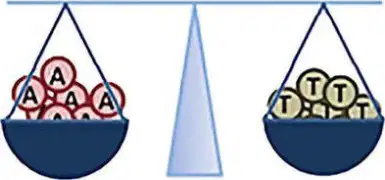
What does Chargaff's Rule state about the composition of DNA?
Adenine is equal to guanine, and cytosine is equal to thymine.
Adenine is equal to thymine, and cytosine is equal to guanine.
Adenine is equal to cytosine, and thymine is equal to guanine.
Adenine is equal to thymine, and cytosine is equal to thymine.
What is the name of the rule that describes the equal proportions of adenine to thymine and cytosine to guanine in DNA?
Watson's Rule
Chargaff's Rule
Mendel's Rule
Franklin's Rule
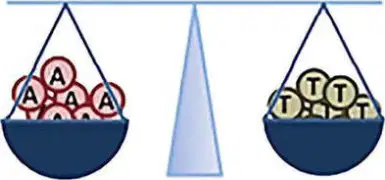
According to Chargaff's Rule, if the percentage of adenine in a DNA sample is 30%, what is the percentage of thymine?
20%
30%
40%
50%
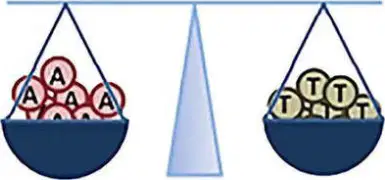
Which of the following pairs are equal in percentage according to Chargaff's Rule?
Adenine and guanine
Cytosine and thymine
Adenine and thymine
Guanine and thymine
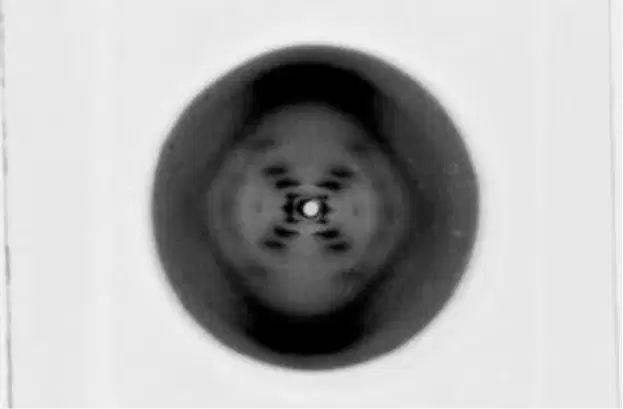
Who were the scientists who successfully used an X-ray technique to see the shape of DNA for the first time?
Rosalind Franklin & Maurice Wilkins
James Watson & Francis Crick
Gregor Mendel & Charles Darwin
Alexander Fleming & Louis Pasteur
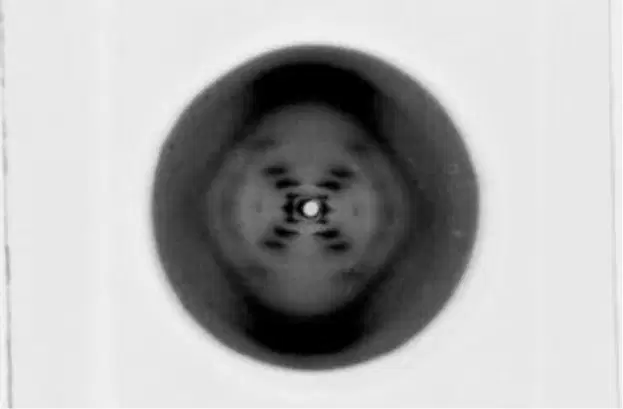
What was the significance of Rosalind Franklin's work with X-ray techniques?
It helped identify the structure of DNA for the first time.
It discovered the process of DNA replication.
It proved the existence of genetic mutations.
It explained the function of RNA in cells.
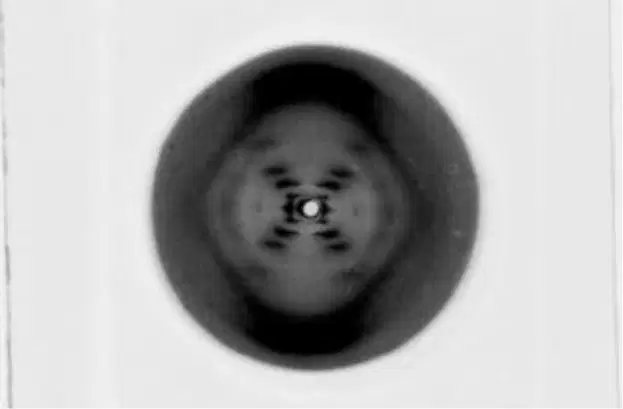
What happened to Rosalind Franklin's work after it was completed?
It was taken from the lab and used as evidence for other scientists to get credit.
It was published in a scientific journal under her name.
It was destroyed and never used again.
It was used to develop a cure for genetic diseases.
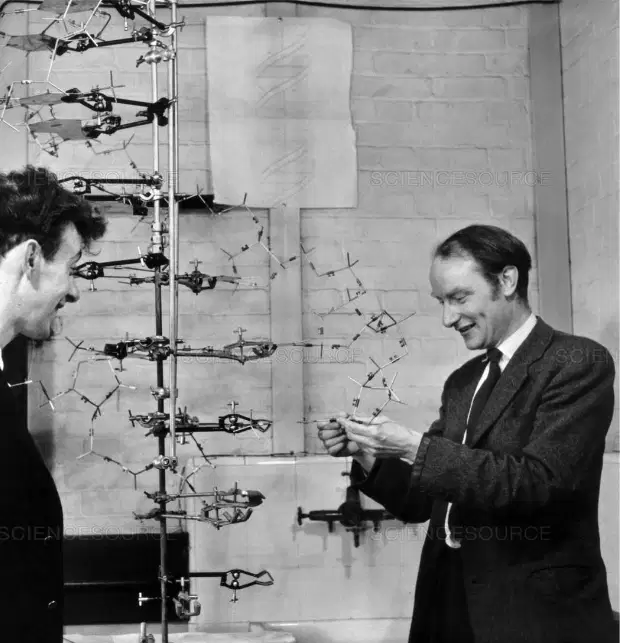
Who hypothesized that the DNA molecule was a double helix, ladder-shaped structure with sugars and phosphates on the outsides?
Rosalind Franklin
James Watson and Francis Crick
Maurice Wilkins
Gregor Mendel
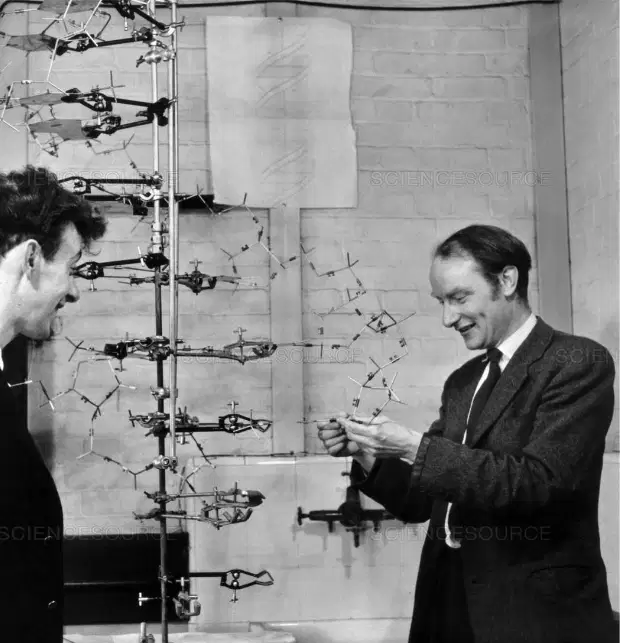
In which year was the structure of DNA credited to James Watson and Francis Crick?
1950
1953
1960
1945
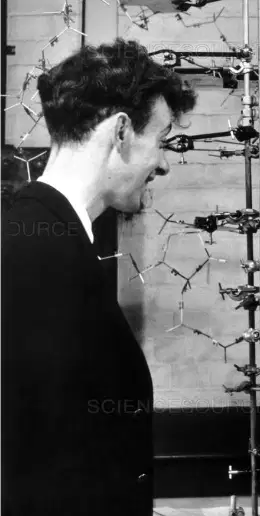
Whose data did Watson and Crick use to support their hypothesis about the DNA structure?
Rosalind Franklin and Maurice Wilkins
Charles Darwin and Alfred Wallace
Gregor Mendel and Thomas Morgan
Barbara McClintock and James Watson
What is the shape of the DNA molecule as hypothesized by Watson and Crick?
Single strand
Double helix
Circular molecule
Triple helix
What does it mean when strawberries are described as "octoploid"?
They have eight sets of chromosomes.
They have eight seeds per fruit.
They grow in groups of eight.
They contain eight types of DNA.
Where can DNA be found?
Only in plant cells.
Only in animal cells.
In both plant and animal cells.
Only in food products.
What happens to DNA during the digestive process?
It remains intact.
It gets broken down.
It multiplies.
It changes into proteins.
What is a visible result of extracting DNA from a strawberry?
The DNA turns into a liquid.
The DNA forms white strands in the pink solution.
The DNA becomes invisible.
The DNA changes color to green.

