
 Worksheets
MCQ FMS 1 PART 1
Total questions: 96
Worksheet time: 48mins
Which of the following best describes epigenetic events that may contribute to formation of cancer?
Mutations in histone modifier
Hypermethylation of BRCA1
Hypermethylation of pro angiogenic inhibitor
A and B
A, B, and C
In general, methylation of DNA in Eukaryotes
Activates gene expression
Promotes cell growth
Reduces level of gene expression
Induces genetic rearrangements
Triggers translational modification
Stem cells need signal from the microenvironment to be capable to differentiate into more specialized cells. Of the following options, what can be the signal for stem cells to stimulate osteogenesis?
Granulocyte colony stimulating factor (G-CSF) and erythropoietin (Epo)
Fluid shear stress and/or mechanical strain inside the blood vessel
Coculture of hematopoietic stem cell with a stromal cell line
Manipulation of matrix elasticity on mesenchymal stem cell
Sonic hedgehog
iPS cell is a type of stem cell derived from reprogramming of adult cells into pluripotent cells. This has been a promise for an unlimited source of pluripotent cells, although there are pros and cons. What is the disadvantage of iPS cells?
iPS cells can produce patient-specific or disease-specific cells of any lineage for therapeutic use
Viruses that integrate into the host cell genome have intrinsic risks
Autologous iPS cells have reduced chances of immune rejection
iPS cells are universally accessible
iPS cells can provide unlimited reservoir of stem cells minus the ethical controversy of embryonic materials
The oxidative deamination of the amino acid alanine in muscle produces
one molecule of pyruvate and a molecule of urea
one molecule of pyruvate and a molecule of oxygen
one molecule of pyruvate and a molecule of ammonia
one molecule of pyruvate and a molecule of carbon dioxide
one molecule of pyruvate and a molecule of water
Specialized epithelium with cells on its surface that can change their shape is known as
Transitional epithelium
Simple columnar epithelium
Simple cuboidal epithelium
Stratified epithelium
Simple squamous epithelium
Biochemical mechanism responsible for “transmitting” extracellular signals inside the cell, which ultimately lead to the activation of targets that control metabolic pathways or regulate gene expression, is called
Signal transduction
Gene expression regulation
Signal transformation
Signal transmission
Metabolic regulation
Metabolism is divided into two classes: __ is the breakdown of macromolecules (proteins, carbohydrates, fats) to produce energy. This class is characterized by __ reactions. __ is the construction of biomolecules from smaller precursors. This requires energy input. This class is characterized by __
Catabolism, oxidative, anabolism, reductive, ATP
Exergonism, exergonic, endergonism, endergonic, GTP
Anabolism, reductive, catabolism, oxidative, AMP
Anabolism, oxidative, catabolism, reductive, UTP
Anihesis, reduction, synthesis, oxidation, CTP
Structural abnormalities in chromosomes could occur when chromosomes break and reunite in an abnormal way. Which of the following structural abnormalities involve two chromosomes?
Dicentric chromosome and deletion
Inversions and deletion
Deletion and translocation
Isochromosome and translocation
Ring chromosome and inversions
Which of the following statements about gluconeogenesis is correct?
Gluconeogenesis uses all the SAME enzymes that are also used in glycolysis
The enzyme glucose-6-phosphatase hydrolyses glucose-6-phosphate and is present in most cells
Muscles have a large glycogen store which gives rise to blood glucose during prolonged starvation
Fatty acids are plentiful in the blood during starvation and are used for glucose synthesis
Gluconeogenesis enables the liver to maintain blood glucose levels during starvation
Two patterns of cell death are observed: necrosis and apoptosis. Which of the following statements best describes necrosis?
Cytoplasmic blebbing
Significant inflammatory response
Caspase activation
Affects individual cells
Condensation of nucleus
Source of embryonic stem cells are mostly derived from
Blastocyst
Cleaved embryo
Fertilized egg
Bone marrow
Umbilical cord
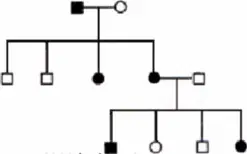
The following pedigree is characteristic for a disease which is inherited in ___ manner
X-linked dominant
X-linked recessive
Autosomal recessive
Autosomal dominant
Mitochondrial inheritance
Which of the following best describes trisomy?
Loss of one haploid
Gain of one haploid
Loss of sex chromosomes
Loss of one centromere
Gain of one chromosomes
What is the effect of a nonsense mutation in a gene?
It prevents introns from being excised
It alters the reading frame of the mRNA
It has no effect on the amino acid sequence of the encoded protein
It introduces a premature stop codon into the mRNA
It changes an amino acid in the encoded protein
Which of the following statements is TRUE for glucagon?
It is secreted by adrenal gland as response to “fight-or-flight” condition
It is secreted by pancreatic α cells as response to high glucose concentration in blood
It is secreted by pancreatic α cells as a response to low glucose concentration in the blood
It is secreted by pancreatic β cells as a response to low glucose concentration in the blood
It is secreted by pancreatic β cells as a response to high glucose concentration in blood
A 60-year-old woman suffers from cirrhosis of liver. Toxins such as ammonia are not properly metabolized by the liver and can damage the brain. Which of the following compounds should be in highest concentration in brain as a result of detoxification of ammonia?
Alpha ketoglutarate
Asparagine
Glutamate
Glutamine
Glycine
During mitosis one cell divides once to form two identical cells. The major purpose of mitosis is for growth and to replace worn out cells. Meiosis is a more specific type of cell division, in which the daughter cells further divide and there are meiosis I and meiosis II. Meiosis II is similar to mitosis in that
The chromosome number is reduced
Sister chromatids separate during anaphase
The daughter cells are diploid
Crossing over occurs
Homologous chromosomes form a pair
Metastasis is the movement or spreading of cancer cells from one part of the body/organ or tissues to another. Cancer cells usually spread through the bloodstream or the lymph system. Which one of the following is the correct order of metastasis?
Intravasation, extravasation, transport, colonization, invasion
Invasion, intravasation, transport, extravasation, colonization
Invasion, intravasation, extravasation, transport, colonization
Intravasation, extravasation, invasion, transport, colonization
Extravasation, extravasation, transport, invasion, colonization
Which of the following statements about the TCA cycle is true?
Two molecules of carbon dioxides are produced in one turn of the TCA cycle
Three molecules of NADH and one molecule of FADH2 are produced in one turn of the TCA cycle
Two turns of TCA cycles are needed to oxidize one molecule of glucose
The TCA cycle occurs in the mitochondrial matrix
All statements are true
One of the challenges in stem cell technology is to produce embryonic stem cells without the creation of embryo. A variation in stem cell technology where cdx gene (a gene to form placenta) is turned on in patient’s nucleus before it is transferred to donor egg called as
SCNT using embryo at mitosis
Fusion
Parthenogenesis
ANT
SCNT
Which of the following is INCORRECT for the transport of small substance across lipid bilayer?
CO2 and O2 diffuse rapidly across bilayer
Glucose hardly to diffuse thus need special transport protein
Lipid bilayer are permeable to ions
Small, uncharged and polar molecules diffuse rapidly across bilayer
Lipid bilayers are impermeable to charged molecules
The proteins that makeup the electron transport chain in animals are located
In the mitochondrial matrix
On the outer mitochondrial membrane
In the cytoplasm
In the nucleus
On the inner mitochondrial membrane
Human Genome Project Objectives. Which of the following was (were) the objective(s) of the Human Genome Project?
Obtain a detailed genetic map of every human chromosome
Determine the sequence of all expressed human genes
Determine the complete DNA sequence of each human chromosome
A and B are true
A, B, and C are true
A 35-year-old Indonesian living in Europe came to his doctor with stomach cramps and diarrhea after drinking milk. What is the most likely cause for this man's problem?
Lack of pancreatic amylase
Excessive growth of bacteria and yeast in the large intestine
Lactase deficiency in the small intestine (lactose intolerance)
Aldolase B deficiency (fructose intolerance)
Lack of sucrase-isomaltase of the small intestine
DNA replication is discontinuous due to
Sister chromatid exchange
Polymerase slippage
Topoisomerases cutting the DNA in a random fashion
Being restricted to synthesis in the 5’ to 3’ direction
Trinucleotide repeats
Gout is a disorder associated with abnormal amounts of urates in the body. A drug used primarily to treat this hyperuricemia and its complications prevents uric acid synthesis by inhibiting the enzyme xanthin oxidase. The name of this drug is
Voltaren
Colchine
Probenecid
Aspirin
Allopurinol
Genes that can contribute to cancer through increased expression are
Rapidly degraded
Cyclin dependent kinase inhibitors
Oncogenes
Tumor suppressor genes
Nonexistent
Log radishes crossed with round radishes result in all oval radishes. This type of inheritance is
Multiple alleles
Complete dominance
Co-dominance
Incomplete dominance
Polygenic inheritance
Vitamins often function as co-enzyme in a reaction. Which vitamin is essential for the enzyme pyruvate dehydrogenase to properly function and its deficiency causes disease called beri-beri?
Vitamin A
Vitamin C
Vitamin D
Vitamin B1 (thiamine)
Vitamin B12 (cobalamine)
Which of the following is not true about HSC transplantation?
Donor and recipient must have perfectly matched HLA
Peripheral stem cell collection produces a lower yield compare to bone marrow collection
Allogenic transplantation is when the donor and recipient are the same species
The higher the degree of mismatched HLA the more complications with engraftment and graft versus host syndrome
Immunosuppressant can be used to prevent GVHD
The effect of cell to cell communication may be broad to whole body or limited to certain part of body. Insulin secretion is an example of a way which acts at distance and influence the whole body, as know as
Phosphorylation cascade
Paracrine
Endocrine
Autocrine
Intracrine
The chemical bonds in DNA by which the sugar components of adjacent nucleotides are linked through the phosphate groups are called bonds.
Phosphodiester
Hydrophobic
Hydrophilic
Ionic
Hydrogen
Which of the following characteristic is not common to many cancer cells?
Decreased adhesion to other cells
Abnormal structures of chromosome
Uncontrolled growth and division
Absence of cytoskeleton
Increased mobility
The stage of mitosis when chromosomes condense to form rod-shaped structures visible under the microscope is called
Prophase
Telophase
Anaphase
Interphase
Metaphase
Fibroblast growth factor (FGF) is a ligand that will stimulate the cell proliferation and differentiation when it is attached to its receptor on cell membrane. FGF receptor is a type of enzyme-linked receptor. Which of following is not the criteria of enzyme-linked receptor?
Autophosphorylation
Consist of 7 pass trans membrane alpha helix
Has ligand binding on extracellular side
For example, receptor serine/threonine kinase
Has kinase domain on cytosol side
While viewing a slide of rapidly moving sperm cells, a student concludes that these cells require a large amount of energy to maintain their activity. The organelle that most likely provides this energy is
Golgi apparatus
Mitochondria
Ribosome
Peroxisome
Centrosome
The pathway of a tRNA during polypeptide elongation on the ribosome is
A site → P site → E site
P site → A site → E site
A site → P site → entry site
P site → Entry site → exit site
Non of the above
Which of the following factors can affect enzymes activity?
Temperature
pH
Salt concentration
The addition or removal of phosphate
All the above
If a proto-oncogene is mutated into an oncogene in an otherwise normal cell, the immediate result would likely be
Rapid mutations of other genes
The cell would metastasize to other distant organ
Apoptosis
Not much, perhaps a slight accelerating of the cell cycle
Cell cycle arrest
Aneuploidy is the second major category of chromosome mutations in which chromosome number is abnormal. Of the following human aneuploidies, which is the one that generally has the most severe impact on the health of the individual?
47, 21+
47, XXX O
45, X
47, XXY
47, XV
Bone marrow is one of the stem cell source. Stem cells derived from bone marrow consist of hematopoietic and mesenchymal stem cell. Mesenchymal stem cell is capable to differentiate into the following type of cells, except
Cartilage
Osteocyte and bone
Adipose tissue
Myoblast and chondroblast
Lmyphoblast
The sequence between 5’ methyl-guanosine cap (5’ cap) and start codon in eukaryotic mRNA is called
Last intron
Termination codon
5’ UTR (untranslated region)
Last exon
3’ UTR (untranslated region)
A pluripotent stem cell is
A specialized cell that mainly differentiate into blood cell
An undifferentiated cell that is capable of dividing and giving rise to one or more distinct types of specialized cells to make an individual
An undifferentiated cell that is capable of dividing and giving rise to one or more distinct types of specialized cells, except for fetal supporting tissues
Specialized cell that is capable of dividing and giving rise to one or more distinct types of undifferentiated cells
A specialized cell that is capable of dividing and giving rise of central nervous system
Protesting the government's policy, a 25-year-old man went on hunger strike. Which of the following metabolites are the most heavily elevated in his blood plasma after 3 days?
Un-esterified fatty acids
Glucose
Ketone bodies
Triacylglycerol
Glycogen
A man who is an achondroplastic dwarf with normal vision marries a color-blind woman of normal height. The man's father was six feet tall, and both the woman's parents were of average height. Achondroplastic dwarfism is autosomal dominant, and red-green color blindness is X-linked recessive. What proportion of their sons would be color-blind and of normal height?
One out of four
None
All
Half
Three out of four
Exocrine gland that secretes its product by losing the apical part of cytoplasm is known as gland
Merocrine
Apocrine
Holocrine
Endocrine
None of the above
Which of the following statements about the role of the pentose phosphate pathway is correct?
The pentose phosphate pathway is directly connected to TCA cycle
The pentose phosphate pathway oxidizes glucose-6-phosphate completely to carbon dioxide and water
The pentose phosphate pathway delivers –NH3 for amino acid synthesis
The pentose phosphate pathway occurs in the mitochondria of most cells
The pentose phosphate pathway produces ribose-5-phosphate and NADPH
What is the basis for the difference in how the leading and lagging strands of DNA molecules are synthesized?
The origins of replication occur only at the 5' end
DNA polymerase can join new nucleotides only to the 3' end of a growing strand
Helicases and single-strand binding proteins work at the 5' end
DNA ligase works only in the 3 5 direction
Polymerase can work on only one strand at a time
Epistasis controls the coat color of laboratory rats, with the B locus controlling color (Black is dominant to brown), and C locus determining the color-pigment deposit. Which of the following is trus?
bbCc results in black coat
bbcc results in brown coat
BBcc results in black coat
BbCc results in black coat
Bbcc results in brown coat
The spontaneous loss of amino groups from cytosine (C) results in uracil (U), an uncommon base, opposite guanine in DNA. What combination of enzymes could repair such damage?
Nuclease, telomerase, primase
DNA ligase, helicase, RNase H
Topoisomerase, helicase, RNA polymerase
Nuclease, DNA polymerase, DNA ligase
Topoisomerase, primase, DNA polymerase
A single pass transmembrane protein that acts as a self-marker is:
ECM
cAMP
MP
G-protein
MHC
Totipotent stem cell is
Stem cells that can differentiate into any type of specialized cells found in organism of that species.
Stem cells that can become all the cell types that are found in an organism, but not the embryonic components of the trophoblast and placenta (these are usually called extra-embyonic tissues).
Stem cells that can produce cells of multiple differentiated cell types, but all within a particular tissue, organ, or physiological system.
Stem cells that mainly differentiate into blood forming cell
None above is correct
A girl pulled her hand away after accidentally touched a hot stove. Moment from the signal until she pulled her hand was very quick. The transmission of a nerve impulse along a neuron from one end to the other occurs as a result of electrical changes across the membrane of the neuron. The term of depolarization in nerve signaling is
Inside of the cell more negative relative to the outside
The charge of cell shifts from negative to positive
Has an inhibitory effect at synapse
Triggered by Na+ outflux
Triggered by K+ influx
A phenotypically normal woman with a translocation involving chromosomes 14 and 21 karyotype has a karyotypically normal husband. Among their liveborn offspring, which of the following karyotype is LEAST likely?
Balanced Carrier
Normal
Translocation chr 21 and 14
Monosomy 21
Trisomy 21
Together with clinicians at siloam hospital, MRIN scientists are planning to conduct gene therapy research to treat cystic fibrosis (CF), as they think CF is good candidate. Which of the following statement is the most appropriate for their plan?
CF is inherited in dominant manner
The target tissue is the skin
There are several mutations that caused the disease
CF is single gene disorder
Gene therapy is affordable
Which of the following statement is TRUE about passive transport
Movement of substance against concentration gradient with energy cost
Movement of water from hypertonic solution to hypotonic solution without energy cost
Movement of substance down its electrochemical gradient with or without carrier protein
NA+/K+ pump
None of the above
HSC needs to be characterized before transplantation. Which of the following is a characteristic of HSC?
Able to produce embryoid body in vitro
Can be derived from mesenchymal tissue
Cannot undergo apoptosis
CD133+/34
Addition of cytokines such as GM-CSF will cause the cells to differentiate to lymphoid progenitor
Glycolysis takes places in the ___ and produces ___, which in the presence of oxygen then enters the ____.
Cytosol; pyruvate; mitochondrion to complete cellular respiration
Nucleus; acetyl-CoA; cytosol to complete gluconeogenesis
Mitochondrion; pyruvate; chloroplast to complete photosynthesis
Cytosol; glucose; mitochondrion to complete fermentation
Cytosol; pyruvate; mitochondrion to complete fermentation
What is the effect of a missense mutation in a gene?
It changes an amino acid in the encoded protein
It has no effect on the amino acid sequence of the encoded protein
It alters the reading frame of the mRNA
It prevents introns from being excised
It introduces a premature stop codon into the mRNA
Cell cycle checkpoints are control mechanisms in eukaryotic cells which ensure proper division of the cell. At the center of the cell cycle control system is Cdk, a protein that
Binds to different cyclins
Is dephosphorylated to become active
Binds to different cyclins
Is only active during mitosis
Is degraded before it is active
A researcher made an interesting observation about a protein that was translocated into the rough endoplasmic reticulum (ER) during its synthesis and eventually ending up in the plasma membrane. Significantly, the protein in the plasma membrane was found to be slightly larger than the related protein in the ER. The protein was probably changed in the
Smooth endoplasmic reticulum
Mitochondrion
Nucleus
Lysosome
Golgi apparatus
Positron emission tomography (PET) imaging using 18F-fluorodeoxyglucose (18F-FDG) has been a powerful cancer imaging tool for many decades. Of the many hallmarks of cancer that include biological capabilities acquired during the multistep development of human tumors; which one is put to use when imaging cancer using PET:
Sustained angiogenesis
Limitless replicative potential
Evading apoptosis
Reprogramming metabolism
Self-sufficiency in growth signal
The blood sugar homeostasis involves hormones that are secreted by pancreas. The hormone that is secreted by the beta cells of the pancreas that lowers blood glucose when levels are high is
Glucagon
Insulin
Cortisol
Epinephrine
Somatostatin
Cancer is unchecked cell growth. Mutations in certain genes can cause cancer by accelerating cell division rates. Any drug that blocks the process of cell replication has therefore potential as a treatment for cancer. Which one of the following would be a potential target drug for cancer treatment?
Drug that disrupts microtubule assembly
Drug that disrupts cyclin and cyclin dependent kinase complex
Drug that stabilizes microtubule structure
Drug that inhibits proteasome function
All options are potential target drug
Extracellular signal interacts with its receptor to initiate signal transduction. Which of the following plasma membrane receptors activate signalling pathways usually by forming molecular dimers upon binding of their specific ligand?
Acetylcholine receptors
Steroid hormone receptors
Receptor tyrosine kinases
Ligand-gated ion channels
G protein-coupled receptors
Signal sequences are
Short peptide sequences attached to a protein that initiates its degradation by digestive enzymes
Short peptide sequences to transport a protein to the nucleus
Short peptide sequences that serve as an address for transporting newly synthesized proteins to the correct location
Glycoproteins that serve as an address for transporting newly synthesized proteins to the correct location
Short peptide sequences that are synthesized by signal peptidase
DNA damage has been long recognized as causal factor for cancer development. When inaccurate DNA repair leads to mutations or chromosomal aberrations affecting cancer critical genes, cells undergo malignant transformation resulting in cancerous growth. In which of the following DNA repair pathways do cell rely on BRCA1 function?
Nucleotide excision repair
Base excision repair
Homologous end-joining
Non-homologous end-joining
Mismatch repair
Marasmus is a form of serve malnutrition characterized by energy deficiency. It can occur in anyone with serve malnutrition but usually occurs in children. What type of cellular adaptation happens in this case?
Metatrophy
Hyperplasia
Hypertrophy
Metaplasia
Atrophy
Which one of the following sequences best describe the steps leading to tumor angiogenesis? 1) Endothelial cell activation 2) Endothelial cell proliferation 3) HIF1-alpha activation 4) Sprouting 5) VEGF expression 6) Basement membrane degradation
5,3,1,2,6,4
5,1,3,2,4,6
5,1,6,3,2,4
3,5,1,6,2,4
3,1,2,5,4,6
Embryonic stem cells are self-renewal, immortal and have an almost unlimited differentiation potential. Those characteristics are results of inhibiting differentiation and apoptosis. Which of the following is the correct network for the regulation of embryonic stem cell self-renewal?
Myc-FGF-LIF
FGF-Nanog-Oct4
cMyc-FGF-Oct4
LIF-Sox2-cMyc
Sox2-Nanog-Oct4
A 21-year-old woman is presented to the Emergency Room with extreme muscle weakness, difculty in swallowing and breathing. Diagnosis of myasthenia gravis was made based on the history, examination and laboratory test. Myasthenia gravis is a condition of an improper functioning at the neuromuscular junction. What is blocked at neuromuscular junction in this case?
blocked acetylcholine receptor
defect in Na+ coltage-gated receptor
damage in dendrites
Cells fall into one of two broad categories: prokaryotic and eukaryotic. The single-celled organisms of the domains Bacteria and Archaea are classified as prokaryotes. Animal cells, plant cells, fungi, and protists are eukaryotes. Which of the following is a feature found in BOTH prokaryotic and eukaryotic cells?
Extensive array of intermediate filaments
Multiple linear chromosomes in each cell
Mitotic spindles that partition chromosomes into the daughter cells
Ribosomes that accomplish protein synthesis
All of the above are found in both types of cells
Tissue in which the cellular component is very dominant and contains very few extracellular components is known as
Nervous tissue
Muscle tissue
Epithelial tissue
Connective tissue
None of the above
A scientist collects cells from a phase of embryonic development and wants to test if those cells are pluripotent. What are two ways to demonstrate pluripotency?
In vitro producing teratoma and in vivo producing GVHD
In vitro producing embryoids bodies and in vivo producing GVHD
In vitro producing embryoids bodies and in vivo producing teratoma
In vitro producing teratoma and in vivo producing embryoids bodies
In vitro producing three layers and in vivo producing immune rejection
Which of the following enzyme groups can catalyse oxidation reactions?
Hydrolases
Isomerases
Lyases
Ligases
Dehydrogenases
In Mendel’s experiment with the pea plants, which trait was observed in the F1 generation?
Recessive
Incomplete recessive
Co-dominant
Dominant
Incomplete dominance
A single nucleotide polymorphism (SNP) refers to any position in the nuclear genome where there is at least one variant nucleotide that occurs at a frequency of 1% or more within the population. A SNP may alter function of a protein due to
Synonymous change in exon
Synonymous change in promoter
Non-synonymous change in intron
Non-synonymous change in exon
Synonymous change in intron
A 48-year-old male patient screened for diabetes at a clinic has a fasting plasma glucose level of more than 200 mg/dL. Patient has associated symptoms such as polyuria and polydipsia. Further test showed that patient’s pancreas has a defect in glucose transport thus affects the insulin production and release process. Pancreas takes up glucose from blood through …
GLUT 2
GLUT 1
GLUT 5
GLUT 4
GLUT 3
A simple method to distinguish two types of bacteria is their ability in retaining the crystal violet dye (Gram staining). What is the characteristic of Gram positive bacteria?
Releases endotoxin
A lower peptidoglycan and higher lipid content
A larger periplasmic space
A higher peptidoglycan and lower lipid content
Two outer membranes
Among the common causes of cancer are infection by cancer-causing (oncogenic) viruses. The following statement is true for oncogenic viruses except: Select one:
Human Papillomavirus (HPV) expresses E6 oncogenic protein
Hepatitis B Virus (HBV) integrates viral genome into cellular DNA
Human Immunodeficiency Virus (HIV) increases alternative splicing of angiogenesis-related genes
Hepatitis C Virus (HCV) promotes DNA repair
Epstein Barr Virus oncogene LMP1 inhibits p53 function
Enzymes involved in phosphorylation cascade are kinase and phosphatase. The following is the function of phosphatase:
Amplifying signal
Removing phosphate group from the intracellular signalling protein
Activating intracellular protein signalling
Phosphorylation
Adding phosphate group onto the intracellular signalling protein
Which of the following definitions is NOT properly matched with the respective proteins?
Insulin: Controls glucose metabolism
Antibody: Immune system molecule
Collagen: Structural protein
Actin: Required for muscle contraction
Amylase: Transport/storage protein
Which of the following statements about the synthesis of fatty acids is correct?
NADH is used for fatty acid synthesis
NADH is formed from fatty acid synthesis
NADPH is used for fatty acid synthesis
NADPH is formed from fatty acid synthesis
None of these
Which enzymes remove supercoiling during DNA replication ahead of the replication fork?
Ligases
Primases
Helicases
DNA polymerases
Topoisomerases
Insulin is a protein that is produced by certain pancreatic cells and secreted into the bloodstream. Which of the following choices best describes the route of insulin from its production in the rough ER to its exit from the cell?
Golgi apparatus, plasma membrane
Lysosomes, transport vesicles, plasma membrane
Transport vesicles, Golgi apparatus, transport vesicles, plasma membrane
Lysosome, plasma membrane
Golgi apparatus, smooth ER, cell membrane
Parthenogenesis is …
A process of asexual reproduction that involves development of egg without reutilization
A process of development where egg is fertilized in petri dish
A process of obtaining tetraploid pluripotent cells
A process of obtaining stem cells from bone marrow mesenchymal tissue
A process of development where stem cell is fused with somatic cell to produced tetraploid cell
Two broad classes of genes - proto-oncogenes and tumor-suppressor genes - play a key role in cancer induction. Of the many known oncogenes, all but a few are derived from normal cellular genes (i.e., proto-oncogenes) whose products participate in cellular growth-controlling pathways. Proto-oncogenes can be transformed to oncogenes by all of the following mechanisms except: Select one:
During a viral infection cycle
Radiation induced mutation
Elimination of their start signals for translation
Chemically induced mutagenesis
Chromosomal rearrangements
Which one of the following statements describe non-essential amino acids?
They are ingested but not used in protein synthesis
They are stored in adequate amounts so are not needed in the diet
They only can be found in complete proteins
They can be synthesized from metabolic intermediates
They are less important in cells than essential amino acids
Endocytosis is a cellular process in which substances are brought into the cell. Which of the following substances is most likely to be brought into a cell by receptor-mediated endocytosis?
A sodium ion
Water
Glucose
LDL particle
An amino acid
The process of translation requires the presence of:
mRNA, ribosomes and RNA polymerase
Free nucleotide bases, amino acids and ribosomes
mRNA, tRNA and ribosomes
DNA, mRNA and RNA polymerase
Chromatin, DNA and amino acids
Intracellular connection that facilitates intracellular communication by allowing the movement of various small molecules between adjunct cell is known as
Tight junction
Macula adherens
Zonula adherens
Fascia adherens
Gap junction
Which type of bonding is responsible for the secondary structure of proteins?
Ionic bonds between charged side chains of amino acids
Covalent bonds joining different parts of the peptide backbone
Disulphide bridges between cysteine residues
Hydrogen bonding between the C=O and N-H groups of peptide bonds
Peptide bonds between amino acids
Peritoneal dialysis is methods to remove excess waste and water from the blood of patients suffering from kidney disease. In this process, patient receives injection of dialysis liquid into the peritoneum. The removal of water into the peritoneum in this process is an example of osmosis. Which of the following statement is correct for osmosis?
A process that lead to isotonic condition in blood
Movement of solute from high concentration to low concentration area
Movement of ion from the high concentration to low solute concentration
Movement of ion from the lower concentration to high concentration area
A process that lead to hypotonic condition in blood
In eukaryotes, there are three different RNA polymerases. The RNA polymerase responsible for synthesis of mRNA is
RNA polymerase I
RNA polymerase II
RNA polymerase III
RNA polymerase IV
None of these
The followings are characteristic of X-linked dominant inheritance, except:
Affected women have milder phenotype than affected men
Males and females may be affected
No male to male transmission
Both sons and daughters of affected women have 50% risk of being affected
Half of daughters of affected male will be affected

