
 Worksheets
Final Exam Review
Total questions: 131
Worksheet time: 1hrs 7mins
Which of the following is not one of the four pillars of health?
Physical
Emotional
Economic
Social
Select all aspects of physical health that are within someone’s control.
Exercise and diet choices
Diet and sleep schedule
Sleep schedule and diseases
Diseases and exercise habits
What is the most correct description of a person’s worldview?
A person’s confidence in their abilities and traits
How they interpret what is happening around them
The characteristics a person identifies with
What a person believes is how others see them
Lowering a person’s sense of self-efficacy is best described as which type of social health effect?
Neutral effect on communication
Negative influence on relationships
Beneficial effect on identity
Positive influence on relationships
Building trust and honesty in peers primarily leads to which outcome for social health?
Lower willingness to communicate
Reduced self-image
Stronger relationship quality
Negative group dynamics
The health continuum suggests that health is best understood as which idea?
A fixed state with set categories
A social label unrelated to biology
A dynamic range that shifts over time
A genetic trait independent of behavior
Mental health has four major aspects; which of the following is not one of them?
Resting metabolic rate
How information is interpreted
Effective problem solving
Ability to make decisions
Expressing oneself is mostly associated with which pillar of health?
Physical health domain
Emotional health domain
Mental health domain
Social health domain
Risk factors are aspects of a person’s life that ______ the chance of disease, injury, or decline in health.
Do not change risk
Increase the likelihood
Decrease the likelihood
Completely negate risk
Select the two categories of risk factors.
Economic and physical
Genetic and financial
Modifiable and non-modifiable
Behavioral and emotional
Which of the following is NOT a behavioral factor of health?
Nutrition and food choices
Genetics and inheritance
Sexual activity decisions
Sleep patterns and habits
Supportive parents best represent what kind of protective factor for a child?
Non-modifiable factor in family
Genetic inheritance factor
Modifiable factor in environment
Economic status factor
Homelessness is considered what kind of environmental factor?
Economic policy factor
Physical environment factor
Social environment factor
Media influence factor
Culture and community are examples of which environmental factors?
Emotional health factors
Physical environmental factors
Social environmental factors
Risk category factors
Having constant communication on social media can influence a person’s ________.
Worldview and perspectives
Economic health profile
Critical thinking skills only
Immune system function
Which option lists only modifiable risk factors?
Diet and physical activity
Age and family history
Sex and genetic traits
Ethnicity and age
Which option lists only non-modifiable risk factors?
Diet and alcohol intake
Sleep and stress management
Age and genetic predisposition
Exercise and screen time
Which scenario best demonstrates the interaction between pillars of health?
Physical fitness unrelated to mental focus
Economic status never affects relationships
Poor sleep causing mood changes and conflicts
Genetic traits fixed regardless of actions
Which change would most likely reduce a modifiable health risk?
Altering family medical history
Reducing chronological age
Changing biological sex traits
Improving daily nutrition choices
Which statement best distinguishes protective factors from risk factors?
Protective factors are always genetic only
Protective factors decrease harm likelihood
Both increase harm likelihood equally
Risk factors guarantee negative outcomes
Put the steps of blood flow through your heart in order, 1 to 4: ___ Blood leaves the left ventricle and goes to the rest of the body ___ Blood enters the right ventricle and then is pumped out to the lungs ___ Blood returns from the body to the right atrium ___ Blood enters the left atrium from the lungs.
1- Blood returns to right atrium; 2- Blood enters right ventricle; 3- Blood enters left atrium; 4- Blood leaves left ventricle
1- Blood leaves left ventricle; 2- Blood enters left atrium; 3- Blood returns to right atrium; 4- Blood enters right ventricle
1- Blood enters left atrium; 2- Blood returns to right atrium; 3- Blood leaves left ventricle; 4- Blood enters right ventricle
1- Blood enters right ventricle; 2- Blood returns to right atrium; 3- Blood leaves left ventricle; 4- Blood enters left atrium
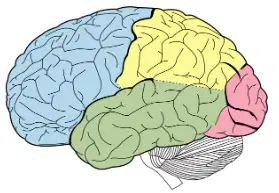
Label the frontal, occipital, parietal, and temporal lobes of the brain on the diagram.
Frontal back; parietal front; temporal top; occipital side
Frontal top; parietal back; temporal front; occipital side
Frontal front; parietal top; temporal side; occipital back
Frontal side; parietal back; temporal top; occipital front
Match the type of muscle fiber with the correct characteristics: a. Skeletal muscle:__ b. Smooth muscle:__ c. Cardiac muscle:__ 1. Involuntary, Striated 2. Voluntary, Striated 3. Involuntary, Non-Striated
a-3, b-1, c-2
a-1, b-2, c-3
a-2, b-1, c-3
a-2, b-3, c-1
Asthma attacks can occur for a variety of reasons, constricting the airway for extended periods of time. Give one reason someone might have an asthma attack, and how it impacts a person’s athletic performance.
Extra oxygen intake; increases endurance and speed
Muscle strain; strengthens airway and stamina
Trigger like cold air; reduces endurance and speed
High blood sugar; improves lung elasticity
The frontal lobe is responsible for which process?
Sight
Hearing
Critical thinking
Memories
When breathing in, the diaphragm (Contracts/Relaxes) and creates a vacuum that (Pushes/Pulls) the air into your lungs.
Relaxes and Pushes
Relaxes and Pulls
Contracts and Pushes
Contracts and Pulls
Your nervous system has 2 main divisions in your body. What are they called?
Peripheral & Autonomic
Central & Peripheral
Somatic & Peripheral
Autonomic & Central
Many professionals stressed that having purpose, staying social, and living with hope are just as important as medicine when dealing with dementia. Why do these non-medical factors matter so much for people living with dementia?
They support mood and function, slowing decline
They directly regrow lost brain neurons
They replace need for prescribed medications
They cure dementia with daily routines
Match the component of blood with its purpose: a. Red Blood Cell:__ b. White Blood Cell:__ c. Platelets:__ d. Plasma:__ 1. Carries waste products 2. Carries Oxygen 3. Helps the body fight infection 4. Key role in blood clotting
a-2, b-3, c-4, d-1
a-4, b-1, c-3, d-2
a-3, b-2, c-1, d-4
a-1, b-4, c-2, d-3
What is the correct order for air to travel through to enter the lungs? a. Trachea ___ b. Nose ___ c. Bronchi ___ d. Larynx ___
d, b, a, c
b, a, d, c
d, a, b, c
b, d, a, c
Asthma attacks can not be triggered by which of the following?
Certain smells
Stress
Cold Air
Exercise
Next to the organ, put whether they perform mechanical (M), chemical digestion (C), or both (B): a. Mouth ____ b. Esophagus ____ c. Stomach ____ d. Small Intestine ____ e. Large Intestine ____
a-B, b-C, c-C, d-M, e-B
a-C, b-B, c-M, d-B, e-C
a-M, b-C, c-B, d-B, e-C
a-B, b-M, c-B, d-C, e-M
Smoking is hazardous to both your respiratory and circulatory systems. Give one example of how smoking can impact the health of those body systems.
Damages airways and vessels, reducing oxygen delivery
Strengthens lung tissues and improves blood oxygen
Increases cilia activity and artery flexibility
Expands alveoli and widens coronary arteries
Muscles attach to bones through which tissue?
Agonists
Ligaments
Tendon
Antagonists
Which of the following traits is NOT associated with mental health?
Problem solving
Interpreting observations
Expressing feelings
Critical thinking
Match the terms with their correct definition: Self-Esteem: ___ Self-Identity: ___ Self-Image: ___ 1. Characteristics/qualities that distinguish an individual 2. The mental picture of oneself, driven by interactions 3. The confidence in one’s own worth and abilities
Esteem-3, Identity-2, Image-1
Esteem-1, Identity-2, Image-3
Esteem-2, Identity-3, Image-1
Esteem-3, Identity-1, Image-2
Which of the following characteristics are not associated with mental health?
Critical thinking
Expressing feelings
Interpreting observations
Problem solving
Based on the described factors, which option best identifies a protective factor for a teenager’s mental health?
A family history of conditions such as bipolar disorder.
Increased time spent on social media platforms
Family support of positive thought patterns.
Frequent exposure to stressful childhood events
Mental and emotional health can be described as being on a continuum. What does that mean, and what are some actions that can positively impact a person’s mental health state?
It fluctuates randomly; actions include ignoring feelings
It is fixed after childhood; actions include medication only
It ranges from illness to wellness; actions include sleep, support, coping
It is identical for everyone; actions include strict routines
Managing your emotions has 3 steps. Place them in the correct order: a. Expressing Your Feelings b. Identifying Your Feelings c. Accepting Your Feelings
a, b, c
b, c, a
c, b, a
b, a, c
Often, we struggle to differentiate our emotions. What is a potential reason for it?
People use cognitive distortions to identify true emotions.
You learn emotions from your parents during childhood.
Overlapping emotions mask each other.
People are easily overwhelmed by their surroundings.
Self-identity has 5 major components. Select all that influence a person’s self-identity.
Physical Identity
Personality
Cultural Identity
Emotional Intelligence
Self Esteem
What is a cognitive distortion? In a complete sentence, explain why a person would use a cognitive distortion in their life.
It is a temporary emotion that always improves behavior
It is a conscious choice to lie to manipulate others
It is an inaccurate thought pattern used to cope or simplify
It is a brain disorder that stops decision making entirely
Building self-esteem has 4 major components. Which of the following is NOT one of them?
Knowing your strengths
Accepting your feelings.
Avoiding perfectionism
Celebrating your accomplishments
Vaccines help your body to produce what?
Antigens
Antibodies
Red Blood Cells
Platelets
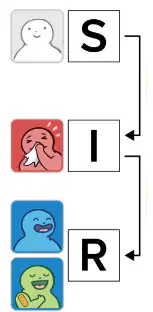
Below is the SIR Model for infection tracking. The arrow moving between S and I, what word would best describe it?
Infected
Recovery
Spreading
Transmission
What does the SIR model stand for?
S: Symptomatic; I: Ill; R: Rehabilitated
S: Sick; I: Immune; R: Removed
S: Susceptible; I: Infected; R: Recovered
S: Suspected; I: Infectious; R: Resistant
In complete sentences, explain 2 different locations that could be considered vectors for pathogens located on campus and behaviors we can employ to prevent the spread of these pathogens on campus.
High-touch areas like doorknobs and locker rooms; clean hands, sanitize surfaces
Library books only; never share sanitizer with classmates
Isolated offices with no visitors; avoid cleaning to build immunity
Outdoor open fields always sterile; skip handwashing after sports
Bradley has mononucleosis and has to share water with a teammate because she left her bottle at home. Later, her teammate is feeling ill. What kind of transmission took place?
Direct Transmission
Vertical Transmission
Indirect Transmission
Horizontal Transmission
Next to the term, mark whether it is a specific (s) or non-specific (n) response: Fever; Antibodies; White Blood Cells; Skin.
Fever-n; Antibodies-n; WBC-s; Skin-s
Fever-s; Antibodies-n; WBC-s; Skin-n
Fever-n; Antibodies-s; WBC-s; Skin-n
Fever-s; Antibodies-s; WBC-n; Skin-s
Which of the following describes good behaviors that reduce the spread of infection?
Coughing
Vectors
Respiratory etiquette
Sneezing
Vaccinations are added to a population. What general change occurs in the rate and severity of a potential infection spreading through that population?
Rate stays constant and severity unchanged
Rate drops and severity decreases broadly
Rate fluctuates and severity becomes unpredictable
Rate rises and severity increases widely
Mark the following for either being a macronutrient (M) or a micronutrient (m): Protein; Minerals; Vitamins; Lipids.
Protein-M; Minerals-m; Vitamins-m; Lipids-M
Protein-m; Minerals-M; Vitamins-m; Lipids-m
Protein-M; Minerals-M; Vitamins-m; Lipids-M
Protein-m; Minerals-m; Vitamins-M; Lipids-m
Amino acids are broken into essential and non-essential. Why are some labeled essential?
They are needed for muscle growth
They are required for all functions
Your body can produce them
Your body cannot produce them
What is the most correct definition of what a diet is?
The process of choosing foods for health and growth
The food sources used to gain nutrients daily
Eliminating excess nutrients that are harming you
Restricting the calories you consume daily
Which nutrient is considered inorganic?
Proteins
Vitamins
Fats
Minerals
Which of the following is NOT a benefit of a balanced diet?
Improved health and well-being
A platform for mental and emotional health
A caloric deficit to promote weight loss
Disease prevention
Match the macronutrient with its correct function: Carbohydrates; Proteins; Fats with 1. Long-term energy, 2. Short-term energy, 3. Major body functions.
Carbs-2; Proteins-1; Fats-3
Carbs-1; Proteins-2; Fats-3
Carbs-2; Proteins-3; Fats-1
Carbs-3; Proteins-1; Fats-2
Which barrier is part of the body's first line of defense against pathogens?
Skin and mucous membranes
B cells producing antibodies
Memory T cell activation
Inflammatory cytokine storm
Which statement best distinguishes specific from non-specific immune responses?
Non-specific creates antigen-specific memory cells
Specific tailors responses to particular antigens
Non-specific requires prior exposure to be effective
Specific targets any pathogen equally
Which behavior most directly prevents respiratory infection transmission in crowded spaces?
Taking high-dose vitamin supplements
Exercising in enclosed gym spaces
Covering coughs and wearing masks
Sharing water bottles with friends
A community increases childhood vaccination coverage from 60% to 95%. Which outcome is most likely?
Same outbreaks with more severe cases
More outbreaks with milder cases
Fewer outbreaks with more severe cases
Fewer outbreaks and milder cases
Which combination correctly lists three macronutrients?
Vitamins, minerals, water
Carbohydrates, proteins, fats
Amino acids, minerals, fiber
Glucose, iron, vitamin C
Which statement about micronutrients is most accurate?
Synthesized by muscles during exercise
Needed in large amounts for energy
Provide short-term energy to cells
Needed in small amounts for function
Which meal best reflects a balanced diet for an active student?
Grilled chicken, brown rice, mixed vegetables
Protein shake, cookies, energy drink
Bacon, cheese, processed snack chips
White bread, butter, sugary lemonade
Which scenario best illustrates why fad diets are often ineffective and sometimes harmful over time?
Short balanced plan improves cholesterol
Moderate plan includes fruits and vegetables
Elimination plan restricts food groups severely
Mediterranean plan emphasizes variety and balance
Which statement correctly pairs each macronutrient with a primary role?
Carbs hormones; proteins insulation; fats antibodies
Carbs energy; proteins growth; fats energy storage
Carbs storage; proteins antibodies; fats short energy
Carbs enzymes; proteins energy; fats oxygen transport
What is physical activity?
Activities outside a person’s daily routine.
Any unplanned exercise that a person has to overcome.
Any action that uses energy.
Activity that is planned for raising physical fitness.
There are 3 key principles for physical improvement: Overload, Specificity, and Progression. Define each of these and explain which one is the most important for improving physical health.
Overload is ignoring limits; specificity is broad focus; progression is skipping steps.
Overload is doing less work; specificity is general training; progression is staying the same.
Overload is resting more; specificity is random drills; progression is immediate jumps.
Overload is adding stress; specificity is targeted training; progression is gradual increases.
Which is not a key exercise component that helps create improvement over time?
Duration
Repetitions
Mobility
Intensity
Which of the following is not a type of contraception?
Barrier
Faith-Based
Hormonal
Natural
An Intrauterine Device (IUD) is known to be which type of contraceptive?
Barrier
Natural
Hormonal
Sterilization
Contraceptive is often thought of as “one person’s problem”. What is the fallacy in this thinking, & how can you avoid potential unwanted pregnancies?
It is only a medical issue; avoid by ignoring sex education.
It is purely a moral issue; avoid by judging partners’ choices.
It is a shared responsibility; avoid by communication and using contraception.
It is inevitable; avoid by hoping for the best.
The STI known as AIDS is transmitted by what kind of pathogen:
Protists
Fungus
Bacteria
Virus
Which STI is the most commonly reported in college students in the US?
Chlamydia
HIV/AIDS
Genital Herpes
Gonorrhea
What percentage of STIs are preventable?
100%
50%
25%
66%
A lot of STIs are stigmatized negatively in social media and entertainment. How can this potentially impact a person’s choices regarding their sexual health?
It encourages seeking medical care early.
It reduces misinformation and myths entirely.
It guarantees safer decision-making for everyone.
It can discourage testing and honest communication.
According to the material, what is the definition of health?
State of complete physical, mental, emotional and social well-being
Absence of disease only
Ability to exercise regularly
Having a healthy diet
Which of the following is outside your control when it comes to physical health?
Diet
Sleep schedule
Genetics
Avoiding bad substances
Which of the following best describes "Emotional Health" as emphasized in the material?
How an individual expresses their thoughts and feelings
How physically fit a person is
How much money a person earns
How many friends a person has

A student wants to reduce their risk of illness. Which action would be considered addressing a modifiable risk factor?
Exercising regularly
Changing their age
Altering their DNA
Ignoring pre-existing conditions
Which of the following is an example of how one type of health can negatively impact another?
Mental health can hurt physical health by causing lack of motivation to exercise.
Physical health can help mental health by improving mood.
Social health can help physical health by encouraging group activities.
Physical health can help social health by joining sports teams.
Over time, some bacteria can become resistant to certain drugs.
True
False
What are the two main forms of direct transmission?
Direct Contact and Droplet Spread
Vector and Airborne
Indirect Contact and Airborne
Food and Water
Fill in the blank: Direct transmission occurs when a ______ travels from its origin to an individual.
pathogen
antibody
vaccine
enzyme
Indirect transmission happens when pathogens are found in a ______ that passively holds them.
separate source
living host
direct contact
immune cell
What is universally seen as the number 1 method of preventing the spread of communicable diseases?
Hand washing
Wearing sunglasses
Eating spicy food
Taking daily vitamins
Match the following aspects of emotional health
Identifying Feelings:
Differentiating the specific emotions
Accepting Feelings:
Active acknowledgement of what is felt.
Expressing Feelings:
Expressing feelings for positive results
A student feels pressured to be perfect on social media and gets discouraged by small mistakes. Which plan best applies the strategies shown to support healthier self-esteem?
Limit comparisons to others online, set achievable goals instead of unrealistic standards, and note small wins each day
Post more frequently to gain validation, set one huge goal to prove worth, and avoid relaxing until it’s achieved
Ignore all feedback from peers, avoid setting goals, and wait for big successes before celebrating
Work alone to prevent criticism, compare with top influencers for motivation, and celebrate only perfect outcomes
Which statement best defines cognitive distortions?
Healthy thought patterns that improve critical thinking over time
Unhealthy patterns of thinking that are often not grounded in reality
Temporary mood shifts that have no impact on mental health
Accurate beliefs formed through careful observation of the environment
Based on the described factors, which option best identifies a protective factor for a teenager’s mental health?
Frequent exposure to stressful childhood events
Strong family support that encourages positive thought patterns
Increasing time spent on social media platforms
Genetic variants associated with higher risk of serious mental health conditions
Which kind of disorder is characterized by a dependence on certain behaviors or processes occuring in a person's life?
Addictive Disorders
Phobias
Mood Disorders
Anxiety Disorders
Which statement best distinguishes diet from nutrition in human health?
Nutrition is the list of foods eaten each day
Diet is the daily food sources a person uses
Nutrition is the flavors and textures of meals
Diet is the process of selecting healthy foods
Which feature most accurately describes fad diets as presented?
They restrict specific sources for a reason
They emphasize gradual lifelong behavior change
They guarantee long‑term metabolic adaptation
They balance animal and plant sources evenly
Which pairing correctly matches a micronutrient example with its noted contribution?
Fat — supplies essential minerals
Protein — regulates body temperature directly
Carbohydrate — builds genetic material
Vitamin C — supports growth and function
Which statement best distinguishes essential from non-essential amino acids?
Essential are used for energy; non-essential for structure
Essential are found only in animals; non-essential in plants
Essential cannot be made by the body; non-essential can
Essential are larger molecules; non-essential are smaller
Which statement best explains a primary nutritional benefit of eating a variety of fruits and vegetables?
They only contribute water and minimal calories
They primarily increase simple sugar intake
They mainly provide saturated fat and sodium
They supply vitamins, minerals, and fiber
They act as the sole source of dietary protein
Which outcome is a direct benefit of maintaining a balanced diet?
Improved overall health and well-being
Rapid muscle gain without exercise
Immediate weight loss after each meal
Higher tolerance to all allergens
Which scenario illustrates how nutrition can influence self-esteem and body image?
Eating late at night ensures improved public speaking skills
Skipping breakfast permanently changes eye color and vision
Calorie counting always guarantees athletic scholarship awards
Diet patterns affect confidence in social and physical abilities
Which statement best defines undernutrition in the context of health impacts?
Insufficient nutrient absorption reduces growth and organ performance
Excess protein consumption always increases muscle mass quickly
High-calorie intake enhances immunity and organ efficiency
Balanced meals provide steady energy and tissue maintenance
Which set lists appropriate drink sources that contribute to hydration?
Milkshakes, cola, smoothies, sweetened tea
Coffee, sports gels, wine, flavored syrups
Soda, energy shots, beer, sweetened tea
Water, milk, juices, unsweetened tea
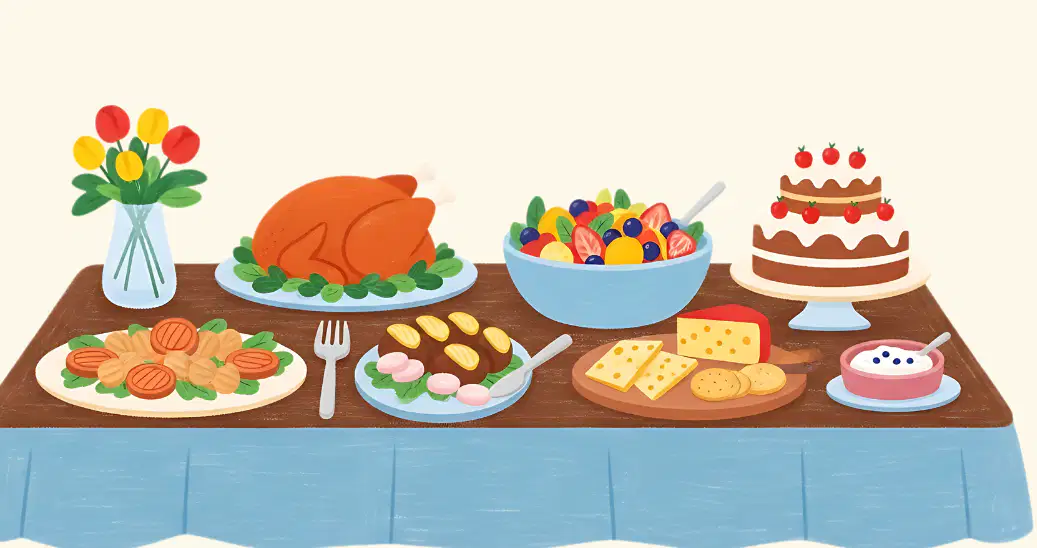
Why can high-fiber meals reduce overeating after a large holiday feast?
They promote satiety by slowing digestion
They cause a sharp insulin spike immediately
They increase taste receptor sensitivity
They accelerate gastric emptying rapidly
They decrease water absorption in intestines
Which statement best defines sexually transmitted infections (STIs)?
Diseases caused only by poor hygiene habits
Illnesses mainly spread through sexual activity
Infections affecting only certain orientations
Conditions limited to specific age populations
Which statement about symptoms of STIs is correct?
Asymptomatic cases are never contagious
Symptoms always appear within twenty-four hours
All infections cause immediate severe illness
Some infections show no noticeable symptoms
Which reason contributes to stigma surrounding STIs?
Media frames them as shameful illnesses
School curricula never discuss prevention
Public health campaigns normalize testing
Clinics offer completely anonymous care
Which statement best describes chlamydia in adolescents and young adults?
A viral STI common on campuses annually
A bacterial STI highly prevalent among students
A parasitic STI with few annual cases
A fungal STI rare in college populations
Which pathogen causes genital herpes?
Hepatitis B virus (HBV)
Human immunodeficiency virus (HIV)
Human papillomavirus (HPV)
Herpes simplex virus (HSV)
What is accurate about treatment for genital herpes?
Topical steroids eradicate the virus
No cure; antivirals reduce outbreaks
Full cure with antibiotics course
Vaccination eliminates current infection
Which statement correctly distinguishes HIV from AIDS?
HIV is the virus; AIDS is the syndrome
AIDS occurs before HIV infection
HIV is the syndrome; AIDS is the virus
Both are the same disease stage
Which body fluids are primary routes for HIV transmission?
Mucus, sweat, tears, saliva
Skin oil, sweat, tears, saliva
Sweat, tears, saliva, urine
Blood, breast milk, semen, vaginal secretions
What is the main effect of untreated HIV on the immune system?
Targets nerve cells leading to paralysis
Kills white blood cells, enabling opportunistic infections
Increases red blood cell count dramatically
Causes overproduction of antibodies only
A couple wants to reduce STI transmission and prevent pregnancy. Which plan shows effective reasoning and consent?
Skip testing and use no protection this time
Choose withdrawal without discussing consent
Agree on condom use and confirm verbal consent
Rely on rumors about partners’ STI status
Which action is part of responsible sexual health behavior before sexual activity?
Avoid discussing past relationships entirely
Use any method without partner agreement
Assume consent if there was a previous date
Disclose sexual history and recent STI testing
Which statement best reflects shared responsibility in preventing STIs and teen pregnancy?
Parents decide the protection methods for teens
Both partners share equal responsibility for prevention
Only the sexually active partner manages protection
Healthcare providers carry most responsibility for prevention
Which statement best describes a barrier method of contraception?
Removes penis before ejaculation
Tracks menstrual timing for fertility
Releases hormones to halt ovulation
Blocks skin contact and fluid transmission
Hormonal methods are intended to prevent
Neither STIs nor pregnancy
Both STIs and pregnancy
STIs only, not pregnancy
Pregnancy only, not STIs
Which mechanism describes an intrauterine device (IUD)?
Placed over penis to block bodily fluids and skin contact
Surgically inserted, releases hormone to keep cervix closed
Taken daily to stop menstrual cycle through pregnancy hormones
Applied on skin to release medication that alters gametes
Fertility awareness method relies on
Surgical placement of a device in uterus
Daily hormone pills to suppress ovulation
Using condoms to prevent fluid transmission
Tracking menstrual cycle to identify fertile window
Which option is the only method that can 100% prevent both STIs and pregnancies?
Withdrawal before ejaculation
External condom use every time
Abstinence from sexual activity
Oral contraceptive pills daily
Which statement best distinguishes exercise from physical activity?
Physical activity is structured with fitness goals
Physical activity never raises heart rate
Exercise is planned to improve physical fitness
Exercise is any action that uses energy
Select the option that lists two outcomes raised by regular physical activity.
Coping ability and sleep quality
Anxiety and cancer risk
Cancer risk and depression
Cardiovascular disease and obesity
A coach wants to improve an athlete’s ability to perform successfully in a particular sport or activity. Which fitness type should be prioritized?
Skill-related fitness focusing on sport-specific abilities
Cardiorespiratory fitness emphasizing oxygen transport
Muscular fitness emphasizing maximal strength only
General physical fitness without targeted practice
Which statement best defines the Overload principle in training?
Applying stress beyond usual effort to trigger gains
Maintaining comfortable effort to prevent fatigue in sessions
Targeting only favorite muscles to enhance sport skills
Changing exercises daily without increasing intensity
A sprinter wants faster starts. Which plan shows Specificity?
Swimming laps to build overall cardiovascular fitness
Cycling indoors for non-impact cross-training
Practicing explosive block starts and short sprints
Doing long easy jogs for general endurance

You increased squat weight by 2.5 kg each week for six weeks, then added a light deload week before another increase. Which principle is mainly demonstrated?
Specificity by training upper-body strength
Overload only during the first heavy week
Random variation without structured planning
Progression through planned gradual increases
To build sustainable improvement over a semester, which combination is most effective?
Increase volume sharply, skip technique, ignore recovery
Focus broadly, never increase intensity, change goals weekly
Train randomly, avoid stress, rest excessively
Apply overload, train specifically, progress systematically
Two friends want to be more active. One chooses dance classes they love; the other selects a demanding plan they dislike. Predict the more likely outcome after two months and why.
The dancer maintains activity due to enjoyment
Enjoyment matters little compared with discipline
Both quit because routines are inconvenient
The strict plan builds faster but is sustainable
What is the immediate neurotransmitter effect commonly triggered during exercise, producing pleasure and alertness?
Dopamine release during activity
Acetylcholine spike in recovery
Serotonin surge after sleep
Melatonin peak during daylight
Arrange the sequence for progressive improvement when starting out:
Increase duration, add repetitions, raise intensity
Raise intensity, increase duration, add repetitions
Increase duration, raise intensity, add repetitions
Add repetitions, raise intensity, increase duration
Which strategy best supports forming a lasting exercise habit for most people?
Repeat one routine without any variation
Pick the most intense workouts available
Choose activities you genuinely enjoy doing
Exercise only when you have extra free time
Which outcome is most associated with greater flexibility?
Increased range of motion and function
Higher single‑rep lifting capacity
Faster cardiovascular oxygen delivery
Thicker muscle fibers during growth

