
 Worksheets
MolGen Review (2025)
Total questions: 102
Worksheet time: 2hrs 1mins
What is the role of Cas9?
Glue sections of DNA together.
Target mutated genes.
Change the sequence or order of DNA bases.
Cut DNA at specific locations.
Why do bacteria have CRISPR? Check all that apply.
To be able to remember which viruses they have been infected with
To be able to edit virus DNA
To cut apart virus DNA thereby stopping the virus infection
To be able to edit their own DNA
CRISPR-Cas9 was discovered in which of the following organisms?
protists
fungi
bacteria
viruses
What is the function of guide RNA in CRISPR-Cas9 system?
Guide RNA helps in the replication of DNA.
Guide RNA is responsible for repairing damaged DNA.
Guide RNA guides the Cas9 enzyme to the target DNA sequence.
Guide RNA acts as a template for protein synthesis.
Which enzyme is responsible for cutting the target DNA in CRISPR-Cas9 system?
Cas9
RNA polymerase
DNA polymerase
CRISPR

What does the acronym CRISPR stand for?
Controlled Reservative Image Spectacle Palindromic Recounts
Clustered Regularly-Interspaced Short Palindromic Repeats
How does CRISPR edit DNA? Check ALL that apply.
CRISPR chemically changes A's to C's
CRISPR cuts the DNA and the cell makes errors when it tries to fix the broken DNA
CRISPR cuts the DNA and the cell can use a similar DNA sequence as a template to try to fix the DNA
CRISPR changes all PAM's so that they are no longer able to be recognized
We have been modifying DNA sequences for many years - ever since restriction enzymes were discovered in the early 1970's. CRISPR and restriction enzymes are essentially the same because they can both be used to cut DNA and can be used inside of living cells.
TRUE
FALSE - Restriction enzymes do not cut DNA
FALSE - CRISPR does not cut DNA
FALSE - Restriction enzymes cannot be used inside of living cells
Which of the following is NOT a component of the CRISPR Cas9 system?
Trans-activating crRNA (tracrRNA)
Guide RNA (gRNA)
DNA polymerase
Cas9 nuclease
The following sequence is a known GENE MUTATION that geneticists would like to remove. What would be the guide RNA they need to build into a CRISPR-Cas9 enzyme?
TTA CCG
AAU GGC
AAT GGC
TTA CCG
GCC ATT
What are the two main parts found in CRISPR?
Repeats and Spacer DNA
Repeats and Viral DNA
Spacer DNA and Cas Proteins
Cas Proteins and Viral DNA
How does the CRISPR-Cas9 system differ from the immune system in humans?
CRISPR-Cas9 system uses RNA to guide DNA cutting, while the immune system uses antibodies
CRISPR-Cas9 system repairs damaged DNA, while the immune system fights infections
CRISPR-Cas9 system prevents viral DNA transcription, while the immune system produces antibodies
CRISPR-Cas9 system replicates viral DNA, while the immune system attacks viral DNA
Which of the following is the correct order of each step in the process of using CRISPR- Cas9 to inactivate a gene?
Targeting, Cleaving, DNA Repair, Binding
Binding, Targeting, DNA Repair, Cleaving
DNA Repair, Targeting, Cleaving, Binding
Targeting, Binding, Cleaving, DNA Repair
In the cleaving step of the CRISPR-Cas9 process, which strand(s) will be cleaved in the DNA?
5' -> 3'
3' -> 5'
Both strands
Neither strand

A special protein that targets a specific base sequence and cuts DNA into smaller fragments is a(n)
Gene
DNA Probe
Exon
Restriction Enzyme
A vector in genetic engineering is
plasmid or virus that contains or carries modified genetic material
a host organism that is used to grow up lots of copies of transfected DNA
an organism that can carry a disease to a host
CRISPR is an example
How does CRISPR-Cas9 differ from other gene editing techniques?
CRISPR-Cas9 is less efficient than other gene editing techniques.
CRISPR-Cas9 is more precise and efficient than other gene editing techniques.
CRISPR-Cas9 is more error-prone than other gene editing techniques.
CRISPR-Cas9 is slower than other gene editing techniques.
Evaluate the potential societal impacts of genetic engineering technologies becoming widely accessible.
It could democratize access to advanced medical treatments but may also raise ethical and privacy concerns.
It could democratize access to advanced medical treatments but may also lead to increased healthcare costs.
It could limit access to advanced medical treatments and raise ethical and privacy concerns.
It could limit access to advanced medical treatments and lead to increased healthcare costs.
The enzyme that glues DNA back together
Sticky Ends
DNA Polymerase
RNA polymerase
Ligase
The taking in of DNA that the cell or organism did not have before. The new DNA gives new traits to the cell or organism.
Transformation
Restriction Enzymes
Plasmid
Cloning
The gene that the scientist is manipulating to make a product.
Okasaki Fragment
Plasmid
Transformation
Gene of Interest

New strand of DNA made by inserting the gene of one organisms into the DNA of another.
gel electrophoresis
polymerase chain reactions
recombinant DNA (rDNA)
clone
A technique that produces millions or even billions of copies of a specific DNA sequence in just a few hours.
gene sequencing
PCR
DNA microarray
cloning
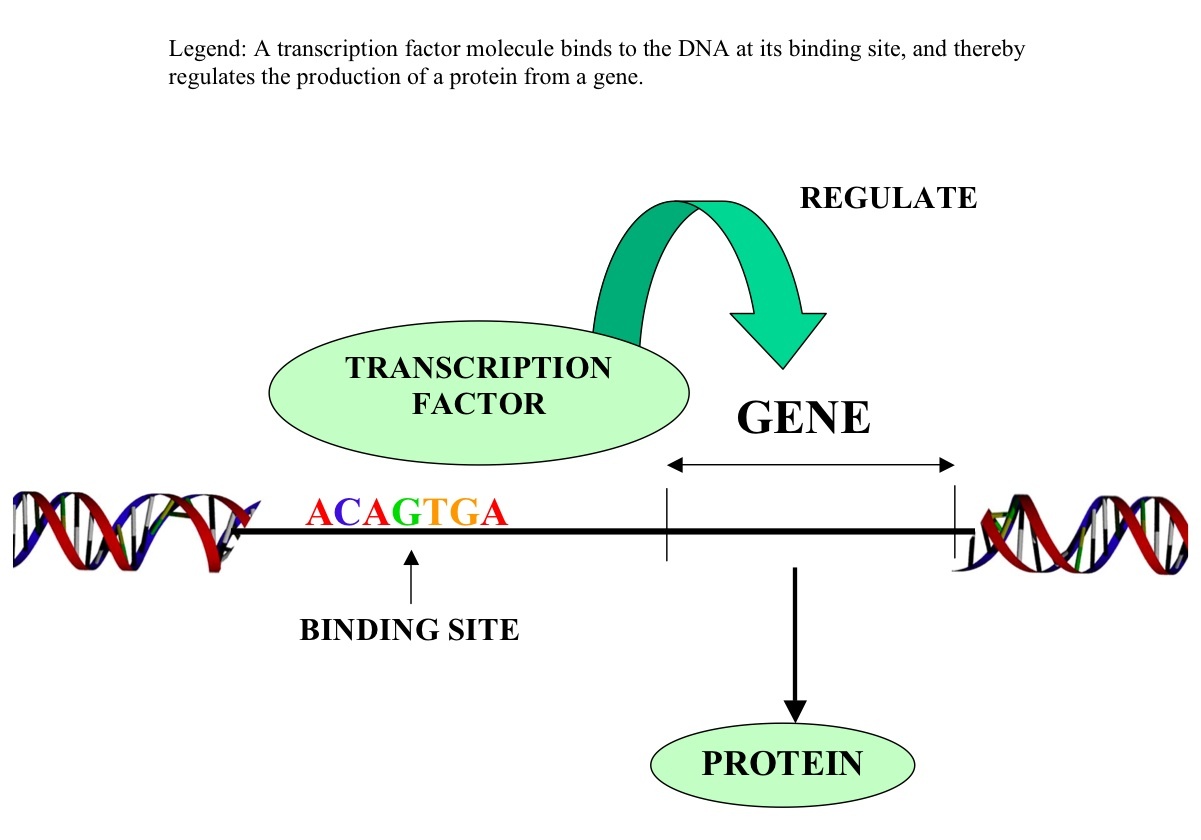
transcription factors
topoisomerase
regulatory genes
activators

regulator
repressor
activator
corepressor
Transcription of genes by RNA polymerase requires energy, so a bacteria's operon is usually not always turned on.
In E. coli bacteria, the trp operon encodes genes for the synthesis of tryptophan, and the lac operon encodes genes for the digestion of lactose.
Which of the following strains of E. coli is likely to use its energy most efficiently?
A strain in which RNA polymerase is inhibited (stopped) from transcribing the trp operon when tryptophan is present
A strain in which RNA polymerase transcribes the trp operon when tryptophan is present
A strain in which RNA polymerase is inhibited (stopped) from transcribing the lac operon when lactose is present
A strain in which RNA polymerase transcribes the lac operon when lactose is absent
Which statement best explains why gene expression can be more complex and sophisticated in eukaryotic cells than in prokaryotic cells?
Gene expression in eukaryotic cells involves both transcription and translation.
Transcription and translation occur in different places and at different times in eukaryotic cells.
Eukaryotic cells use double-stranded DNA and single-stranded RNA
Eukaryotic cells use a more complex genetic code

Genes can be shut off (not expressed) when a ___ binds to the ____.
activator, operator
repressor, operator
corepressor, operator
repressor, promotor
Which of the following is/are similarities between prokaryotic and eukaryotic gene expression?
both use proteins to interact with the DNA to control gene expression
both have histones complexed with their DNA
both separate the processes of transcription and translation spatially
both use operons to control genes being repressed or activated
Which enzyme is crucial for the process of PCR?
DNA ligase
RNA polymerase
Taq polymerase
Reverse transcriptase
Which of the following is a key difference between proteomics and genomics?
Genomics focuses on mutations, while proteomics studies entire genomes.
Proteomics studies DNA sequences, while genomics studies proteins.
Proteomics examines DNA replication, while genomics tracks gene mutations.
Genomics studies all genetic material, while proteomics studies protein expression.
Why is defining a species considered difficult?
Because all organisms reproduce sexually.
Because asexual and sexually reproducing organisms require different criteria.
Because all organisms are eukaryotes.
Because there is only one species concept.
What is the primary focus of the morphological species concept?
DNA sequencing
Breeding behaviors
Structural features
Genetic mutations
When is the morphological species concept typically used?
When the genetic species concept is unavailable.
When the biological species concept cannot be used.
When studying plant species only.
When species are extinct.
The broadest category in the classification system is the
Family
Class
Order
Domain
A horse and donkey can mate and produce offspring of a mule. What is one reason why a horse and donkey are NOT considered the same species?
The horse and donkey are not classified as Kingdom Animalia
The horse and donkey naturally created the mule offspring
The horse has a larger body size than the donkey
The mule offspring is unable to reproduce
A correctly written scientific name is--
Canis Lupus
Felis domesticus
mus domesticus
quercus Alba
Why does PCR work much faster than cellular DNA replication?
Heating the DNA removes the need for DNA helicase
Cooling the DNA removes the need for DNA polymerase
Exactly the needed nucleotides are supplied in PCR
PCR only requires single-stranded DNA, so it's twice as fast
Today, obtaining a person's full genome from a good genetic sample takes:
About a decade
About a year
About a month
About a day
What is the primary use of a karyotype?
To create a library of DNA fragments
To measure changes in pH during sequencing
To determine the sequence of nucleotides in DNA
To detect genetic disorders caused by missing or extra chromosomes
What does VNTR stand for?
Verified Number of Tandem Repeats
Variable Nucleotide Tandem Repeats
Very New Tandem Repeats
Variable Number of Tandem Repeats
True or False: The number of genes is determined by the complexity of the organism.
True
False
What is the Extension step?
DNA polymerase adds nucleotides to the 5' end
RNA polymerase adds nucleotides to the 5' end
DNA polymerase adds nucleotides to the 3' end
RNA polymerase adds nucleotides to the 3' end

During which PCR step do primers form complementary base pairs with single-stranded template DNA?
Denaturation
Annealing
Extension
Synthesis

Observe the results above. What gene is present in the engineered plasmid?
kanamycin resistant gene
ampicillin resistant gene
tetracycline resistant gene
No plasmid is necessary to grow on plate 3.

Examine the results for group 4. Why would this group see growth without RFP in the third plate?
The bacteria cells did not transform.
The bacteria cells transformed, but did not incorporate the plasmid containing the RFP gene.
The bacteria cells transformed, but did not incorporate the plasmid with the arabinose gene.
Group 4 did not observe growth in the third plate.

What type of cut is this photo?
Blunt
sticky

How many fragments resulted from the cut above?
1
2
3
4
What is the full form of BLAST?
Basic Linear Alignment Search Tool
Basic Local Alignment Search Tool
Basic Local Analysis Search Tool
Basic Linear Analysis Search Tool
Most Popular Nucleotide Database is
GenBank
ENA
DDBJ
None
Molecular consequences of an SNP can be
Synonymous amino acid substitution
Nonsynonymous amino acid substitution
creation of a Stop codon
All
What characteristic of short tandem repeat DNA makes it useful for DNA fingerprinting?
The number of repeats varies widely from person to person or animal to animal.
The sequence of DNA that is repeated varies significantly from individual to individual.
The sequence variation is acted upon differently by natural selection in different environments.
Every racial and ethnic group has inherited different short tandem repeats.

"transgenic" refers to an animal that:
Has DNA from another organism spliced into its genome
Has undergone DNA modification
Has unique genes for its species
How much of your genome is the same as everyone else’s genome?
A. 1%
B. 50%
C. 99.9%
D. 75%
Which of these is a true statement?
Both plasmids and viruses can serve as
vectors.
Plasmids can carry recombinant DNA but
viruses cannot.
Vectors carry only the foreign gene into the
host cell.
All of these statements are true.
Put the following phrases in order to form a
plasmid carrying recombinant DNA.
1. use restriction enzyme
2. use DNA ligase
3. remove plasmid from parent bacterium
4. introduce plasmid into new host bacterium
1, 2, 3, 4
4, 3, 2, 1
3, 1, 2, 4
2, 3, 1, 4
Which of the following is NOT needed to
make a recombinant DNA molecule?
foreign DNA
vector DNA
restriction enzymes
DNA ligase
DNA polymerase
Genetically engineered plants have or will
be used to
resist insects
resist herbicides
produce protein-enhanced beans, corn, and wheat
produce animal neuropeptides, blood factors, and growth hormones
all of these are correct
Which of the following is NOT a form of
genetic recombination in bacteria?
binary fission
conjugation
transduction
transformation
All are forms of recombination.

In a transformation experiment, a sample of E. coli bacteria was mixed with a plasmid containing the gene for resistance to the antibiotic ampicillin (ampr). Plasmid was not added to a second sample. Samples were plated on nutrient agar plates, some of which were supplemented with the antibiotic ampicillin. The results of E. coli growth are summarized below. The shaded area represents extensive growth of bacteria; dots represent individual colonies of bacteria.
Plates that have only ampicillin-resistant bacteria growing include which of the following?
I only
III only
IV only
I and II
In a transformation experiment, a sample of E. coli bacteria was mixed with a plasmid containing the gene for resistance to the antibiotic ampicillin (ampr). Plasmid was not added to a second sample. Samples were plated on nutrient agar plates, some of which were supplemented with the antibiotic ampicillin. The results of E. coli growth are summarized below. The shaded area represents extensive growth of bacteria; dots represent individual colonies of bacteria.
Which of the following best explains why there is no growth on plate II?
The initial E. coli culture was not ampicillin resistant.
The transformation procedure killed the bacteria.
Nutrient agar inhibits E. coli growth.
The bacteria on the plate were transformed.
In a transformation experiment, a sample of E. coli bacteria was mixed with a plasmid containing the gene for resistance to the antibiotic ampicillin (ampr). Plasmid was not added to a second sample. Samples were plated on nutrient agar plates, some of which were supplemented with the antibiotic ampicillin. The results of E. coli growth are summarized below. The shaded area represents extensive growth of bacteria; dots represent individual colonies of bacteria.
Plates I and III were included in the experimental design in order to
demonstrate that the E. coli cultures were viable.
demonstrate that the plasmid can lose its ampr gene.
demonstrate that the plasmid is needed for E. coli growth.
prepare the E. coli for transformation.
In a transformation experiment, a sample of E. coli bacteria was mixed with a plasmid containing the gene for resistance to the antibiotic ampicillin (ampr). Plasmid was not added to a second sample. Samples were plated on nutrient agar plates, some of which were supplemented with the antibiotic ampicillin. The results of E. coli growth are summarized below. The shaded area represents extensive growth of bacteria; dots represent individual colonies of bacteria.
Which of the following statements best explains why there are fewer colonies on plate IV than on plate III?
Plate IV is the positive control.
Not all E. coli cells are successfully transformed.
The bacteria on plate III did not mutate.
The plasmid inhibits E. coli growth.

The DNA fragment indicated is approximately ____ base pairs in size.
300
450
580
610
700

Does suspect A have more or less repeats at TPO than the crime scene DNA?
More
Less
The same

Which suspect most likely committed the crime?
A
B
Neither
Can't tell

Lane showing most restriction sites
A
B
C
D
E
Which of the following describes a plasmid? (Choose all that apply)
part of the bacterial chromosome
self-replicating, small and able to transform other bacteria
found in eukaryotes
exists within a cell separate from the bacterial chromosome
able to be edited to include genes from other organisms
If you start with two double stranded DNA strands, how many would there be after 3 thermal cycles of PCR?
4
8
16
24
32
What percentage of the human genome codes for genes?
1.5%
5%
10%
25%

The complete genomes of many organisms have been sequenced. The table shows the number of genes and base pairs in the genome of several species, as well as their haploid chromosome number (n). Which organism has the largest number of base pairs (bp) in their genome?
Rice
Capsicum
Human
Horse
How can computer programs be used in genomics?
To identify base sequences by looking for sequences similar to known genes.
To create physical models of DNA structures.
To synthesize new genes from scratch.
To replace laboratory experiments entirely.

Amino acid sequences can be compared to determine relationships between species. When comparing the sequences provided, which two organisms are humans most closely related to?
horses and gorillas
gorillas and chimpanzees
chimpanzees and zebras
zebras and horses
When scientists compare the amino acid sequences for the red blood cell protein hemoglobin between various species, what can they determine about the evolutionary relationship between the species?
It can be determined how efficient hemoglobin is for different species.
It can determine relatedness between members of the same species.
It can provide evidence about the relatedness of different species.
It can show which species evolved first.

This table shows the number of differences in amino acids of a protein when compared to humans. Which species is LEAST closely related to humans?
Chimpanzee
Fruit fly
Horse
Pigeon
Rattlesnake
Why can similarities in amino acid sequences be used to determine species relatedness?
You are born with all of you amino acids
amino acids control which DNA is used to build you
DNA codes for amino acid sequences, so similar amino acid sequences indicate similar DNA
amino acids cannot provide valid data on species relatedness
A scientist wants to determine the function of a certain sequence of DNA in a snake. What might be the most reasonable approach?
use RT-PCR to amplify and examine the sequence
look for an identical sequence in another species, and perform a knockout experiment of this sequence in that species
genetically engineer a mouse with a copy of the sequence and examine its phenotype
prepare a genetically engineered bacterial culture with the new sequence
DNA biotechnology has allowed scientists to identify many human genetic disorders, such as hemophilia and cystic fibrosis. When the gene has been amplified by PCR, the DNA is sequenced to determine whether the individual has the disease. If scientists decide to create a test for a new genetic disease, what must first occur before PCR can be used to test for that disease?
the genome must be run through gel electrophoresis
the gene for the disease must be located in the genome
the complementary sequence specific to the gene must be created in the lab through cDNA
it must be recombined into a bacterial cell through recombination
In gel electrophoresis, the DNA fragments will migrate towards the
anode or positive electrode
cathode or negative electrode
anode or negative electrode
neutral electrode
The charge present on the DNA backbone is negative. The force required to accelerate the molecules towards anode is directly proportional to number of
sugar molecules
nitrogenous bases
phosphate groups
both A and C
How is the size of molecules under analysis measured?
by measuring the distance moved using a ruler
by measuring the amount of dye seen under analysis
by running a standard molecule, whose size is already known
none of the above
In PCR, _______ is from a thermophilic bacterium. It is highly resistant to heat, and does not denature easily.
DNA Polymerase I
DNA Polymerase II
Taq
Sigma

