
 Worksheets
IPC: 2025 Fall Final Exam Review
Total questions: 72
Worksheet time: 3hrs 37mins
The Law of Conservation of Energy states:
Energy can created or destroyed but not transformed
Energy cannot be created or destroyed, it can only transformed from one form to another form
Energy can't be created, destroyed or transformed
All the above

Energy can not be created nor destroyed.
Newton's Laws of Motion
Big Bang Theory
The Law of Conservation of Momentum
The Law of Conservation of Energy

What type of heat transfer takes place when you touch a warm mug of hot chocolate?
Radiation
Convection
Conduction
None of the above

Conduction requires
Electricity
the electromagnetic spectrum and particles
air or water flow
direct contact

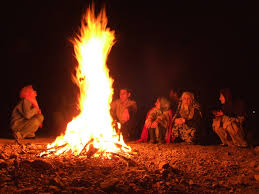
A group of friends gather around a fire to stay warm. This is an example of ________.
conduction
convection
radiation

The baby chickens kept warm by the heat lamps. This is an example of ________.
conduction
convection
radiation

You get sunburned due to __________ from the sun.
conduction
convection
radiation

Near the ceiling of a room the air is warmer. The warm air rises because of ________.
conduction
convection
radiation

The type of heat transfer that creates currents in water is called ________.
conduction
convection
radiation

A huge rock at the state park gets so hot during the day because of ________.
conduction
convection
radiation

The heat transferred from the Sun to the Earth by waves is called ________.
conduction
radiation
convection

A pot is placed directly on a stove. The pot gets hot due to ________.
conduction
convection
radiation

What are the three types of heat transfer?
Radaition, Conduction, Convection
Radiation, Conductors, Sun
Insulator, Radiation, Conuction
Thermal Energy, Sun, Heat
Radiation, Conduction, Convection

Which of the following is a type of energy that travels as electromagnetic waves and releases heat to it's surroundings?
Convection
Radiators
Radaition
Radiation
A pot is on a burning stove, what heat transfer is causing the handle to get hot?
Conudction
Convection
Conduction
Radiation
Makai is boiling water in a pot on the stove. He wonders how all of the water in the pot gets hot even though only the bottom level of the water is near the heat source. What kind of heat transfer causes all of the water to get hot?
Conduction
Convectoin
Convection
Conuction
What type of heat transfer takes place when you touch a warm mug of hot chocolate?
Radiation
Convection
Conduction
None of the above
Conduction requires
Electricity
the electromagnetic spectrum and particles
air or water flow
direct contact
If you walk barefoot on hot asphalt, energy is transferred by which process?
Convection
Radiation
Conduction
Reflection
A snowball in your hand is what heat transfer?
Convection
Conduction
Law of Conservation of Energy
Radiation
When energy increases, the speed of molecules ______.
Increases
Decreases
Stay the same

When molecules are heated, what happens to them?
They speed up, becomes less dense, and rise
They speed up, become more dense, and rise
They slow down, become less dense, and sink
They slow down, become more dense, and sink

What happens to warmed molecules after they rise to the top?
They cool down, become more dense, and sink
They cool down, become more dense, and rise
They warm up, become more dense, and rise
They warm up, become less dense, and sink
Objects that easily transfer heat (metals are good at this)
Conductors
Insulators
Fluids
Molecules
Objects that do not allow heat to transfer easily through them (wood, plastic, fabrics)
Conductors
Insulators
Molecules
Fluids

Which molecules have more energy?
Cold
Hot
What is convection?
Transfer of heat in a fluid through currents
Transfer of heat through direct contact
Transfer of heat through electromagnetic waves
What two states of matter are considered fluids?
Solids
Liquids
Gases
Plasma

The best place to cook a hot dog is above the fire. Why?
Because heat rises
Because heat sinks
Because there are more molecules above it
Because there is more room

Conduction or Convection?
(a)

Lava lamps work because of what type of heat transfer?
Conduction
Convection
Identify the example(s) of convection.
Floating in a hot air balloon
Lava lamps
Heating a marshmallow over a fire
Cooking a burger on the grill
Match

radiation

radiation AND conduction

convection
Match these heat transfers

Conduction

Convection

Radiation

Scoopy McScooperson places a spoon in warm water for a few minutes. Then, he uses it to easily scoop out ice cream. This is because the warm spoon (a) heat to the ice cream, melting it and making it easier to scoop.
Select 4. Which of the following are examples of radiation?

microwave

sunlight

fire

touching a piece of hot metal

x-ray
Select 3: Which of these are examples of conduction?


warming a spoon makes it easier to dip

steak on a hot pan

sunlight feels warm

Match these
Heat transfers through waves/rays
Radiation
Liquid (or air) heats up, speeds up and spreads out, becoming less dense. As it rises, it cools, slows, and comes back together. This increases density, making it sink again.
Convection
Heat transfers from objects that are touching.
Conduction

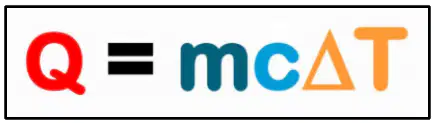
4,180 J of heat energy is added to change the water temperature by 10.0°C. How many grams of water are being heated?
C = 4.18
4.18 g
10,000 g
174,724 g
100 g
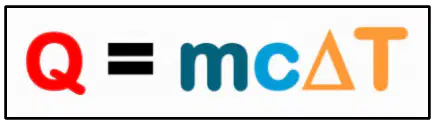
Q = m x c x ∆t
Q = m x c
Q = ½ m x v
m = Q x C

A 15.75-g piece of iron absorbs 1086.75 joules of heat energy and its temperature change is from 150°C. Calculate the specific heat capacity of iron.
0.46 J/goC
1.654 J/goC
2.56 J/goC

How many joules of heat are needed to raise the temperature of 10.0 g of aluminum 33 degrees, if the specific heat of aluminum is 0.903?
298 Joules
0.003 Joules
297 J/g°C
0.003 J/g°C

The specific heat of aluminum is 0.9025. How much heat (Q) is released when a 10.0 g piece of aluminum foil is taken out of the oven and cools 50.0°C?
451 J
45.1 J
400 J

20.0 g of water changes the temperature by 5°C. The specific heat of water is 4.184. How much heat energy (Q) moves from the water to the surroundings?
418 Joules
209 J
83 J
4.18 J

The specific heat (C) of copper is 0.38. What is the temperature change (∆t) when 100.0 Joules of heat (Q) is added to 20.0 grams?
13 °C
13.2°C
13.16 °C

A sample of iron receives 50 J of heat energy that raises the temperature of the iron 25.0°C. If the iron has a specific heat of 0.10, what is the mass of the iron sample?

The temperature of an unknown piece of metal with a mass of 30.00 g changes by 10°C when the metal absorbs 350.0 J of energy. What is the specific heat of the metal?
4,180 J of heat energy is added to change the water temperature by 10.0°C. How many grams of water are being heated?
C = 4.18
4.18 g
10,000 g
174,724 g
100 g
A 15.75-g piece of iron absorbs 1086.75 joules of heat energy and its temperature change is from 150°C. Calculate the specific heat capacity of iron.
0.46 J/goC
1.654 J/goC
2.56 J/goC
How many joules of heat are needed to raise the temperature of 10.0 g of aluminum 33 degrees, if the specific heat of aluminum is 0.903?
298 Joules
0.003 Joules
297 J/g°C
0.003 J/g°C
The specific heat of aluminum is 0.9025. How much heat (Q) is released when a 10.0 g piece of aluminum foil is taken out of the oven and cools 50.0°C?
451 J
45.1 J
400 J
20.0 g of water changes the temperature by 5°C. The specific heat of water is 4.184. How much heat energy (Q) moves from the water to the surroundings?
418 Joules
209 J
83 J
4.18 J
The specific heat (C) of copper is 0.38. What is the temperature change (∆t) when 100.0 Joules of heat (Q) is added to 20.0 grams?
13 °C
13.2°C
13.16 °C
A sample of iron receives 50 J of heat energy that raises the temperature of the iron 25.0°C. If the iron has a specific heat of 0.10, what is the mass of the iron sample?
The temperature of an unknown piece of metal with a mass of 30.00 g changes by 10°C when the metal absorbs 350.0 J of energy. What is the specific heat of the metal?
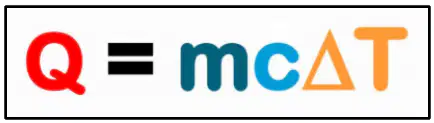
20 g of water. specific heat of water is 4.18 J/g°C. temperature changes from 25° C to 20° C, how much heat energy (Q) moves from the water to the surroundings?
-418 J
-209 J
-83 J
-4.18 J
How many Joules of energy are required to change 10 gram of water from 20 C to 90 C? C = 4.18
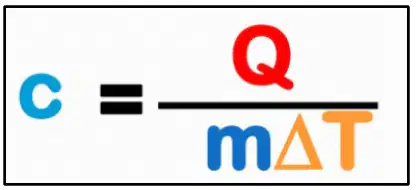
A pot of 2,400g of water at a temperature of 25˚C is heated on a stove until the water boils at 100˚C. The specific heat of water is 4.18 J/(g˚C).
Determine the heat energy needed to heat the water in the pot to a boil.

