
NEW
Font size
 Worksheets
Biology SOL Remediation RC1 - Practice Questions
Total questions: 79
Worksheet time: 40mins
A student observes a cell under a microscope and notices a high concentration of mitochondria. Which inference about the cell's function is most likely correct?
The cell is used for storing large amounts of water.
The cell requires a significant amount of energy to function.
The cell is responsible for synthesizing lipids.
The cell's primary role is photosynthesis.
Which plant structure is specifically adapted for the life process of increasing water absorption from the soil?
Waxy cuticle
Stomata
Root hairs
Phloem
A certain cell lacks a nucleus but contains DNA, ribosomes, and a cell membrane. Which inference can be made about this organism?
It is a complex multicellular animal cell.
It is a prokaryotic organism, such as a bacterium.
It is a plant cell that has lost its chloroplasts.
It is a virus that requires a host to reproduce.
How does the structure of a leaf's palisade mesophyll, which is packed with chloroplasts, relate to its function?
It allows for the rapid transport of water to the roots.
It maximizes the capture of light energy for photosynthesis.
It provides a rigid skeleton to support the plant's height.
It acts as a barrier to keep pathogens out of the plant.
If a scientist observes a cell with a very large central vacuole, what can be inferred about the organism?
It is an animal cell specialized for movement.
It is a plant cell that uses turgor pressure for support.
It is a fungal cell that lacks a cell wall.
It is a bacterial cell that reproduces through binary fission.
Muscle cells have a highly developed sarcoplasmic reticulum for storing calcium ions. Why is this structural feature necessary?
To protect the cell's DNA from damage.
To provide a location for aerobic respiration.
To facilitate the rapid release of ions needed for contraction.
To synthesize proteins for the cell membrane.
The presence of cilia on the cells lining the human respiratory tract is an adaptation for which process?
Direct absorption of oxygen into the bloodstream.
Moving mucus and trapped particles out of the lungs.
Increasing the surface area for nutrient absorption.
Providing structural rigidity to the trachea.
A biologist finds a single-celled organism with a flagellum. What is the most likely inference regarding its life processes?
It uses the flagellum to capture prey.
It is capable of independent movement through its environment.
It uses the flagellum to anchor itself to rocks.
It uses the flagellum to perform gas exchange.
The folded inner membrane of the mitochondria is called the cristae. What is the advantage of this folded structure?
It allows the mitochondria to fit inside a smaller cell.
It increases the surface area for chemical reactions to occur.
It prevents toxins from entering the mitochondrial matrix.
It provides a place for the cell to store genetic information.
Nerve cells (neurons) have long, thin extensions called axons. How does this structure support the cell's function?
It allows the cell to store more nutrients for long-term use.
It enables the transmission of signals over long distances.
It increases the rate of protein synthesis in the cell body.
It helps the cell divide more quickly during mitosis.
Which statement best describes the relationship between the reactants and products of photosynthesis and cellular respiration?
The products of photosynthesis are the reactants for cellular respiration.
The products of photosynthesis are also the products of cellular respiration.
Both processes produce carbon dioxide and water as final waste products.
Cellular respiration provides the solar energy needed for photosynthesis to occur.
In the carbon cycle, which molecule is released by mitochondria and then used by chloroplasts?
O2 (Oxygen)
CO2 (Carbon dioxide)
C6H12O6 (Glucose)
ATP (Adenosine triphosphate)
What is the primary energy transformation that occurs during photosynthesis?
A. Chemical energy is converted into light energy.
B. Light energy is converted into chemical energy stored in glucose.
C. Nuclear energy is converted into kinetic energy.
D. Thermal energy is converted into oxygen.
Which organelle is responsible for converting the chemical energy in glucose into a form (ATP) that the cell can use directly?
Chloroplast
Nucleus
Mitochondrion
Ribosome
During a period of low light, a plant's rate of photosynthesis decreases. How does this directly affect the plant's cellular respiration?
A. Respiration increases to compensate for the lack of light.
B. Respiration stops completely until the sun comes out.
C. There may be less glucose and oxygen available for respiration.
D. Respiration begins to produce carbon dioxide instead of oxygen.
Which equation represents the process of cellular respiration?
6CO₂ + 6H₂O + light → C₆H₁₂O₆ + 6O₂
C₆H₁₂O₆ + 6O₂ → 6CO₂ + 6H₂O + ATP
6CO₂ + 6O₂ → C₆H₁₂O₆ + 6H₂O
C₆H₁₂O₆ + 6CO₂ → 6H₂O + 6O₂
In what way are photosynthesis and cellular respiration similar?
Both processes occur in all living organisms.
Both processes involve the exchange of gases and the transformation of energy.
Both processes take place within the same organelle.
Both processes require sunlight to function directly.
What happens to the energy stored in the bonds of a glucose molecule during cellular respiration?
It is destroyed as the molecule breaks apart.
It is converted into light energy and released by the cell.
It is transferred to the bonds of ATP molecules.
It is used to build more carbon dioxide molecules.
If a student places a plant in a sealed glass container, why does the plant survive for a long time without fresh air?
The plant does not need oxygen to live.
The plant produces the oxygen it needs during photosynthesis.
The plant creates its own air from the soil.
The plant uses nitrogen instead of carbon dioxide.
Photosynthesis is an "anabolic" process (building up), while cellular respiration is "catabolic" (breaking down). Which molecule is built in one and broken in the other?
Water
Glucose
Carbon Dioxide
ATP
A student is analyzing a compound that contains carbon, hydrogen, and oxygen. The molecule is used for long-term energy storage and is a major part of the cell membrane. Which macromolecule is the student identifying?
Protein
Lipid
Carbohydrate
Nucleic Acid
Which of the following is the monomer (building block) of a protein?
Monosaccharide
Nucleotide
Fatty Acid
Amino Acid
Amylase is a chemical that helps break down starch into sugar during digestion. Which type of macromolecule is amylase?
Carbohydrate
Lipid
Protein (Enzyme)
Nucleic Acid
What is the primary function of DNA and RNA in a cell?
To provide quick energy for the cell.
To store and transmit genetic information.
To build the lipid bilayer of the cell membrane.
To speed up chemical reactions.
Which of the following describes the primary structure and function of carbohydrates in living organisms?
They are polymers of amino acids and serve as enzymes and structural components.
They are polymers of nucleotides and store and transmit genetic information.
They are composed of a glycerol head and fatty acid tails for long-term energy storage.
They are polymers of monosaccharides (sugars), serving as a primary and immediate source of energy.
The monomers of nucleic acids like DNA and RNA are linked together in a specific sequence to encode genetic information. What is the name of this essential monomer?
A. Amino acid
B. Fatty acid
C. Nucleotide
D. Monosaccharide
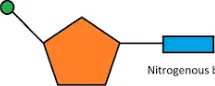
Which diagram represents a building block of a nucleic acid?
A molecule made of amino acids.
A molecule consisting of a sugar, a phosphate, and a nitrogen base.
A long chain of glucose molecules.
A glycerol head with three fatty acid tails.
Unlike the other three macromolecules, lipids are not polymers built from repeating monomers. Which of the following is the most important function of phospholipids, a type of lipid, in a cell?
To catalyze chemical reactions (act as enzymes).
To store the genetic code for protein synthesis.
To form the primary structure of the cell membrane (the bilayer).
To provide quick, immediate energy for the cell.
A student is analyzing an unknown organic molecule and determines it is an enzyme that speeds up the breakdown of starches. Based on its role as a biological catalyst, this molecule must belong to which class of macromolecules?
Nucleic Acid
Protein
Lipid
Carbohydrate
In a model of protein synthesis, which molecule is responsible for carrying the genetic code from the nucleus to the ribosome?
DNA
mRNA
tRNA
rRNA
A student is looking at a diagram where a double-stranded molecule is being unzipped to create a single-stranded molecule. Which process is being modeled?
Replication
Translation
Transcription
Mutation
If a DNA template strand has the sequence 5'-ATT-GCA-3', what would be the corresponding mRNA sequence produced during transcription?
TAA-CGT
AUU-GCA
UAA-GCA
UAA-CGU
Which cell organelle serves as the site where mRNA and tRNA interact to assemble amino acids?
Nucleus
Ribosome
Mitochondria
Golgi Apparatus
In a model of translation, what is the role of the tRNA molecule?
To unzip the DNA double helix
To act as the template for the genetic code
To transport specific amino acids to the ribosome
To catalyze the formation of the nucleus
What type of bond is formed between amino acids during the process of translation?
Hydrogen bond
Peptide bond
Ionic bond
Metallic bond
A sequence of three bases on an mRNA strand that codes for a specific amino acid is called a(n):
Anticodon
Gene
Codon
Nucleoside
Which of the following describes the correct flow of information in a cell?
Protein -> RNA -> DNA
RNA -> DNA -> Protein
DNA -> RNA -> Protein
DNA -> Protein -> RNA
During translation, the tRNA anticodon binds to the mRNA codon. If the mRNA codon is 'CUG', what is the matching tRNA anticodon?
GAC
CAG
GTC
GUC
What happens to the mRNA molecule after it has been translated by the ribosome?
It can be translated again or eventually broken down
It becomes part of the DNA double helix
It turns into a tRNA molecule
It is permanently stored in the vacuole
Which of the following is a primary advantage of being a multicellular organism compared to a unicellular organism?
The ability to reproduce asexually
The ability to have specialized cells perform specific functions
A smaller requirement for energy and nutrients
The ability to survive as a single cell if separated
In the levels of biological organization, which level is formed by a group of similar cells working together to perform a specific function?
Organ
Organ system
Tissue
Population
Cell differentiation is most critical to which of the following processes?
The development of a multicellular organism from a zygote
Binary fission in bacteria
The movement of water through osmosis
ATP production during cellular respiration
Which of the following is the correct order of organization from simplest to most complex?
Tissue -> Cell -> Organ -> Organ System
Cell -> Tissue -> Organ -> Organ System
Organ System -> Organ -> Tissue -> Cell
Cell -> Organ -> Tissue -> Organ System
A student observes a slide of skin tissue under a microscope. She notices that the cells are closely packed and form a protective barrier. This is an example of —
Cellular respiration
Cell specialization
Unicellularity
Spontaneous generation
Why can't a single specialized cell from a multicellular organism usually survive on its own?
It lacks DNA and cannot reproduce
It is too small to be seen by predators
It depends on other specialized cells to perform essential life functions
It cannot undergo mitosis
Which of these is considered an organ in a plant?
Chloroplast
A leaf
Xylem cell
Glucose
How does the DNA in a nerve cell compare to the DNA in a muscle cell of the same individual?
The nerve cell has more DNA because it is more complex
The muscle cell has different genes than the nerve cell
They have identical DNA
The DNA is different because they have different functions
Which of the following is an example of an organ system?
The heart
The circulatory system
Blood tissue
Red blood cells
The process by which unspecialized cells become specific types of cells is called —
Metamorphosis
Differentiation
Homeostasis
Photosynthesis
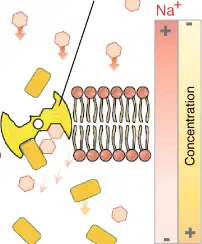
A diagram shows a cell in a solution. The concentration of glucose is higher outside the cell than inside. Glucose molecules are seen moving into the cell through a protein channel without the use of ATP. Which process is being modeled?
A) Facilitated diffusion
B) Active transport
C) Simple diffusion
D) Osmosis
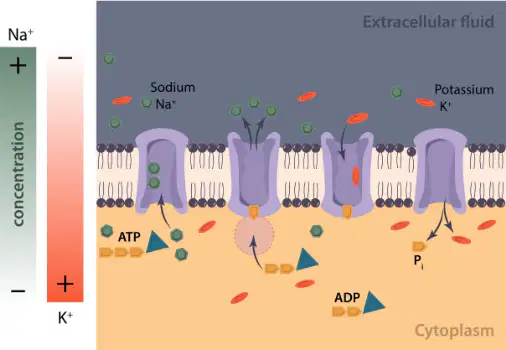
If a model illustrates a cell membrane using energy (ATP) to move sodium ions from an area of low concentration to an area of high concentration, which type of transport is represented?
Active transport
Passive transport
Diffusion
Facilitated diffusion
A student models a cell in a hypertonic solution. What should the model show happening to the water molecules?
Water moves out of the cell, causing it to shrink.
Water moves into the cell, causing it to swell.
Water moves in and out at an equal rate.
Water stops moving across the membrane entirely.
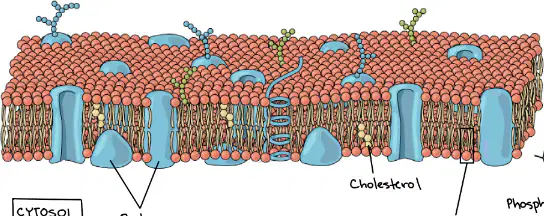
In a model of a plasma membrane, which component is primarily responsible for forming the bilayer that acts as a barrier to most polar molecules?
Phospholipids
Transport proteins
Carbohydrate chains
Cholesterol
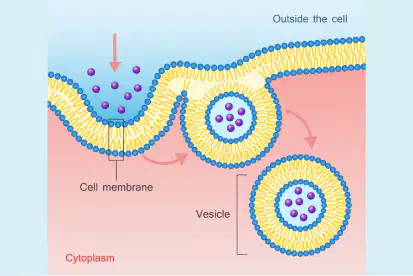
A diagram shows a large particle being surrounded by the cell membrane and taken into the cell in a vesicle. This is a model of —
A) Endocytosis
B) Exocytosis
C) Osmosis
D) Facilitated diffusion
Which of these molecules would most likely require a transport protein to cross the phospholipid bilayer efficiently?
Ions like Na⁺
Oxygen gas O₂
Carbon dioxide CO₂
Small lipids
When modeling the process of diffusion, what is the "driving force" that causes molecules to move?
The random motion of molecules
ATP hydrolysis
Pressure from the cell wall
Gravitational pull
What is the main difference between facilitated diffusion and active transport?
A) Active transport requires energy; facilitated diffusion does not.
B) Facilitated diffusion requires energy; active transport does not.
C) Facilitated diffusion moves substances against the gradient.
D) Active transport does not use proteins.
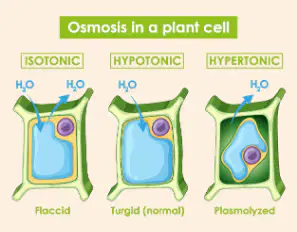
A model shows a plant cell with a shrunken cytoplasm and a membrane pulling away from the cell wall. Which environment was the cell most likely placed in?
A) Hypertonic
B) Hypotonic
C) Isotonic
D) Pure water
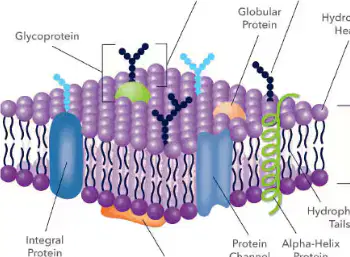
A diagram of a cell membrane includes carbohydrate chains attached to proteins. What is the primary function of these "glycoproteins" in the model?
A) Cell-to-cell recognition
B) Pumping ions
C) Providing structural rigidity
D) Storing genetic information
Enzymes are biological catalysts. What is their primary function in a living cell?
They increase the activation energy needed for a reaction.
They speed up chemical reactions by lowering the activation energy.
They act as a permanent part of the product in a reaction.
They provide the energy required for a reaction to begin.
Which organic molecule group do most enzymes belong to?
Carbohydrates
Lipids
Proteins
Nucleic Acids
The specific location on an enzyme where a substrate binds is known as the —
Inhibitor site
Active site
Product site
Catalytic bond
The "lock and key" model of enzyme action emphasizes that —
Enzymes can break down any type of molecule.
Enzymes are destroyed after a single use.
The shape of the enzyme is specific to the shape of the substrate.
Enzymes work best at very high temperatures.
What happens to an enzyme if it is exposed to an extremely high temperature or a highly acidic pH?
It becomes more efficient and works faster.
It changes into a different enzyme.
It denatures, changing its shape and losing its function.
It multiplies to compensate for the harsh conditions.
A student is studying an enzyme that functions best in the human stomach at a pH of 2. What would most likely happen if this enzyme were placed in the small intestine, where the pH is around 8?
The enzyme would stop functioning because the environment is too basic.
The enzyme would work faster because the pH is higher.
The enzyme would begin to digest the small intestine.
The enzyme's structure would remain the same.
After a substrate binds to an enzyme and a reaction occurs, what is released from the active site?
Another enzyme
The substrate, unchanged
The products of the reaction
The activation energy
Which statement best describes the relationship between enzymes and the reactions they catalyze?
One enzyme can catalyze many different types of reactions.
Enzymes are used up during the reaction and must be replaced.
Enzymes are specific and can be reused many times.
Enzymes only function outside of cells.
If you keep the amount of enzyme constant but keep adding more substrate, what will eventually happen to the rate of reaction?
The rate will increase indefinitely.
The rate will level off because all enzyme active sites are occupied.
The rate will decrease to zero.
The enzymes will begin to denature.
Hydrogen peroxide ( H2O2 ) is broken down into water and oxygen by the enzyme catalase. In this reaction, hydrogen peroxide is the —
A) Catalyst
B) Substrate
C) Product
D) Inhibitor
Which structure is responsible for pulling sister chromatids apart during the stages of mitosis?
A. Spindle fibers
B. Nuclear envelope
C. Ribosomes
D. Cell plate
A student is observing a cell under a microscope and notices a cleavage furrow forming. What type of cell is most likely being observed?
A. An animal cell undergoing cytokinesis
B. A plant cell undergoing cytokinesis
C. A bacterial cell undergoing binary fission
D. A virus replicating inside a host
Which phase of the cell cycle is characterized by the replication of DNA?
A. G1 phase
B. S phase
C. G2 phase
D. Prophase
What is the primary purpose of meiosis in multicellular organisms?
To produce gametes for sexual reproduction
To repair damaged tissues
To allow for asexual budding
To increase the size of the organism
If a parent cell has 46 chromosomes and undergoes mitosis, how many chromosomes will each daughter cell have?
23
46
92
0
During which stage of mitosis do the chromosomes line up along the equator (middle) of the cell?
A. Prophase
B. Metaphase
C. Anaphase
D. Telophase
How does the process of crossing over during meiosis contribute to a species?
A. It speeds up the rate of cell division
B. It prevents mutations from occurring
C. It ensures daughter cells are identical
D. It increases genetic variation
What occurs if a cell loses its ability to regulate the cell cycle and begins to divide uncontrollably?
Cancer
Apoptosis
Interphase
Meiosis
Which of the following best describes the function of the centromere?
It produces the energy for cell division
It houses the cell's organelles
It holds sister chromatids together
It is the site of protein synthesis
Which component of the cell cycle ensures that the cell is large enough and has enough nutrients to divide?
A. Centrioles
B. Telomeres
C. Cytokinesis
D. Checkpoints

