
 Worksheets
Untitled Quiz
Total questions: 119
Worksheet time: 3570secs
Which statement best describes a vector in gene cloning?
DNA molecules that transfer genes into a host
Protein complexes that edit genomes directly
RNA molecules that silence genes in hosts
Lipids that encapsulate genes for delivery
Which natural sources originally provided commonly used cloning vectors?
Viruses such as bacteriophages
Plasmids from bacteria
Mitochondria from animals
Chromosomes from plants
What is the primary reason self-replication is essential for a cloning vector?
Facilitates protein folding of expressed products
Prevents transcription of inserted genes
Allows replication independent of host genome
Ensures integration into host chromosomes
What is the primary reason self-replication is essential for a cloning vector?
Facilitates protein folding of expressed products
Prevents transcription of inserted genes
Allows replication independent of host genome
Ensures integration into host chromosomes
Restriction sites on a cloning vector serve which function?
Enable cleavage by restriction enzymes
Initiate translation of marker genes
Bind RNA polymerase for expression
Transport vectors across host membranes
Why are marker genes included in cloning vectors?
To reduce vector size for easier handling
To increase vector replication speed
To verify successful insertion of foreign DNA
To distinguish transformed cells from non-transformed
Which feature of cloning vectors supports efficient laboratory handling?
Large size improves stability during isolation
Suitable small size facilitates isolation and handling
Multiple origins increase replication burden
Absence of markers simplifies screening workflows
Select the set that lists essential features of an effective cloning vector.
Self-replication, restriction sites, marker genes, suitable size
Exons, introns, splice sites, poly-A tails
Host genome integration, telomeric repeats, centromeres
Photosynthetic genes, ribosomal RNA genes, operons
Which feature allows a plasmid to replicate independently of the bacterial chromosome?
Antibiotic resistance cassette
Multiple cloning site region
Origin of replication sequence
Promoter for transcription
Plasmids are best described as which type of genetic element in bacteria?
Extrachromosomal circular DNA
Mitochondrial circular DNA
Chromosomal RNA plasmids
Chromosomal linear DNA
Which statement about plasmids is accurate regarding their necessity for bacterial survival?
Always essential for viability
Essential only during stationary phase
Not essential but can be advantageous
Essential in eukaryotic cells
The origin of replication in a plasmid determines which property most directly?
Restriction enzyme recognition
Copy number in the host
Antibiotic resistance spectrum
Transcriptional strength
What typical size range can plasmids exhibit?
Less than 1 kb to >500 kb
10 kb to 50 kb
100 bp to 1 kb
1 Mb to 5 Mb
Which list correctly names commonly used cloning vectors?
Shuttle vectors
Plasmids
Bacteriophages
Yeast artificial chromosomes
Cosmid vectors
A multiple cloning site (MCS) is primarily designed to provide what?
Transfer sequences to host
Antibiotic resistance genes
Clustered restriction sites
Many replication origins
Blue/white selection in plasmid cloning typically reports which event?
Successful plasmid replication
Insertion disrupting lacZ
Antibiotic degradation rate
Host strain identity change
Naturally occurring plasmids often carry genes that confer resistance under specific conditions. Which example fits this role?
Photosynthesis operons
Telomerase subunits
Antibiotic resistance determinants
Ribosomal protein variants
Which host types can naturally harbor plasmids?
Bacterial strains
Eukaryotic yeast
Plant chloroplasts
Mammalian mitochondria
Low-copy-number plasmids typically have how many copies per cell?
Hundreds to thousands
One to four copies
Ten to one hundred
Exactly one copy
High-copy-number plasmids commonly show which approximate range?
1000–2000 copies
200–400 copies
1–4 copies
10–100 copies
Which feature determines whether a plasmid can replicate in a particular host species?
Multiple cloning site segment
Antibiotic resistance marker
Blue/white reporter gene
Origin of replication sequence
Why are plasmids widely used as cloning vectors?
They accept foreign inserts via MCS
They are small and circular
They naturally integrate into chromosomes
They replicate independently
What is the primary purpose of antibiotic resistance genes on a cloning plasmid during laboratory selection?
Induce high copy number
Enable selective growth
Provide transcriptional control
Prevent recombination
Which feature best describes a multiple cloning site (MCS, polylinker) in modern plasmids?
A promoter driving lacZ across the plasmid
A short DNA with clustered restriction sites
An origin duplicated across the vector
A long repeat region spanning the plasmid
Why are individual restriction sites within the polylinker designed to occur only once in the plasmid?
To enable continuous expression of lacZ
To prevent replication from multiple origins
To ensure inserts cut only the intended region
To increase antibiotic resistance gene copy
Select all accurate statements about blue/white lacZ screening in plasmid cloning.
It replaces antibiotic selection for transformants
The system visually differentiates bacterial clones
Blue colonies signal successful recombinant inserts
White colonies indicate lacZ disruption by an insert
Which statement about plasmid insert capacity is correct?
Plasmids can hold unlimited insert lengths
Plasmids routinely hold inserts over 100 kb
Plasmids never carry inserts beyond 1 kb
Plasmids typically carry inserts under 10 kb
What advantage does an MCS provide during cloning strategy design?
Provides high-level antibiotic resistance
Ensures insert integrates randomly
Allows many restriction enzymes choices
Eliminates need for ligase enzymes
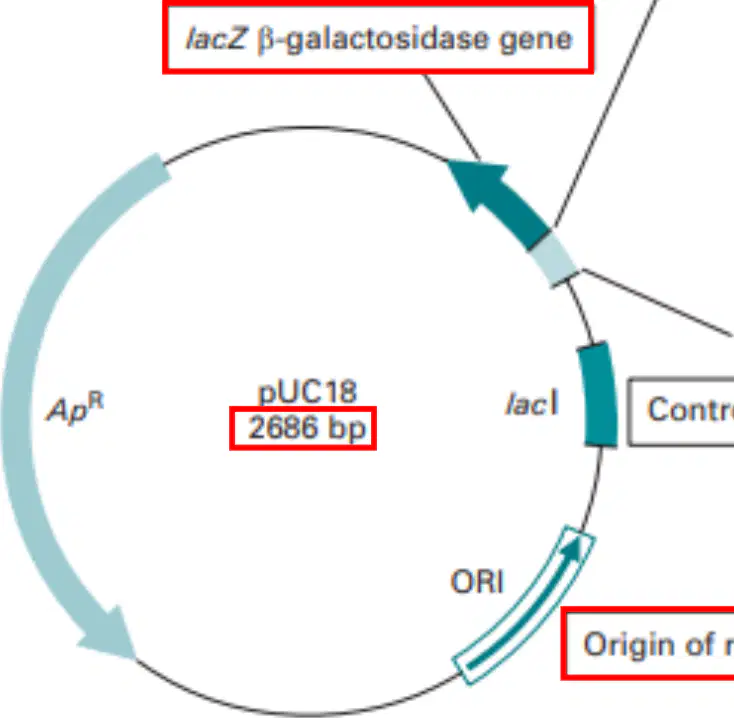
Which feature of a plasmid ensures that the vector is duplicated within a bacterial cell during division, allowing inherited maintenance of the plasmid?
Multiple cloning site providing unique cutters
Ampicillin resistance gene enabling drug survival
lacZ gene enabling blue–white screening
Origin of replication initiating DNA synthesis
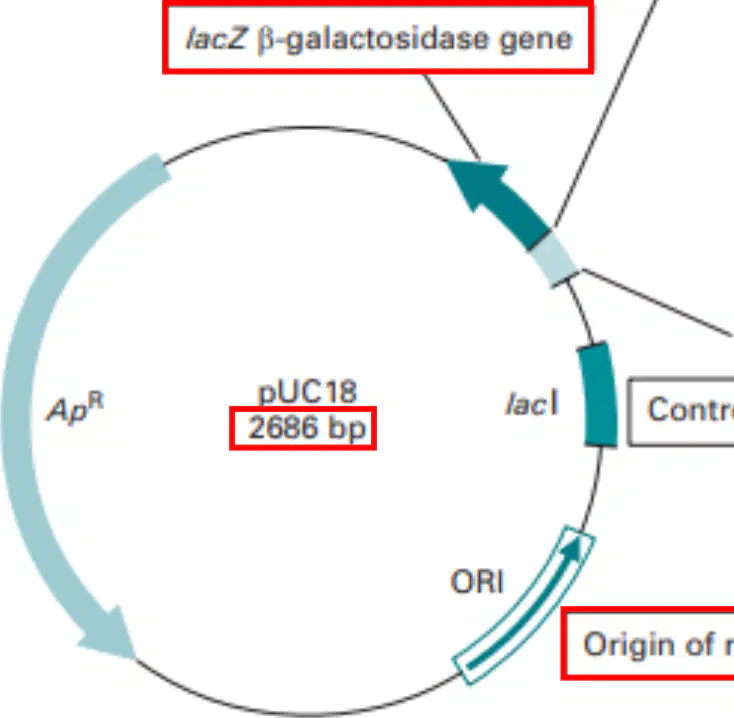
In blue–white screening using a pUC-style plasmid, insertion of a DNA fragment into the MCS typically disrupts which function?
Replication initiation at the ORI locus
Beta-galactosidase activity encoded by lacZ
Ampicillin degradation mediated by bla
Restriction enzyme recognition across sites
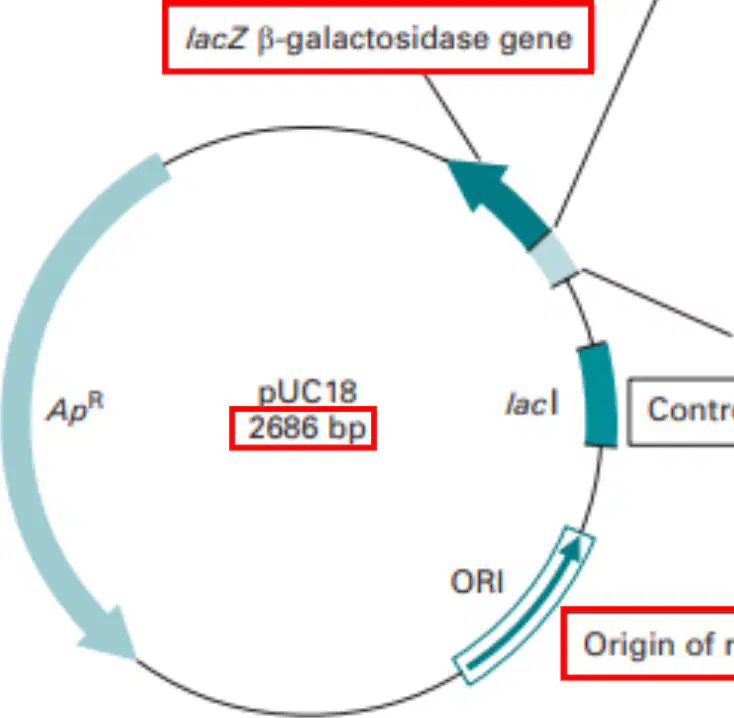
Which components together enable selection of bacteria carrying the plasmid after transformation?
Ampicillin resistance gene conferring antibiotic survival
Origin of replication enabling plasmid duplication
Multiple cloning site providing insertion locations
lacZ gene producing a blue chromogenic signal
Which statement best describes a lytic life cycle in lambda phage infection?
Phage DNA integrates as a prophage, remaining dormant
Phage DNA replicates, virions assemble, cell lyses
Phage proteins suppress bacterial lysis indefinitely
Host chromosome replicates without phage assembly
During the lysogenic cycle of lambda phage, what occurs inside the bacterial cell?
New phage particles exit by lysing the membrane
Cos sites are ligated to circularize the genome
Phage head and tail proteins assemble rapidly
Phage DNA integrates as a prophage into chromosome
Which outcome signals a transition from lysogeny to the lytic cycle in lambda phage?
External signal triggers prophage excision
Random host mutation stabilizes prophage state
Cos ends prevent genome packaging
Tail fibers lose ability to bind receptors
What feature makes bacteriophage lambda suitable for cloning long DNA fragments?
Circular RNA genome with multiple origins
Replaceable central region allowing inserts
Ability to infect eukaryotic cell nuclei
Tail assembly that edits foreign sequences
Up to what approximate insert size can lambda phage vectors clone using the described adaptations?
Up to 10 kb of foreign DNA
Up to 20 kb of foreign DNA
Up to 5 kb of foreign DNA
Up to 50 kb of foreign DNA
Which structural component of the lambda phage genome is nonessential for the lytic cycle?
Central region required for lysogeny
Left arm coding head and tail proteins
Cos ends enabling circularization
Right arm carrying replication and lysis genes
What is the primary role of the left arm of the lambda genome?
Formation of cohesive cos ends
Production of heads and tails
Integration into host chromosome
DNA replication and cell lysis
Cos (cohesive) ends in lambda phage are best described as:
Palindromic repeats required for lysogenic integration
Protein caps aiding in head packaging specificity
Single-stranded complementary ends that circularize DNA
Double-stranded blunt termini facilitating ligation
Which step defines in vitro packaging in lambda phage cloning?
Ligating cos sites to form circular genomes
Selecting lysogens by antibiotic resistance
Mixing empty heads, recombinant DNA, and tails
Transforming bacteria with naked recombinant DNA
What laboratory observation indicates successful lytic infection by recombinant lambda phage on an agar plate?
Colonies with uniform turbidity
Clear plaques of lysed bacterial cells
Filamentous phage forming biofilms
Green fluorescent foci from prophage
Which statement about bacteriophages as vectors is accurate?
They cannot be adapted to carry foreign DNA
They replicate only through lysogeny
They are viruses specialized to infect bacteria
They infect bacteria and eukaryotes equally
After lambda phage infects a host, which two alternative pathways can follow?
Lytic cycle and sporulation
Lytic cycle and lysogenic cycle
Transformation and transduction
Lysogenic cycle and conjugation
Why is only the lytic cycle expected after replacing the central region with a foreign insert in lambda vectors?
Central region encodes replication enzymes
Central region produces tail fibers for entry
Central region is essential for lysogeny only
Central region forms cos ends for packaging
Which genome property is found inside the lambda phage head?
Supercoiled plasmid DNA of 100 kb
Linear, double-stranded DNA of 48.5 kb
Segmented double-stranded RNA of 20 kb
Circular, single-stranded RNA of 9 kb
What happens to cos ends once lambda DNA enters the host cell?
They form triple helices blocking packaging
They integrate into the host tRNA genes
They ligate to circularize the genome
They degrade to enable lytic replication
Which components are combined to produce infective lambda particles during in vitro packaging?
Recombinant phage DNA
Host chromosomal fragments
Purified empty heads
Tail assemblies
Which feature directly enables packaging of lambda DNA during assembly?
Presence of cohesive cos sites
Integration into host chromosome
Deletion of right arm genes
Mutation in tail fiber proteins
During plaque formation, what sequential events occur?
Phage multiplies via lytic cycles
Prophage integrates stably
Cells lyse creating clear zones
Surrounding cells become infected

In lambda-based cloning, which genomic region is replaced to allow packaging of foreign DNA and ensure a lytic cycle only, as depicted in the diagram?
Tail fiber coding region
Terminal cos sites region
Central genome stuffer region
Head assembly gene cluster
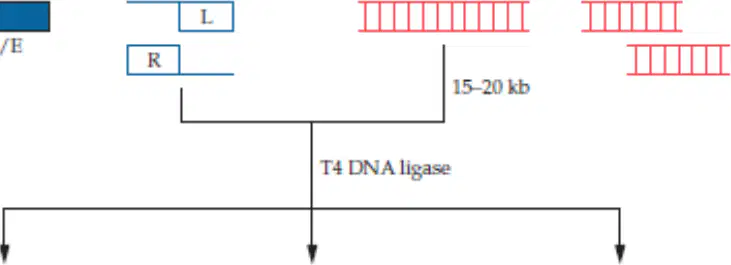
Which step combination must occur to generate plaques containing recombinant λ DNA in E. coli, according to the workflow shown?
Perform in vitro packaging before infecting E. coli
Exclude λ arms during ligation and package source DNA only
Select inserts larger than 40 kb for packaging
Ligate 15–20 kb inserts between L and R arms
Digest λ arms and source DNA with BamHI
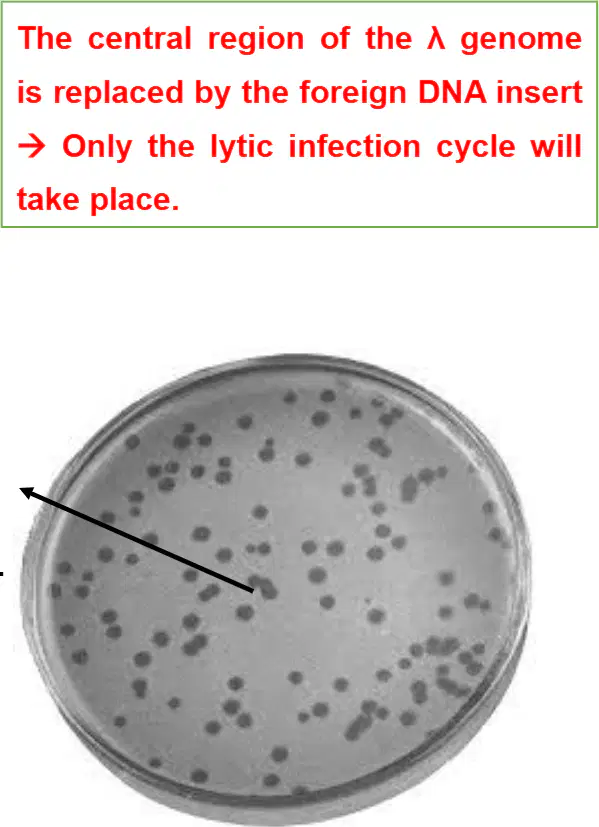
What is the primary readout that indicates successful cloning with bacteriophage λ in the plate image?
Colonies formed by E. coli growth
Clear plaques from E. coli lysis
Turbid zones of partial lysis
Confluent lawn without breaks
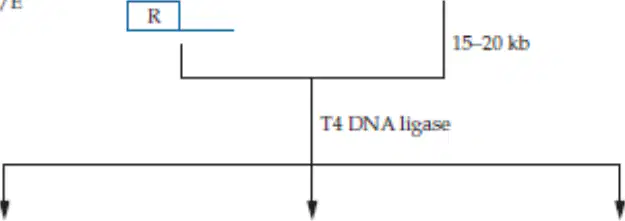
Why are source DNA fragments fractionated to retain only 15–20 kb pieces before ligation into λ arms?
Smaller fragments improve lysogeny efficiency
This size fits packaging constraints
Any size is acceptable for λ heads
Larger fragments increase recombination frequency
Which statement best describes cosmids in genetic cloning?
Plasmid-only vectors without phage-derived sequences
Pure bacteriophage vectors lacking plasmid features
Eukaryotic artificial chromosomes used in yeast
Hybrid vectors combining lambda-phage and plasmid DNA
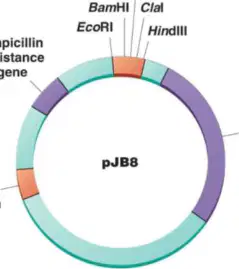
What feature enables cosmids to package large DNA fragments for delivery into E. coli?
Multiple origins of replication per vector
High-copy number selection marker genes
Direct production of lambda-phage proteins
Presence of cos sites flanking insertable DNA
Select all characteristics typical of cosmids used in cloning.
Replication inside cells as plasmids
In vitro packaging mimicking lambda phage
Formation of infectious viral particles in hosts
Larger cloning capacity up to about 45 kb
During cosmid-mediated infection of E. coli, what occurs to the injected DNA?
It forms complete lambda-phage particles
It remains linear and degrades rapidly
It integrates randomly into the host chromosome
It circularizes and replicates as a plasmid
Why are antibiotic resistance markers useful when working with cosmids?
They encode lambda-phage structural proteins
They prevent circularization within host cells
They directly increase packaging efficiency in vitro
They allow selection of cells containing cosmid molecules
In the diagram, which feature of the cosmid enables lambda phage headful packaging during in vitro packaging?
ori replication origin sequence
Tet^r antibiotic resistance gene
cos cohesive end sequences
BamHI restriction enzyme site
According to the workflow shown, why are source DNA fragments enriched around ~45–50 kb before ligation into the cosmid vector?
To match the headful size of lambda packaging
To fit the E. coli plasmid replication limit
To avoid restriction digestion by BamHI
To ensure removal of cos sites before ligation
Which step directly creates recombinant cosmid molecules capable of packaging and infection as shown?
ScaI linearization of the vector backbone
T4 DNA ligase joining vector and inserts
BamHI protection of cos sites on inserts
E. coli transformation by heat shock
Which components must be present on a cosmid for successful cloning and recovery in E. coli, based on the diagram?
Tet^r selectable marker
ori for plasmid replication
cos sites for phage packaging
Tail fiber sequence for adsorption
Which feature makes Yeast Artificial Chromosomes suitable for cloning very large eukaryotic DNA fragments?
Single origin of replication for bacteria
Presence of multiple restriction sites only
Ability to ligate yeast chromosomal components
High copy number in bacterial hosts
Inherent antibiotic resistance genes
A researcher needs to clone a human gene containing several introns. Which vector choice is most appropriate?
Ti plasmid from Agrobacterium
Cosmid vector
Bacteriophage lambda vector
Yeast Artificial Chromosome
Standard E. coli plasmid vector
Shuttle vectors are best described as plasmids that can multiply in two different species. Which design element enables this capability?
Integration into host chromosomes
Dual origins of replication for each host
Presence of oriT for conjugation
High-GC content sequences
One universal origin of replication
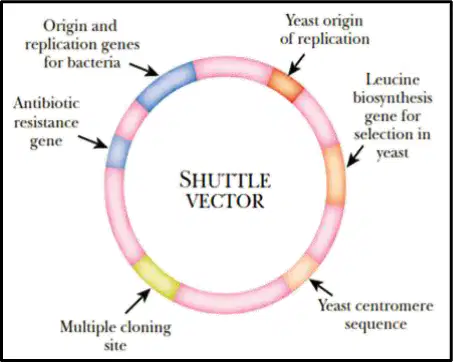
Which pair correctly matches host and essential shuttle vector components required for selection/replication?
Bacterial centromere with leucine biosynthesis gene
Yeast ori with antibiotic resistance gene only
Bacterial ori with yeast intron processing genes
Bacterial origin of replication with antibiotic resistance gene
Yeast origin of replication with centromere sequence
YACs are constructed by ligating components of natural yeast chromosomes. Which components are essential for stable maintenance of large inserts in yeast?
Human promoter and poly-A signal
Yeast centromere and telomere sequences
Antibiotic resistance cassette alone
Bacterial ori and lacZ alpha fragment
Yeast origin of replication and centromere
Which statement accurately contrasts YACs and shuttle vectors?
YACs carry dual origins for two species, shuttle vectors carry one
YACs exclude introns, shuttle vectors require cDNA
YACs replicate in bacteria only, shuttle vectors in yeast only
YACs clone very large eukaryotic DNA, shuttle vectors shuttle between hosts
YACs are high-copy plasmids, shuttle vectors are chromosomal
Which factor directly influences choosing between E. coli and yeast as host cells for a cloning vector?
Desired gene expression complexity in host
Availability of antibiotic selection markers
Presence of multiple cloning sites on plasmid
Ease of DNA extraction from cultures
A researcher wants many copies of a gene without producing its protein. Which vector type is most appropriate?
Shuttle vector for dual hosts
Expression vector enabling translation
YAC designed for very large inserts
Cloning vector focused on replication
Which statement best distinguishes expression vectors from cloning vectors?
Include features to drive transcription and translation
Use origins of replication for plasmid maintenance
Carry selectable markers for antibiotic resistance
Prefer bacteriophage hosts for high copy number
You need to insert a 30 kb DNA fragment for propagation in E. coli. Which vector is most suitable?
Plasmid with 10 kb capacity
Cosmid with 45 kb capacity
Bacteriophage lambda with 20 kb capacity
YAC with 2000 kb capacity
Which pair correctly matches vector and typical host organism?
Cosmid — Yeast host
Plasmid — E. coli host
YAC — E. coli host
Lambda phage — Yeast host
Select all features commonly present in expression vectors to obtain a protein product.
Selectable markers for host survival
Ribosome binding or translation signals
Large insert capacity exceeding 1000 kb
Promoter sequences for transcription
For cloning objectives in E. coli, which vectors are typical options?
YACs optimized for mammalian cells
Cosmids combining plasmid and phage features
Bacteriophage lambda vectors
Plasmids used in bacteria
A 1.5 Mb genomic region must be cloned intact. Which vector choice is realistic?
Plasmid supporting around 10 kb inserts
Cosmid supporting around 45 kb inserts
YAC supporting around 2000 kb inserts
Lambda phage supporting around 20 kb inserts
In gene cloning, which step directly follows insertion of the gene into a suitable vector? Use the visual to guide your answer.
Selection or screening of recombinant cells
Introduction of the vector into a host cell
Making the desired gene product
Purification of the inserted gene fragment
Which statement best defines transformation in prokaryotic cells?
Cells exchange plasmids during conjugation between cells
Cells synthesize new DNA from nucleotides
Cells integrate viral DNA through transduction by bacteriophages
Cells take up extracellular DNA from the environment
What term describes a cell capable of taking up DNA?
Proficient
Competent
Activated
Receptive
Why is inducing competency important for transformation efficiency?
It inhibits restriction endonucleases in cytoplasm
It creates membrane pores facilitating DNA entry
It increases transcription of selectable markers
It stabilizes plasmid replication and segregation
Which methods are commonly used to induce host cell competency for transformation?
Long-term selection with antibiotics
Electroporation using pulsed electric field
CRISPR-Cas9 mediated genome editing
Chemical treatment with CaCl2 on ice
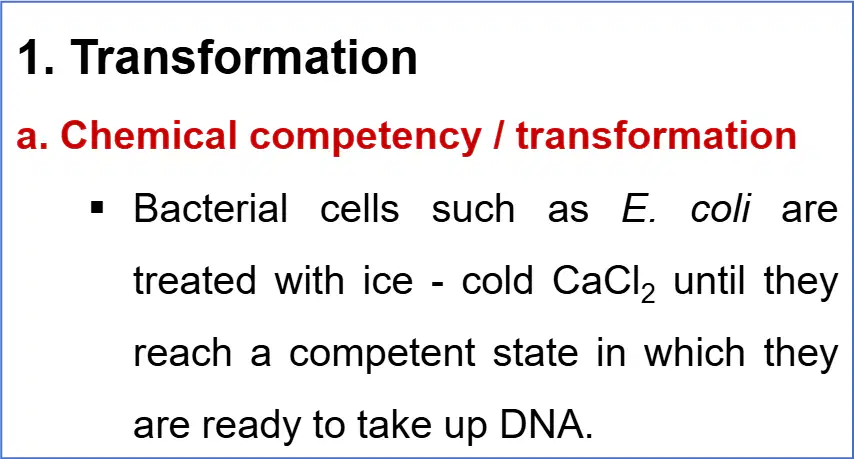
During chemical competency, E. coli cells are typically treated with which reagent and condition?
MgSO4 at room temperature
CaCl2 on ice at low temperature
KCl at 4°C overnight incubation
NaCl at 42°C heat bath

What is the immediate purpose of the 42°C heat shock step in chemical transformation?
Activate ampicillin resistance gene expression
Create a brief thermal gradient driving DNA uptake
Denature chromosomal DNA for recombination
Induce replication of the recombinant plasmid
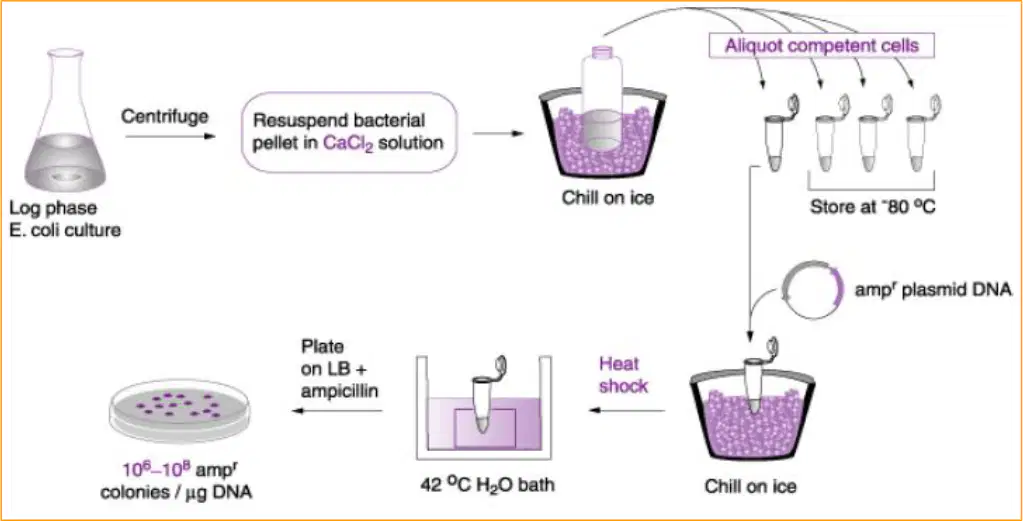
Which sequence of steps best matches the chemical transformation workflow shown?
Electroporate, recover, screen by PCR immediately
Grow cells, add plasmid, plate directly on antibiotic
Warm to 42°C, centrifuge, store at −80°C
Chill in CaCl2, mix with plasmid, apply heat shock

Electroporation increases DNA uptake primarily by which mechanism?
Chelation of divalent cations around DNA
Permanent removal of peptidoglycan layer
Transient pore formation via pulsed electric field
Enzymatic digestion of outer membrane proteins
Which statement about electroporation is accurate?
It is restricted to prokaryotes only
It requires a device called an electroporator
It prevents RNA molecules entering cells
It substitutes antibiotic selection entirely
Identify the pair correctly matching method to key requirement.
Chemical transformation — electroporator device
Chemical transformation — viral transduction machinery
Electroporation — 42°C heat shock step
Electroporation — pulsed electrical field application
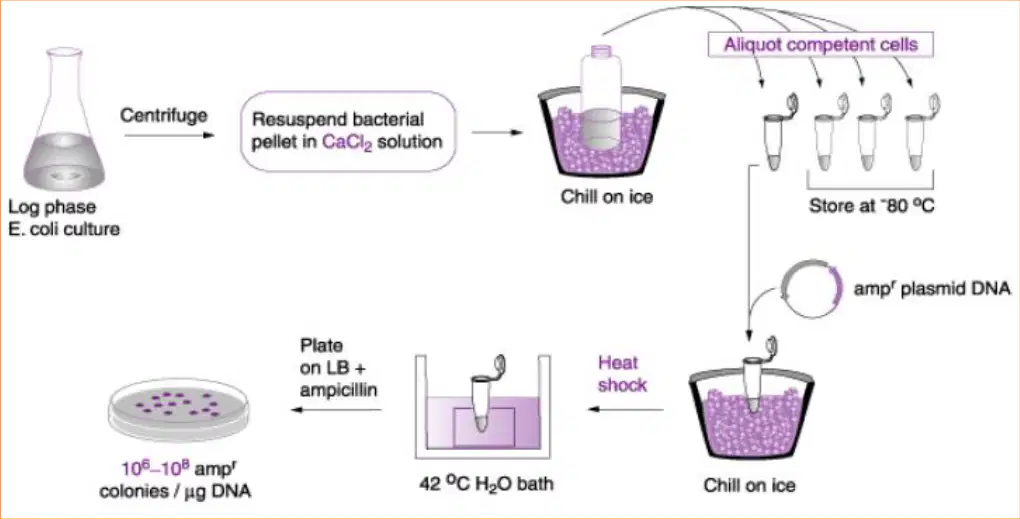
Which outcome indicates successful transformation after plating on LB + ampicillin?
No colonies due to antibiotic stress
Colonies resistant to ampicillin grow
Only lawn growth without selection
Cells lyse due to osmotic shock
Choose all molecules that can be introduced into cells through electroporation.
Lipids forming micelles
Proteins like GFP
RNA such as mRNA
DNA such as plasmids
Which statement best describes transduction in prokaryotes?
Transfer of recombinant DNA by a bacteriophage
Direct uptake of naked plasmid DNA by bacteria
Editing host genome using CRISPR-Cas systems
Fusion of donor and recipient bacterial cells
Why is transduction often preferred for introducing recombinant λ phage or cosmid DNA into E. coli?
It prevents formation of plaques on agar plates
It yields high efficiency compared to transformation
It avoids using bacteriophage particles entirely
It only works with eukaryotic host cells
During transduction, what role does phage packaging play in vitro?
It integrates plasmids into the host chromosome
It degrades non-viral DNA prior to infection
It blocks infection of E. coli by bacteriophages
It packages recombinant DNA into phage particles
Which outcome indicates successful transduction of E. coli by recombinant phage particles?
No change in colony morphology on agar
Formation of plaques after plating infected cells
Increased antibiotic resistance without infection
Complete lysis of uninfected control cells
Select all statements that are accurate about the efficiency of transduction relative to bacterial transformation with plasmids.
It can be 10–100-fold higher
It is typically much lower
Efficiency depends on phage packaging into particles
It requires cell-to-cell conjugation
Which step directly follows insertion of the gene of interest during gene cloning, as depicted in the diagram?
Selection or screening of recombinant cells
Introduction of the vector into a host
Making the desired gene product
Isolation of the host genome
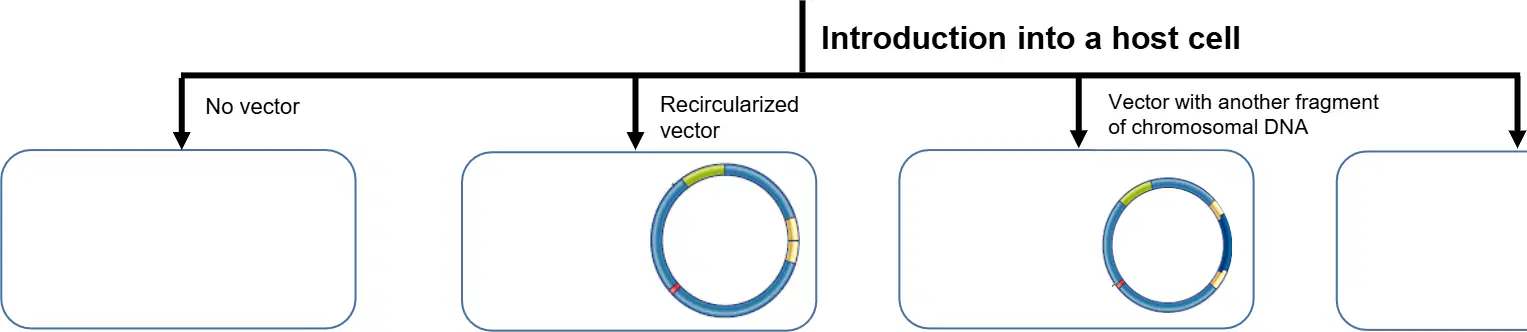
In the diagram, which outcome occurs when a host cell receives no plasmid vector during transformation?
Recombinant cell carrying target gene
Recombinant cell carrying wrong insert
Non-recombinant cell with empty vector
Non-transformed cell lacking any vector
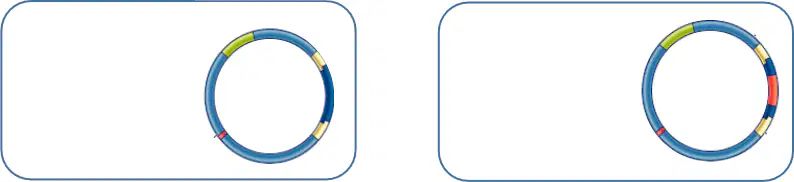
Which scenarios represent recombinant cells in the diagram? Select all that apply.
Vector recircularizes without insert
Vector ligates another chromosomal fragment
Vector ligates the gene of interest
Host cell receives no vector
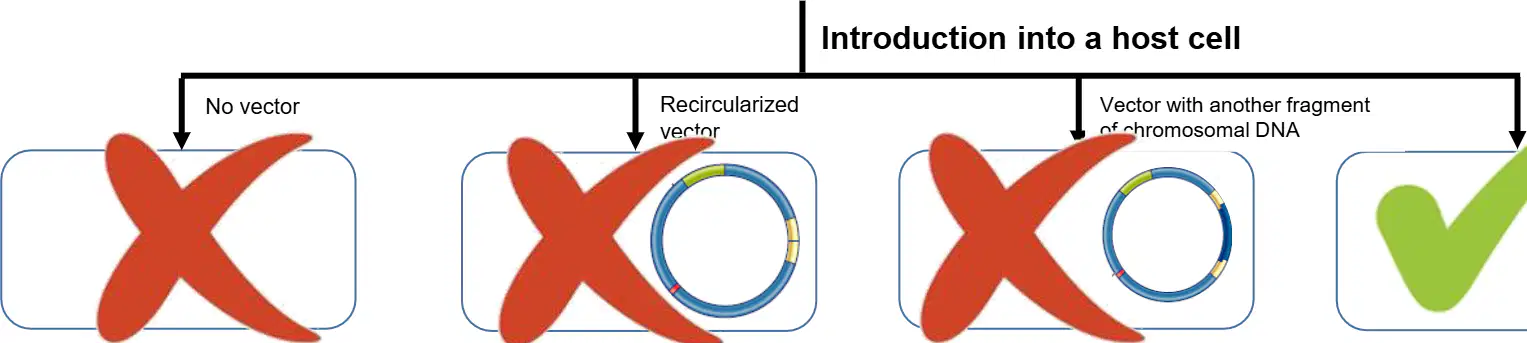
After ligation, the plasmid shown as a closed circle with no foreign DNA corresponds to which cellular outcome after introduction into a host?
Non-recombinant cell transformed by empty vector
Non-transformed cell without any vector
Recombinant cell with incorrect gene fragment
Recombinant cell with correct gene of interest
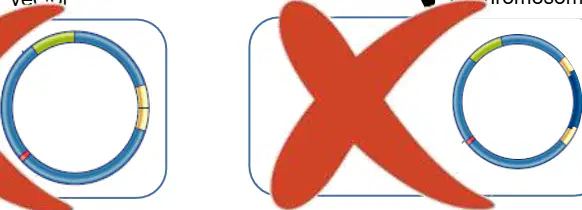
According to the diagram sequence, which step distinguishes a correctly recombinant cell from an incorrectly recombinant cell?
Whether ligation occurs between blunt ends
Whether the host cell uptakes any vector
Whether the vector circularizes successfully
Whether the insert is the gene of interest
What is the primary aim of selection/screening in gene cloning?
To increase antibiotic concentration in media
To eliminate all plasmids from host cells
To amplify host genome without inserts
To isolate recombinant clones correctly oriented
In cloning vectors, why are two marker genes commonly included?
One enhances transcription, one stabilizes mRNA
Both suppress non-homologous recombination events
Both increase plasmid copy number in hosts
One selects transformed cells, one identifies recombinants
Which statement best distinguishes transformed cells from recombinant cells?
Transformed express antibiotic; recombinant lose resistance
Transformed integrate into genome; recombinant remain episomal
Transformed are resistant; recombinant are antibiotic sensitive
Transformed received vector; recombinant carry inserts
During antibiotic selection, what must the vector contain to allow growth on selective plates?
A toxin-antitoxin stabilization module
A ribosomal RNA operon for fast growth
An antibiotic resistance gene such as ampR
A promoter that drives lacZ expression
On agar containing ampicillin, what happens to non-transformed bacteria?
They grow slowly until mutations arise
They form colonies but lose plasmids
They fail to grow due to lacking ampR plasmids
They survive by secreting β-lactamase extracellularly
Which pair correctly matches selection step with the purpose?
Colorimetric assay: increase plasmid yield
Ampicillin plating: identify gene orientation
Marker suppression: enhance transformation efficiency
Antibiotic resistance: select vector uptake
Choose the TRUE statements about selecting recombinant clones using antibiotics.
Potential transformants are plated on antibiotic agar
Vectors carry resistance genes enabling growth
Non-transformed cells grow if they secrete enzymes
Resistance indicates the host received a cloning vector
Which outcome best indicates successful screening for recombinant clones?
Vectors oriented randomly without gene inserts
Bacteria that are sensitive to all antibiotics
Cells that lose plasmids under nonselective growth
Colonies that are transformed and carry inserts
Which statement best describes insertional inactivation in cloning vectors?
Insert duplicates reporter gene sequences
Insert enhances reporter gene expression
Insert disrupts reporter gene function
Insert relocates reporter gene to plasmid
A cloning site located within an antibiotic resistance gene is used so that successful DNA integration will cause what outcome?
Acquisition of new resistance
Increased an109MULTIPLE CHOICE • 30 sec • 1 PtEditA cloning site located within an antibiotic resistance gene is used so that successful DNA integration will cause what outcome?Acquisition of new resistanceIncreased antibiotic resistanceLoss of resistance phenotypeUnchanged resistance phenotypetibiotic resistance
Loss of resistance phenotype
Unchanged resistance phenotype
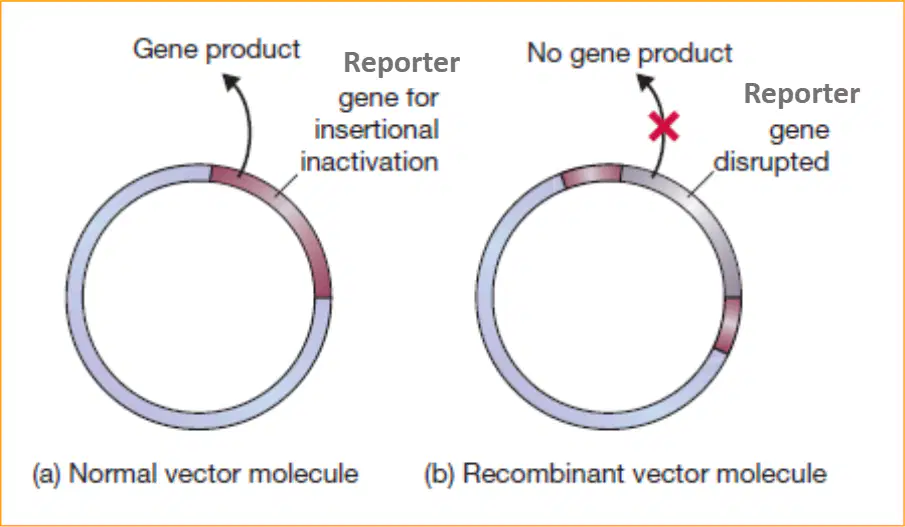
Which pair correctly matches the role and readout of a reporter gene used for insertional inactivation?
Gene function stabilized, constant product
Gene function shifted, altered product
Gene function boosted, bright product
Gene function disrupted, no product
During screening by insertional inactivation of an antibiotic resistance gene, how are recombinant colonies identified on the selective plate?
Colonies that fail to grow
Colonies that grow faster
Colonies that change color
Colonies that grow larger
Which steps are involved when printing colony patterns from a master plate onto a plate containing the selective antibiotic? Select all that apply.
Picking colonies that grew strongly
Comparing positions to master plate
Marking colonies that did not grow
Replicate plating onto antibiotic plate
Why is the cloning site often placed within a reporter gene or resistance gene for screening purposes?
Insertion disrupts function as a signal
Insertion increases plasmid copy number
Insertion prevents DNA ligation events
Insertion reduces host metabolism rate
Which observation indicates a non-recombinant vector when using antibiotic resistance gene inactivation?
Colony changes pigmentation
Colony fails to grow
Colony grows on antibiotic
Colony shows no gene product
Blue-white screening is an example of insertional inactivation targeting which gene?
recA recombination gene
lacZ reporter gene
tetR resistance gene
ampR resistance gene
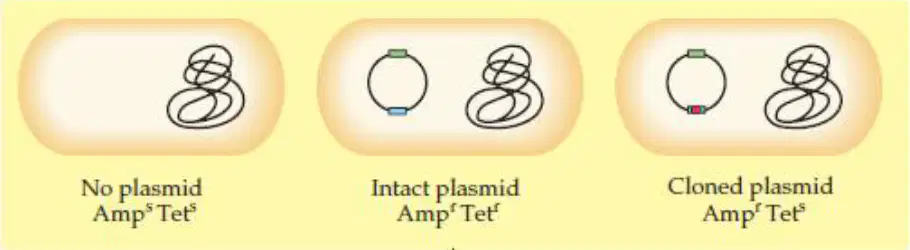
In the diagram, E. coli are first plated on medium containing ampicillin. Which colonies survive this step and why?
Cells with genomic mutation conferring Tet resistance
Cells without plasmid due to intrinsic Amp resistance
Cells with intact plasmid expressing Amp resistance
Cells with cloned plasmid losing Amp resistance
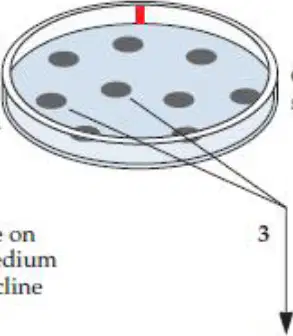
Replica plating onto tetracycline medium distinguishes recombinant colonies. Which phenotype indicates a plasmid disrupted within the tetracycline resistance gene by an insert?
Amp resistant, Tet sensitive colonies
Amp sensitive, Tet sensitive colonies
Amp sensitive, Tet resistant colonies
Amp resistant, Tet resistant colonies

Which step correctly identifies cells carrying inserts cloned into the Tet^r gene on the plasmid shown?
Pool Amp sensitive colonies and grow in broth
Replica plate onto tetracycline and choose Tet sensitive
Transform E. coli and select on ampicillin plates
Ligate the DNA into the Tet^r region at MCS
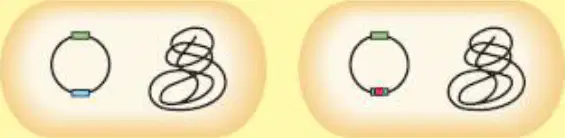
Why are colonies that are Ampr Tets preferred as recombinant candidates in this selection scheme?
Insert disrupted Amp gene decreasing resistance
Insert interrupted Tet gene indicating cloning site
Insert integrated into chromosome causing resistance
Insert restored Tet gene function after ligation

