
 Worksheets
M255 Exam 1 Review Quiz
Total questions: 90
Worksheet time: 49mins
What is the primary purpose of personal protective equipment (PPE) in a laboratory setting?
To enhance the appearance of laboratory personnel.
To protect laboratory personnel from potential hazards.
To ensure faster completion of experiments.
To reduce the need for laboratory training.

Which of the following is NOT a recommended practice for personal protection in the lab?
Wearing gloves when handling hazardous materials.
Eating and drinking in the laboratory.
Wearing safety goggles during experiments.
Using lab coats to protect clothing.

What should be done with gloves after handling hazardous materials in the lab?
Reuse them for the next experiment.
Dispose of them in designated waste bins.
Wash them and store them for future use.
Leave them on the lab bench.

Why is it important to avoid eating or drinking in the laboratory?
It distracts from the experiment.
It can lead to contamination and exposure to hazardous substances.
It is against laboratory etiquette.
It takes up too much time.

What is the recommended action if a chemical spill occurs in the lab?
Ignore it and continue working.
Inform the supervisor and follow the spill cleanup procedure.
Use paper towels to clean it up immediately.
Leave the area and let someone else handle it.
What is the correct way to dispose of biohazard materials in a laboratory?
Place them in regular trash bins.
Dispose of them in biohazard bags located in the rear of the laboratory.
Flush them down the sink.
Leave them on the lab bench for cleaning staff.
Which formula is used to calculate the total magnification of a compound microscope?
Ocular + Objective = Total Magnification.
Ocular x Objective = Total Magnification.
Ocular - Objective = Total Magnification.
Ocular ÷ Objective = Total Magnification.
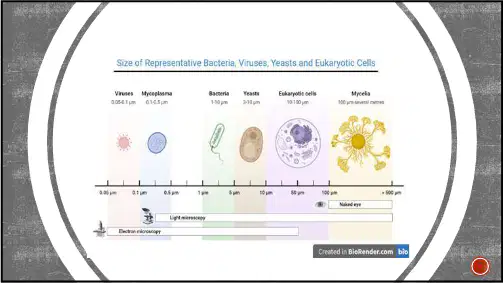
Which of the following cells is the largest in size based on the diagram provided?
Bacteria.
Viruses.
Yeast.
Eukaryotic cells.
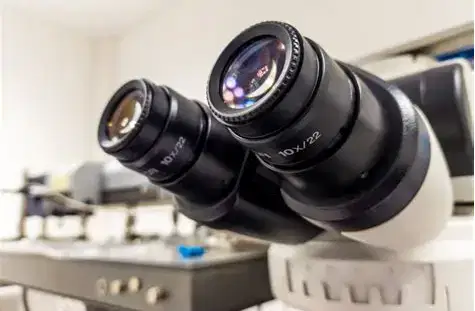
What is the role of the ocular lens in a compound microscope?
To provide illumination to the specimen.
To magnify the image formed by the objective lens.
To adjust the focus of the microscope.
To hold the specimen in place.
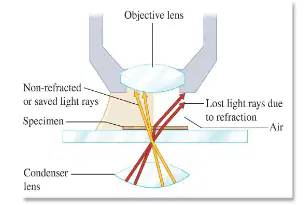
What does the term "resolution" refer to in microscopy?
The ability to magnify an object.
The capacity to distinguish or separate two adjacent objects.
The ability to focus light on a specimen.
The process of refraction in lenses.
How does wavelength affect resolution in microscopy?
Longer wavelengths improve resolution.
Shorter wavelengths improve resolution.
Wavelength has no effect on resolution.
Resolution is only affected by the objective lens, not wavelength.
What is the working distance in microscopy?
The distance between the objective lens and the specimen.
The area visible through the microscope.
The magnification power of the objective lens.
The wavelength of light used in the microscope.
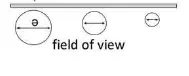
Which magnification level typically has the smallest field of view?
4x
10x
40x
All magnifications have the same field of view.
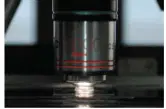
What is the purpose of using an oil immersion lens in microscopy?
To increase the magnification of the microscope.
To reduce light refraction and improve resolution.
To allow the microscope to focus on smaller objects.
To prevent the lens from getting damaged.
Which of the following is NOT a characteristic of eukaryotic cells?
Presence of a nucleus.
Presence of membrane-bound organelles.
Smaller and simpler than prokaryotic cells.
Ribosomes with an 80S sedimentation rate.
Which of the following organisms is an example of a unicellular eukaryote?
Bacteria.
Paramecium.
Virus.
Cyanobacteria.

What is the sedimentation rate of ribosomes in eukaryotic cells?
70S.
80S.
60S.
90S.
What does the term "ubiquity of bacteria" refer to?
The ability of bacteria to cause diseases
The presence of bacteria in specific environments only
The presence of bacteria everywhere in the environment and body
The inability of bacteria to survive in extreme conditions
Why is it important to incubate/inoculate plates upside down?
To prevent contamination from the environment
To allow bacteria to grow faster
To prevent condensation from dripping onto the agar surface
To ensure even distribution of bacteria
Which of the following is a key difference between prokaryotic and eukaryotic cells?
Prokaryotic cells have a nucleus, while eukaryotic cells do not
Eukaryotic cells have membrane-bound organelles, while prokaryotic cells do not
Prokaryotic cells are larger than eukaryotic cells
Eukaryotic cells lack ribosomes, while prokaryotic cells have them
What is the purpose of using oil immersion in microscopy?
To clean the microscope lens
To increase the magnification of the specimen
To reduce light refraction and improve resolution
To stain the specimen for better visibility
Which of the following is NOT a part of aseptic technique?
Using a Bunsen burner to sterilize equipment
Wiping down the work area with disinfectant
Keeping media sterile and lids closed
Leaving the work area uncleaned after use
What are the three main shapes/morphologies of bacteria?
Bacilli, cocci, and spiral
Squares, triangles, and circles
Ovals, cubes, and hexagons
Cylinders, cones, and pyramids
What information should be included when labeling plates in a lab setting?
Your initials, date, media type, and what you inoculated on the plate
Only the date and lab exercise
The type of bacteria and the lab instructor's name
The lab exercise and the type of medium used
Where should labels be written on a plate in a lab setting?
On the top of the plate
On the bottom perimeter of the plate
On the side of the plate
On the glass portion of the plate
What is a key characteristic of prokaryotic cells compared to eukaryotic cells?
Prokaryotic cells contain mitochondria
Prokaryotic cells lack a nucleus
Prokaryotic cells are larger than eukaryotic cells
Prokaryotic cells have a cell wall made of cellulose
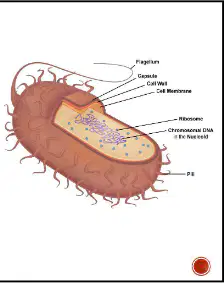
What is the function of flagella in prokaryotic cells?
To synthesize proteins
To rotate and provide motility
To store genetic material
To carry out photosynthesis
What is the primary component of the cell wall in most prokaryotic cells?
Cellulose
Peptidoglycan
Chitin
Lipids

What is a colony in microbiology?
A single bacterial cell.
A visible mass of microorganisms all originating from a single mother cell.
A group of unrelated microorganisms growing together.
A sterile environment for bacterial growth.

Which part of the petri dish is labeled with the date, initials, medium, organism, etc.?
Transparent lid
Culture medium
Base of transparent container
No labeling is necessary.
At what temperature should the petri dishes be incubated during the plate exposure method?
25°C.
37°C.
50°C.
10°C.
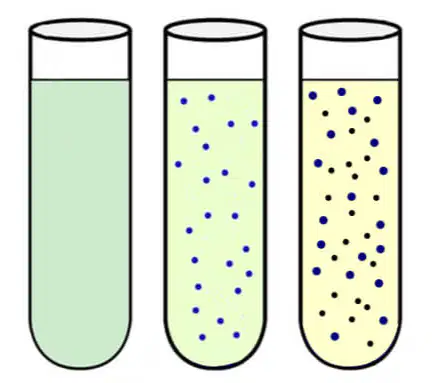
What observation indicates turbidity in broth growth results?
The tube is clear with no threads or clumps.
The tube is cloudy with visible threads or clumps.
The tube is empty.
The tube is clear with over 100 colonies.
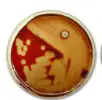
Which type of hemolysis is characterized by complete clearing of the red blood cells around the colonies?
Alpha hemolysis
Beta hemolysis
Gamma hemolysis
Delta hemolysis
What is the primary purpose of aseptic techniques in the lab?
To enhance the growth of bacteria
To prevent contamination and promote sterile conditions
To increase the temperature of the lab environment
To reduce the need for hand washing
Why is agar not digestible for most organisms?
It lacks nutrients
It is a polysaccharide
It is resistant to enzymatic breakdown
It contains too much moisture
Which method of sterilization involves using steam under pressure at 121°C for 15–40 minutes?
Incineration
Disinfection
Autoclaving
Pasteurization

What is the hottest part of the flame in a Bunsen burner?
The outer blue cone
The tip of the inner blue cone
The orange area
The base of the flame
What is the first step in the transfer method for handling bacteria in the lab?
Flame the inoculating loop
Clean the work area with table cleaner and wash your hands thoroughly
Label your tubes and plates
Remove the cap from the tube containing culture
What should you do immediately after removing the cap from the tube containing culture during bacterial transfer?
Flame the inoculating loop
Flame the top of the tube
Replace the cap on the tube
Transfer the bacteria to the plate
What is the purpose of using streak plate and pour plate methods in microbiology?
To identify the shape of microorganisms
To isolate colonies to obtain pure cultures
To evaluate the purity of isolated colonies
To stain microorganisms for observation
What is the purpose of the streak plate method in microbiology?
To isolate single colonies of bacteria
To measure bacterial growth rate
To identify bacterial species
To sterilize bacterial cultures
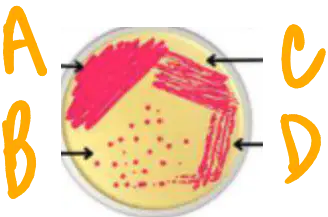
In the streak plate method, what is the expected result in Area 4 of the plate?
Heavy confluent growth
Less dense growth
Weak growth
Isolated single colonies
Which of the following is a correct step in the streak plate method?
Sterilize the loop before streaking each section
Use the same loop without sterilizing for all sections
Add a new bacterial culture to each section
Incubate the plate immediately after streaking without sterilization
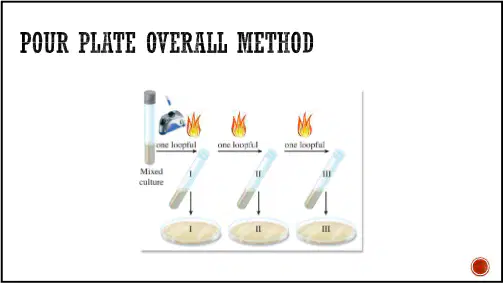
What is the primary purpose of the pour plate method in microbiology?
To isolate and count microorganisms in a sample.
To sterilize laboratory equipment.
To measure the pH of a solution.
To identify the chemical composition of a sample.
Which step is essential in the pour plate method to ensure even distribution of microorganisms in the medium?
Heating the sample to 100°C.
Mixing the sample gently with molten agar.
Adding antibiotics to the medium.
Incubating the sample at room temperature.

What is a key observation in the results of the pour plate method?
Colonies grow only on the surface of the agar.
Colonies grow at different depths within the agar.
No colonies are observed in the medium.
Colonies grow only at the edges of the petri dish.
What is the purpose of using different conditions in bacterial culture experiments?
To observe the effects of light on bacterial growth
To study the growth of bacteria under specific environmental conditions
To determine the nutritional requirements of plants
To measure the pH of bacterial colonies
Which bacterial species is known for producing a green pigment?
Escherichia coli
Pseudomonas aeruginosa
Staphylococcus aureus
Bacillus subtilis
What is the purpose of aseptic technique in E. coli culture transfer?
To prevent contamination during the transfer process.
To increase the growth rate of E. coli.
To change the morphology of E. coli.
To reduce the nutrient requirements of E. coli.
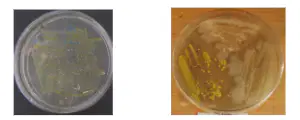
What is a common method to examine the purity of a culture?
Observing turbidity in broth.
Examining growth on agar plates.
Measuring the pH of the culture medium.
Counting the number of cells under a microscope.
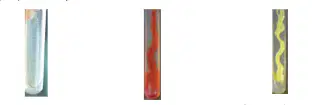
Which organism produces a yellow pigment on slant culture?
E. coli.
S. marcescens.
M. luteus.
Bacillus subtilis.
What is the macroscopic appearance of S. marcescens on agar plates?
Yellow pigment.
Red pigment.
Green pigment.
No pigment.
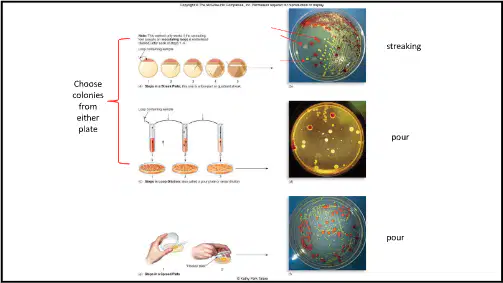
What is the purpose of streaking on an agar plate in microbiology?
To isolate individual colonies for identification
To mix different bacterial species together
To increase bacterial growth across the entire plate
To sterilize the agar plate
What temperature is usually recommended for incubating plates in microbiology experiments?
Room temperature/25°C
Body temperature/37°C
Boiling/100°C
Refrigerator temperature/4°C
What is the primary objective of differentiating between motile and nonmotile bacteria?
To identify the presence of flagella
To understand the difference between true motility and Brownian motion
To classify bacteria based on their shape
To study bacterial reproduction
Which of the following is NOT a characteristic of prokaryotic flagella?
Composed of microtubules
Used for bacterial motility
Contains a basal body
Powered by proton motive force
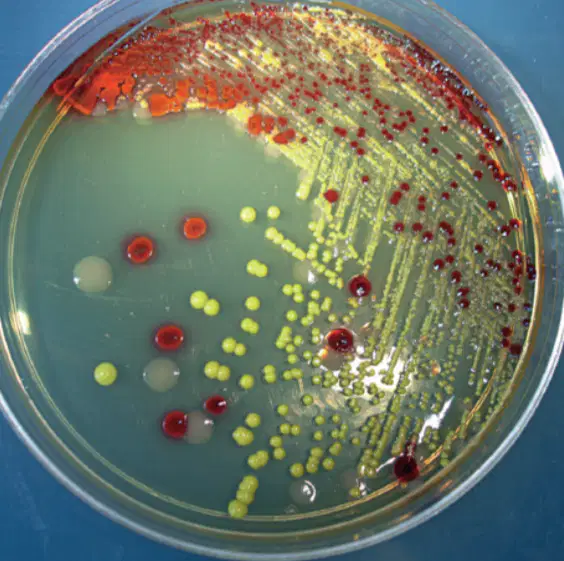
How can one describe this culture?
Mixed culture
Pure culture
Selective culture
Enriched culture
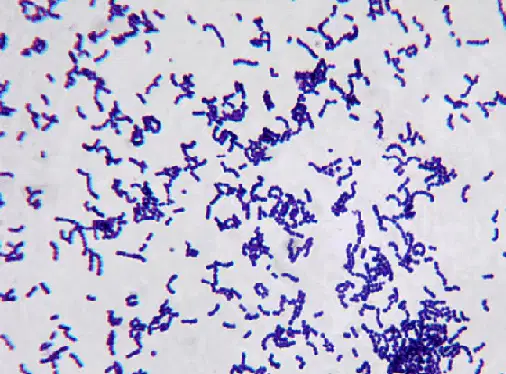
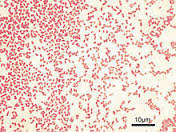

High dry/40X
Low power/10X
Scanning/4X
Oil immersion/100X
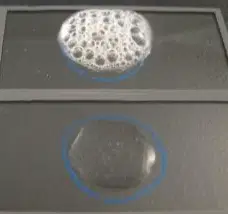
Which of the following is true about the catalase test?
Generates water and oxygen from hydrogen peroxide
Performed by aerotolerant anaerobes
Performed by obligate anaerobes
The enzyme used is peroxidase
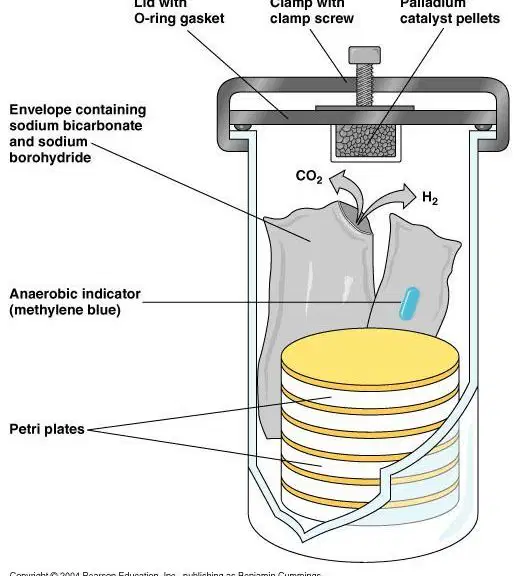
An unknown bacterium only grows on Brewer's plates in the GasPak. What is its likely oxygen requirement?
Obligate aerobe
Obligate anaerobe
Facultative anaerobe
Microaerophile
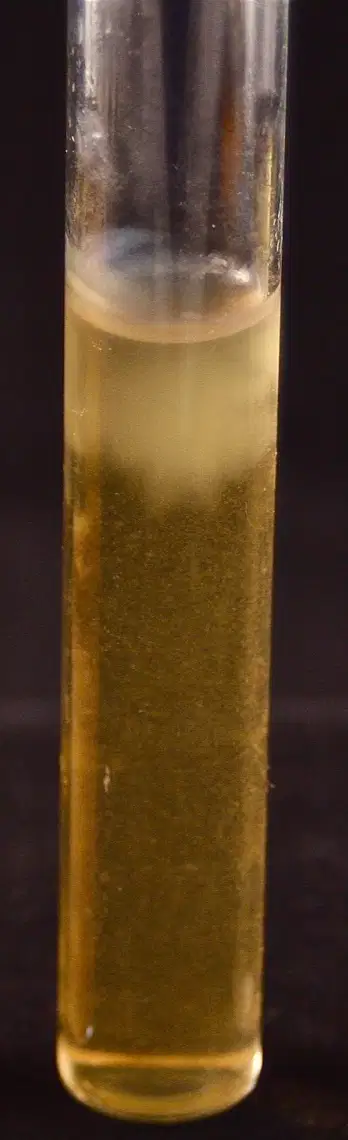
What is the likely oxygen requirement of the catalase positive bacteria growing in this tube?
Obligate anaerobe
Microaerophile
Aerotolerant anaerobe
Facultative anaerobe
Byproducts of cellular respiration can damage all of the following EXCEPT:
Extracellular matrix
Protein
DNA
Lipids
Which of the following is NOT a characteristic that differentiates fungi from plants?
Fungi have cell walls made of chitin.
Fungi are eukaryotic.
Fungi obtain nutrients through absorption.
Fungi are decomposers.
How do fungi differ from bacteria?
Fungi are prokaryotic.
Fungi have cell walls made of peptidoglycan.
Fungi are eukaryotic.
Fungi perform photosynthesis.

The fungi phylum that produces sexual spores in microscopic sac-like structure is called
Ascomycota
Zygomycota
Basidiomycota
Deuteromycota

Rhizopus fungi (bread mold) belongs to
Ascomycota
Zygomycota
Basidiomycota
Deuteromycota

What phylum are mushrooms in?
Basidiomycota
Zygomycota
Ascomycota
Chytridiomycota
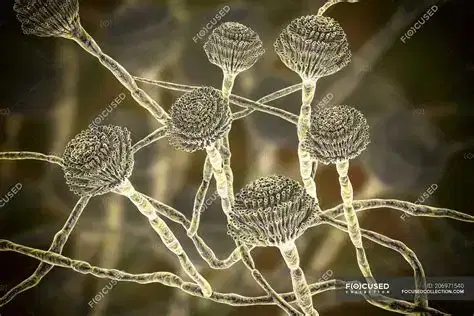
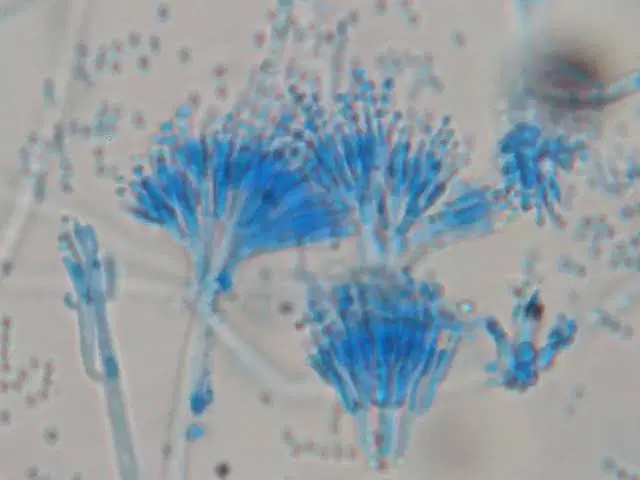
These "broom-"like structures represent _______spores of _______.
Asexual, aspergillus
Asexual, penicillium
Sexual, aspergillus
Sexual, penicillium
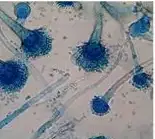
Which type of asexual spore is shown here?
Basidiospore
Sporangiospore
Conidia
Ascospore
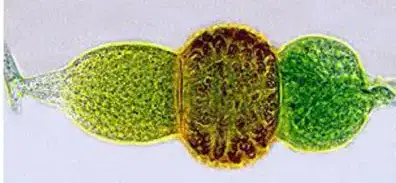
What type of sexual spore is shown here?
Ascospore
Basidiospore
Zygospore
Conidia
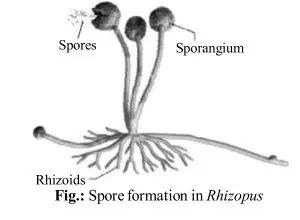
Fungi use spores for asexual/sexual reproduction while bacteria use ________ to survive adverse environmental conditions.
endospores
flagella
cilia
proton pumps
Select all the ways yeast are different than molds:
Smooth, white colonies
Unicellular
Multicellular
Hairy, velvety texture
True motility is:
passive shaking
jiggling motion
sweeping motion across slide
directional towards/away from stimuli
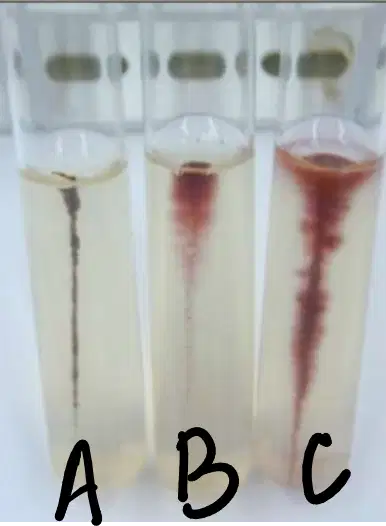
Which tubes display motility?
A
B
C
B and C

Which SIM tube is positive for hydrogen sulfide production?
A
B
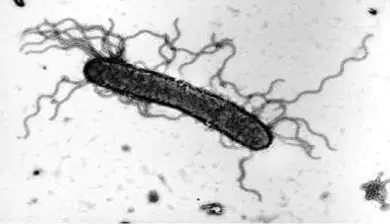
Which type of flagella is shown on this bacillus? Ex. Escherichia coli, Proteus vulgaris, Serratia marcescens, etc.
Lophotrichous
Monotrichous
Peritrichous
Amphitrichous
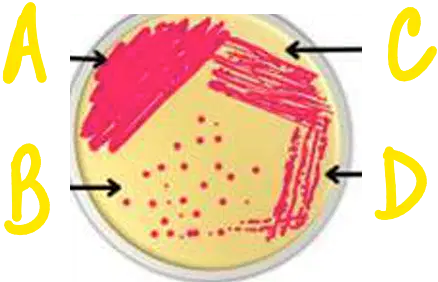
Which streak shows isolated colonies?
A
B
C
D
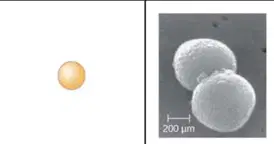
Cocci usually have flagella.
True
False
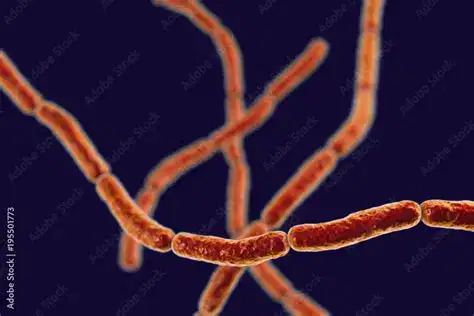
What is the arrangement of these bacteria?
Palisades
Streptobacilli
Streptococci
Staphylococci
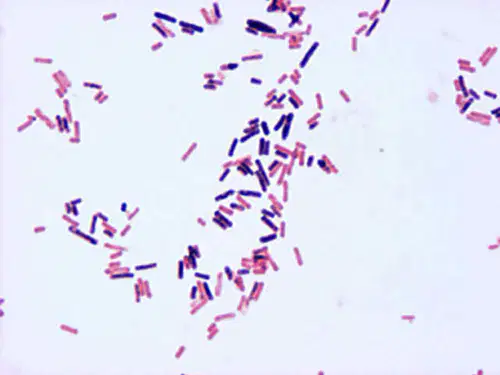
Which factor most commonly contributes to Gram variability?
Endospores
Thick peptidoglycan cell wall
Lipid content in outer membrane
Age of the bacterial culture
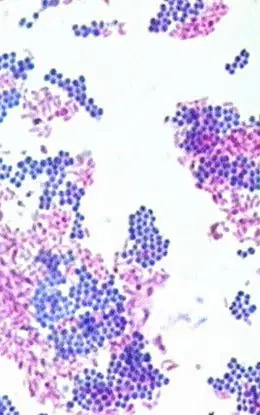
Which feature allows acid-fast bacteria such as Mycobacterium tuberculosis to retain the primary stain despite treatment with acid-alcohol?
Thick peptidoglycan cell wall
Capsule
Teichoic acids
Mycolic acids in cell wall
The mordant in the endospore staining process is
Gram's iodine
acid alcohol
heat
malachite green
At the end of the endospore stain, endospores will appear
green
pink
purple
colorless
What is the counterstain in the Gram staining method?
Crystal violet
Safranin
Malachite green
Methylene blue

