
 Worksheets
Biology Review
Total questions: 78
Worksheet time: 41mins
Why is there a wide range of phenotypes for polygenic traits?
Polygenic traits are controlled by one dominant allele
Polygenic traits are influenced by multiple genes and the environment
Polygenic traits only occur in recessive conditions
Polygenic traits skip generations
What is a major benefit of gene therapy?
It permanently removes chromosomes
It replaces faulty genes with functional ones
It increases mutation rates
It stops all cell division
Genetically modified bacteria are commonly used to
break down waste in ecosystems
produce insulin for people with diabetes
perform photosynthesis
replace human cells
How does the environment affect gene expression?
It changes the DNA sequence permanently
It determines which genes are turned on or off
It removes dominant alleles
It stops transcription
A family has a history of diabetes, but a person never develops it due to diet and exercise. This is an example of
mutation
codominance
environmental influence on gene expression
meiosis failure
How can a mutation in DNA affect phenotype?
It always causes death
It changes the amino acid sequence of a protein
It only affects gametes
It stops replication
A sickle cell mutation changes the shape of hemoglobin. This affects red blood cells by
increasing oxygen binding
making cells rigid and sickle-shaped
increasing ATP production
stopping protein synthesis
Toxic damage to a nucleotide causes an error during replication in a somatic cell. Which apply? (CHECK ALL THAT APPLY)
mRNA for the new somatic cell may be different
A new protein may be made due to a new amino acid sequence
It can affect protein function
It is inherited by offspring
Toxic damage to a nucleotide causes an error during replication in a somatic cell. Which apply? (CHECK ALL THAT APPLY)
It is a somatic mutation
It can lead to cancer
It is inherited by offspring
What are the products of aerobic respiration?
glucose and oxygen
ATP, carbon dioxide, and water
lactic acid and ATP
nitrogen and oxygen
How do enzymes increase the rate of chemical reactions?
By increasing temperature
By lowering activation energy
By being consumed in the reaction
By changing products
What increases enzyme activity? (CHECK ALL THAT APPLY)
Optimal temperature
Optimal pH
High substrate concentration
Extreme heat
Denaturation
How does enzyme shape relate to function?
Enzymes work with any substrate
Enzymes have specific active sites that match substrates
Shape does not matter
Enzymes dissolve all materials
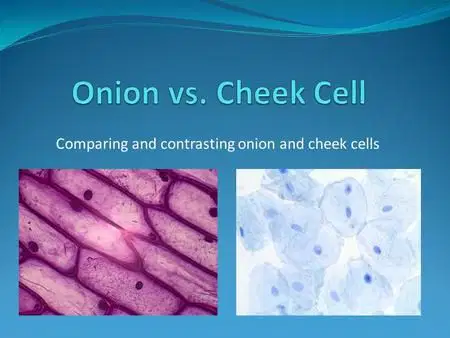
Cheek cells compared to onion cells differ because
They perform the same function
Onion cells have cell walls and are rectangular
Cheek cells have chloroplasts
Both are plant cells
What causes skin cells and white blood cells to become different cell types?
Different DNA
Different genes being expressed
Different chromosome numbers
Different meiosis stages
What is the function of a semi-permeable membrane?
Allows all substances to pass
Allows some substances to pass
Blocks water
Stops diffusion
If starch can pass through a membrane but water cannot, what does this indicate?
The membrane is impermeable
Transport depends on molecule size or properties
Osmosis cannot occur
Active transport occurred
Which biomolecule does NOT contain phosphorus?
Nucleic acids
Phospholipids
Proteins
ATP
What is the role of centrioles?
Protein synthesis
Spindle fiber formation
Photosynthesis
Diffusion
What happens if centrioles do not function properly?
DNA cannot replicate
Chromosomes may not separate correctly
ATP production stops
The nucleus disappears
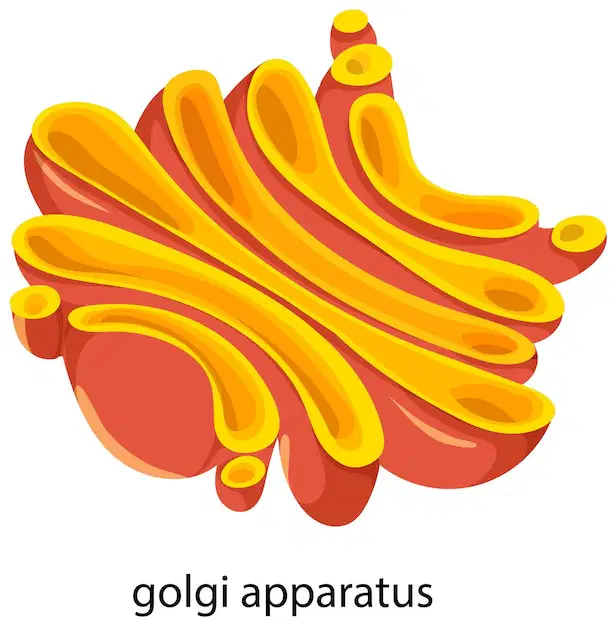
What happens if the Golgi apparatus stops working?
Proteins cannot be modified or shipped
DNA cannot replicate
Ribosomes stop functioning
Cell membrane dissolves
What does the Golgi apparatus look like?
A spherical sac
A stack of flattened membranes
A long tube
A spiral structure
How are heart, lung, and stomach cells similar?
They perform the same function
They contain the same genetic code
They have different DNA
They divide at the same rate
What is osmosis?
Movement of solutes
Movement of water across a semi-permeable membrane
Active transport
Vesicle transport
What is the internal environment of a cell?
Cytoplasm and organelles
Ecosystem
Atmosphere
Soil
How do bacteria reproduce?
Mitosis
Meiosis
Binary fission
Budding
If meiosis cannot occur, what happens?
More somatic cells are produced
Gametes cannot form
DNA cannot replicate
Mitosis stops
A mesophyll cell has 14 chromosomes. How many chromosomes will each daughter cell have after mitosis?
7
14
28
21
Anti-cancer drugs target spindle fibers. How does this affect cell division?
DNA cannot replicate
Sister chromatids cannot separate
Enzymes stop working
Cytokinesis speeds up
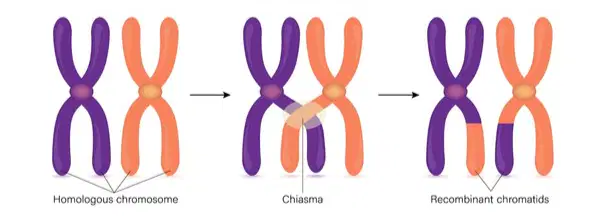
A picture shows crossing over. What is occurring?
Homologous chromosomes exchange genetic material
Sister chromatids separate
DNA replicates
Mutation occurs
What is natural selection?
Random change in DNA
Survival and reproduction of organisms with favorable traits
Artificial breeding
Meiosis
What causes favorable traits to become more common?
Mutation only
Increased survival and reproduction
Random chance
Gene therapy
What has caused the wide variety of bird species today?
Artificial selection
Geographic isolation and natural selection
Mitosis
Codominance
What is the best evidence for evolution?
Fossils alone
Biochemical evidence such as DNA and protein similarities
Physical appearance
Climate change
What is the role of producers in a food chain?
Consume other organisms
Convert light energy into chemical energy
Decompose matter
Fix nitrogen
What would happen if nitrogen-fixing bacteria were removed?
Plants could still get nitrogen
Nitrogen would be unavailable to plants
Oxygen levels would increase
Consumers would increase
What happens to carbon if all consumers die?
Carbon decreases
Carbon accumulates in producers and the atmosphere
Carbon disappears
Carbon cycle stops
How does deforestation affect the carbon cycle?
Increases carbon storage
Decreases carbon dioxide
Increases atmospheric carbon
Has no effect
How does oxygen move through an ecosystem?
Through respiration and photosynthesis
Only through animals
Only through plants
Only through water
What limits photosynthesis in a terrarium?
Light intensity
Carbon dioxide levels
Water availability
All of the above
What is released during photosynthesis and respiration?
Oxygen in respiration
Carbon dioxide in photosynthesis
Oxygen in photosynthesis and carbon dioxide in respiration
ATP in photosynthesis

What happens if Elodea is moved closer to a light source?
Oxygen production decreases
Oxygen bubble production increases
Respiration stops
Photosynthesis stops
Why are thylakoids stacked in chloroplasts?
To store glucose
To maximize light absorption
To protect DNA
To transport proteins

A mutation reduces the surface area of cristae in mitochondria. What happens?
ATP production increases
ATP production decreases
Photosynthesis increases
Cell division speeds up
DNA fingerprinting is used to
determine blood type
compare genetic similarities
change genes
clone organisms
Yeast in a bottle inflates a balloon. What gas is produced?
Oxygen
Carbon dioxide
Nitrogen
Hydrogen
A dialysis tube starts with 5 mL starch and 5 mL water. After osmosis, water enters the tube. Why?
Water moves from low to high solute concentration
Starch diffuses out
Active transport
Facilitated diffusion
Four siblings have blood types A, B, AB, and O. What are the parents' blood types?
A and A
B and B
A and B
AB and O
A section of DNA in a somatic cell has the following original strand: 5'– A T G C C A –3'. During DNA replication, a toxic chemical damages one nucleotide, causing a base substitution. The damaged strand now contains A T G T C A. Which newly synthesized DNA strand will be produced after replication?
5'– T A C A G T –3'
5'– T A C G G T –3'
5'– A T G T C A –3'
A somatic cell experiences a point mutation during DNA replication caused by exposure to a toxin. Which outcome is most likely as a result of this mutation?
The mutation will be passed to offspring
The mRNA transcribed from this DNA may be different
Meiosis will stop occurring
All proteins in the cell will change
In a species of insect, wing color is determined by the following genotypes: YbYb → blue wing color; YBYb → yellow wing color. Which statement best explains the inheritance pattern of wing color in this species?
Blue is dominant over yellow
Yellow is dominant over blue
The trait shows incomplete dominance
The trait is sex-linked
Predicting Offspring Phenotypes: Two insects are crossed. One parent has blue wings (YbYb) and the other has yellow wings (YBYb). What percentage of the offspring is expected to have yellow wings?
0%
25%
50%
100%
How are buffers important in maintaining homeostasis in the human body?
They increase body temperature
They regulate blood pH
They speed up enzyme activity
They remove toxins from cells
Ecology & Populations: How can the introduction of an invasive species affect the population density of native species?
It always increases native populations
It reduces competition
It can decrease native populations by competing for resources
It has no effect on ecosystems
Ecology & Populations: Which human action best helps protect natural resources?
Using nonrenewable energy
Increasing pesticide use
Rotating crops to increase soil fertility
Removing native plant species
Genetics & Mutations: How does a mutation in a cell’s genotype affect its phenotype?
It changes the chromosome number
It always results in death
It can change protein structure and function
It has no effect on traits
Why can a mutation change protein function?
It removes ribosomes
It causes a different amino acid sequence, changing protein shape
It stops transcription
It removes enzymes
Genetics & Mutations: Bacteria grown at 0°C form red colonies, but the same bacteria grown at 25°C form white colonies. What explains this difference?
A permanent DNA mutation occurred
Different environmental conditions caused different phenotypes
The bacteria became a new species
Meiosis occurred
A child is born with PKU but has minimal symptoms at age 18. What best explains this?
The gene disappeared
The mutation was repaired
Lifestyle and diet reduced gene expression
PKU only affects children
Identical twins have different diets and lifestyles. What is the most likely result?
Different genotypes
Identical phenotypes
Different phenotypes due to environmental influence
Different chromosome numbers
Cell Classification & Structure: A student observes a cell with no membrane-bound nucleus, free-floating DNA, active ribosomes, and two flagella. How should this cell be classified?
Plant cell
Animal cell
Eukaryotic cell
Prokaryotic cell
DNA Analysis & Evolution: DNA fingerprints of four organisms show many overlapping bands, but the patterns do not match exactly. What can be concluded?
They are the same organism
They are identical twins
They are different species with genetic similarities
They are unrelated
DNA Analysis & Evolution: How has natural selection resulted in antibiotic resistance in bacteria?
Antibiotics cause mutations intentionally
All bacteria adapt equally
Some bacteria survive antibiotics and pass resistance to offspring
Antibiotics stop evolution
Cellular Respiration: Which equation best represents cellular respiration?
Carbon dioxide + water → glucose + oxygen
Oxygen + glucose → ATP + carbon dioxide
ATP + oxygen → glucose
Nitrogen + glucose → ATP
Phylogenetic Trees & Evolutionary Relationships: In a phylogenetic tree, what do nodes represent?
Individual organisms
Mutations
Shared common ancestors
Extinction events
Phylogenetic Trees & Evolutionary Relationships: Two species share a more recent node on a phylogenetic tree. What does this indicate?
They evolved independently
They share a more recent common ancestor
They are identical species
They are unrelated
Prokaryotes vs. Eukaryotes: Which best explains why prokaryotes reproduce faster than eukaryotes?
They undergo meiosis
They have fewer chromosomes
They reproduce by binary fission and lack a nucleus
They require fertilization

Images show chromosomes independently assorting during meiosis, resulting in different combinations of maternal and paternal chromosomes in gametes.
What is the most important outcome of this process?
A. Faster cell division
B. Formation of diploid cells
C. Increased genetic variation in a population
D. Prevention of mutations
A pedigree shows an autosomal recessive disorder. Two parents do not have the disorder, but one of their children does. What are the most likely genotypes of the parents?
Both parents are heterozygous carriers
Both parents are homozygous dominant
Both parents are homozygous recessive
One parent is homozygous recessive
In a pedigree, an individual shows the recessive disorder. What is the most likely genotype of this individual?
Homozygous recessive
Homozygous dominant
Codominant
Heterozygous
How does natural selection lead to antibiotic resistance in bacteria?
All bacteria adapt equally
Antibiotics strengthen bacteria
Antibiotics cause all bacteria to mutate
Resistant bacteria survive and reproduce
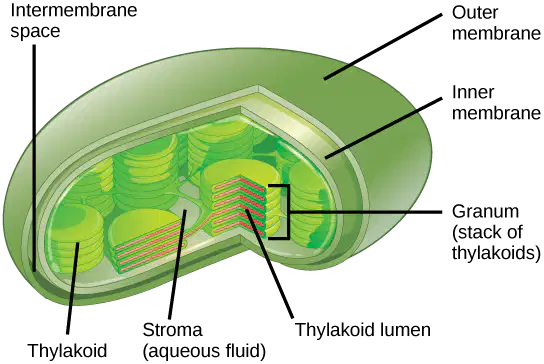
Thylakoids are stacked into structures called grana. What is the advantage of this arrangement?
It stores glucose
It increases carbon dioxide diffusion
It maximizes surface area for light absorption
It protects DNA
Blood type A and blood type B are codominant, while blood type O is recessive. A girl has AB blood. What does this indicate about her parents?
One parent was type O
Both parents were type AB
One parent was homozygous recessive
Both parents passed on dominant alleles
During protein synthesis, ________ happens first in the _______
transcription
nucleus
translation
ribosome
How does the shape of DNA help it with its function and bases?
It converts DNA into RNA automatically
It forces DNA to replicate only once per cell cycle
Its double helix structure protects bases and allows complementary base pairing for accurate replication
It allows the bases to float freely in the nucleus

