
 Worksheets
Prevalence of Mental Illness in U.S. Adults
Total questions: 72
Worksheet time: 36mins
Which statement best defines Any Mental Illness (AMI) in adults?
A disorder with no functional impairment
A mental, behavioral, or emotional disorder
A diagnosis that always causes disability
A condition limited to severe impairment only
Which feature distinguishes Serious Mental Illness (SMI) from AMI?
Symptoms limited to mild and moderate impact
Presence of any emotional symptoms
Interference with one or more major life activities
Absence of behavioral manifestations
What percentage of U.S. adults live with a mental illness?
About 30 percent
About 10 percent
About 40 percent
About 20 percent

In the bar chart of AMI prevalence by sex, which group shows higher past-year prevalence?
Data unclear
Both groups equal
Male adults
Female adults

Which age group displays the highest past-year prevalence of AMI in the chart?
18–25 years
26–49 years
50+ years
All ages equal

Which race/ethnicity category shows the lowest AMI prevalence in the chart?
Asian adults
Hispanic adults
Two or more races
White adults

Which group has the highest AMI prevalence among race/ethnicity categories shown?
American Indian/Alaska Native adults
Black or African American adults
White adults
Two or more races

In the treatment chart, which sex is more likely to have received mental health treatment in the past year among those with AMI?
Cannot be determined
Female adults
Both groups equal
Male adults

Which age group shows the highest past-year treatment receipt among adults with AMI?
18–25 years
All ages equal
26–49 years
50+ years

Which race/ethnicity category has the lowest treatment receipt among adults with AMI in the chart?
Hispanic or Latino adults
White adults
Asian adults
Black or African American adults

Which statement best captures a treatment disparity shown across race/ethnicity?
Rates are identical across all categories
White and Two or More races show higher treatment rates
Asian and White have the same treatment rates
Hispanic adults show the highest treatment rate

Which age group shows the highest past-year prevalence of serious mental illness in the chart (percent bars by age)?
26–49 years group
All ages combined
18–25 years group
50+ years group

In the prevalence chart, which sex category has the higher percentage of serious mental illness?
Female adults group
Male adults group
No difference shown
Sexes combined group

Which racial/ethnic group displays the highest prevalence of serious mental illness on the chart?
Asian adults group
Two or more races group
Black or African American group
White adults group

Compare age groups: Which shows the lowest prevalence of serious mental illness?
50+ years group
All ages combined
18–25 years group
26–49 years group

In the treatment chart, which age group has the highest percentage of adults with SMI receiving treatment?
26–49 years group
18–25 years group
All ages combined
50+ years group

Which racial/ethnic group has the lowest treatment rate among adults with SMI in the treatment chart?
Two or more races group
White adults group
Hispanic or Latino group
Black or African American group

According to the treatment chart, which sex has a higher rate of receiving treatment among adults with SMI?
Female adults group
Sexes combined group
Male adults group
Rates are identical group
Which pairing correctly matches the higher prevalence with the lower treatment rate relative to peers?
Asian adults: lower prevalence, higher treatment rate
18–25 years: higher prevalence, lower treatment rate
Female adults: higher prevalence, lower treatment rate
Two or more races: higher prevalence, higher treatment rate
Which statement best describes the global disease burden among adolescents aged 10–19 related to mental health conditions?
They account for about five percent of burden
They account for around fifteen percent of burden
They account for nearly thirty percent of burden
They account for under one percent of burden
By what age do approximately half of all mental health conditions begin?
Before age ten years
Before age eighteen years
Before age fourteen years
After age twenty years
Among adolescents, which group of disorders is identified as leading causes of illness and disability?
Eating, sleep, and somatic disorders
Depression, anxiety, and behavioral disorders
Personality, psychotic, and cognitive disorders
Substance, neurodevelopmental, and seizure disorders
For those aged 15–19 years, suicide ranks where among causes of death?
First leading cause of death
Second leading cause of death
Third leading cause of death
Fourth leading cause of death

In the chart of depression by age, which age group shows the highest percentage?
Ages 3–5 years
Ages 6–11 years
Ages 12–17 years
Ages 2–8 years
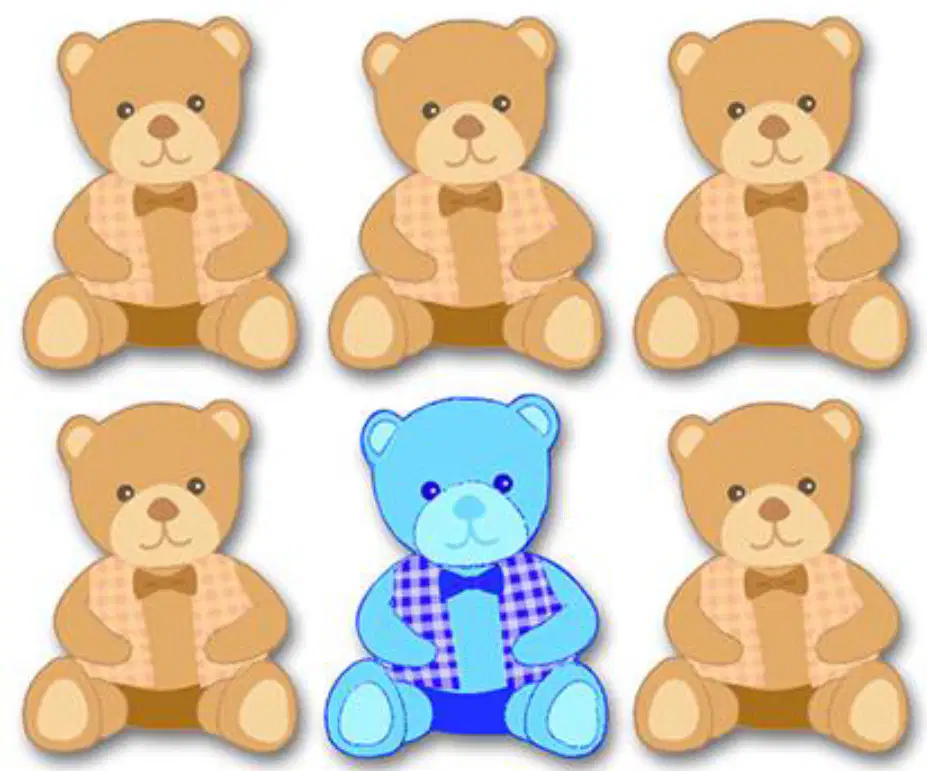
What proportion of children aged 2–8 years has a mental, behavioral, or developmental disorder, as depicted by the teddy bear graphic?
Approximately one in six children
About one in ten children
Roughly one in eight children
Nearly one in four children
Which factor best exemplifies a cultural influence that can shape mental health outcomes in diverse populations?
Identical access to specialty hospital units
Shared beliefs about help-seeking and stigma
Universal response to standardized treatments
Nationwide prevalence of a single diagnosis

A client requests a service you are not trained to provide. What is the most appropriate action within professional scope of practice?
Refer the client to a qualified professional
Provide the service but document concerns
Continue the service and monitor closely
Attempt the service with online guidance
You are developing a community program for a linguistically diverse neighborhood. Which planning step most effectively addresses population differences?
Apply one outreach model without adaptation
Assume materials work for all groups equally
Use translated materials with cultural input
Rely on general national statistics only

In the collaborative care model, which role primarily delivers brief, evidence-based behavioral interventions and tracks outcomes across a patient registry?
Behavioral Health Care Manager providing interventions and registry tracking
Primary Care Provider coordinating medications and referrals
Patient self-managing symptoms without formal team support
Psychiatric Consultant conducting full diagnostic evaluations weekly

Which team member in collaborative care typically advises on treatment changes for patients who are not improving, often through case review rather than direct visits?
Psychiatric Consultant recommending adjustments via case review
Behavioral Health Care Manager facilitating stepped care plans
Patient choosing therapies independently
Primary Care Provider delivering routine medical follow-up

A core benefit of collaborative care for mental health in primary care is best described as:
Fragmented services with longer wait times
Integrated team approach improving access and outcomes
Exclusive specialty care separate from primary clinics
Unstructured communication among clinicians
Which downside is most plausible when implementing collaborative care in a clinic?
Need for infrastructure like registries and workflows
Higher costs from duplication of assessments
Reduced communication between clinicians
Loss of measurement-based care across cases

In the depicted workflow, how does the patient typically interact with the team?
Exclusive sessions with the Psychiatric Consultant
Direct daily communication with the registry system
Only infrequent visits with Psychiatric Consultant
Frequent contact with Behavioral Health Care Manager and PCP
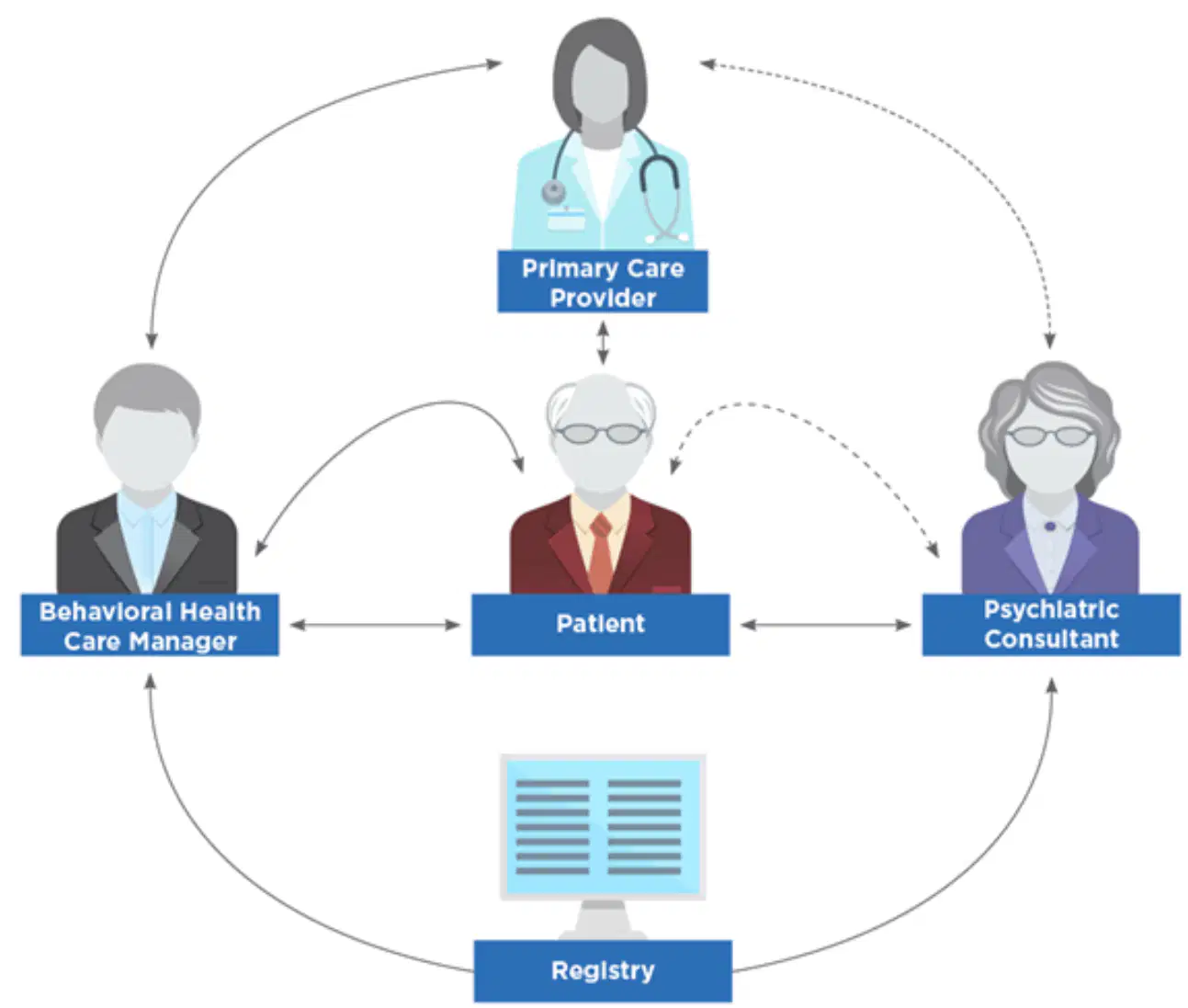
Which statement best captures the role of the registry in collaborative care?
Hosts telehealth sessions between patient and consultant
Replaces clinical documentation for the PCP
Tracks caseload outcomes enabling population-based management
Stores billing codes for specialty referrals only

A primary care provider in collaborative care should most appropriately:
Prescribe and coordinate treatment using consultant input
Deliver weekly psychotherapy to all high-risk patients
Conduct comprehensive psychiatric diagnoses for each case
Delegate all mental health decisions to the registry

Which medication is specified as the initial treatment in the multi-level algorithm for depression management shown in the diagram?
Venlafaxine chosen for new patients
Bupropion as starting monotherapy
Citalopram used for initial treatment
Sertraline as first-line initial therapy

At Level 2, which option correctly represents a switch strategy from citalopram when response is inadequate?
Switch to buspirone extended-release therapy
Switch to bupropion sustained-release or cognitive therapy
Switch to tranylcypromine monoamine oxidase inhibitor
Switch to mirtazapine combined with venlafaxine

Which augmentation option is listed at Level 2 to enhance partial response after an initial SSRI?
Augment with buspirone or cognitive therapy
Augment with triiodothyronine hormone therapy
Augment with lithium carbonate salts
Augment with nortriptyline tricyclic agent

For patients already receiving cognitive therapy at Level 2, what does Level 2a recommend as the next step?
Combine tranylcypromine with venlafaxine extended-release
Augment with mirtazapine or nortriptyline agents
Switch to bupropion sustained-release or venlafaxine extended-release
Add lithium or triiodothyronine to sertraline

Which Level 3 strategy includes augmentation options restricted to certain antidepressant backbones?
Augment with mirtazapine for all treatments
Augment with nortriptyline regardless of base drug
Augment with lithium or triiodothyronine only with bupropion, sertraline, venlafaxine
Augment with buspirone for any regimen

At Level 4, which switching option is correctly stated for treatment-resistant cases?
Switch to bupropion with cognitive therapy addition
Switch to sertraline with buspirone augmentation
Switch to tranylcypromine or mirtazapine combined with venlafaxine extended-release
Switch to citalopram as rescue strategy
Which statement best defines the chief complaint in a psychiatric evaluation?
Summary of past medical conditions
Detailed timeline of symptom evolution
Clinician’s working diagnostic impression
Patient’s main reason for seeking care
During history of present illness, which element is most essential to document?
Family’s expectations for treatment
Preferred pharmacy and medication brand
Insurance status and coverage details
Onset, duration, and course of symptoms
Which component is typically included in social history for a mental health assessment?
Recent lab values and vital signs
Physical exam of cranial nerves
Differential diagnoses under consideration
Housing, relationships, and substance use
A patient reports, “I can’t sleep and feel constantly anxious for three weeks.” Where should this information be placed?
Review of systems section
Past medical history section
Assessment and plan section
Chief complaint section of the note
You are planning the interview. Which sequence supports effective information gathering in the first visit?
Past medical history then HPI then chief complaint
HPI then social history then chief complaint
Social history then chief complaint then HPI
Chief complaint then HPI then social history
Which choice best illustrates strategic use of social history to guide care?
Linking substance use patterns to symptom changes
Listing prior surgeries without context
Repeating the chief complaint verbatim
Ignoring housing status when planning safety
Which element is explicitly included when documenting past medical history in a mental health assessment?
Military service and rank
Religious or spiritual beliefs
Current employment and income
Perinatal and developmental history
In a comprehensive psychiatric evaluation, which category focuses on operations the patient has undergone?
Housing situation
Family social supports
Abuse history
Past surgical history
When reviewing medications, which detail is essential to capture?
Currently taking and past psychiatric trials
Preferred pharmacy location and hours
Vitamin preferences and herbal teas
Insurance copay amounts and deductibles
Past psychiatric history should emphasize which time frame according to the workflow?
Lifetime occupational changes
Childhood vaccinations only
Future therapy goals exclusively
Recent episodes and treatments
Which family history dimension directly addresses inherited risk factors for mental illness?
Pet ownership traditions
Genetic conditions in relatives
School extracurricular choices
Neighborhood crime patterns
Which item belongs in social history under relationships?
Cardiac catheterization dates
Medication copay documentation
Liver function test trends
Family of origin connections
Which domain of social history evaluates protection factors beyond symptoms?
Genetic carrier screening
Other strengths and resources
Recent lab abnormalities
Past surgical complications
Legal problems are most appropriately recorded under which section?
Family psychiatric lineage
Medication reconciliation
Past medical diagnoses
Social history details
Which item aligns with assessing social support networks?
Appendectomy scar location
Hemoglobin A1c monitoring
Autoimmune antibody panels
Friends and community supports
Housing situation should be documented because it can influence which mental health factor?
Stress, safety, and stability
Insulin absorption kinetics
Suture selection in surgery
Erythrocyte sedimentation rate
Which component of the mental status exam focuses on how thoughts are organized and connected?
Thought content inventory
General fund of knowledge
Thought process assessment
Sensorium and cognition
Which item belongs under thought content rather than thought process?
Rate of thoughts
Organization of thoughts
Delusions and beliefs
Connection of thoughts
Which pair best distinguishes thought process from thought content?
What they feel vs. how they feel
What they know vs. how they act
How they think vs. what they think
How they speak vs. why they speak
During an interview, a patient frequently changes topics illogically. Which process feature is most implicated?
Tangential or derailment
Impaired visuospatial ability
Compulsive ritual behavior
Fixed false belief
Which example most represents a delusion?
Trouble recalling recent events
Unreasonable fear of heights
Belief neighbors read thoughts
Difficulty sustaining attention
Which feature is assessed by MMSE within sensorium and cognition?
Insight into illness severity
Rate of associative thinking
Presence of specific phobias
Orientation to time and place
Which best describes a phobia within thought content?
Rapid, pressured speech
Persistent, disproportionate fear
Loose, illogical associations
Global memory impairment
A patient responds indirectly and needs redirection to stay on topic. Which process dimension is affected?
Abstract thought capacity
General knowledge base
Language comprehension
Organization of thoughts
Which domain primarily evaluates attention and concentration?
Reliability and impulsivity
Affect and mood
Judgment and insight
Sensorium and cognition
Which content item involves repetitive intrusive thoughts and rituals?
Obsessions and compulsions
Cognitive biases
Reading and writing
Visuospatial ability
Which observation belongs to speech rather than thought process?
Cognitive bias presence
Topic shifting patterns
Connection of ideas
Rate, volume, articulation
Which item is most relevant when assessing risk in thought content?
Organization of associations
Rate of thought production
Suicidal ideation or intent
Abstract proverb interpretation
Which term refers to systematic errors in thinking patterns affecting judgment?
Cognitive biases
Homicidal ideation
General intelligence
Visuospatial skills
Which aspect distinguishes abstract thought within content assessment?
Displaying flat affective tone
Switching topics illogically
Speaking with pressured rate
Interpreting metaphors flexibly
Which set lists sensorium and cognition elements?
Appearance, reliability, speech
Orientation, memory, language
Mood, affect, attitude
Insight, judgment, impulsivity

