
Font size
 Worksheets
AP Biology Unit 2 Review
Total questions: 61
Worksheet time: 31mins
What organelles are in animal cells, but not in plant cells?
Lysosomes, centrosomes, cilia/flagella
Chloroplasts, large central vacuole, cell wall
Plasmodesmata, chloroplasts, cell wall
Central vacuole, cellulose cell wall, chloroplasts
What organelles are in plant cells, but not in animal cells?
Chloroplasts, large central vacuole, cell wall, plasmodesmata
Lysosomes, centrosomes, cilia/flagella
Cilia, flagella, centriole, lysosome
None of the above; plant and animal cells have identical organelles
How do ribosomes help carry out instructions encoded in the DNA?
They read mRNA and link amino acids to build proteins
They replicate DNA during cell division
They package proteins into vesicles
They degrade mRNA to regulate gene expression
If a cell has a high rate of protein synthesis, what organelle would you expect it to have a large number of? Why?
Ribosomes, because they synthesize proteins
Mitochondria, because they store proteins
Chloroplasts, because they assemble amino acids
Lysosomes, because they modify proteins
Differentiate between the rough and smooth ER.
Rough ER has ribosomes and makes/folds proteins; smooth ER lacks ribosomes and synthesizes lipids and detoxifies
Rough ER lacks ribosomes and synthesizes lipids; smooth ER has ribosomes and makes proteins
Both rough and smooth ER lack ribosomes and only transport proteins
Rough and smooth ER are identical in function
Identify the main differences between prokaryotic and eukaryotic cells.
Prokaryotes have small circular DNA and no membrane-bound organelles; eukaryotes have linear chromosomes and membrane-bound organelles
Prokaryotes have linear chromosomes in a nucleus; eukaryotes have circular DNA and no organelles
Prokaryotes are larger and more complex than eukaryotes
There are no major differences between prokaryotes and eukaryotes
Describe the endomembrane system.
Interconnected membranes that make, modify, and move cell materials; includes nuclear envelope, ER, Golgi, vesicles, lysosomes/vacuoles, plasma membrane
A network of microtubules that provides cell shape
A group of mitochondria that produces ATP
A set of chloroplast membranes for photosynthesis
Trace the path of a protein, from production to final product.
DNA → mRNA → ribosome on rough ER → transport vesicle → Golgi → secretory vesicle → exocytosis
DNA → ribosome → nucleus → chloroplast → lysosome
mRNA → nucleus → mitochondrion → Golgi → peroxisome
Ribosome → cytoskeleton → cell wall → vacuole
Plants have a cell wall, therefore they do not have a plasma membrane. Is this true or false?
False; plants have both a cell wall and a plasma membrane
True; the cell wall replaces the plasma membrane
True; only animal cells have plasma membranes
False; plants have a cell wall but lack any membranes
Plant cells get their energy from photosynthesis; therefore, they do not have mitochondria. Do you agree or disagree with this statement? Why?
Disagree; plants have mitochondria that make ATP
Agree; chloroplasts replace mitochondria entirely
Disagree; plants have no need for ATP
Agree; plant cells use only photosynthesis for energy and lack mitochondria
Compare the Golgi Complex to a warehouse/mail facility. How is its function similar?
It receives, sorts, modifies, and adds tags before shipping materials
It generates ATP by cellular respiration
It transcribes DNA into RNA
It stores genetic information long-term
Describe how the surface area-to-volume ratio should be in order for cells to optimize the exchange of material through the plasma membrane.
High surface area-to-volume ratio; small cells
Low surface area-to-volume ratio; large cells
Equal surface area and volume to maximize exchange
Ratio does not affect exchange efficiency
Propose problems that would occur if a single cell were to keep getting larger and larger over time.
Regulation of import/export becomes difficult; SA:V decreases and heat dissipation is harder
Metabolic rate increases and improves regulation
SA:V increases, improving material exchange
DNA replication becomes faster with cell size
The following lists will compare the surface area-to-volume ratio of three cells. Which ratio will have the most efficient exchange across its cell membrane?
2.0
1.1
0.7
Efficiency is equal for all listed ratios
You have a set of data regarding the surface area-to-volume ratios of four cells. Which ratio belongs to the cell that would be best suited for storage?
3.1
2.5
1.8
4.2
Calculate and compare the SA:V ratios of the cubes below. Then identify which will have the best exchange of material through the plasma membrane.
The cell with SA:V of 3 has better exchange than the one with SA:V of 1.2
The cell with SA:V of 1.2 has better exchange than the one with SA:V of 3
Both have equal exchange efficiency
Exchange efficiency cannot be inferred from SA:V
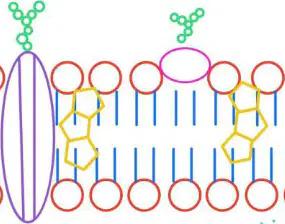
In a small section of a plasma membrane, which component forms the hydrophobic core of the bilayer?
Fatty acid tails of phospholipids
Phospholipid heads
Peripheral proteins
Glycoproteins
Why is the plasma membrane often referred to as a fluid mosaic model?
It is composed of many macromolecules and can move and shift due to hydrophobic interactions
It is rigid and composed of a single type of molecule
It is entirely hydrophilic and does not permit movement
It lacks proteins and is made only of carbohydrates
What is the purpose of the plasma membrane?
To separate the cell from the external environment and selectively allow specific materials to cross
To generate ATP and store energy
To synthesize DNA and RNA
To carry out photosynthesis
What is the difference between unsaturated and saturated tails of phospholipids?
Unsaturated tails have one or more double bonds; saturated tails have only single bonds
Unsaturated tails have only single bonds; saturated tails have double bonds
Unsaturated tails are shorter than saturated tails
There is no difference between them
What causes kinks in the tails of phospholipids?
Double bonds
Single bonds
Protein attachments
Ionic charges
What molecule embeds itself within the membrane and affects fluidity, and how does it affect fluidity at high and low temperatures?
Cholesterol; decreases fluidity at high temperatures and reduces tight packing at low temperatures
Cholesterol; increases fluidity at all temperatures
Water; increases fluidity at high temperatures and decreases at low
Glucose; reduces fluidity regardless of temperature
Differentiate between integral and peripheral proteins.
Integral proteins span or are embedded in the lipid bilayer; peripheral proteins are loosely attached to the surface
Integral proteins are loosely attached to the surface; peripheral proteins span the bilayer
Both are embedded fully in the bilayer
Neither associates with the membrane
How are human cells able to maintain membrane fluidity when they are in cold temperatures?
High amounts of cholesterol prevent tight packing of phospholipid tails and allow movement
They eliminate cholesterol to rigidify the membrane
They convert all lipids to saturated fats
They stop membrane movement entirely
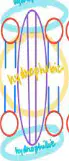
For an integral protein embedded within the plasma membrane, which region is hydrophobic and faces the bilayer’s core?
The transmembrane region
The extracellular domain
The cytosolic peripheral domain
The glycosylated head group
In your own words, what does it mean that the plasma membrane is selectively permeable?
It allows certain substances to cross while blocking others
It allows all substances to cross freely
It blocks all substances from crossing
It only permits water to cross
What qualities of the plasma membrane make it selectively permeable?
It is amphipathic with hydrophilic and hydrophobic portions forming a bilayer
It is purely hydrophilic
It is purely hydrophobic
It is composed only of carbohydrates
Are nonpolar molecules hydrophobic or hydrophilic, and what does this mean for their passage across the plasma membrane?
Hydrophobic; they can pass through the membrane more easily
Hydrophilic; they require no assistance to cross
Hydrophilic; they cannot enter the membrane
Neither; passage is unaffected by polarity
Are polar molecules hydrophobic or hydrophilic, and what does this mean for their passage across the plasma membrane?
Hydrophilic; they have a difficult time crossing the membrane
Hydrophobic; they easily cross the membrane
Hydrophilic; they cross freely without barriers
Hydrophobic; they cannot dissolve in the membrane
Identify each molecule as polar or nonpolar: carbon dioxide, ions, oxygen, water, glucose.
Carbon dioxide is nonpolar
Ions are polar/charged
Oxygen is nonpolar
Water is polar
Glucose is polar
If plant cells have a cell wall, then they cannot exchange material through their plasma membrane. True or false, and why?
False; the plasma membrane is selectively permeable and plants have plasmodesmata
True; the cell wall blocks all exchange
True; only animal cells exchange materials
False; plant cells lack a plasma membrane
What are cell walls composed of?
Cellulose
Chitin
Peptidoglycan
Keratin
What kind of cells have a cell wall, and what is the purpose of a cell wall?
Plants, fungi, bacteria, algae, and some protists; provides structural support, protection, prevents bursting, controls growth
Only animal cells; used for movement
Only bacteria; used for energy production
Plants only; used for photosynthesis
What are the main differences between passive and active transport?
Active transport requires energy (ATP) and can move substances against the concentration gradient; passive transport does not require energy and moves substances down the concentration gradient.
Active transport does not require energy and moves substances down the concentration gradient; passive transport requires ATP and moves substances against the concentration gradient.
Both passive and active transport require ATP and move substances up the concentration gradient.
Passive transport uses vesicles, while active transport only uses channels.
Imagine a room is a cell and someone brings in freshly popped popcorn (gas molecules). The smell slowly drifts through the room. What type of transport is this an example of?
Simple diffusion
Facilitated diffusion
Osmosis
Active transport
In passive transport, molecules move from high to low concentration. Choose the correct description.
From high to low concentration
From low to high concentration
From equal to equal concentration
Randomly without regard to concentration
How are molecules able to go through diffusion? What about them allows this process?
Their constant random motion causes movement down a concentration gradient without requiring energy.
They use ATP to move up a concentration gradient.
They can only move with the help of carrier proteins.
They require external pressure to cross membranes.
How is it possible that animal cells have a high internal concentration of potassium in comparison to their external environments?
A sodium/potassium ATPase pump uses ATP to move 3 sodium ions out of the cell and 2 potassium ions into the cell, building and maintaining the gradient.
Passive diffusion of potassium into the cell is sufficient to maintain a higher internal concentration.
Aquaporins transport potassium across the membrane.
Endocytosis of potassium-containing vesicles maintains the gradient.
What molecule is necessary for active transport?
ATP
NADH
Glucose
Water
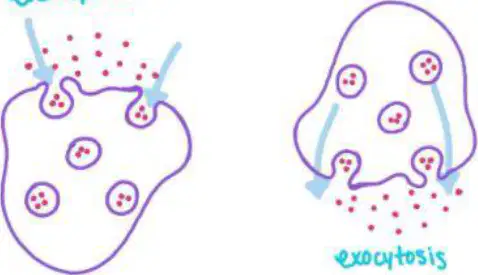
Using the provided diagrams of endocytosis and exocytosis, which statement correctly distinguishes these two processes?
Endocytosis brings substances into the cell via vesicle formation, while exocytosis releases substances by vesicle fusion with the plasma membrane.
Endocytosis releases substances out of the cell; exocytosis brings substances in.
Both processes move substances into the cell.
Neither process involves vesicles.
Is facilitated diffusion a type of active or passive transport? Why?
Passive; substances move down the concentration gradient through transport proteins without energy input.
Active; substances require ATP to move down the concentration gradient through transport proteins.
Passive; substances move up the concentration gradient without energy.
Active; channel proteins always consume ATP to move substances.
Identify the two types of transport proteins involved in facilitated diffusion.
Channel proteins
Carrier proteins
ATPase pumps
Aquaporins
What are two ways water can pass through the cell membrane?
By osmosis across the membrane
Through aquaporin channels
By active transport via ATPase pumps
By symporters that couple water to ions
How does facilitated diffusion affect the rate of diffusion?
It increases the rate of diffusion.
It decreases the rate of diffusion.
It stops diffusion entirely.
It reverses the concentration gradient.
Predict the effect on a cell if there were a mutation that changed the amino acid sequence of the proteins that make up aquaporins.
Reduced permeability to water leading to decreased water uptake; the cell may shrink.
Increased water permeability leading to excessive swelling.
No effect on water movement because aquaporins do not affect permeability.
Aquaporins would convert to ion pumps and increase ion gradients.
How can a chemical gradient be a source of energy for the cell (think about membrane potential)?
Ion gradients store potential energy that the cell can use to power other processes.
Gradients only slow reactions and cannot provide energy.
Chemical gradients consume ATP but never provide energy.
Only temperature gradients provide usable energy.
Contrast concentration gradient to electrochemical gradient.
A concentration gradient refers to the concentration of a particular molecule across a membrane, whereas an electrochemical gradient includes both concentration and membrane potential across the membrane.
A concentration gradient refers only to membrane potential; an electrochemical gradient refers only to concentration.
Both terms mean the same thing.
An electrochemical gradient depends solely on temperature differences.
Which description correctly defines a hypertonic solution and its effects on cells?
Higher solute concentration outside the cell; net movement of water out of the cell. Animal cells shrink; plant cells undergo plasmolysis.
Equal solute concentration inside and outside; no net movement of water; animal and plant cells unchanged.
Lower solute concentration outside the cell; net movement of water into the cell; animal cells swell/burst; plant cells have increased turgor.
Which description correctly defines an isotonic solution and its effects on cells?
Equal solute concentration inside and outside; no net movement of water; animal and plant cells unchanged.
Higher solute concentration outside the cell; net movement of water out; cells shrink.
Lower solute concentration outside the cell; net movement of water in; animal cells swell/burst; plant cells have increased turgor.
Which description correctly defines a hypotonic solution and its effects on cells?
Lower solute concentration outside the cell; net movement of water into the cell. Animal cells may swell/burst; plant cells gain turgor (optimal for plants).
Equal solute concentration inside and outside; no net movement of water.
Higher solute concentration outside the cell; net movement of water out; cells shrink.
In a hypertonic solution, how does a saltwater fish maintain homeostasis?
It must consume water and excrete excess salt.
It must avoid drinking water and retain salt.
It must actively take up salt without excreting it.
It relies only on passive diffusion without regulation.
If the concentration of NaCl inside a plant cell is 0.45 M, which way will water diffuse if the cell is placed in a 0.25 M NaCl solution?
Into the cell, because the outside solution is hypotonic relative to the cell.
Out of the cell, because the outside solution is hypertonic.
No net movement of water will occur.
What is the solute potential of a 0.3 M NaCl solution at 35°C, in bars?
-15.36 bars
-1.53 bars
+15.36 bars
+0.15 bars
Why is compartmentalization important in cells (use lysosomes as an example to support your reasoning)?
It allows different metabolic reactions to occur in separate locations, increases surface area for reactions, prevents interfering reactions, and keeps harmful enzymes (e.g., lysosomal hydrolases) separated.
It reduces reaction efficiency by mixing all enzymes together.
It primarily serves to store water without affecting reactions.
It prevents any transport across membranes.
How do both the mitochondria and chloroplast compartmentalize processes (be specific)?
Mitochondria have an outer membrane, intermembrane space, and an inner membrane with cristae surrounding a matrix; chloroplasts have outer and inner membranes, stroma, and thylakoids.
Mitochondria are single-membrane sacs without internal compartments; chloroplasts are empty vesicles.
Both organelles lack membranes and rely on cytosol only.
Mitochondria and chloroplasts consist solely of ribosomes and DNA without internal membranes.
How does compartmentalization affect surface area?
It increases the internal surface area of a cell to maximize efficiency.
It decreases the surface area and slows reactions.
It has no effect on surface area.
It collapses membranes into a single flat sheet.
Why are the mitochondria highly folded (what is it producing)?
The folds maximize the surface area for ATP synthesis, enhancing ATP production.
The folds store water for osmoregulation.
The folds prevent protein synthesis.
The folds are solely for calcium storage.
How do eukaryotic and prokaryotic cells differ in terms of compartmentalization?
Eukaryotes have membrane-bound organelles; prokaryotes do not.
Prokaryotes have more membrane-bound organelles than eukaryotes.
Both have identical compartmentalization.
Compartmentalization is absent in all cells.
Which statement best describes the endosymbiotic theory?
An ancestral eukaryotic cell engulfed small bacteria that were not digested; the relationship became mutualistic, and over time the bacteria became endosymbionts that persisted as organelles inside the cell.
Organelles were created de novo from plasma membrane invaginations without any symbiosis.
Cells evolved organelles by condensing ribosomes.
The theory claims mitochondria and chloroplasts formed from viral infections.
Which evidence supports the endosymbiotic theory?
Mitochondria and chloroplasts have double membranes, their own circular DNA, their own ribosomes, and are semi-autonomous.
They lack DNA and ribosomes and are fully controlled by the nucleus.
They have single membranes and linear DNA identical to nuclear DNA.
Their membranes are made of peptidoglycan.
Mitochondria and chloroplasts can still be found as free-living prokaryotes (i.e., not in a symbiotic relationship with a eukaryote). True or False?
True
False

