
 Worksheets
🤗HW37: 2.1
Total questions: 110
Worksheet time: 1hrs 12mins

Match each missing word statement with the correct term.
A balanced chemical reaction obeys the law of ___.
conservation of matter
Within the electron cloud there are different ___ of electrons.
energy levels
Rusting metal is an example of a ___ change.
chemical
Sugar dissolving, water boiling and ice melting are examples of ___ changes.
physical

Match each set of properties to the correct kingdom.
Non-motile
Cells have nuclei
Multicellular
Cell wall
Reproduces sexually
Plantae
Cells have nuclei
Membrane-Bound Organelles
No cell wall
Unicellular
Protista
Multicellular
Reproduces via spores
Heterotrophic
Cells have nuclei
Fungi
Multicellular
No cell wall
Small vacuoles
Reproduces sexually
Motile
Animalia
Unicellular
No Nuclei
Reproduces asexually
Pathogenic
Eubacteria
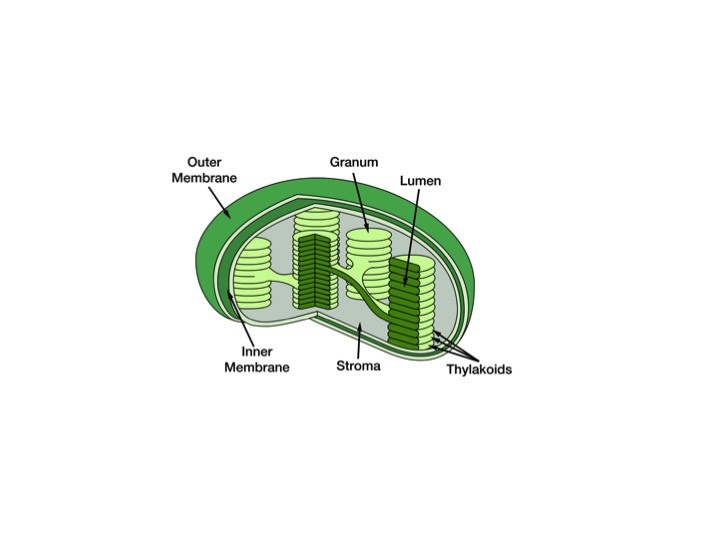

Match each of these terms with the correct meaning.
Covalent Bond
Type of Bond, Sharing of Electrons.
Ionic Bond
Type of Bond, Transferring of Electrons.
Reactant
The start of a chemical reaction (LEFT).
Product
The end of a chemical reaction (RIGHT).
Chemical Equation
An expression that depicts a chemical reaction -
Start → End.

Select the people MOST responsible for your academic performances. (Select all that apply)
ME
me
Me
Duh- Me!
Match each missing word statement with the correct term.
A balanced chemical reaction obeys the law of ___.
conservation of matter
Within the electron cloud there are different ___ of electrons.
energy levels
Rusting metal is an example of a ___ change.
chemical
Sugar dissolving, water boiling and ice melting are examples of ___ changes.
physical

A student uses this diagram of a car using gasoline to model cellular respiration.
How does the diagram model cellular respiration?
The car uses gasoline to make food the car needs for movement.
The car uses gasoline to release energy for movement.
The car uses gasoline to to build structures the car needs for movement.
The car uses gasoline top store waste products made through movement.

Two students study a figure that shows the structure of a single-celled organism. It contains organelles required to perform photosynthesis, release energy from food, move, maintain homeostasis, and store genetic material.
The students agree that the organism is nor part of Kingdom Plantae. Which cell parts are missing from the organism that are commonly found in plant cells?
chloroplast and mitochondrion
cell wall and central vacuole
cell wall and chloroplast
chloroplast and flagellum

What distinguishes a plant cell from an animal cell? (How do you tell them apart) Hint: There's 3 ways (Check all 3)
Central Vacuole
Mitochondria
Cell Wall
Ribosomes
Chloroplasts

Match each of the essential components with its name.
C6H12O6
Glucose
O2
Oxygen
H2O
Water
CO2
Carbon Dioxide
→
makes/produces
Match each of these definitions with its term.
Pure substance made of one type of atom.
element
Two or more different elements chemically combined.
compound
Two or more different substances physically combined.
mixture
Exactly Measurable.
definite
Another term for homogeneous mixture.
solution

Match each term with its correct definition.
Prokaryote
A single-celled organism that does not have a nucleus or membrane-bound organelles.
Eukaryote
Organism made of cells that have nucleus enclosed by membrane.
Cell
Basic building block of living things.
Organism
One individual living thing; anything that can carry out life processes independently.
Organelle
Tiny parts of a cell with a specific function.

Match each of these terms with its correct definition.
unicellular
organism made of one cell
multicellular
organism made of many cells
cell
basic building block of all living things
microscope
tool used for making really small things → BIG
hierarchy
order of organization

Correctly match each of the levels with its example.

Organism

Cell

Tissue

Population

Ecosystem

For each Biological Hierarchical Level match its image.

Population

Biosphere

Organism

Organ System

Ecosystem

Match each of these parts with its corresponding part.
Outline of an object.
Shape
Amount of space something takes up.
Volume
Amount of amounts in an object.
Mass
Anything with mass and volume.
Matter
Exactly Measurable.
Definite

Match each of these terms with its definition.
Description of Matter.
Property
Action of Matter.
Change
Description of matter, indicates features of a sample of matter
Physical Property
Description of matter, depicts the ability of a sample of matter to participate in a reaction.
Chemical Property
Action of matter, results in the creation of a new substance.
Chemical Change
Match each set of properties to the correct kingdom.
Non-motile
Cells have nuclei
Multicellular
Cell wall
Reproduces sexually
Plantae
Cells have nuclei
Membrane-Bound Organelles
No cell wall
Unicellular
Protista
Multicellular
Reproduces via spores
Heterotrophic
Cells have nuclei
Fungi
Multicellular
No cell wall
Small vacuoles
Reproduces sexually
Motile
Animalia
Unicellular
No Nuclei
Reproduces asexually
Pathogenic
Eubacteria
Select the people MOST responsible for your academic performances. (Select all that apply)
ME
me
Me
Duh- Me!
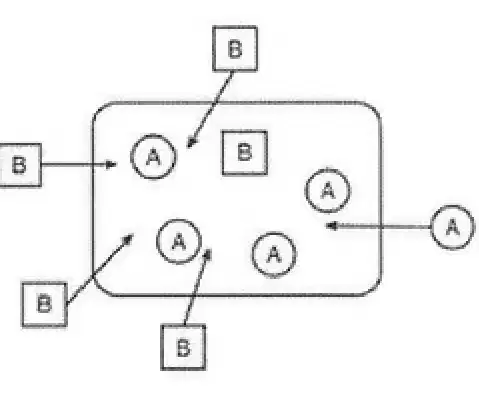
The diagram illustrates a cell membrane regulating passage of essential nutrients. Which property of the membrane is most closely associated with its ability to promote this process?
The cell membrane is completely dependent of proteins for nutrient transport.
The cell membrane is selectively permeable (semi-permeable), ensuring regulated passage of nutrients.
The cell membrane can break down easily for nutrient passage or other functions.
The cell membrane is unstable, thereby allowing nutrients to enter and exit freely.

What is the dominant trait?
yellow pea seeds
green pea seeds
there is no dominant seed
Jolly green giant

What does a Punnett Square do?
tell you exactly what your offspring will look like
increase the chance you pass on recessive traits
predict genotypes and phenotypes in offspring
have no purpose but for Taylor to give us extra assignments

Heredity is the passing of traits from ____ to _____.
predators to prey
water to rain
parents to offspring
fungi to protists

Match each of these definitions with its term.
Another term for Child.
Offspring
Passing genetic information from parent to offspring.
Heredity
Genetic info; map of organism's makeup.
DNA
Characteristic or feature.
Trait
Segment of DNA located on Chromosome.
Gene

Match each term with its definition.
Hetero-
Means different
Homo-
Means same.
-Zygous
Referring to allele or genetic info.
Allele
Version of a gene.
Trait
Characteristic or feature.

Match each of these terms with its meaning.
Dominant Allele
Inherited allele is the more popular version.
Recessive Allele
Inherited allele is the rare version.
Homozygous Dominant
Both alleles are dominant (capital).
Homozygous Recessive
Both alleles are recessive (lowercase).
Probability
Likeliness to occur.

Which of these statements is true (Select all that apply)?
Scientific name has two parts.
Organisms in the same genus can mate and produce fertile offspring.
Scientific names are unique to each organism.
Scientific names are made of domain and kingdom.
Scientific names are made of genus and species.

Match each of the terms with its correct definition.
Photosynthesis
Process of converting solar energy, carbon dioxide and water into glucose sugar and oxygen.
Cellular Respiration
Process of creating ATP (cell energy) from glucose sugar and oxygen.
Carbon Dioxide
Reactant needed by autotrophs, found in the air, exhaled from non-autotrophic beings.
Glucose
Created by producers and used as a reactant in respiration.
Decomposition
Process that continues the cycling of nutrients throughout the ecosystem from decaying parts.
Match each of these images with its description.

Sunlight: Required - Photosynthesis

Central Vacuole

Chloroplasts - Required of Autotrophs

Plasma Membrane - Semi-Permeable

Glucose - C6H12O6

Place these Hierarchical Levels in order, from MOST members to LEAST members.
Domain
Class
Order
Family
Species
Labeling the Animal Cell.
Place a dot on the organelle.
RER
SER
Nucleolus
Nucleus
Cytoplasm
Golgi Body
Labeling Plant Cell.
Place a DOT on the organelle.
Ribosomes
Cell Wall
Cell/Plasma Membrane
Central Vacuole
Chloroplast
Match each of these terms with its meaning.
Dominant Allele
Inherited allele is the more popular version.
Recessive Allele
Inherited allele is the rare version.
Homozygous Dominant
Both alleles are dominant (capital).
Homozygous Recessive
Both alleles are recessive (lowercase).
Probability
Likeliness to occur.

T - tall and t = short. In the Punnett square below, what belongs in the missing square?
tt
Tt
Bb
TT

B = brown fur b = white fur In the Punnett square, what is the probability for white fur?
0%
25%
50%
75%

If T=Tall & t=short, what is the genotypic ratio?
1:3
3:1
1:2:1
2:2

B - black, b - brown. Two black mice mate and have some black and some brown mice. What is the genotype of the parents?
BB x Bb
BB x bb
Bb x Bb
Bb x bb

What are the possible genotypes for this cross?
TT = 25% Tt= 50% tt=25%
all tall
TT= 75% tt = 25%
Tt = 100%

In a certain species of plant, the color purple (P) is dominant to the color white (p). According to the Punnett Square, what is the probability of an offspring being white?
25%
0%
100%
50%

Purple (P) is dominant to the white (p). According to the Punnett Square, what is the probability of an offspring being purple?
25%
0%
100%
50%

What is the yellow seed genotype?
aa
Aa
AA
AA or Aa
What is the dominant trait?
yellow pea seeds
green pea seeds
there is no dominant seed
Jolly green giant

What is the genotypic ratio here?
25% blue eye 75 % brown eye
BB = 25% Bb = 50% bb = 25%
BB= 50 % bb = 50%
All brown eye
What does a Punnett Square do?
tell you exactly what your offspring will look like
increase the chance you pass on recessive traits
predict genotypes and phenotypes in offspring
have no purpose but for Taylor to give us extra assignments

What genotype would go in box 2?
BB
Bb
bb

What genotype would go in box 3?
BB
Bb
bb

What genotype would go in box 1?
BB
Bb
bb
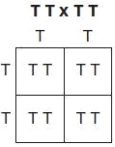
What ratio of the offspring from the cross shown will be homozygous recessive for the trait of tallness?
0 in 4
1 in 4
2 in 4
4 in 4

In a flowering plant species, red flower color (R) is dominant over white flower color (r). What is the genotype of any red-flowering plant resulting from this species?
rr
R
RR
RR or Rr

Which of the characteristics is a lion least likely to pass on to its offspring?
fur color
length of tail
scars on leg
body size
Which of the characteristics is a lion least likely to pass on to its offspring?
fur color
length of tail
scars on leg
body size

How many alleles (letters) does a child get from each parent for each trait?
1
2
3
4
Heredity is the passing of traits from ____ to _____.
predators to prey
water to rain
parents to offspring
fungi to protists

Which trait does a puppy inherit from its parents?
fur color and pattern
obedience to commands
food brand preferences
affection for a specific home

A couple has 6 children, all girls. If the mother gives birth to a 7th child, what is the probability that the seventh child will be a girl?
7 out of 7
6 out of 7
1 out of 2
1 out of 7
Match each term with its definition.
Hetero-
Means different
Homo-
Means same.
-Zygous
Referring to allele or genetic info.
Allele
Version of a gene.
Trait
Characteristic or feature.

Which of these statements is true about Punnett Squares (Select all that apply)?
They are useful to determine likeliness of traits passed to offspring.
Each square is equal to 25% probability of occurrence.
The allele combinations of mom and dad are used.
The allele combinations of the first offspring and one parent are used.
Phenotype percentages can be determined by the percentage outcomes.
Match each of these terms with its meaning.
Dominant Allele
Inherited allele is the more popular version.
Recessive Allele
Inherited allele is the rare version.
Homozygous Dominant
Both alleles are dominant (capital).
Homozygous Recessive
Both alleles are recessive (lowercase).
Probability
Likeliness to occur.

Short tails (T) are dominant to long tails (t). What's the probability of a long-tailed mouse with these parents, Tt x tt?
25%
50%
75%
100%
0%

When combining a plant whose genotype is homozygous dominant for a specific trait with one whose genes are heterozygous for that trait, what's the probability of a heterozygous offspring (use any trait to answer)?
0%
25%
50%
75%
!00%

In seals, the allele for long whiskers is dominant to the allele for short whiskers. What percentage of offspring would be expected to be heterozygous for long whiskers if both parents are heterozygous for long whiskers?
0%
25%
50%
75%
100%

What does the genotype for an allele combination BB represent?
Each letter represents the dominant allele inherited from each parent.
Both letters represent the dominant allele inherited from the mother.
Both letters represent the recessive allele inherited from the father.
Each letter represents the recessive allele inherited from each parent.

In humans, the presence of dimples is dominant to a lack of dimples. If a person without dimples (dd) and a person with dimples (Dd) have children, what can be concluded about the genotypes for the offspring?
There's a 75% chance the offspring will have dimples.
There's a 25% chance the offspring will not have dimples.
There's a 50% chance the offspring will be dd and a 50% chance they'll be Dd.
There's a 50% chance the offspring will be DD and a 50% chance they'll be dd.
In humans, the presence of dimples is dominant to a lack of dimples. If a person without dimples (dd) and a person with dimples (Dd) have children, what can be concluded about the genotypes for the offspring?
There's a 75% chance the offspring will have dimples.
There's a 25% chance the offspring will not have dimples.
There's a 50% chance the offspring will be dd and a 50% chance they'll be Dd.
There's a 50% chance the offspring will be DD and a 50% chance they'll be dd.

How is it possible for an organism to have a recessive phenotype for a trait such as white flowers in pea plants?
The organism inherits the recessive allele from one parent.
The organism inherits the recessive allele from both parents.
The organism fails to inherit the alleles for the trait from either parent.
The organism obtains its traits from the environment.

Match each Element with its correct atomic number.
Ne
10
Na
11
N
7
Ti
22
F
9

Match the following.
Subatomic particle with +1 Charge.
Proton
Subatomic particle with -1 Charge.
Electron
Subatomic particle with 0 Charge.
Neutron
Center Region of Atom, Positively Charged.
Nucleus
Outer Region of Atom, Negatively Charged.
Electron Cloud

Match each term with its definition.
Solid
Definite Shape and Definite Volume
Liquid
Indefinite Shape and Definite Volume
Gas
Indefinite Shape and Indefinite Volume
Matter
Anything with Mass and Volume
Mass
Amount of Atoms
Identify each element as Metal (M+), Non-Metal (NM-) or Metalloid (ML).
O
NM-
Al
M+
Po
ML
Match the following.
Center Region of Atom, Positively Charged.
Nucleus
Outer Region of Atom, Negatively Charged.
Electron Cloud
The Number of Protons.
Atomic Number
The amount of Nucleons.
Mass Number
Occurs with different amounts of Neutrons.
Isotope
Match the following.
Class of Element, Shiny, Ductile, Malleable, and Great Electrical Conductor.
Metal
Class of Element, Dull, Brittle and Poor Electrical Conductor.
Non-Metal
Class of Element, Properties in Between M+ and NM-, Semi-Conductors.
Metalloid
Small number in chemical formula, indicates the number of atoms present for the element it follows.
Subscript
Large number in FRONT of chemical formula, used as a multiplier for the ENTIRE compound.
Coefficient
Match each of these definitions with its term.
Another term for Child.
Offspring
Passing genetic information from parent to offspring.
Heredity
Genetic info; map of organism's makeup.
DNA
Characteristic or feature.
Trait
Segment of DNA located on Chromosome.
Gene
Match each of these functions with its organelle.
Brain of the cell; controls all cellular functions.
Nucleus
Site of photosynthesis; process that converts carbon dioxide and water to glucose.
Chloroplasts
Detoxifiers of the cell; trashman.
Lysosomes
Jelly of the cell; maintains organelle motility and cellular shape.
Cytoplasm
Powerhouse of the cell; converts cellular food into cellular energy (ATP).
Mitochondria
Match each of these functions with its organelles.
Factory that prepares proteins for distribution throughout the cell.
Endoplasmic Reticulum
Located in the center of the nucleus; most concentrated area of DNA.
Nucleolus
Synthesizes proteins.
Ribosomes
Provides structure and supports cellular pressure.
Cell Wall
Flatten-sacs that are packaging agents; shipping proteins and lipids in and out of the cell.
Golgi Body

What is the order of the taxonomic levels from least specific to most specific?
Kingdom, Family, Species, Order, Class, Phylum, Genus
Kingdom, Phylum, Class, Order, Family, Genus, Species
Species, Order, Kingdom, Family, Genus, Phylum, Class
Species, Genus, Family, Order, Class, Phylum, Kingdom

Match each of these organelles with its relatable role.
Lysosome
Trashman
Nucleus
Mayor
Vacuole
Ziploc Bag
Cell/ Plasma Membrane
Doorman
Golgi Body
Fedex Shipper
Match each of these organelles with its relatable role.
Ribosomes
Small Protein Factory
Cytoplasm
Jelly
SER
Factory for Lipids
Cell/ Plasma Membrane
Doorman
Golgi Body
Fedex Shipper
Labeling Plant Cell.
Place a DOT on the organelle.
Ribosomes
Cell Wall
Cell/Plasma Membrane
Central Vacuole
Chloroplast
Labeling the Animal Cell.
Place a dot on the organelle.
RER
SER
Nucleolus
Nucleus
Cytoplasm
Golgi Body
Labeling the Animal Cell.
Place a dot on the organelle.
Plasma Membrane
Lysosome
Mitochondria
RER
SER
Nucleolus
For each Biological Hierarchical Level match its image.
Population

Tissue

Community

Biome

Organ System
For each Biological Hierarchical Level match its image.
Population
Biosphere
Organism
Organ System
Ecosystem
Correctly match each of the levels with its example.
Organism
Cell
Tissue
Population
Ecosystem


Eukaryotic cells can include _______ (Select all that apply).
protists
plants
animals
fungi

Which of these is a chemical change (Select all that apply)?
odor change
fizzing and popping
In a certain species of plant, the color purple (P) is dominant to the color white (p). According to the Punnett Square, what is the probability of an offspring being white?
25%
0%
100%
50%
Purple (P) is dominant to the white (p). According to the Punnett Square, what is the probability of an offspring being purple?
25%
0%
100%
50%
What is the genotypic ratio here?
25% blue eye 75 % brown eye
BB = 25% Bb = 50% bb = 25%
BB= 50 % bb = 50%
All brown eye
What does a Punnett Square do?
tell you exactly what your offspring will look like
increase the chance you pass on recessive traits
predict genotypes and phenotypes in offspring
have no purpose but for Taylor to give us extra assignments
What genotype would go in box 1?
BB
Bb
bb
What ratio of the offspring from the cross shown will be homozygous recessive for the trait of tallness?
0 in 4
1 in 4
2 in 4
4 in 4
How many alleles (letters) does a child get from each parent for each trait?
1
2
3
4
Which of these statements is true about Punnett Squares (Select all that apply)?
They are useful to determine likeliness of traits passed to offspring.
Each square is equal to 25% probability of occurrence.
The allele combinations of mom and dad are used.
The allele combinations of the first offspring and one parent are used.
Phenotype percentages can be determined by the percentage outcomes.
Short tails (T) are dominant to long tails (t). What's the probability of a long-tailed mouse with these parents, Tt x tt?
25%
50%
75%
100%
0%

Brown fur (B) is dominant to white fur (b) in rabbits. Which genotype would result from two parents that are homozygous for brown fur?
BB
Bb
bb
b
B
What does the genotype for an allele combination BB represent?
Each letter represents the dominant allele inherited from each parent.
Both letters represent the dominant allele inherited from the mother.
Both letters represent the recessive allele inherited from the father.
Each letter represents the recessive allele inherited from each parent.
In humans, the presence of dimples is dominant to a lack of dimples. If a person without dimples (dd) and a person with dimples (Dd) have children, what can be concluded about the genotypes for the offspring?
There's a 75% chance the offspring will have dimples.
There's a 25% chance the offspring will not have dimples.
There's a 50% chance the offspring will be dd and a 50% chance they'll be Dd.
There's a 50% chance the offspring will be DD and a 50% chance they'll be dd.
Identify each element as Metal (M+), Non-Metal (NM-) or Metalloid (ML).
O
NM-
Al
M+
Po
ML

Match each subsystem with its major parts.
Excretory
Kidneys, Liver, Lungs, Bladder, Ureters, Urethra, & Rectum.
Circulatory
Heart, Blood, Veins & Arteries
Muscular
Cardiac Muscle, Skeletal Muscle, & Smooth Muscle.
Nervous
Brain, Nerves, & Spinal Cord.
Respiratory
Nose, Lungs, Trachea, Larynx, Diaphragm

What does homeostasis maintain in the body?
A changing internal environment
A constant or stable internal environment
A changing external environment
A constant or stable external environment

What three systems work together to move the body?
Skeletal, Muscular, Nervous
Skeletal, Respiratory, Digestive
Nervous, Circulatory, Skeletal
Circulatory, Respiratory, Digestive

Match each subsystem with its alternate name.
Cardiovascular
Circulatory, Blood
Integumentary
Skin
Excretory
Urinary
Respiratory
Lung
Skeletal
Bone

Liquid in the mouth that helps in digestion.
bile
saliva
water
plasma

When large pieces of food are cut and crushed into smaller pieces.
Mechanical (Physical) Digestion
Chemical Digestion
Ingestion
Excretion

Which digestive organ removes water from mostly digested food, turns waste into feces?
small intestine
large intestine
esophagus
stomach

What is labeled at number 3?
Small intestine
Rectum
Large intestine
Stomach


Activity that happens in the small intestine.
Mechanical Breakdown
Chemical Breakdown
Nutrient Absorption
Water Absorption/ Solid Waste Production

Match each subsystem with its major parts.
Circulatory
Heart, Blood, & Blood Vessels.
Respiratory
Nose, Mouth, Lungs, Trachea, Larynx, & Diaphragm.
Skeletal
Bones, Joints, & Marrow.
Digestive
Mouth, Esophagus, Stomach, Liver, Pancreas, Small & Large Intestines
Integumentary
Skin, Hair, & Nails.

