
Behaviour 2: Rats, Pigeons and Operant Conditioning

Presentation
•
Science
•
9th - 12th Grade
•
Practice Problem
•
Hard

Thomas Greenland-Jones
FREE Resource
17 Slides • 16 Questions
1

Introduction to Animal
Learning Theory
The Four Fathers, their animals and why they are
important
Learners will be introduced to key behaviourists and ethologists in animal behaviour studies
Learners will be able to define behaviour, stimulus and response,
understand the principles of classical and operant conditioning, and cause and effect
Learners will be able to distinguish between non-associative and
associative learning
Learners will be able to connect animal behaviours with types of learning theory.
2
Multiple Choice
Behaviour is a response to a stimulus
True
False
3
Multiple Choice
There are only innate behaviours
True
False
4
Multiple Choice
Stickleback don't like which of these colours?
This Blue
This Green
This Yellow
This Red
5
Multiple Choice
Ivan Pavlov used dogs to demonstrate which learning theory
Innate behaviours
Habituation
Classical Conditioning
Imprinting
6
Match
Match the following
Learning in which two or more stimuli are paired together
Learning in which no stimuli are paired together
An increase in response to a behaviour
A decrease in response to a stimulus
Associative Learning
Non-associative learning
Habituation
Sensitisation
Associative Learning
Non-associative learning
Habituation
Sensitisation
7
Open Ended
Define Stimulus
8

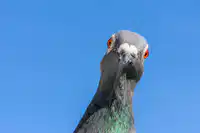
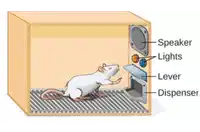
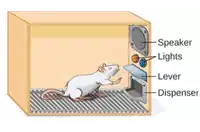
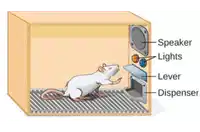
B.F. Skinner described using rats and pigeons how animal behaviour can be reinforced or punished using positive or negative stimuli.
Positive stimuli are good things - sweets, chocolate, going home early etc.
Negative (or aversive) stimuli are bad things - bee stings, hot stoves, Liverpool FC
B.F Skinner's
pigeon boxes
Learners will be introduced to key behaviourists and ethologists in animal behaviour studies
9
Hotspot
Money!
10
Hotspot
Electric Shock!
11
Hotspot
Getting Full Marks in an Assignment!
12
Hotspot
Getting Grounded!
13
Hotspot
Tickets to Liverpool FC game!
14
Hotspot
Listening to Lil Yachty
15
This was known as Operant conditioning.
Where animals can associate a stimulus with a behaviour, and operate accordingly.
This takes trial and error to learn.
Try out the Click Here link and go through the interactive lesson.
B.F Skinner's
pigeon boxes
Learners will be introduced to key behaviourists and ethologists in animal behaviour studies
16
Multiple Choice
This is a form of associative learning... What does associative learning mean?
Where learning occurs by pairing stimuli together
Where learning occurs with only one stimulus
Behaviours that occur from birth (genetically predisposed)
A series of behaviours triggered by a key stimulus
17


Remember
these terms
Negative
To remove a
stimulus
Positive
To add a
stimulus
Reinforcement
To increase a
behaviour
Remove a
stimulus to
increase a
behaviour
Add a stimulus
to increase a
behaviour
Punishment
To reduce a
behaviour
Remove a
stimulus to
reduce a
behaviour
Add a stimulus
to reduce a
behaviour
Skinner’s Operant Conditioning Terms
Positive Reinforcement
Negative Reinforcement
Positive Punishment
Negative Punishment
The four types of operant conditioning are
used to modify the behaviour of an animal
18
19
Open Ended
In your own words, what is operant conditioning?
20
21
Poll
Why was the pigeon turning?
Being instructed to
Being forced to
Trial and Error
Innate behaviour
22
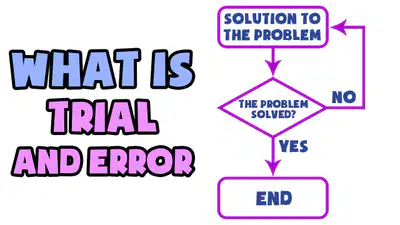

Where an animal ''experiments'' with a range of behaviours until a desired consequence is found
Trial and Error
You may try to find the fastest route to college/work.
You will learn that one way is quicker than another only by experimenting with different routes
For instance
23


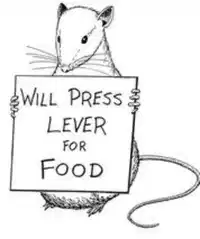
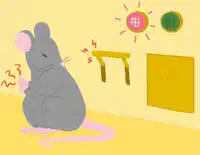


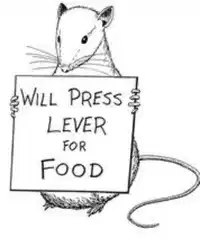
Let’s play
Put the rat in the box!
24

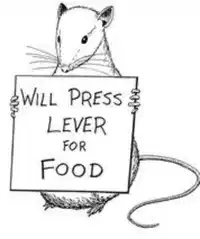
Reinforcement vs Punishment
Back to the 1940s -
the golden age
of animal behaviour
Put the rat in the box
Punishment
Reinforcement
Negative
1
2
Positive
3
4
Learners will be able to define behaviour, stimulus and
response, understand the principles of classical and
operant conditioning, and cause and effect
25

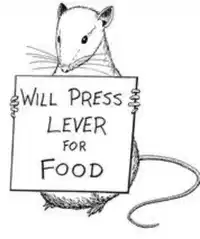
Reinforcement vs Punishment
Back to the 1940s -
the golden age
of animal behaviour
Positive reinforcement
Punishment
Reinforcement
Negative
1
2
Positive
3
4
Learners will be able to define behaviour, stimulus and
response, understand the principles of classical and
operant conditioning, and cause and effect
26

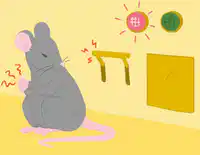
Reinforcement vs Punishment
Back to the 1940s -
the golden age
of animal behaviour
Put the rat in the box
Punishment
Reinforcement
Negative
1
2
Positive
3
4
Learners will be able to define behaviour, stimulus and
response, understand the principles of classical and
operant conditioning, and cause and effect
27

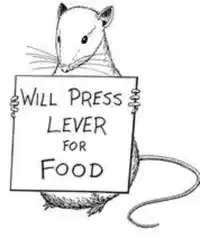
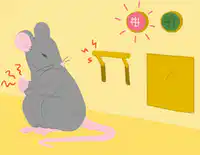
Reinforcement vs Punishment
Back to the 1940s -
the golden age
of animal behaviour
Punishment
Reinforcement
Negative
1
2
Positive
3
4
Learners will be able to define behaviour, stimulus and
response, understand the principles of classical and
operant conditioning, and cause and effect
Positive Punishment
28

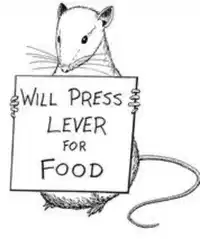
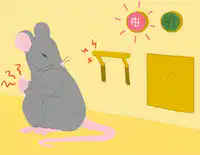
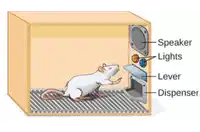
Reinforcement vs Punishment
Back to the 1940s -
the golden age
of animal behaviour
Put the rat in the box
Punishment
Reinforcement
Negative
1
2
Positive
3
4
Learners will be able to define behaviour, stimulus and
response, understand the principles of classical and
operant conditioning, and cause and effect
29
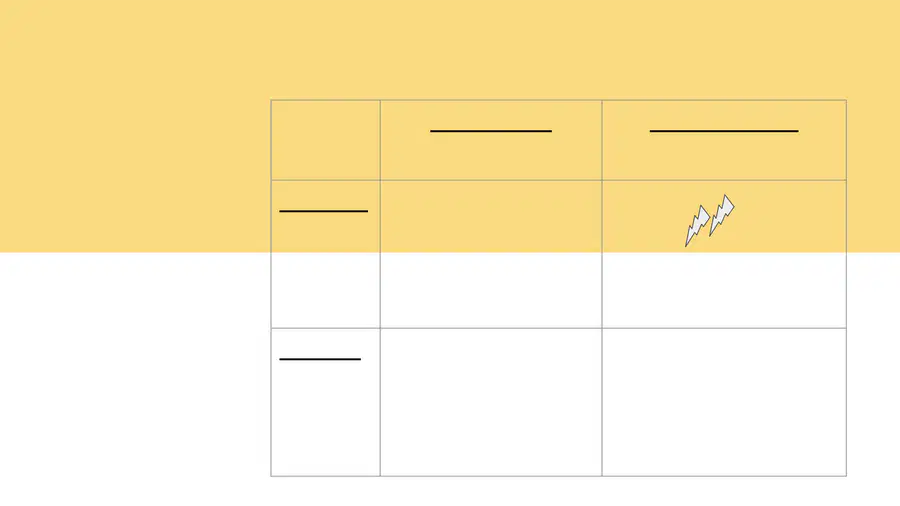

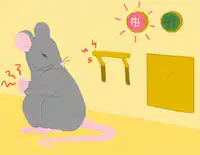
Reinforcement vs Punishment
Back to the 1940s -
the golden age
of animal behaviour
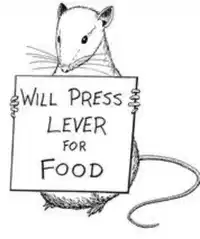
Negative Reinforcement
Punishment
Reinforcement
Negative
1
2
Positive
3
4
Learners will be able to define behaviour, stimulus and
response, understand the principles of classical and
operant conditioning, and cause and effect
30

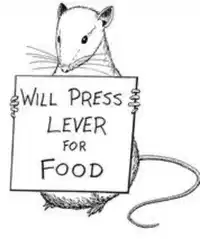
Reinforcement vs Punishment
Back to the 1940s -
the golden age
of animal behaviour
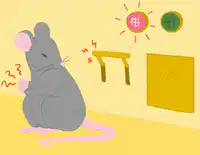
What could go here?
Think of a way that
you could remove a
stimulus to reduce
a behaviour
Punishment
Reinforcement
Negative
1
2
Positive
3
4
Learners will be able to define behaviour, stimulus and
response, understand the principles of classical and
operant conditioning, and cause and effect
31

Given a positive consequence
Increase the behaviour
Positive Reinforcement
Given an aversive consequence
Decrease the behaviour
Positive Punishment
Take away an aversive consequence
Increase the behaviour
Negative Reinforcement
Take away a good consequence
Decrease the behaviour
Negative punishment



32
Match
Match the following
Positive Punishment
Positive Reinforcement
Negative Reinforcement
Negative Punishment
Shouting, Hitting an animal
Give an animal some food
Stop loud music from playing
Take away toys
Shouting, Hitting an animal
Give an animal some food
Stop loud music from playing
Take away toys
33

Something to
think about at
home
How does operant conditioning apply to you?
What happens in your life that is influenced by
operant conditioning?
?
Introduction to Animal
Learning Theory
The Four Fathers, their animals and why they are
important
Learners will be introduced to key behaviourists and ethologists in animal behaviour studies
Learners will be able to define behaviour, stimulus and response,
understand the principles of classical and operant conditioning, and cause and effect
Learners will be able to distinguish between non-associative and
associative learning
Learners will be able to connect animal behaviours with types of learning theory.
Show answer
Auto Play
Slide 1 / 33
SLIDE
Similar Resources on Wayground

26 questions
Homeostasis 1
Presentation
•
9th - 12th Grade
25 questions
PS Day 2 of Chapter 4
Presentation
•
9th - 12th Grade
24 questions
Forensics Observation
Presentation
•
9th - 12th Grade
28 questions
ESP April, 4
Presentation
•
9th - 12th Grade
29 questions
Buddhism
Presentation
•
9th - 12th Grade
29 questions
The Persecuted Church - Eritrea
Presentation
•
9th - 12th Grade
23 questions
Hard Drives
Presentation
•
9th - 12th Grade
Popular Resources on Wayground
11 questions
Hallway & Bathroom Expectations

Quiz
•
6th - 8th Grade
10 questions
HCS SCI 03 Summer School Assessment 2
Quiz
•
3rd Grade
11 questions
Home Scope
Quiz
•
7th - 8th Grade
12 questions
2026 TAP Technology in the Classroom
Presentation
•
Professional Development
15 questions
HCS SCI 05 Summer School Assessment 2 Review
Quiz
•
5th Grade
15 questions
HCS SCI 04 Summer School Review 2
Quiz
•
4th Grade
59 questions
Geometry Unit 3 Review
Quiz
•
9th - 12th Grade
14 questions
FAST ELA READING SMAPLE TEST MATERIALS

Passage
•
3rd Grade