

PS.Chem 2.1 Coloring the PT's Groups

Presentation
•
Science
•
9th - 12th Grade
•
Medium
+11
Standards-aligned

Julie Combs
Used 2+ times
FREE Resource
23 Slides • 31 Questions
1

2
SPDF Blocks
Please use your new periodic table to:
Outline
S block
P block
D block
F block
Re-number the "floors"

Please do NOT color or mark on the arrows!
3

Questions Ahead...
4
Multiple Choice
5
Multiple Choice
6
Multiple Choice
7
Multiple Choice
Which of the following elements is NOT a metalloid?
CARBON (C)
BORON (B)
ARSENIC (As)
8
Multiple Choice
How many valence electrons do metalloids have?
1–2
2–4
3–6
9
Multiple Choice
Which element is NOT a metalloid?
ANTIMONY (Sb)
TELLURIUM (Te)
ALUMINUM (Al)
10
Multiple Choice
Which of the following is a nonmetal?
CALCIUM (Ca)
SULFUR (S)
POTASSIUM (K)
11
12


Make sure you are taking notes in your packet!
Please follow instructions carefully.
You will go between notes and coloring on your Periodic Table.
13
Located in Group 1 (except Hydrogen)
Extremely reactive--they want to lose 1 electron to become "noble gas" like

14
15
The color does not matter, however make sure you ONLY color the Alkali Metals. Make sure to fill in your color key!

16
Located in Group 2
Also very reactive
Both Group 1 & 2 occur naturally as compounds
not individual elements
Needs to lose 2 electrons to become "noble gas like"

17
18
The color does not matter, however make sure you ONLY color the Alkaline Earth Metals. DO NOT color inside the arrow! Make sure to fill in your color key!
19
Located in Group 7
Very active nonmetals
Want to gain 1 electron to become more like a noble gas

20
21
The color does not matter, however make sure you ONLY color the Halogens. Make sure to fill in your color key!
22
Group 8
Sometimes called "inter gases" since generally they NEVER react
Mainly, but not always true, Kr & Xe will sometimes react
Have a full valence shell (8 electrons
Look at you, taking notes!

23
The color does not matter, however make sure you ONLY color the Noble Gases. Make sure to fill in your color key!
24
Located in the center of the Periodic Table
10 elements wide (d block)
Semi-reactive, very valuable, crucial to many life processes

The Yellow color only!
25
26
The color does not matter, however make sure you ONLY color the Transition Metals. DO NOT color inside the arrow! Make sure to fill in your color key!
27
Located at the bottom of the Periodic Table
14 elements wide (f block)
Some are radioactive, but NOT all
Lanthanides = Period 6(4f)
Actinides = Period 7 (5f)


28
The color does not matter, however make sure you ONLY color the Lanthanides & Actinides. Make sure to fill in your color key!
29
Knowledge check ahead...
30
Multiple Choice
Which element is similar to Li?
Be
K
Fe
I
31
Multiple Choice
Which element is similar to Mg?
Ca
B
O
Cl
32
Multiple Choice
Which element is similar to B?
C
Al
Cl
Na
33
Multiple Choice
Which element is similar to He?
H
Ar
Au
Hg
34
Multiple Choice

35
Multiple Choice
36
Multiple Choice
37
Multiple Choice
What is the name of group number 1?
halogens
noble gases
alkali metals
alkaline earth metals
38
Multiple Choice
What is the name of group number 2?
transition metals
halogens
metaloids
alkaline earth metals
39
Multiple Choice
What group number are the halogens found?
18 (8A)
1
2
17 (7A)
40
Multiple Choice
Periodic law states that the elements are arranged according to their atomic ________ so that elements with similar chemical properties are in the same ________ and properties repeat periodically.
numbers, rows
masses, rows
masses, column
numbers, column
41
Multiple Choice
42
Multiple Choice
Name this group: These metals contain familiar metals such as gold, iron, and copper.
43
Multiple Choice

Which element is found in group 2, period 6?
Oxygen (O)
Barium (Ba)
Selenium (Se)
Carbon (C)
44
Multiple Choice
Which halogen is found in period 4?
Krypton (Kr)
Xenon (Xe)
Bromine (Br)
Iodine (I)
45
Multiple Choice
Which element has similar chemical properties as sodium (Na) but has 7 energy levels?
Francium (Fr)
Cesium (Cs)
Rubidium (Rb)
Potassium (K)
46
Multiple Choice
47
Multiple Choice
48
Multiple Choice
How many valence electrons does Phosphorus have?
31
5
15
4
49
Multiple Choice
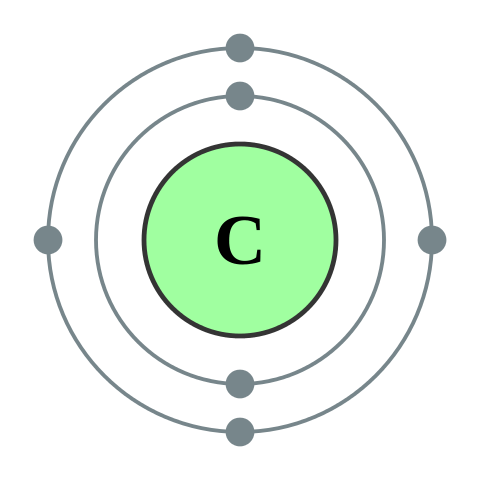
How many valence electrons does carbon have?
4
5
6
7
50
Multiple Choice

How many valence electrons?
51
Multiple Choice
52
Multiple Choice
53
Multiple Choice
How many valence electrons are in the following configuration?
1s22s22p63s2
6
8
2
12
54

Does your PT look like this?
Show answer
Auto Play
Slide 1 / 54
SLIDE
Similar Resources on Wayground

48 questions
Review: Metamorphic Rocks & Rock Cycle
Presentation
•
9th - 11th Grade
46 questions
Properties of Water
Presentation
•
9th - 12th Grade
50 questions
Plant Structure SC.912.L.14.7
Presentation
•
9th - 12th Grade
49 questions
Trophic Levels and Energy Transfers
Presentation
•
9th - 12th Grade
50 questions
7.1 Mole Relationships Honors
Presentation
•
9th - 12th Grade
46 questions
Inclined Planes
Presentation
•
9th - 12th Grade
49 questions
2.4b: Periodic Trends
Presentation
•
9th - 12th Grade
Popular Resources on Wayground
10 questions
How much do you know about our Portrait of an Eagle?

Quiz
•
10th Grade
10 questions
Fast Food Slogans
Quiz
•
6th - 8th Grade
21 questions
Continents and Oceans
Quiz
•
6th Grade
20 questions
Parts of Speech
Quiz
•
5th Grade
16 questions
Subject & Predicate
Quiz
•
5th Grade
25 questions
Multiplication Facts
Quiz
•
5th Grade
12 questions
Map Skills
Quiz
•
3rd Grade
22 questions
Continents and Oceans
Quiz
•
5th Grade
Discover more resources for Science
10 questions
Exploring Chemical and Physical Changes

Interactive video
•
6th - 10th Grade
20 questions
Atomic Structure
Quiz
•
9th Grade
10 questions
Decoding the Periodic Table of Elements
Interactive video
•
6th - 10th Grade
10 questions
Exploring the Periodic Table
Interactive video
•
6th - 10th Grade
14 questions
Physical and Chemical Changes
Quiz
•
10th Grade
22 questions
Periodic Table Review
Quiz
•
9th - 12th Grade
20 questions
Observation vs. Inference
Quiz
•
7th - 9th Grade
14 questions
Periodic Trends
Interactive video
•
11th Grade