Free Printable Acid Base Reactions Worksheets for Year 9
Year 9 acid base reactions worksheets from Wayground provide comprehensive printables and practice problems to help students master chemical reactions between acids and bases, complete with answer keys and free PDF resources.
Explore printable Acid Base Reactions worksheets for Year 9
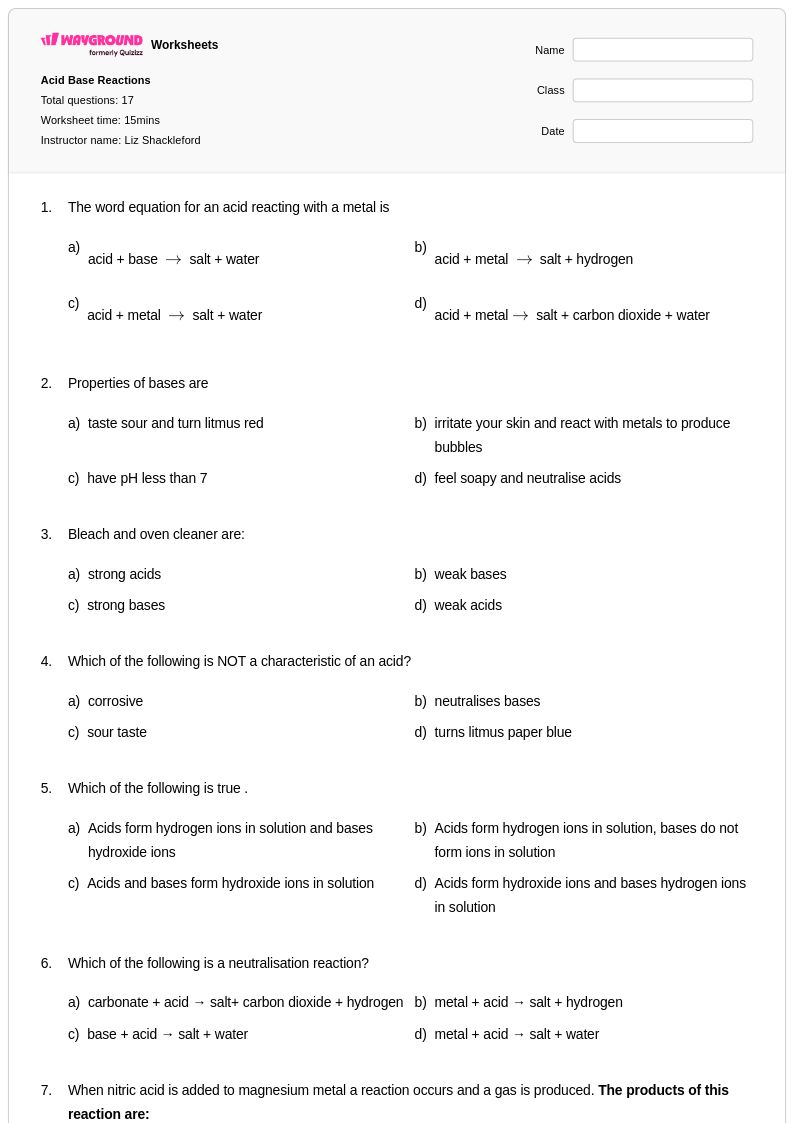
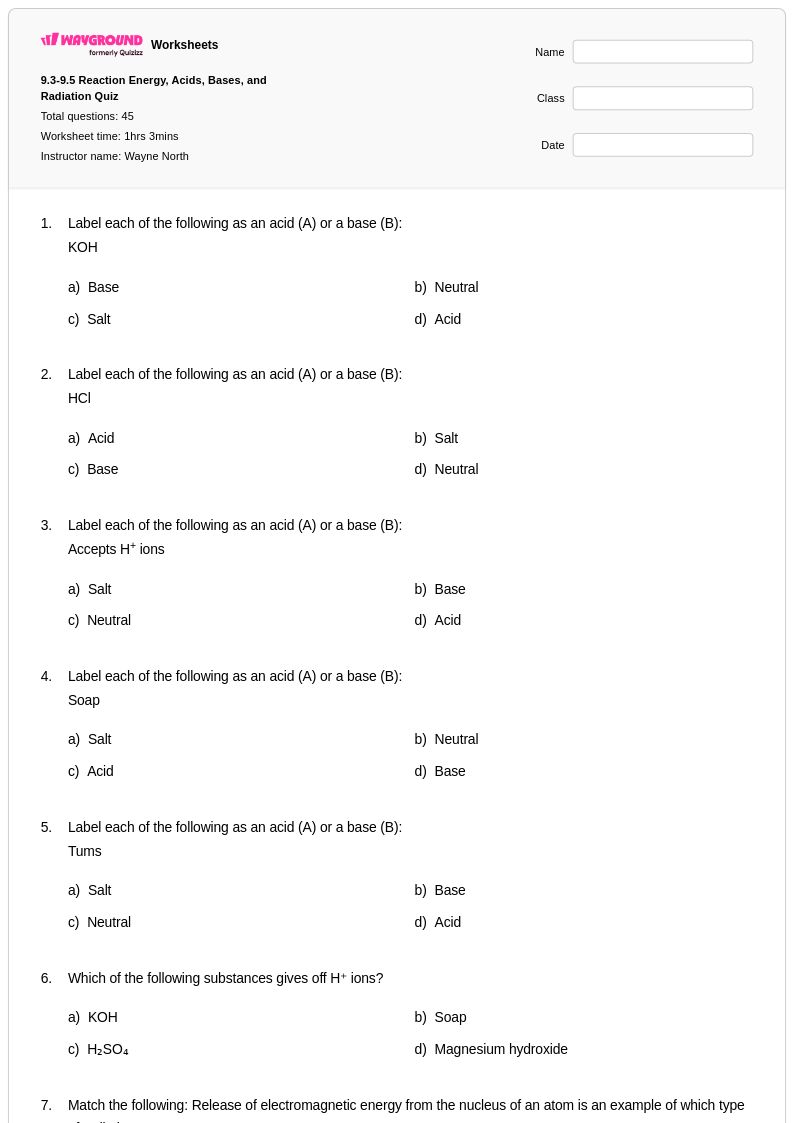
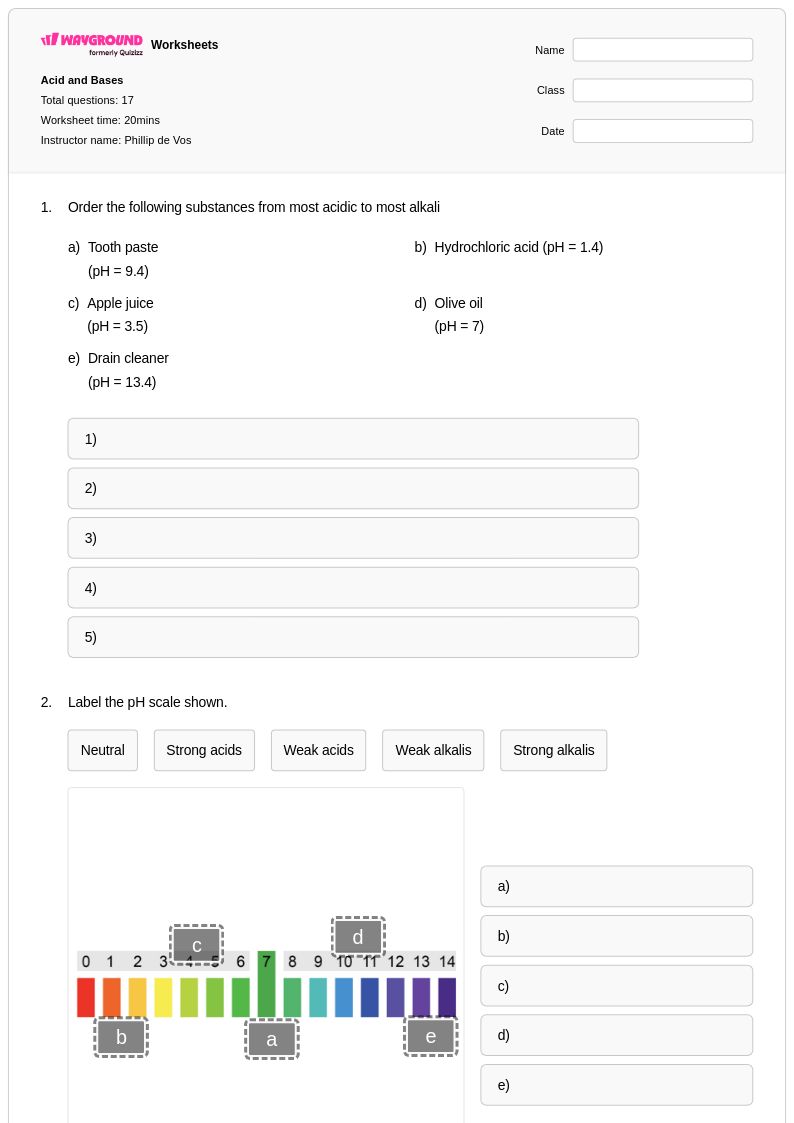
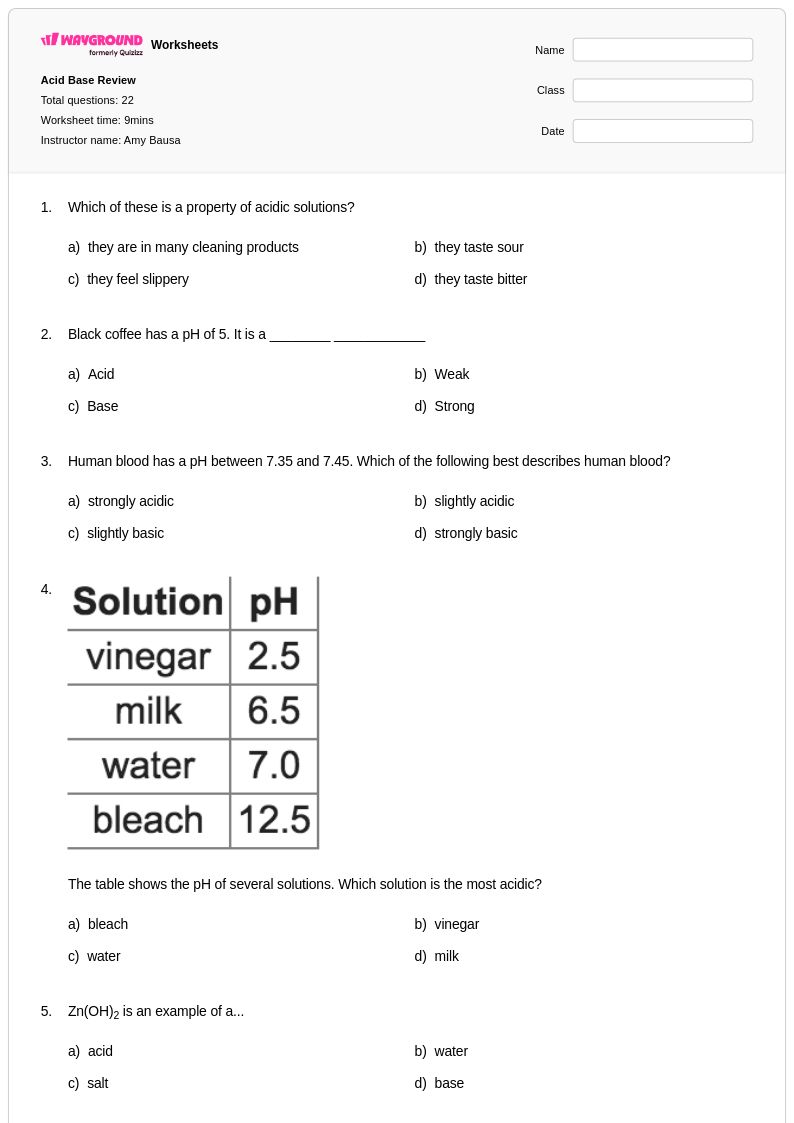
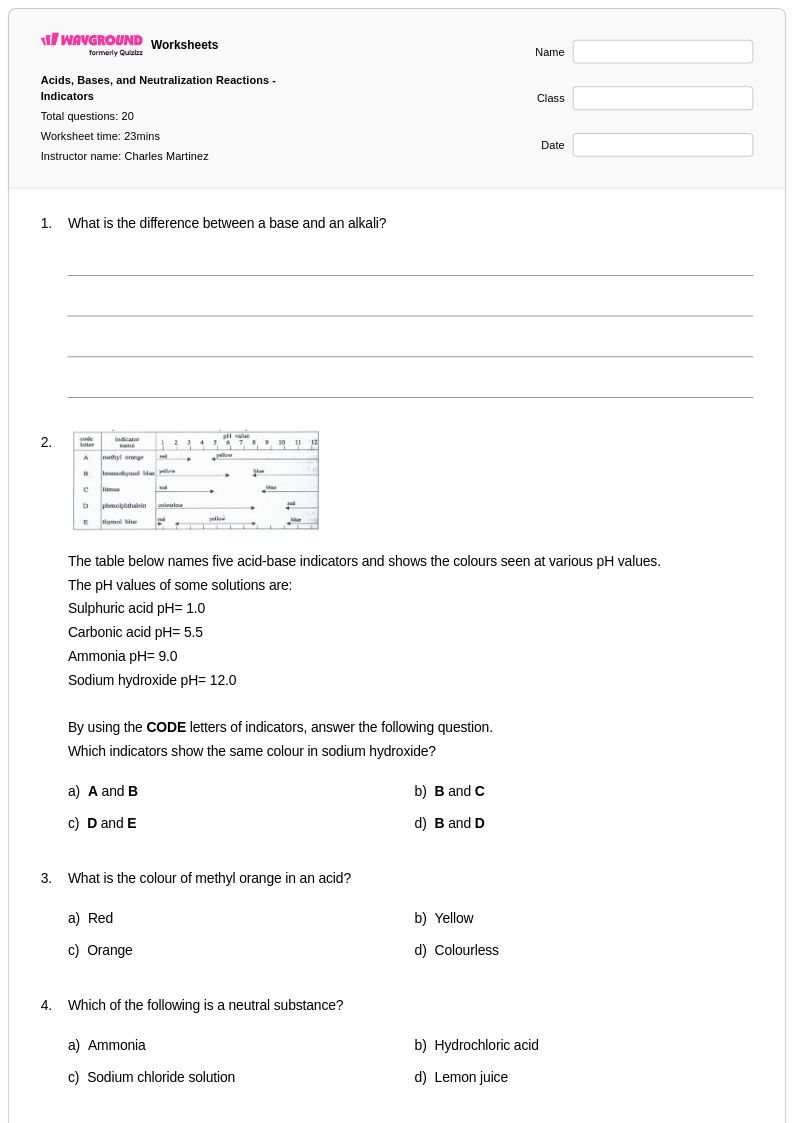
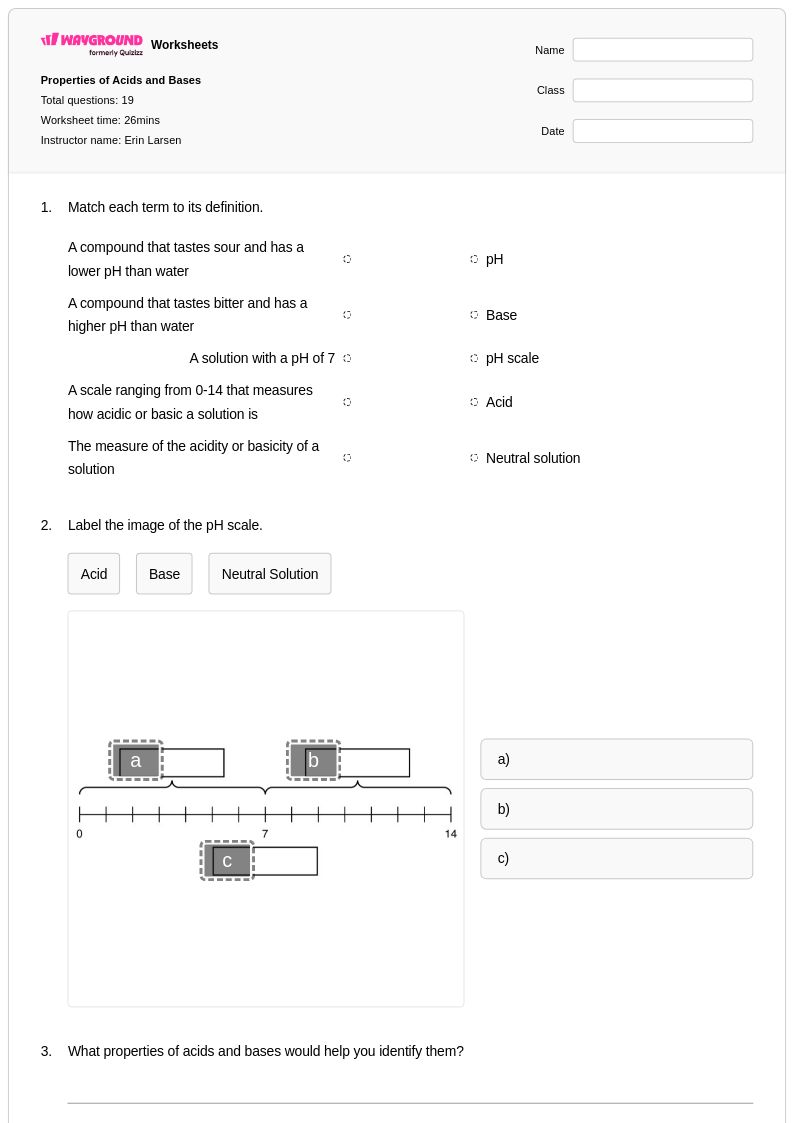
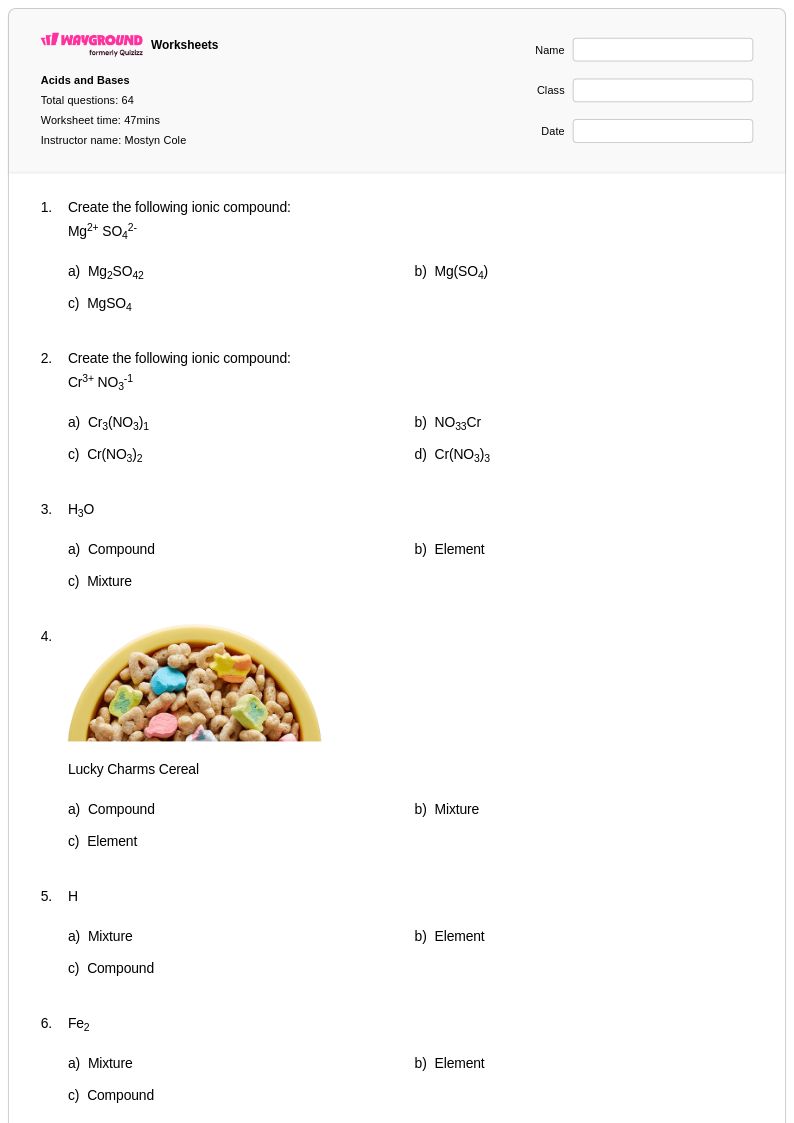
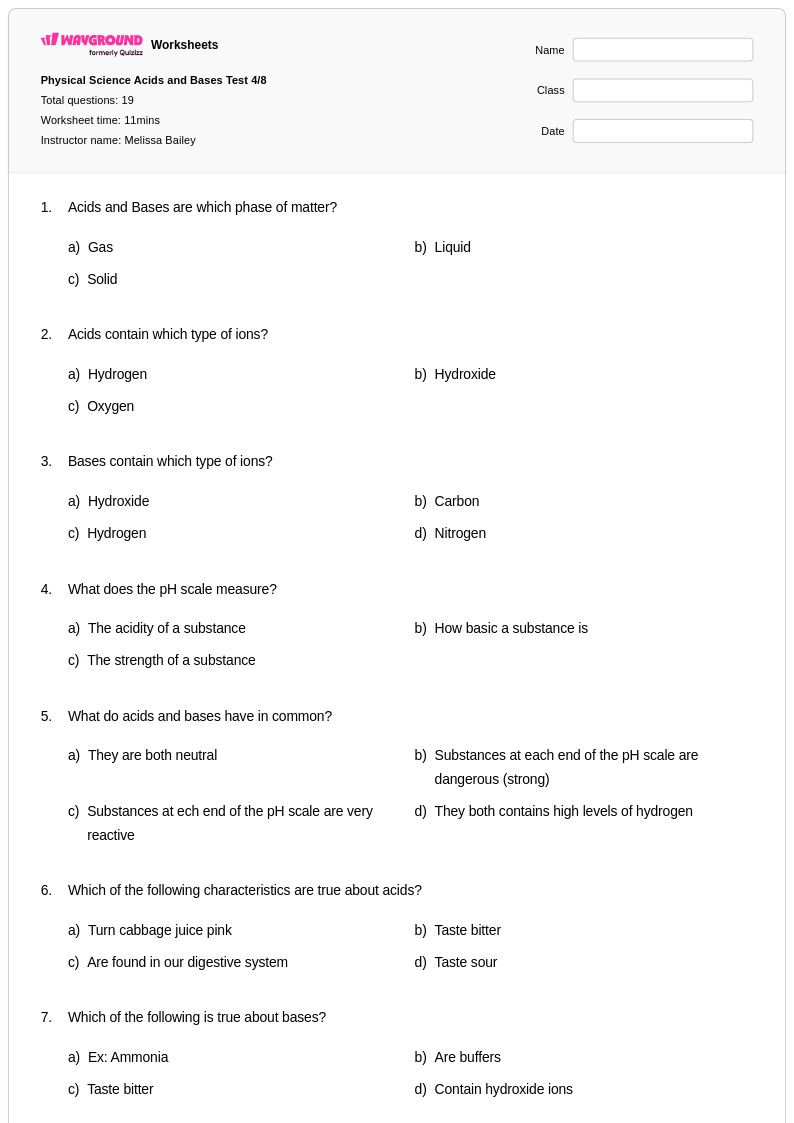
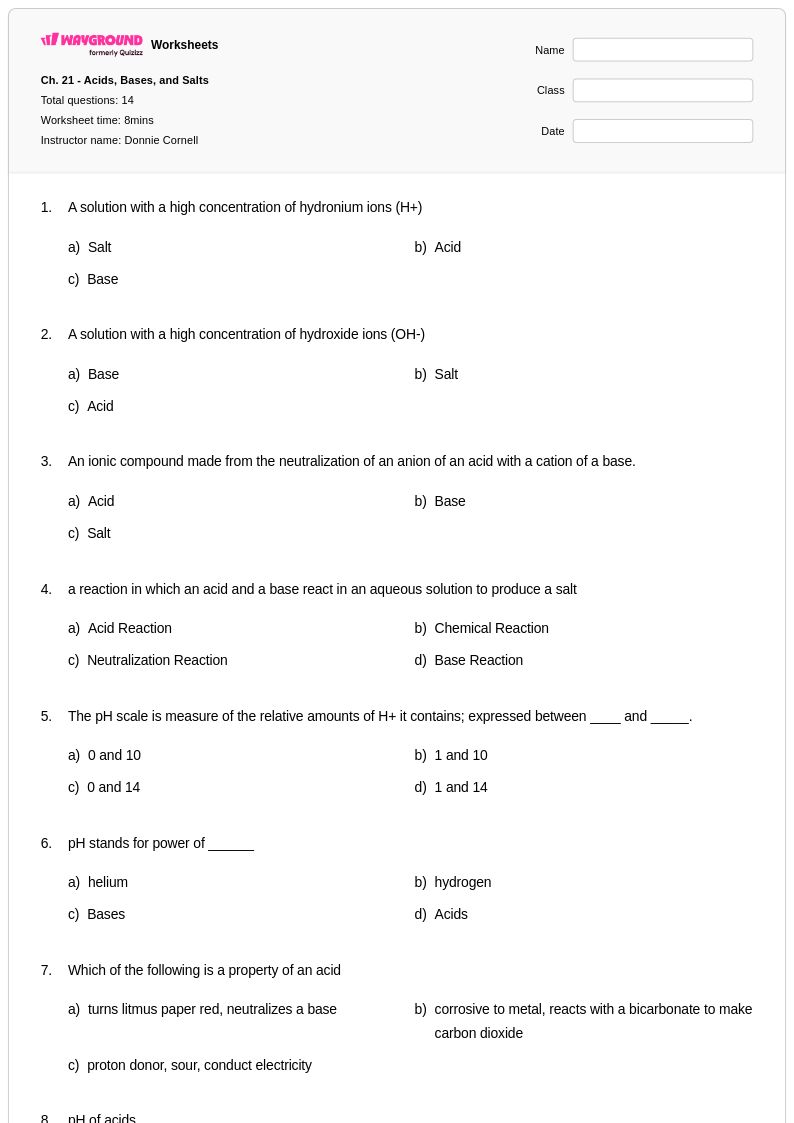
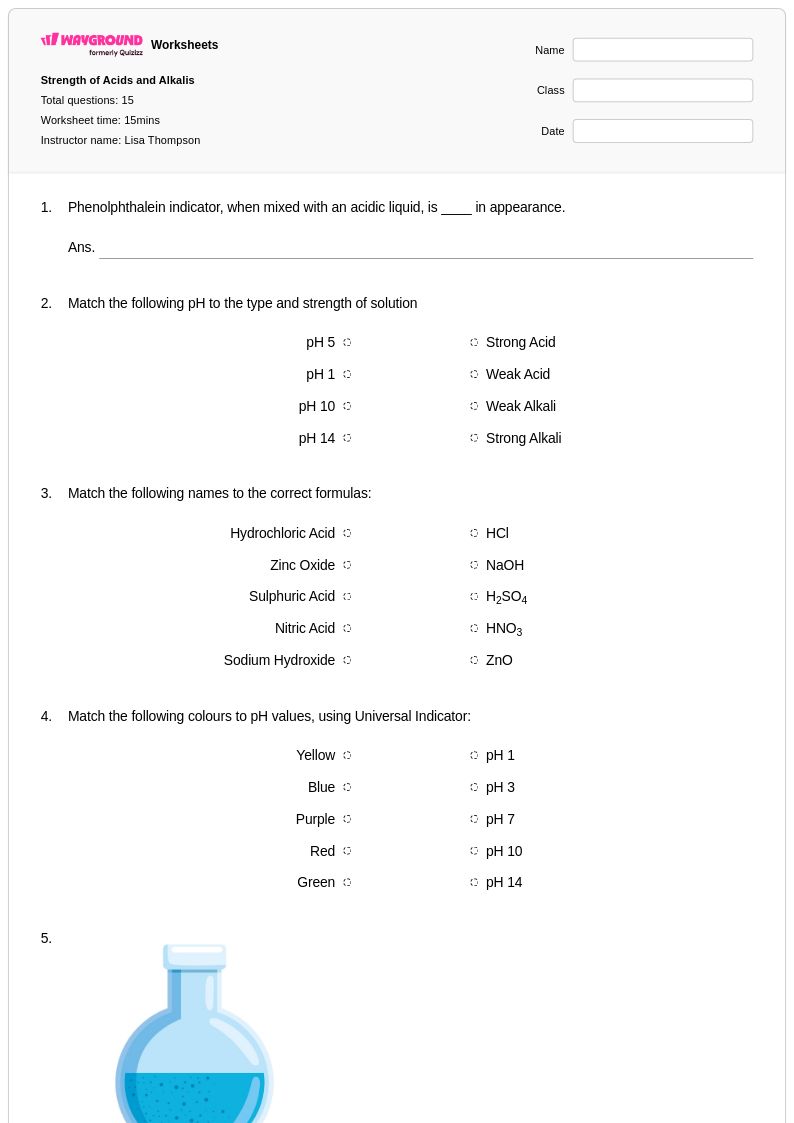
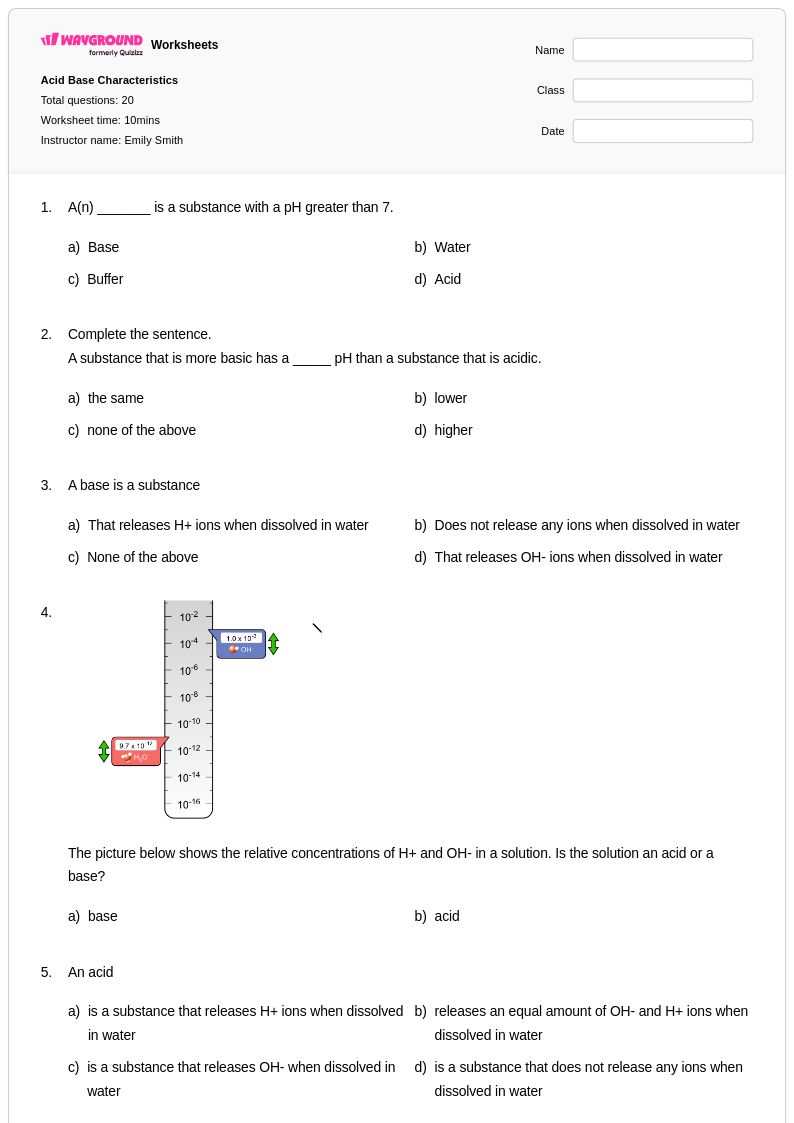
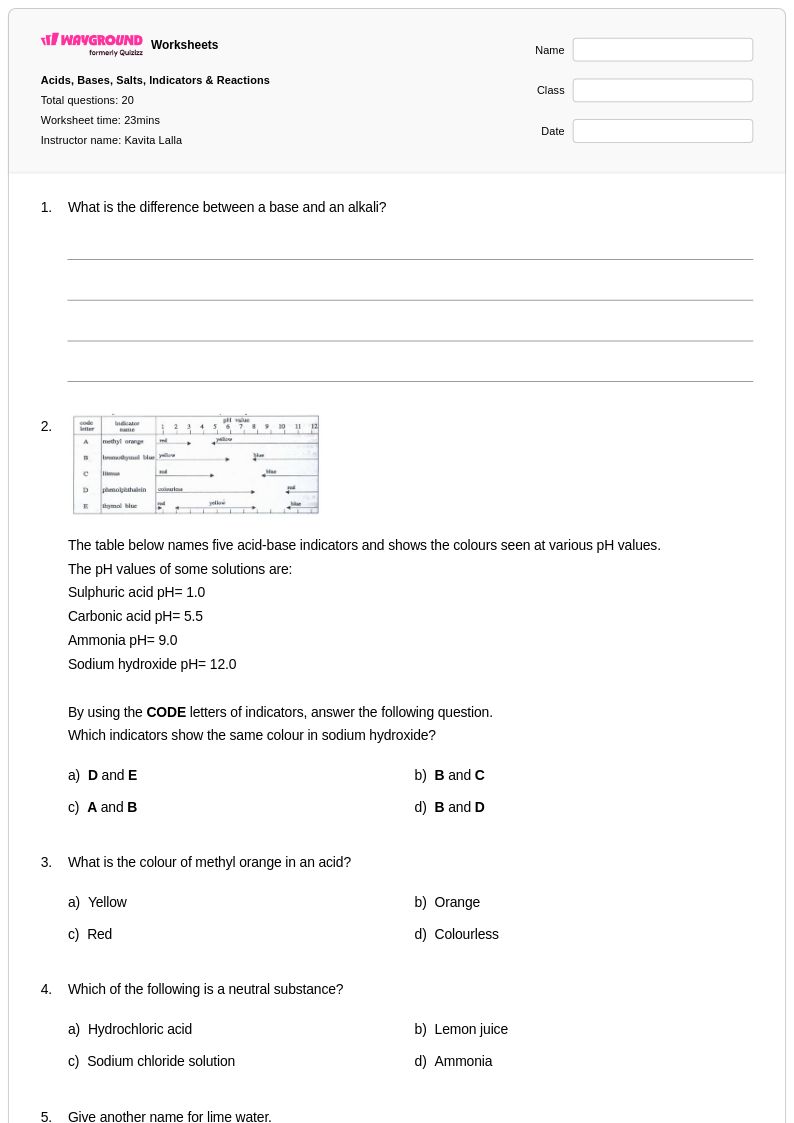
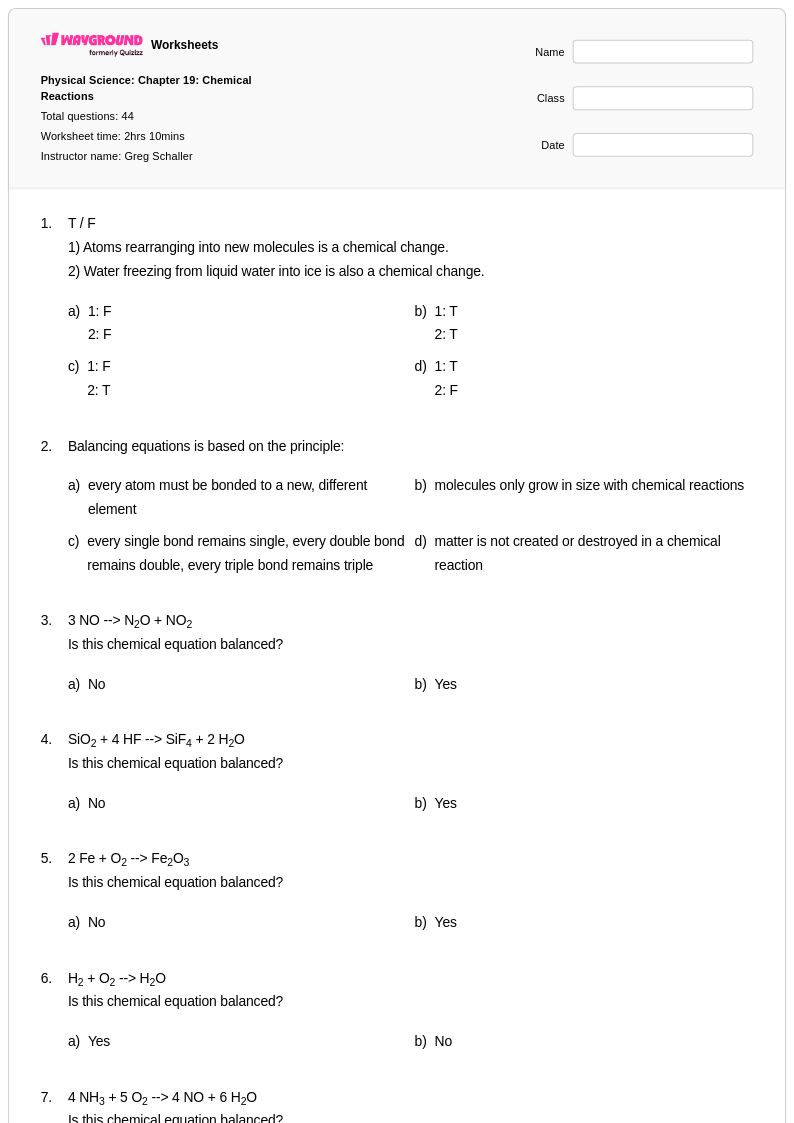
Acid base reactions form a cornerstone of Year 9 chemistry education, and Wayground's comprehensive worksheet collection provides students with essential practice in understanding these fundamental chemical processes. These carefully crafted worksheets guide students through the identification of acids and bases, the prediction of reaction products, and the balancing of chemical equations involving neutralization reactions. Students develop critical analytical skills as they work through practice problems that cover pH calculations, titration concepts, and the behavior of strong versus weak acids and bases. Each worksheet includes a detailed answer key to support independent learning, and the free printable format ensures accessibility for both classroom instruction and home study. The pdf resources systematically build understanding from basic acid-base identification to more complex reaction mechanisms and real-world applications.
Wayground, formerly Quizizz, empowers educators with millions of teacher-created resources specifically designed for acid base reaction instruction at the Year 9 level. The platform's robust search and filtering capabilities allow teachers to quickly locate worksheets that align with specific curriculum standards and learning objectives, whether focusing on conceptual understanding or computational skills. Advanced differentiation tools enable educators to customize worksheet difficulty and content to meet diverse student needs, supporting both remediation for struggling learners and enrichment opportunities for advanced students. Teachers can seamlessly integrate these resources into their lesson planning, utilizing both digital formats for interactive classroom activities and printable versions for traditional paper-based assessments. This flexibility ensures that acid base reaction concepts can be reinforced through varied practice opportunities that accommodate different learning styles and instructional approaches.
FAQs
How do I teach acid-base reactions to chemistry students?
Start by grounding students in Arrhenius, Brønsted-Lowry, and Lewis definitions so they can identify acids and bases across different contexts. From there, move into neutralization reactions, reinforcing the concept that an acid and base react to form a salt and water. Connecting pH calculations to real-world examples, such as stomach acid or household cleaners, helps students build intuition before tackling titration and buffer systems.
What practice problems help students get better at acid-base reactions?
Effective practice problems include writing and balancing neutralization equations, predicting products from acid-base pairs, calculating pH from hydrogen ion concentration, and interpreting titration curves. Progressing from straightforward acid-base identification to multi-step calculations ensures students build confidence before encountering more complex problems like buffer system analysis. Acid-base reaction worksheets on Wayground are structured to follow this progression, with complete answer keys included.
What mistakes do students commonly make when working with acid-base reactions?
One of the most frequent errors is confusing strong and weak acids, leading students to incorrectly assume full dissociation in every reaction. Students also commonly misapply the pH formula, particularly when working with bases and calculating pOH first. Another persistent misconception is treating neutralization as always producing a neutral pH of 7, which ignores the effect of weak acid or weak base components on the resulting solution.
How do I use acid-base reaction worksheets effectively in my classroom?
Acid-base reaction worksheets work well as pre-lab preparation, targeted homework, or exam review tools depending on where students are in the unit. On Wayground, these worksheets are available as printable PDFs for traditional classroom and lab settings, as well as in digital formats for technology-integrated instruction, and can be hosted as a quiz directly on the platform. The included answer keys support both self-paced independent review and teacher-led correction sessions.
How do I differentiate acid-base reaction instruction for students at different levels?
For students who need additional support, reduce complexity by focusing on strong acid and strong base neutralization before introducing weak acid or buffer scenarios. On Wayground, individual student accommodations such as read aloud, reduced answer choices, and extended time can be applied to specific students without other students being notified, making differentiation practical in a mixed-ability chemistry class. Advanced students can be directed toward AP-level problems involving titration calculations and Henderson-Hasselbalch applications.
What is the difference between neutralization reactions and titration in acid-base chemistry?
A neutralization reaction is the chemical process in which an acid and a base react to produce a salt and water, and it occurs whenever the two substances are combined. Titration is an analytical technique that uses a controlled neutralization reaction to determine the unknown concentration of an acid or base by carefully measuring the volume of a standardized solution needed to reach the equivalence point. Students often conflate the two, so it helps to teach neutralization as the underlying chemistry and titration as the laboratory application of that chemistry.