Free Printable Chemical Measurements Worksheets for Year 9
Discover comprehensive Year 9 chemical measurements worksheets and printables through Wayground that help students master unit conversions, significant figures, and laboratory calculations with engaging practice problems, free PDF downloads, and complete answer keys.
Explore printable Chemical Measurements worksheets for Year 9
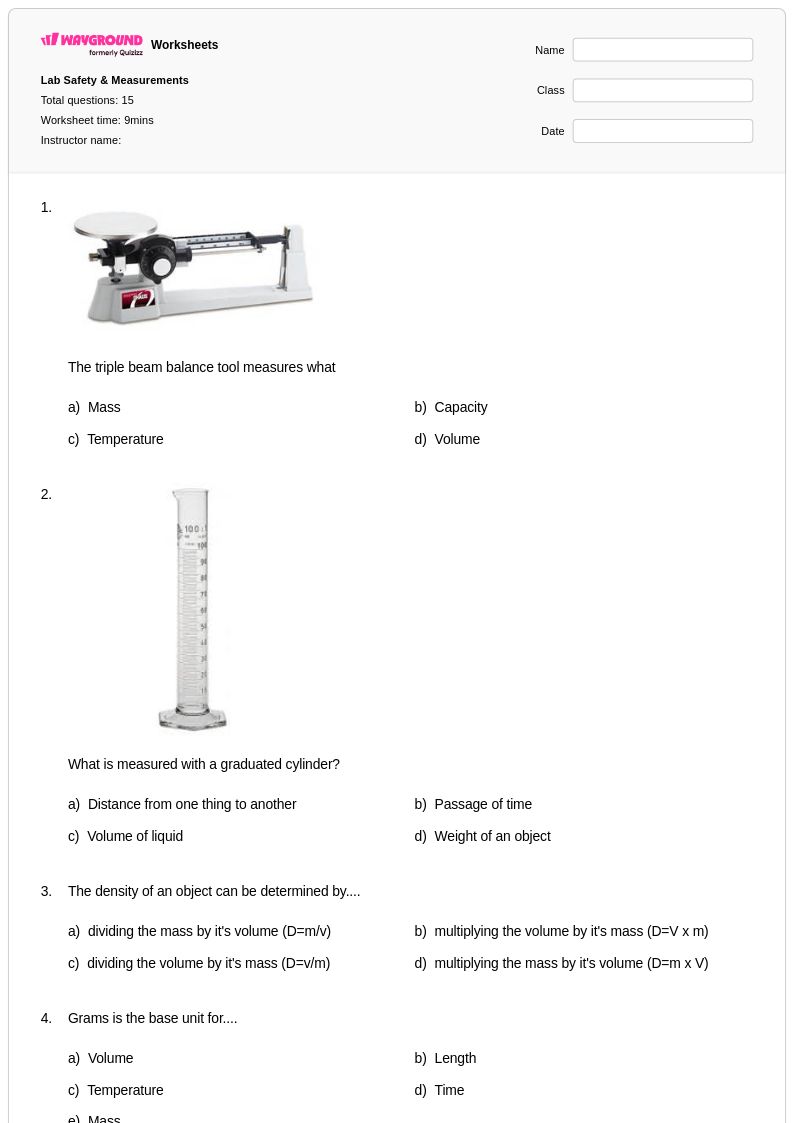
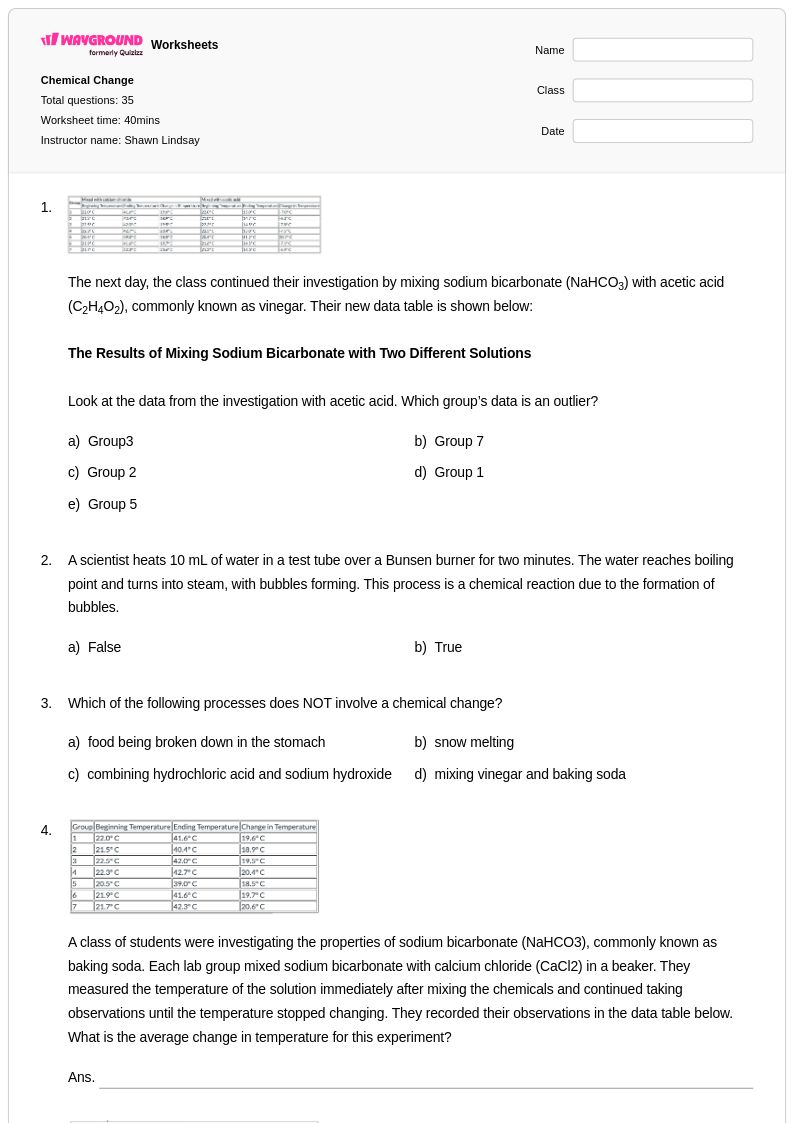
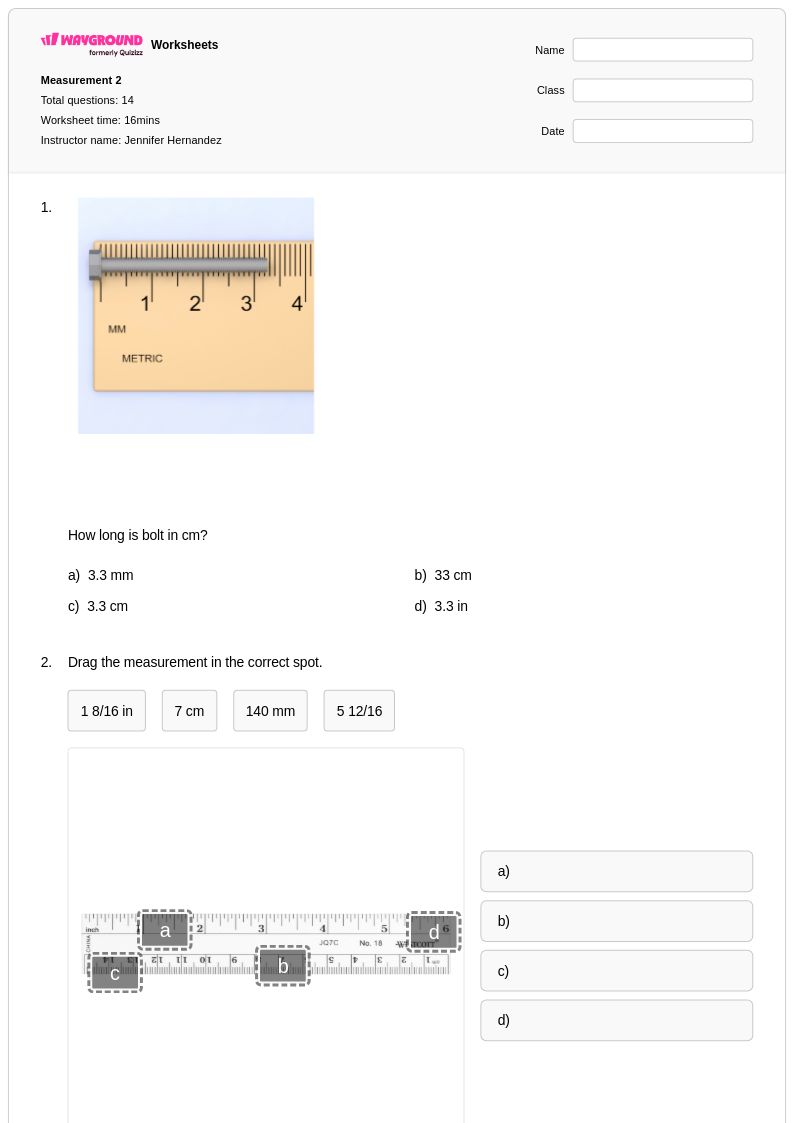
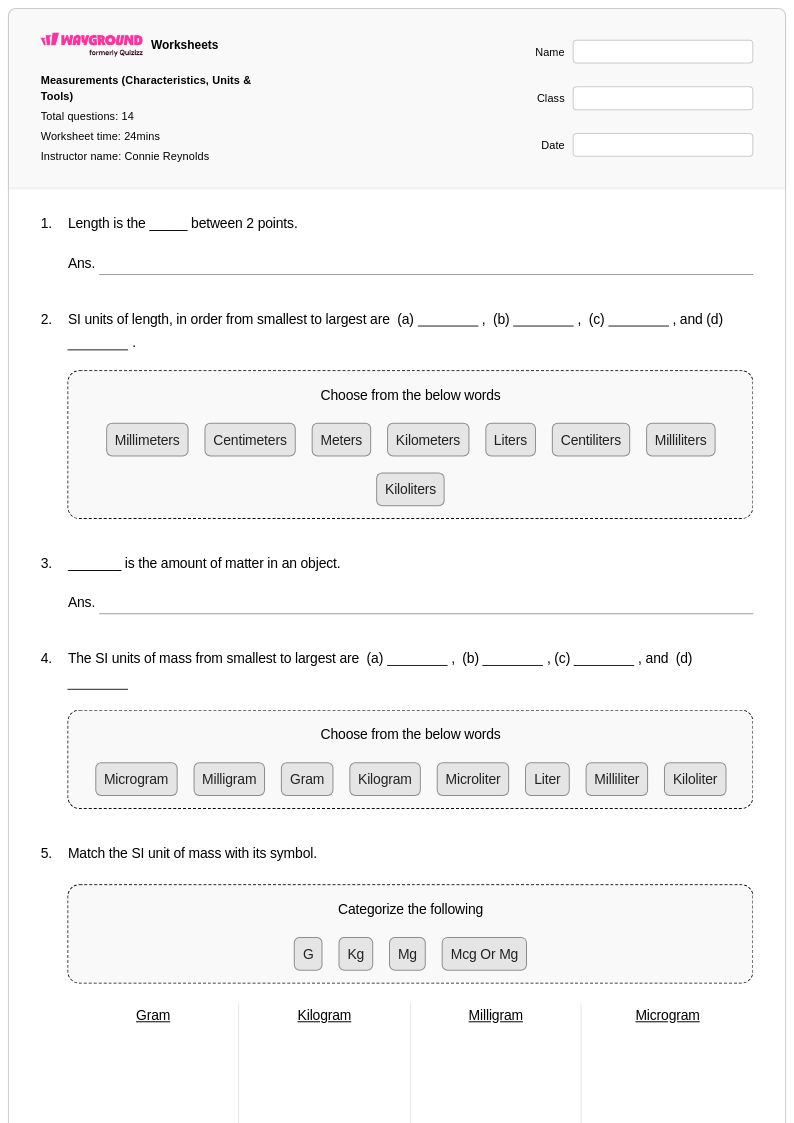
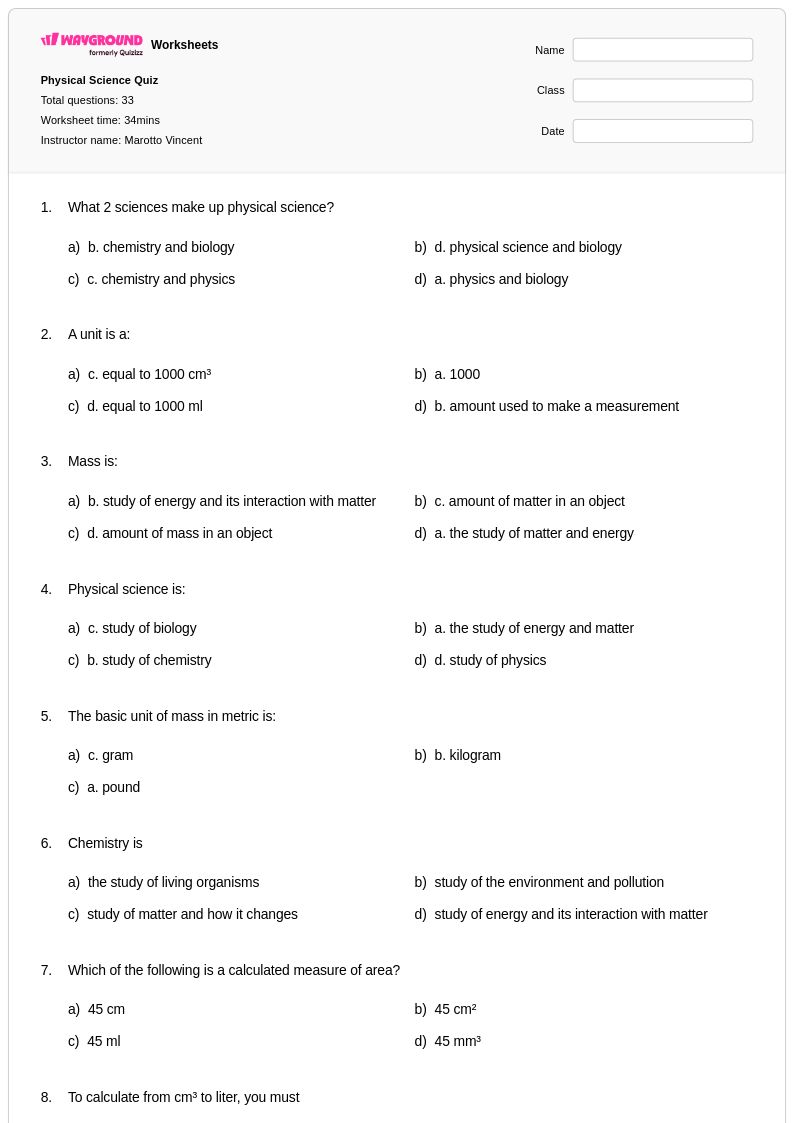
Chemical measurements form the foundation of quantitative analysis in Year 9 chemistry, and Wayground's comprehensive worksheet collection provides students with essential practice in this critical area. These expertly crafted worksheets guide students through the fundamental concepts of scientific notation, significant figures, unit conversions, density calculations, and molar mass determinations that are essential for success in chemistry. Each worksheet includes detailed answer keys and step-by-step solutions that help students master the mathematical skills required for accurate chemical measurements, while free printable formats ensure accessibility for all learners. The practice problems progress systematically from basic unit conversions to more complex calculations involving molarity, percentage composition, and stoichiometric relationships, strengthening students' ability to work confidently with quantitative data in chemistry.
Wayground's extensive library of teacher-created chemical measurements worksheets offers educators unparalleled flexibility in delivering this essential Year 9 chemistry content. With millions of resources available through advanced search and filtering capabilities, teachers can quickly locate materials that align with specific curriculum standards and match their students' varying skill levels. The platform's differentiation tools enable instructors to customize worksheets for remediation or enrichment purposes, while the availability of both printable PDF formats and interactive digital versions accommodates diverse classroom needs and learning preferences. These comprehensive resources streamline lesson planning by providing ready-to-use materials for skill practice, formative assessment, and homework assignments, ensuring that students develop the precision and accuracy required for all future chemistry coursework involving quantitative analysis and mathematical problem-solving.
FAQs
How do I teach significant figures and scientific notation in chemistry?
Start by grounding significant figures in the idea that measurements are never perfectly precise, so students understand why the rules exist rather than memorizing them blindly. Introduce scientific notation alongside unit conversions so students see how both tools manage very large or very small quantities in the same workflow. Consistent practice with real laboratory data, rather than abstract numbers, helps students internalize the rules and transfer them to actual experiments.
What exercises help students practice unit conversions and dimensional analysis in chemistry?
Dimensional analysis practice is most effective when students work through multi-step conversion chains, not just single-step problems, because chemistry rarely requires only one conversion at a time. Structured worksheets that present a mix of metric conversions, density calculations, and mixed-unit problems reinforce the method across different contexts. Having students show their cancellation steps explicitly helps teachers quickly identify where errors in reasoning occur.
What mistakes do students commonly make with precision and accuracy in chemistry?
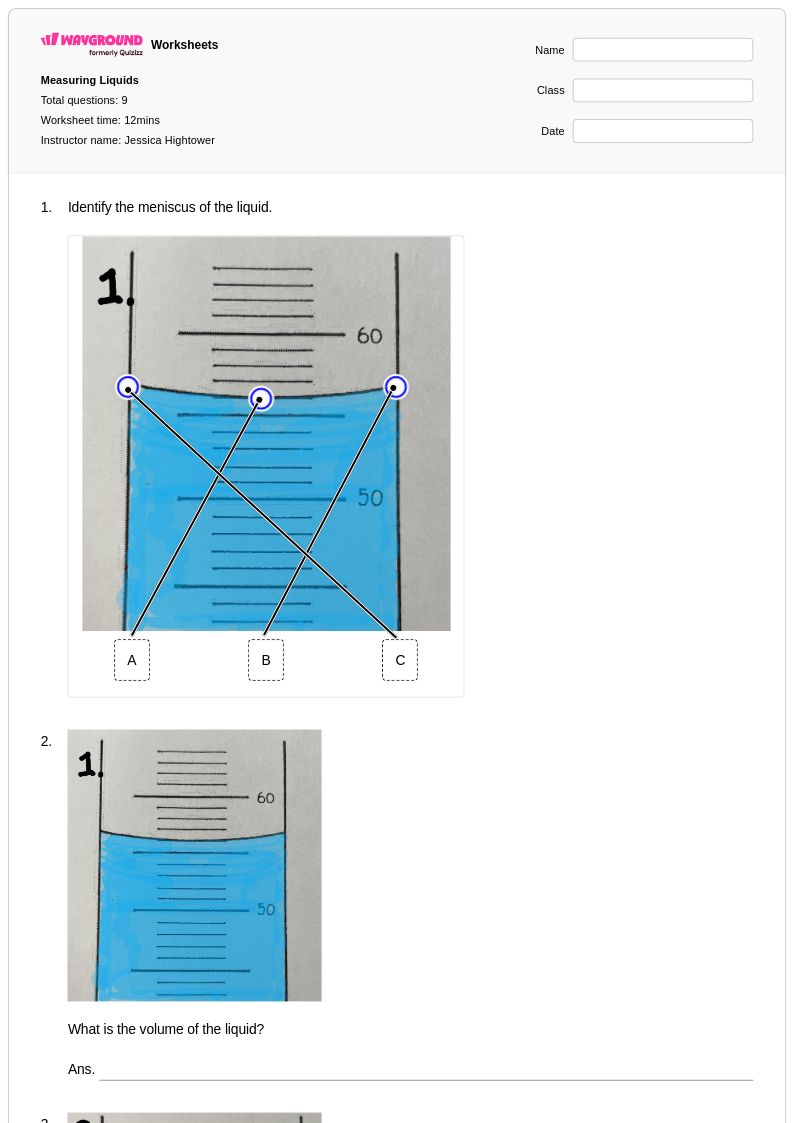
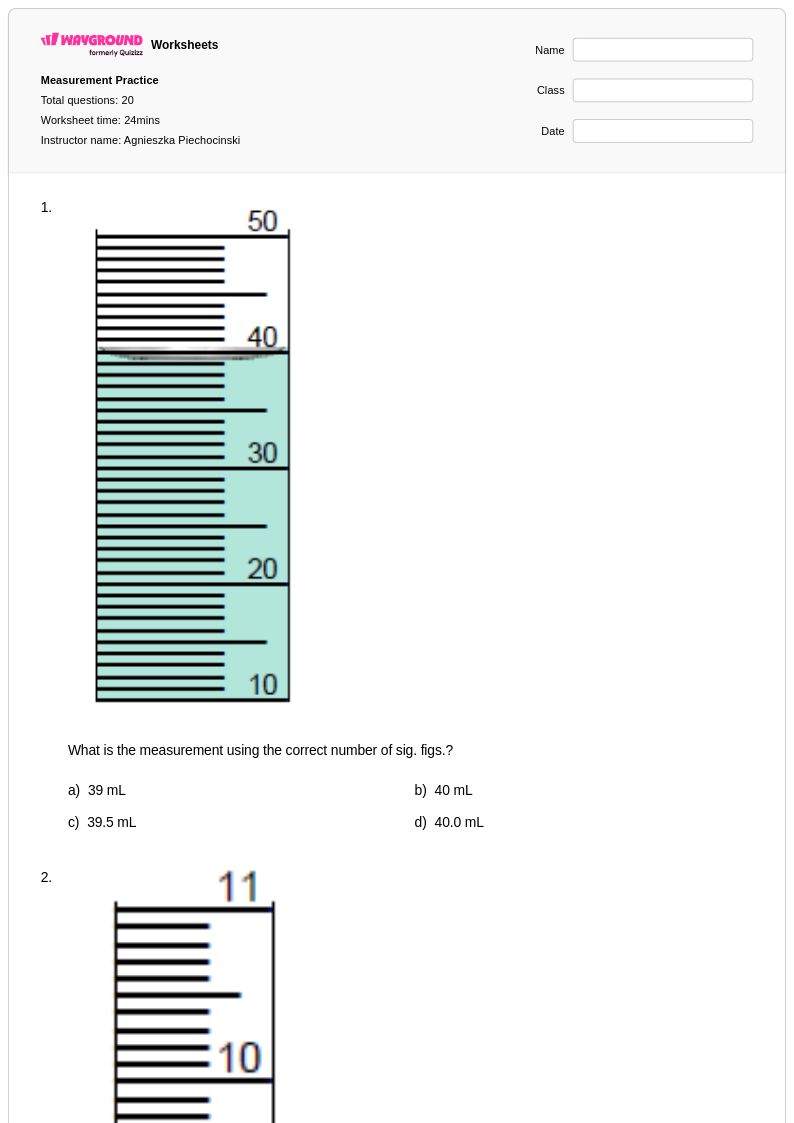
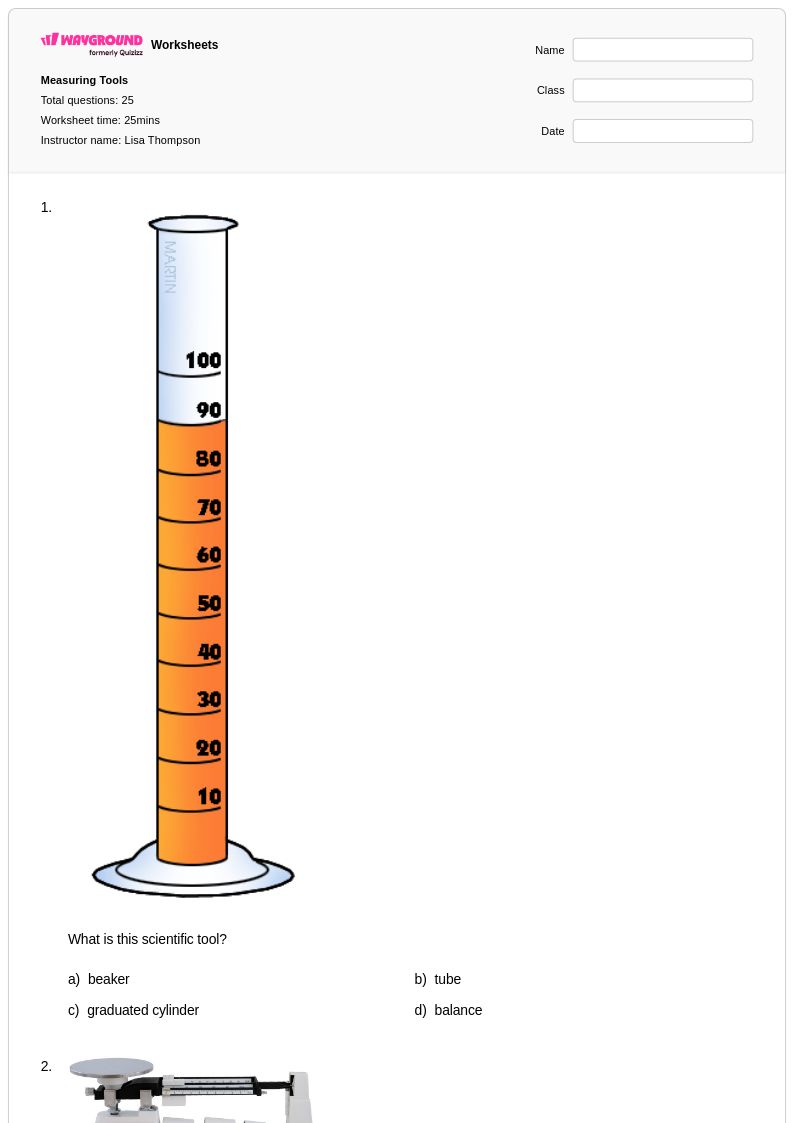
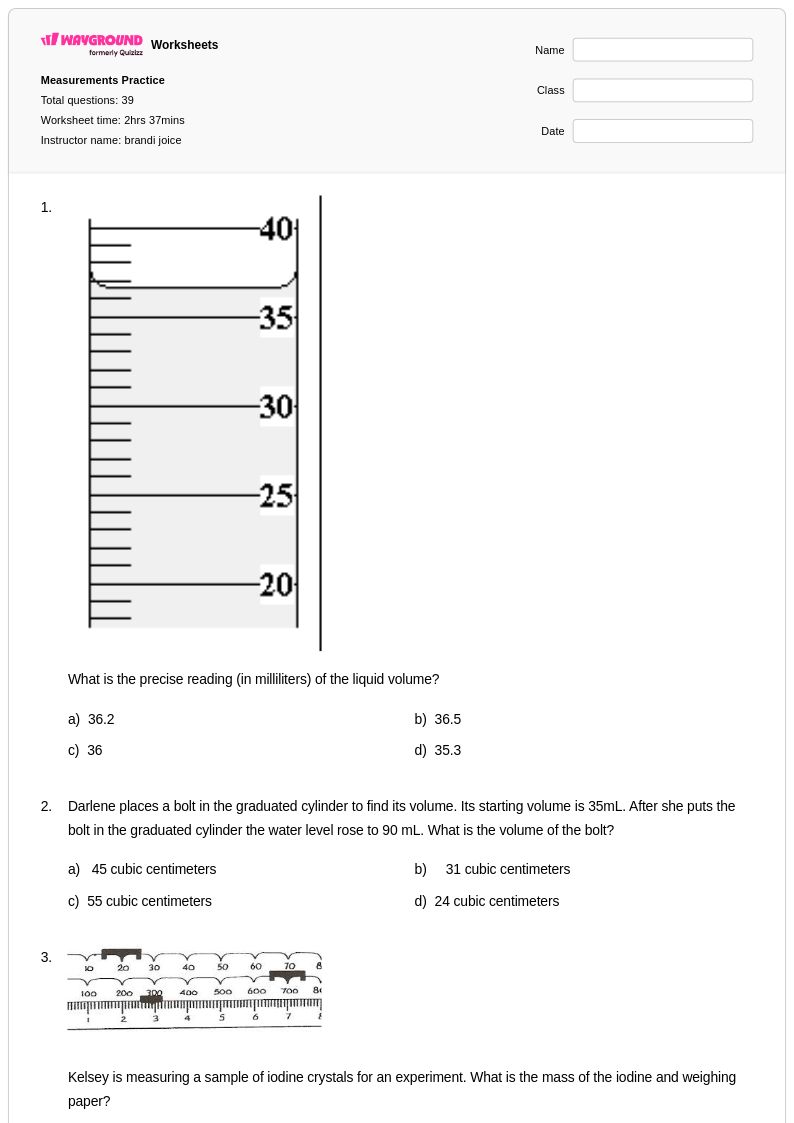
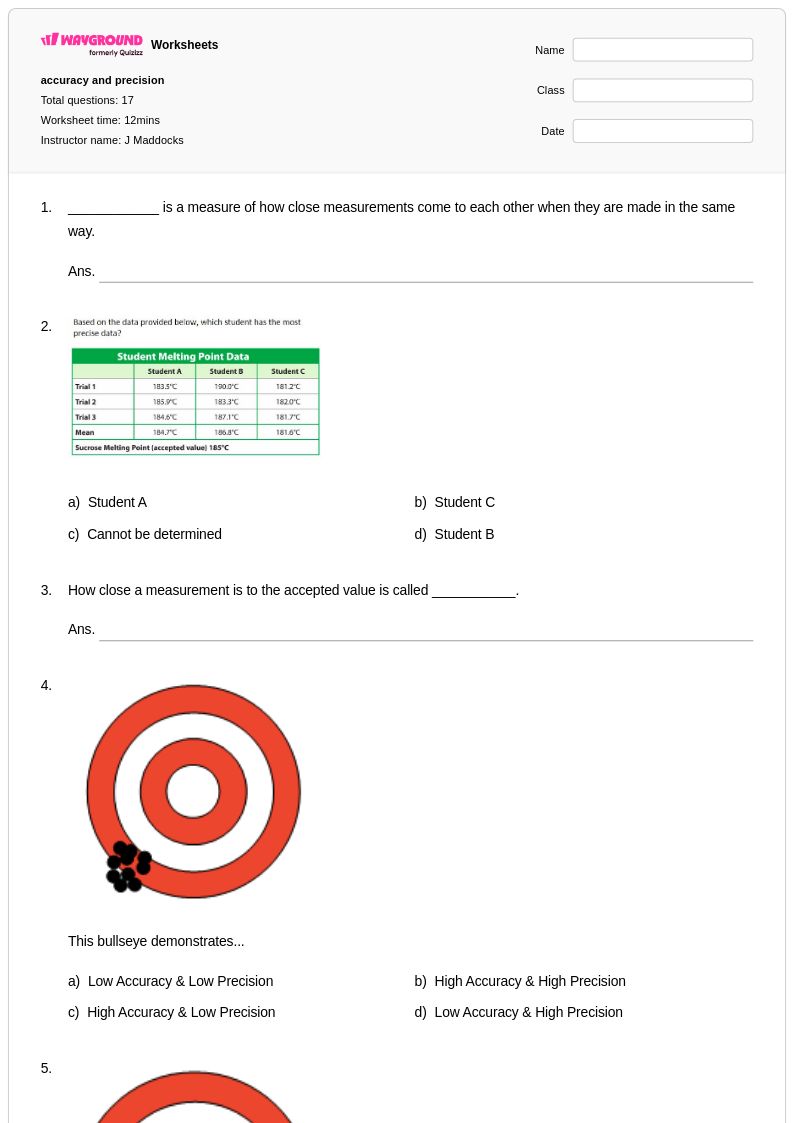
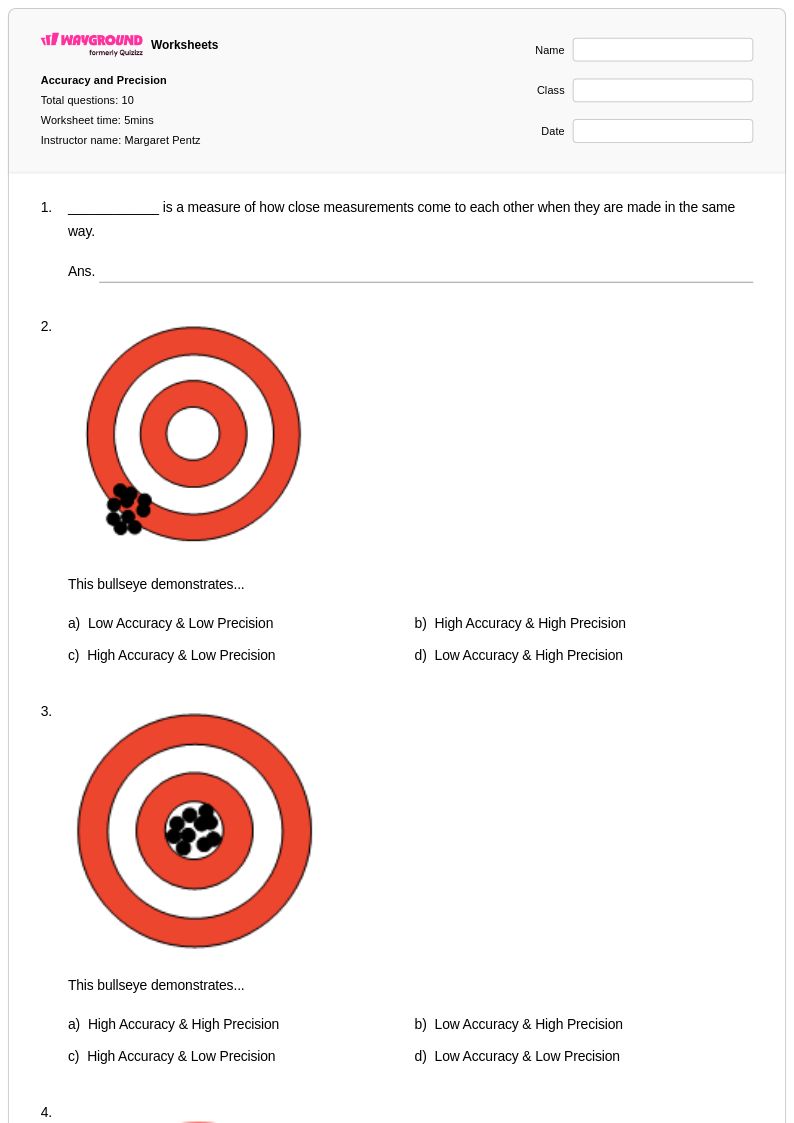
The most persistent misconception is treating precision and accuracy as synonyms — students often assume a precise set of measurements is also accurate, without accounting for systematic error. Another common error is rounding too early in multi-step calculations, which compounds inaccuracies by the final answer. Students also frequently misread graduated cylinders and other lab instruments because they do not account for the meniscus, which is a practical measurement skill that requires explicit instruction and repeated practice.
How do students commonly make errors when working with significant figures?
Students most often struggle with zeros — specifically determining whether a zero is significant when it appears before a decimal, after a decimal, or as a placeholder in a large whole number. A second frequent error is applying significant figure rules only to the final answer rather than tracking precision throughout all steps of a calculation. Targeted practice problems that isolate each zero-rule scenario are the most effective way to address these gaps before they compound in laboratory work.
How can I use Wayground's chemical measurements worksheets in my classroom?
Wayground's chemical measurements worksheets are available as printable PDFs for traditional classroom use and in digital formats for technology-integrated learning environments, making them flexible for lab prep, homework, or in-class practice. Teachers can also host the worksheets as a quiz directly on Wayground, enabling real-time progress tracking. Each worksheet includes a complete answer key, which supports independent practice and makes self-correction straightforward for students.
How can I differentiate chemical measurements instruction for students at different skill levels?
For struggling students, begin with single-concept problems — significant figures only, or unit conversions only — before introducing combined problems that require multiple skills simultaneously. On Wayground, teachers can apply accommodations such as reduced answer choices or read-aloud support to individual students without alerting the rest of the class, which keeps differentiation discreet. Advanced students benefit from open-ended problems that require them to select the appropriate measurement technique and justify their approach, rather than simply executing a prescribed method.