Free Printable Electronegativity Worksheets for Year 9
Master Year 9 electronegativity concepts with Wayground's comprehensive collection of free worksheets, printables, and practice problems featuring detailed answer keys to strengthen chemistry understanding.
Explore printable Electronegativity worksheets for Year 9
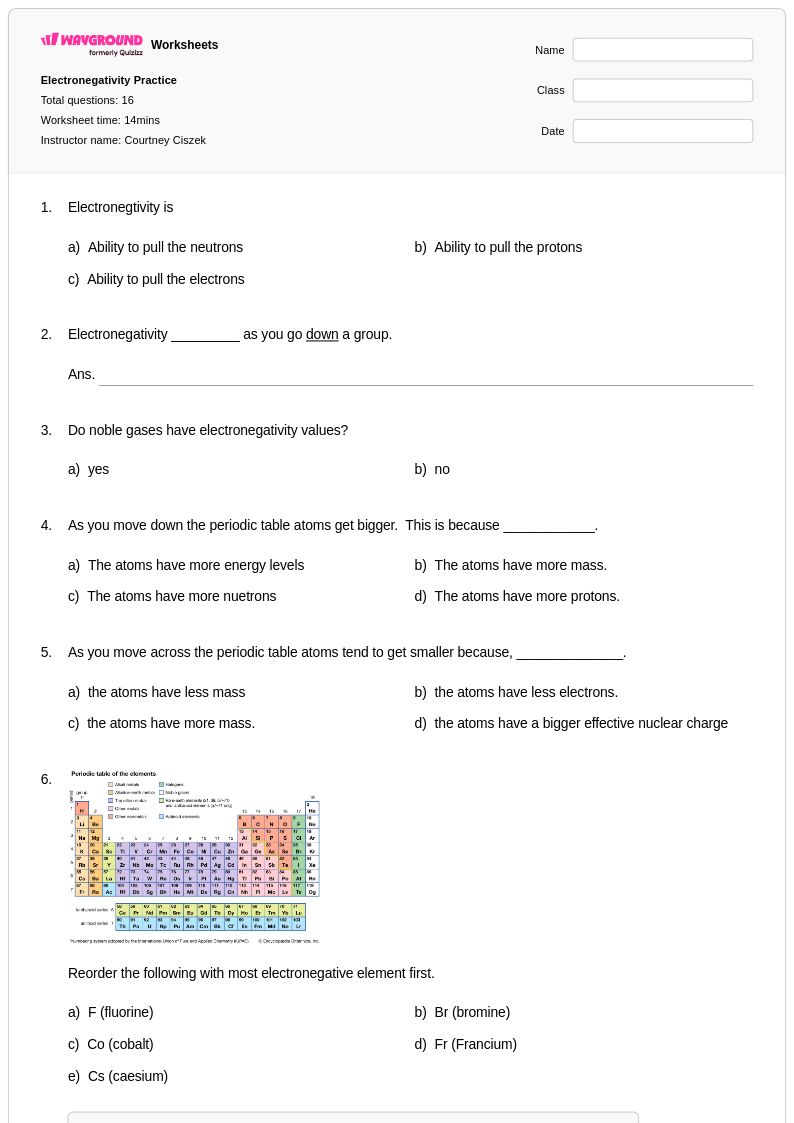
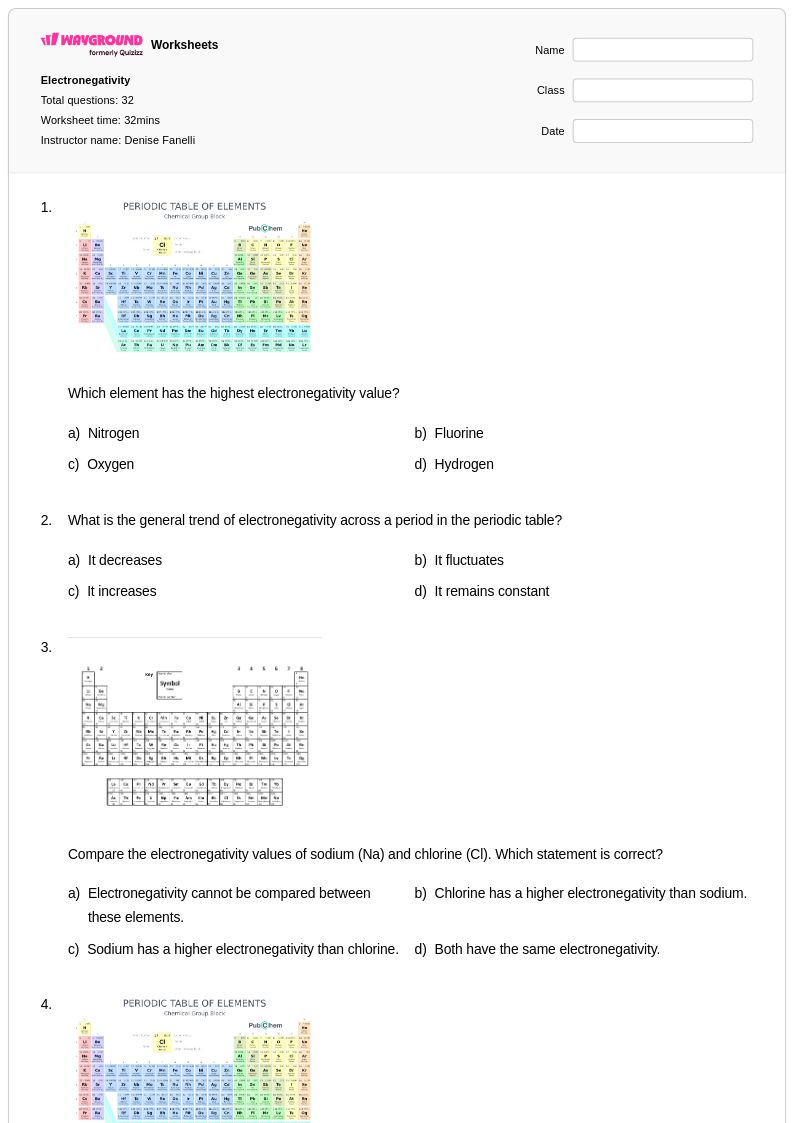
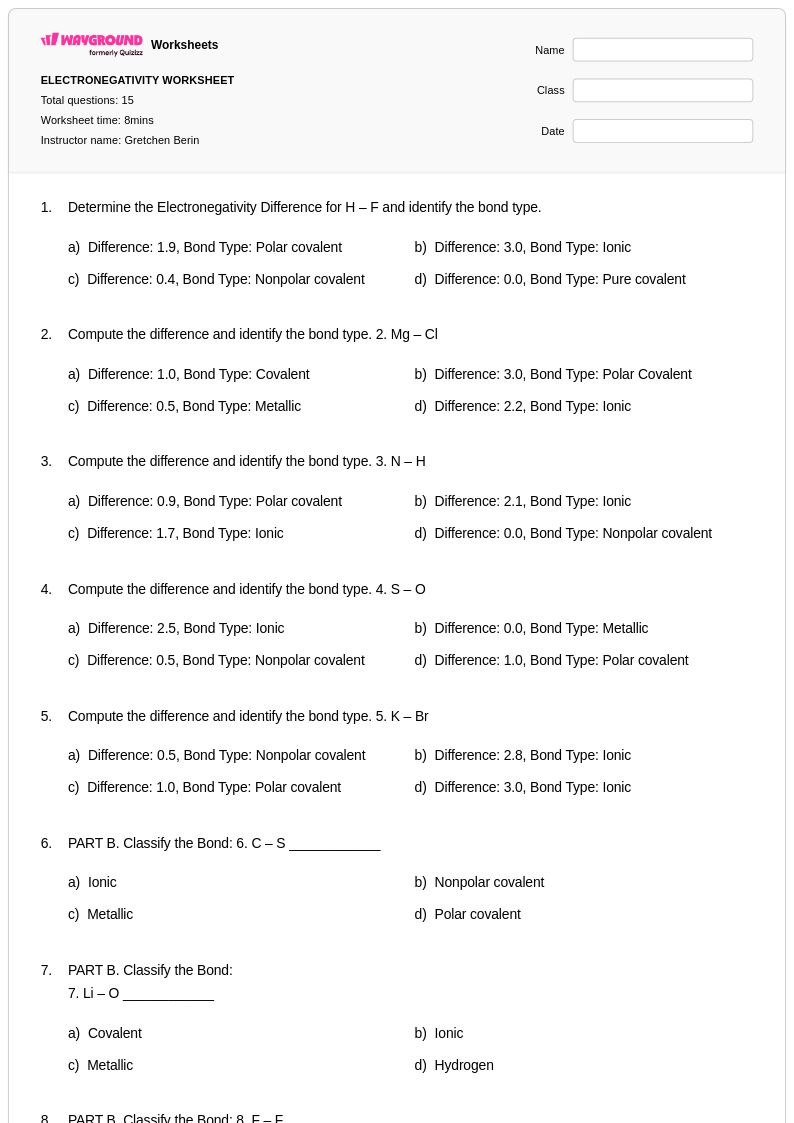
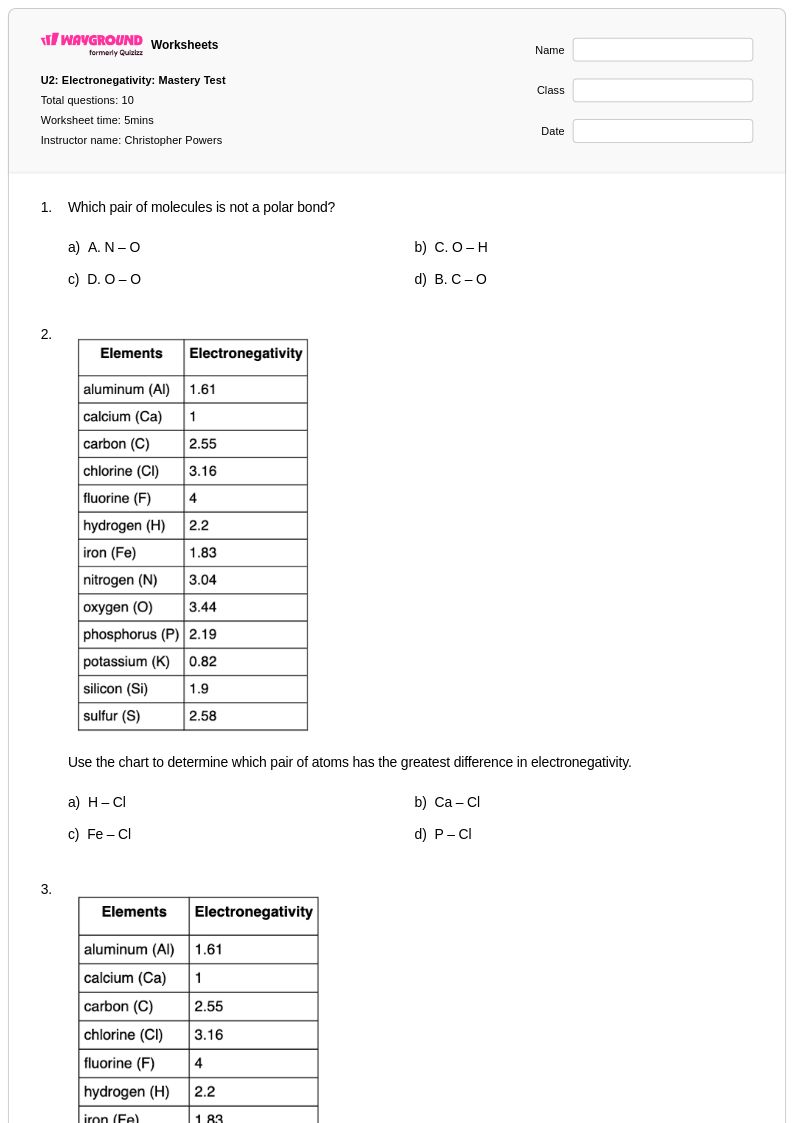
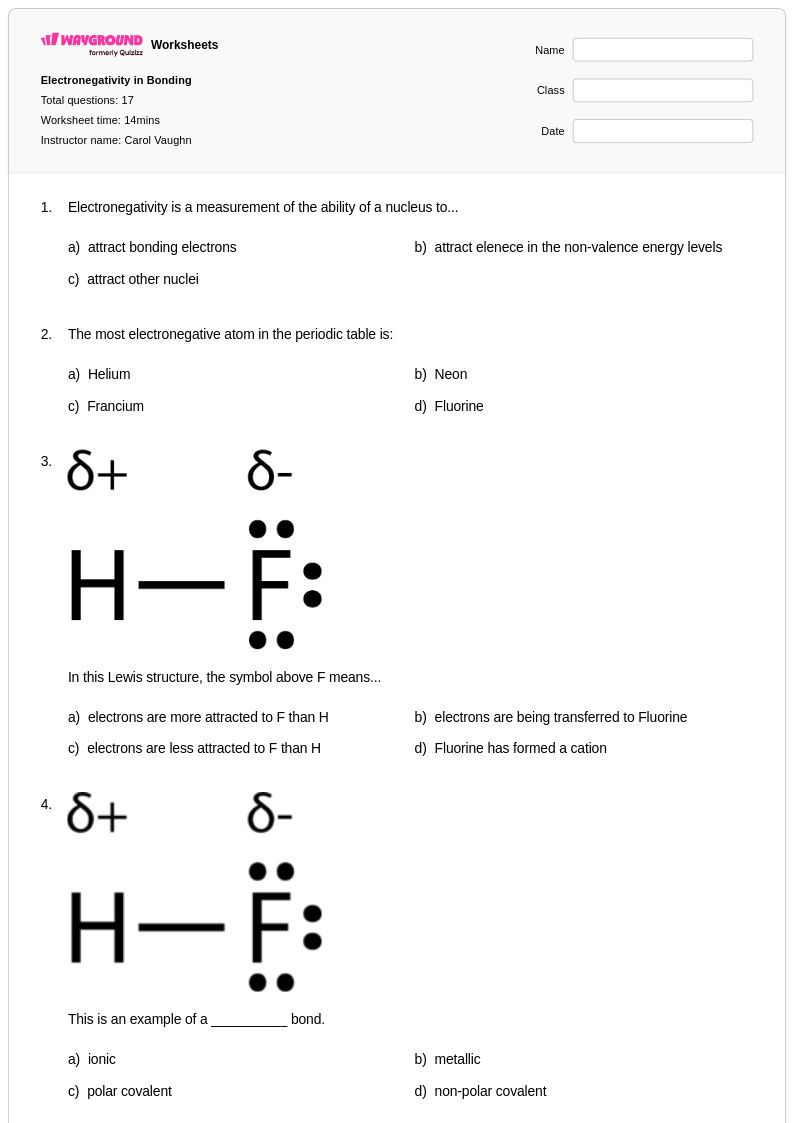
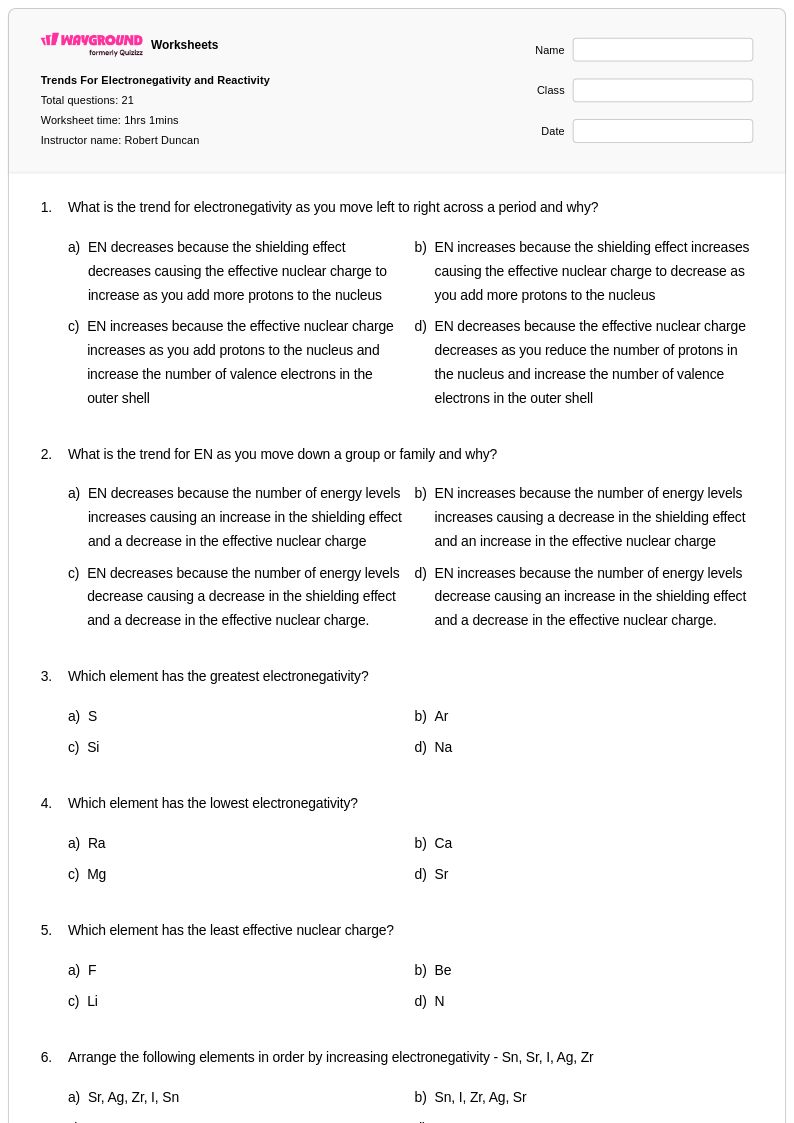
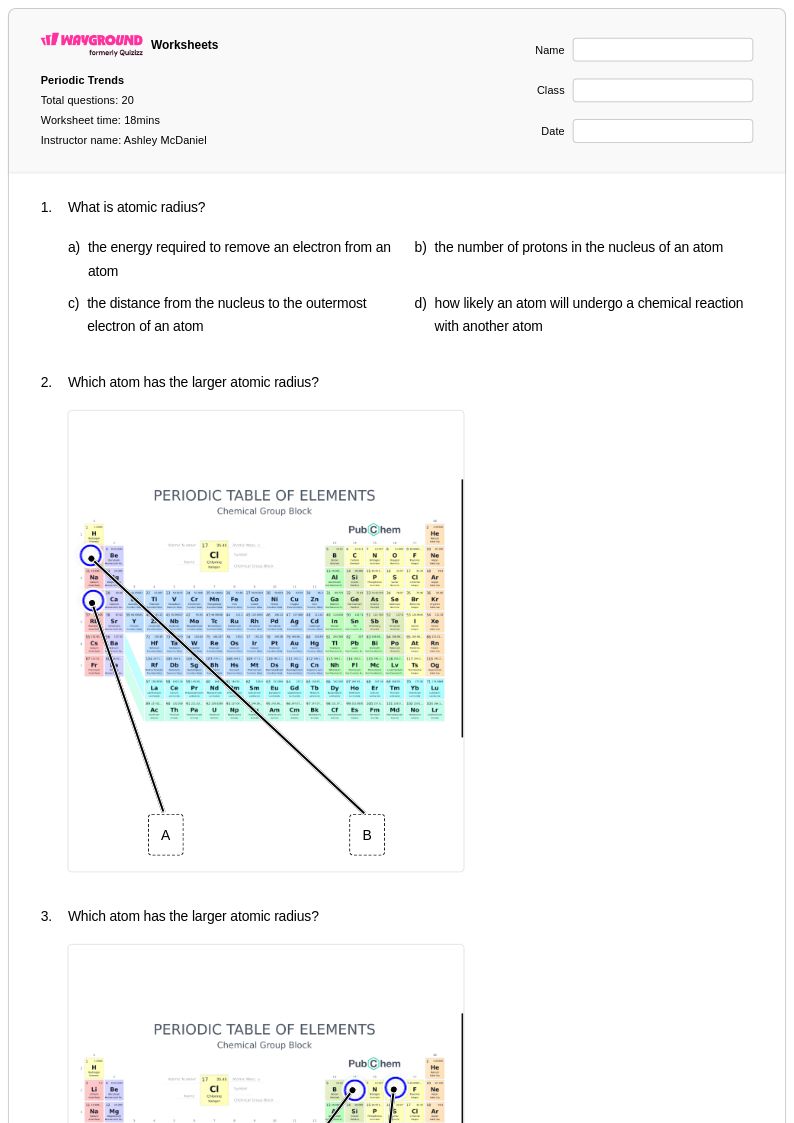
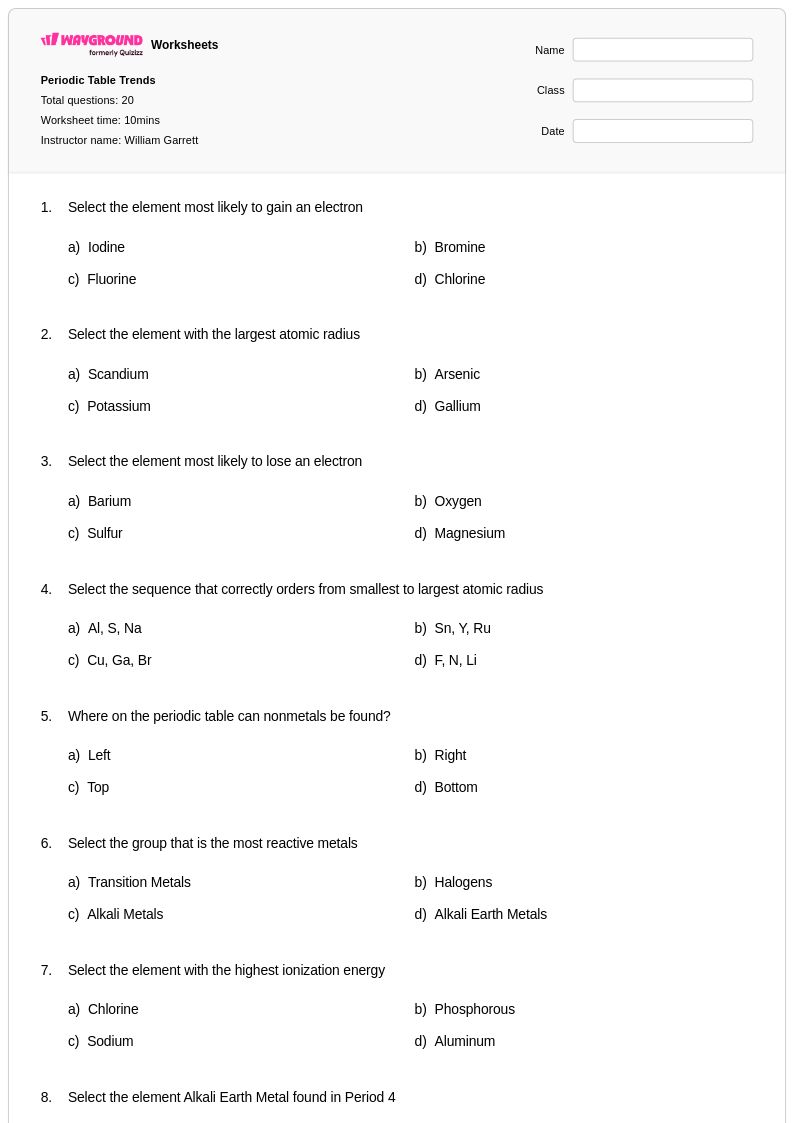
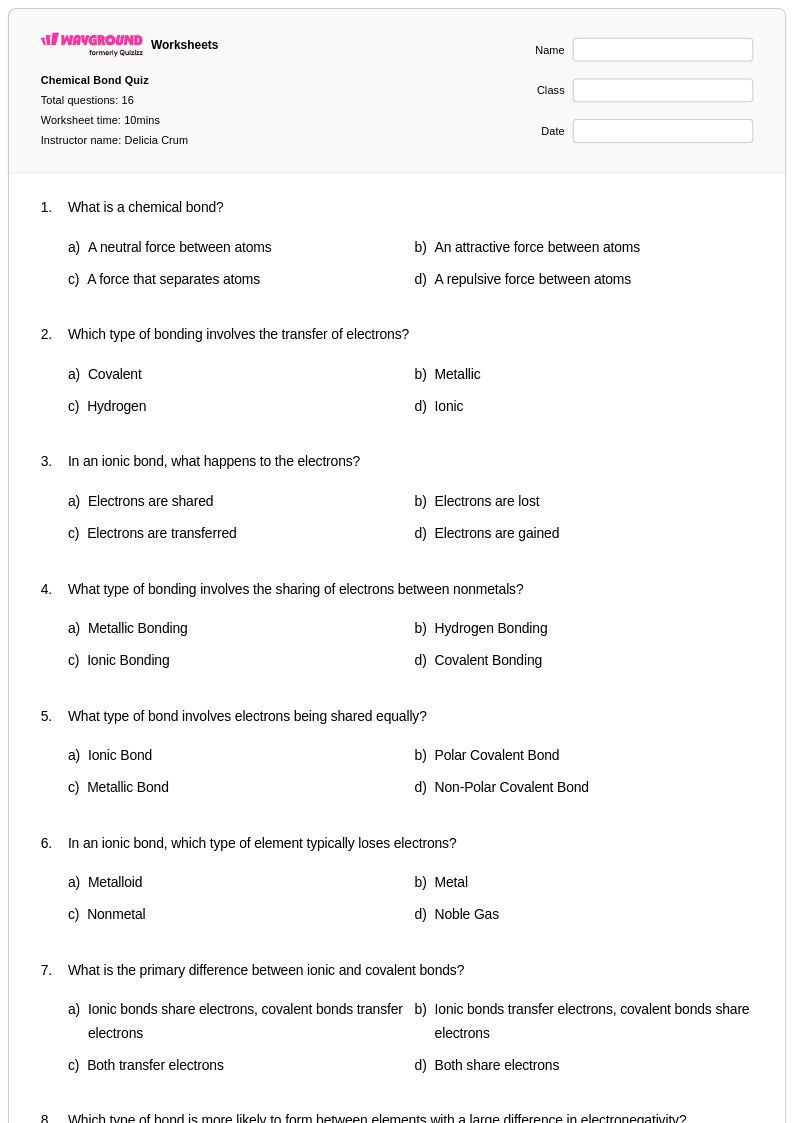
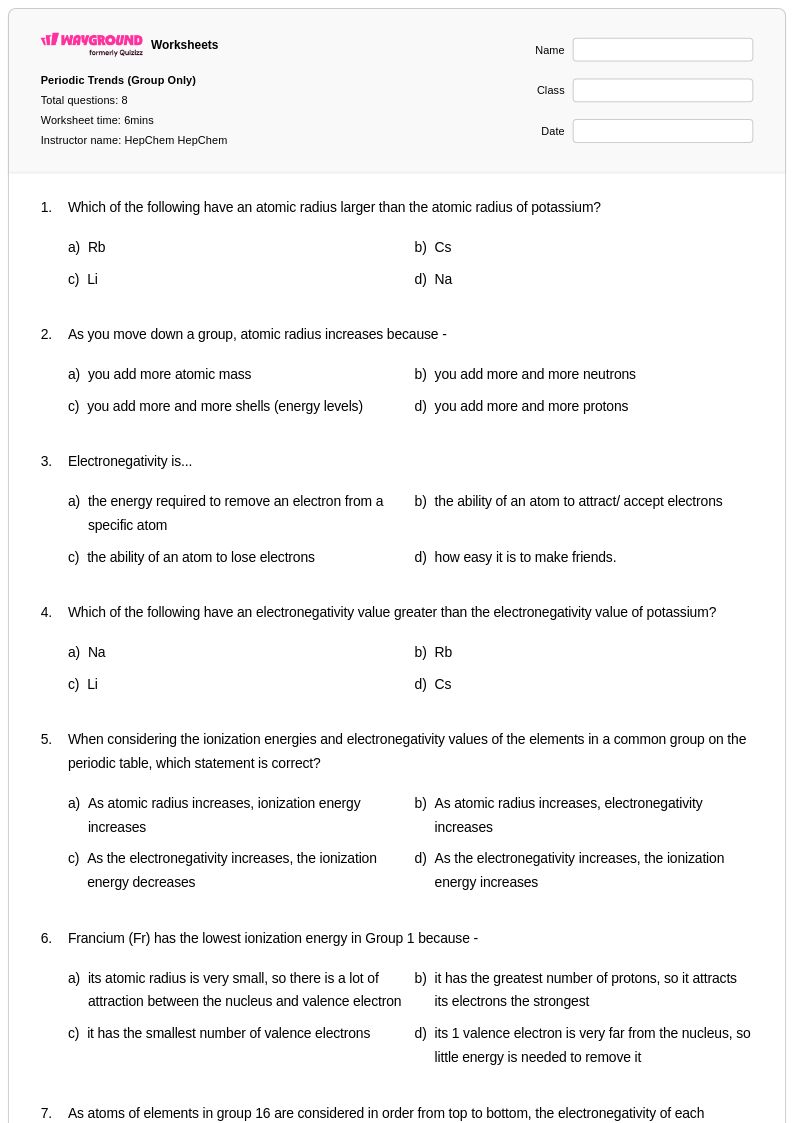
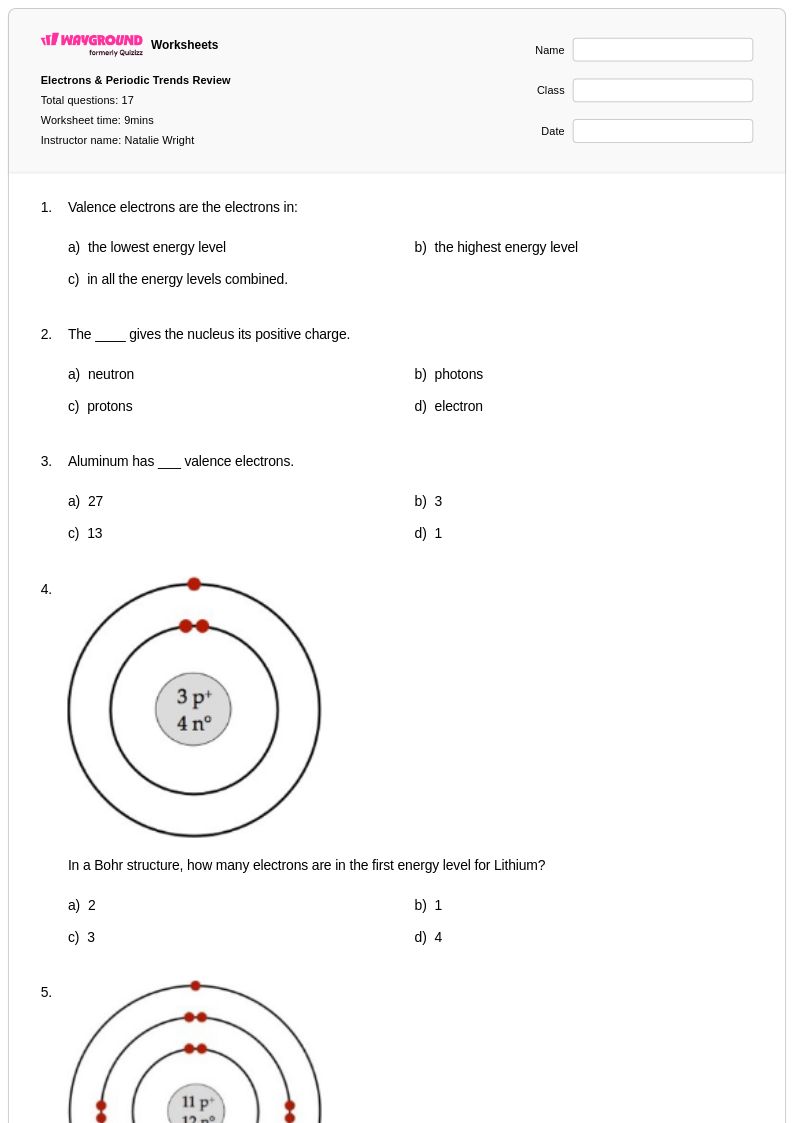
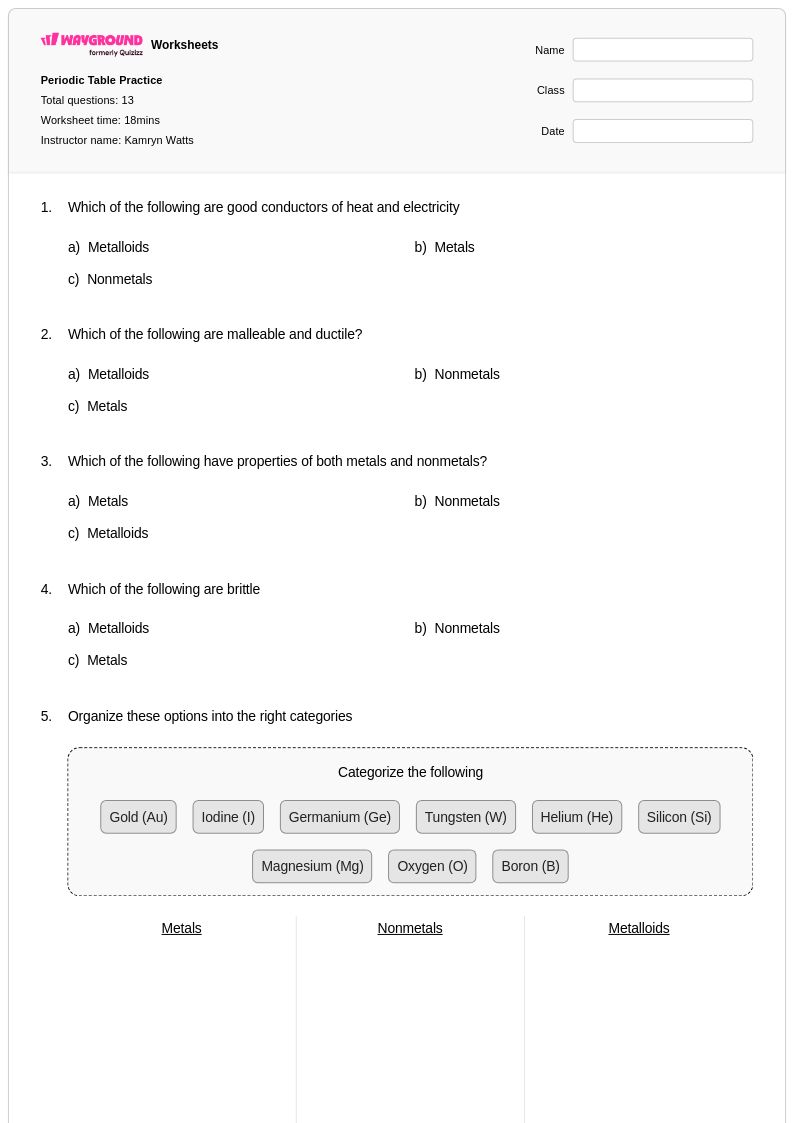
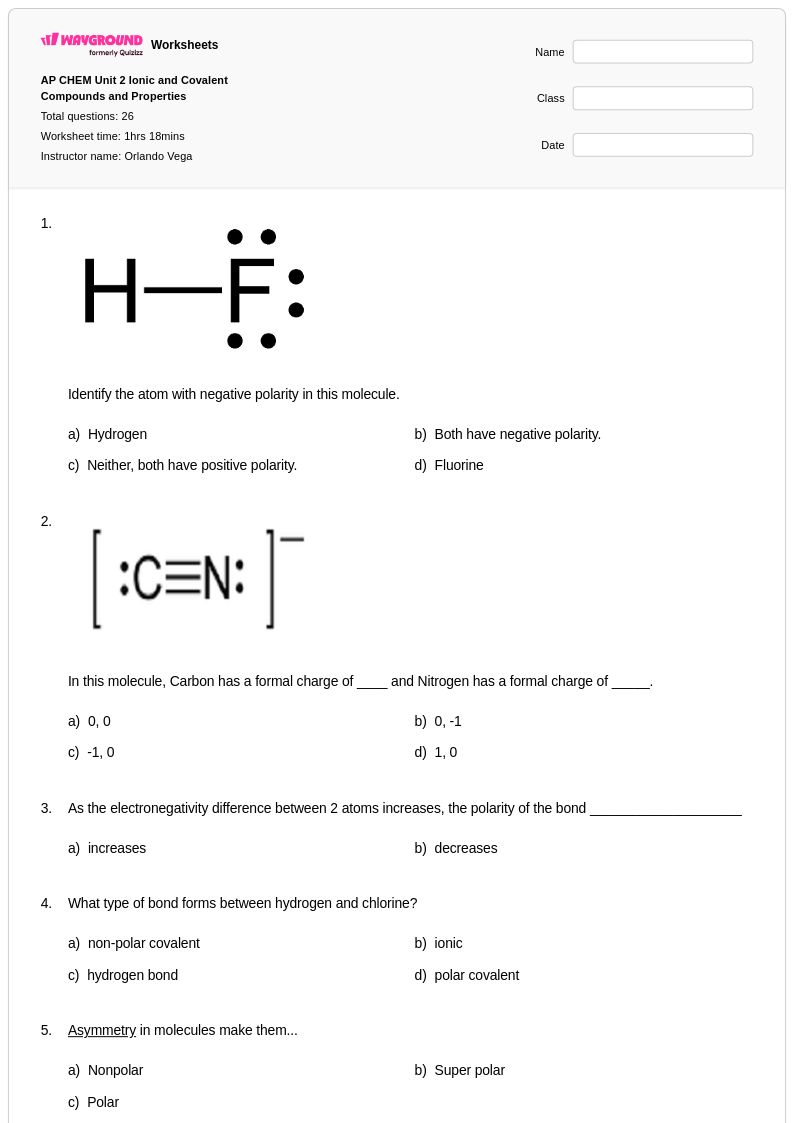
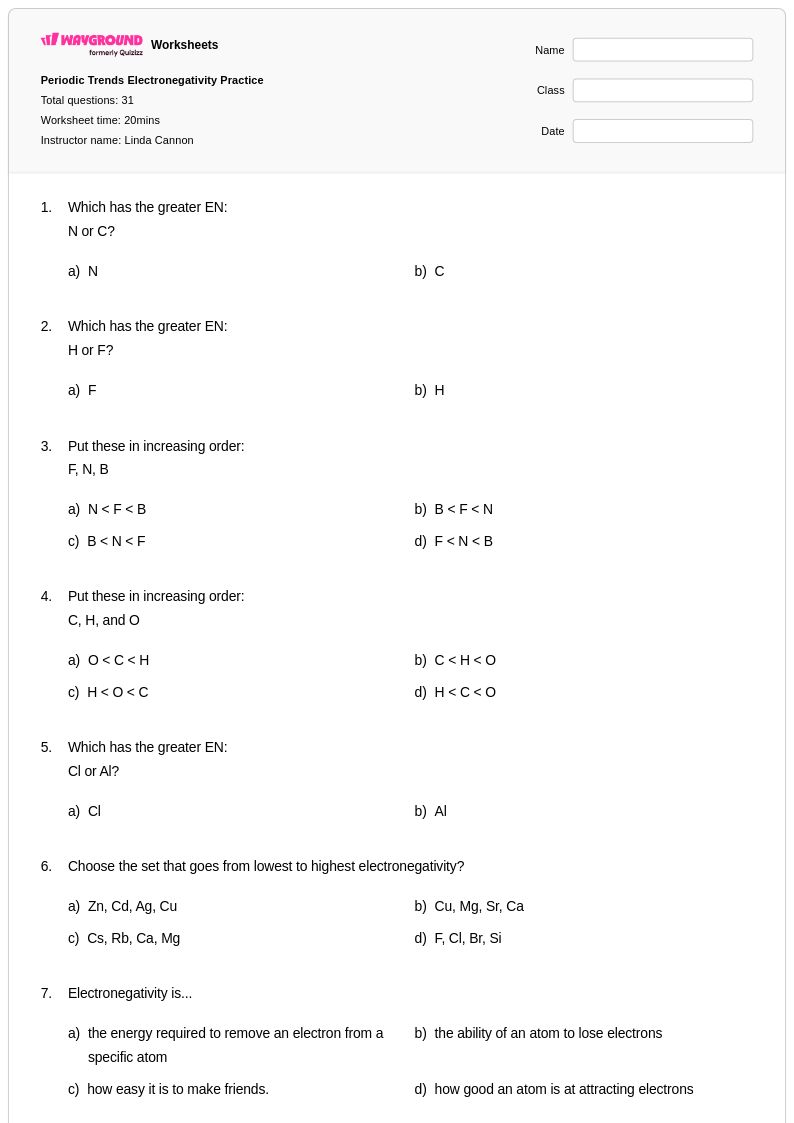
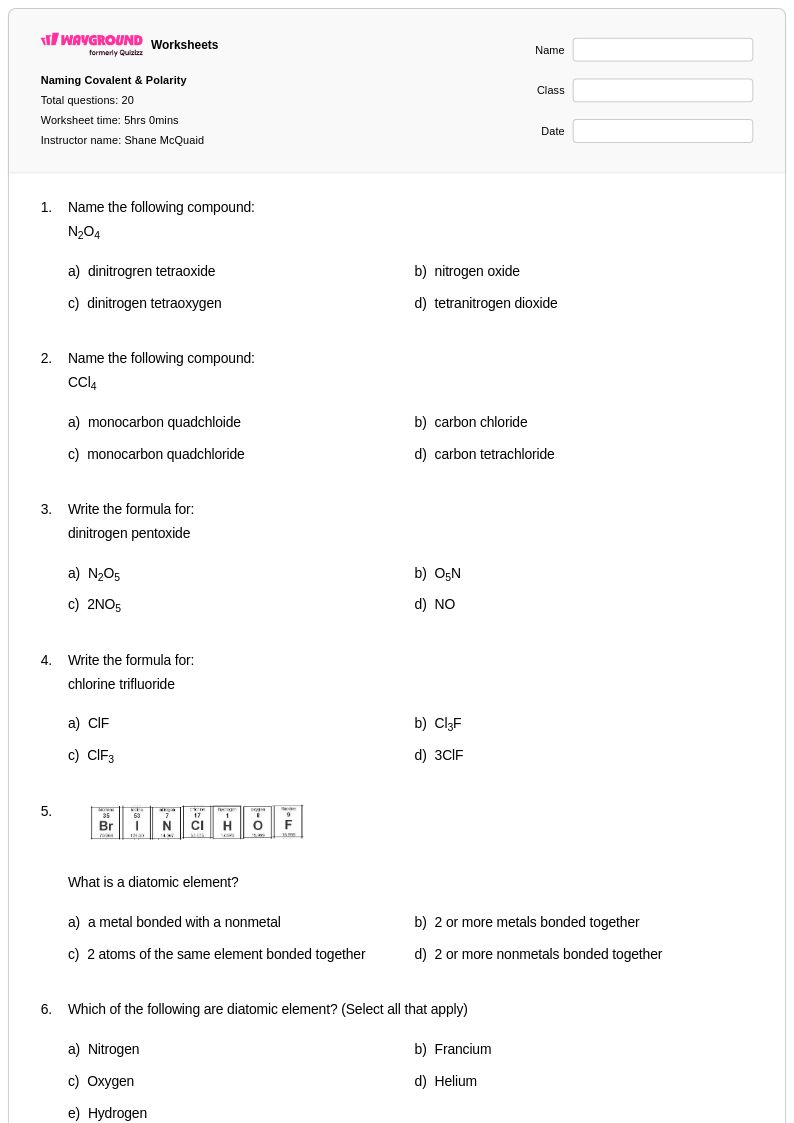
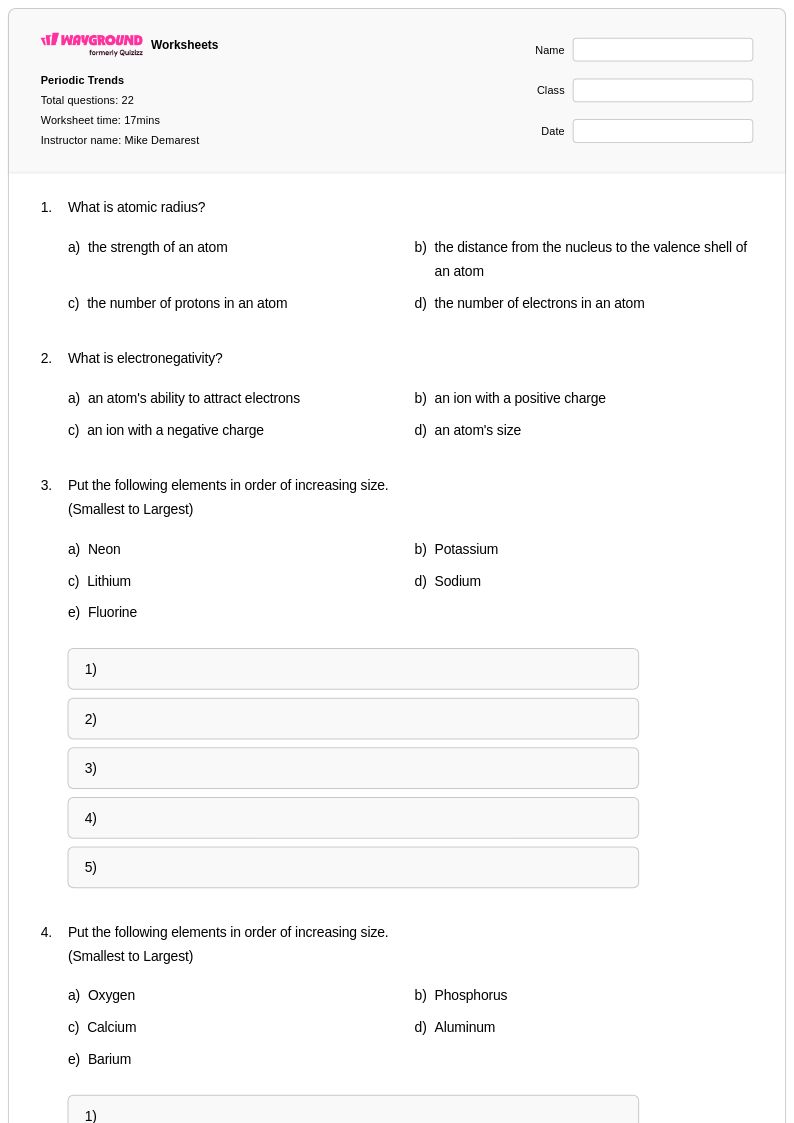
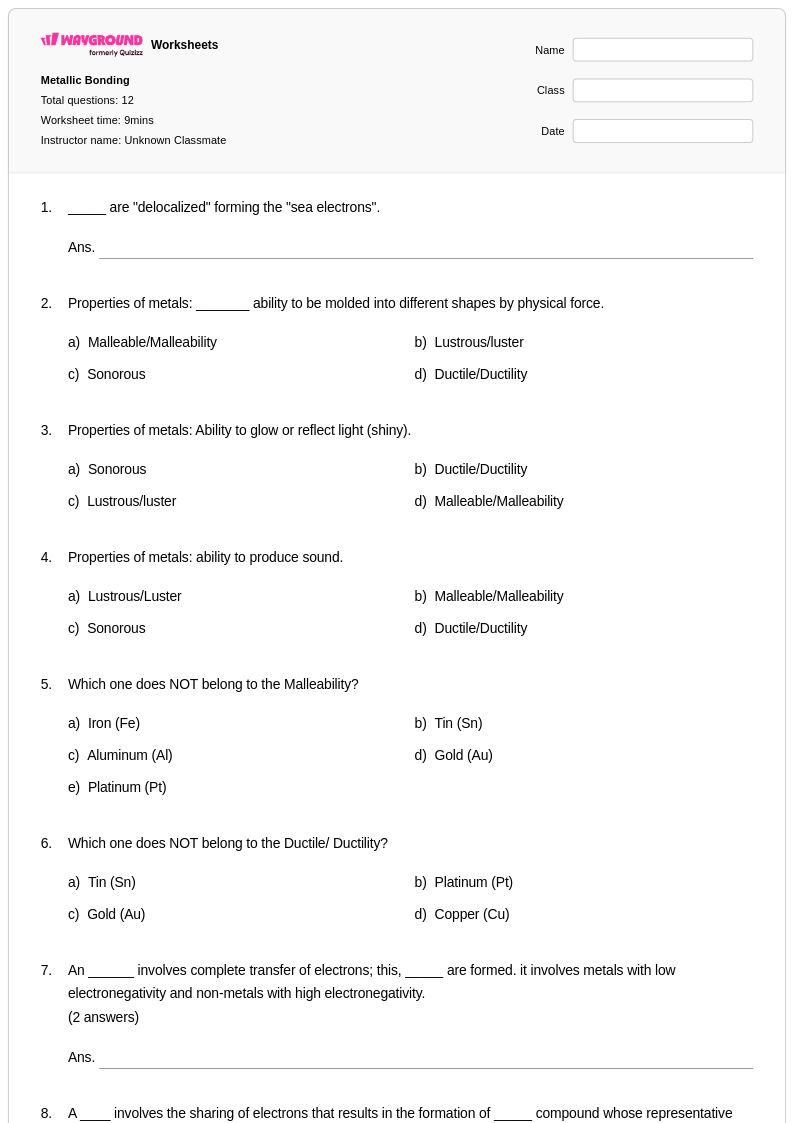
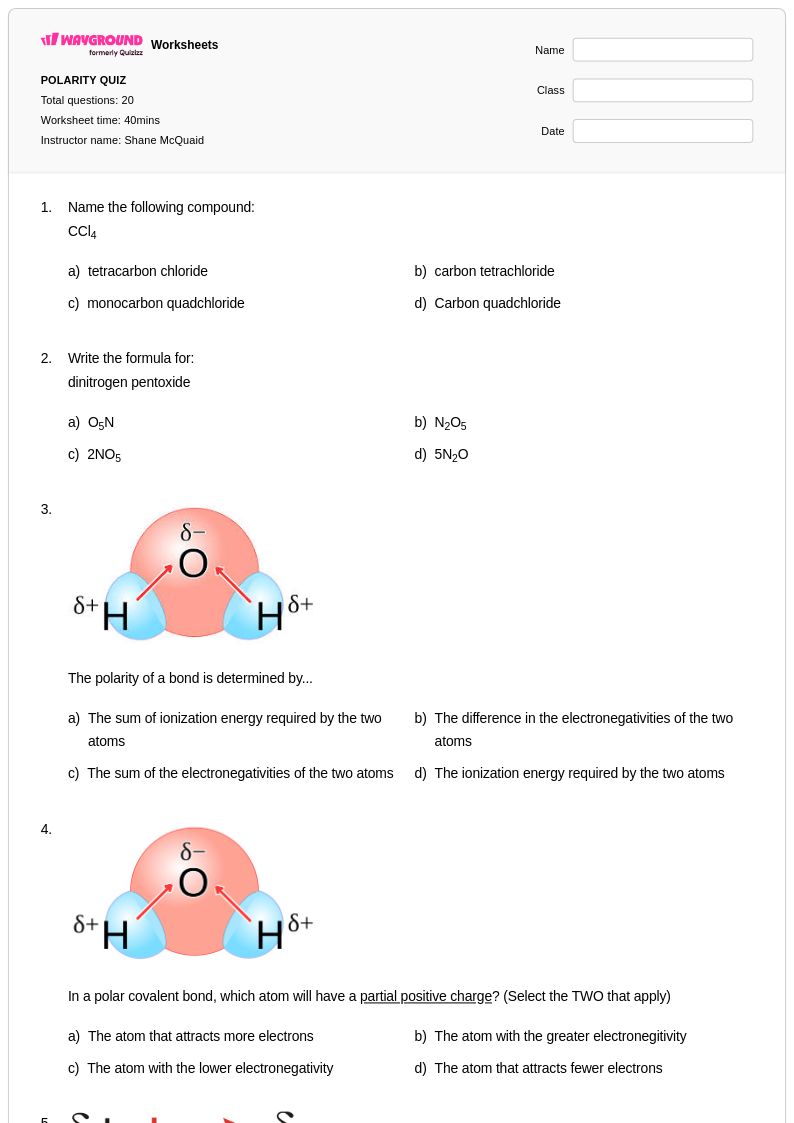
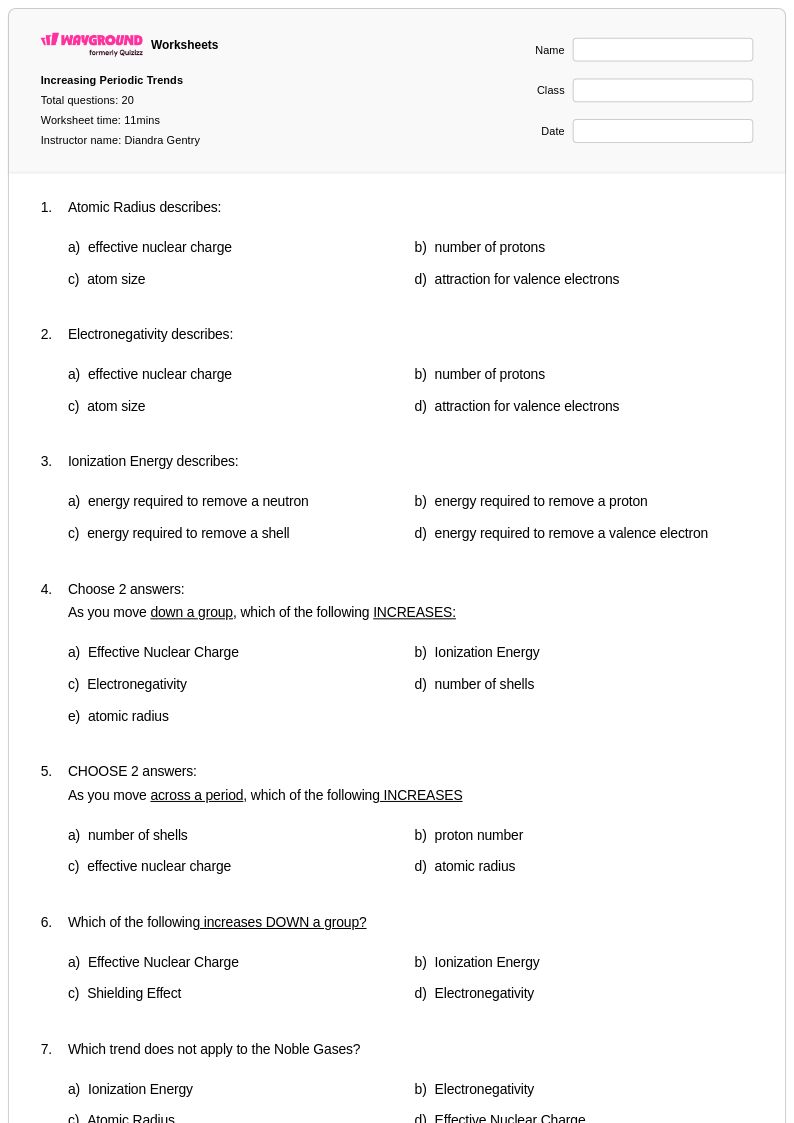
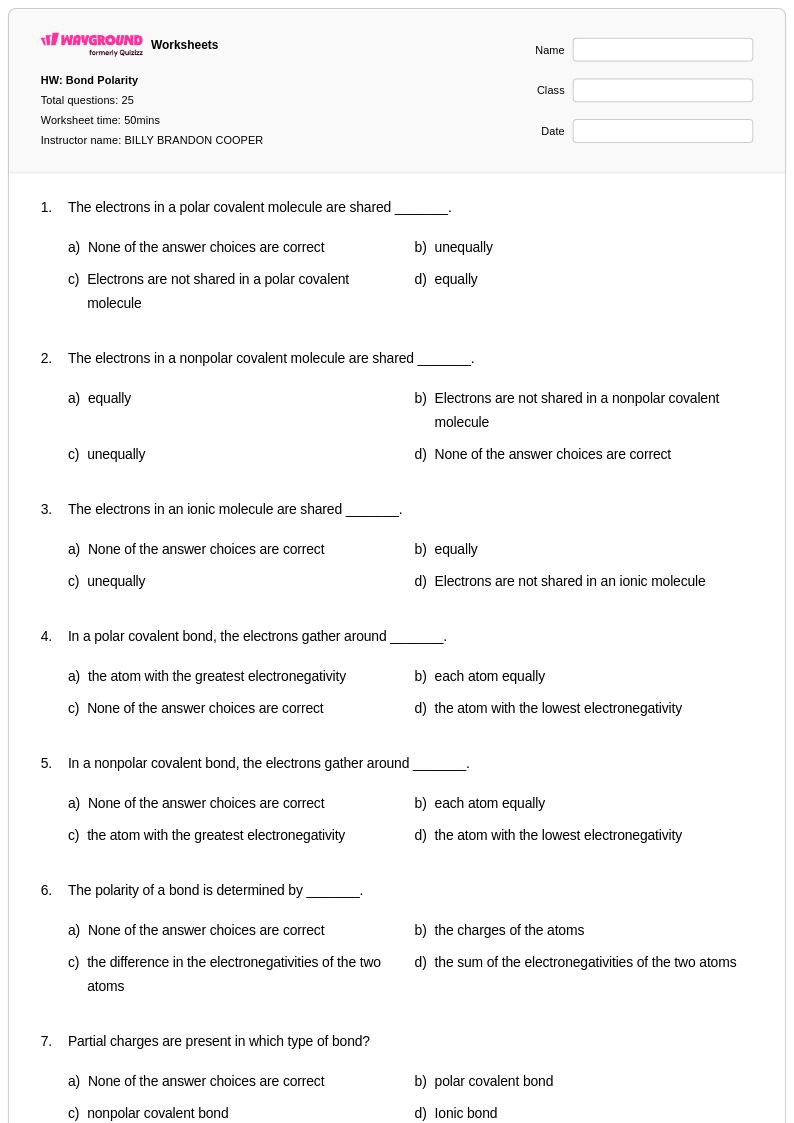
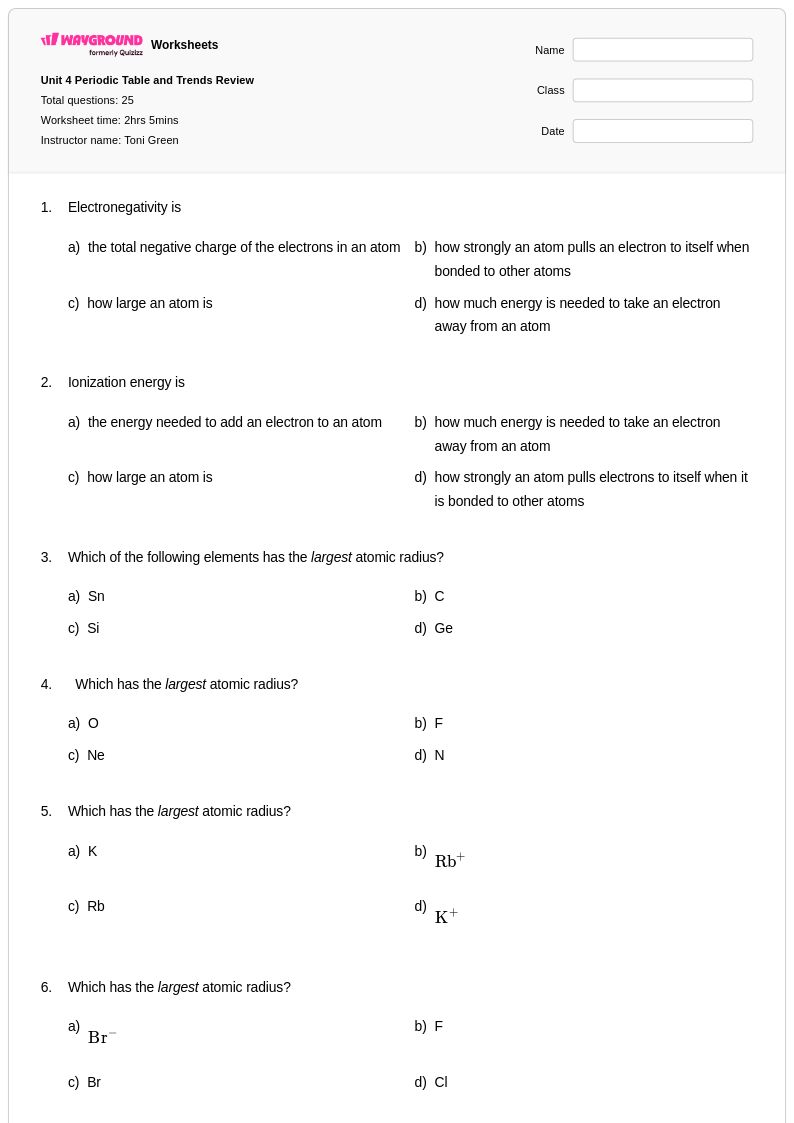
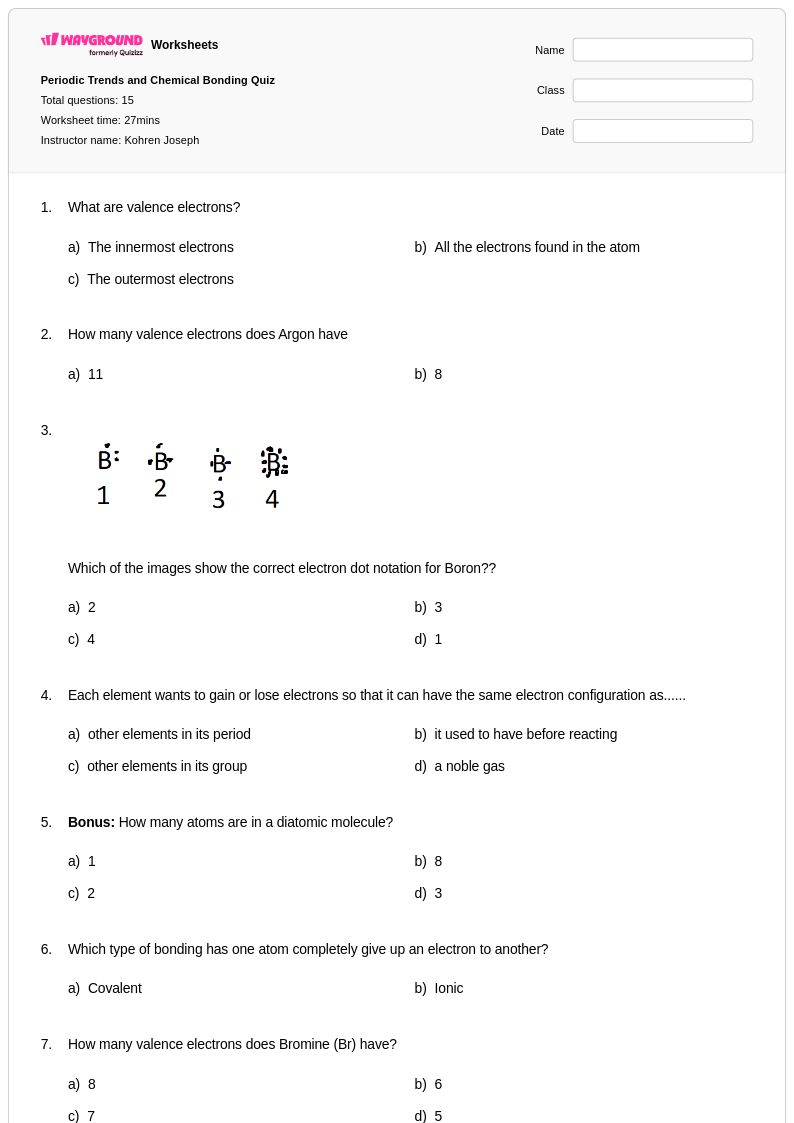
Electronegativity worksheets for Year 9 students through Wayground (formerly Quizizz) provide comprehensive practice in understanding this fundamental chemical concept that governs molecular behavior and bond formation. These carefully designed educational materials help students master the ability to predict and explain how atoms attract electrons in chemical bonds, compare electronegativity values across the periodic table, and determine bond polarity based on electronegativity differences. The worksheets strengthen critical thinking skills as students analyze periodic trends, practice calculating electronegativity differences, and apply this knowledge to predict molecular properties. Each resource includes detailed answer keys that support independent learning and self-assessment, while the free printables offer flexible options for both classroom instruction and homework assignments with engaging practice problems that reinforce core electronegativity principles.
Wayground (formerly Quizizz) empowers educators with millions of teacher-created electronegativity resources that streamline lesson planning and enhance student understanding of this essential chemistry topic. The platform's robust search and filtering capabilities allow teachers to quickly locate grade-appropriate materials that align with curriculum standards, while differentiation tools enable customization for students with varying skill levels and learning needs. These electronegativity worksheets are available in both printable pdf formats for traditional classroom use and digital versions for interactive learning experiences, providing maximum flexibility for diverse teaching environments. Teachers can efficiently implement targeted remediation for struggling students, offer enrichment opportunities for advanced learners, and create structured skill practice sessions that build confidence in electronegativity concepts through systematic, progressive exercises that support mastery of this foundational chemistry principle.
FAQs
How do I teach electronegativity to high school chemistry students?
Start by grounding students in the periodic table trend: electronegativity increases across a period and decreases down a group, with fluorine as the most electronegative element. Use the Pauling scale as a concrete reference and connect electronegativity directly to bond polarity so students understand why the concept matters beyond memorization. Visual aids like color-coded periodic tables and bond dipole diagrams help students internalize the pattern before moving on to molecular polarity and intermolecular forces.
What types of practice problems help students master electronegativity?
Effective practice should span three levels: comparing electronegativity values between elements using the periodic table, classifying bonds as nonpolar covalent, polar covalent, or ionic based on electronegativity differences, and applying those classifications to predict molecular polarity and intermolecular forces. Problems that ask students to rank elements or bonds by polarity — rather than simply label them — build the analytical reasoning that shows up on assessments. Including a mix of straightforward comparisons and multi-step prediction problems ensures students can both recall and apply the concept.
What mistakes do students commonly make when learning electronegativity?
The most frequent error is conflating electronegativity with electron affinity or ionization energy — students often treat these periodic trends as interchangeable when they measure distinct properties. A second common mistake is assuming a molecule with polar bonds is automatically polar overall, without accounting for molecular geometry and bond dipole cancellation. Students also frequently misread the periodic table trend, placing noble gases into their electronegativity comparisons without recognizing those values are typically omitted or treated as negligible.
How do I use electronegativity worksheets to differentiate instruction in my chemistry class?
Differentiation works best when practice problems are tiered: struggling students benefit from scaffolded worksheets that provide the Pauling scale values and ask them to compare and classify, while advanced learners should work with problems that require predicting intermolecular forces or explaining anomalies in boiling points using electronegativity reasoning. On Wayground, teachers can apply individual accommodations such as read aloud, reduced answer choices, and extended time to specific students without affecting the rest of the class, making it straightforward to support diverse learners within the same assignment.
How can I use Wayground's electronegativity worksheets in my classroom?
Wayground's electronegativity worksheets are available as printable PDFs for traditional classroom use and in digital formats for technology-integrated or remote learning environments. Teachers can also host worksheets directly as a quiz on Wayground, enabling real-time student response tracking. Each worksheet includes a detailed answer key, supporting both teacher-led instruction and independent student practice or self-assessment.
How does electronegativity connect to other chemistry concepts students need to know?
Electronegativity is a foundational concept that threads through nearly every major unit in a chemistry course. It directly determines bond polarity, which drives molecular polarity, which in turn explains intermolecular forces like hydrogen bonding, dipole-dipole interactions, and dispersion forces. Students who have a firm grasp of electronegativity are significantly better prepared to reason about solubility, boiling points, reactivity, and even acid-base behavior.