Free Printable Energy Levels Worksheets for Year 9
Free Year 9 energy levels chemistry worksheets and printables help students master electron configurations, orbital theory, and atomic structure through engaging practice problems with complete answer keys available as downloadable PDFs.
Explore printable Energy Levels worksheets for Year 9
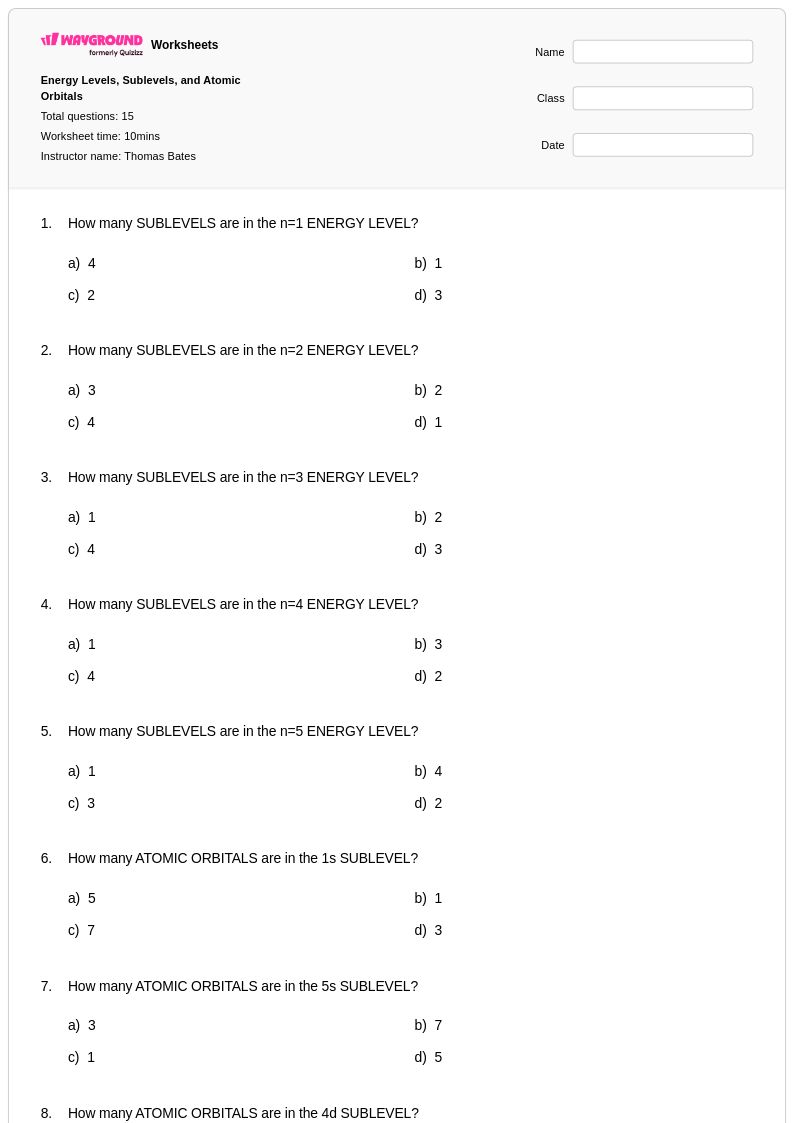
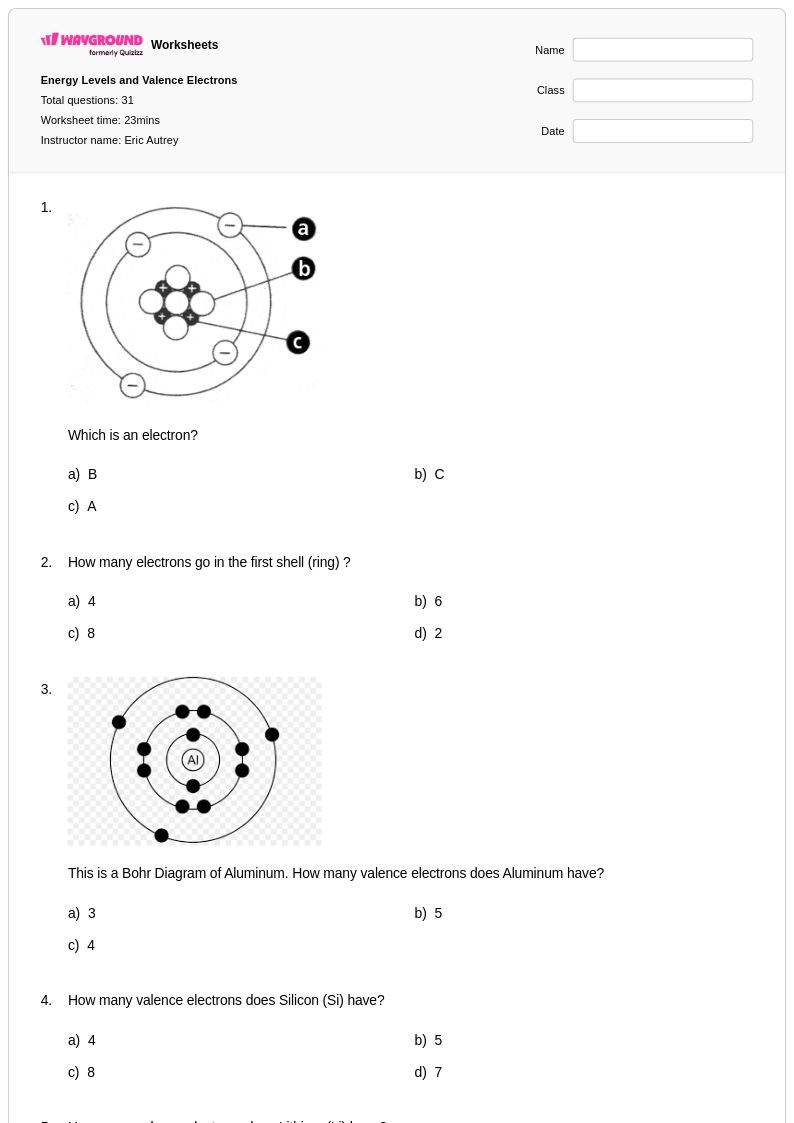
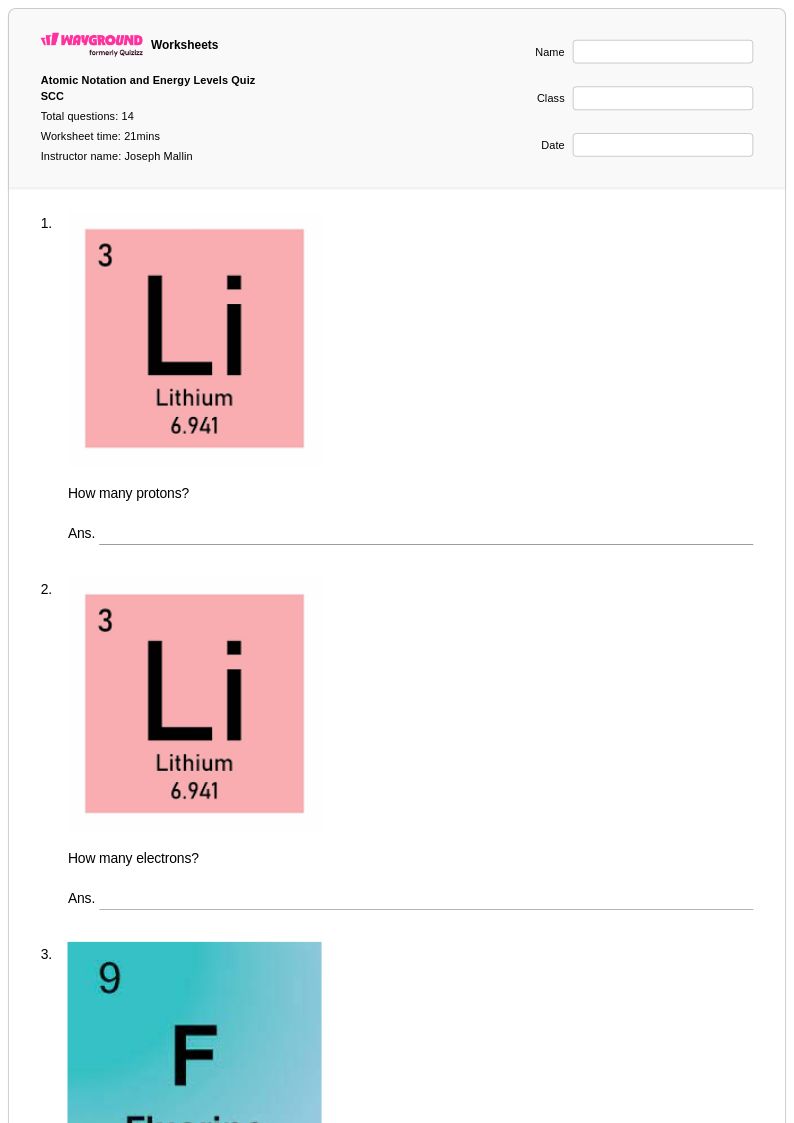
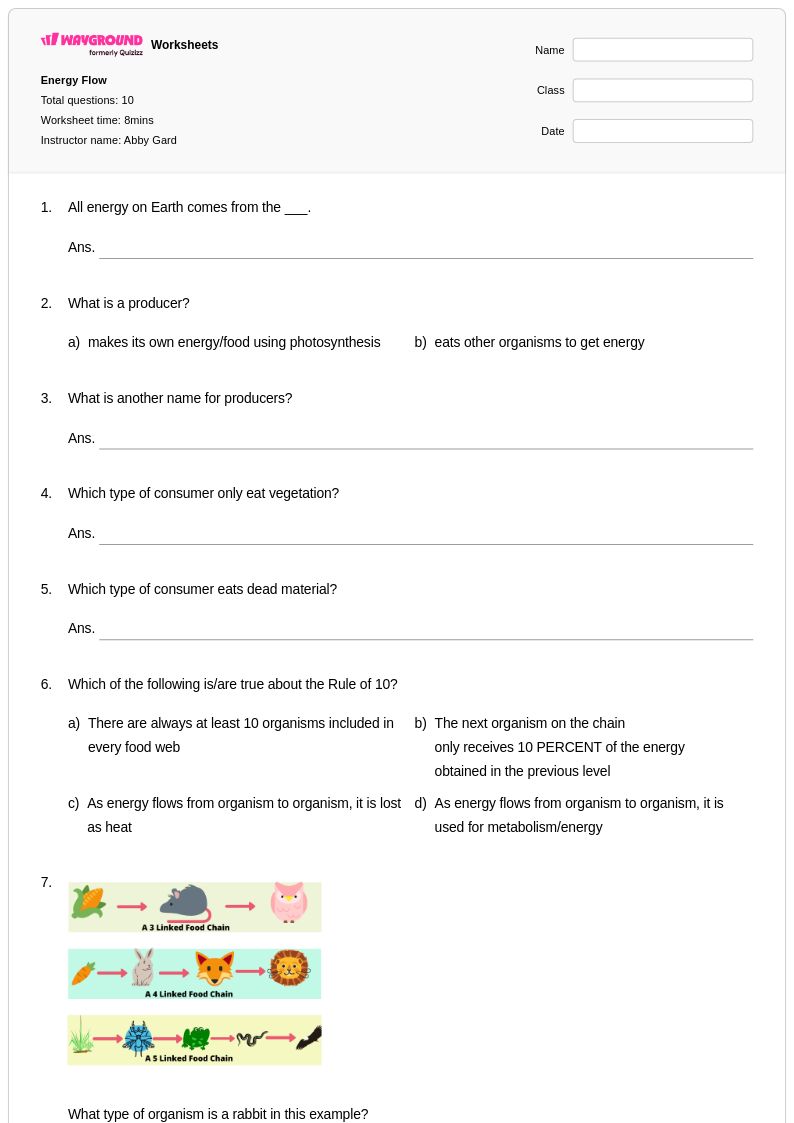
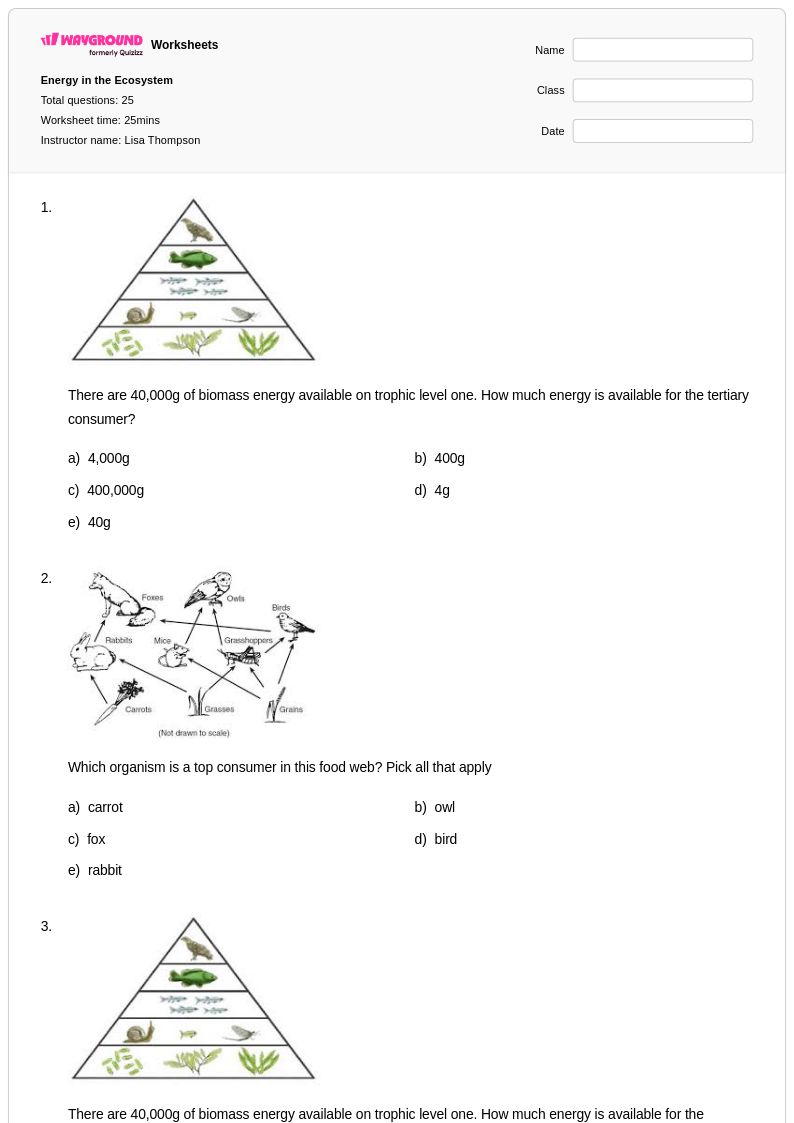
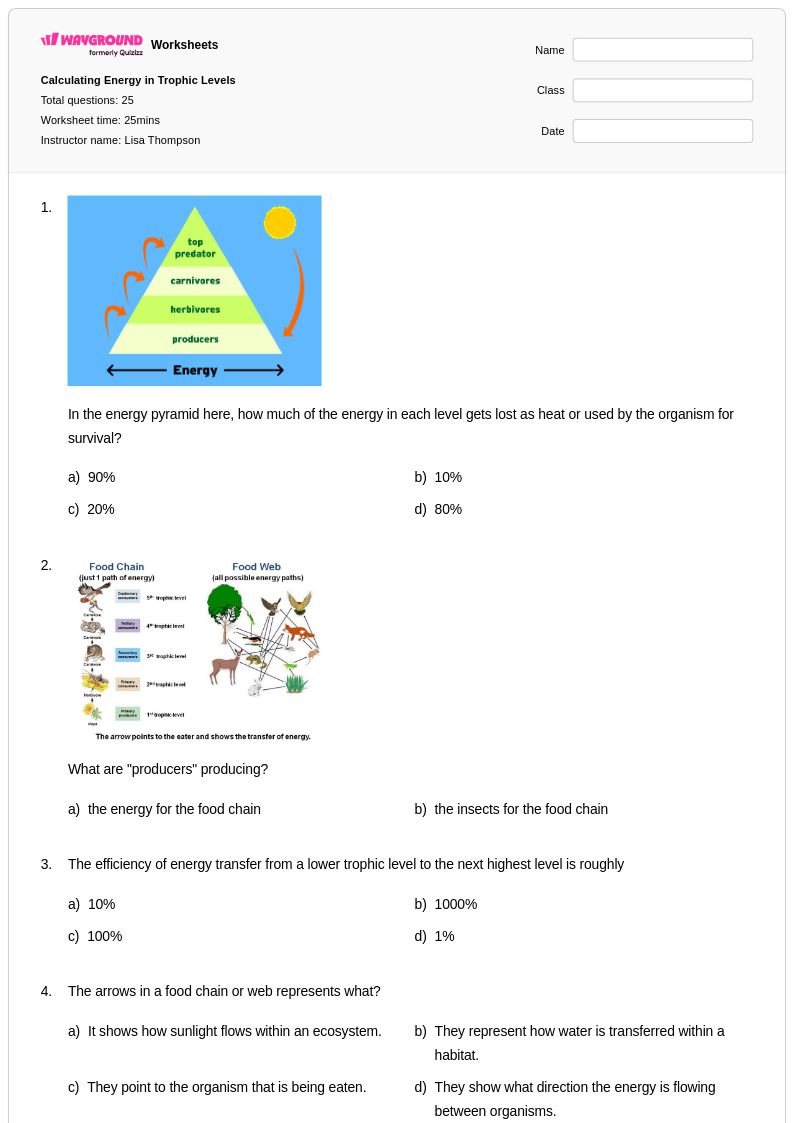
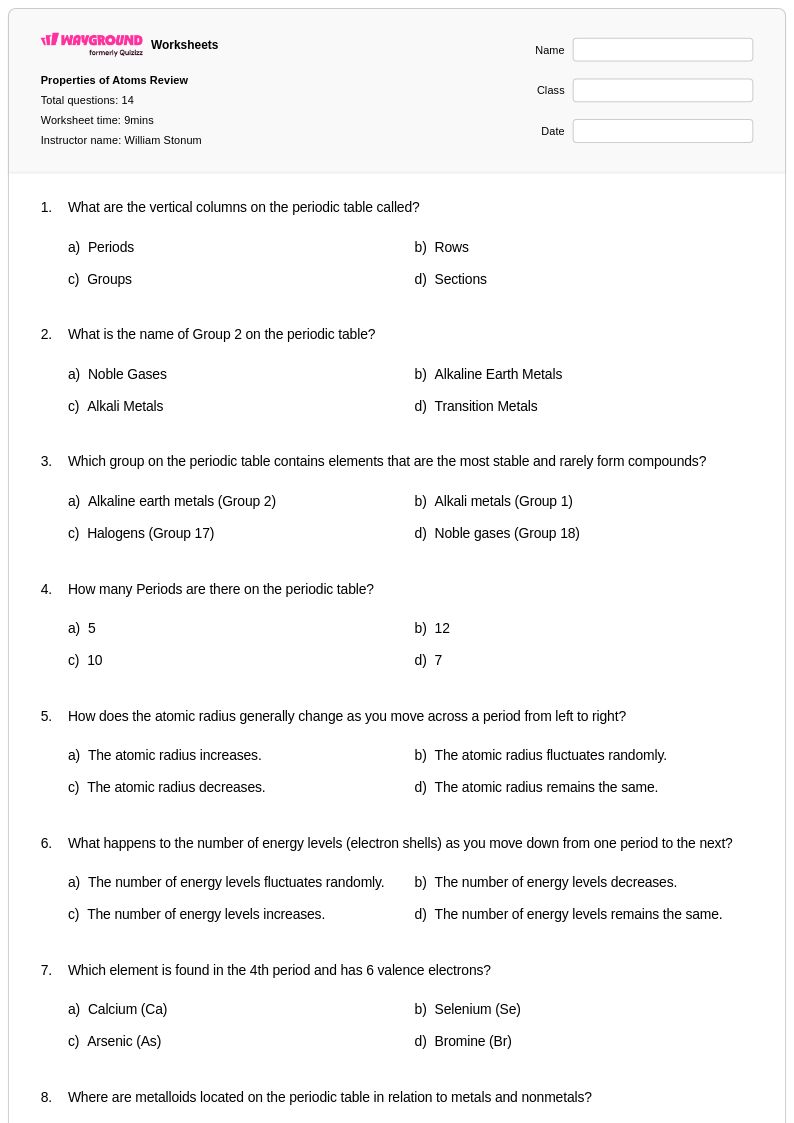
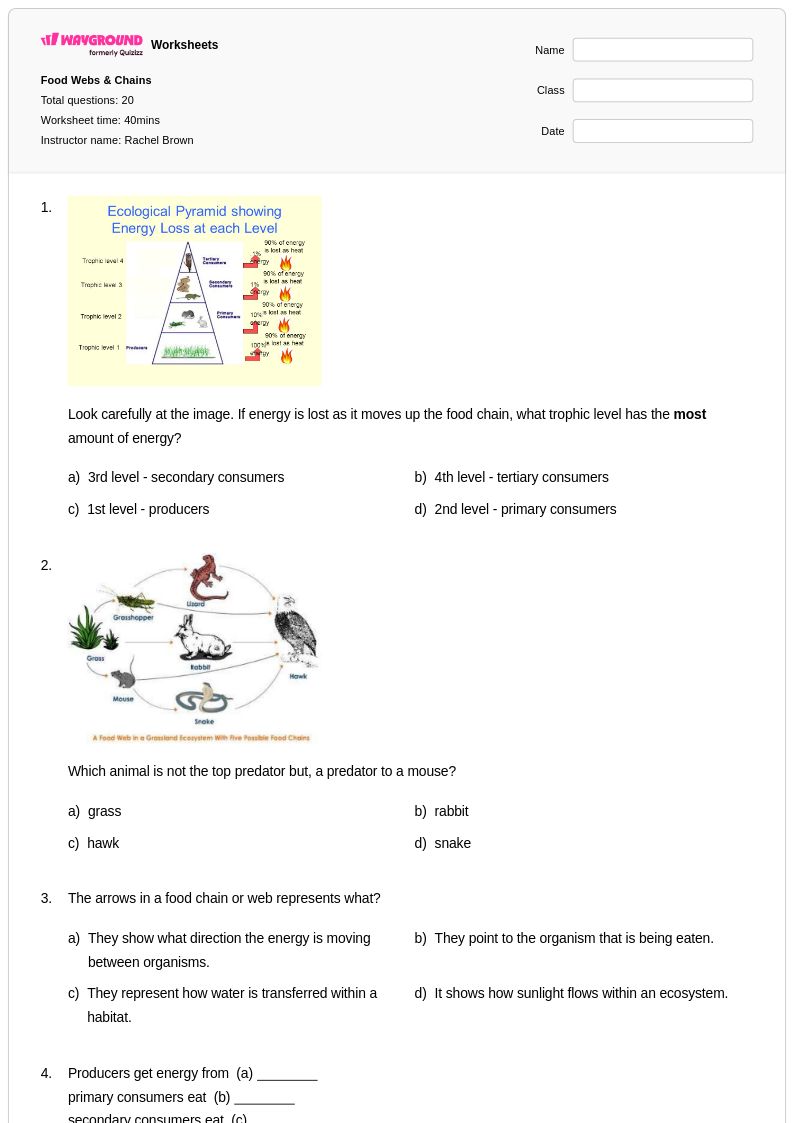
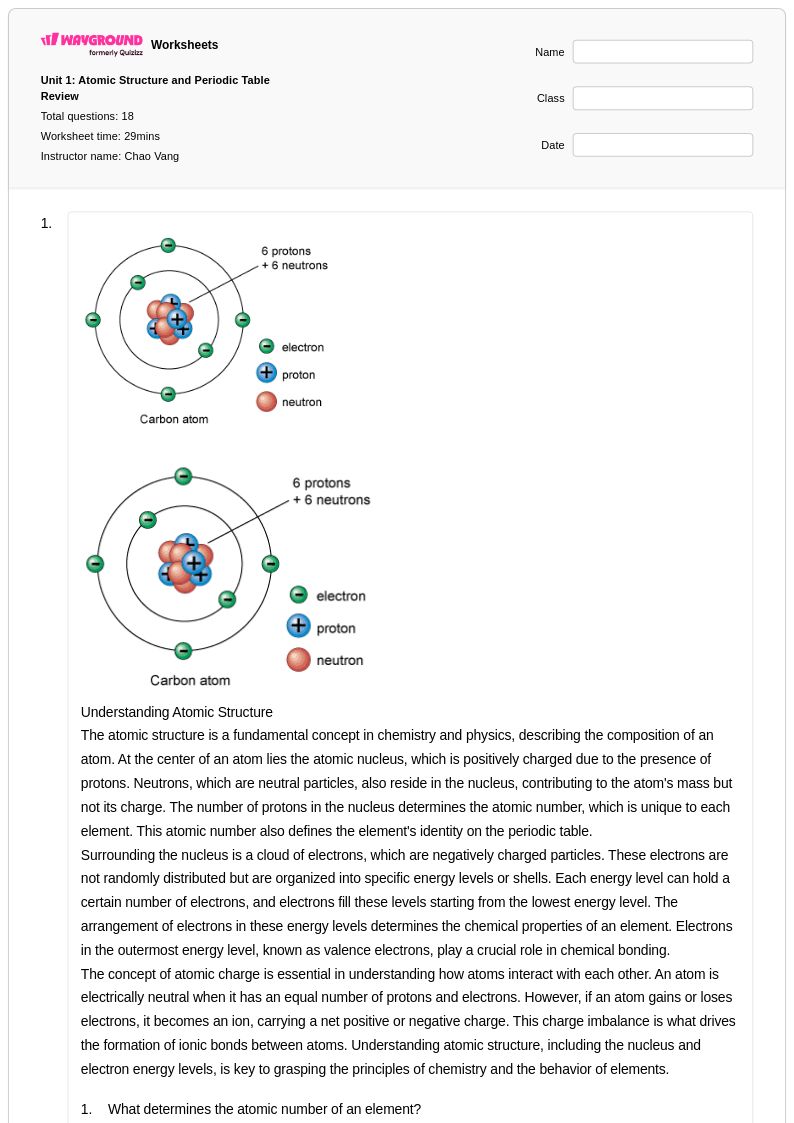
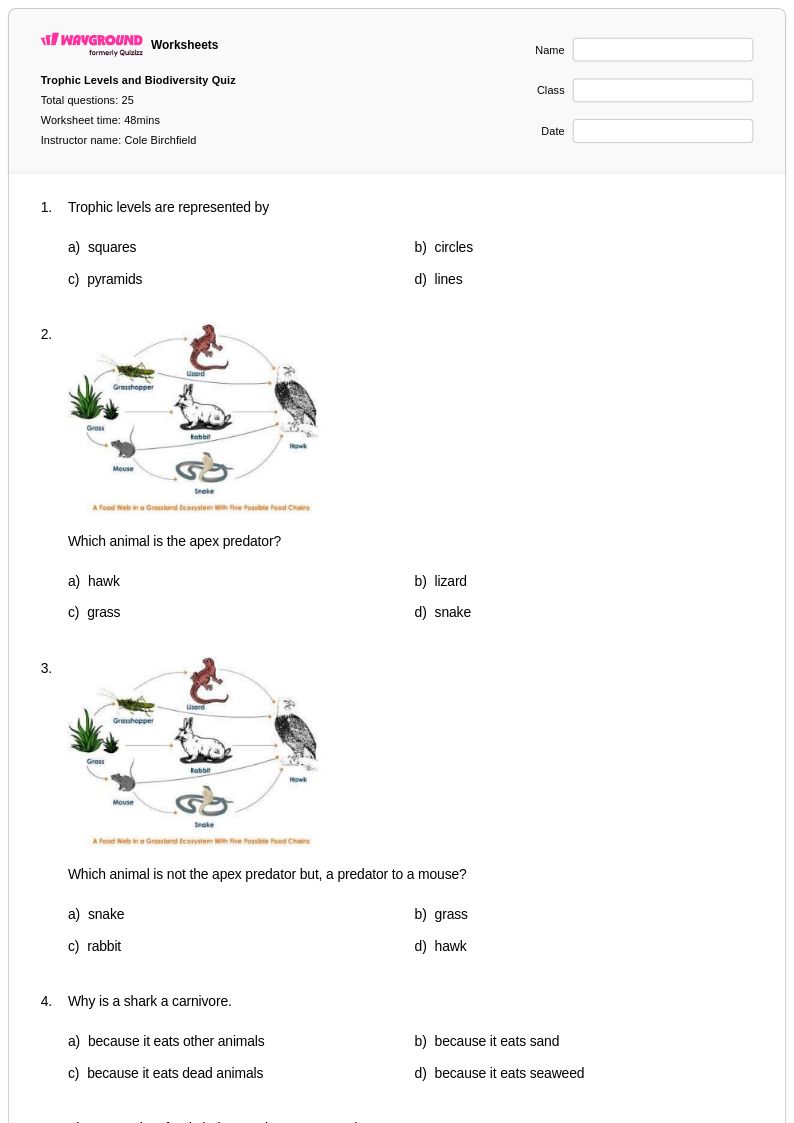
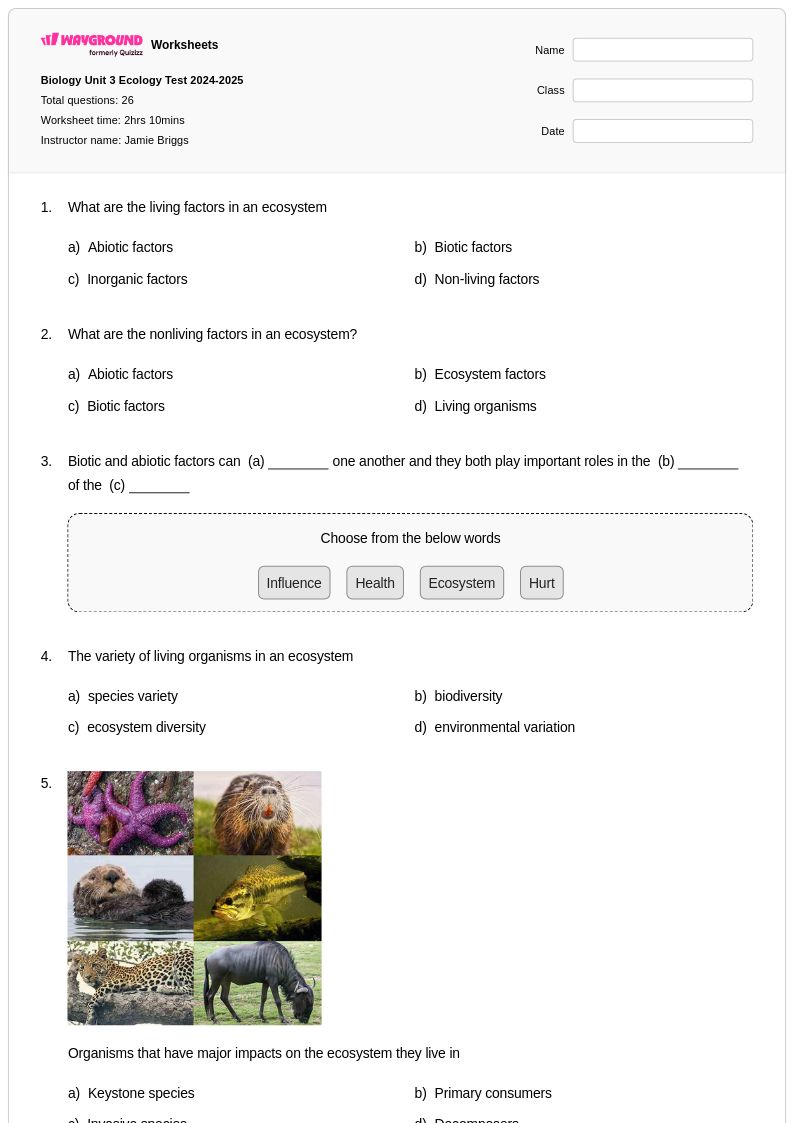
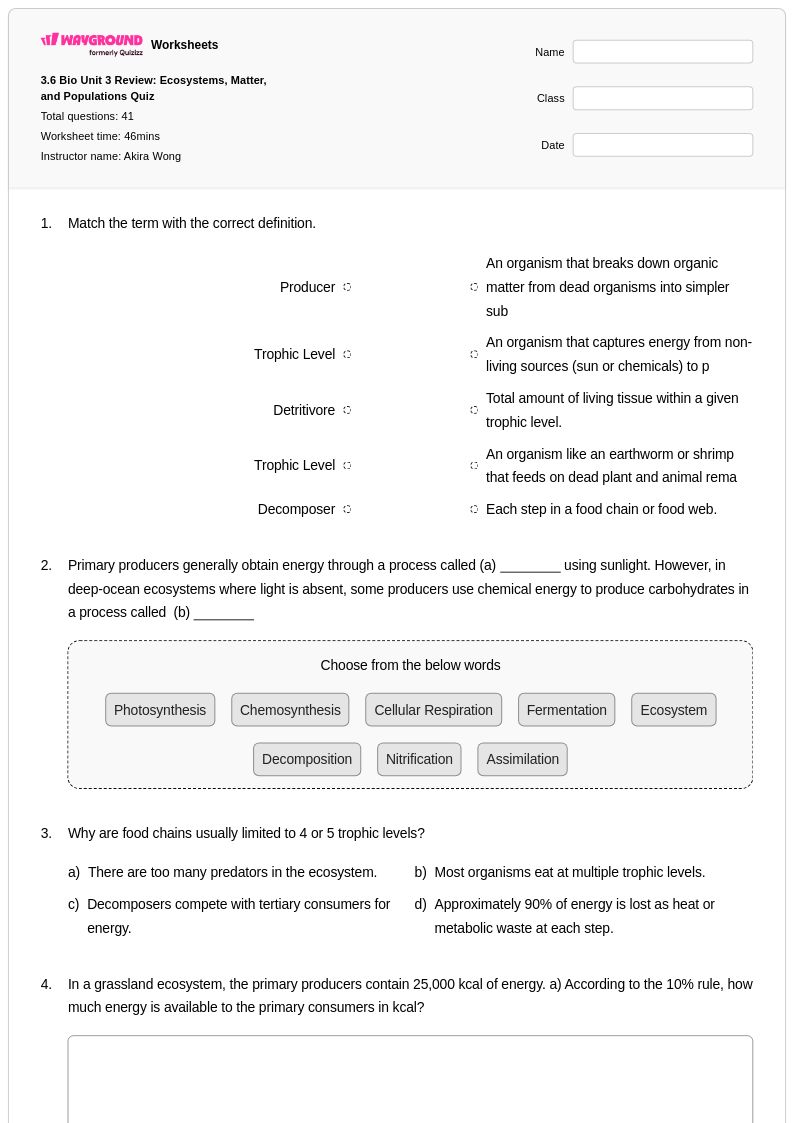
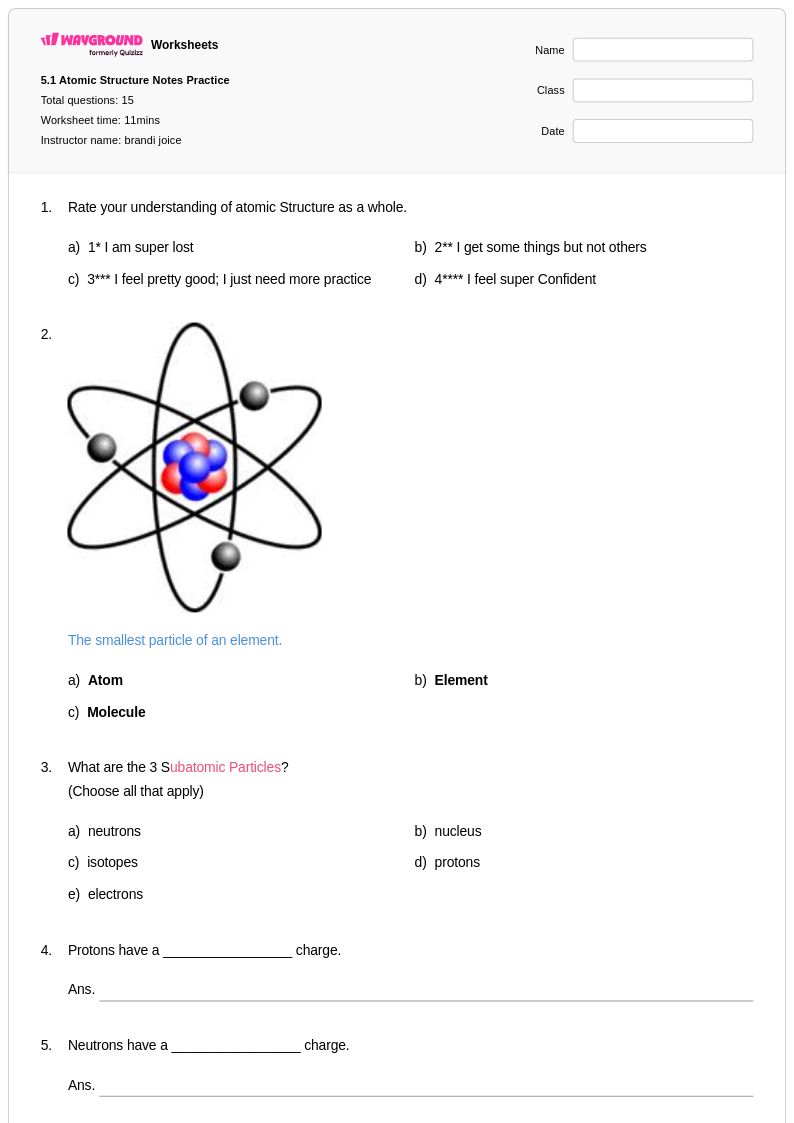
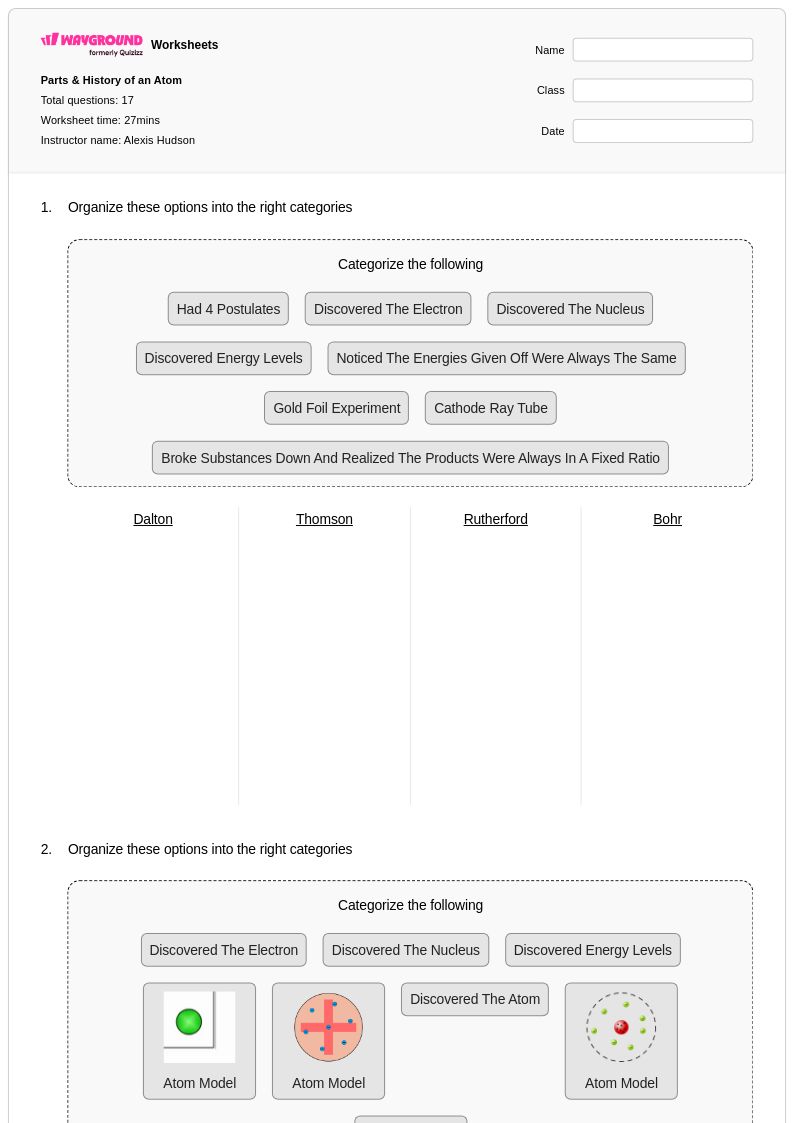
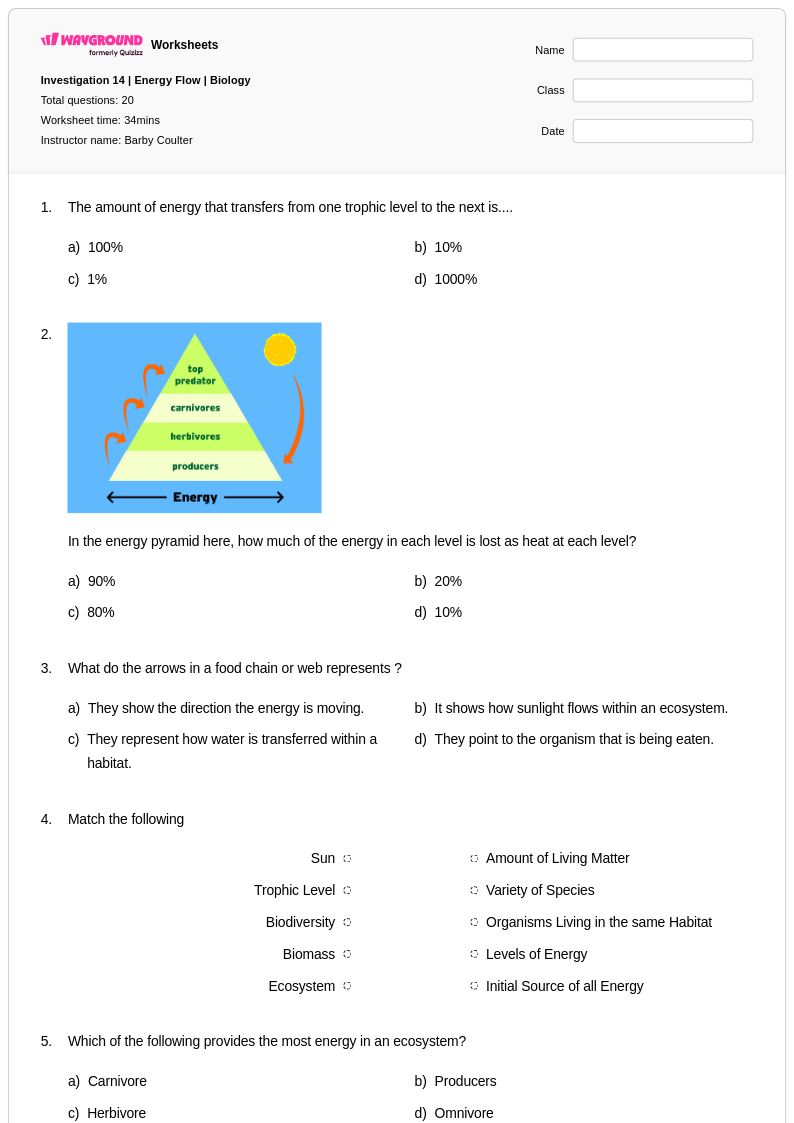
Energy levels worksheets for Year 9 chemistry provide comprehensive practice materials that help students master the fundamental concepts of atomic structure and electron configuration. These carefully designed resources guide students through understanding how electrons occupy specific energy levels around the nucleus, the relationship between energy and electron distance from the nucleus, and how energy level diagrams represent atomic structure. The worksheets strengthen critical thinking skills through practice problems that require students to draw energy level diagrams, calculate energy differences between levels, and explain electron transitions. Each worksheet comes with a detailed answer key, making them valuable for both classroom instruction and independent study, while the free printable format ensures accessibility for all learning environments.
Wayground, formerly Quizizz, empowers educators with millions of teacher-created energy levels worksheets that are specifically aligned with Year 9 chemistry standards and learning objectives. The platform's robust search and filtering capabilities allow teachers to quickly locate materials that match their specific curriculum needs, whether focusing on basic energy level concepts or more advanced electron configuration topics. These resources support differentiated instruction through customizable features that enable teachers to modify worksheets for various skill levels, while the availability of both printable pdf versions and interactive digital formats provides flexibility for diverse classroom settings. Teachers can seamlessly integrate these worksheets into lesson planning for initial skill introduction, targeted remediation for struggling students, or enrichment activities for advanced learners, ensuring comprehensive coverage of energy level concepts across all student ability levels.
FAQs
How do I teach energy levels and electron configuration in chemistry?
Start by grounding students in Bohr's model of the atom, establishing that electrons occupy discrete energy shells at increasing distances from the nucleus. From there, introduce the aufbau principle, Pauli exclusion principle, and Hund's rule as the three rules that govern how electrons fill orbitals. Using orbital diagrams alongside written electron configurations helps students visualize the filling order before moving to shorthand notation. Connecting energy levels to periodic table trends — such as ionization energy and atomic radius — gives students a functional reason to understand the concept rather than just memorizing rules.
What exercises help students practice electron configuration and energy levels?
Effective practice moves students from concrete to abstract: begin with energy level diagrams where students draw and fill shells for simple elements, then progress to orbital notation, and finally to full and noble gas shorthand configurations. Practice problems that ask students to identify the number of electrons in each shell, determine valence electrons, and write configurations for transition metals build the layered fluency this topic requires. Including problems that connect electron configuration to ion formation or periodic trends adds applied context that reinforces why the skill matters.
What mistakes do students commonly make with energy levels and electron configuration?
The most frequent error is misapplying the aufbau principle, particularly with the 3d and 4s subshells — students often place electrons in 3d before 4s when writing configurations, or fail to account for the exceptions in chromium and copper. Another common misconception is treating energy shells and subshells as synonymous, which creates confusion when students encounter orbital diagrams. Students also frequently miscount electrons for ions, forgetting to add or remove electrons based on charge before writing the configuration.
How do I differentiate energy levels instruction for students at different skill levels?
For introductory students, focus on energy shells and electron capacity rules (2, 8, 8) using simple period 1–3 elements before introducing subshell notation. Advanced or honors students can extend into quantum numbers, writing all four quantum numbers for specific electrons, and exploring exceptions to the aufbau principle in transition metals. On Wayground, teachers can apply accommodations such as reduced answer choices or read-aloud support for individual students who need additional scaffolding, while the rest of the class works with standard settings — all within the same assignment.
How do I use Wayground's energy levels worksheets in my classroom?
Wayground's energy levels worksheets are available as printable PDFs for traditional classroom use and in digital formats for technology-integrated environments, giving teachers flexibility regardless of their classroom setup. Teachers can assign digital versions directly through the platform and host them as a quiz on Wayground, enabling real-time tracking of student responses. All worksheets include answer keys, which supports independent practice, homework assignments, and self-paced review without requiring additional teacher preparation.
How do energy levels connect to broader chemistry concepts like periodic trends and chemical bonding?
Energy levels are foundational to understanding periodic trends because properties like ionization energy, electronegativity, and atomic radius are direct consequences of how electrons are arranged relative to the nucleus and each other. Valence electron configuration determines how atoms form bonds — whether ionic, covalent, or metallic — making electron configuration knowledge a prerequisite for bonding units. Students who understand energy levels can predict reactivity patterns, explain why noble gases are stable, and interpret why transition metals form multiple oxidation states.