Free Printable Limiting Reactants Worksheets for Year 9
Year 9 limiting reactants worksheets help students master stoichiometry calculations and identify which reactant gets consumed first in chemical reactions through engaging printables, practice problems, and comprehensive answer keys.
Explore printable Limiting Reactants worksheets for Year 9
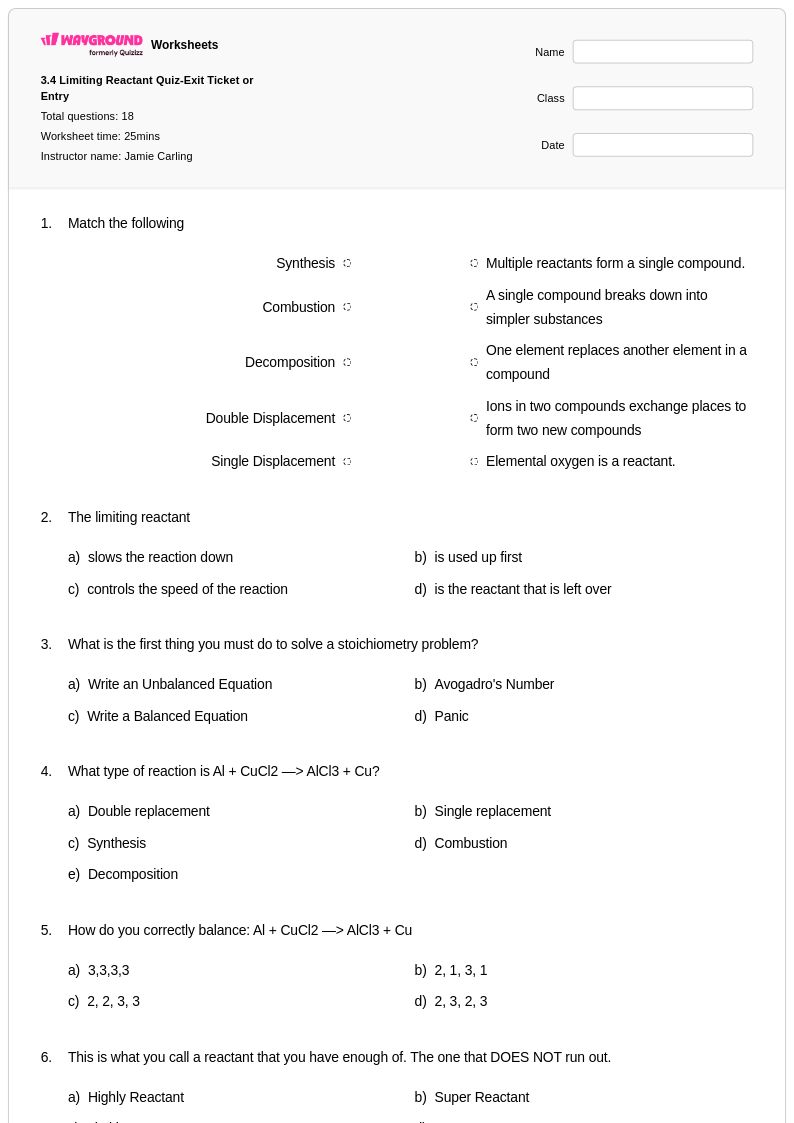
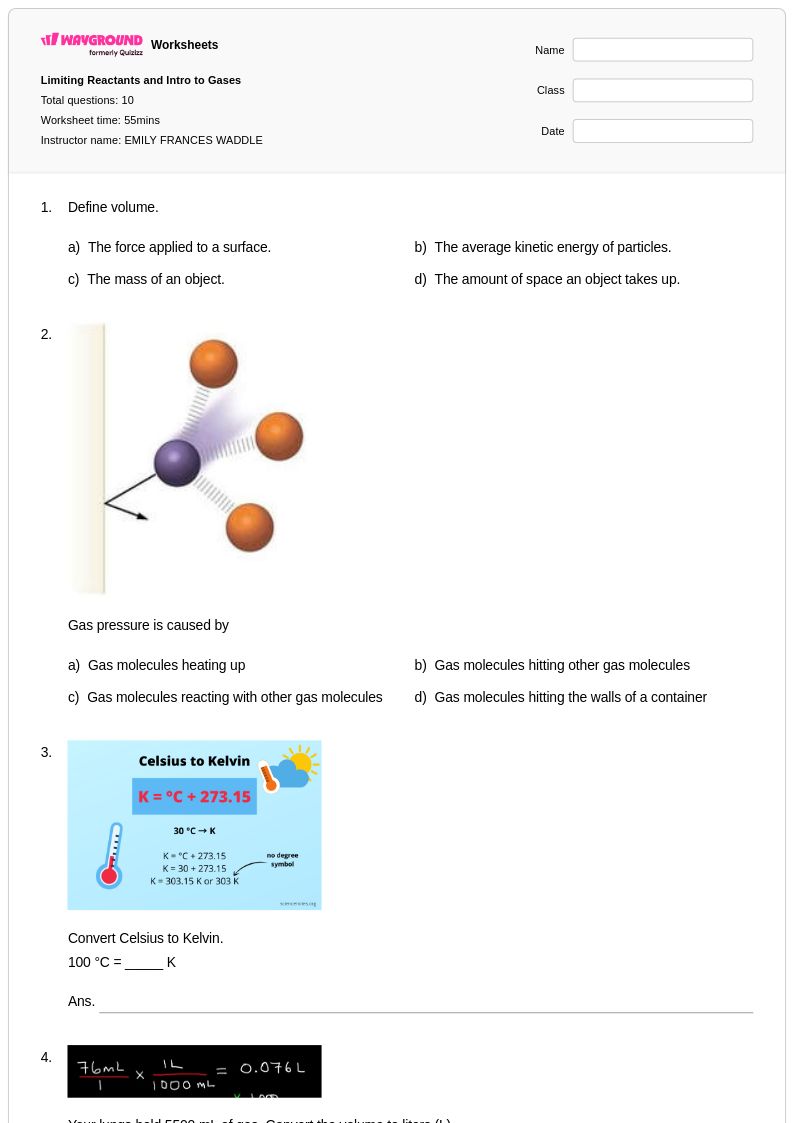
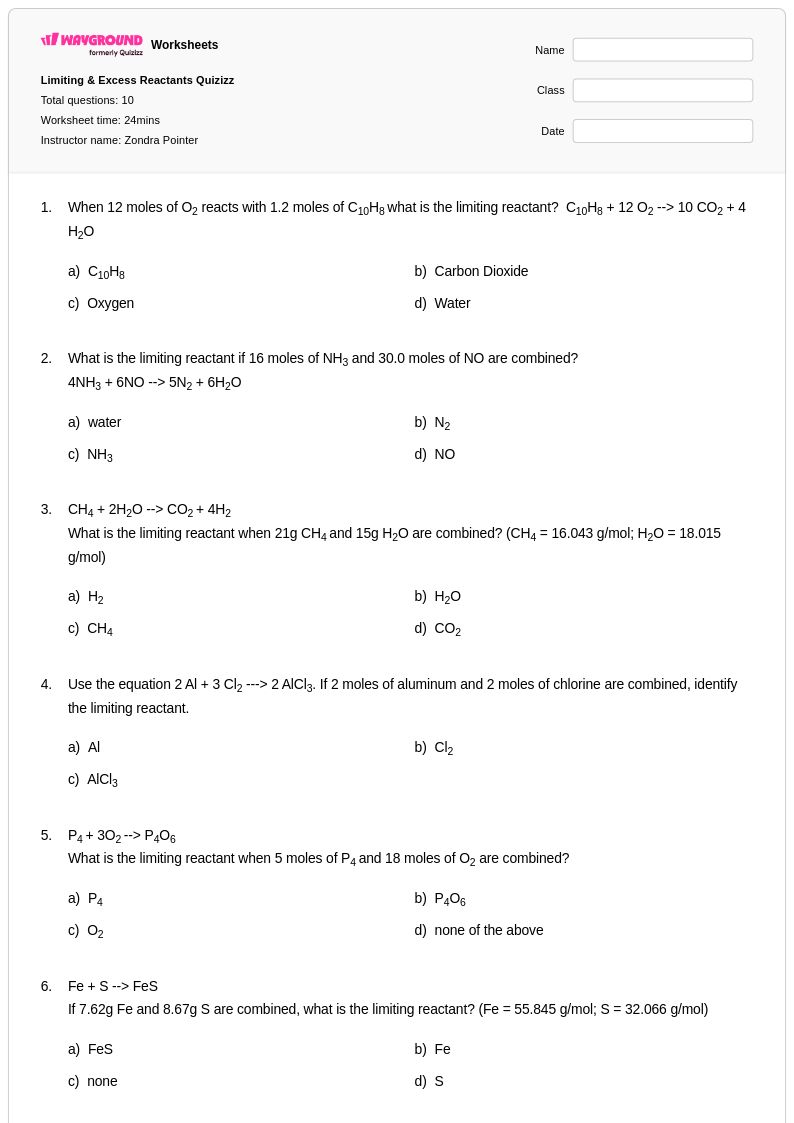
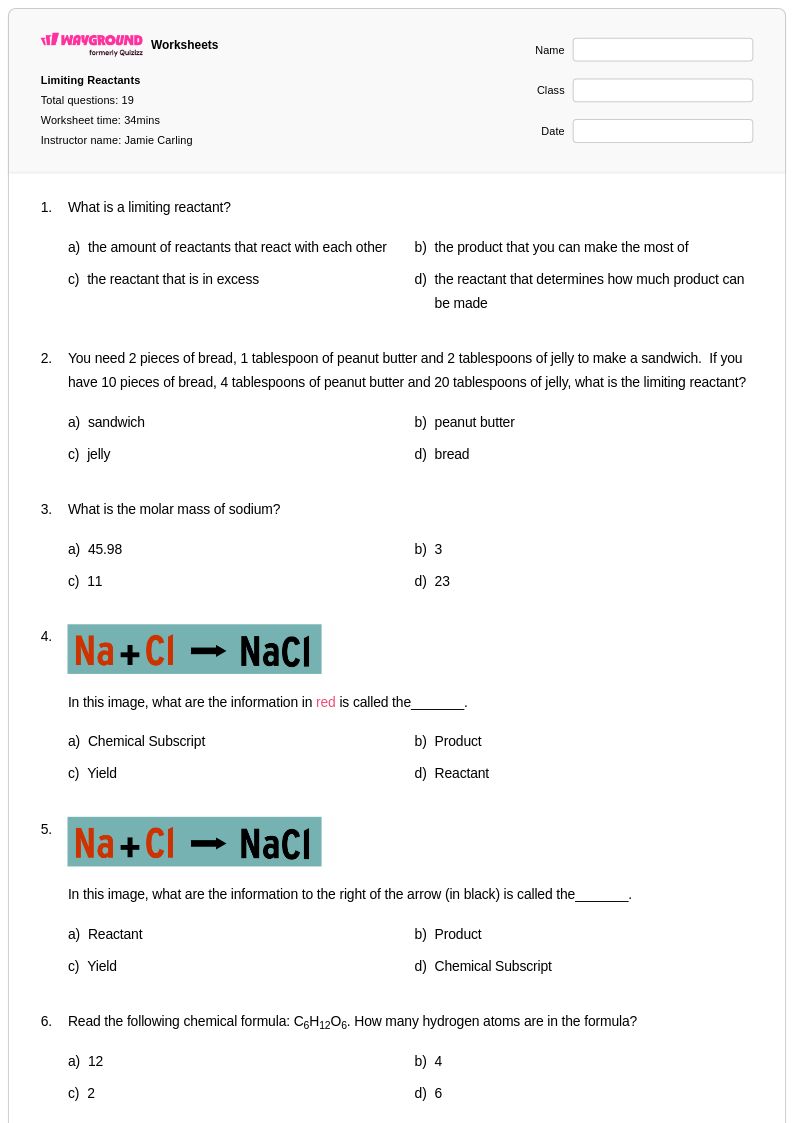
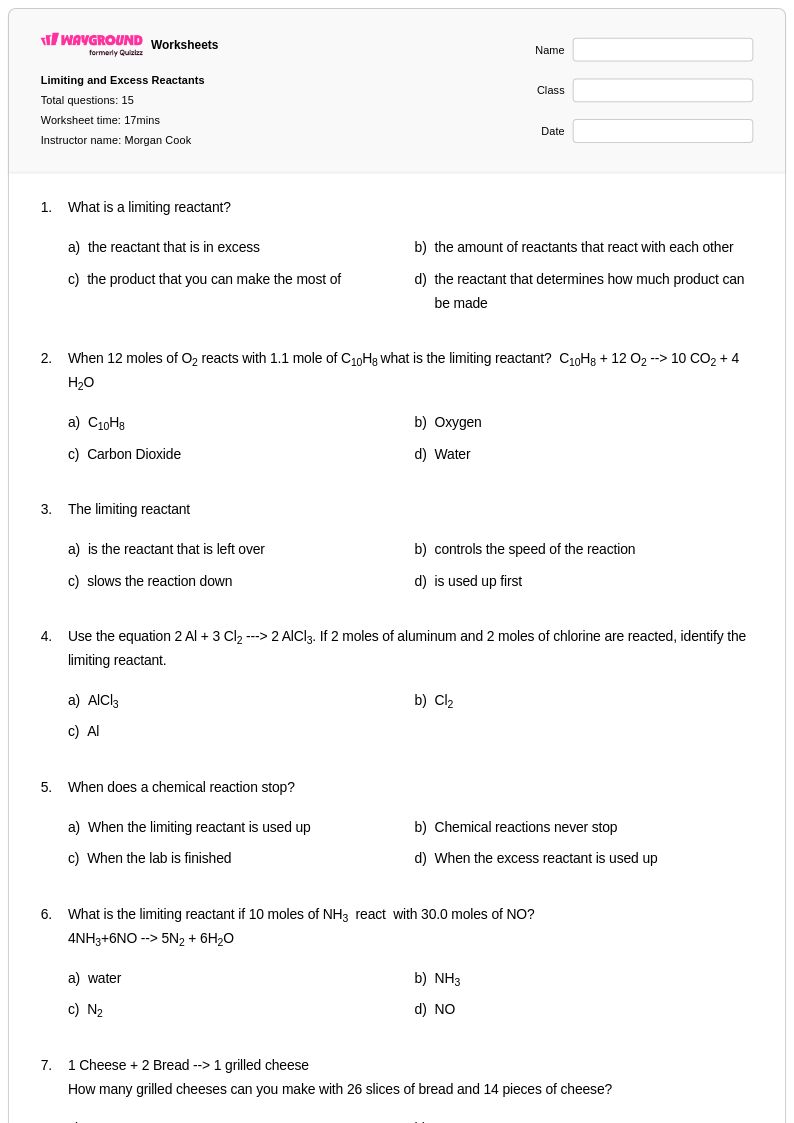
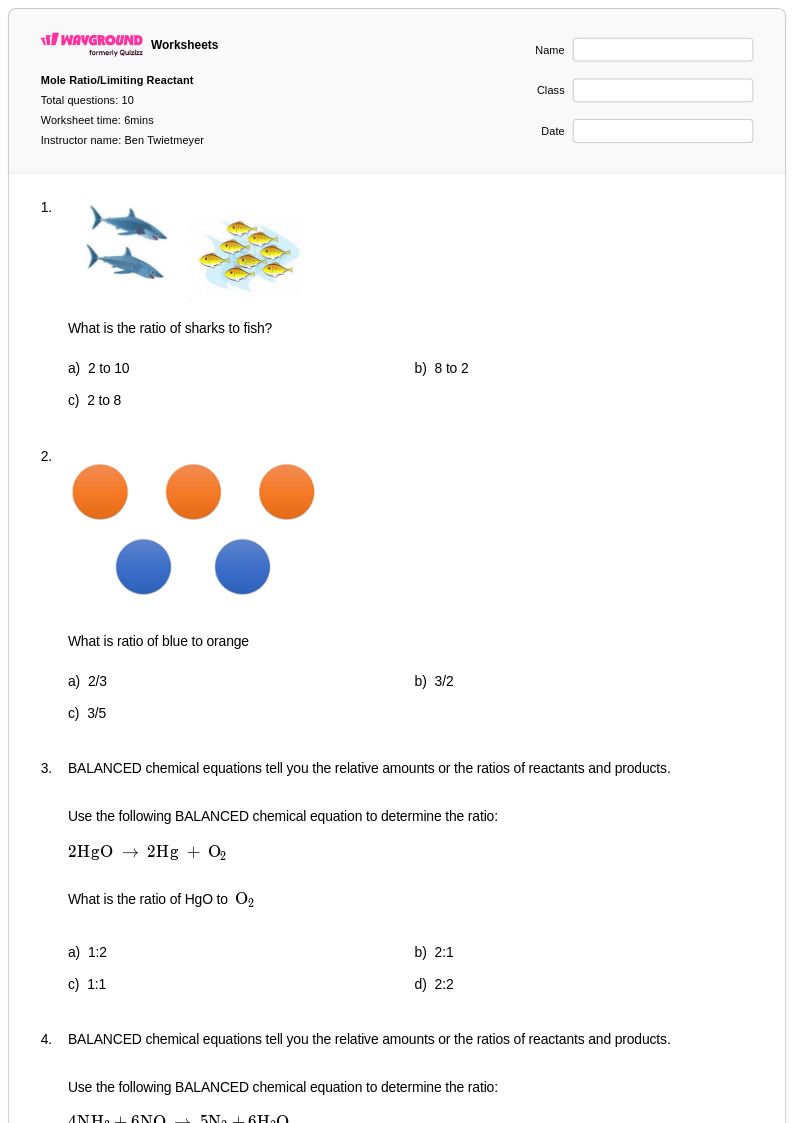
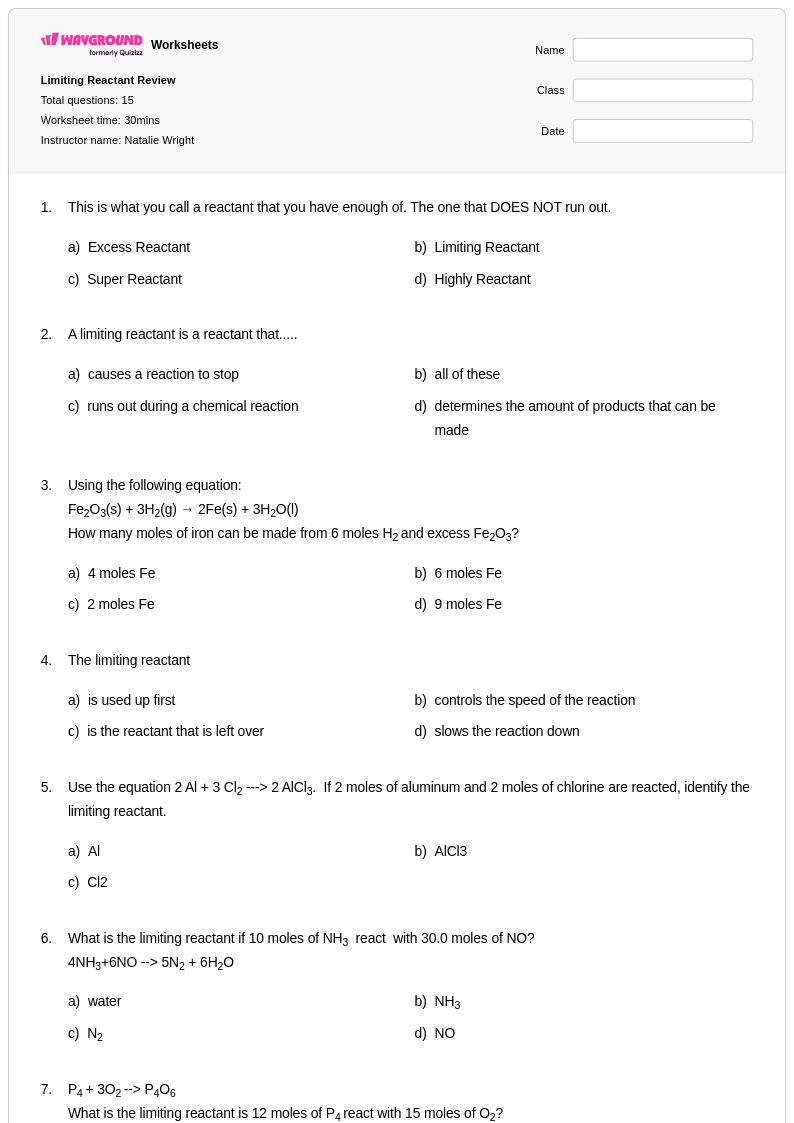
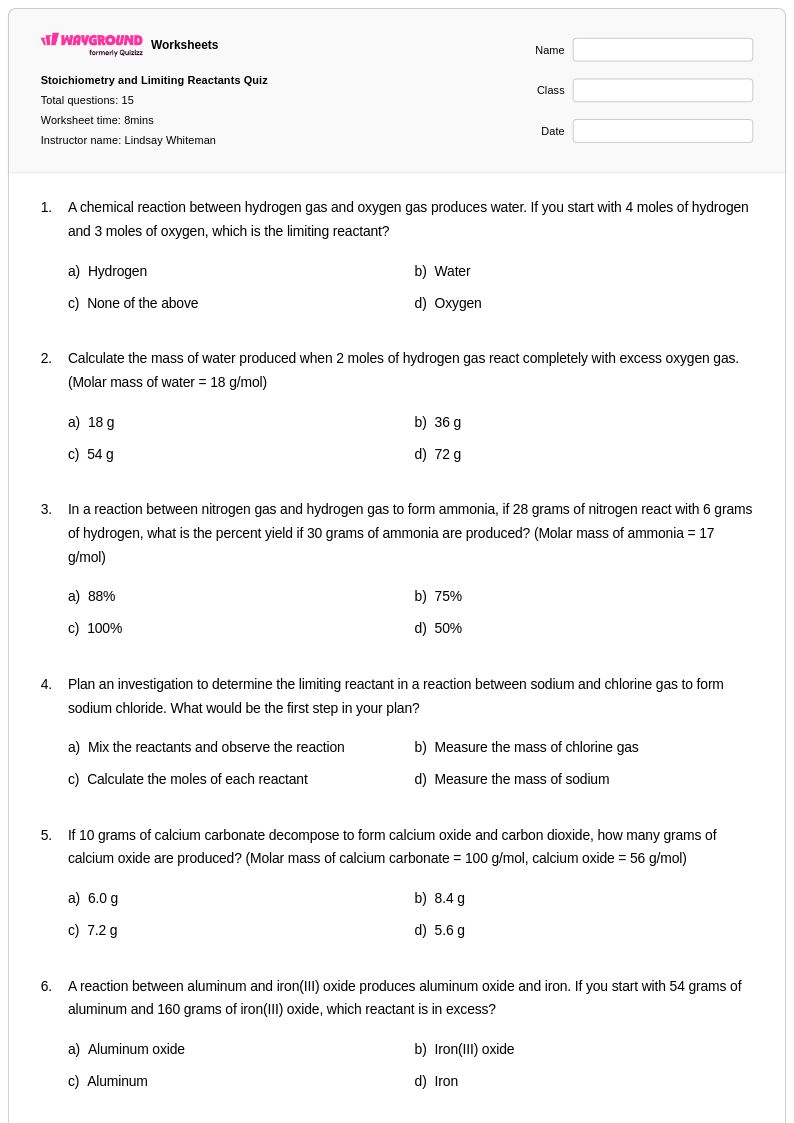
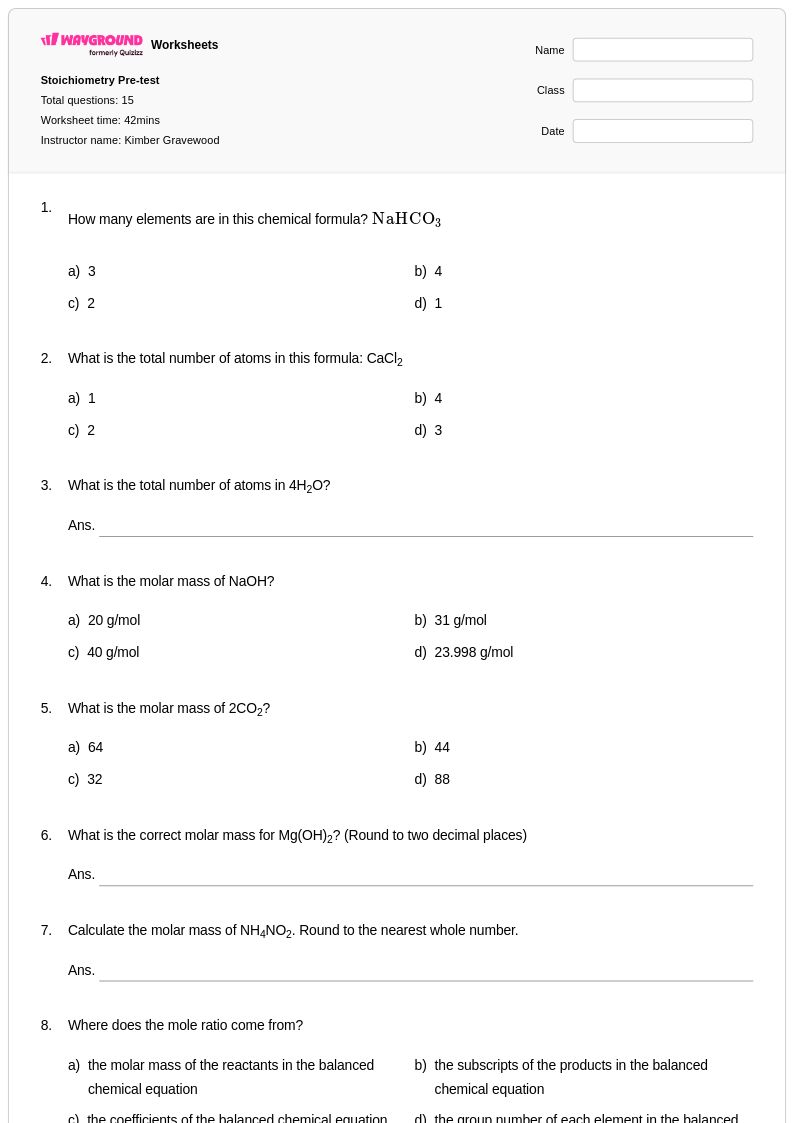
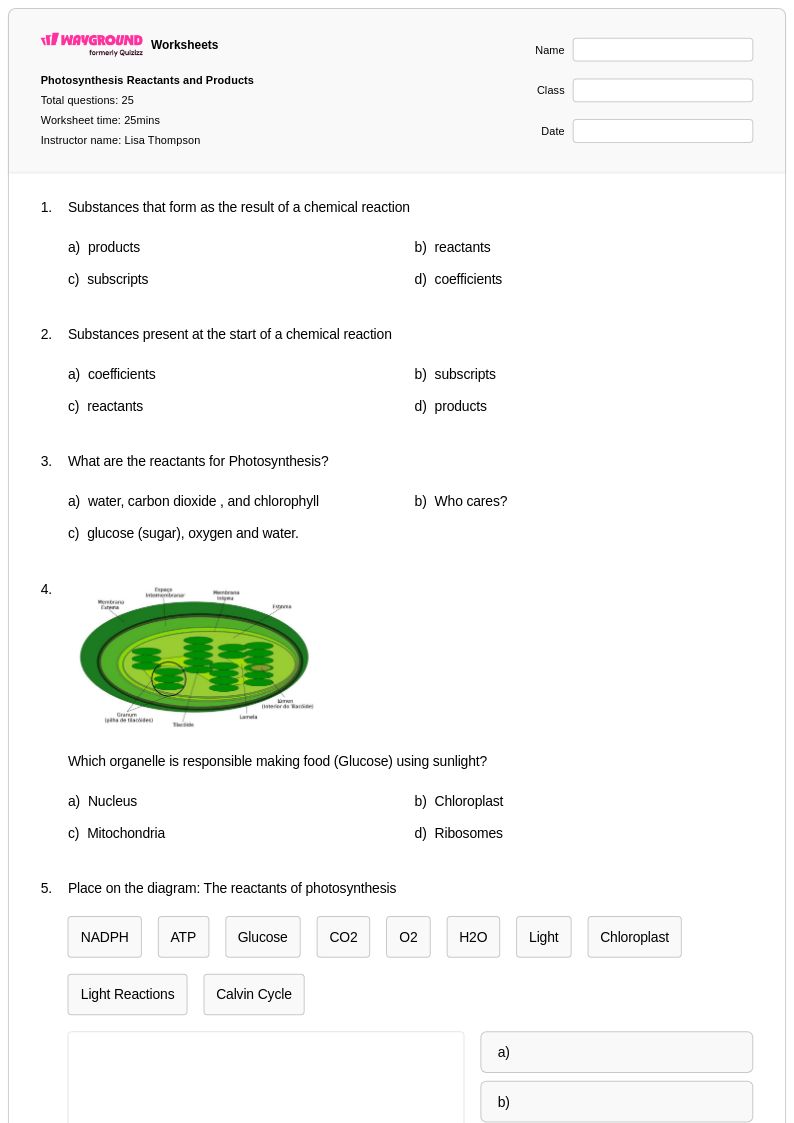
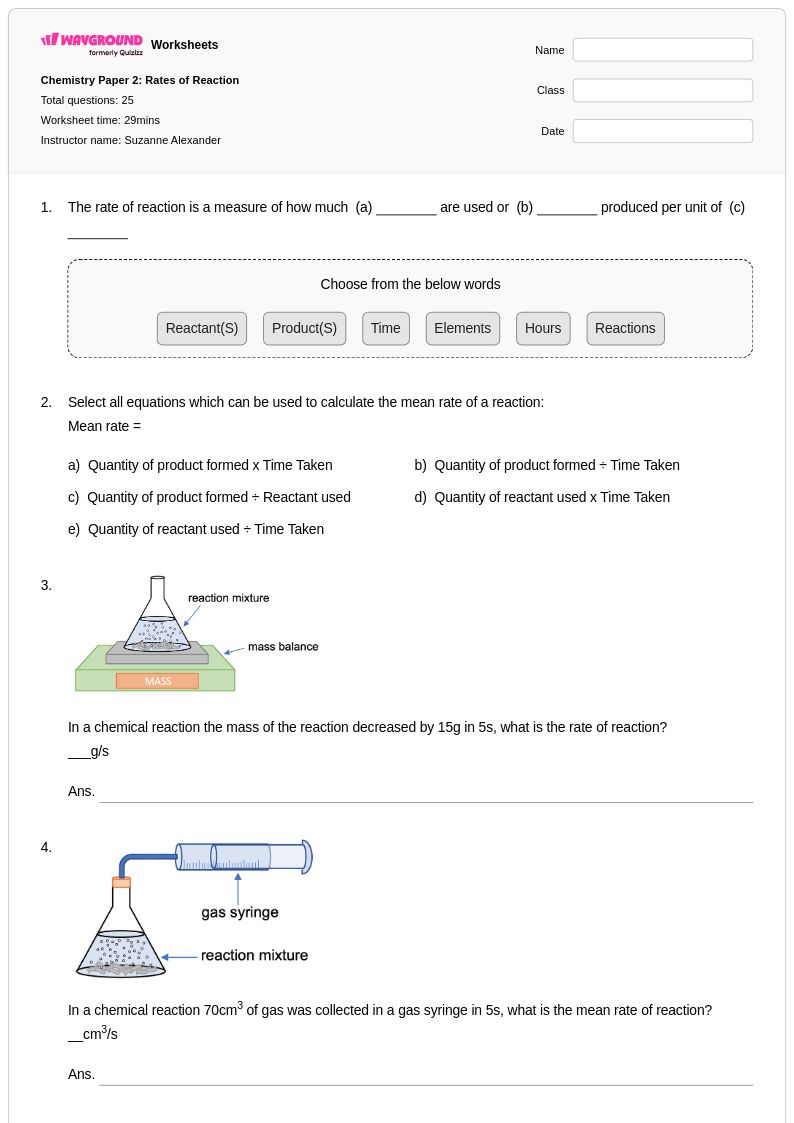
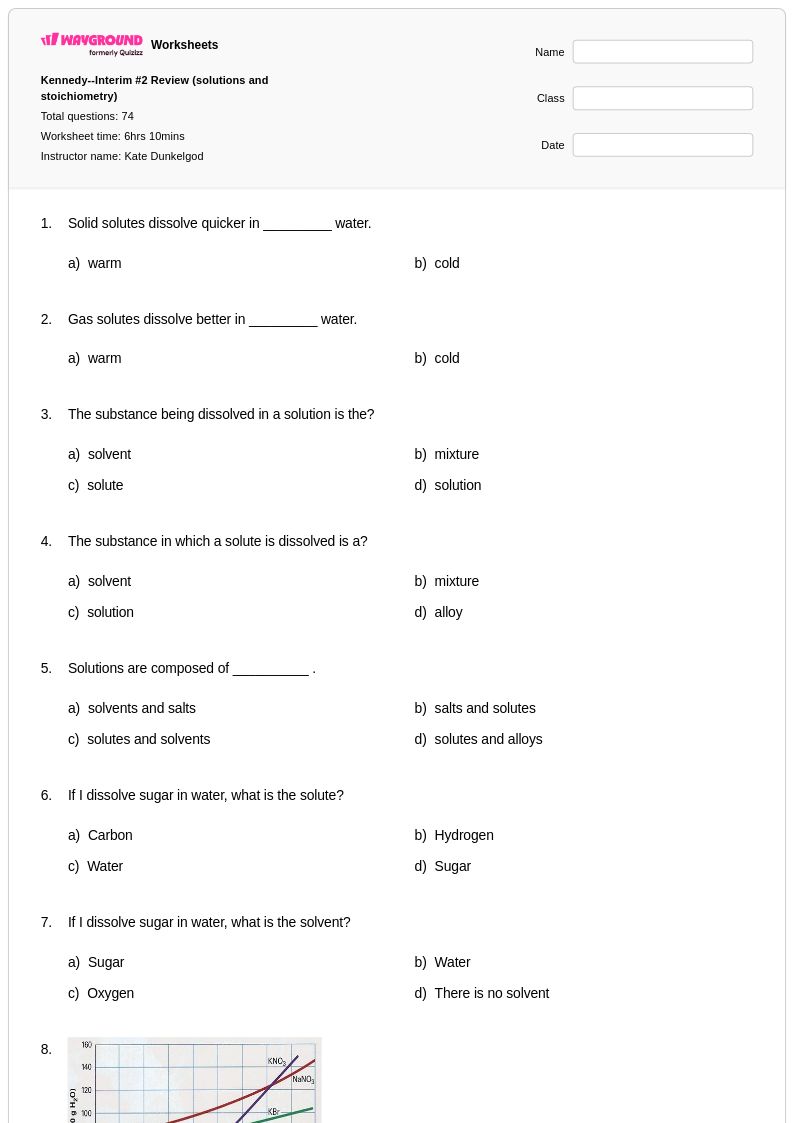
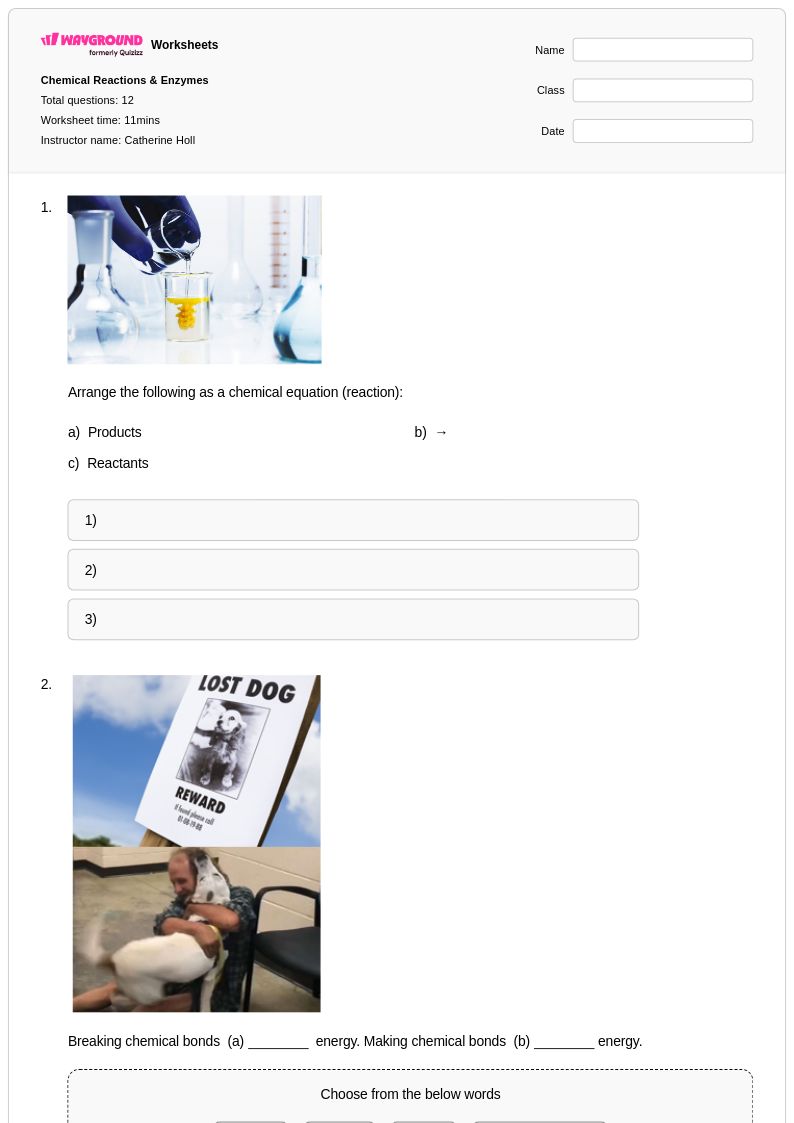
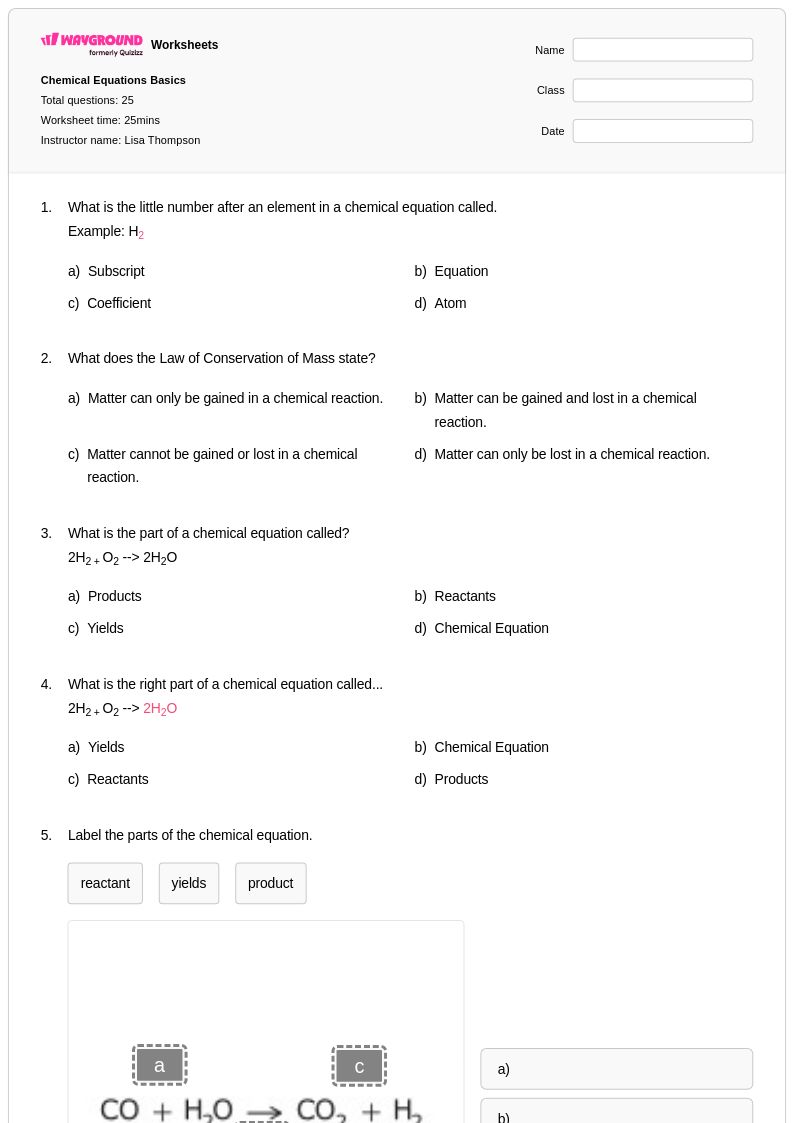
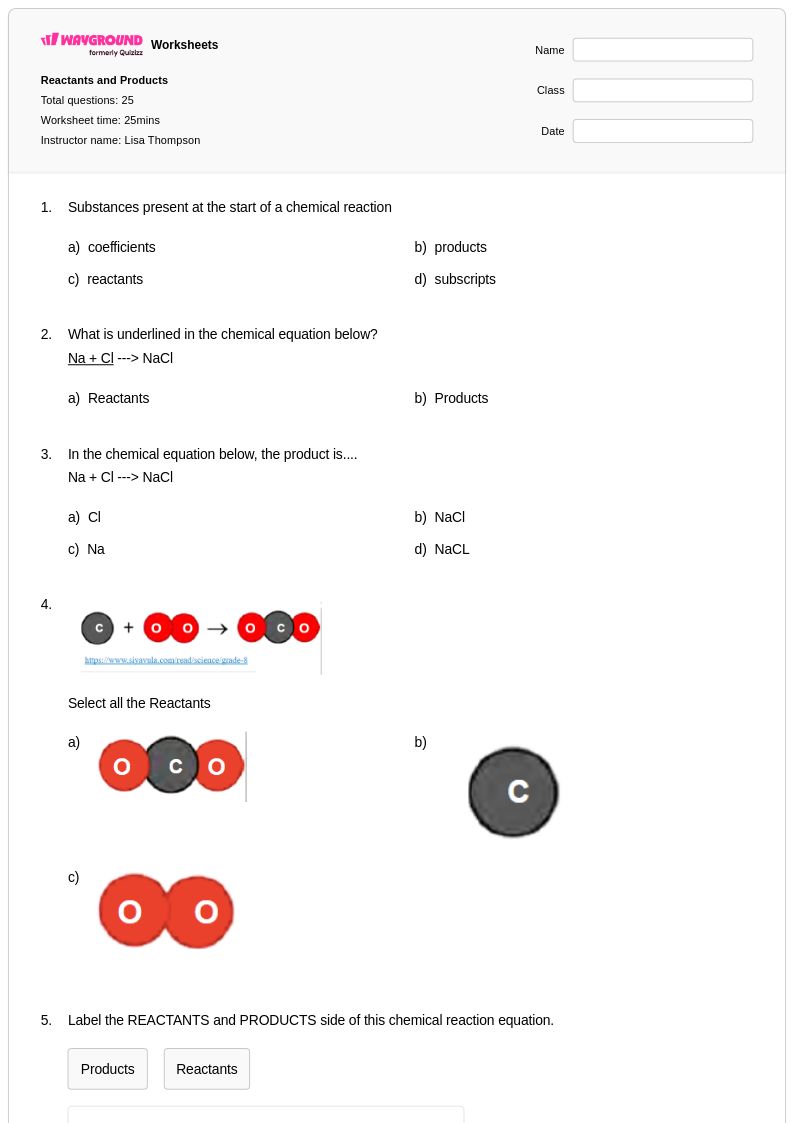
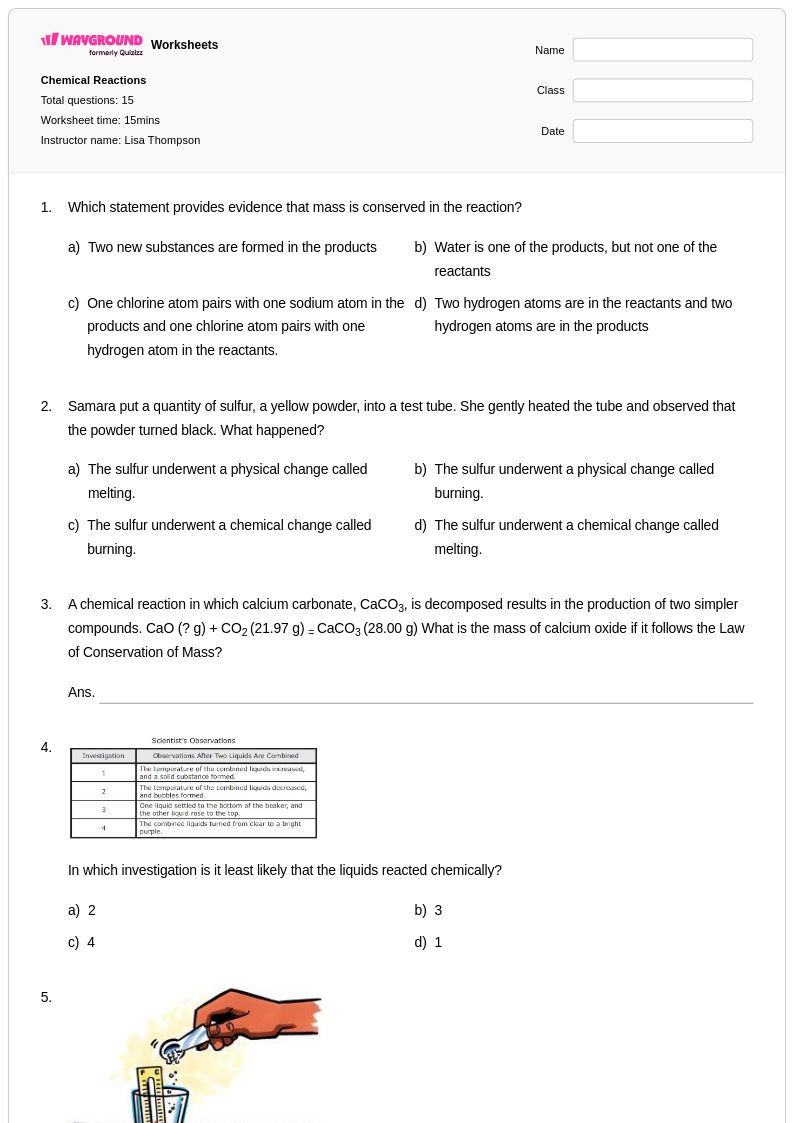
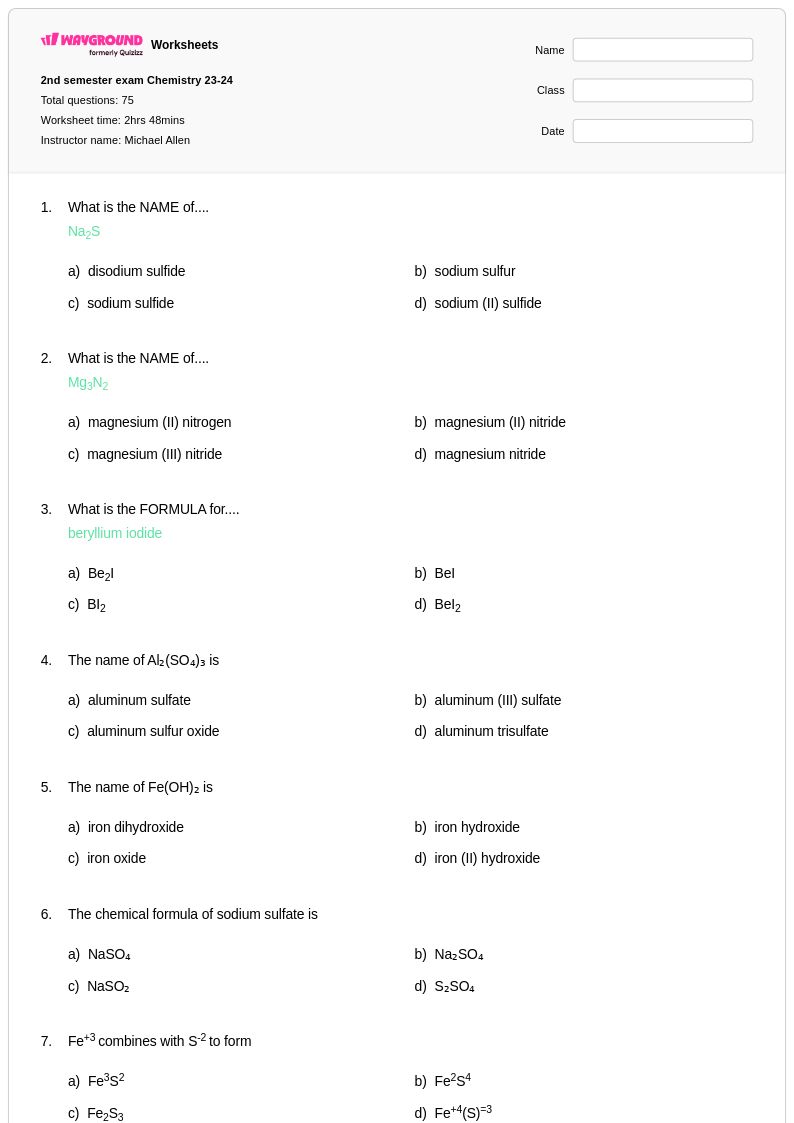
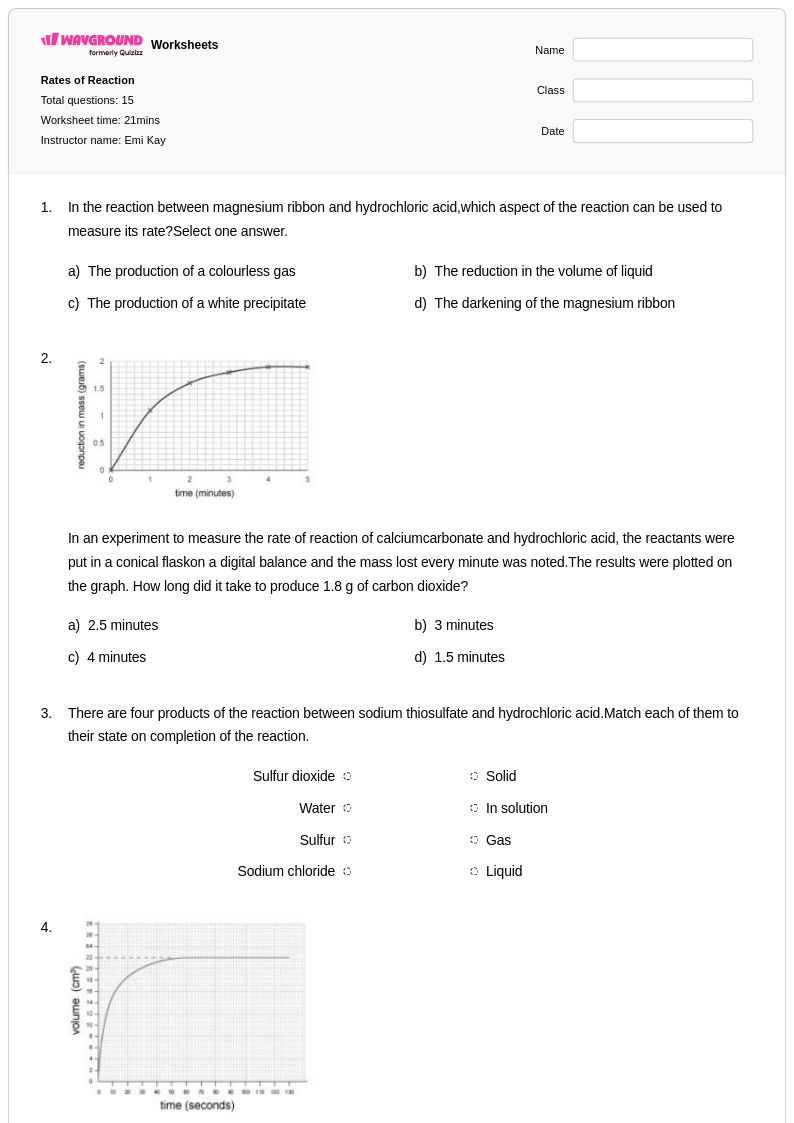
Limiting reactants represent a fundamental concept in Year 9 chemistry that determines how much product can be formed in a chemical reaction when reactants are present in unequal amounts. Wayground's comprehensive collection of limiting reactants worksheets provides students with systematic practice in identifying which reactant will be completely consumed first, calculating theoretical yields, and determining excess reactant quantities remaining after reactions are complete. These carefully designed printables strengthen essential stoichiometric problem-solving skills through step-by-step practice problems that progress from basic identification exercises to complex multi-step calculations involving molar ratios, balanced chemical equations, and quantitative analysis. Each worksheet includes a detailed answer key that guides students through proper problem-solving methodology, making these free resources invaluable for both classroom instruction and independent study as students master this challenging chemistry concept.
Wayground's extensive platform, built from the foundation of Quizizz's educational expertise, empowers chemistry teachers with millions of teacher-created limiting reactants resources that can be seamlessly integrated into lesson planning and differentiated instruction. The platform's robust search and filtering capabilities allow educators to quickly locate worksheets aligned with specific curriculum standards and tailored to varying skill levels, from introductory conceptual understanding to advanced quantitative problem-solving. Teachers can customize these digital and printable materials to meet individual student needs, whether for targeted remediation of struggling learners or enrichment activities for advanced students ready to tackle more complex stoichiometric scenarios. The flexible pdf format ensures these limiting reactants worksheets can be deployed effectively in both traditional classroom settings and remote learning environments, providing consistent skill practice opportunities that support student mastery of this critical chemistry foundation.
FAQs
How do I teach limiting reactants to chemistry students?
Start by grounding students in the analogy of a recipe: if you have 10 slices of bread but only 3 pieces of cheese, the cheese limits how many sandwiches you can make. From there, connect this intuition to balanced chemical equations, showing students how mole ratios determine which reactant runs out first. Once the concept is clear, move into stoichiometric calculations so students can identify the limiting reactant mathematically by comparing mole-to-coefficient ratios for each reactant.
What exercises help students practice identifying limiting reactants?
The most effective practice problems give students a balanced equation along with gram quantities of two or more reactants, requiring them to convert to moles, apply mole ratios, and determine which reactant is fully consumed. Layered problem sets work well: start with problems where the limiting reactant is obvious from mole quantities alone, then advance to problems involving unit conversions, theoretical yield calculations, and percent yield. Worksheets that walk through each calculation step help students see the logical sequence rather than memorizing isolated procedures.
What mistakes do students commonly make when solving limiting reactant problems?
The most frequent error is comparing raw gram quantities instead of mole quantities to identify the limiting reactant, which leads to incorrect conclusions when reactants have different molar masses. Students also frequently skip applying the mole ratio from the balanced equation, incorrectly assuming a 1:1 relationship between reactants. A third common mistake is confusing the limiting reactant with the excess reactant, especially when asked follow-up questions about how much excess reactant remains after the reaction.
How does understanding limiting reactants connect to theoretical yield and percent yield?
The limiting reactant directly controls theoretical yield: once students identify which reactant is fully consumed, they use its mole quantity and the stoichiometric ratio to calculate the maximum amount of product that can form. Percent yield then compares this theoretical value to the actual yield obtained in a real experiment, so errors in identifying the limiting reactant cascade into incorrect yield calculations. This connection makes limiting reactant mastery foundational before introducing percent yield problems.
How can I use Wayground's limiting reactants worksheets in my chemistry class?
Wayground's limiting reactants worksheets are available as free printable PDFs for traditional classroom use and in digital formats for technology-integrated or online learning environments, including the option to host them as a quiz directly on Wayground. Teachers can use the platform's search and filtering tools to locate worksheets aligned to specific curriculum standards and student skill levels. For students who need additional support, Wayground also offers accommodations such as read aloud, extended time, and reduced answer choices, which can be configured per student without disrupting the rest of the class.
How do I differentiate limiting reactant instruction for students at different skill levels?
For students still developing foundational skills, begin with problems that provide mole quantities directly so they can focus on applying mole ratios without the added step of unit conversion. Proficient students should work through multi-step problems involving gram-to-mole conversions, limiting reactant identification, theoretical yield, and excess reactant calculations in a single problem. Wayground supports further differentiation through built-in accommodation settings, including reduced answer choices and read aloud features for students who need additional scaffolding, which can be assigned individually without affecting other students.