Free Printable Gas Variables Worksheets for Year 9
Explore Wayground's comprehensive collection of Year 9 gas variables worksheets featuring free printable PDFs with answer keys to help students master pressure, volume, temperature relationships and practice essential chemistry problems.
Explore printable Gas Variables worksheets for Year 9
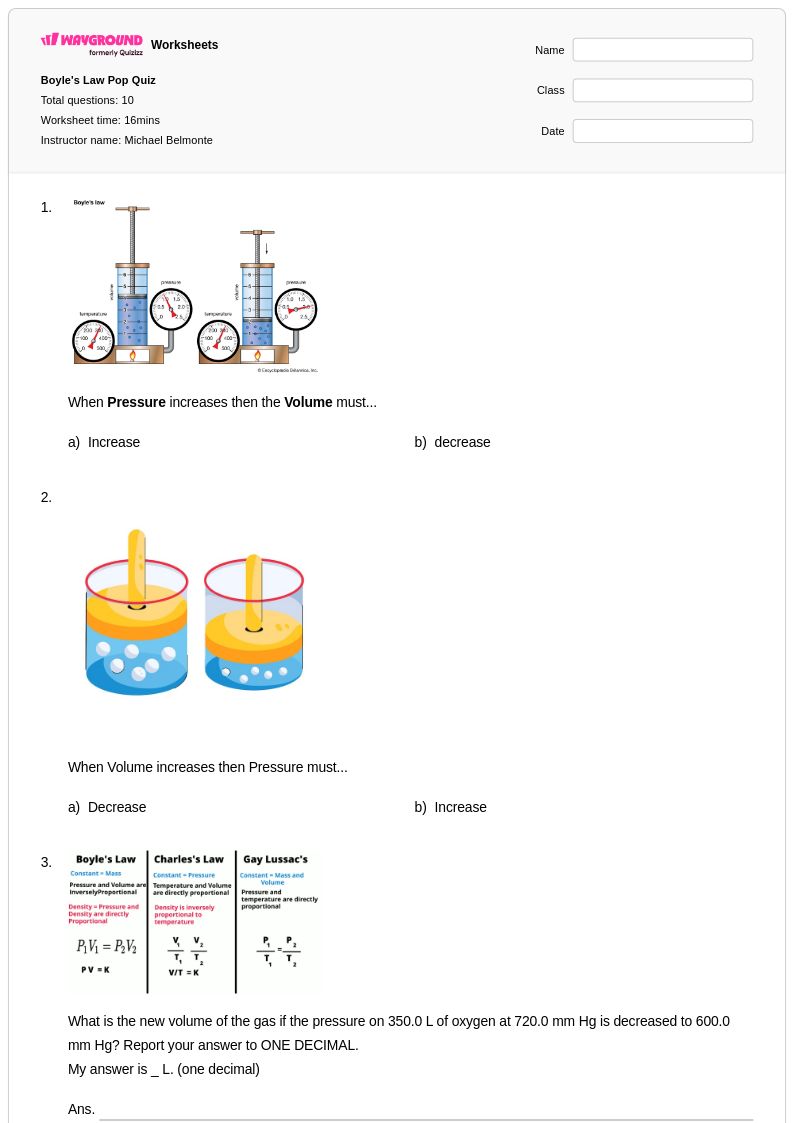
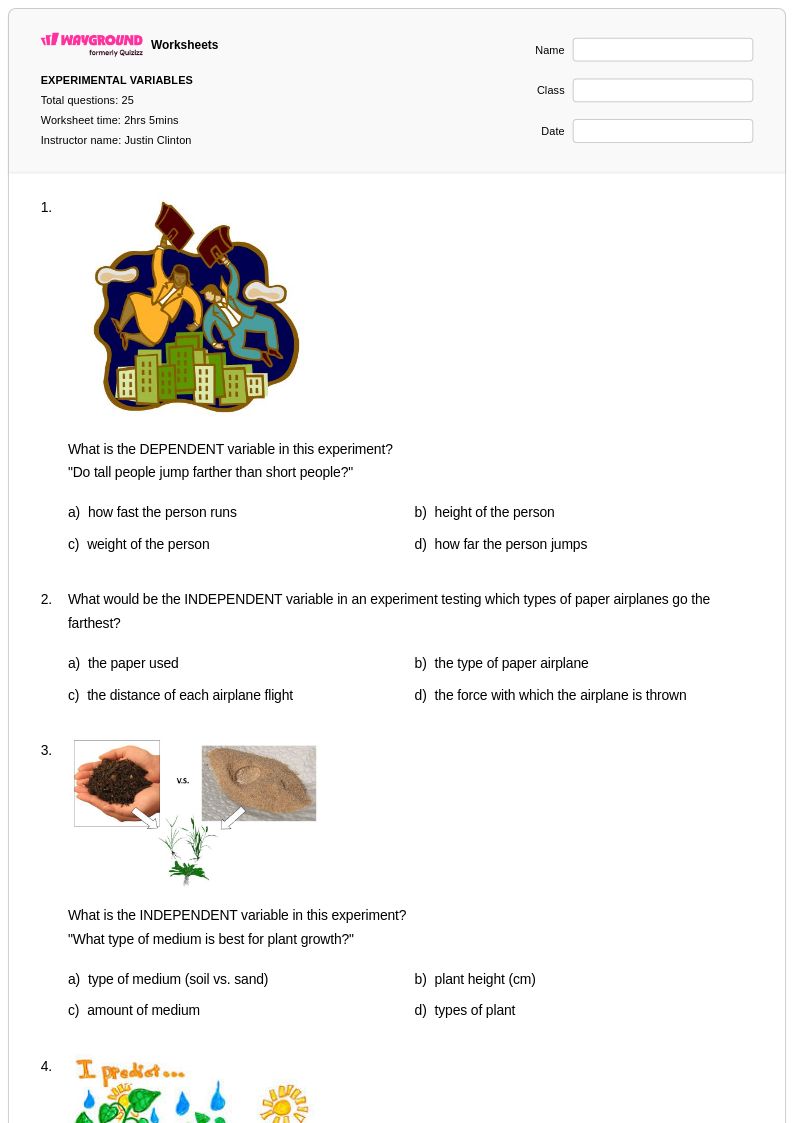
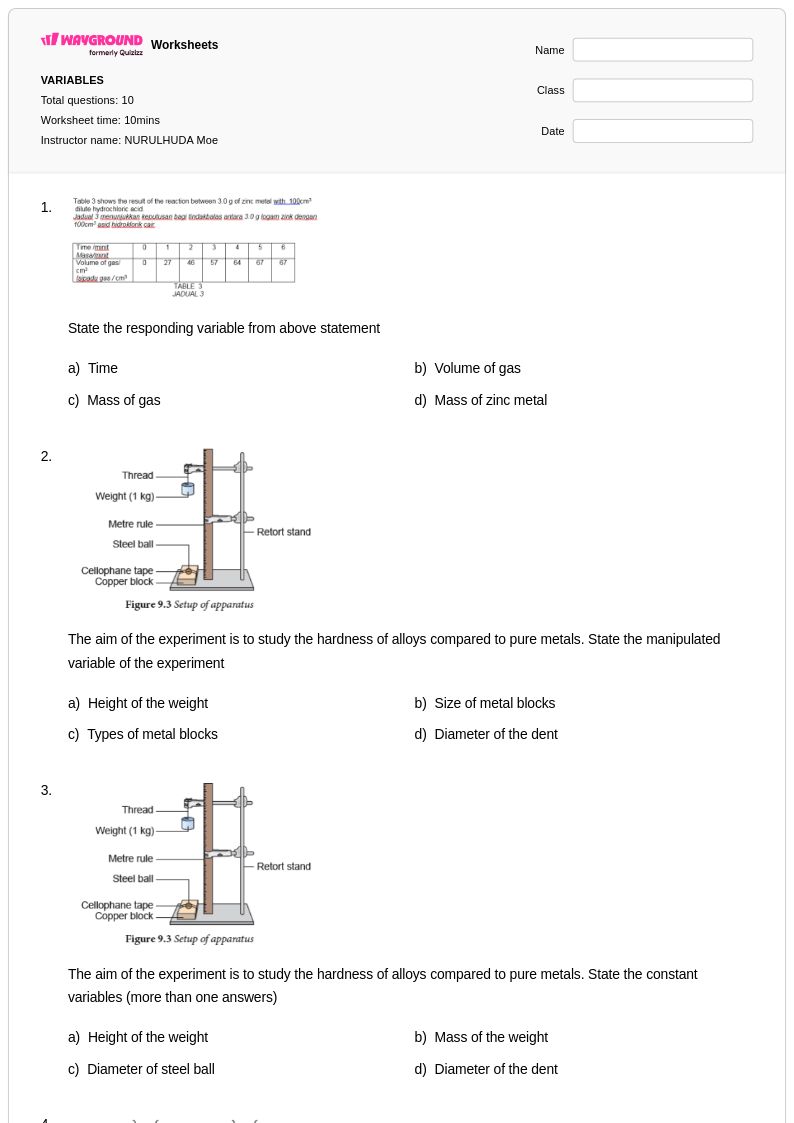
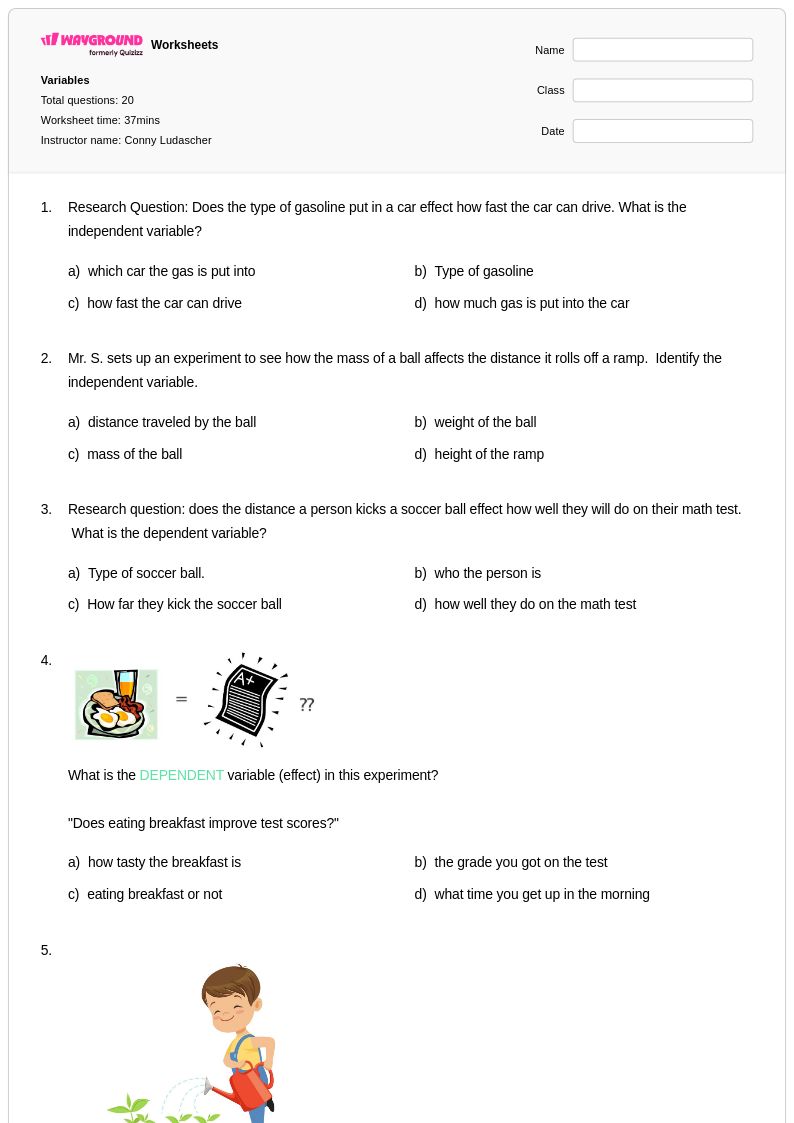
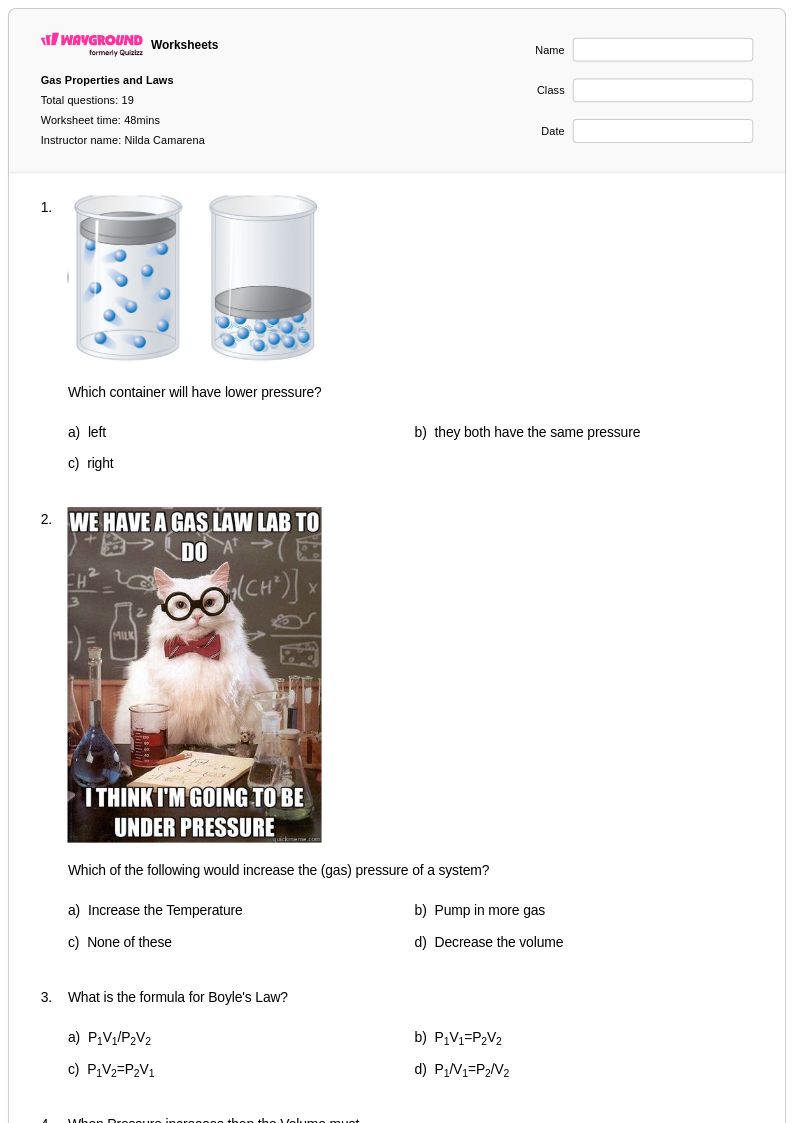
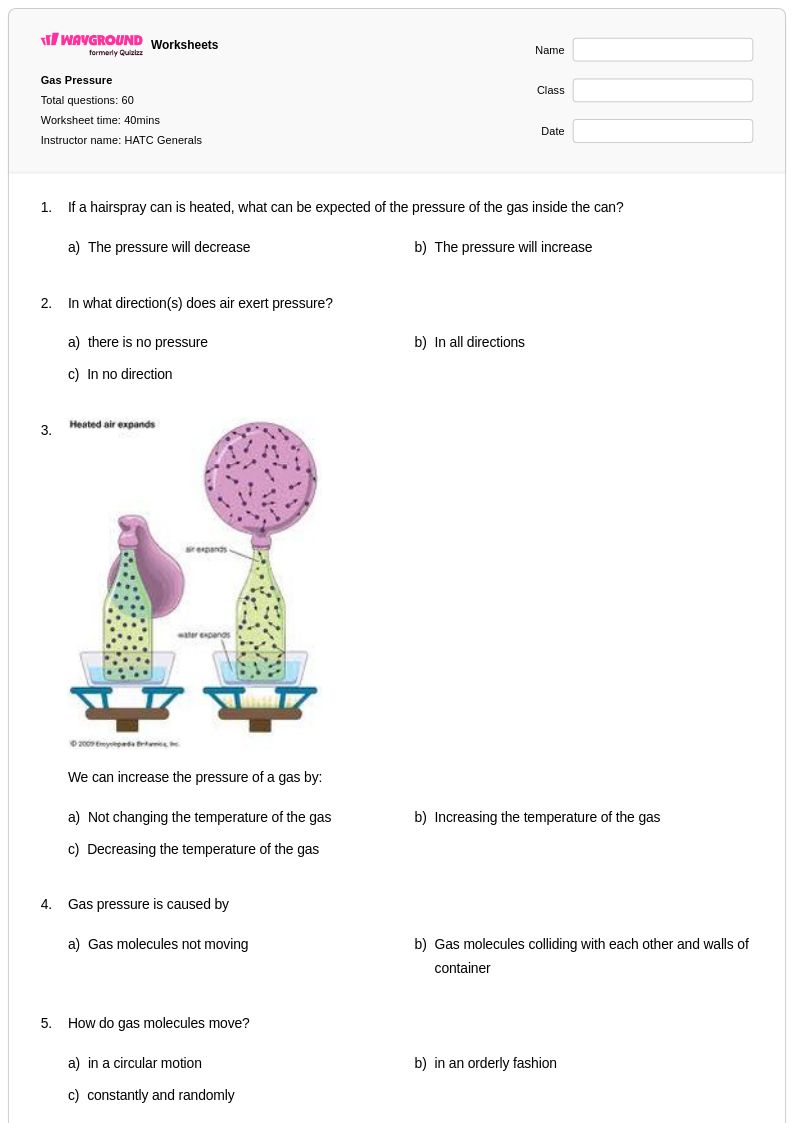
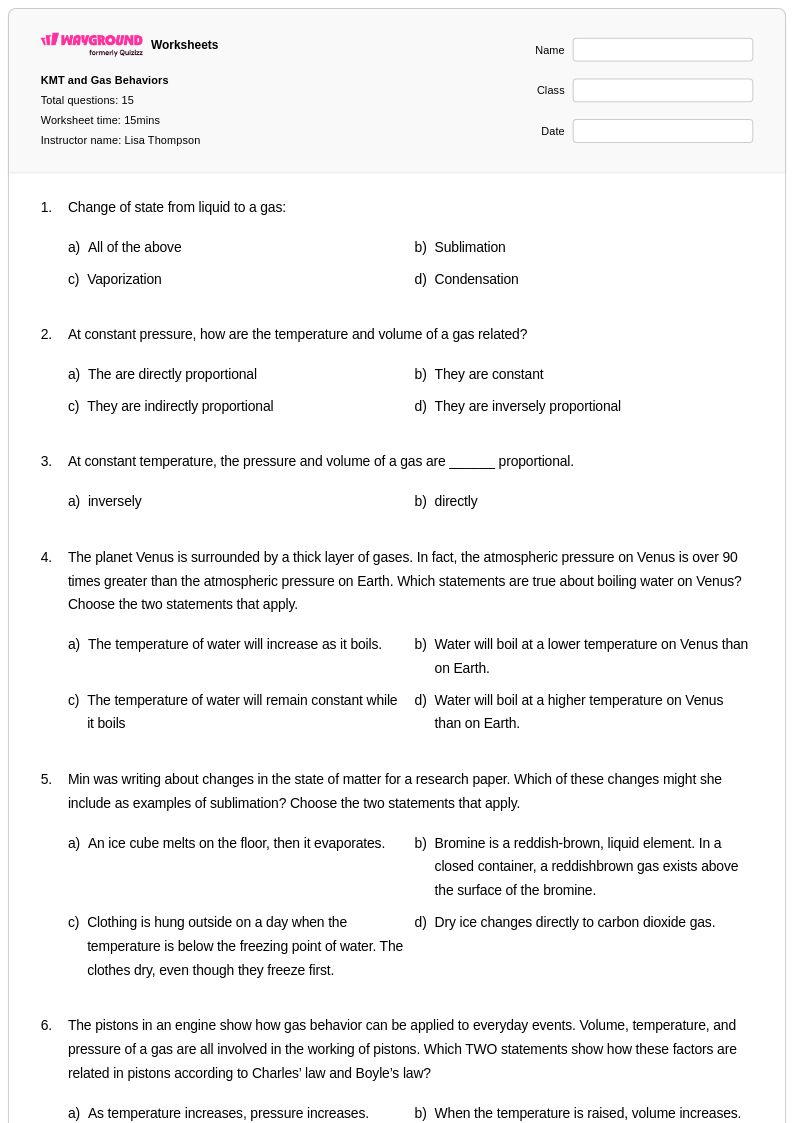
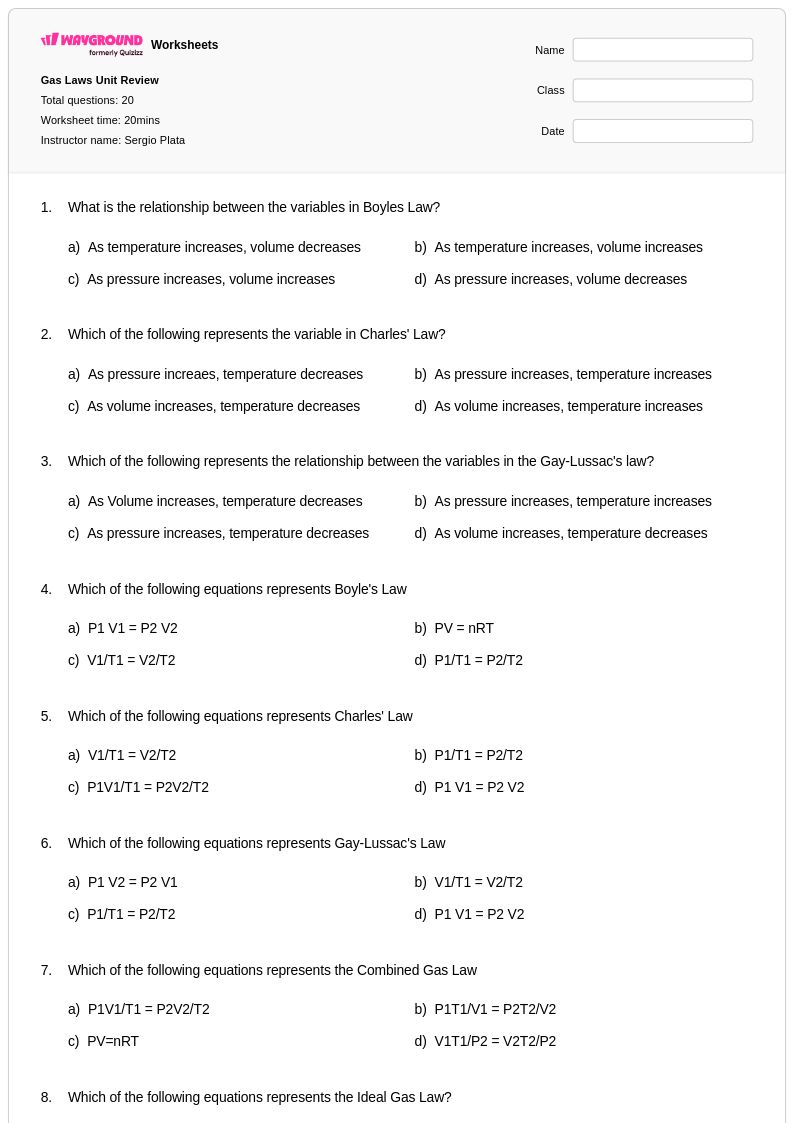
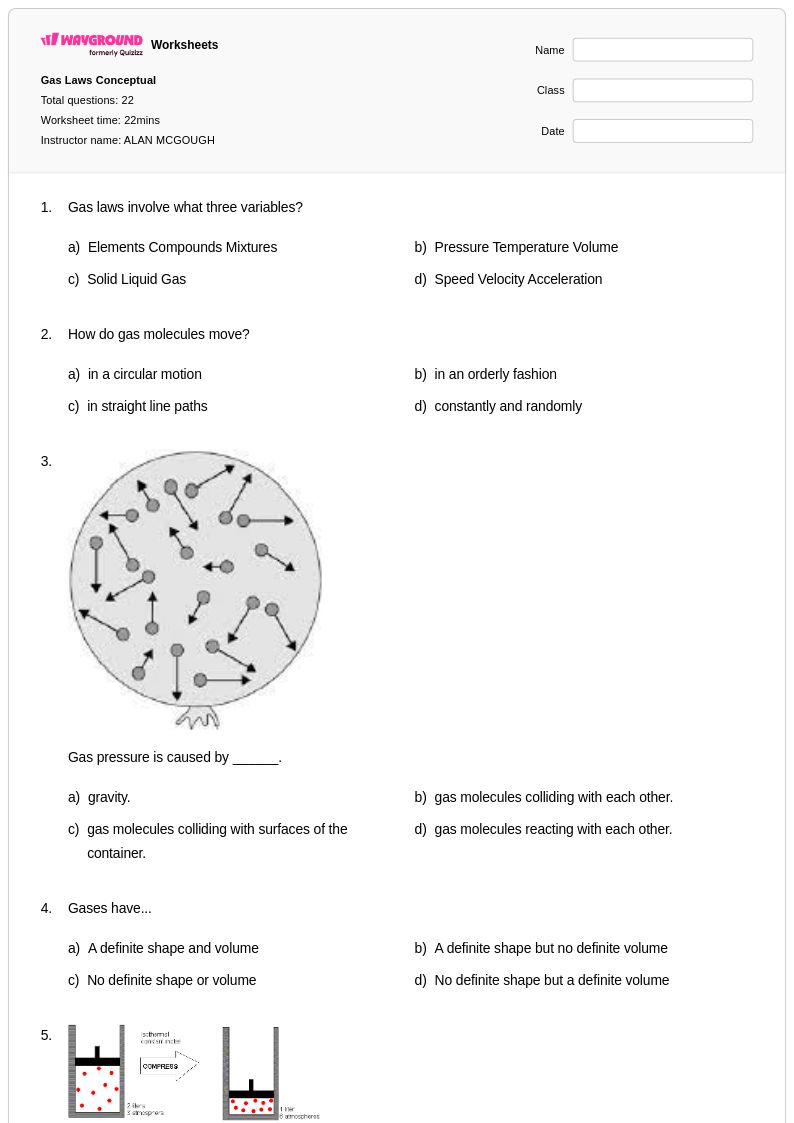
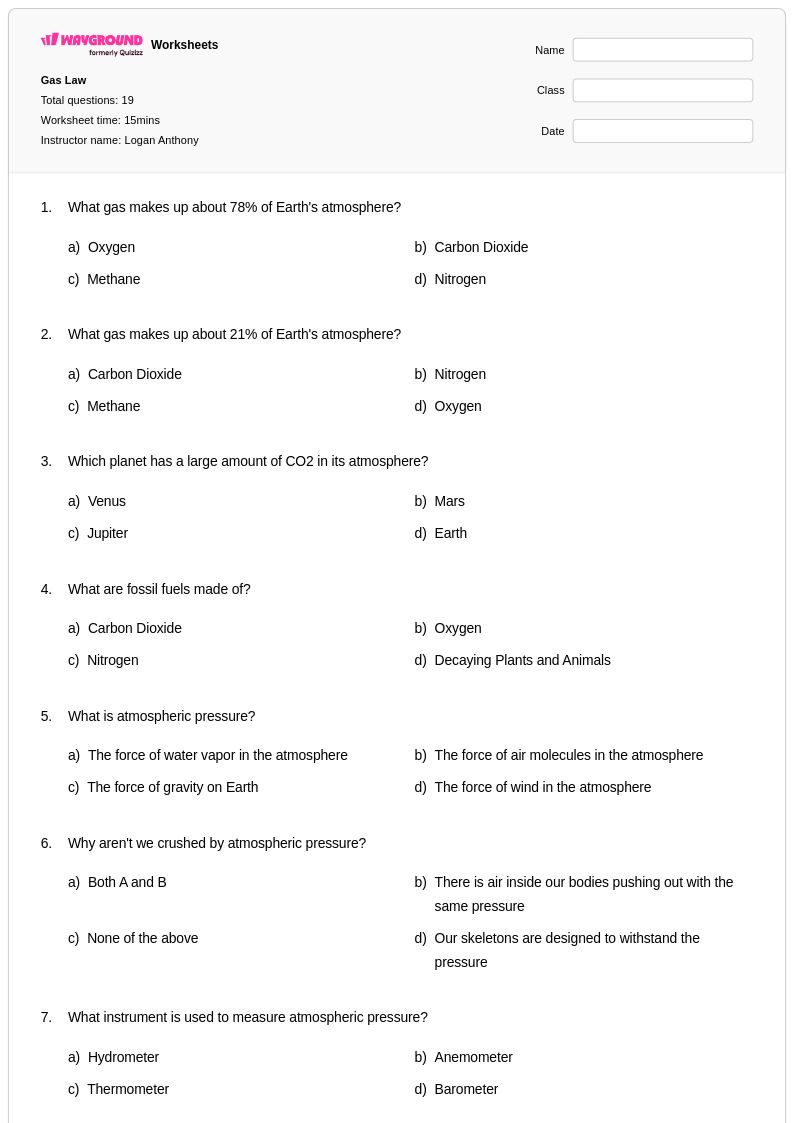
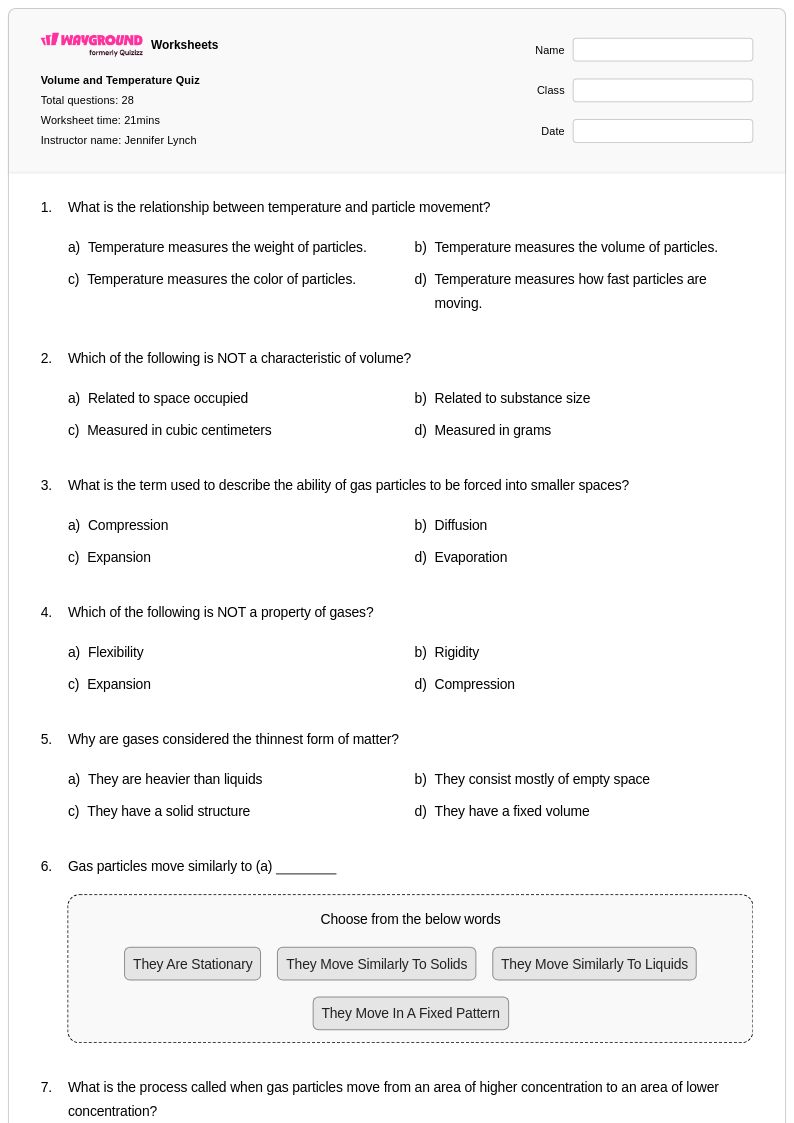
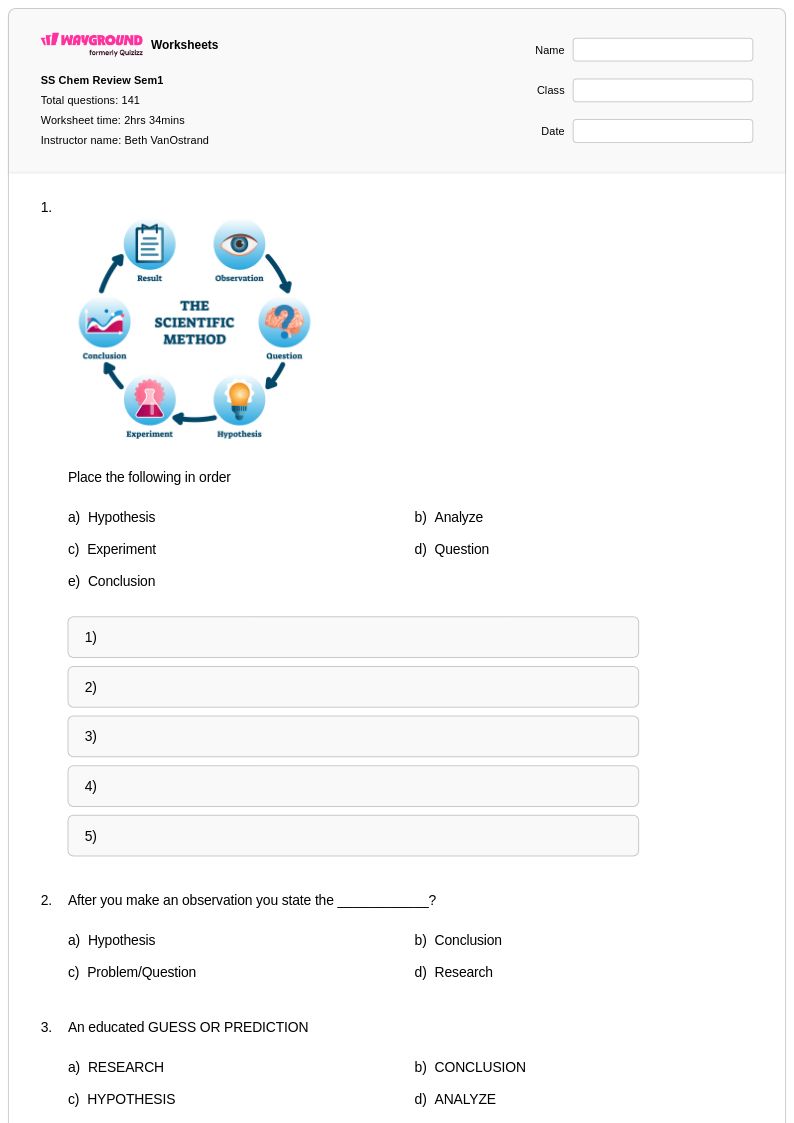
Gas variables worksheets for Year 9 students available through Wayground (formerly Quizizz) provide comprehensive practice with the fundamental relationships that govern gas behavior according to the gas laws. These carefully designed educational resources help students master critical concepts including pressure, volume, temperature, and amount of substance, while developing proficiency in applying Boyle's Law, Charles's Law, Gay-Lussac's Law, and the Combined Gas Law to solve complex problems. The worksheets feature diverse practice problems that challenge students to manipulate gas variable equations, convert between units, and analyze real-world scenarios involving gas behavior. Each worksheet includes detailed answer keys that support independent learning and self-assessment, and the materials are available as free printable pdf resources that can be easily integrated into classroom instruction or assigned for homework practice.
Wayground (formerly Quizizz) empowers educators with an extensive collection of millions of teacher-created gas variables worksheets specifically aligned with Year 9 chemistry standards and curriculum requirements. The platform's advanced search and filtering capabilities allow teachers to quickly locate resources that match their specific instructional needs, whether focusing on individual gas laws, combined gas calculations, or comprehensive gas behavior analysis. Teachers can customize these digital and printable materials to provide differentiated instruction for diverse learning levels, modify problem difficulty, and adapt content for remediation or enrichment purposes. The flexible format options, including downloadable pdf versions, enable seamless integration into both traditional and digital classroom environments, supporting effective lesson planning and providing students with targeted skill practice that builds conceptual understanding of gas variable relationships.
FAQs
How do I teach gas variables and gas laws to chemistry students?
Start by building conceptual understanding of each variable in isolation: pressure, volume, temperature, and moles. Then introduce each gas law (Boyle's, Charles's, Gay-Lussac's, and the combined gas law) one at a time, pairing each with a real-world scenario before moving to mathematical problem-solving. Once students can work with individual laws, introduce multi-variable problems that require selecting the correct law before calculating.
What practice problems help students get better at gas law calculations?
Effective practice starts with single-variable problems that isolate one relationship, such as pressure-volume problems at constant temperature, before moving to two-variable manipulations. Students benefit from problems that require unit conversion (e.g., Celsius to Kelvin) as a prerequisite step, since this is a common source of error. Progressively complex worksheets that move from direct substitution into a formula to multi-step combined gas law problems build procedural fluency systematically.
What mistakes do students commonly make when solving gas law problems?
The most frequent error is using Celsius instead of Kelvin for temperature, which produces incorrect proportional relationships. Students also commonly misidentify which gas law applies when multiple variables change, or incorrectly hold a variable constant when the problem does not state it is fixed. A third pattern is algebraic errors when rearranging gas law equations to isolate the unknown variable before substituting values.
How can I differentiate gas variables instruction for students at different levels?
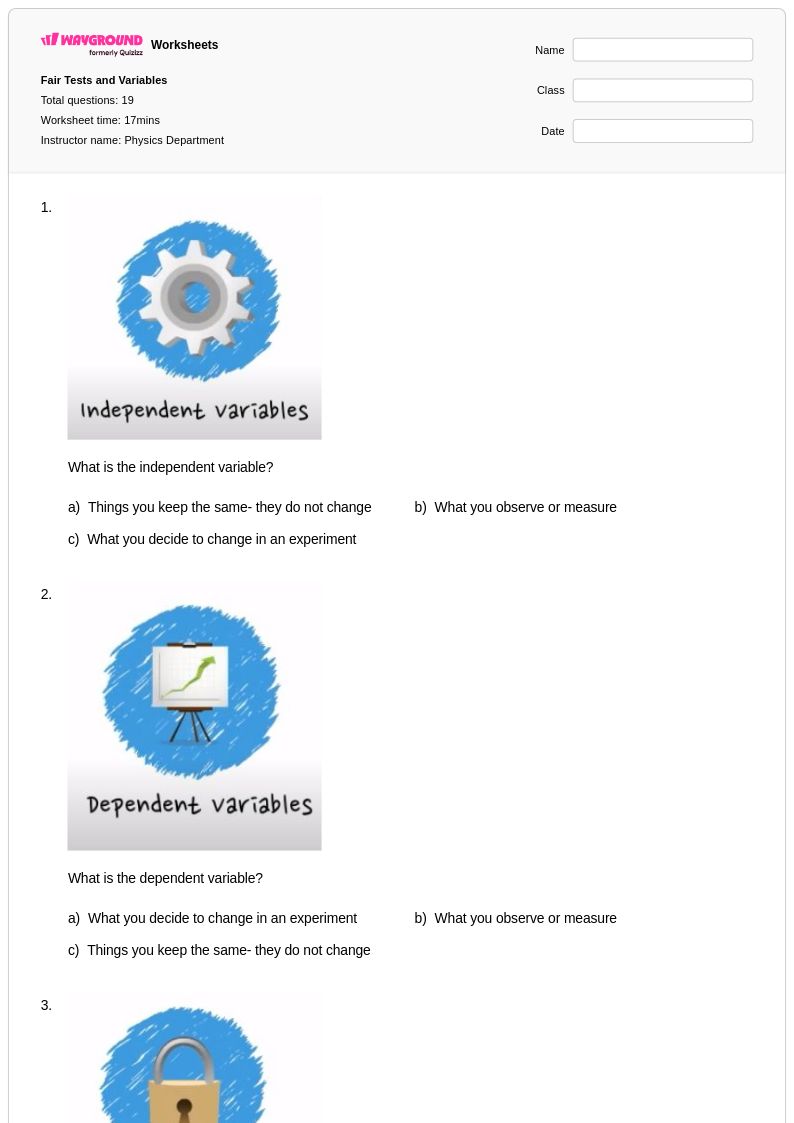
For struggling students, begin with conceptual matching activities that connect each gas law to its corresponding variables before introducing calculations. On Wayground, you can apply accommodations such as reduced answer choices to lower cognitive load for individual students, or enable Read Aloud so question text is read to students who need additional support. Advanced learners can be challenged with multi-step combined gas law problems or real-world application scenarios that require unit analysis alongside formula application.
How do I use gas variables worksheets from Wayground in my chemistry class?
Gas variables worksheets on Wayground are available as printable PDFs for traditional classroom use and in digital formats for technology-integrated or remote learning environments. You can assign them as guided practice, independent homework, or structured review sessions, and you also have the option to host them as a quiz directly on Wayground. Each worksheet includes complete answer keys, supporting both teacher-led correction and student self-assessment.
What is the difference between Boyle's Law, Charles's Law, and the combined gas law?
Boyle's Law describes the inverse relationship between pressure and volume at constant temperature (P1V1 = P2V2). Charles's Law describes the direct relationship between volume and temperature at constant pressure (V1/T1 = V2/T2), requiring temperature in Kelvin. The combined gas law merges both relationships to handle situations where pressure, volume, and temperature all change simultaneously, expressed as P1V1/T1 = P2V2/T2, and it reduces to either individual law when one variable is held constant.