
20 Q
10th - Uni
20 Q
10th - Uni
16 Q
9th - 12th
20 Q
9th - 12th
20 Q
9th - 12th
11 Q
9th - 12th
20 Q
8th - Uni
14 Q
8th - Uni
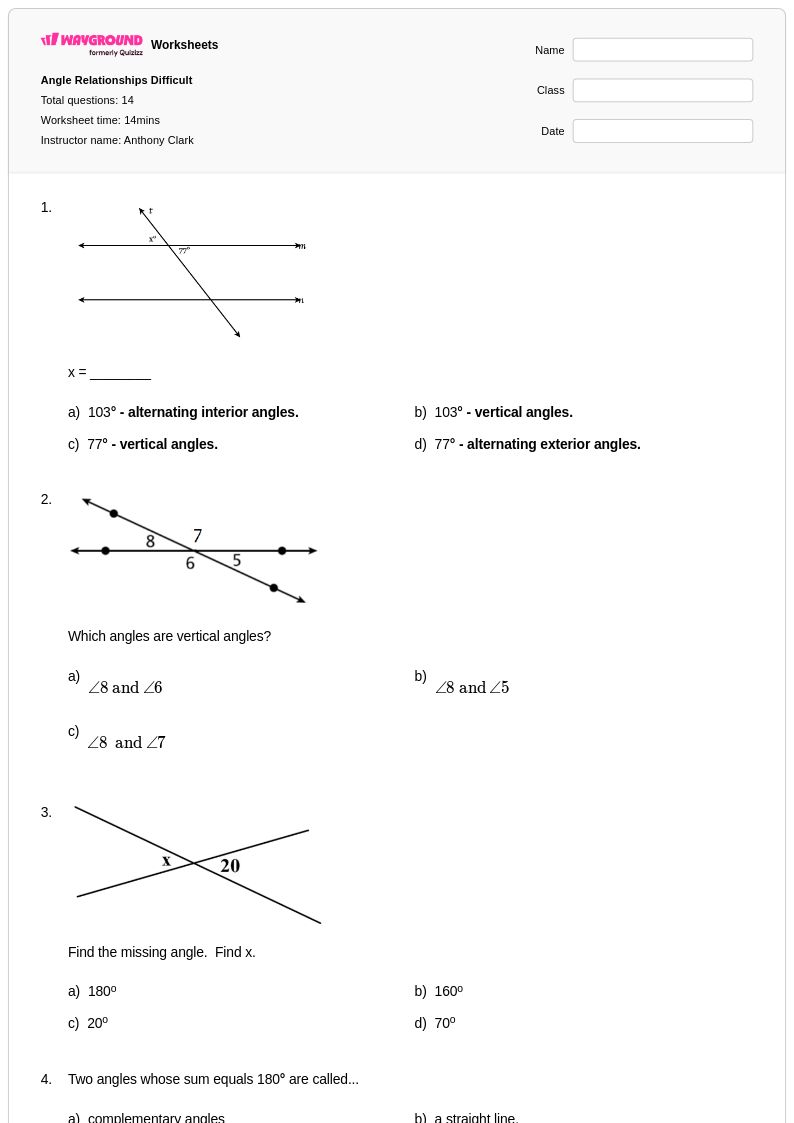
14 Q
10th - Uni
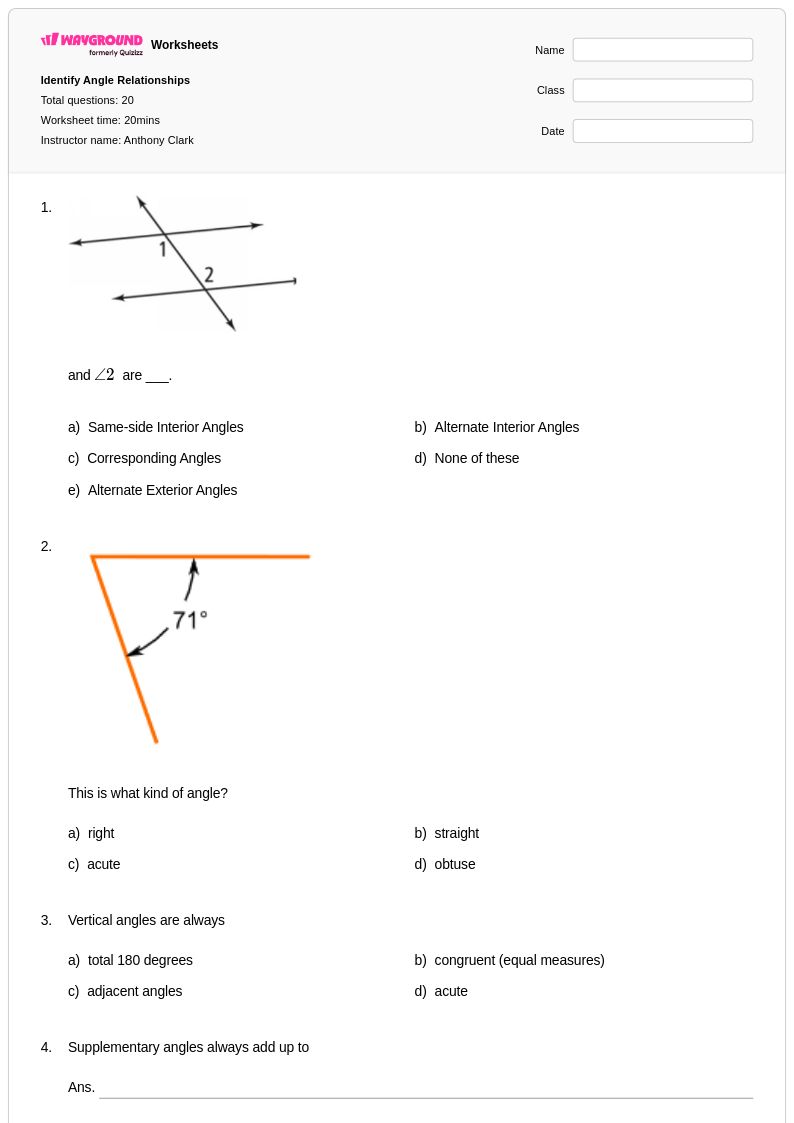
20 Q
10th - Uni
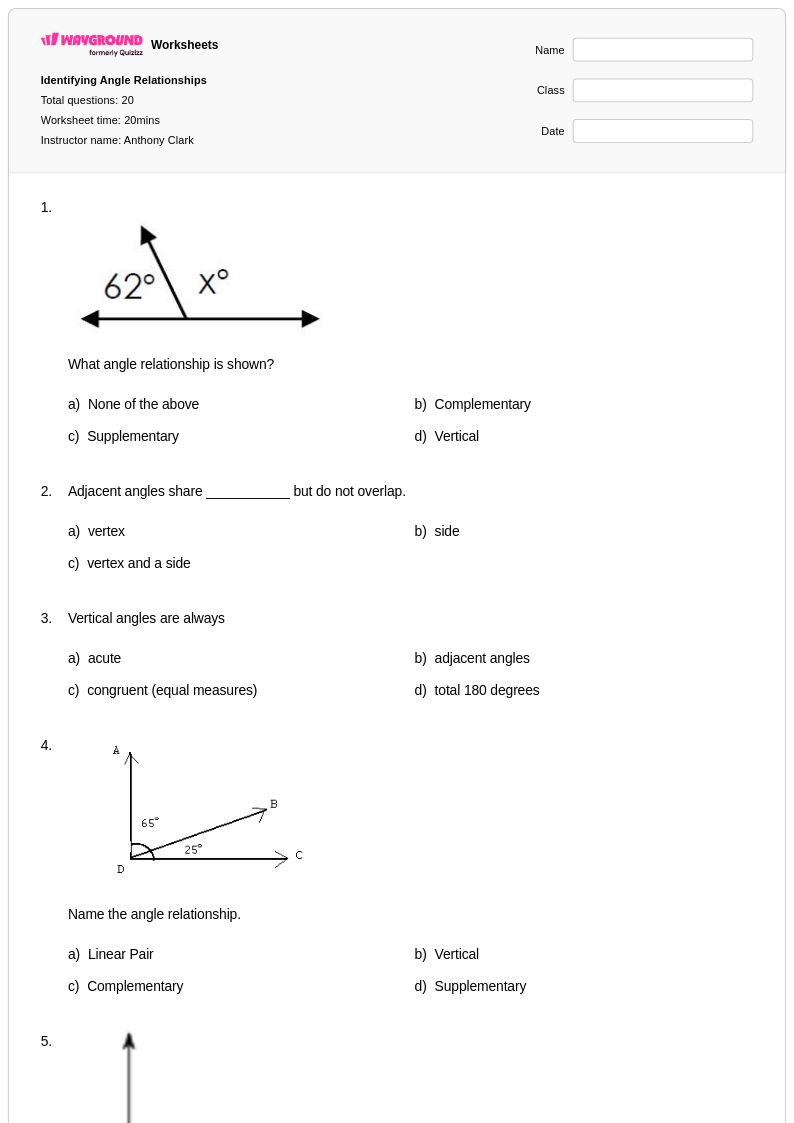
20 Q
7th - Uni
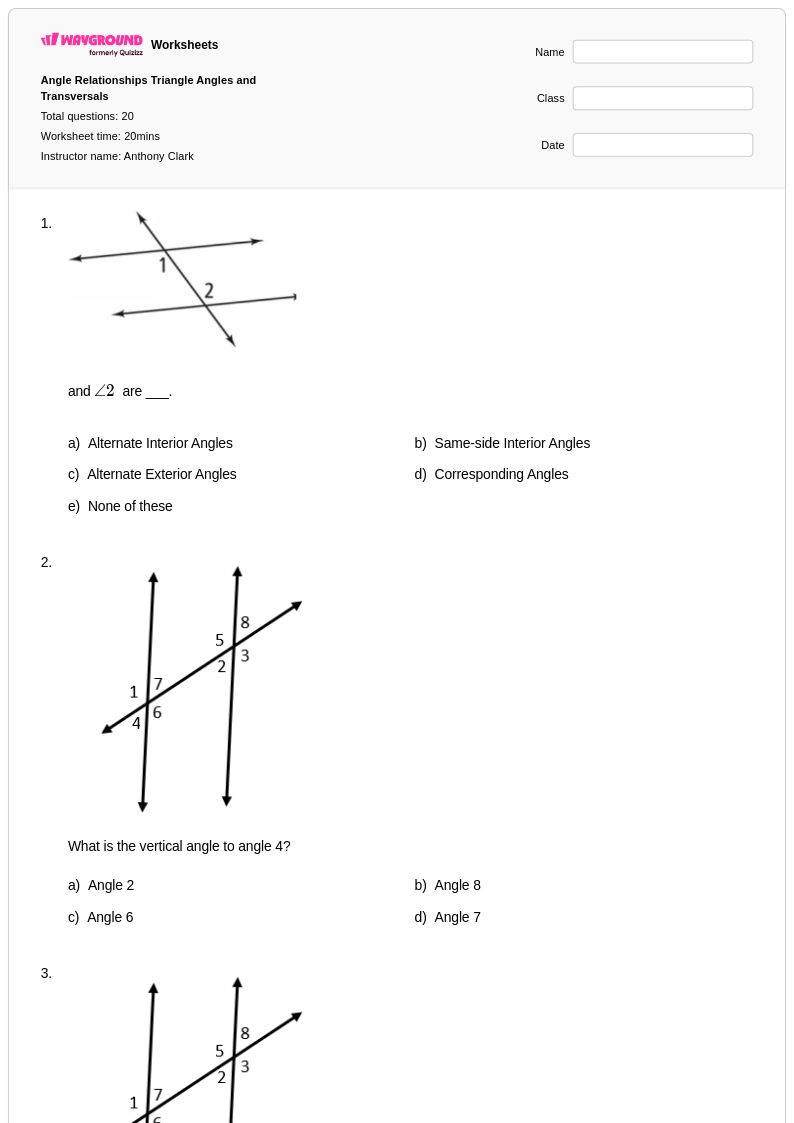
20 Q
8th - Uni
20 Q
8th - Uni
20 Q
10th - Uni
60 Q
9th - 12th
19 Q
10th - Uni
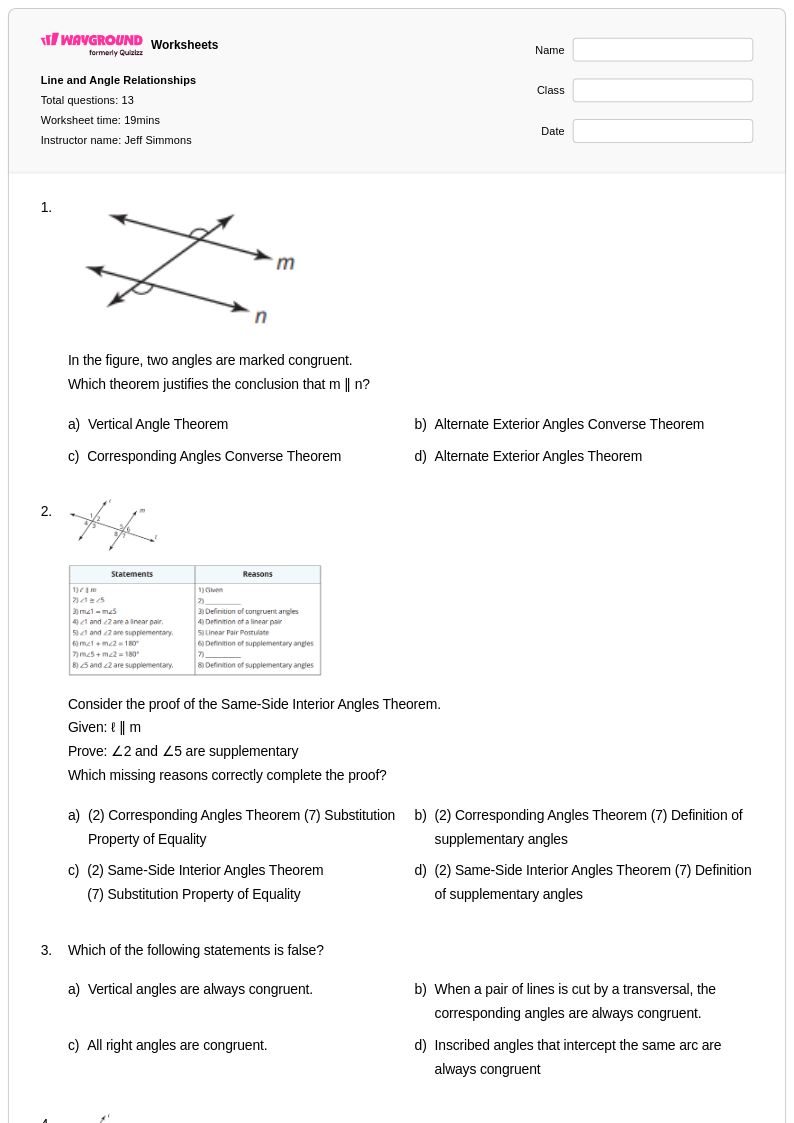
13 Q
9th - 12th
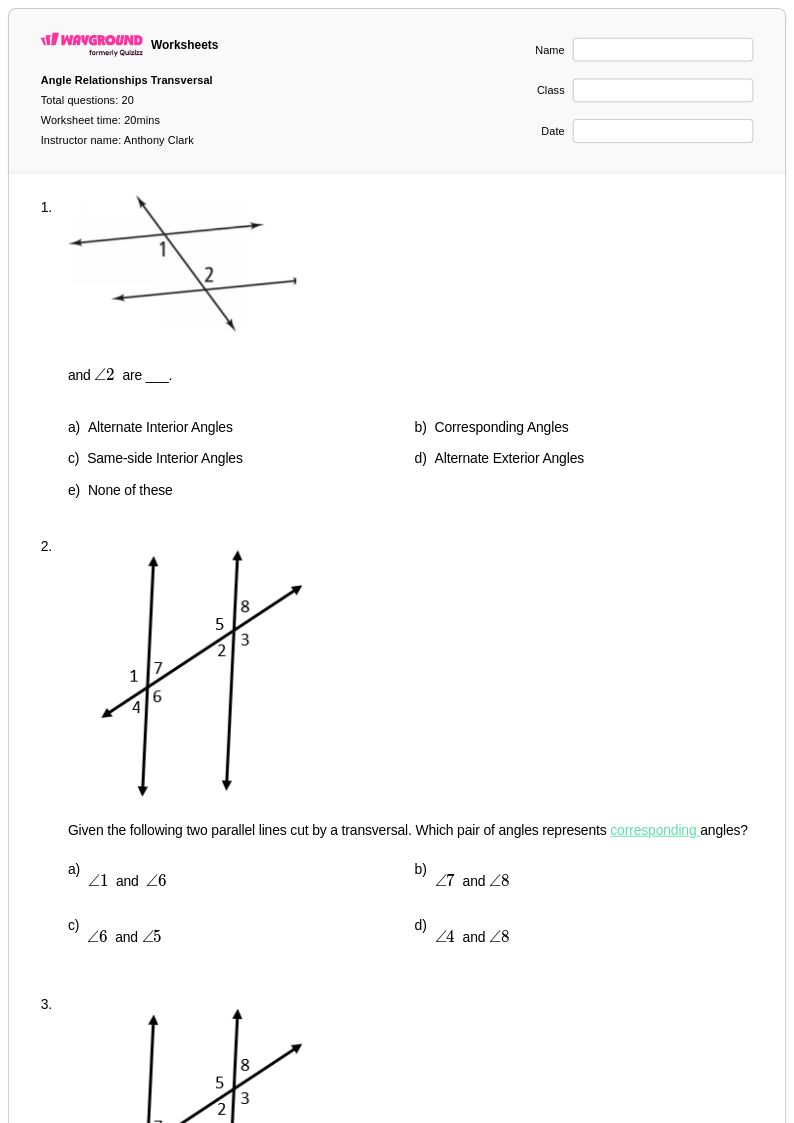
20 Q
10th - Uni
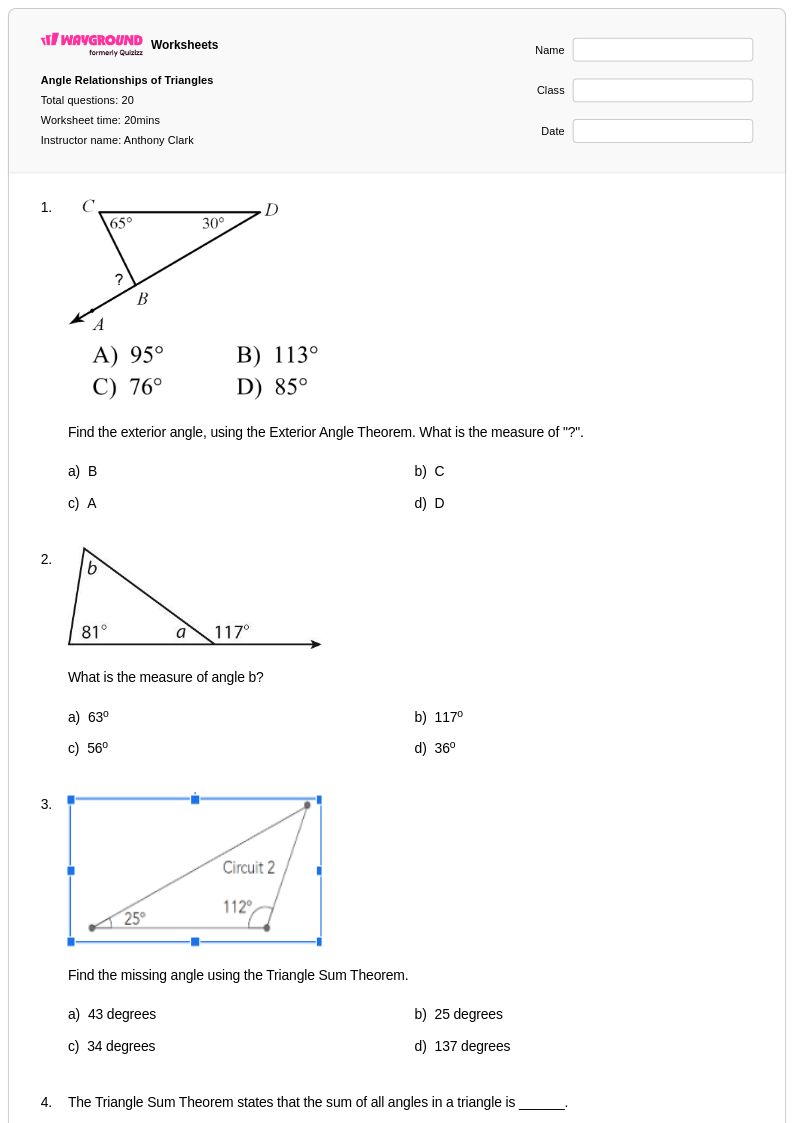
20 Q
8th - Uni
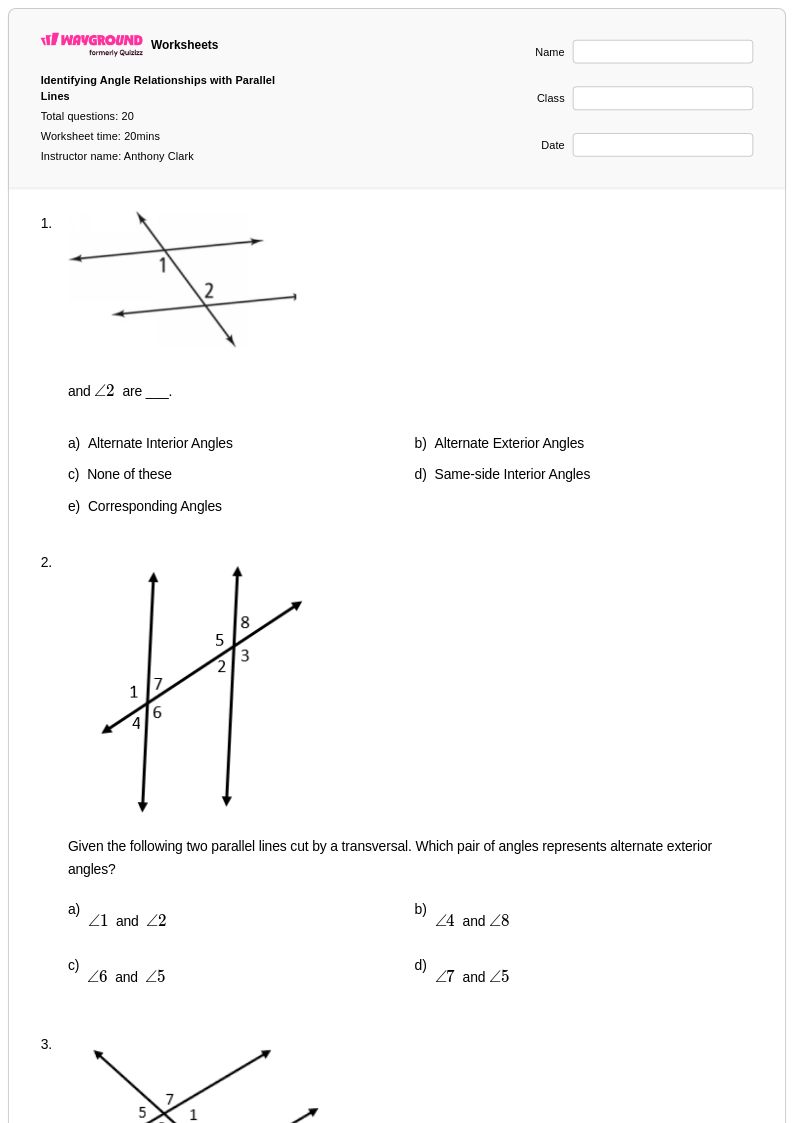
20 Q
8th - Uni
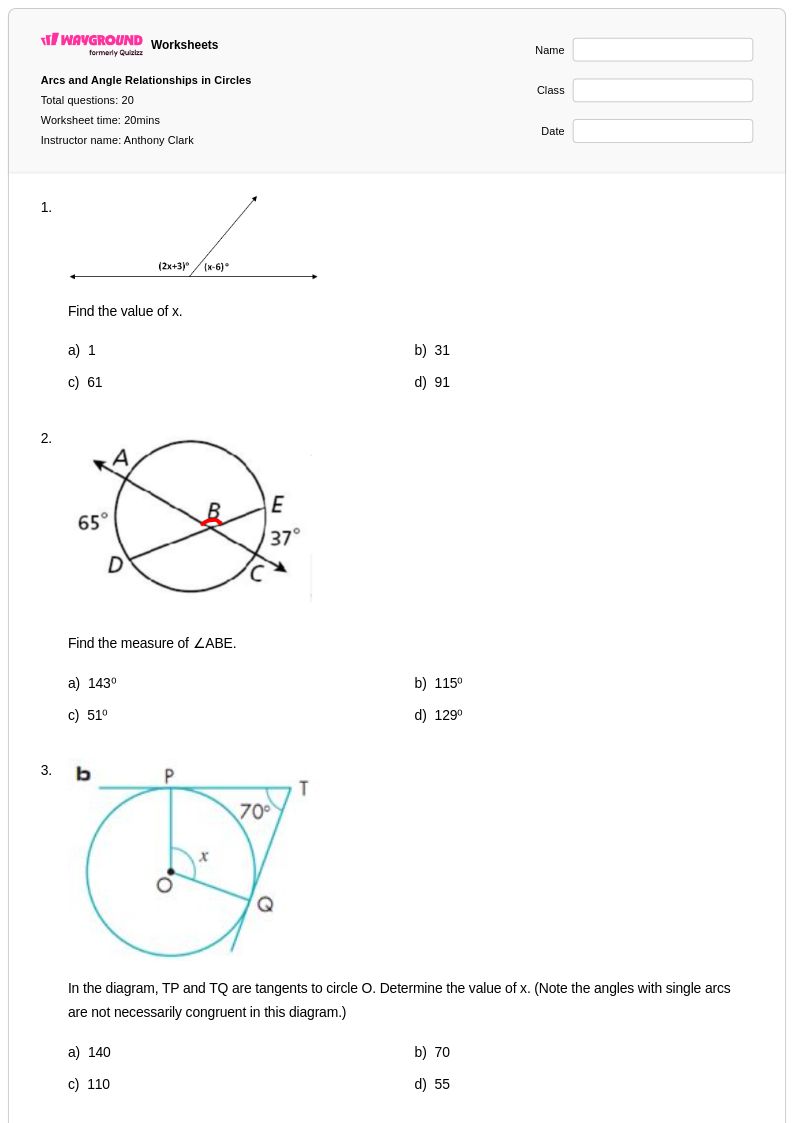
20 Q
10th - Uni
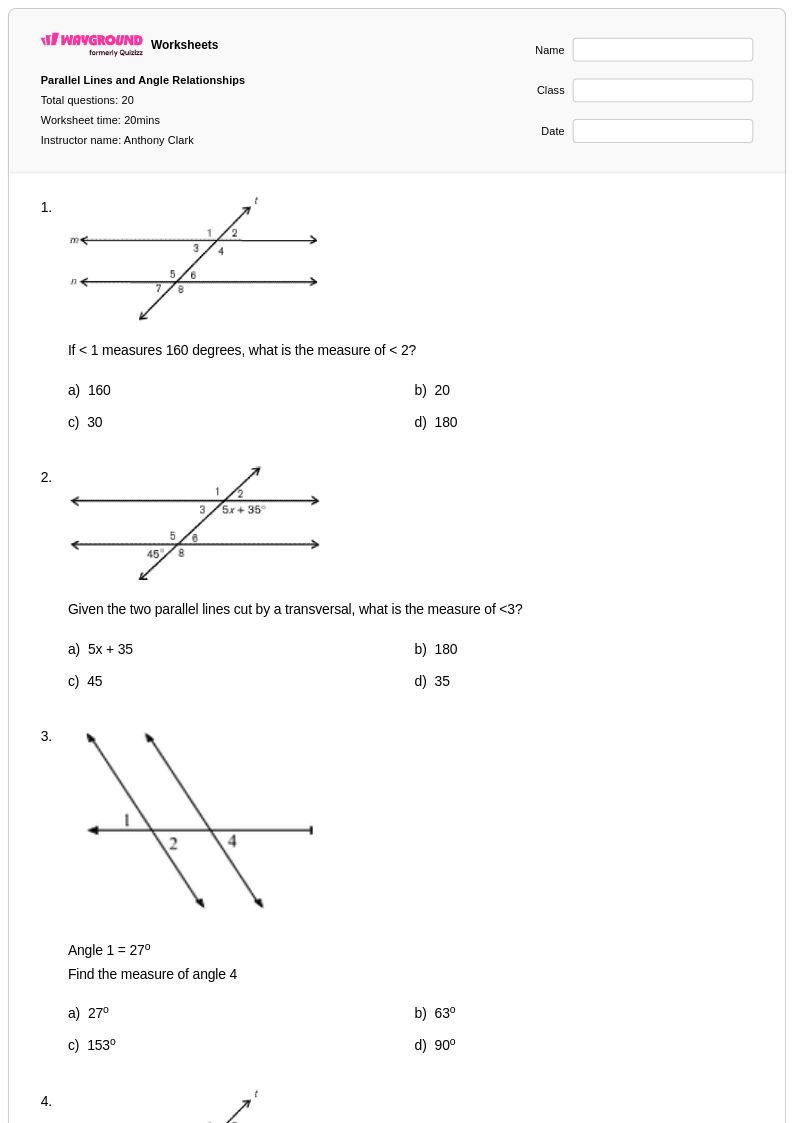
20 Q
8th - Uni
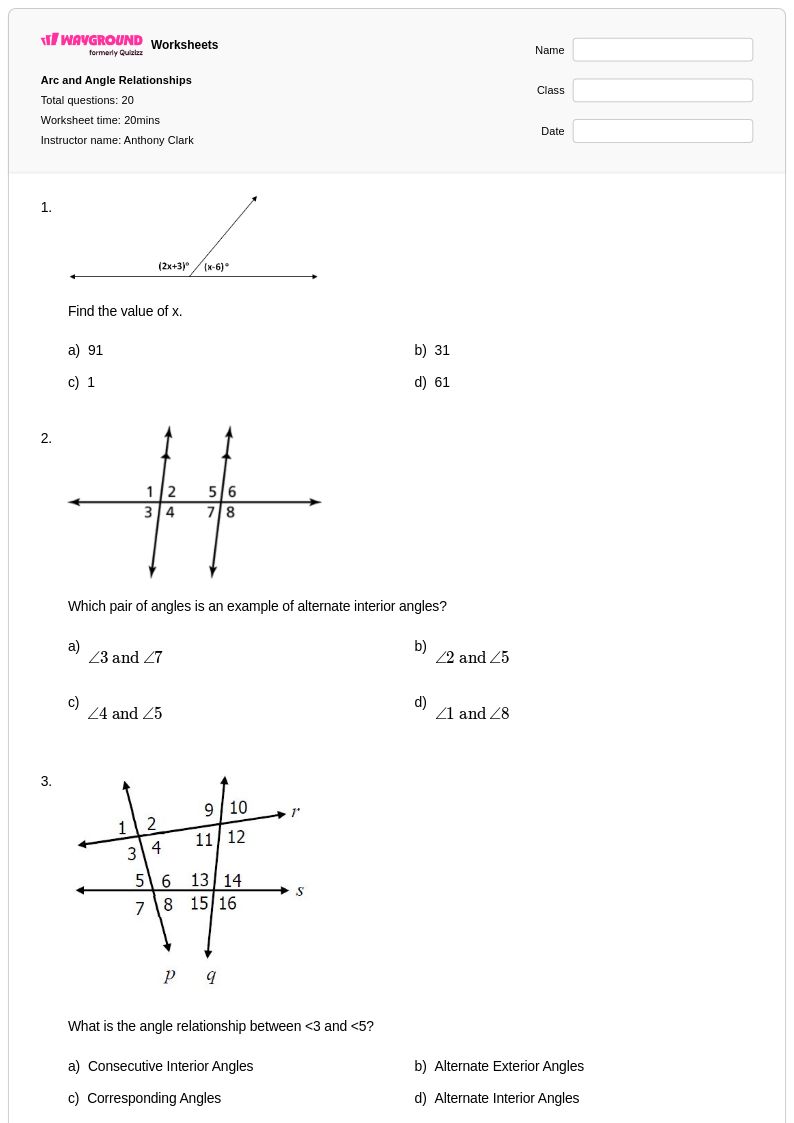
20 Q
8th - Uni
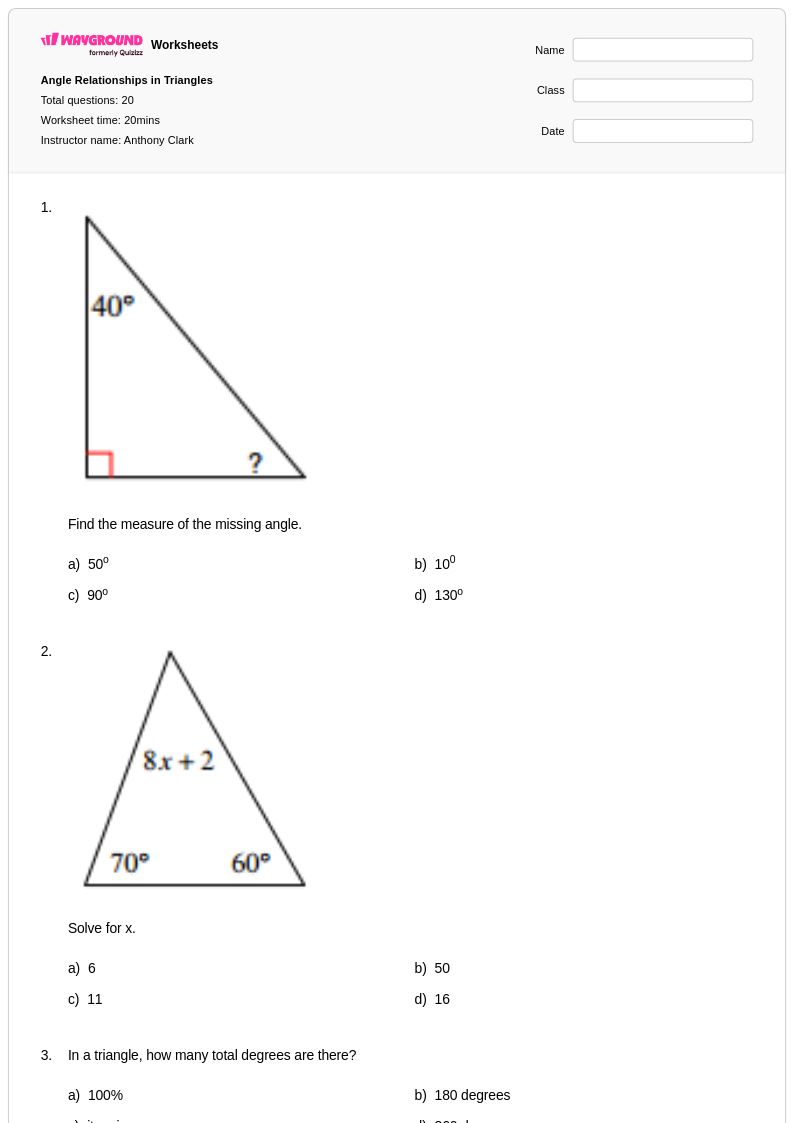
20 Q
8th - Uni
Explore Other Subject Worksheets for year 11
Explore printable Angle Relationships worksheets for Year 11
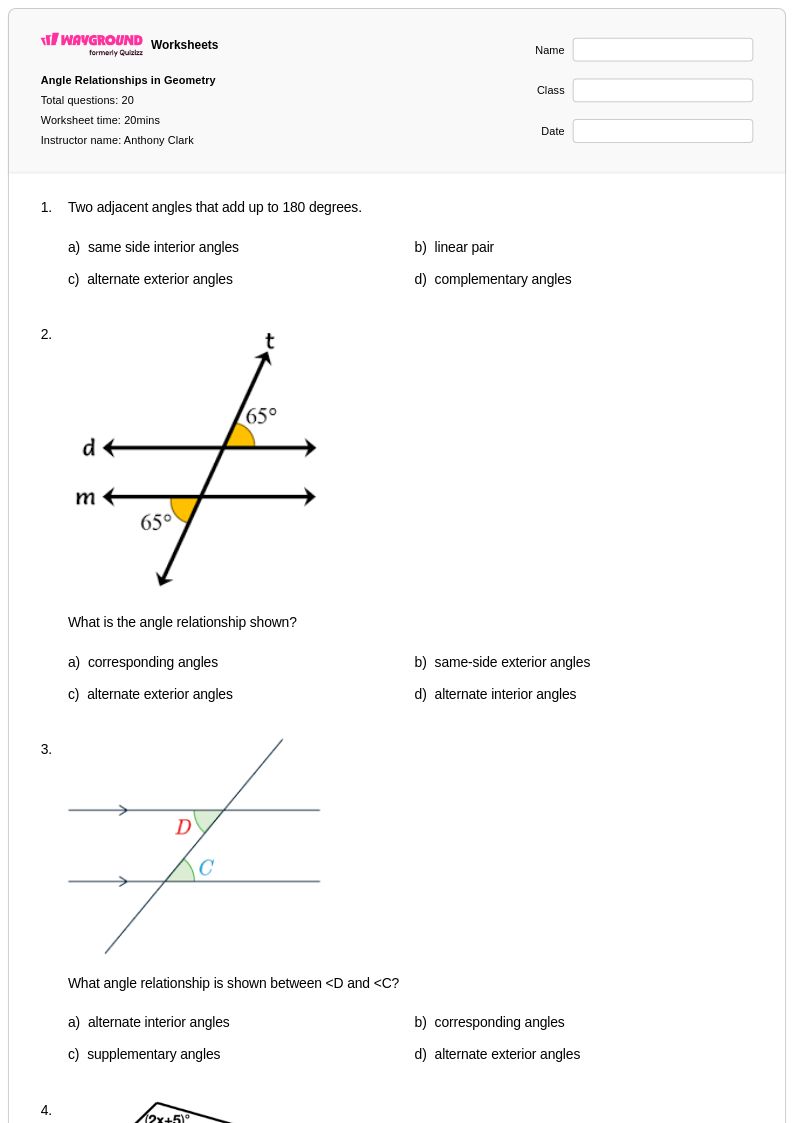
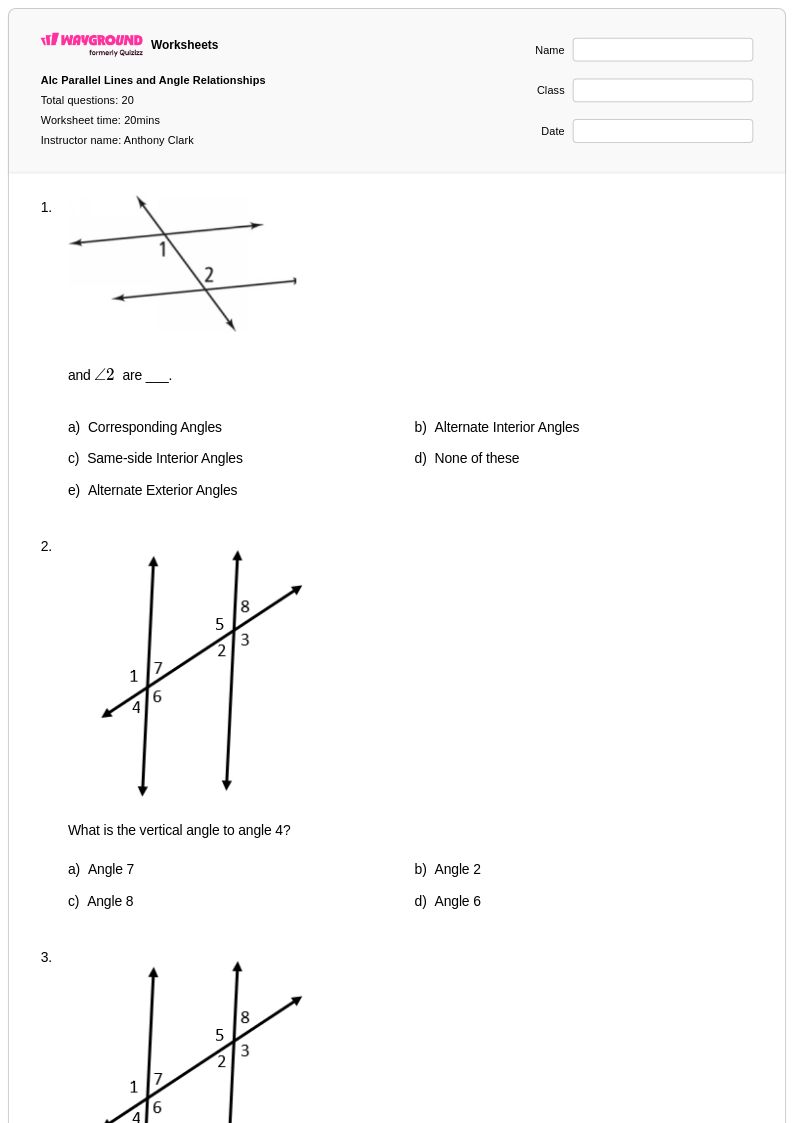
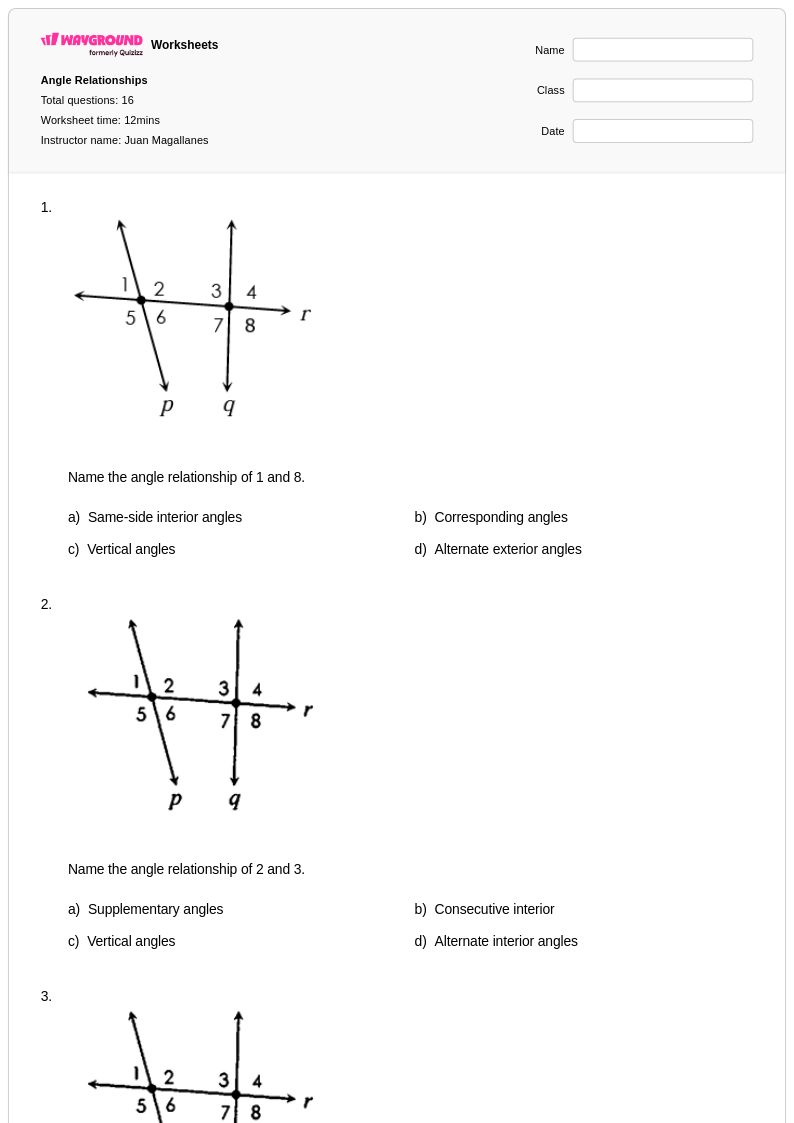
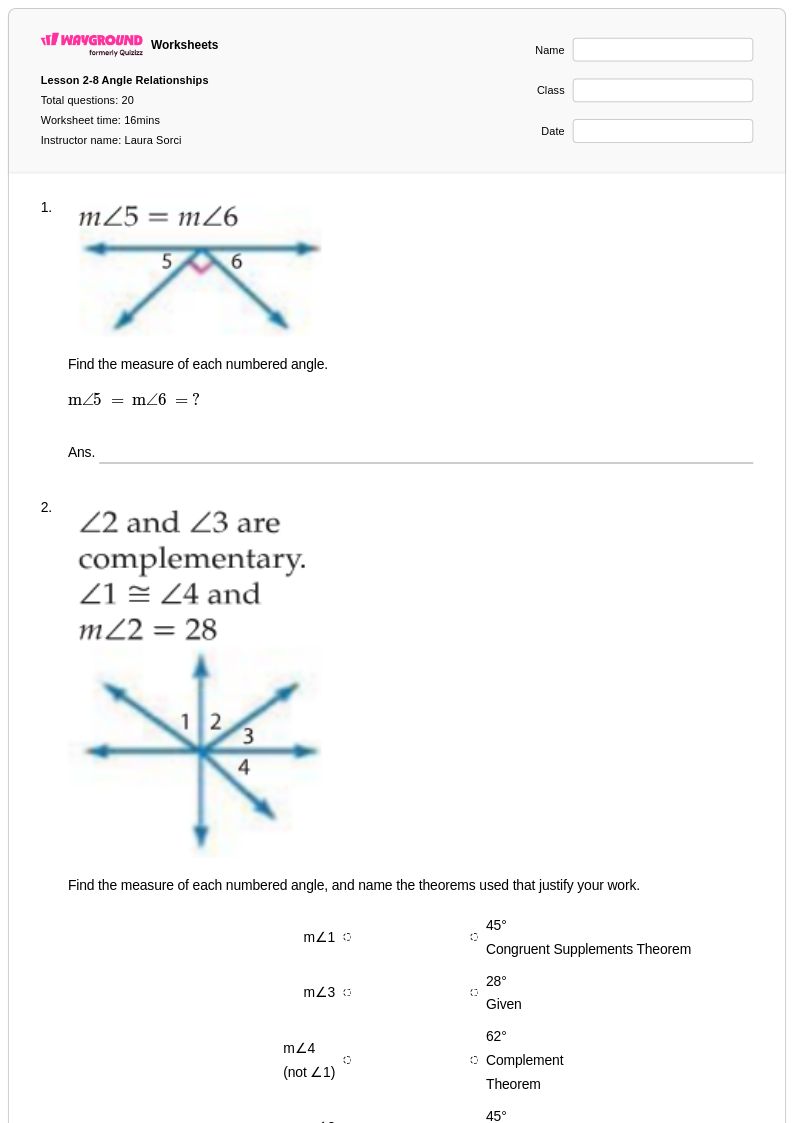
Angle relationships form a fundamental cornerstone of Year 11 geometry, requiring students to master the intricate connections between various angle types and their geometric properties. Wayground's comprehensive collection of angle relationships worksheets provides essential practice problems that strengthen students' understanding of complementary, supplementary, vertical, and adjacent angles, along with more advanced concepts like angles formed by parallel lines and transversals. These carefully designed printables offer systematic skill development through progressive difficulty levels, enabling students to build confidence while working with angle theorems and proofs. Each worksheet includes a complete answer key, making them valuable resources for both classroom instruction and independent study, while the free pdf format ensures accessibility for immediate use in any learning environment.
Wayground's extensive library of millions of teacher-created angle relationships worksheets empowers educators with unparalleled flexibility in delivering Year 11 geometry instruction. The platform's robust search and filtering capabilities allow teachers to quickly locate materials aligned with specific curriculum standards, while differentiation tools enable seamless customization to meet diverse learning needs within the classroom. Whether accessed in printable pdf format for traditional paper-and-pencil work or utilized digitally for interactive learning experiences, these worksheets serve multiple instructional purposes from initial concept introduction to targeted remediation and enrichment activities. The comprehensive nature of the collection supports teachers in developing well-structured lesson plans that systematically build students' geometric reasoning abilities, ensuring thorough mastery of angle relationships before progressing to more complex geometric concepts.
FAQs
How should I teach angle relationships in Grade 11 geometry?
What exercises help Grade 11 students practice angle relationships?
What mistakes do students commonly make with angle relationships?
How can I use these Grade 11 angle relationships worksheets in class?
Do Grade 11 angle relationships worksheets support Common Core geometry?
How can I differentiate angle relationships practice for a mixed-ability class?
What grade level are these angle relationships worksheets designed for?