Free Printable Artificial Selection Worksheets for Year 10
Year 10 artificial selection worksheets from Wayground help students explore selective breeding principles through engaging printables, practice problems, and comprehensive answer keys that make biology concepts accessible and easy to understand.
Explore printable Artificial Selection worksheets for Year 10
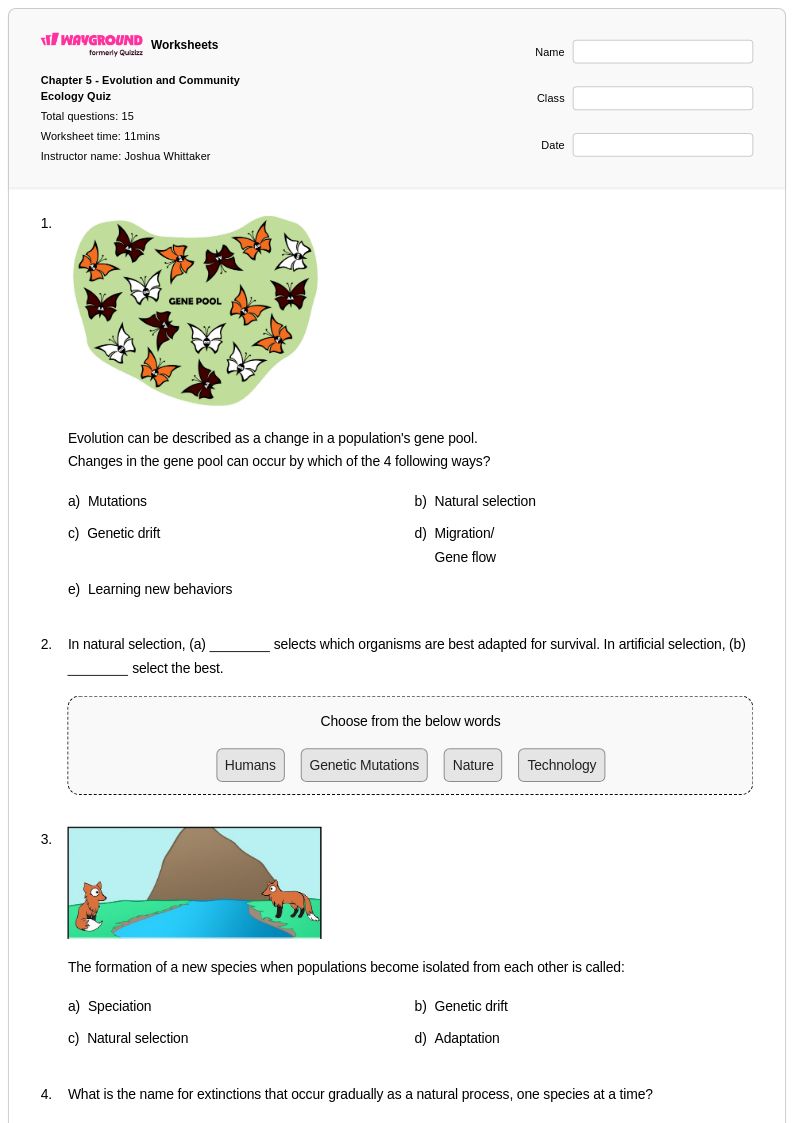
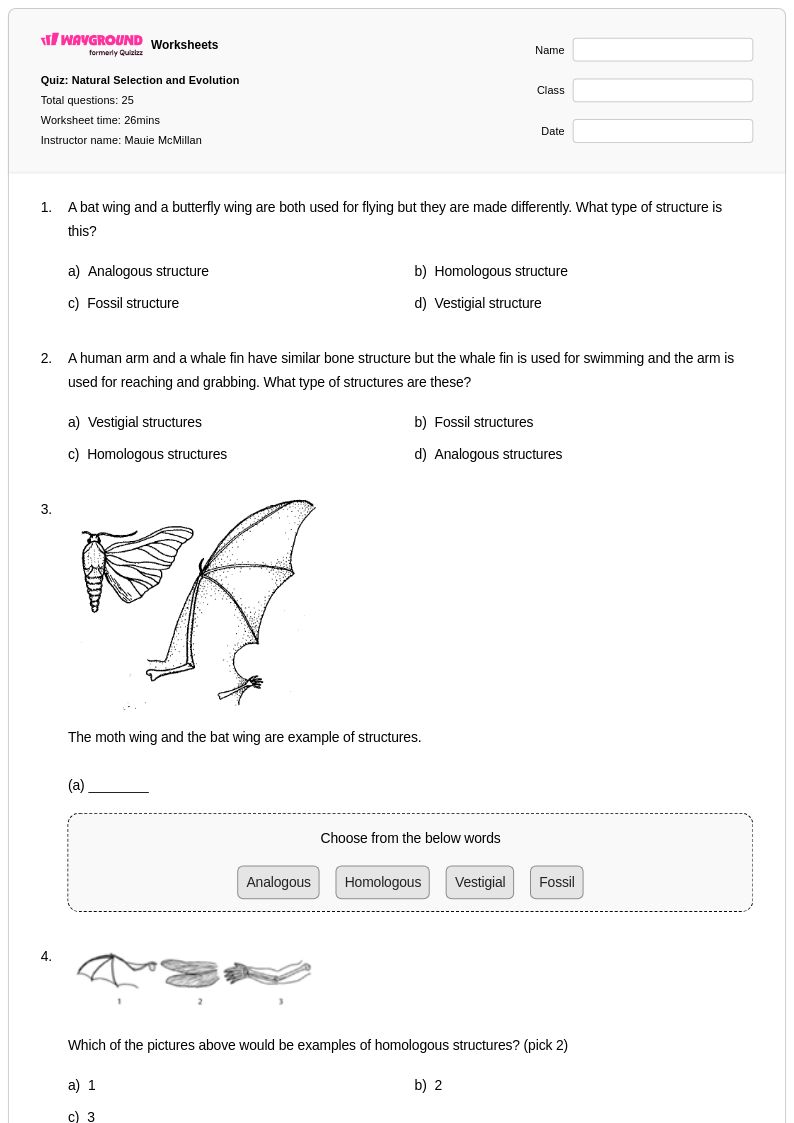
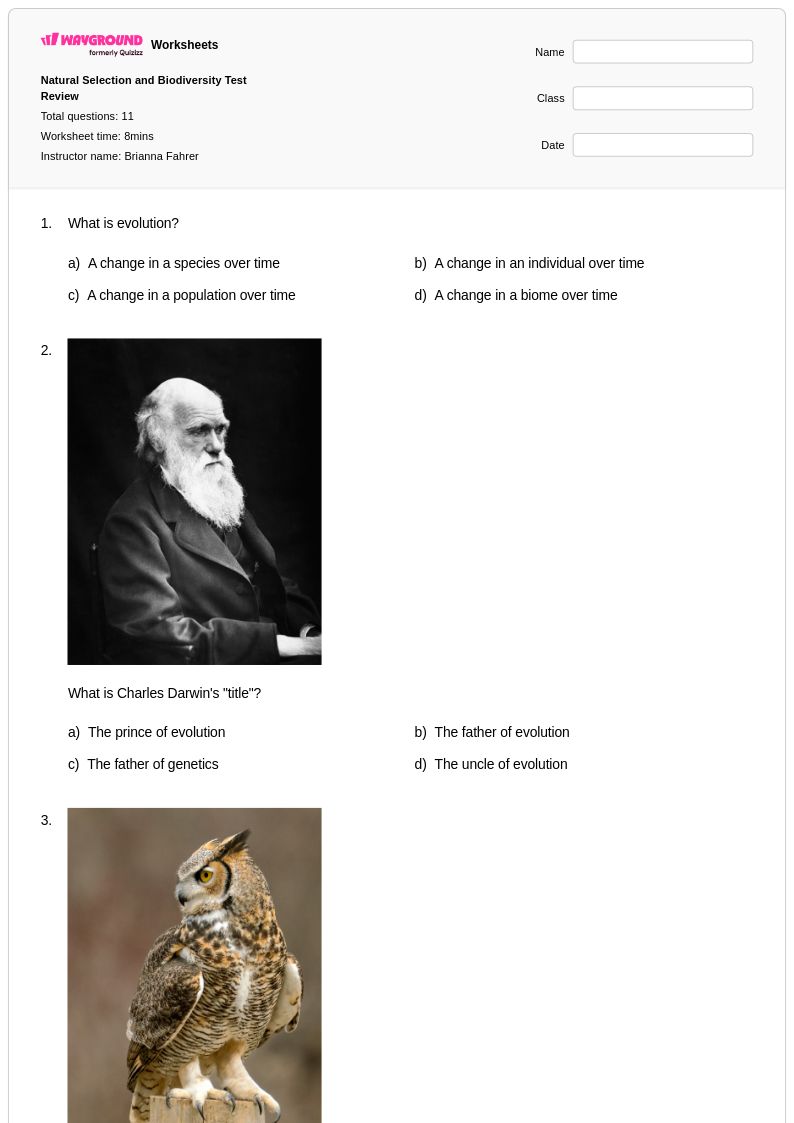
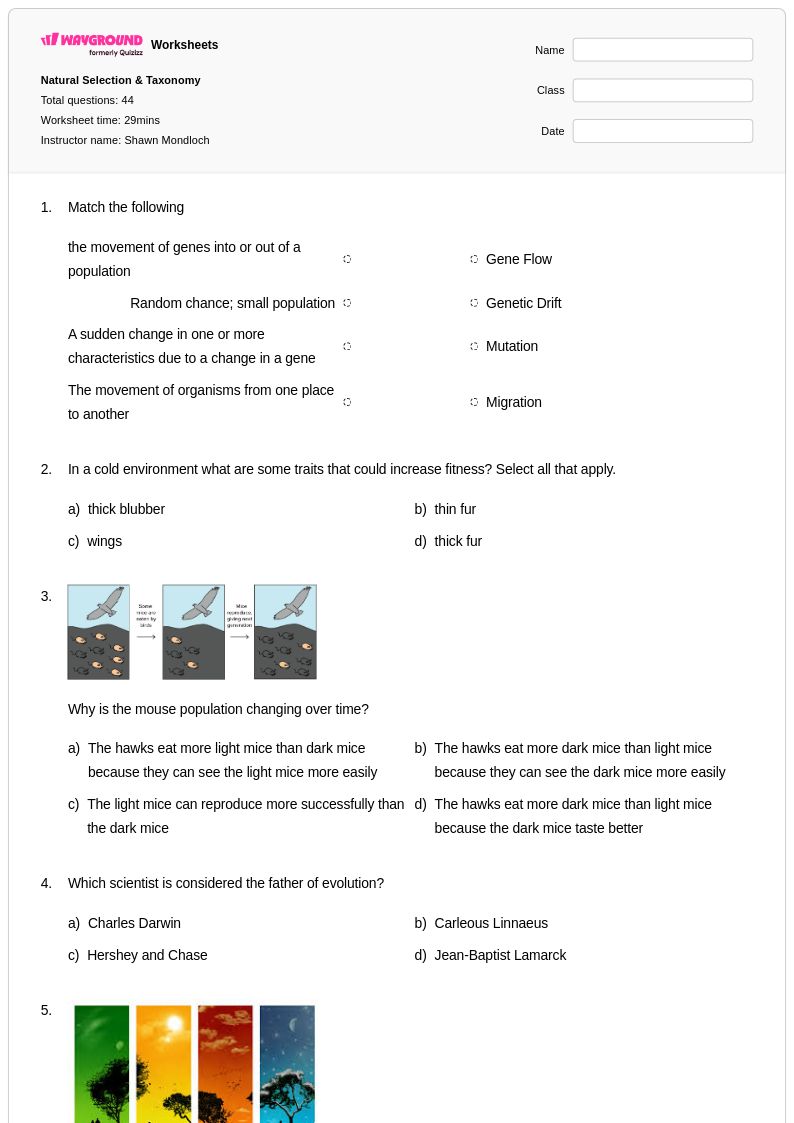
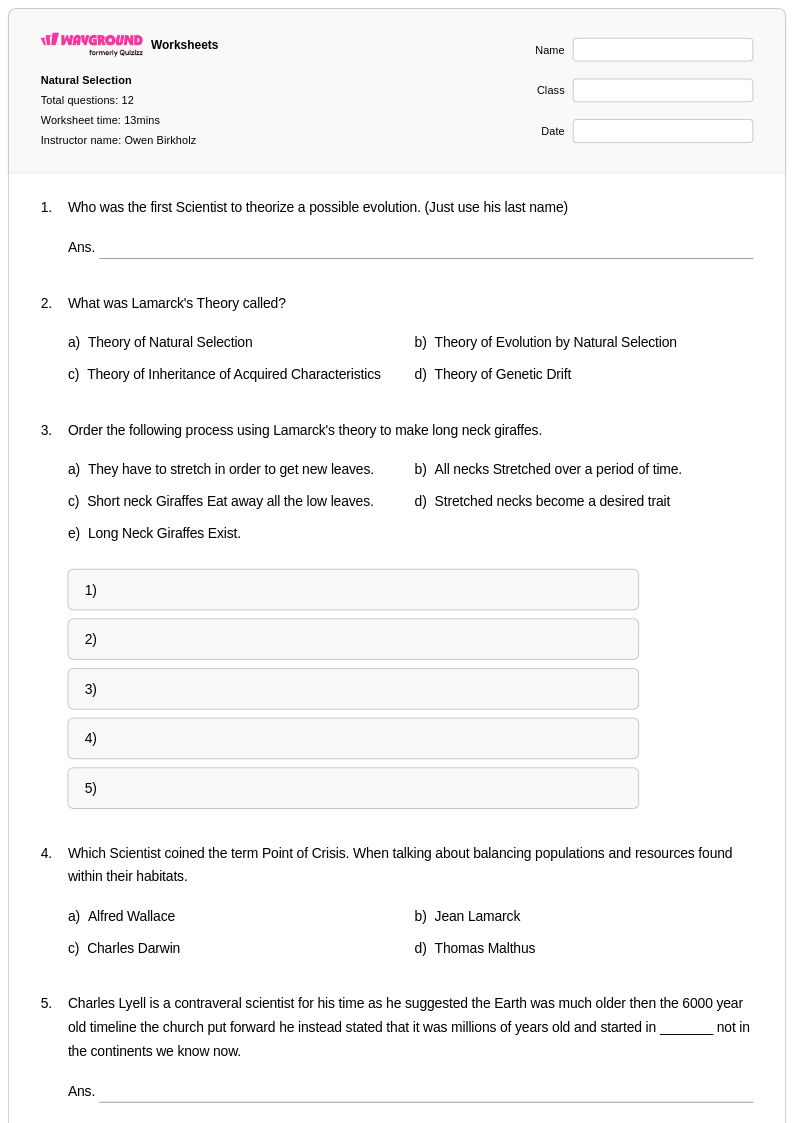
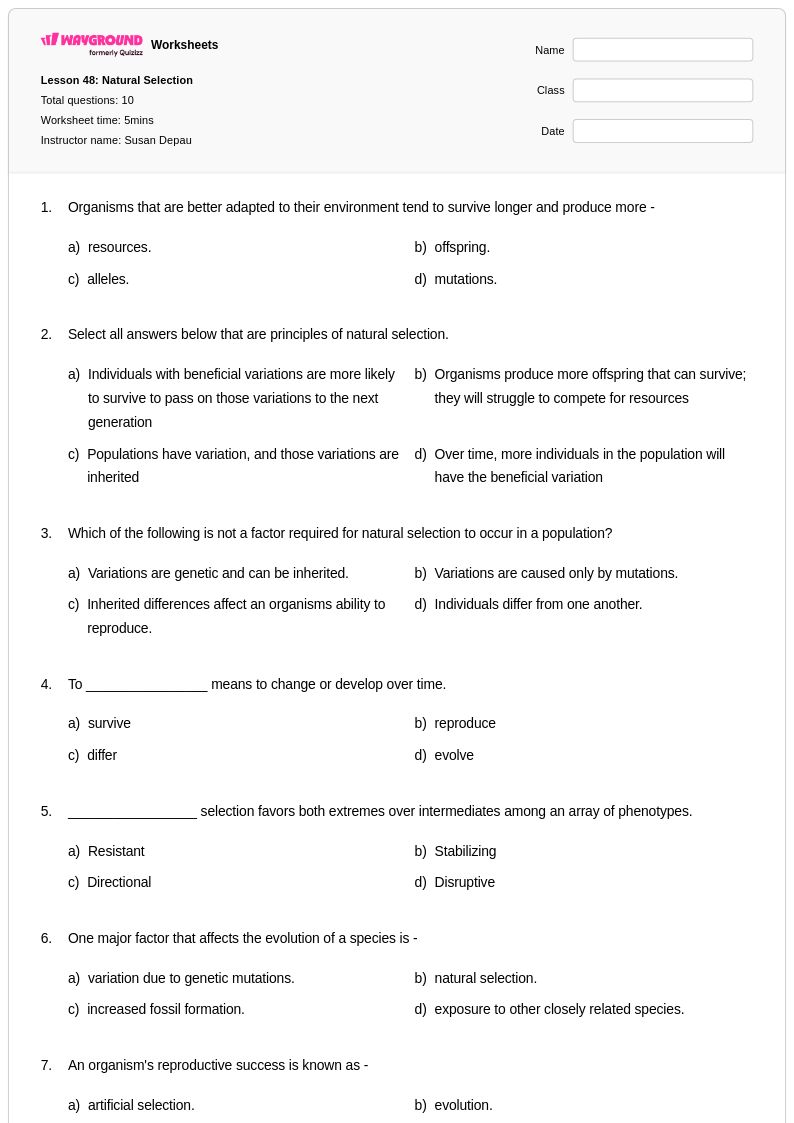
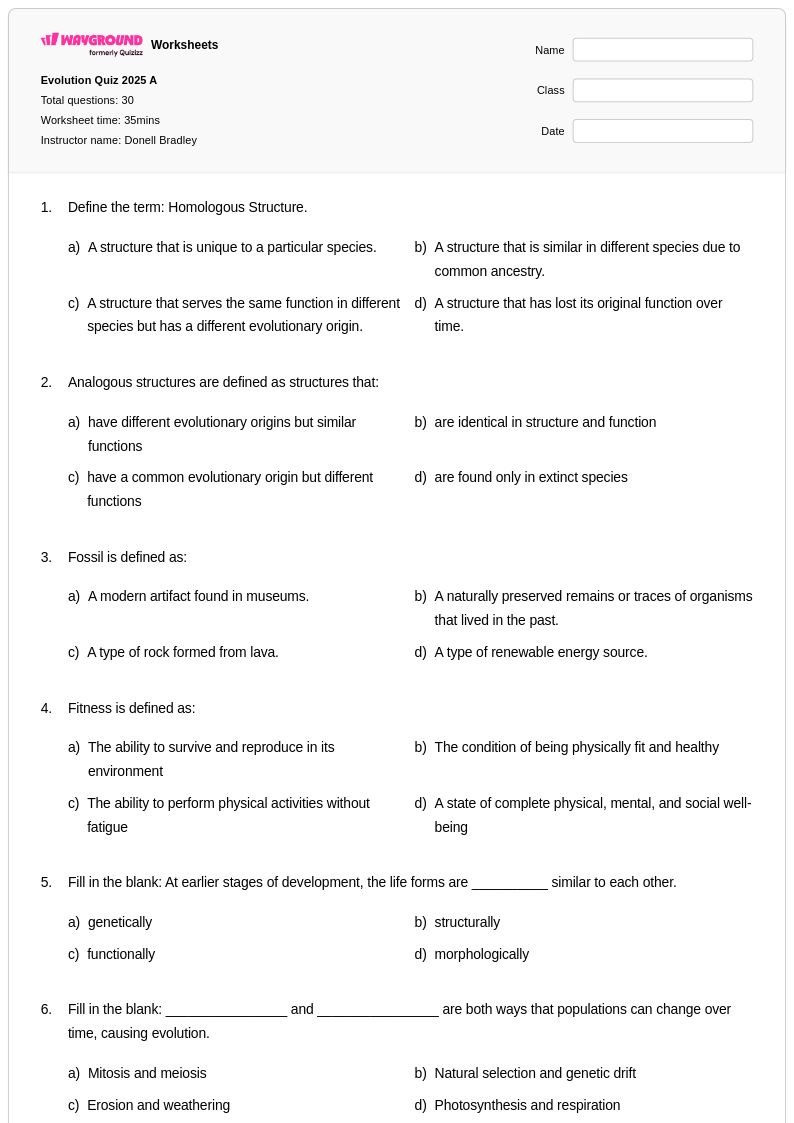
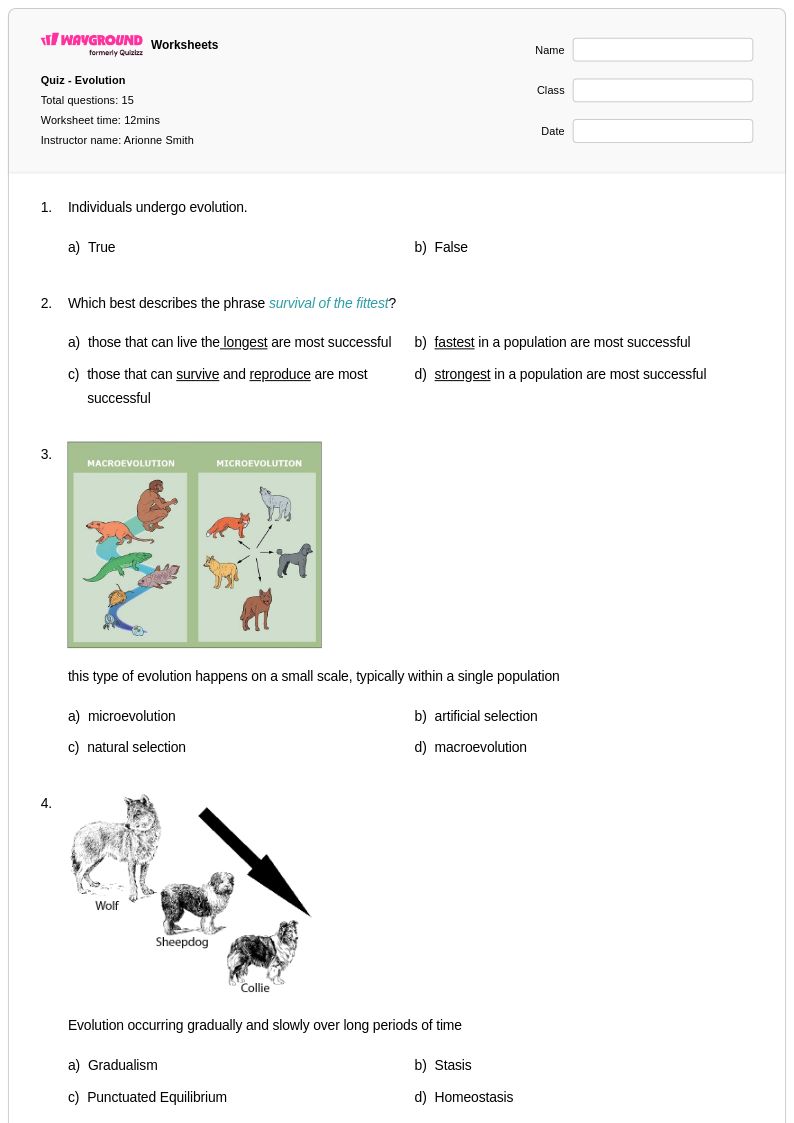
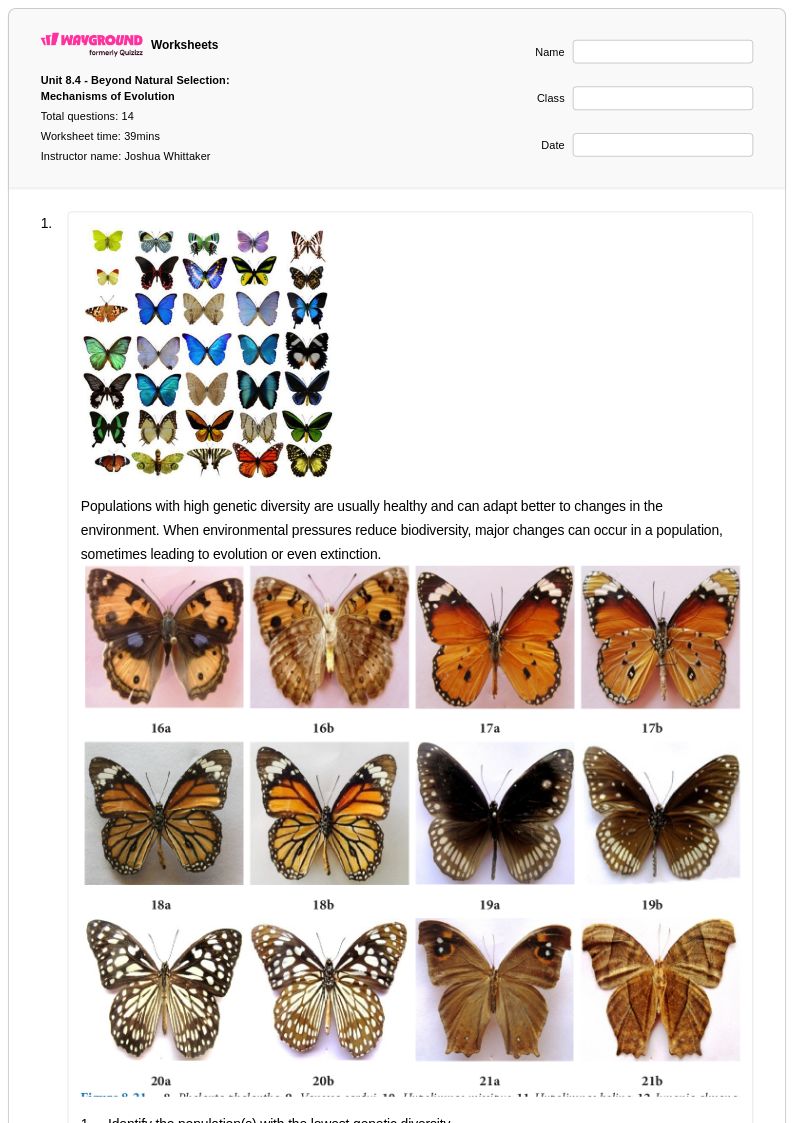
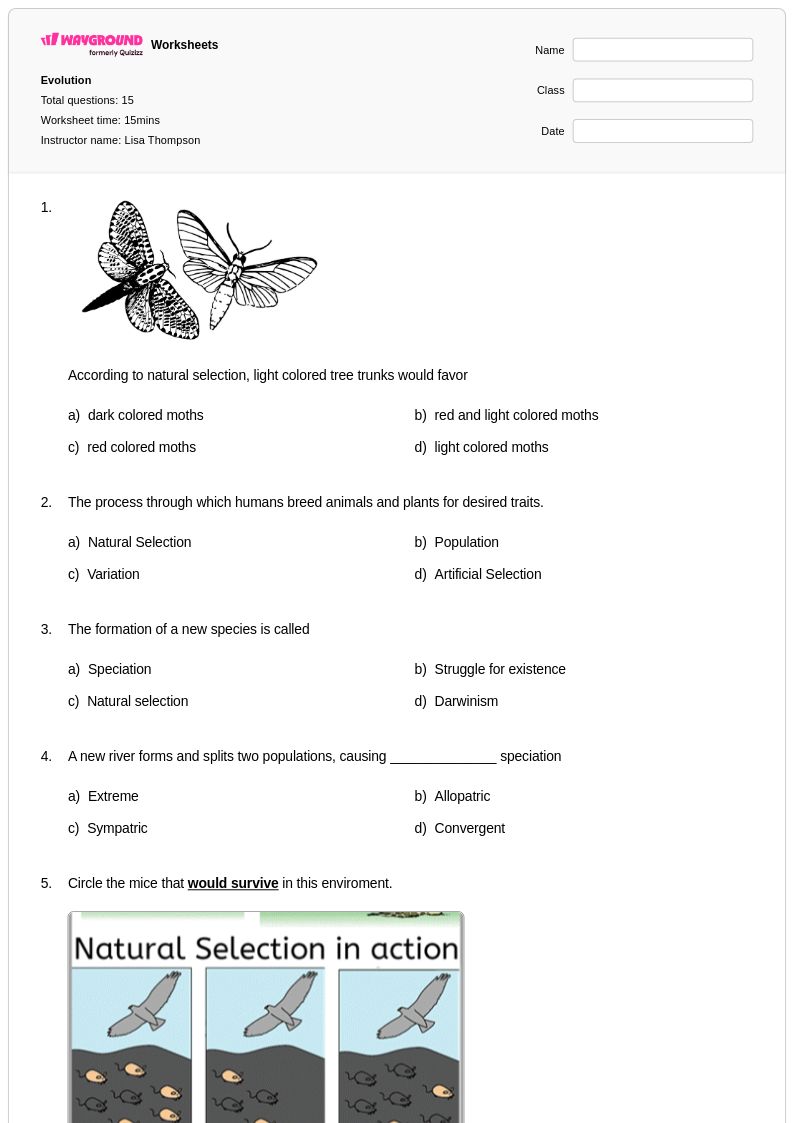
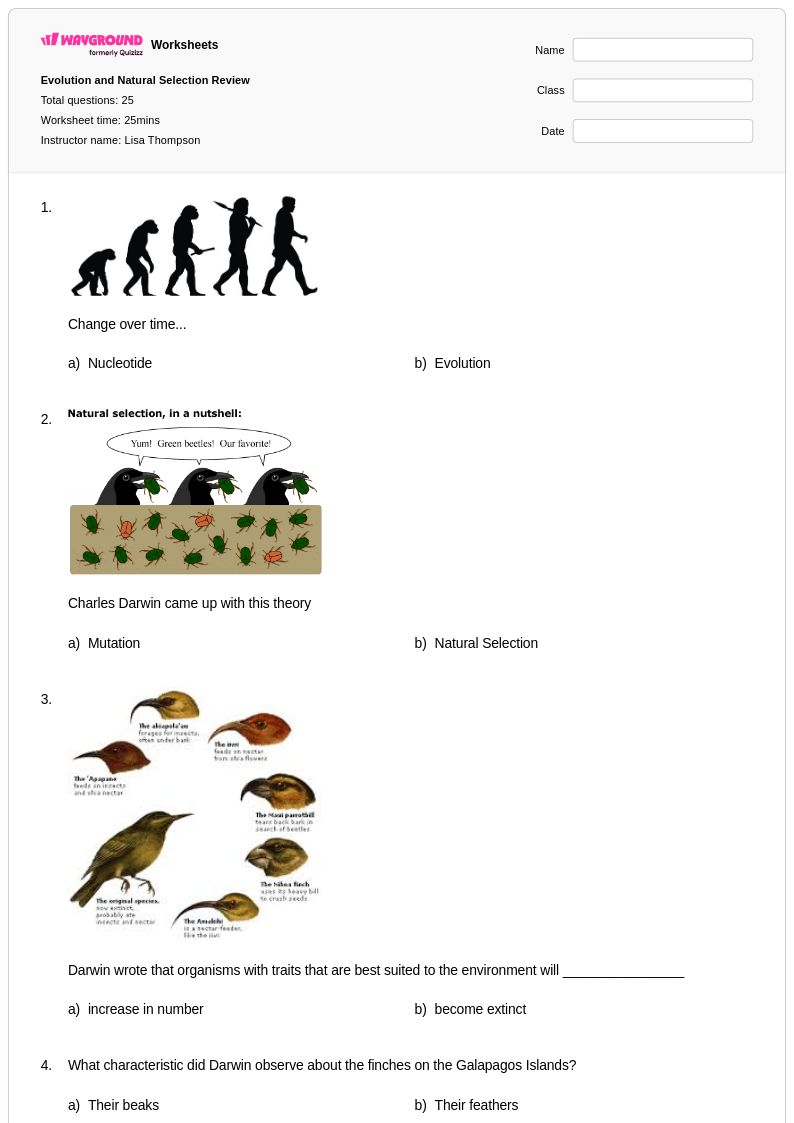
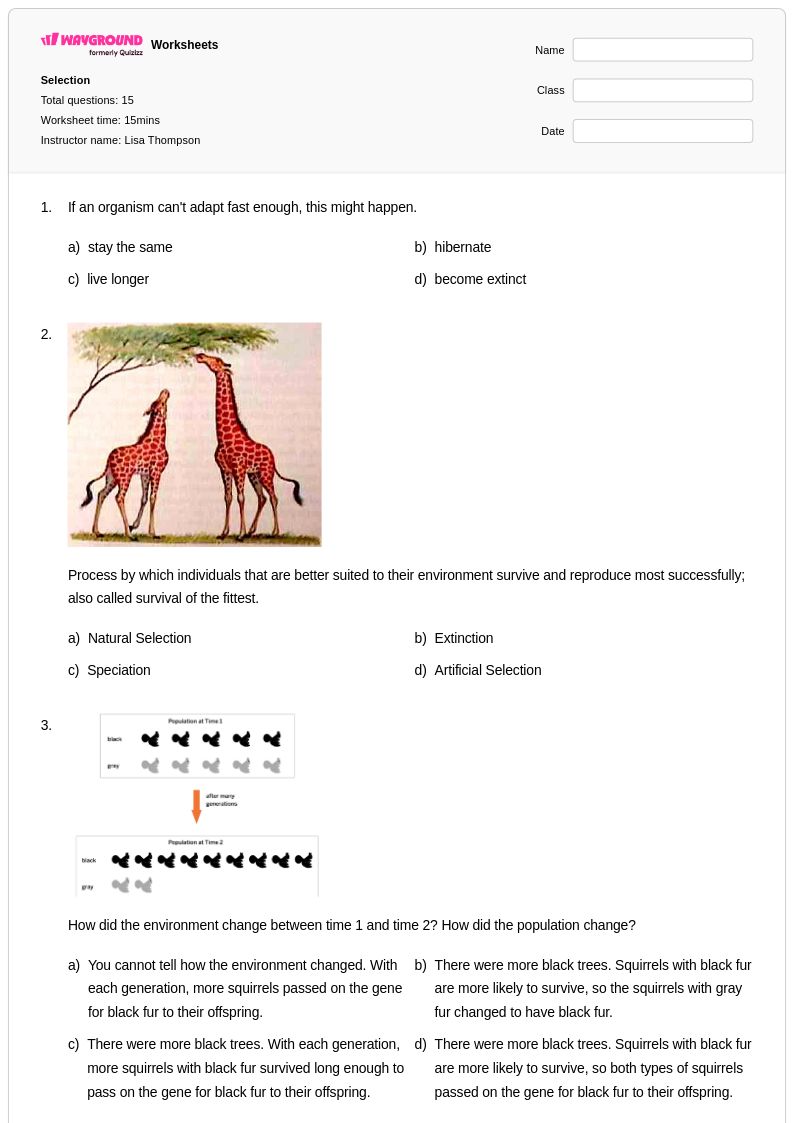
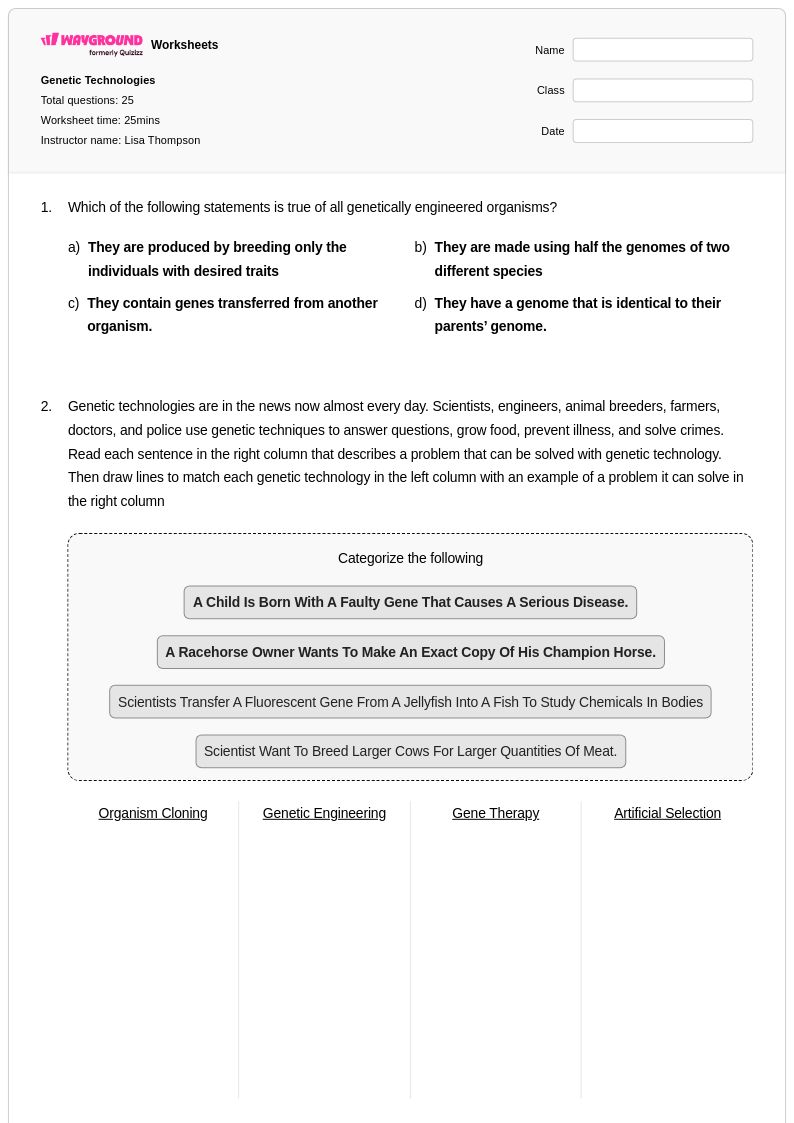
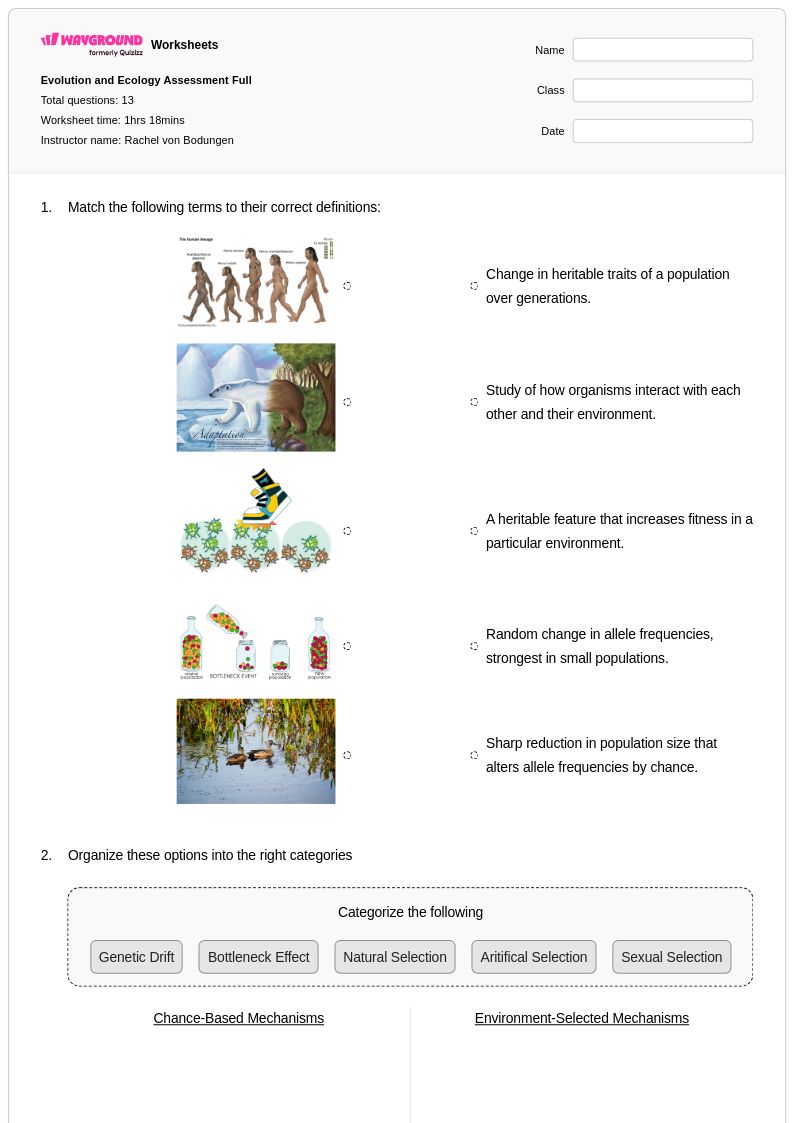
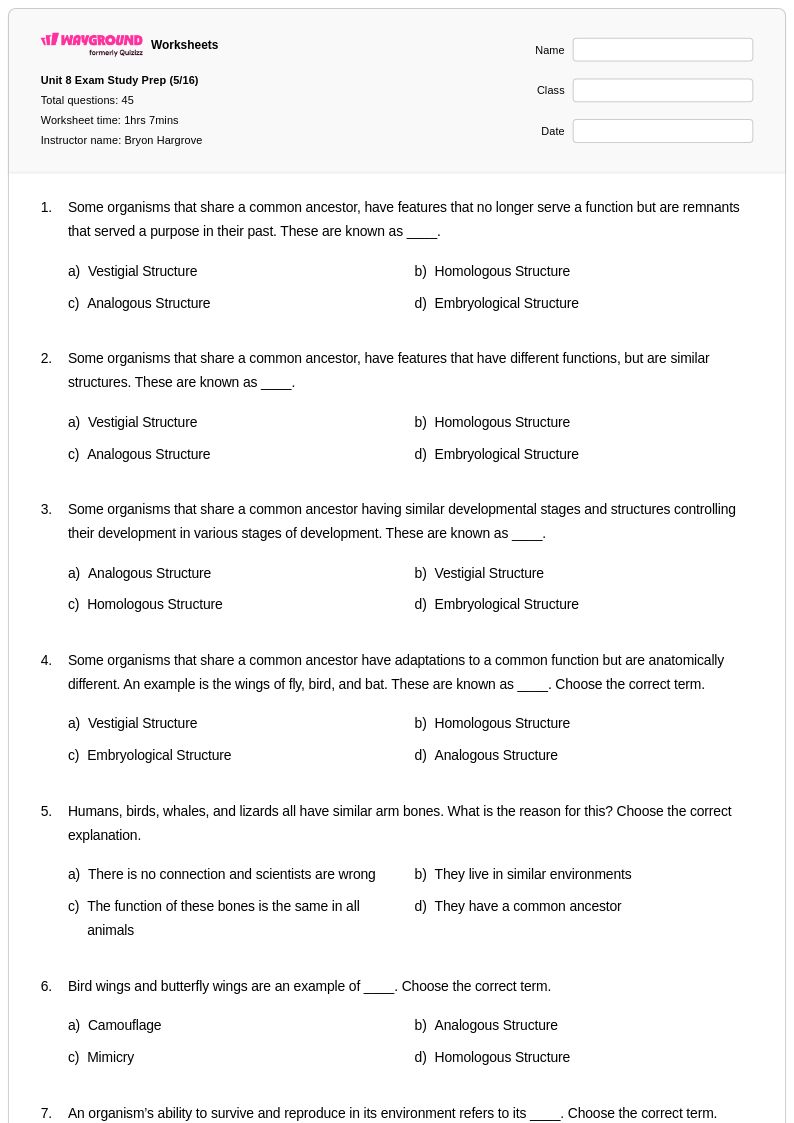
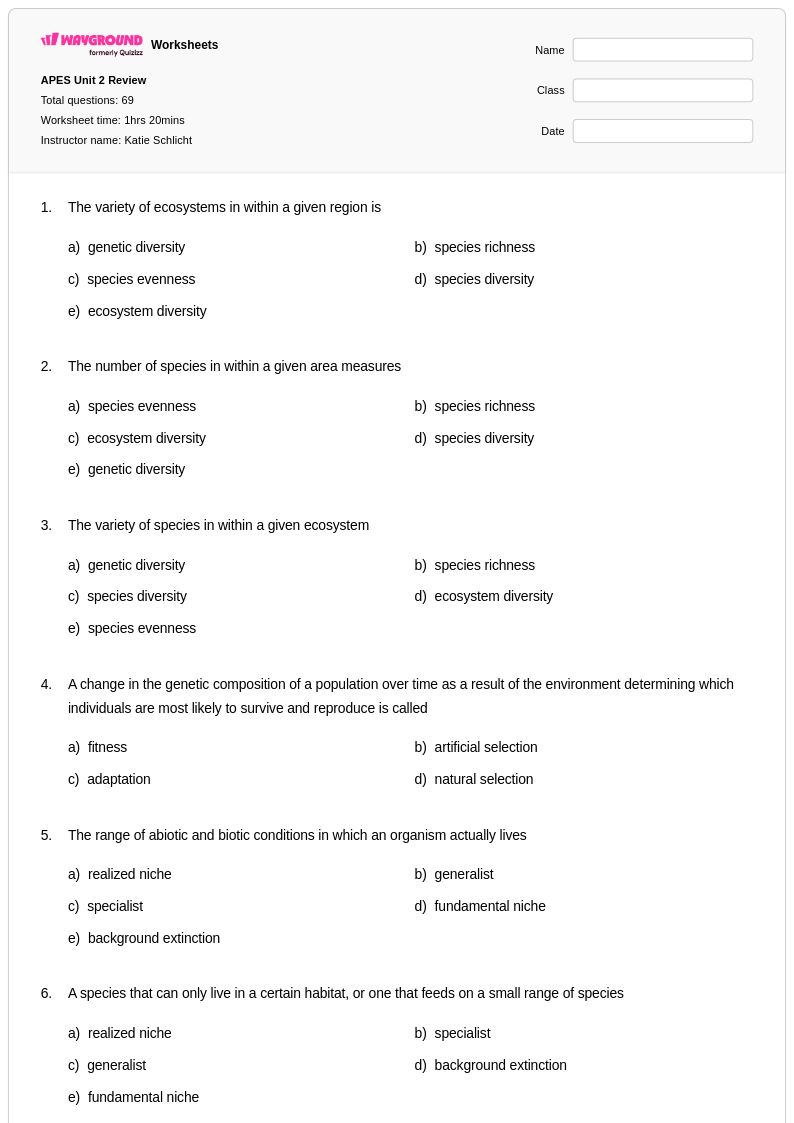
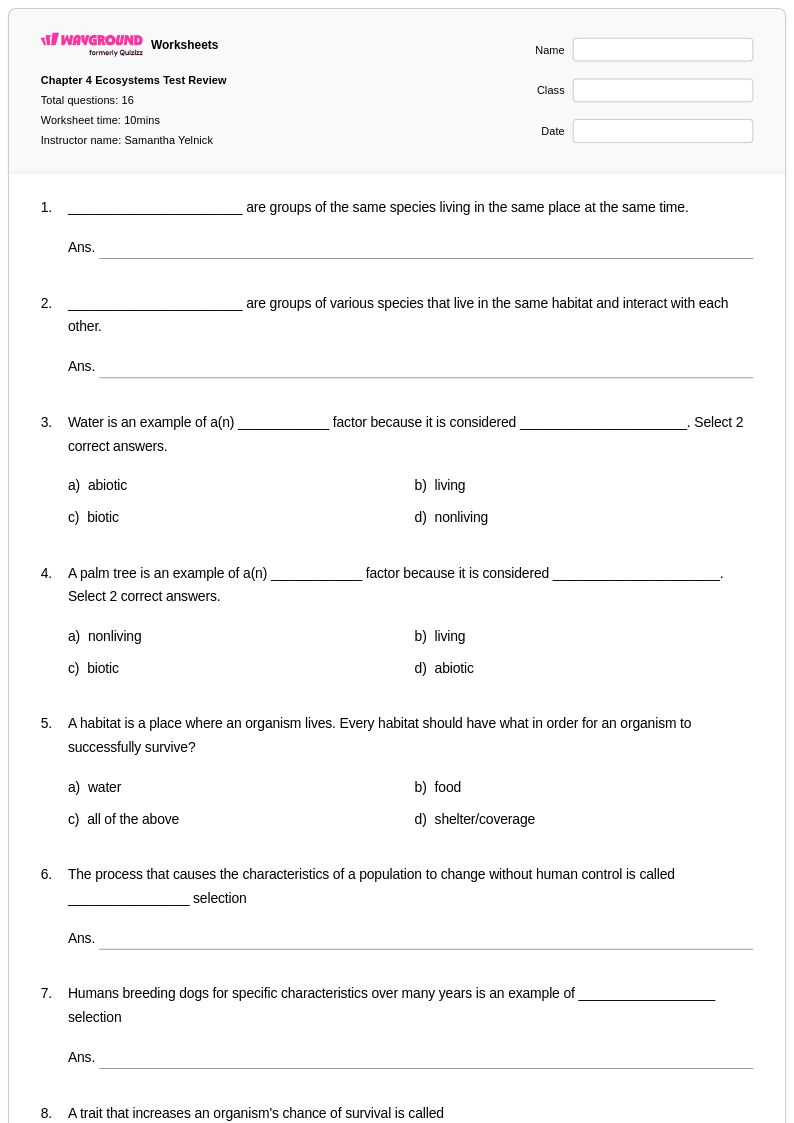
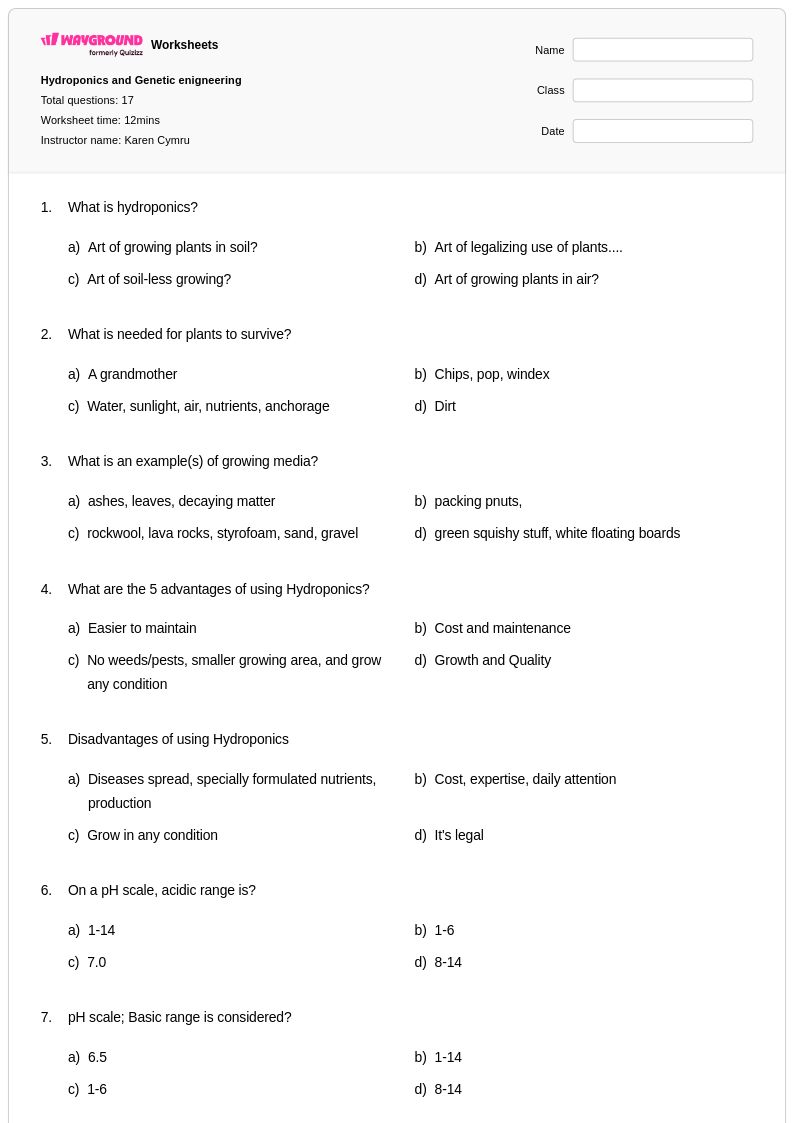
Artificial selection worksheets for Year 10 students available through Wayground provide comprehensive practice with the fundamental concepts of selective breeding and human-directed evolution. These educational resources strengthen critical thinking skills as students analyze how humans have influenced the genetic makeup of organisms through deliberate breeding choices, from agricultural crops to domesticated animals. The worksheets feature practice problems that challenge students to identify examples of artificial selection, compare natural and artificial selection processes, and evaluate the benefits and potential consequences of selective breeding programs. Each worksheet includes detailed answer keys that support independent learning and self-assessment, while the free printable format ensures accessibility for all classroom environments and study situations.
Wayground's extensive collection of artificial selection worksheets draws from millions of teacher-created resources, offering educators powerful search and filtering capabilities to locate materials perfectly suited to their Year 10 biology curriculum needs. The platform's standards alignment features ensure worksheets meet educational benchmarks, while differentiation tools allow teachers to modify content difficulty and complexity for diverse learners. These resources are available in both printable pdf formats and interactive digital versions, providing flexibility for in-class instruction, homework assignments, and remote learning scenarios. Teachers can customize worksheet collections to target specific learning objectives, whether conducting initial skill assessments, providing remediation for struggling students, or offering enrichment opportunities for advanced learners exploring the intersection of genetics, agriculture, and evolutionary biology.
FAQs
How do I teach artificial selection in a biology class?
Start by contrasting artificial selection with natural selection so students understand that the key difference is intentional human intervention rather than environmental pressure. Use concrete examples like dog breeding, crop domestication, and dairy cattle to ground the concept before introducing genetics. Having students trace how a specific trait changed across generations of a selectively bred organism helps them internalize the mechanism before moving to more abstract applications.
What are good practice exercises for artificial selection?
Effective practice exercises include analyzing breeding programs to predict which traits will be expressed in offspring, comparing before-and-after trait profiles of selectively bred species, and evaluating the long-term genetic consequences of narrowing a breeding population. Problems that ask students to distinguish artificial selection examples from natural selection scenarios are particularly useful for reinforcing conceptual boundaries. Worksheets that integrate agriculture, animal husbandry, and plant cultivation give students exposure to the range of real-world contexts where artificial selection applies.
What mistakes do students commonly make when learning about artificial selection?
The most common misconception is that artificial selection causes organisms to deliberately change themselves, rather than understanding that humans selectively choose which individuals reproduce. Students also frequently conflate artificial selection with genetic engineering, not recognizing that artificial selection works through controlled breeding rather than direct manipulation of DNA. Another common error is failing to account for the long-term consequences of reduced genetic diversity when a population is bred for a narrow set of traits.
How does artificial selection differ from natural selection, and how do I help students tell them apart?
In natural selection, environmental pressures determine which organisms survive and reproduce, with no external agent directing the outcome. In artificial selection, humans deliberately choose which organisms breed based on desired traits, bypassing natural survival pressures entirely. A reliable classroom strategy is to give students a set of scenarios and have them identify the selecting agent in each case — this forces students to ask 'who or what is choosing?' rather than relying on surface-level pattern matching.
How do I use Wayground's artificial selection worksheets in my classroom?
Wayground's artificial selection worksheets are available as printable PDFs for traditional classroom use and in digital formats for technology-integrated environments, giving you flexibility regardless of your setup. You can also host them as a quiz directly on Wayground, which supports real-time student interaction and immediate feedback. Each worksheet includes a complete answer key, making them practical for independent practice, self-assessment, or sub plans without additional preparation on your part.
How can I support students who struggle with artificial selection concepts?
For students who need additional support, focus first on building a clear understanding of heredity and trait inheritance before introducing selection pressure. Simplified breeding scenarios with fewer variables help reduce cognitive overload before students tackle more complex multi-trait problems. On Wayground, you can apply accommodations such as read aloud, reduced answer choices, and extended time to individual students without flagging those adjustments to the rest of the class, making differentiation straightforward in a mixed-ability setting.