Free Printable Bacterial Identification Worksheets for Year 9
Year 9 bacterial identification worksheets from Wayground help students master microbiology concepts through engaging printables, practice problems, and comprehensive answer keys for effective biology learning.
Explore printable Bacterial Identification worksheets for Year 9
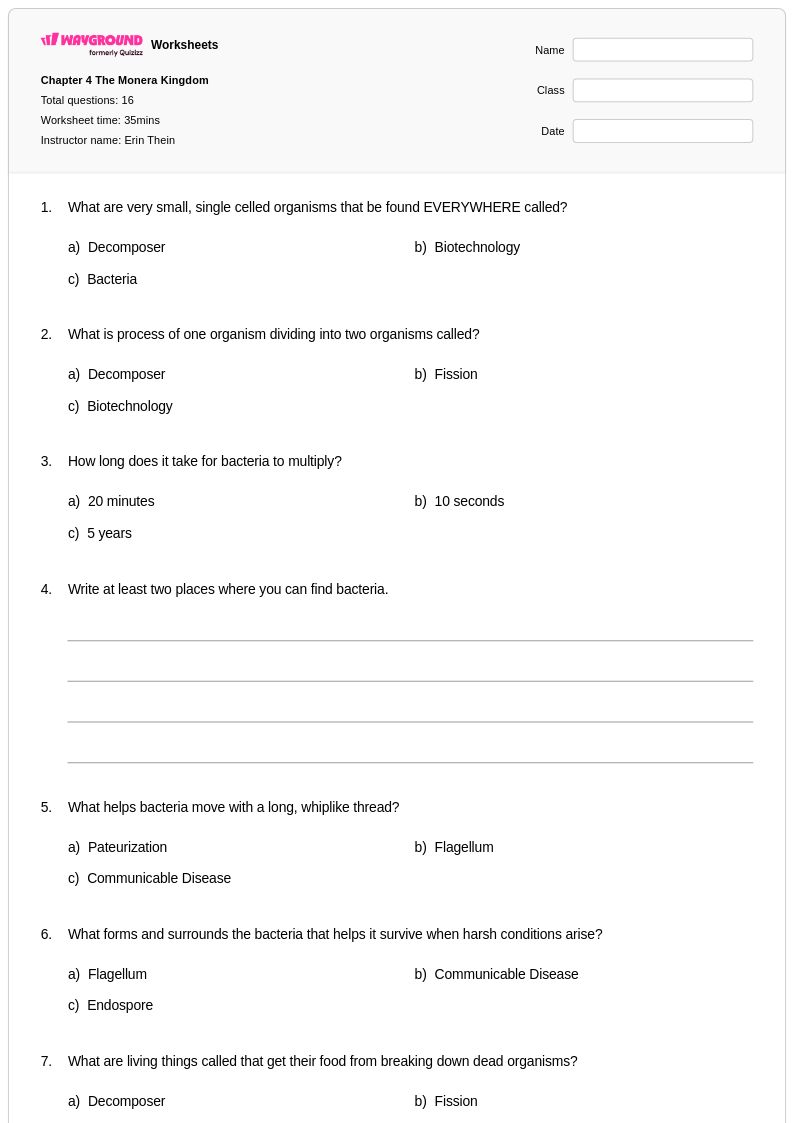
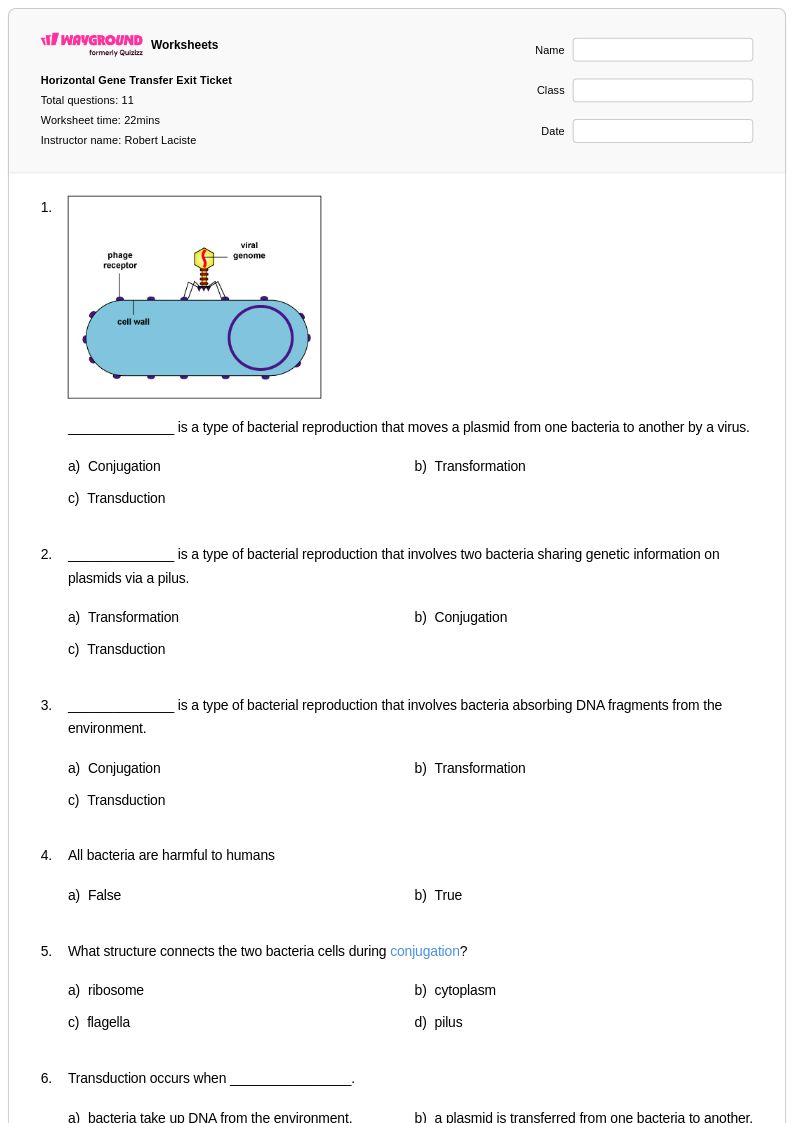
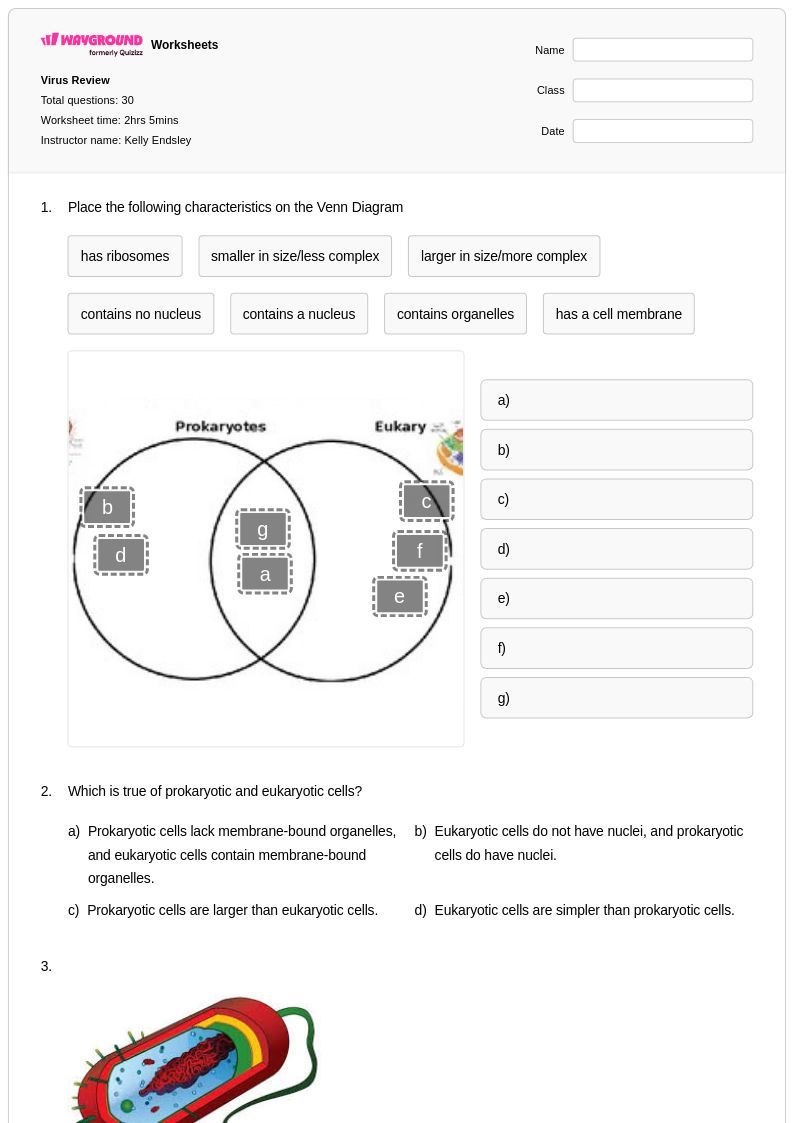
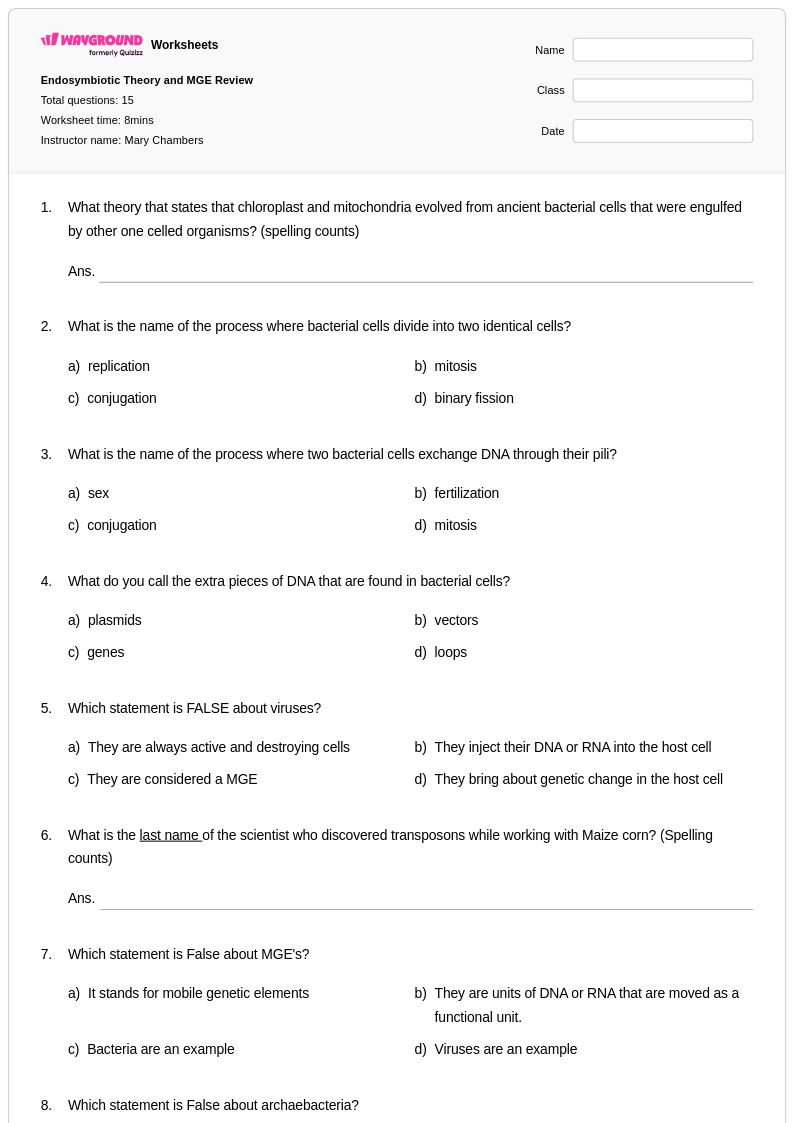
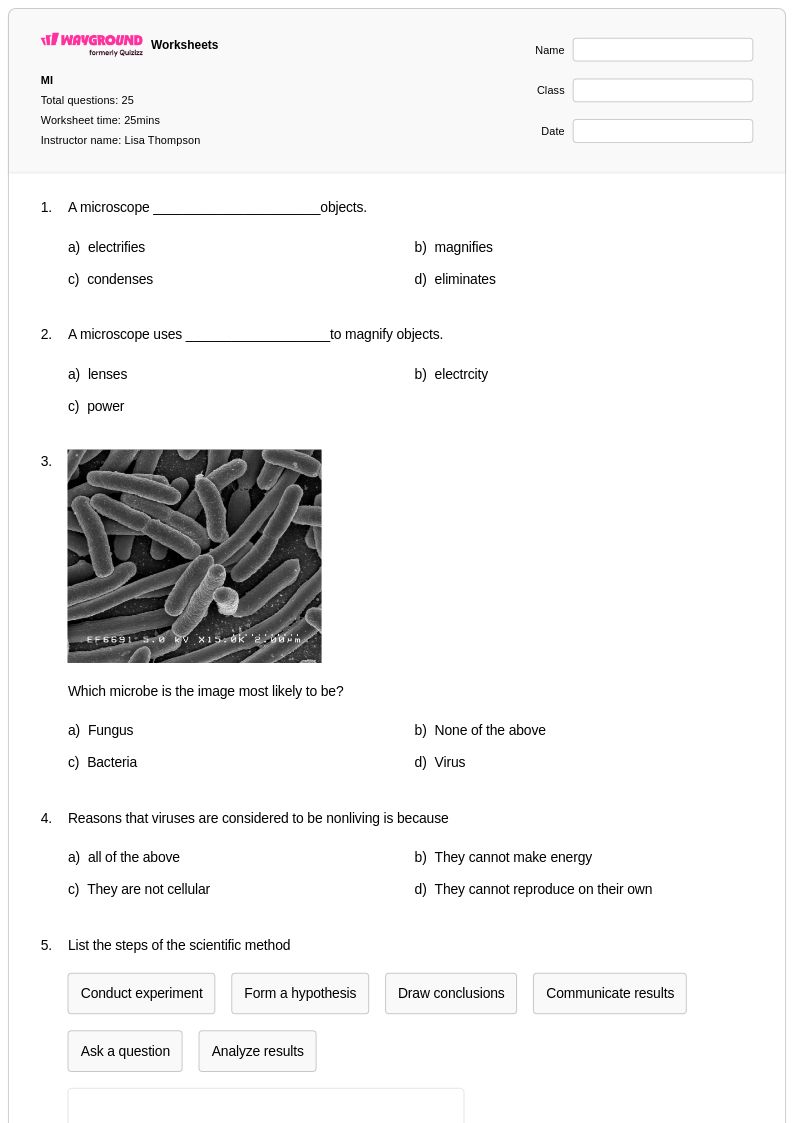
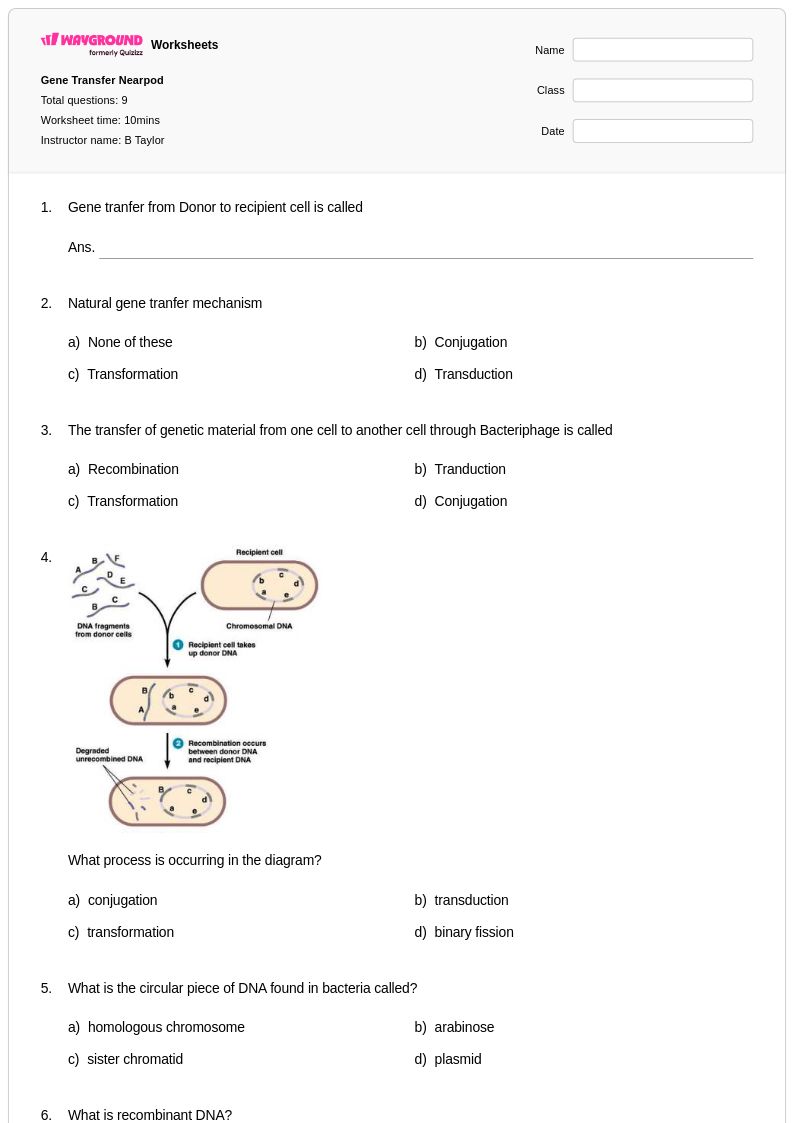
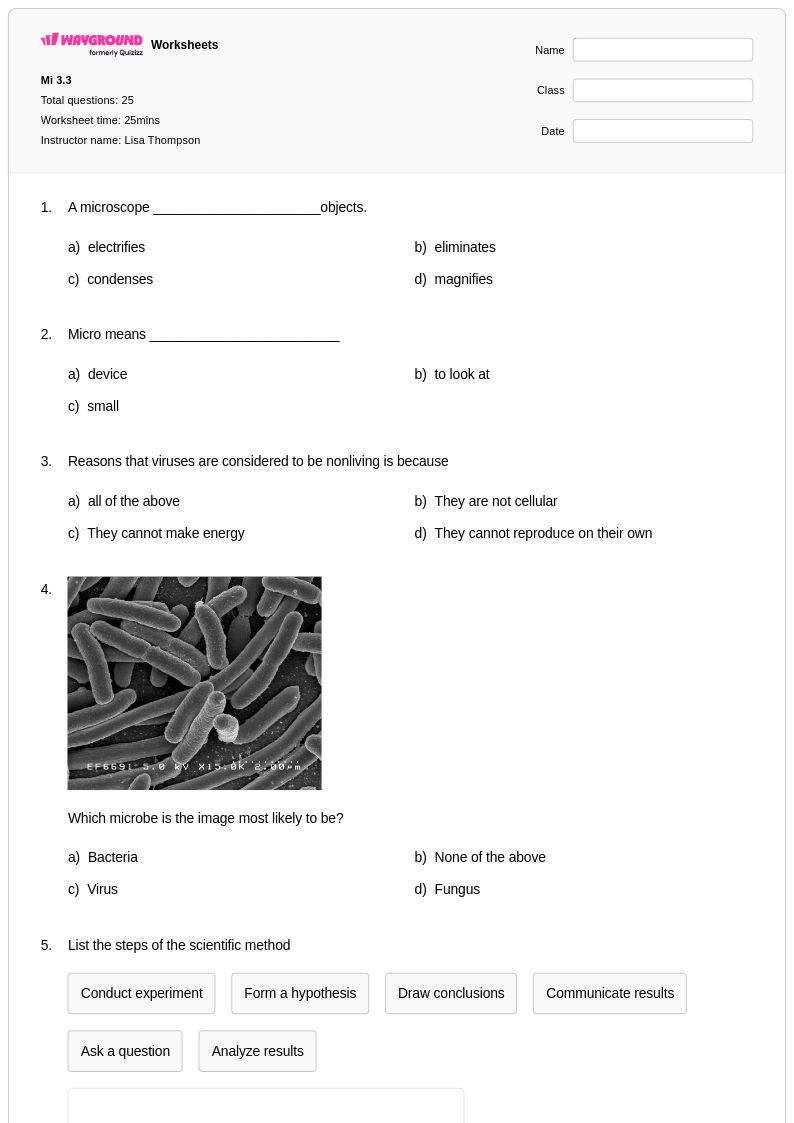
Bacterial identification worksheets for Year 9 students available through Wayground (formerly Quizizz) provide comprehensive practice in recognizing and classifying various bacterial species using morphological, biochemical, and molecular characteristics. These educational resources strengthen essential microbiology skills including microscopic observation techniques, interpretation of gram staining results, analysis of metabolic test outcomes, and application of dichotomous keys for systematic bacterial classification. Students develop critical thinking abilities as they work through practice problems that mirror real laboratory scenarios, from identifying cocci and bacilli formations to interpreting catalase and oxidase test results. Each worksheet comes with a detailed answer key to facilitate self-assessment and includes free printable pdf versions that accommodate both individual study sessions and collaborative classroom activities.
Wayground (formerly Quizizz) supports biology educators with an extensive collection of teacher-created bacterial identification resources, drawing from millions of professionally developed materials that undergo rigorous quality standards alignment. The platform's advanced search and filtering capabilities enable instructors to locate worksheets that match specific curriculum requirements, whether focusing on pathogenic bacteria, environmental microorganisms, or industrial applications of bacterial processes. Teachers benefit from built-in differentiation tools that allow customization of difficulty levels and content focus, making these resources suitable for remediation support, standard grade-level instruction, and enrichment activities for advanced learners. The flexible format options, including both printable pdf downloads and interactive digital versions, streamline lesson planning while providing versatile tools for skill practice, formative assessment, and comprehensive review of bacterial identification methodologies.
FAQs
How do I teach bacterial identification to my students?
Effective bacterial identification instruction begins with morphological observation, teaching students to describe colony shape, color, size, and texture before moving into staining techniques like Gram staining. From there, introduce biochemical testing procedures such as catalase and oxidase tests, guiding students to interpret results systematically. Using identification keys and flowcharts helps students build the logical, step-by-step reasoning that real microbiologists use in diagnostic workflows.
What exercises help students practice bacterial identification skills?
Practice problems that simulate real laboratory scenarios are the most effective, requiring students to interpret Gram staining results, analyze biochemical test outcomes, and navigate dichotomous identification keys. Worksheets that ask students to classify unknown bacterial samples using a combination of morphological and biochemical data reinforce the integrative thinking the skill demands. Repeated exposure to varied specimen types builds the pattern recognition students need for accurate classification.
What mistakes do students commonly make when identifying bacteria?
A frequent error is over-relying on a single characteristic, such as Gram stain result alone, rather than combining multiple lines of evidence. Students also commonly misread biochemical test results by not accounting for reaction timing or color interpretation guidelines. Another common misconception is treating identification keys as foolproof rather than probabilistic tools, which leads to errors when atypical strains produce unexpected results.
How can I differentiate bacterial identification worksheets for students at different skill levels?
For struggling students, start with simplified identification flowcharts that limit the number of variables and provide guided prompts at each decision point. Advanced learners can work through multi-step unknown identification problems that require integrating morphological, staining, and biochemical data without scaffolding. On Wayground, teachers can apply accommodations such as read aloud support, reduced answer choices, and extended time to individual students, ensuring every learner engages with the material at an appropriate challenge level.
How do I use Wayground's bacterial identification worksheets in my classroom?
Wayground's bacterial identification worksheets are available as printable PDFs for traditional lab or classroom use and in digital formats for technology-integrated environments, making them adaptable to both in-person and remote instruction. Teachers can also host the worksheets as a quiz directly on Wayground, enabling real-time student responses and instant data on class performance. Each worksheet includes a complete answer key that explains the reasoning behind identification decisions, supporting both independent student review and whole-class debriefs.
How does Gram staining fit into bacterial identification, and how should I teach it?
Gram staining is typically the first major classification step in bacterial identification, dividing bacteria into Gram-positive and Gram-negative categories based on cell wall composition. Teach students to interpret purple versus pink staining results in the context of the full identification workflow rather than as an isolated technique, since Gram reaction narrows but does not complete identification. Pairing staining practice problems with corresponding biochemical testing scenarios gives students the integrated perspective that accurate identification requires.