Free Printable Balanced and Unbalanced Forces worksheets
Free printable worksheets and practice problems help students master balanced and unbalanced forces through engaging activities, complete with answer keys and PDF downloads from Wayground's comprehensive science collection.
Explore printable Balanced and Unbalanced Forces worksheets
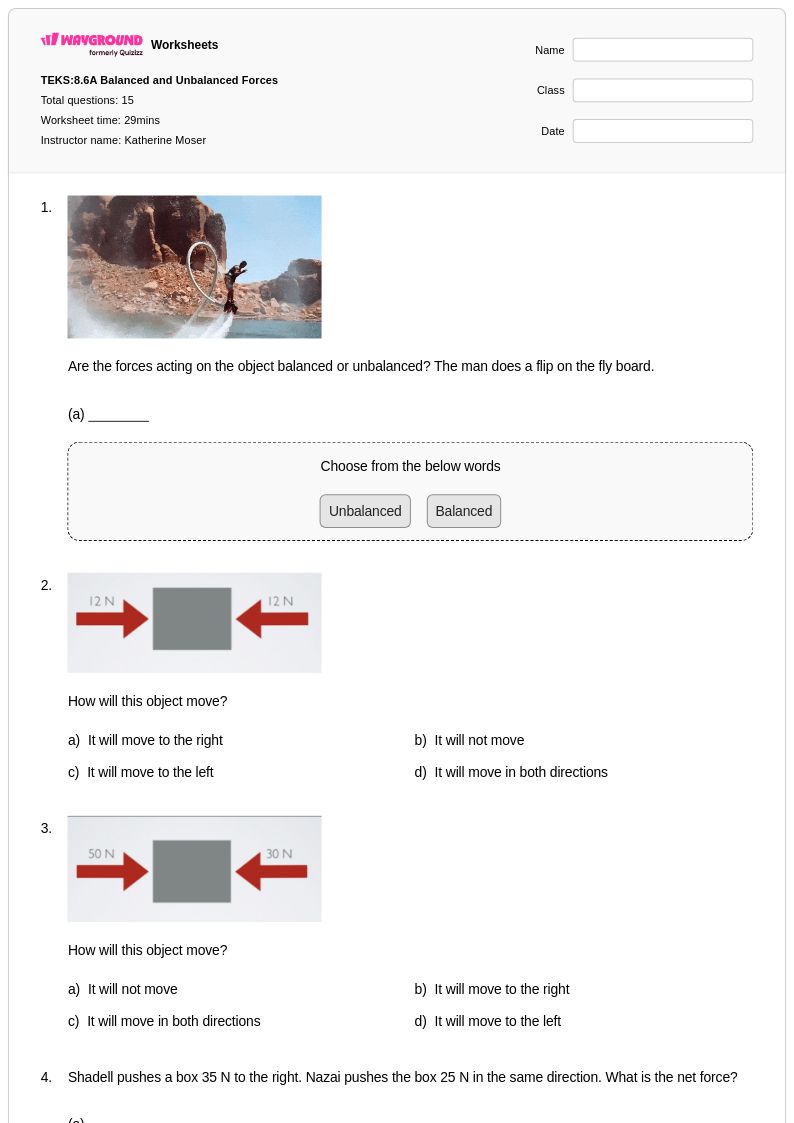
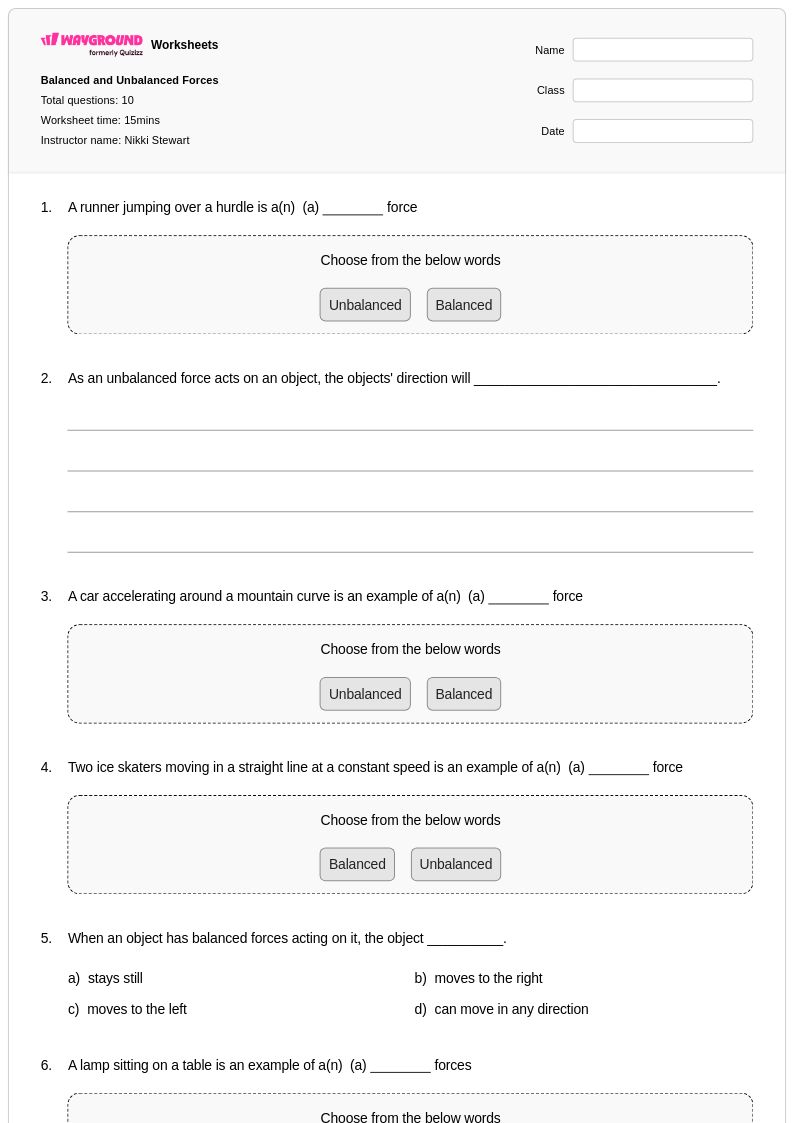
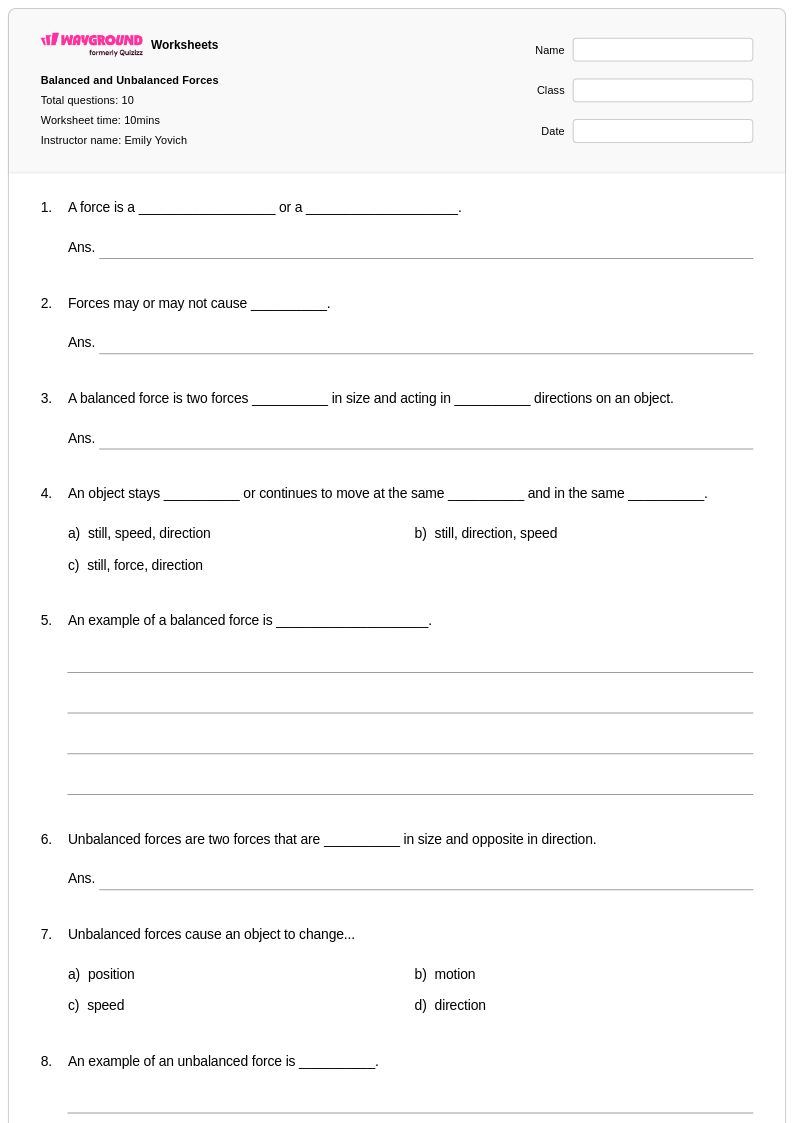
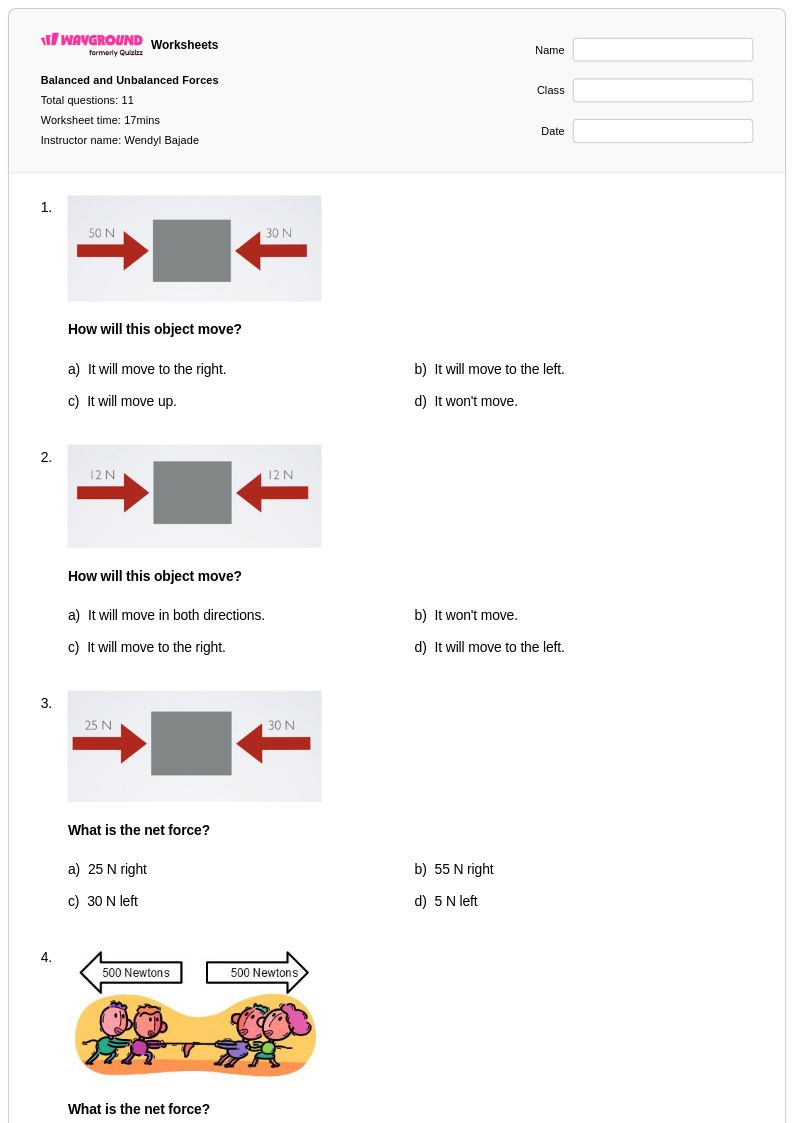
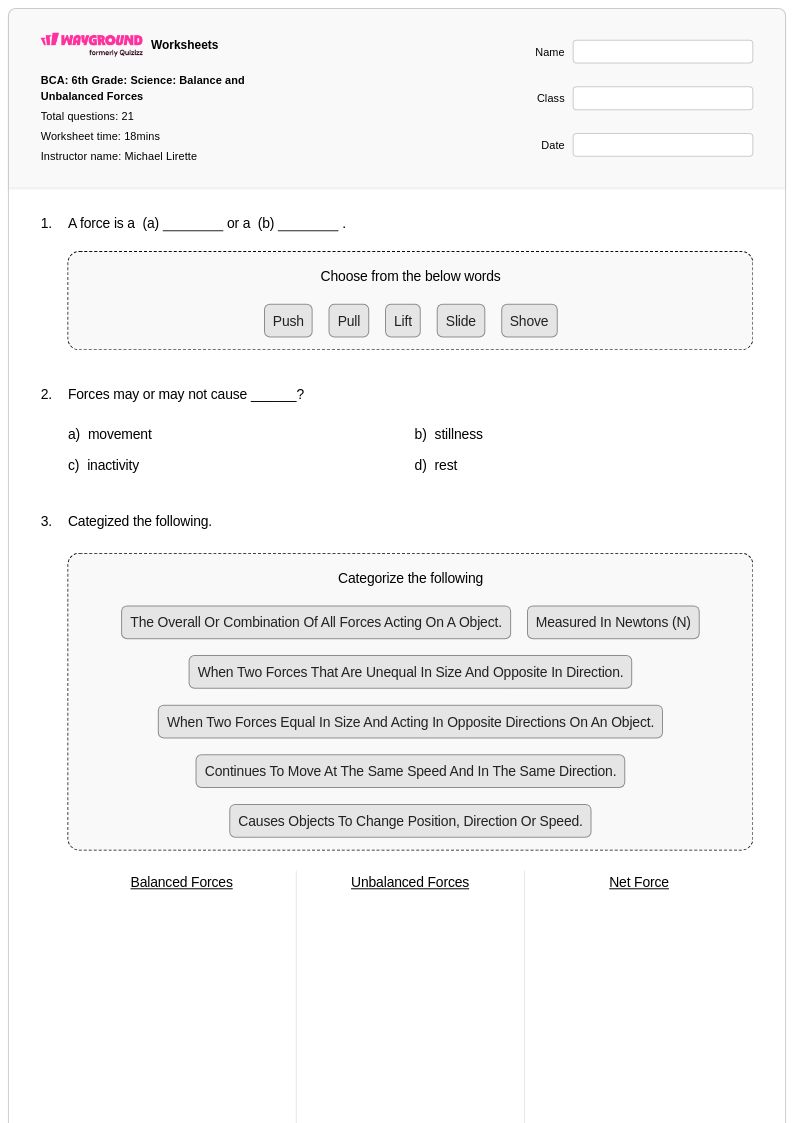
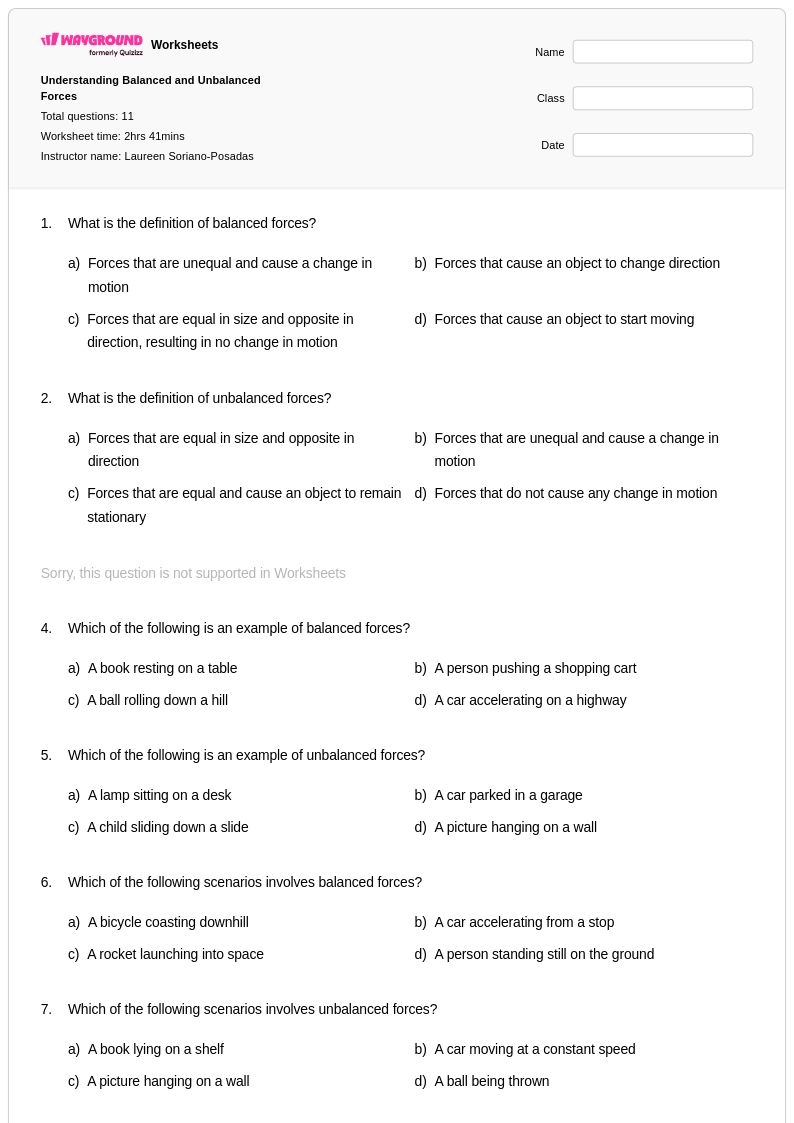
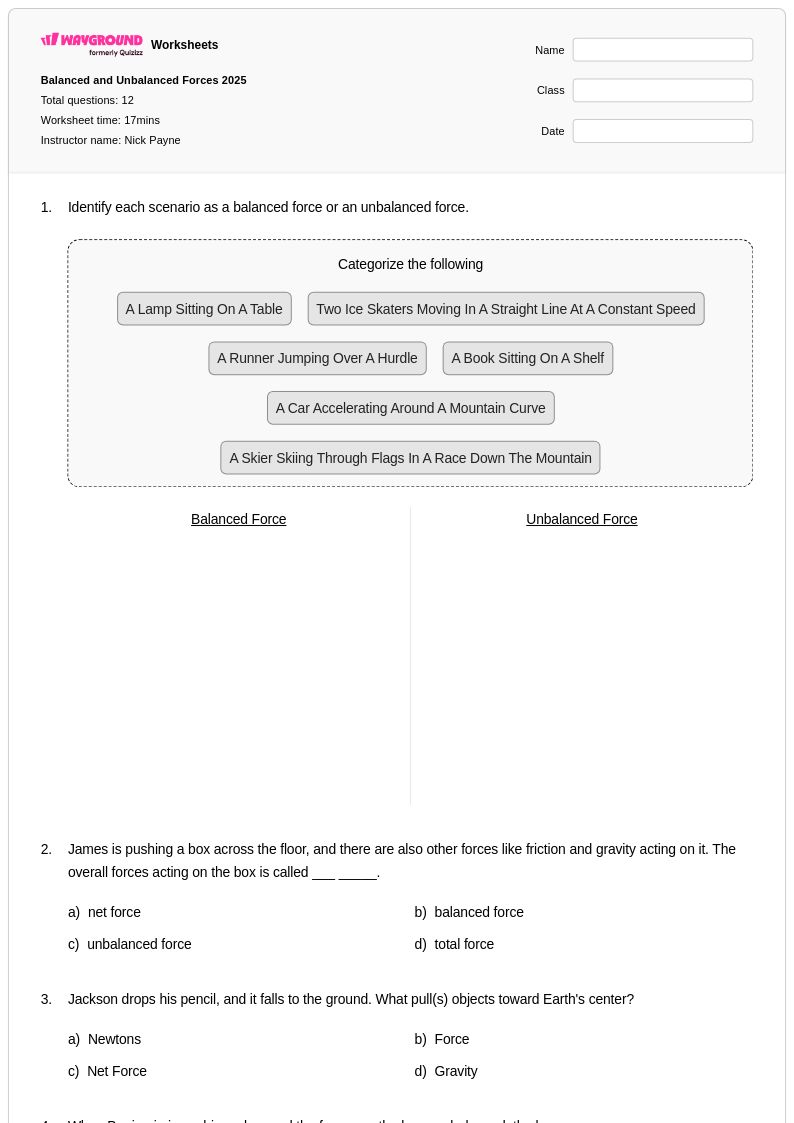
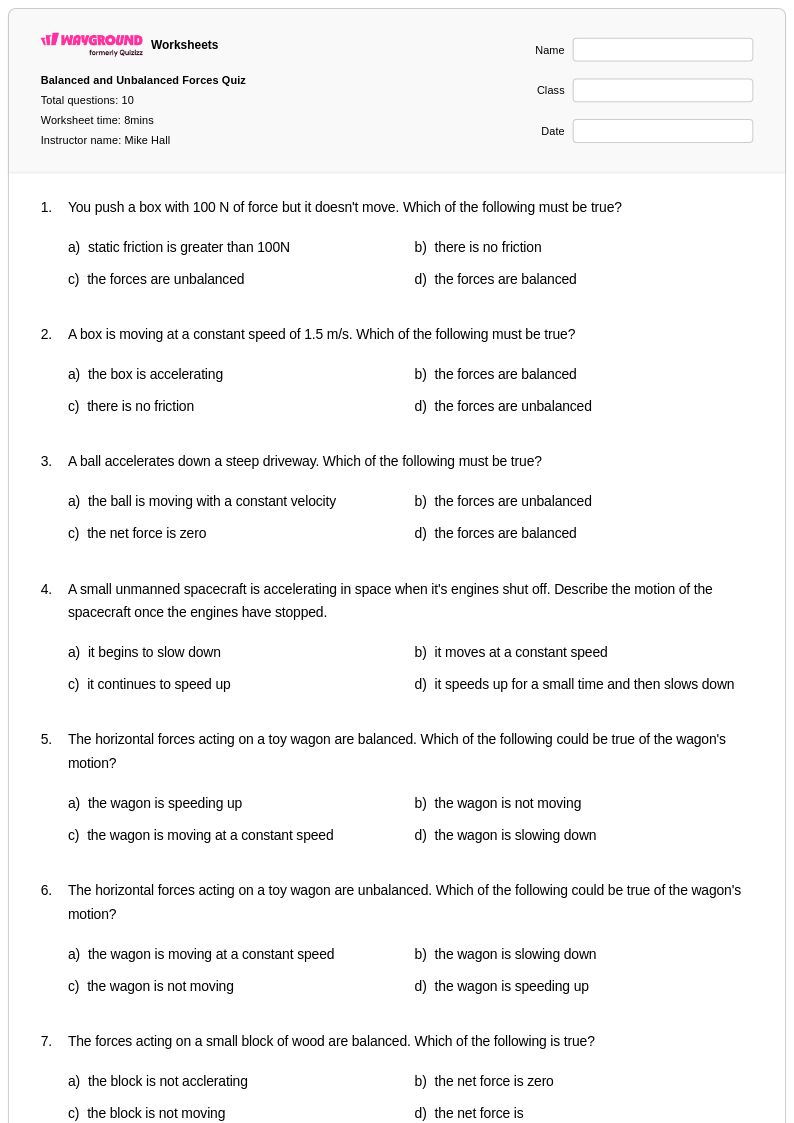
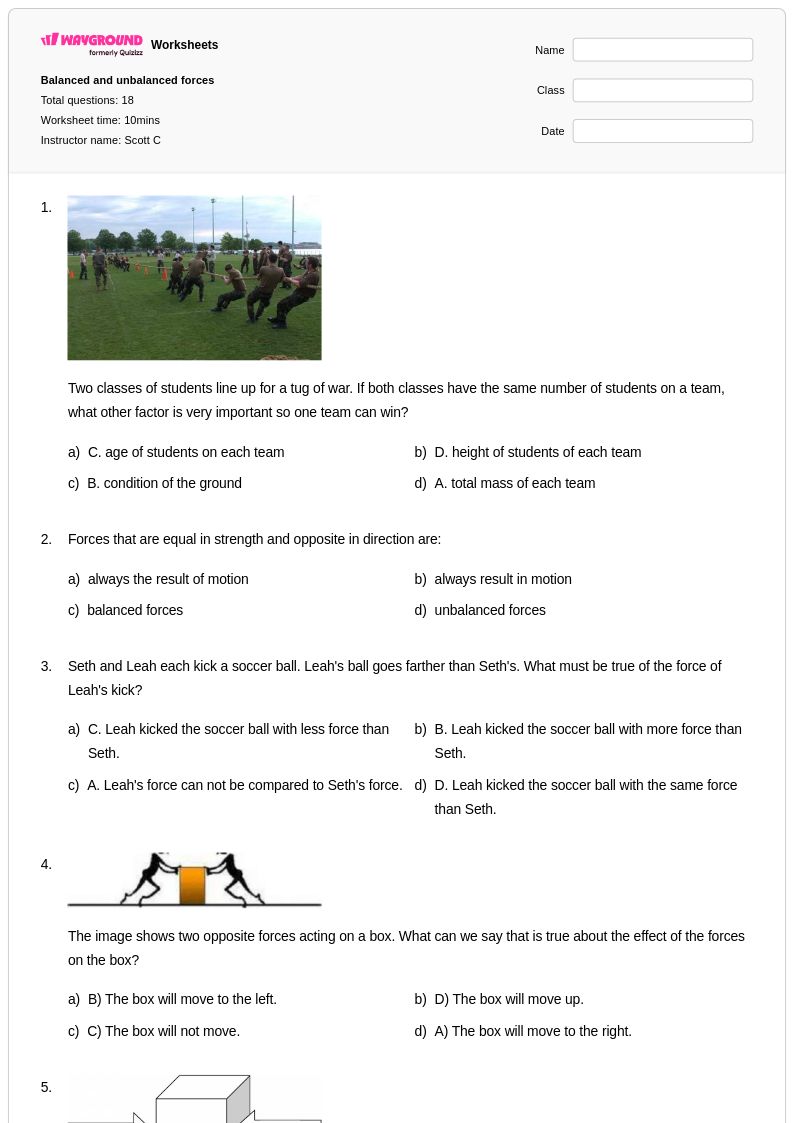
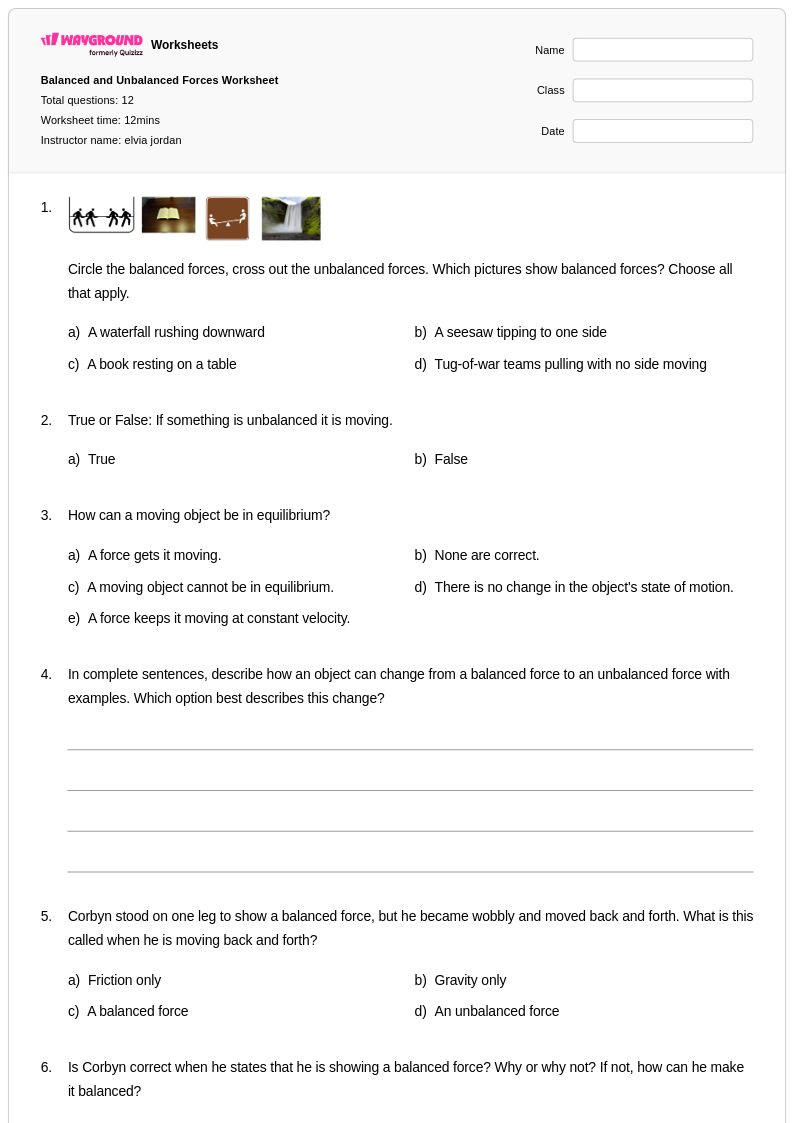
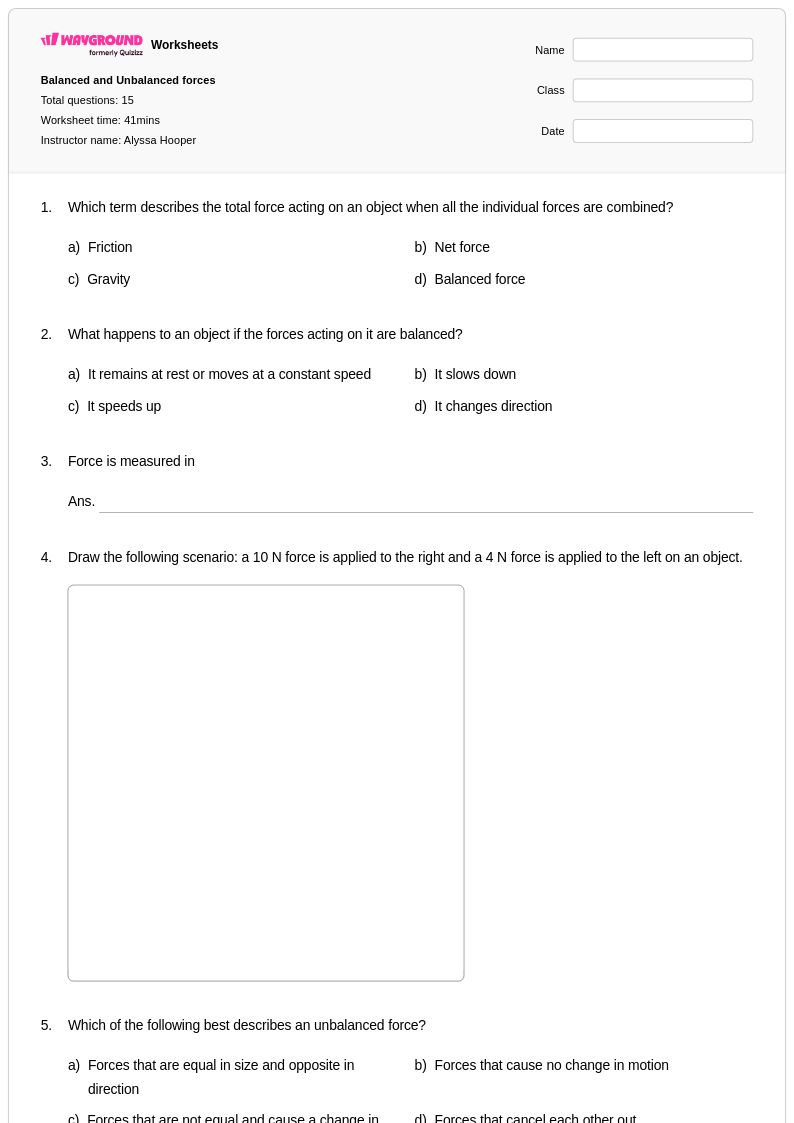
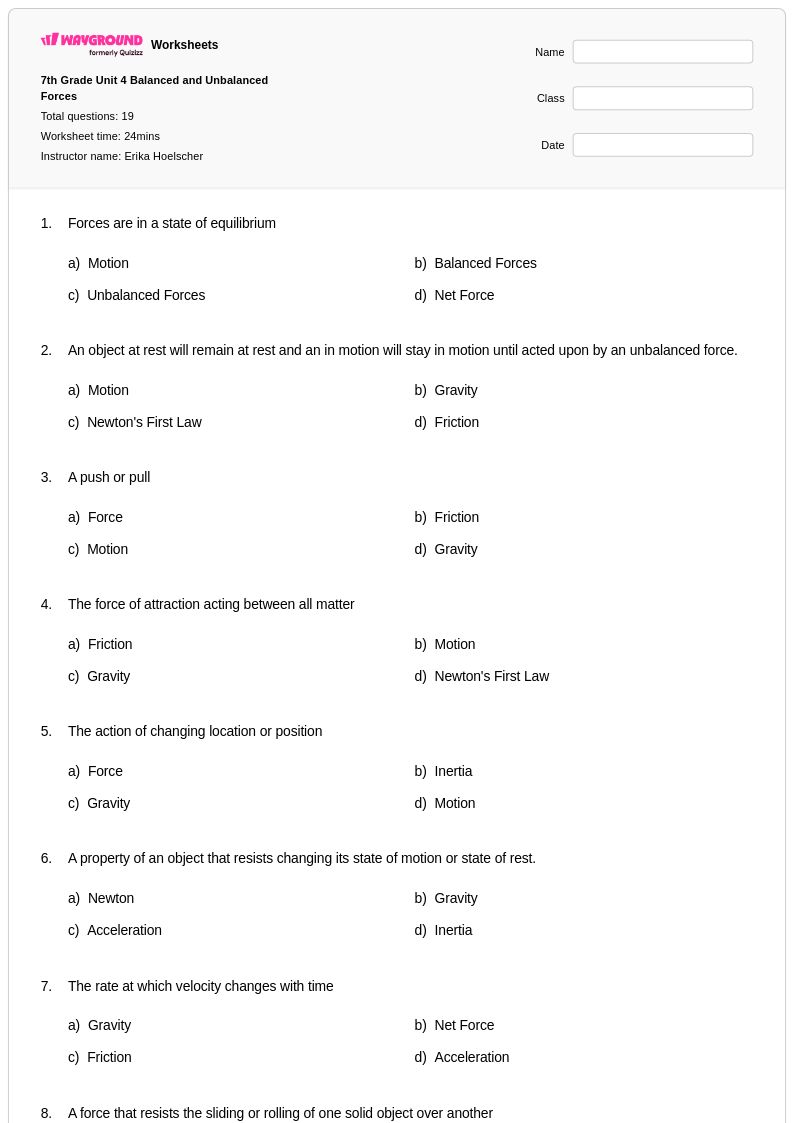
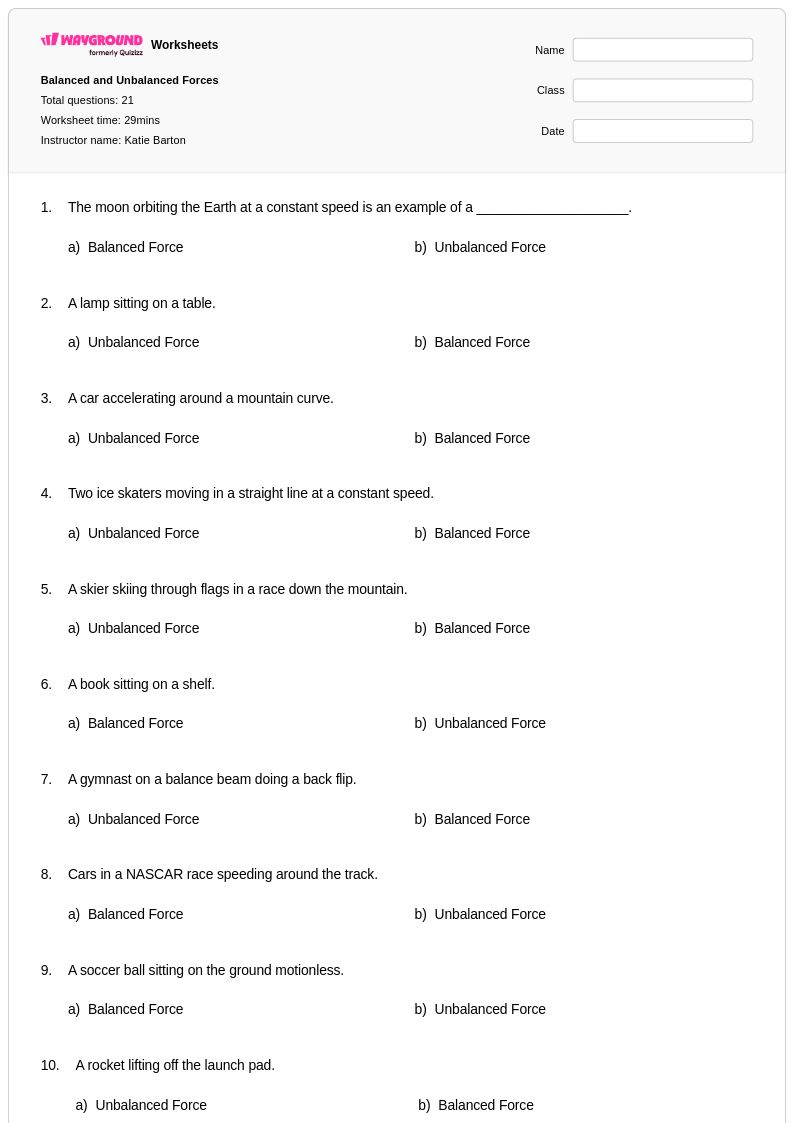
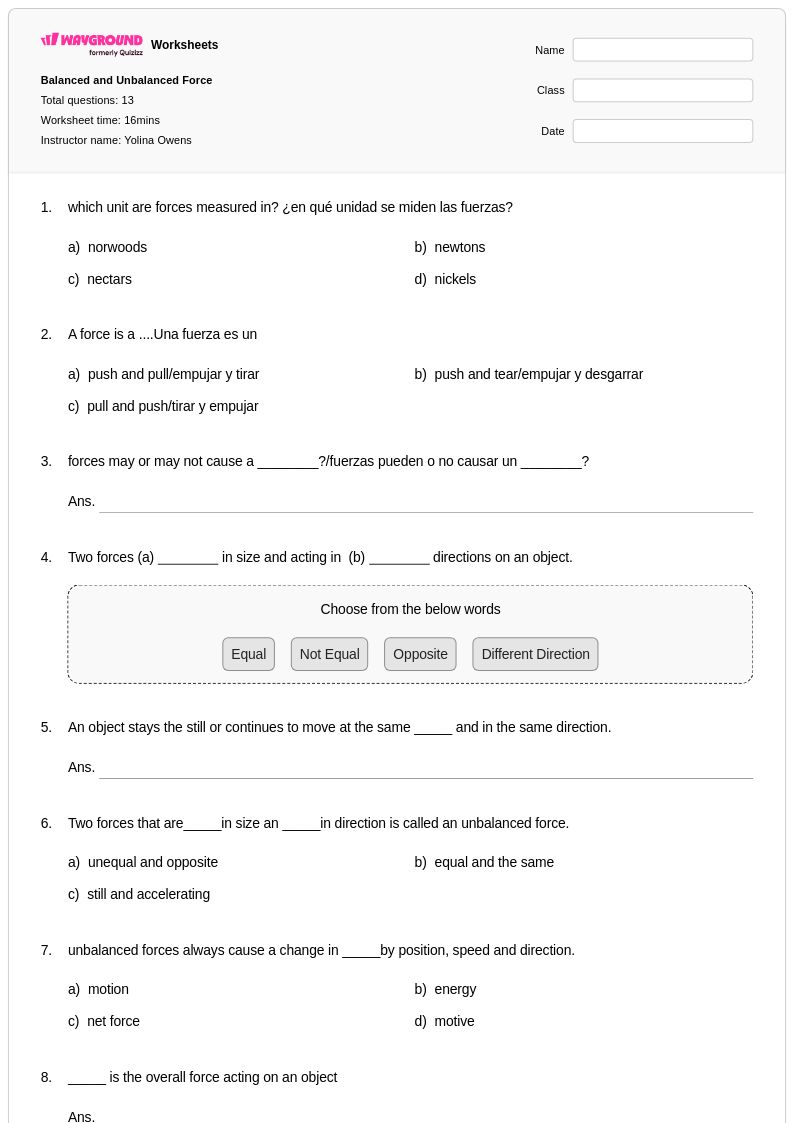
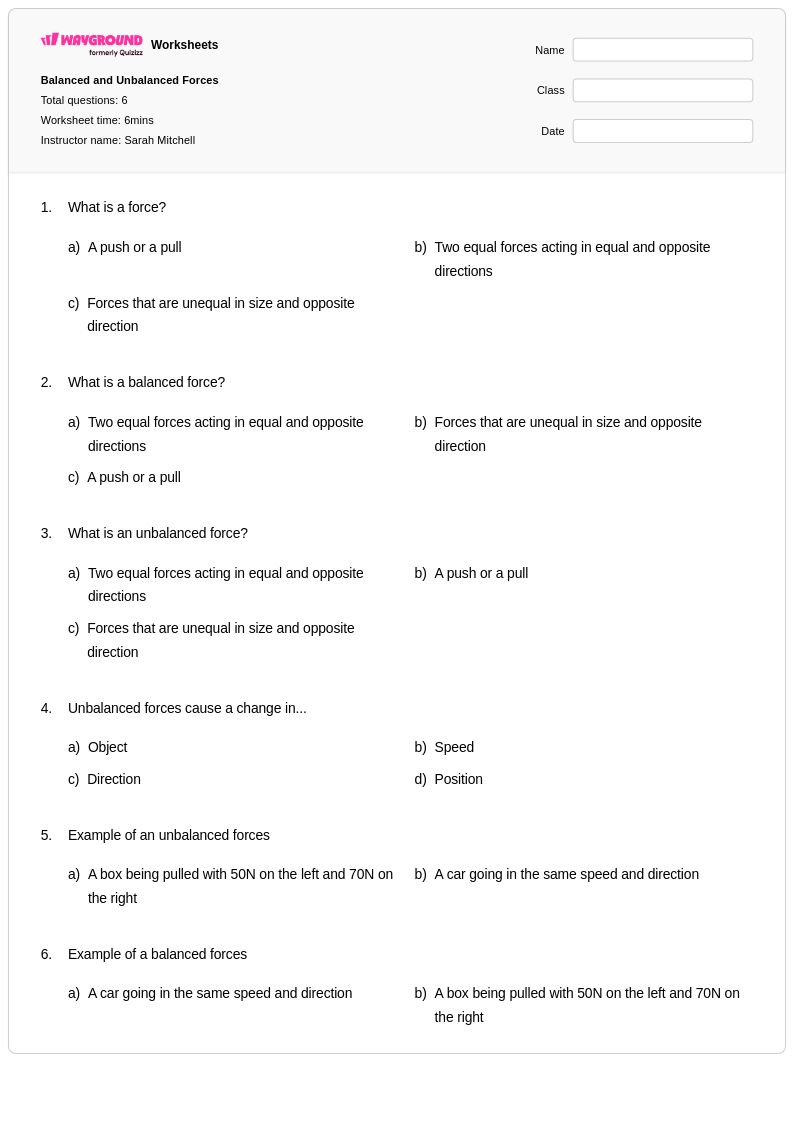
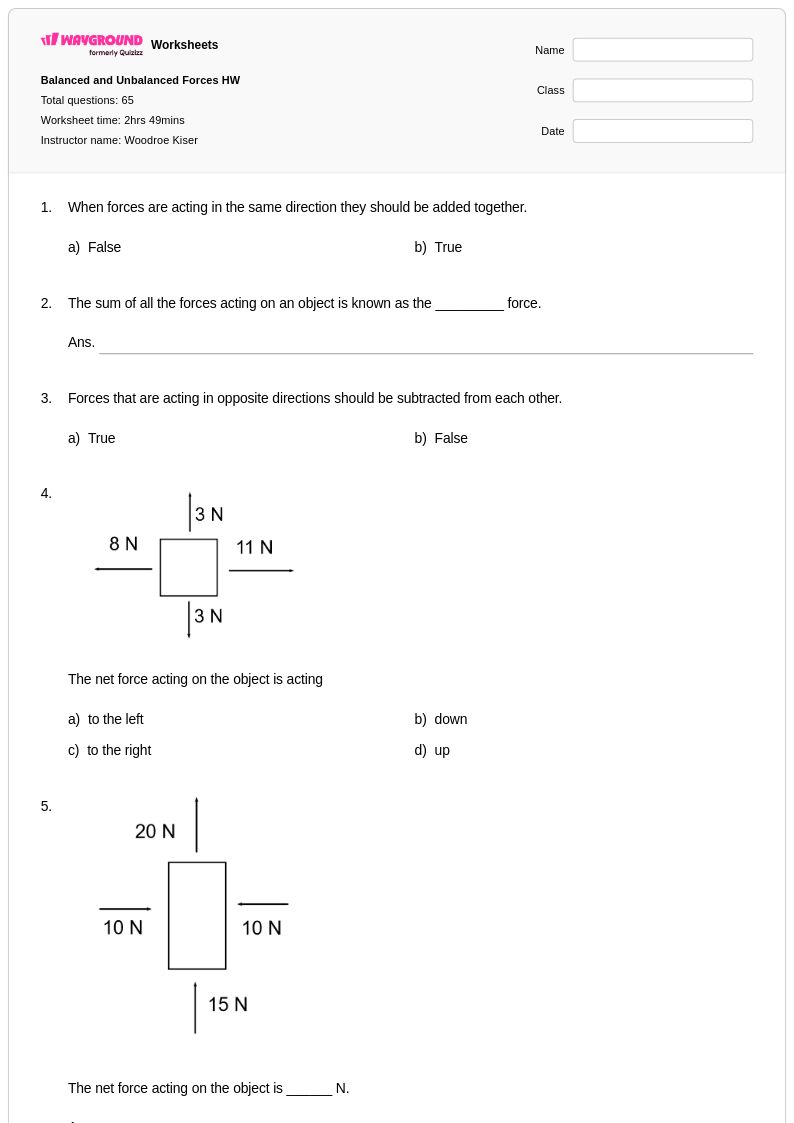
Balanced and unbalanced forces worksheets available through Wayground (formerly Quizizz) provide comprehensive practice for students exploring fundamental physics concepts that govern motion and equilibrium. These educational resources strengthen critical thinking skills by challenging students to identify force pairs, analyze net force calculations, and predict object motion based on force interactions. The worksheets feature diverse problem types including force diagrams, real-world scenarios, and mathematical applications that help students distinguish between situations where forces cancel each other out versus when they produce acceleration. Each worksheet collection includes detailed answer keys and step-by-step solutions, with many resources available as free printables in convenient PDF format for immediate classroom use or homework assignments.
Wayground (formerly Quizizz) empowers educators with an extensive library of millions of teacher-created resources specifically designed for balanced and unbalanced forces instruction, featuring robust search and filtering capabilities that allow quick identification of grade-appropriate materials aligned with state and national science standards. The platform's differentiation tools enable teachers to customize worksheets for varying ability levels, while flexible formatting options provide both printable PDF versions for traditional paper-based learning and interactive digital formats for technology-enhanced instruction. These comprehensive features streamline lesson planning by offering ready-to-use materials for initial concept introduction, targeted skill practice, remediation support for struggling learners, and enrichment activities for advanced students, ensuring that educators can effectively address diverse learning needs while reinforcing essential force and motion principles across multiple instructional contexts.
FAQs
How do I teach balanced and unbalanced forces to middle school students?
Start by grounding the concept in observable experiences — a book resting on a desk (balanced) versus a kicked soccer ball accelerating (unbalanced). Use free body diagrams to make the invisible visible: have students draw and label force arrows, then calculate net force to determine whether motion will change. Once students can reliably connect net force to Newton's First and Second Laws, introduce real-world scenarios like tug-of-war or a car braking, which require them to reason about multiple forces acting simultaneously.
What types of practice problems help students understand balanced vs. unbalanced forces?
The most effective practice combines force diagram construction, net force calculation, and motion prediction across varied contexts. Students should practice identifying when opposing forces are equal in magnitude and opposite in direction (balanced, no change in motion) versus when a net force exists (unbalanced, resulting in acceleration). Including real-world scenarios — such as a falling skydiver reaching terminal velocity or a shopping cart being pushed — helps students transfer abstract force concepts to concrete situations.
What mistakes do students commonly make when working with balanced and unbalanced forces?
The most persistent misconception is equating 'balanced forces' with 'no forces at all' rather than recognizing that balanced forces mean the net force is zero while individual forces are still present. Students also frequently confuse a stationary object with one experiencing no forces, when in fact gravity and a normal force may be perfectly canceling each other out. A related error is assuming that a moving object must have an unbalanced force acting on it — overlooking Newton's First Law, which states that an object in motion stays in motion unless acted upon by a net force.
How do I help struggling students differentiate between balanced and unbalanced forces?
For students who find the distinction difficult, anchor instruction in the question: 'Does the object's motion change?' If it does, forces are unbalanced; if it doesn't, forces are balanced — regardless of whether the object is moving or still. Concrete manipulatives like spring scales in a tug-of-war setup give tactile reinforcement of force equality. On Wayground, teachers can assign accommodations such as reduced answer choices to lower cognitive load for individual students, and enable Read Aloud so that question text is read to students who struggle with dense physics language.
How can I use Wayground's balanced and unbalanced forces worksheets in my classroom?
Wayground's balanced and unbalanced forces worksheets are available as printable PDFs for traditional paper-based instruction and in digital formats for technology-integrated classrooms, making them flexible for homework, in-class practice, or lab follow-up. Teachers can also host worksheets directly as a quiz on Wayground, enabling real-time student response tracking. The worksheets include complete answer keys, so they work equally well for independent student practice or teacher-led review sessions.
How do I assess whether students truly understand net force versus individual forces?
Effective assessment goes beyond asking students to label forces — it requires them to calculate net force and then predict or explain the resulting motion. Use problems where forces are present but balanced (net force = 0, no acceleration) alongside problems with a dominant force in one direction. Common diagnostic questions include: 'A 10 N force pushes left and a 10 N force pushes right — what is the net force, and will the object move?' Students who correctly identify net force as zero but still predict motion reveal the underlying misconception about force and movement that needs direct correction.