Free Printable Binary Ionic Compounds Worksheets for Year 10
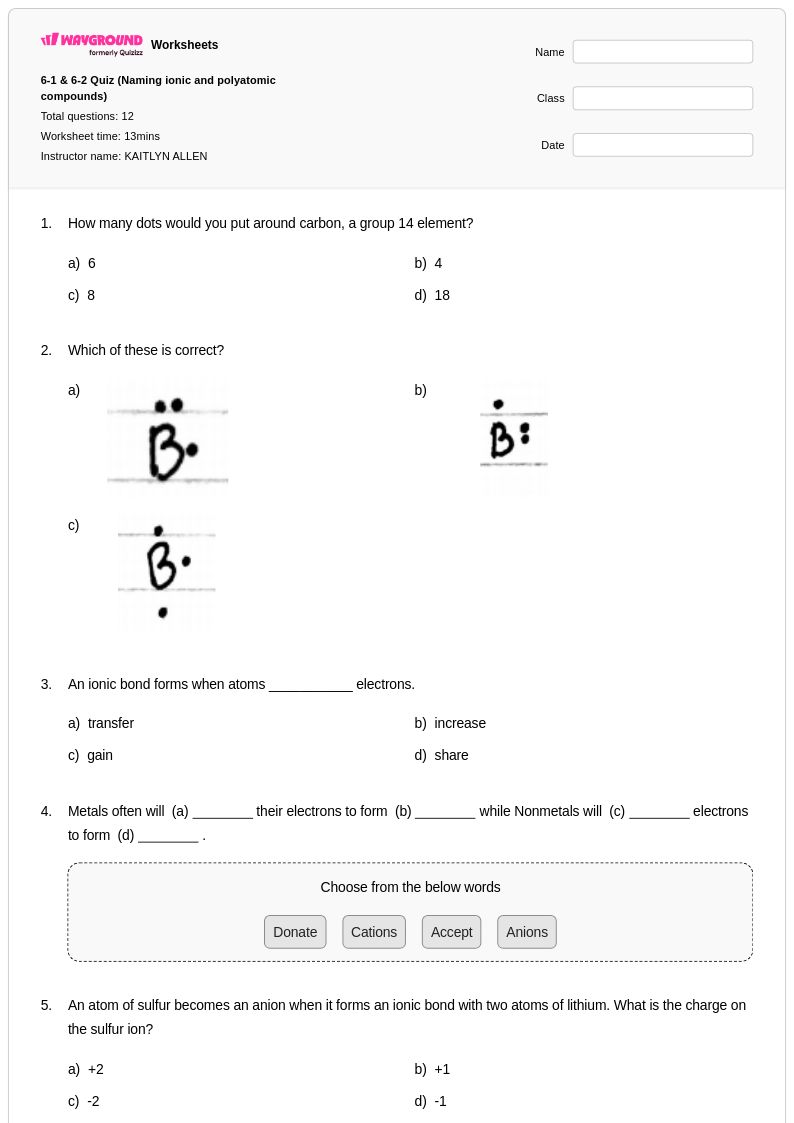
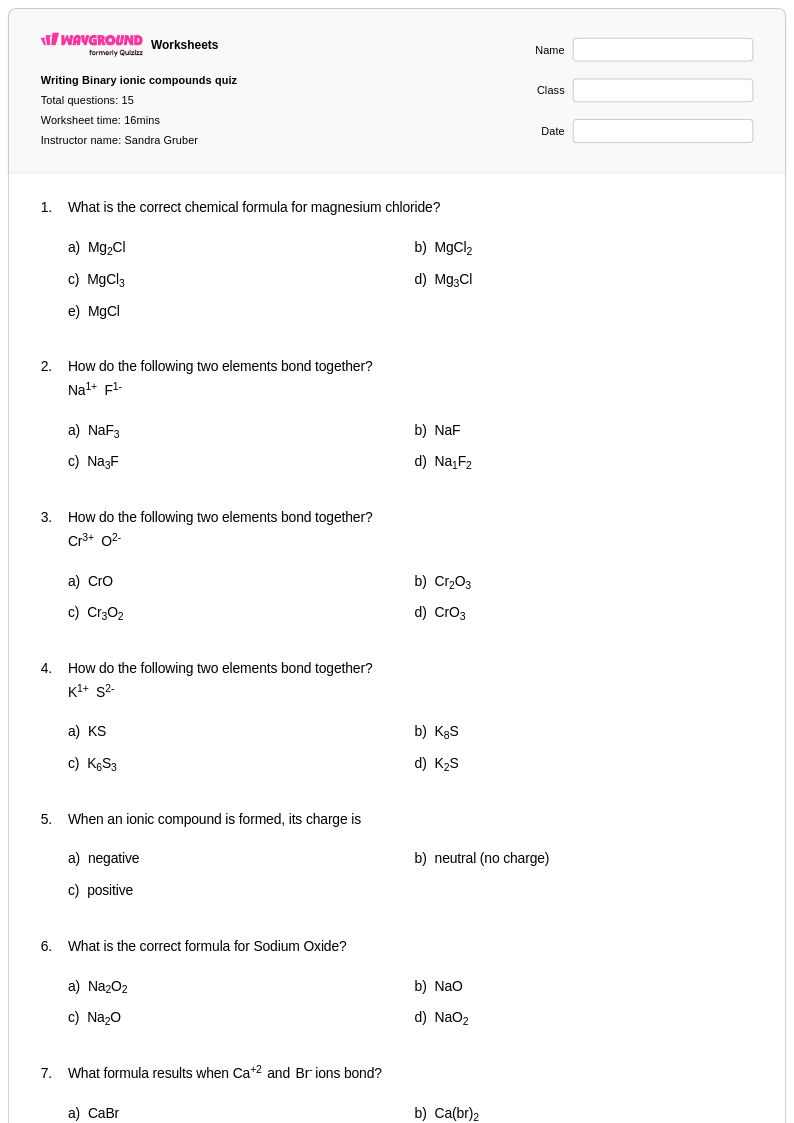
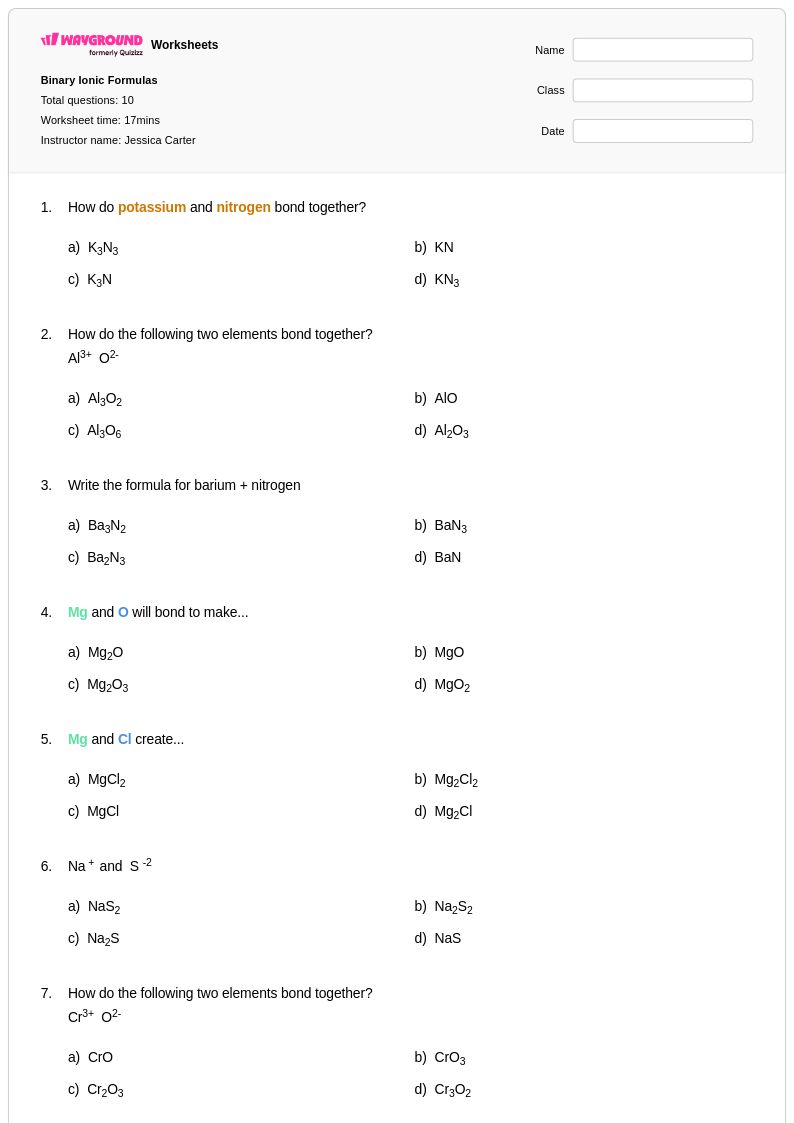
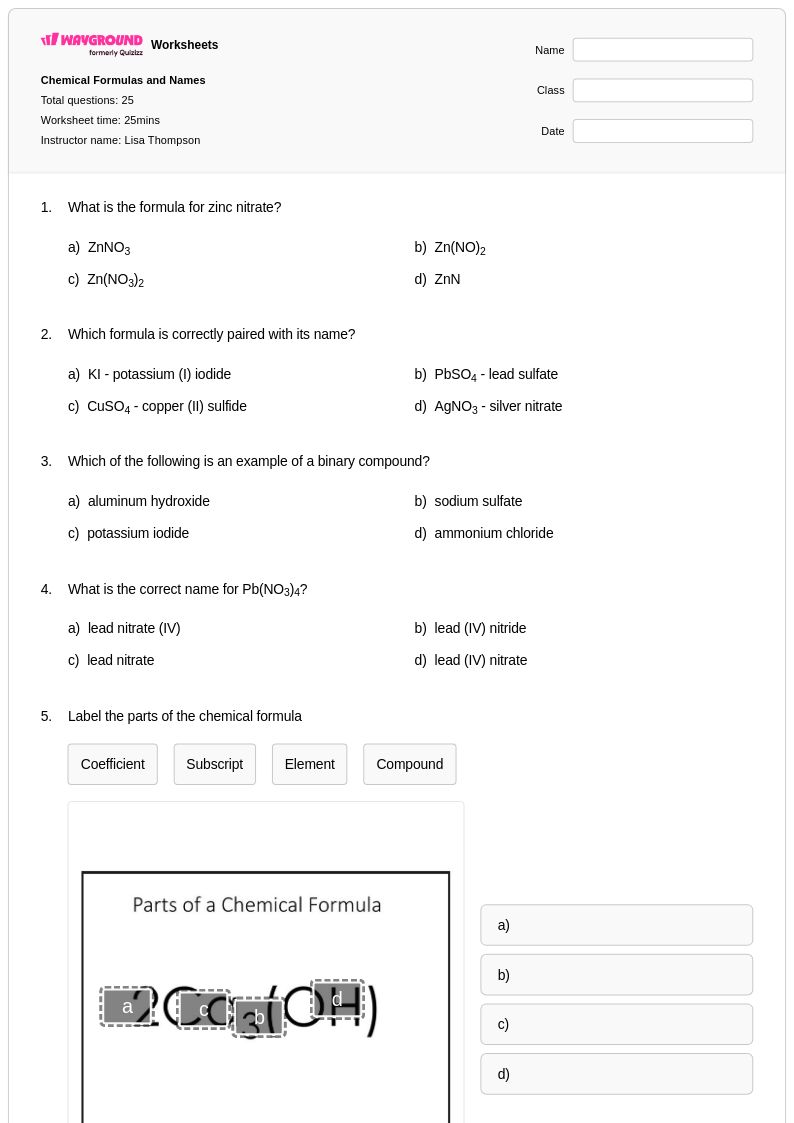
Year 10 binary ionic compounds worksheets from Wayground help students master chemical formula writing and compound naming through engaging printables, practice problems, and comprehensive answer keys available as free PDF downloads.
Explore printable Binary Ionic Compounds worksheets for Year 10
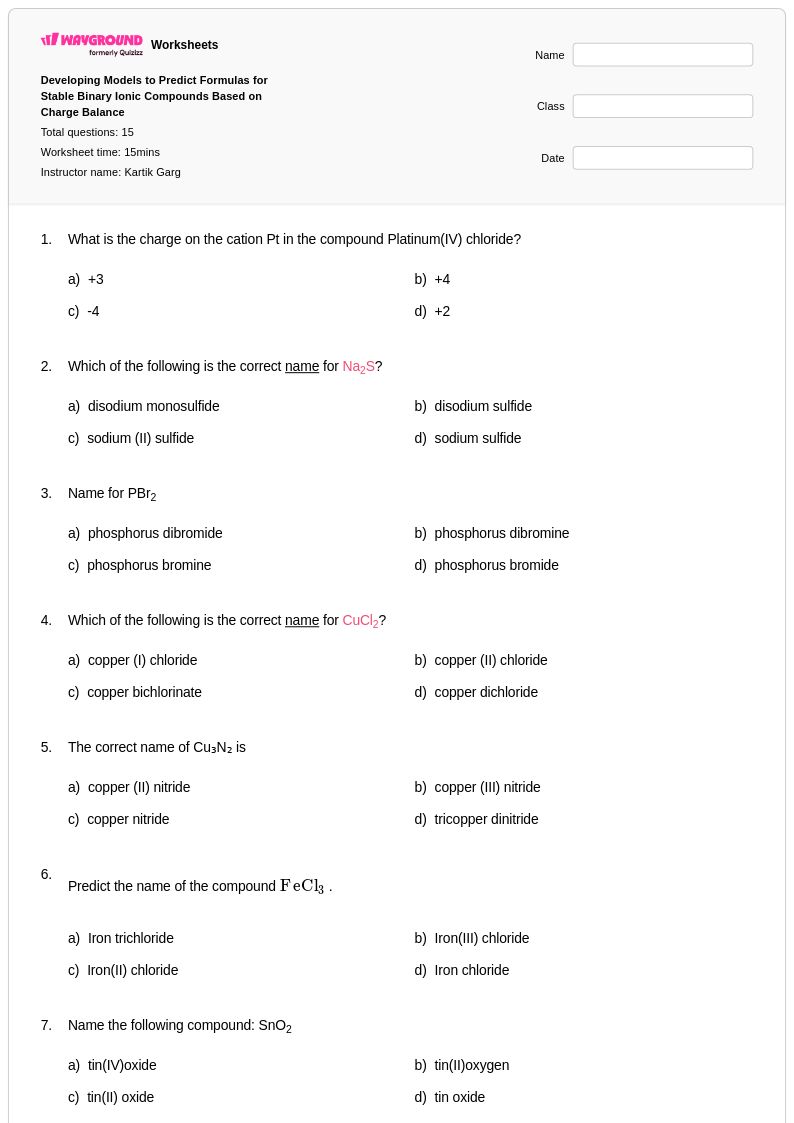
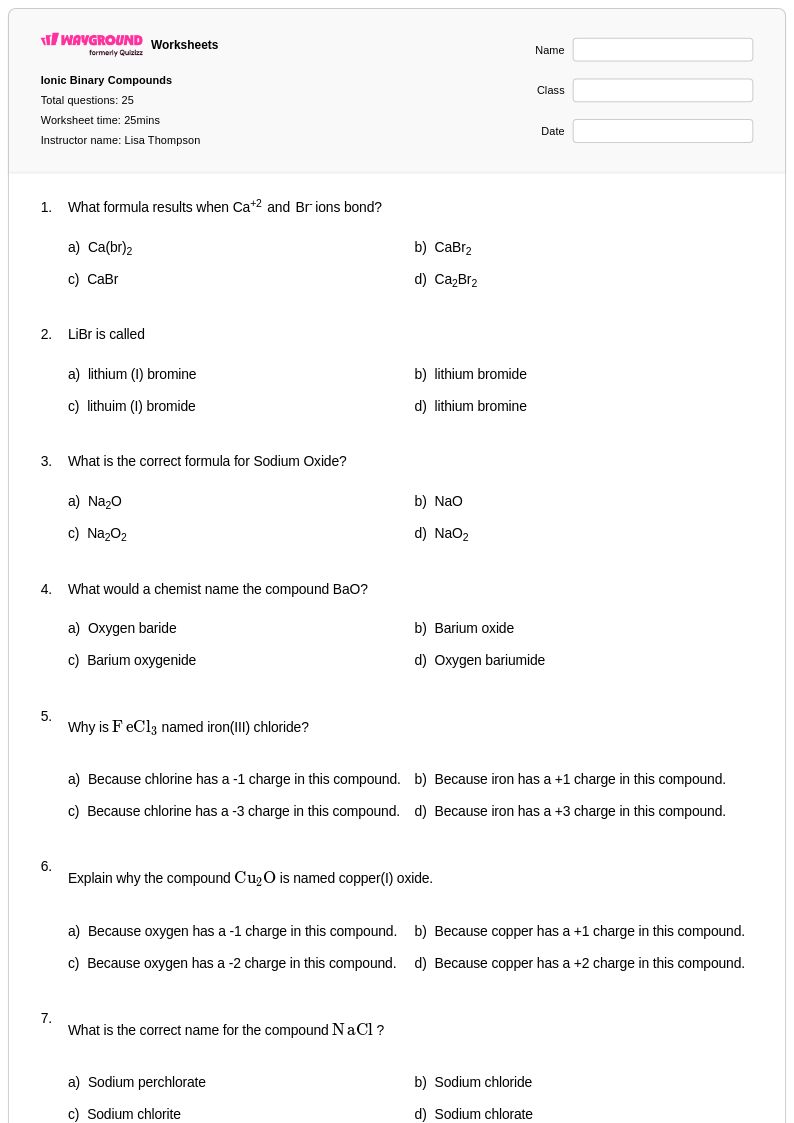
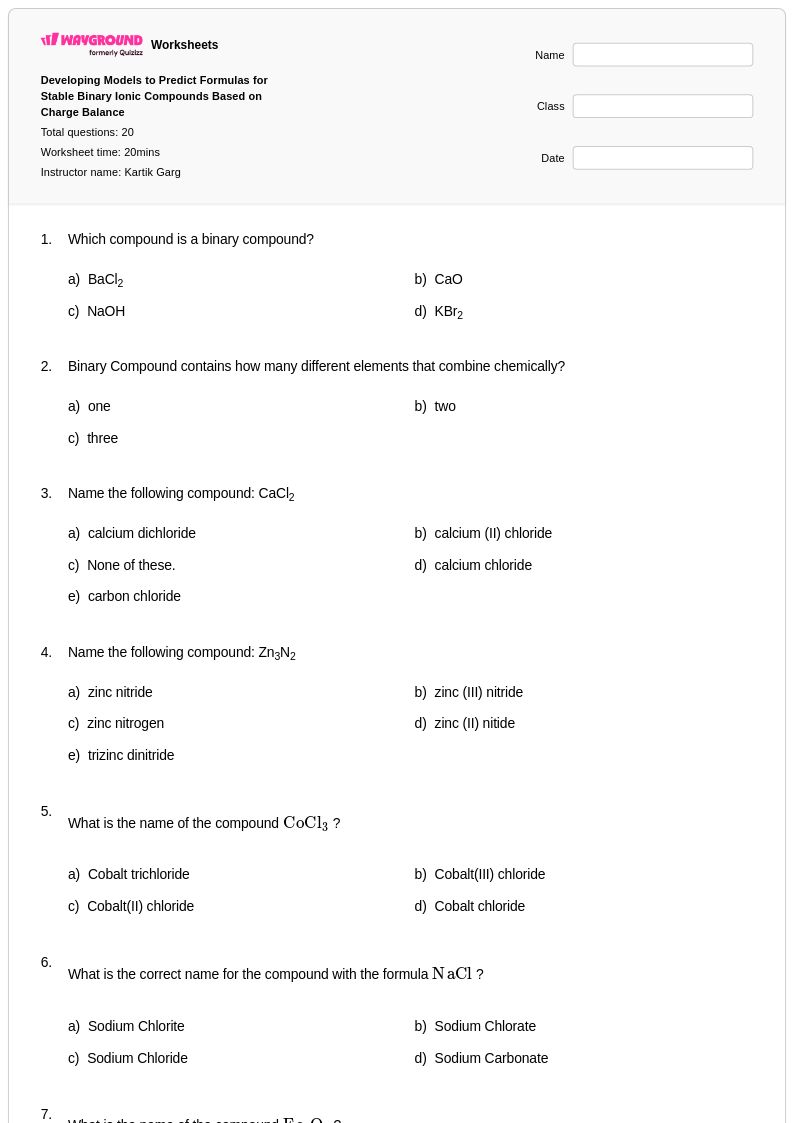
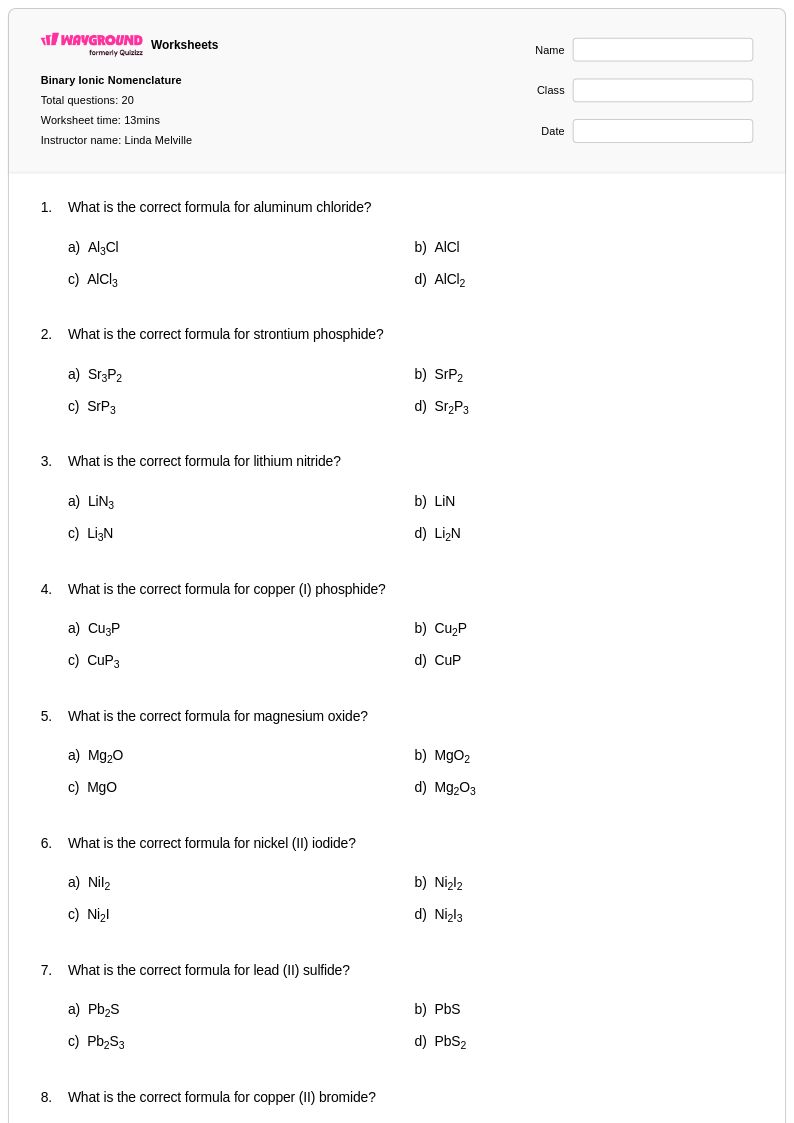
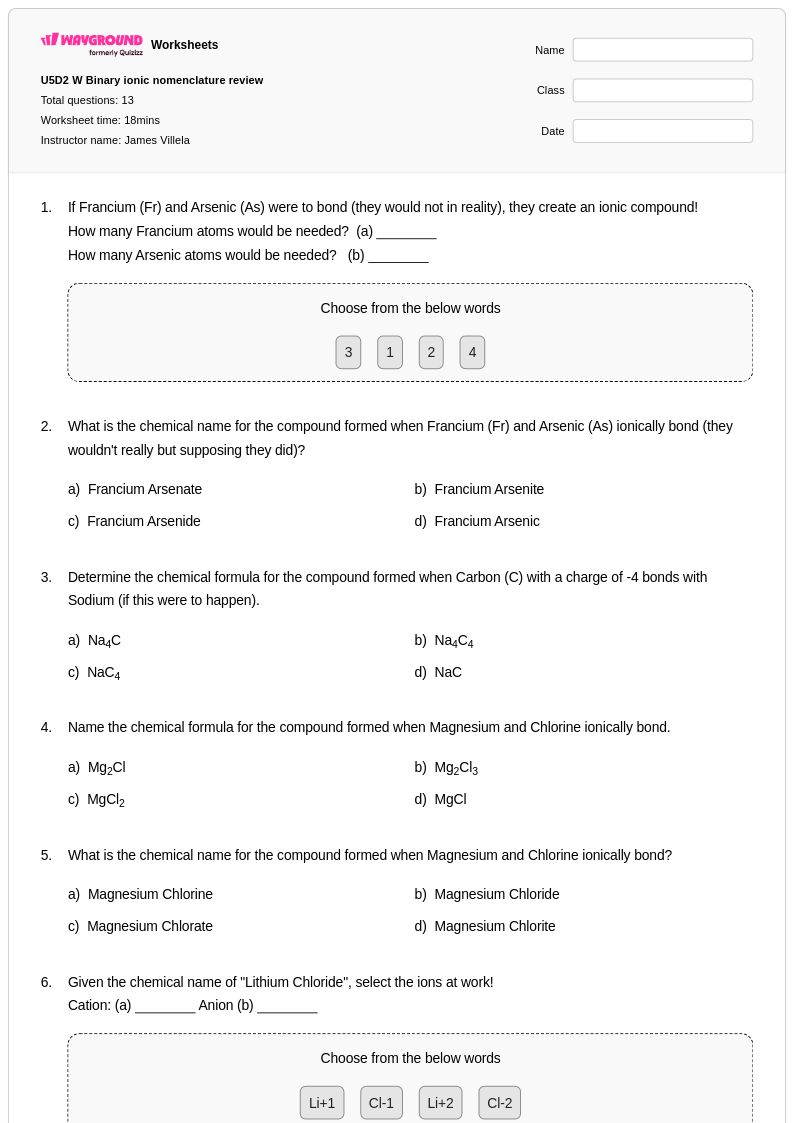
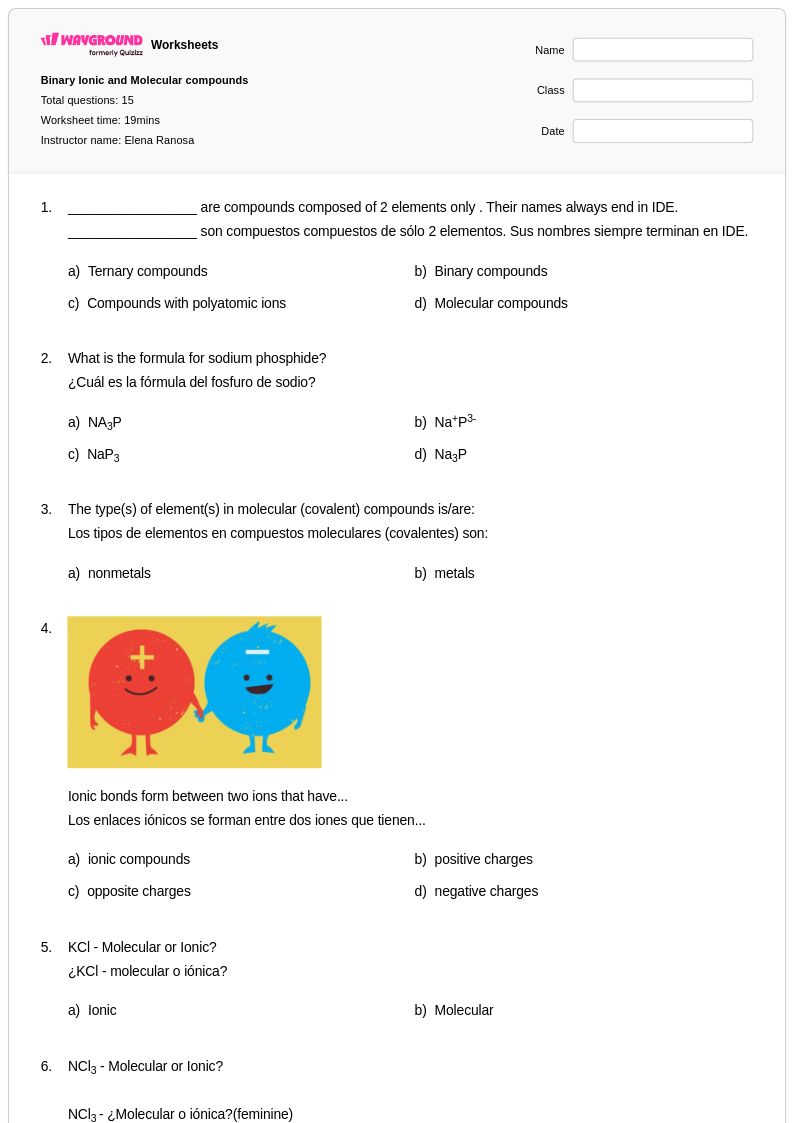
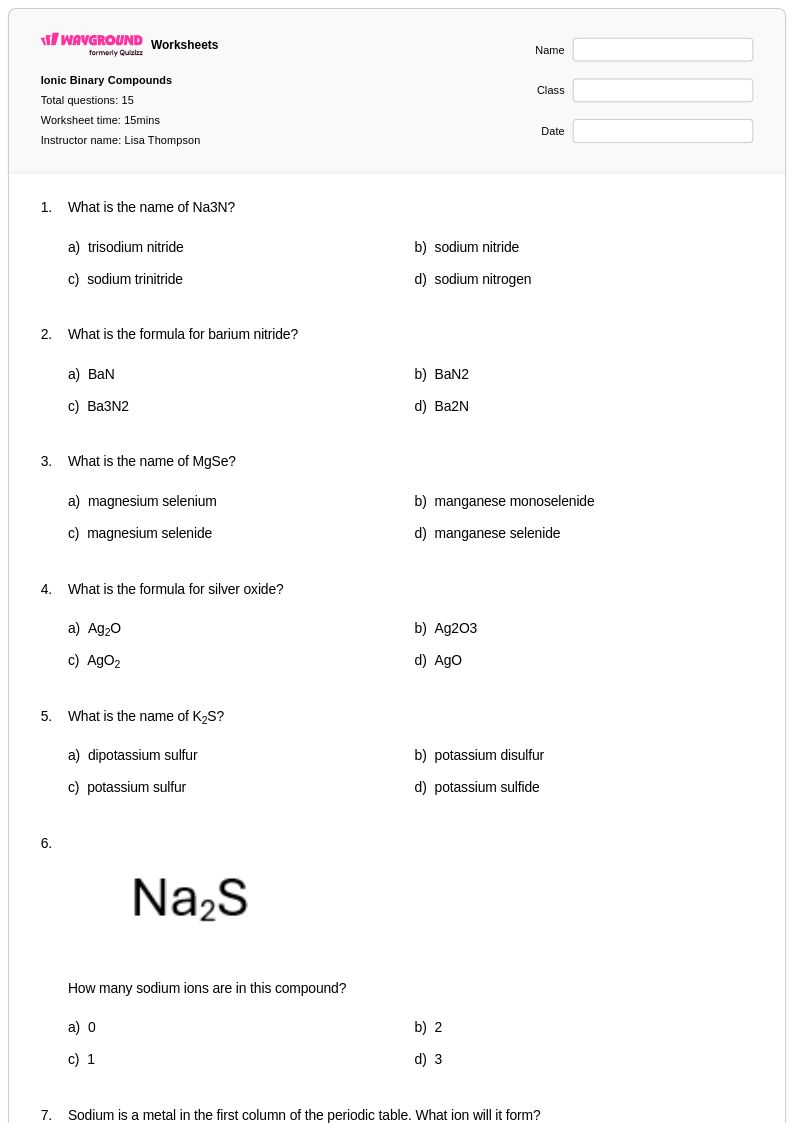
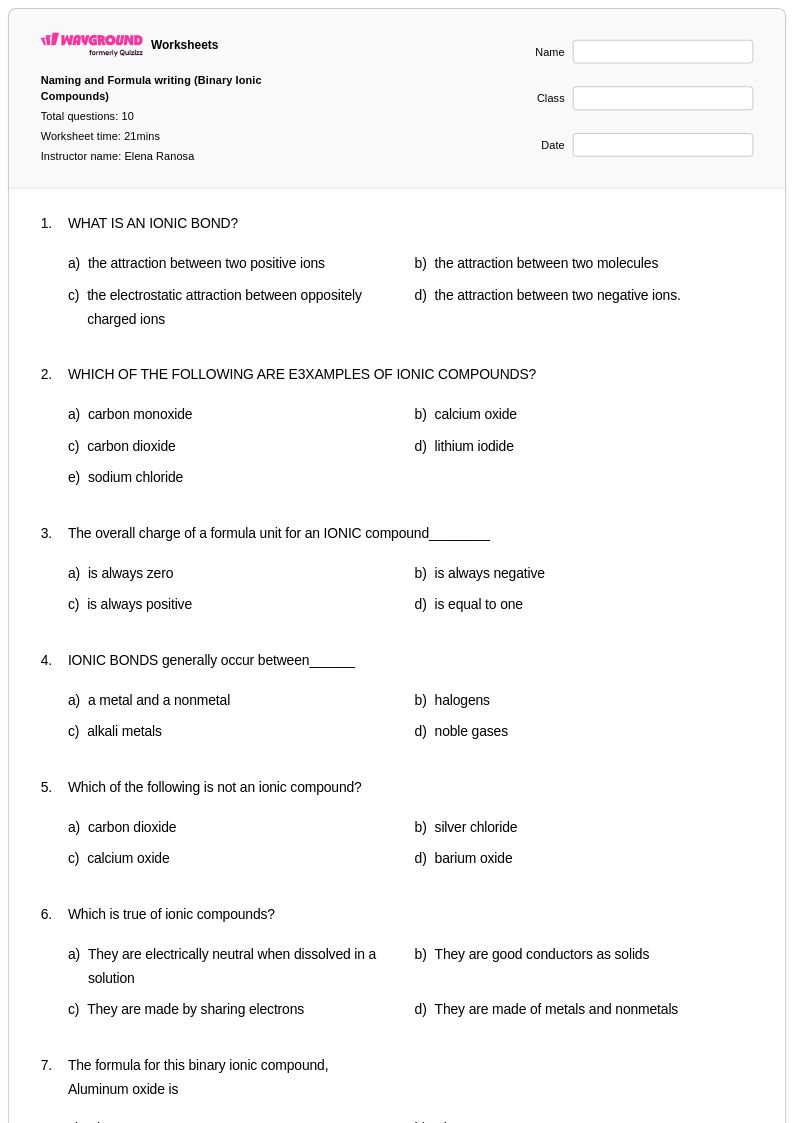
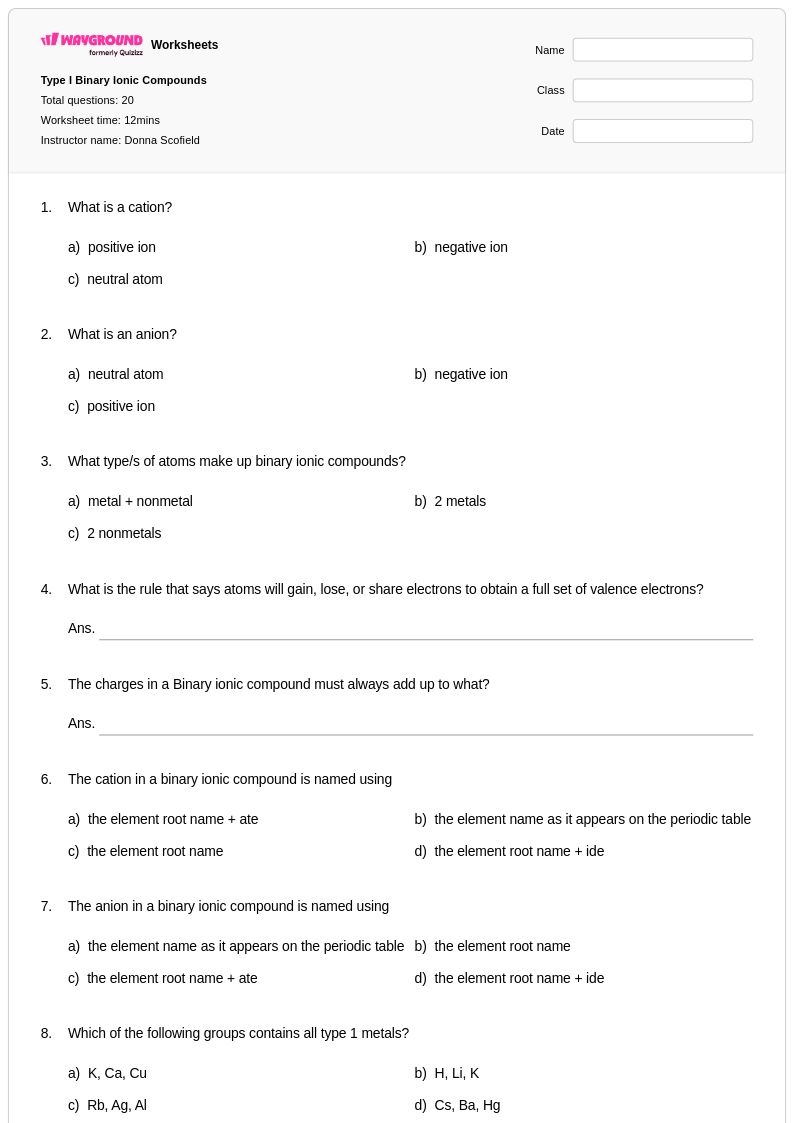
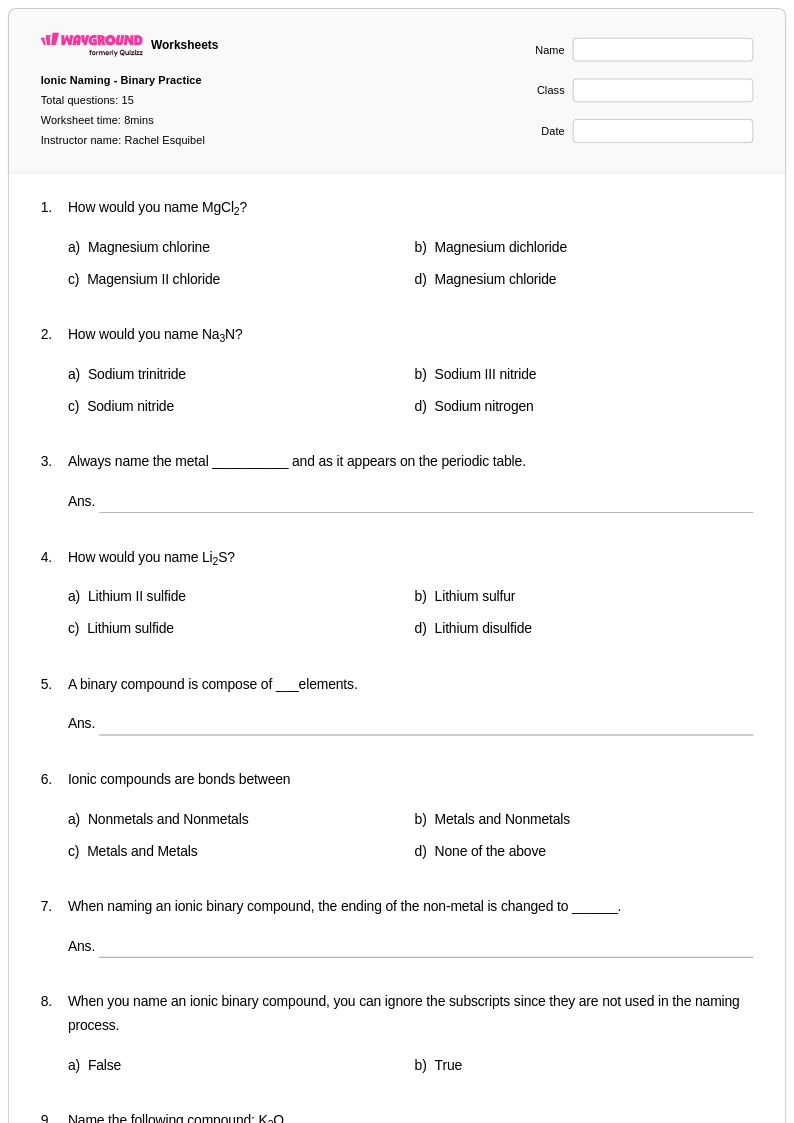
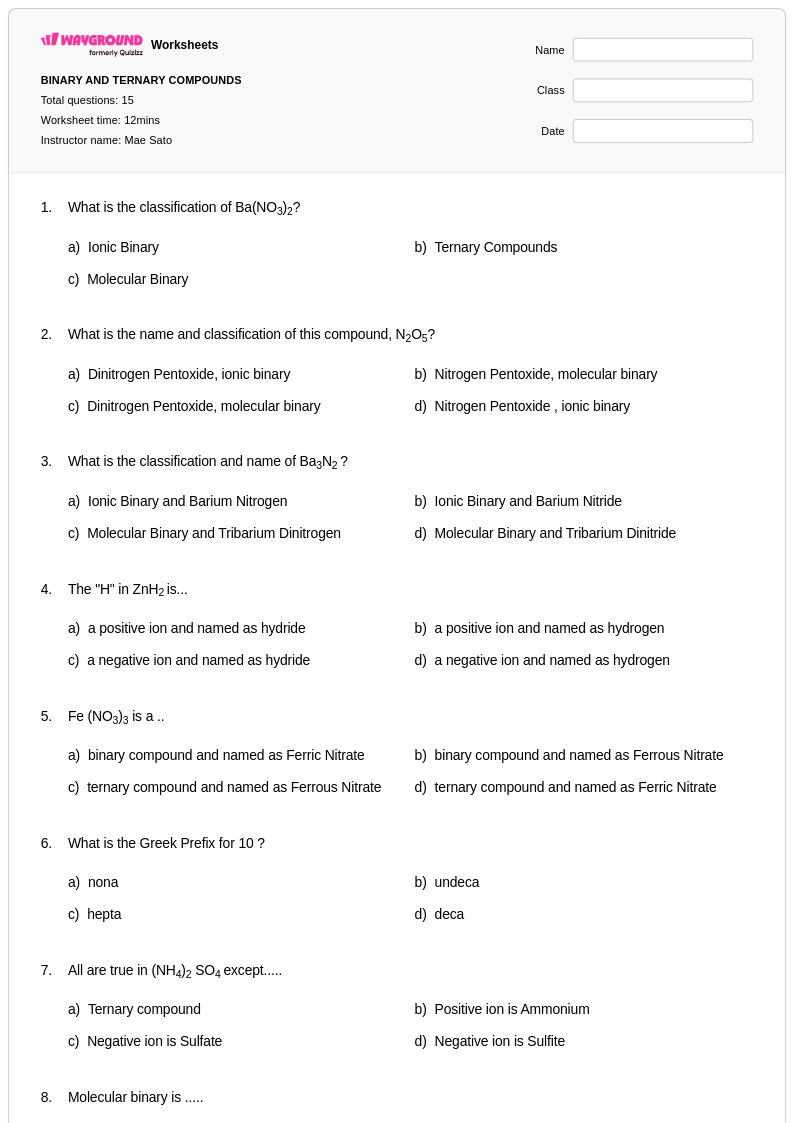
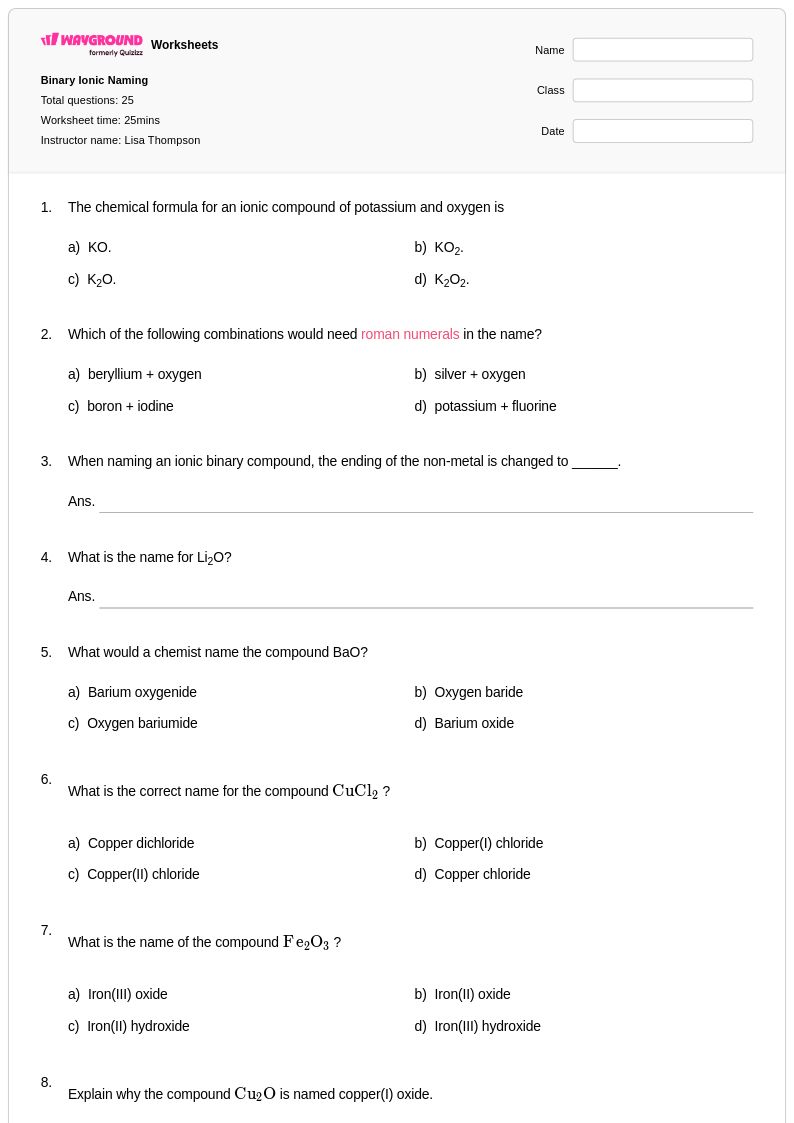
Binary ionic compounds form the foundation of chemical nomenclature and bonding theory in Year 10 chemistry curricula, and Wayground's extensive worksheet collection provides comprehensive practice materials to help students master this critical concept. These expertly designed worksheets guide students through the systematic process of naming binary ionic compounds, writing chemical formulas from compound names, and understanding the charge relationships between metal cations and nonmetal anions. Students develop essential skills in recognizing ionic patterns, applying nomenclature rules, and predicting formula units through structured practice problems that progress from simple compounds like sodium chloride to more complex examples involving transition metals with multiple oxidation states. Each worksheet includes a detailed answer key and is available as a free printable pdf, allowing educators to seamlessly integrate these resources into classroom instruction, homework assignments, or assessment preparation.
Wayground, formerly Quizizz, empowers chemistry teachers with millions of teacher-created resources specifically designed for binary ionic compound instruction, featuring robust search and filtering capabilities that allow educators to locate materials perfectly aligned with their Year 10 chemistry standards and learning objectives. The platform's differentiation tools enable teachers to customize worksheets for varying skill levels, supporting both remediation for struggling students and enrichment opportunities for advanced learners who need additional challenge in chemical nomenclature. These versatile resources are available in both printable pdf formats for traditional classroom use and digital formats for interactive learning environments, making lesson planning more efficient while providing flexible options for skill practice, formative assessment, and targeted intervention. The comprehensive collection supports educators in developing students' confidence with ionic compound nomenclature through systematic practice that builds from fundamental concepts to more sophisticated applications of chemical naming conventions.
FAQs
How do I teach binary ionic compounds to chemistry students?
Start by building a strong foundation in ion charges before introducing formula writing. Teach students to identify the metal (cation) and nonmetal (anion), then apply the crisscross method to balance charges and produce a neutral compound. Use concrete examples like sodium chloride (NaCl) and magnesium oxide (MgO) before progressing to transition metals with variable oxidation states, where students must use Roman numerals in naming. Consistent repetition with structured practice problems reinforces both formula writing and nomenclature simultaneously.
What exercises help students practice writing binary ionic compound formulas?
The most effective practice exercises move students through a structured progression: identifying ion charges from a reference table, applying the crisscross method to write formulas, and then reversing the process by naming compounds from given formulas. Worksheets that include monatomic ions first, then transition metals with variable charges, build confidence systematically. Practice problems that require both writing and naming in the same set reinforce the connection between the two skills and reduce compartmentalized thinking.
What mistakes do students commonly make when naming binary ionic compounds?
The most frequent error is forgetting to use Roman numerals for transition metals with variable oxidation states, such as writing 'iron chloride' instead of 'iron(II) chloride' or 'iron(III) chloride.' Students also commonly reduce formulas incorrectly, writing MgO2 instead of MgO, or fail to fully balance charges before finalizing a formula. Another persistent misconception is applying the Greek prefix naming system used for covalent compounds to ionic ones, which produces errors like 'monosodium chloride.' Targeted practice with transition metal ions and charge-balancing checks helps address these patterns directly.
How do I differentiate binary ionic compound practice for students at different skill levels?
Begin struggling students with monatomic ions that have fixed, predictable charges such as Group 1 and Group 2 metals, then introduce transition metals only after those patterns are secure. For advanced learners, include compounds involving polyatomic ions or multi-step charge balancing. On Wayground, teachers can apply accommodations at the individual student level, including reduced answer choices to lower cognitive load for students who need scaffolding, and read-aloud support for those with reading barriers, all without signaling differences to the rest of the class.
How can I use Wayground's binary ionic compounds worksheets in my classroom?
Wayground's binary ionic compounds worksheets are available as printable PDFs for traditional paper-based practice and in digital formats for technology-integrated classrooms. Teachers can assign them as in-class practice, homework, or formative assessments, and can also host them as a quiz directly on Wayground. Each worksheet includes a complete answer key, making it straightforward to use for self-checking, peer review, or teacher-led correction. The ability to filter and customize resources means teachers can select problems matched to the exact difficulty level or curriculum standard they are targeting.
In what order should students learn binary ionic compound concepts?
Students should learn ion charges and the concept of charge neutrality first, followed by the crisscross method for formula writing using fixed-charge ions. Once that process is reliable, introduce systematic nomenclature rules so students can name compounds they have written. Transition metals with variable oxidation states and Roman numeral notation should come after students are confident with fixed-charge metals. Reversing the process, deriving formulas from names, is the final skill that confirms full conceptual mastery.