Free Printable Le Chatelier's Principle Worksheets for Year 10
Enhance Year 10 students' understanding of Le Chatelier's Principle with Wayground's comprehensive collection of free chemistry worksheets, featuring printable PDFs, practice problems, and detailed answer keys.
Explore printable Le Chatelier's Principle worksheets for Year 10
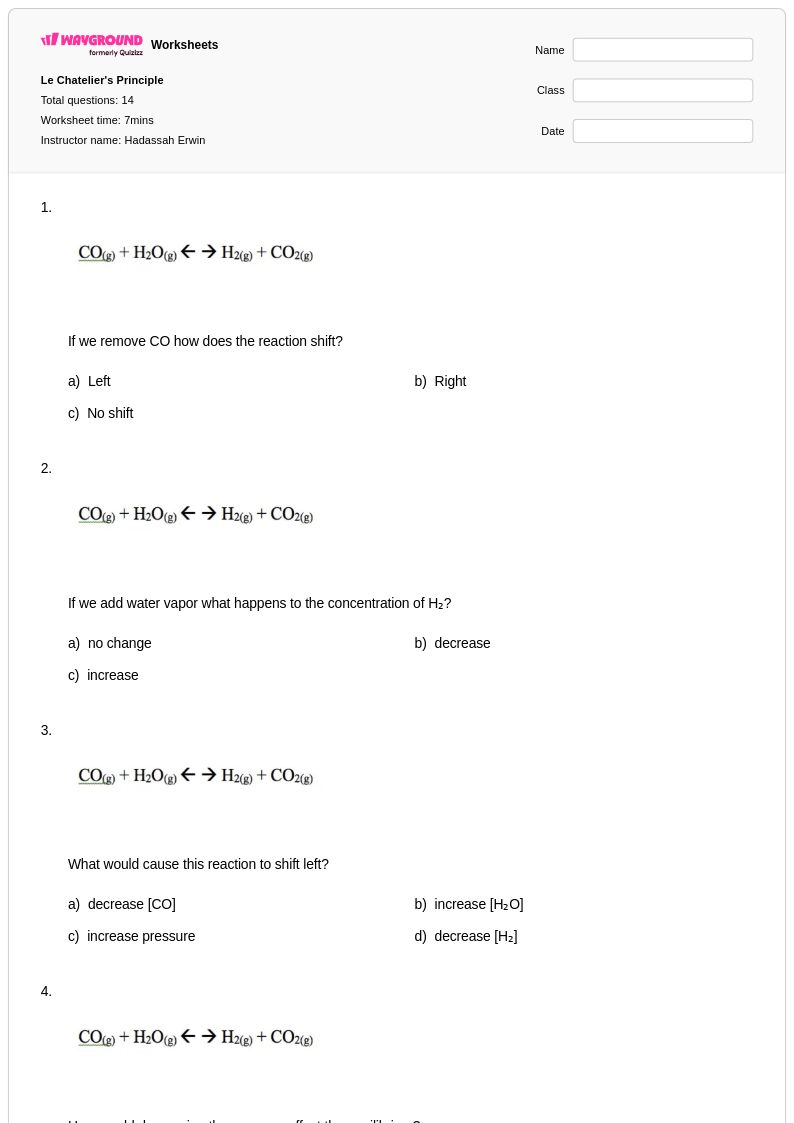
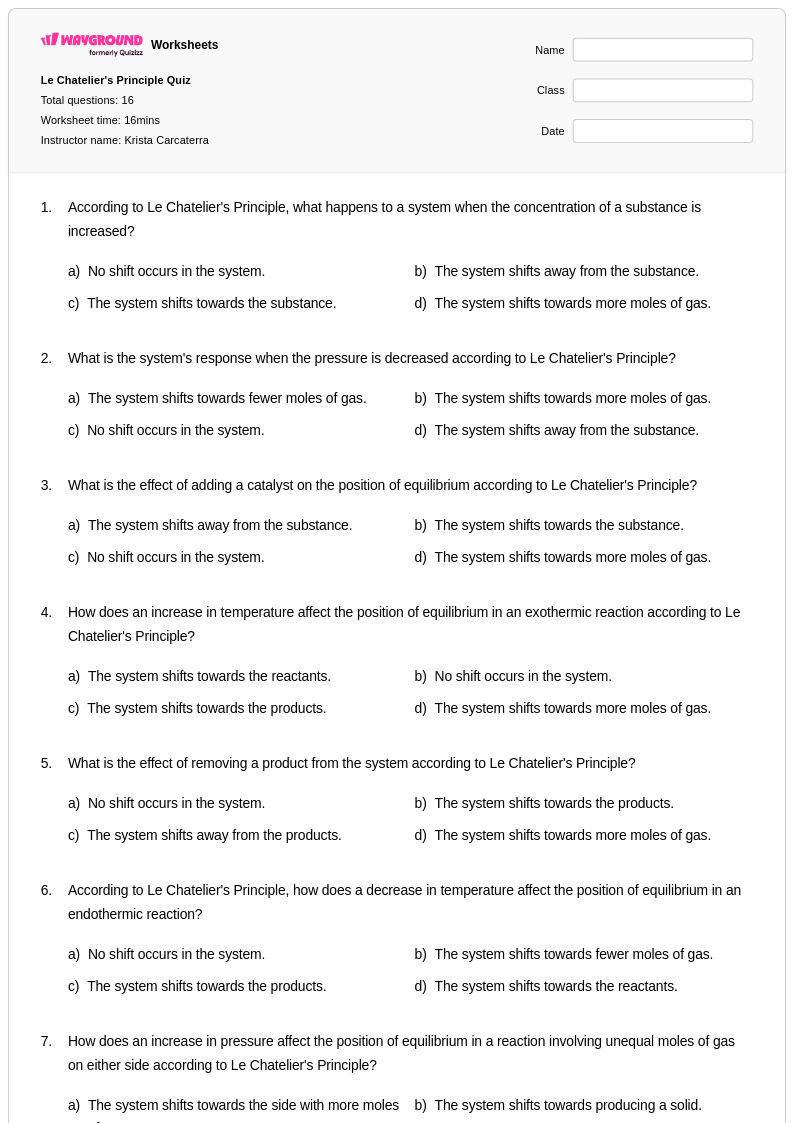
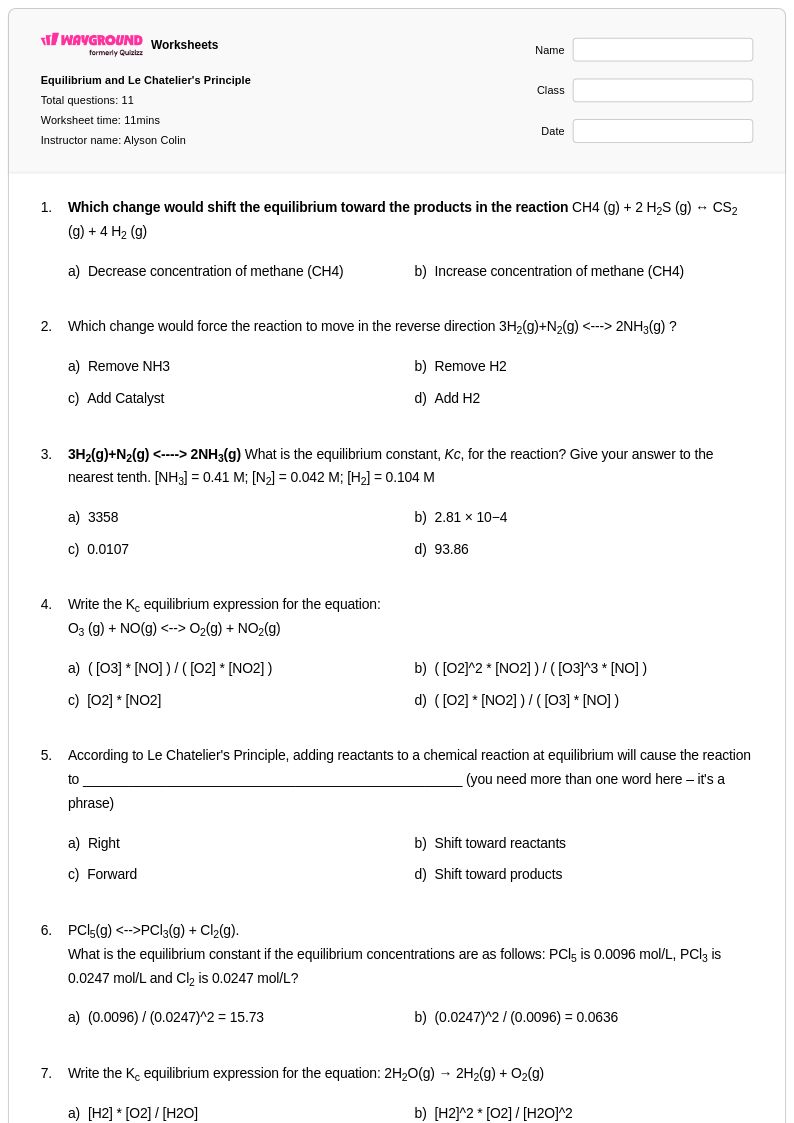
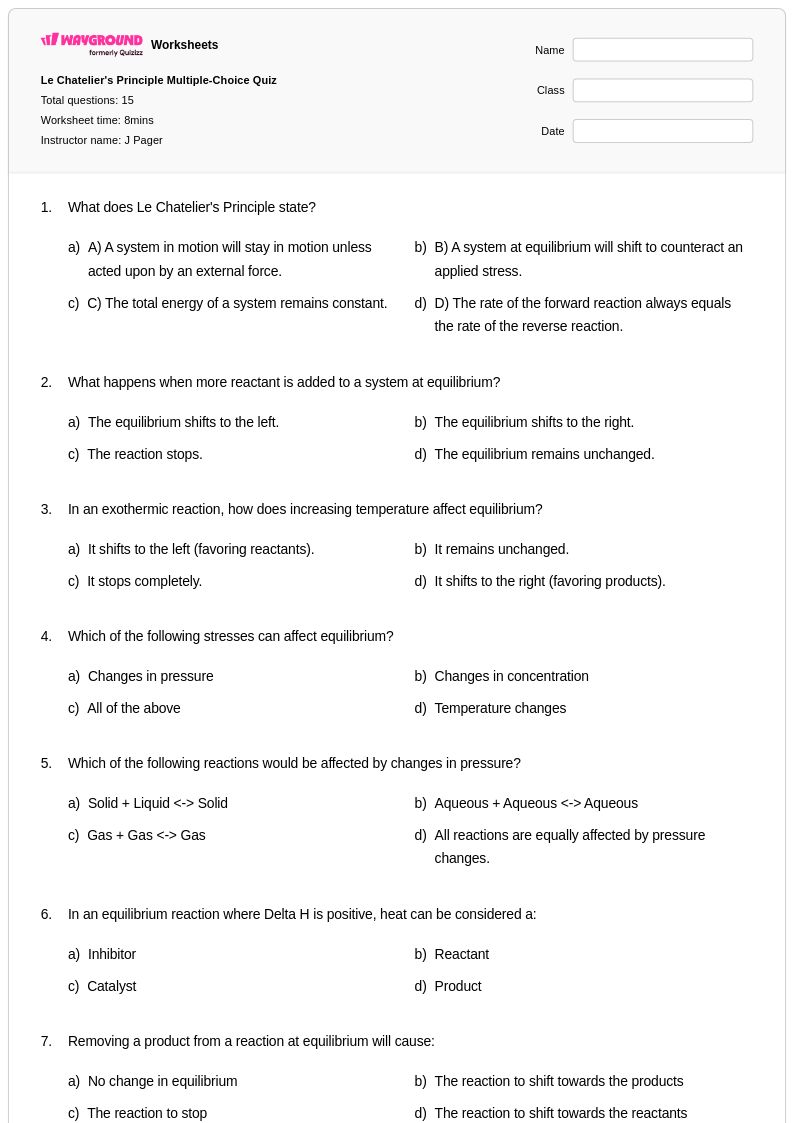
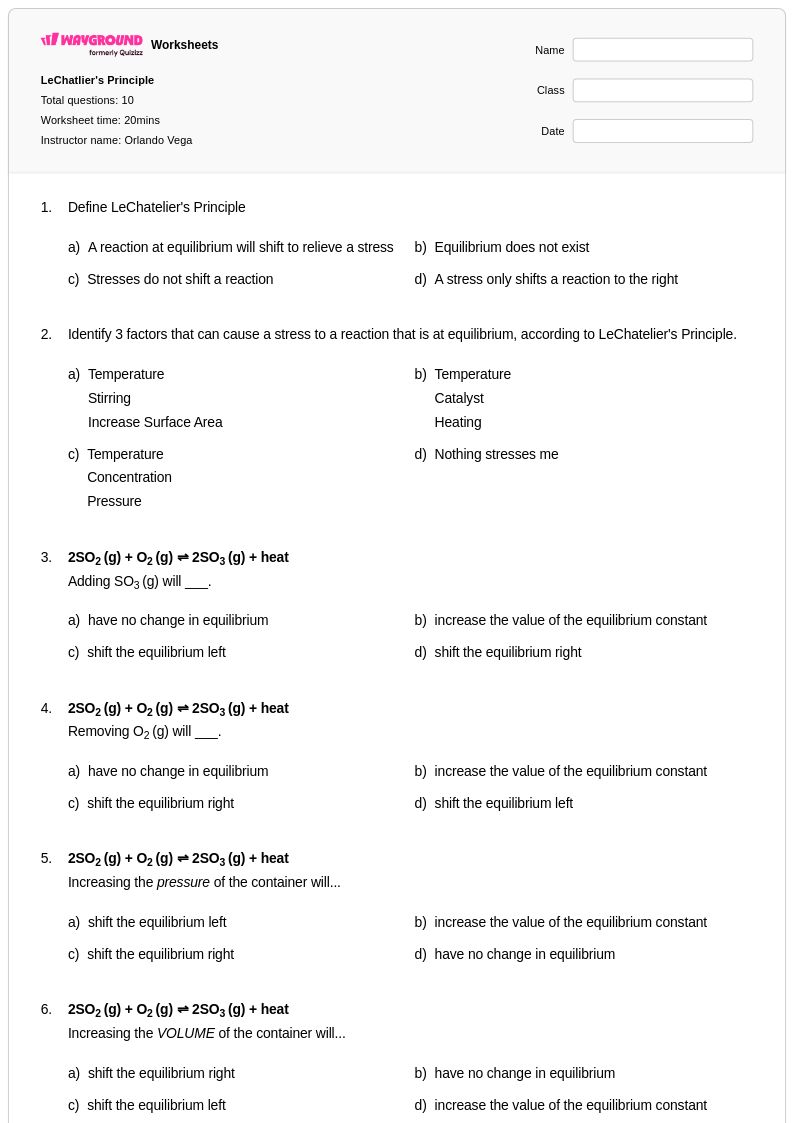
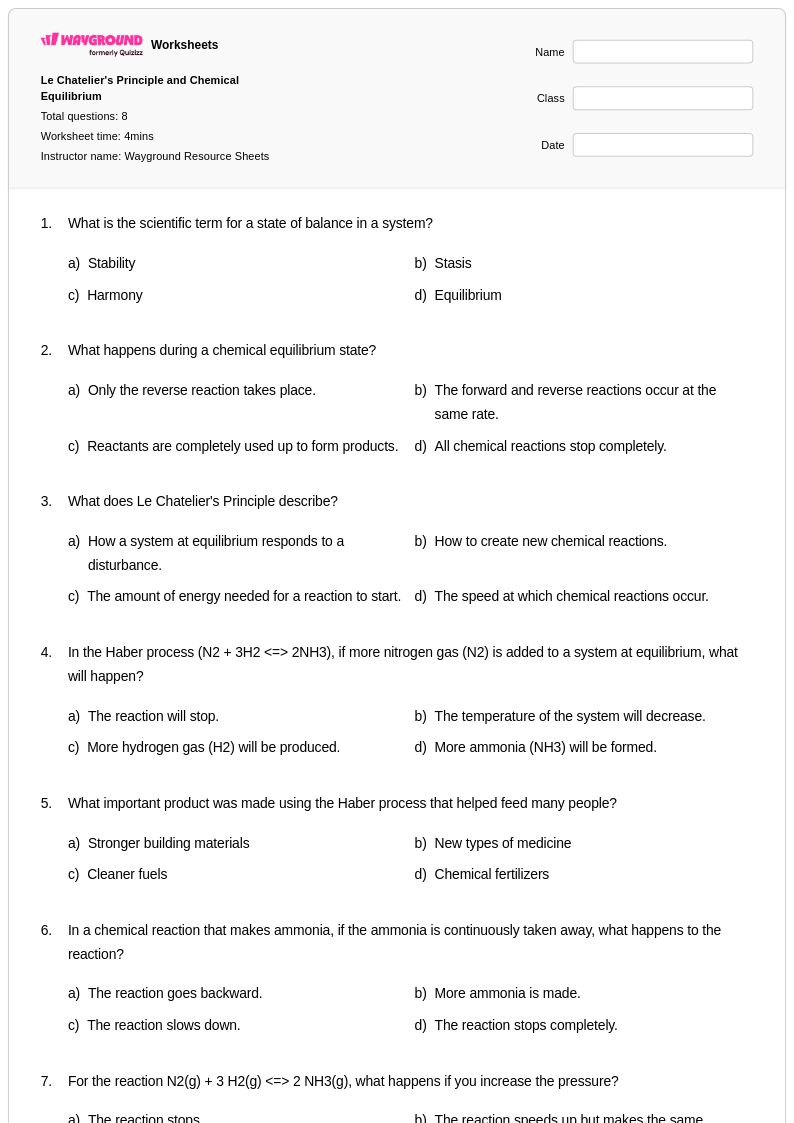
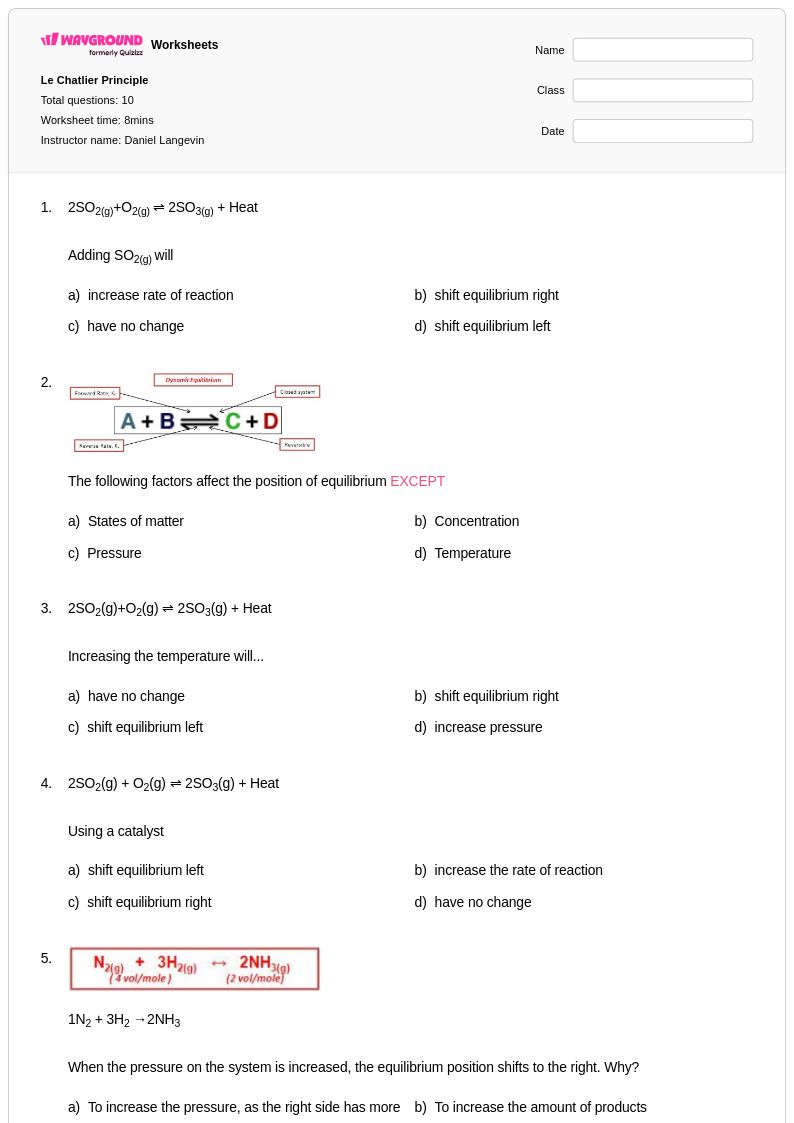
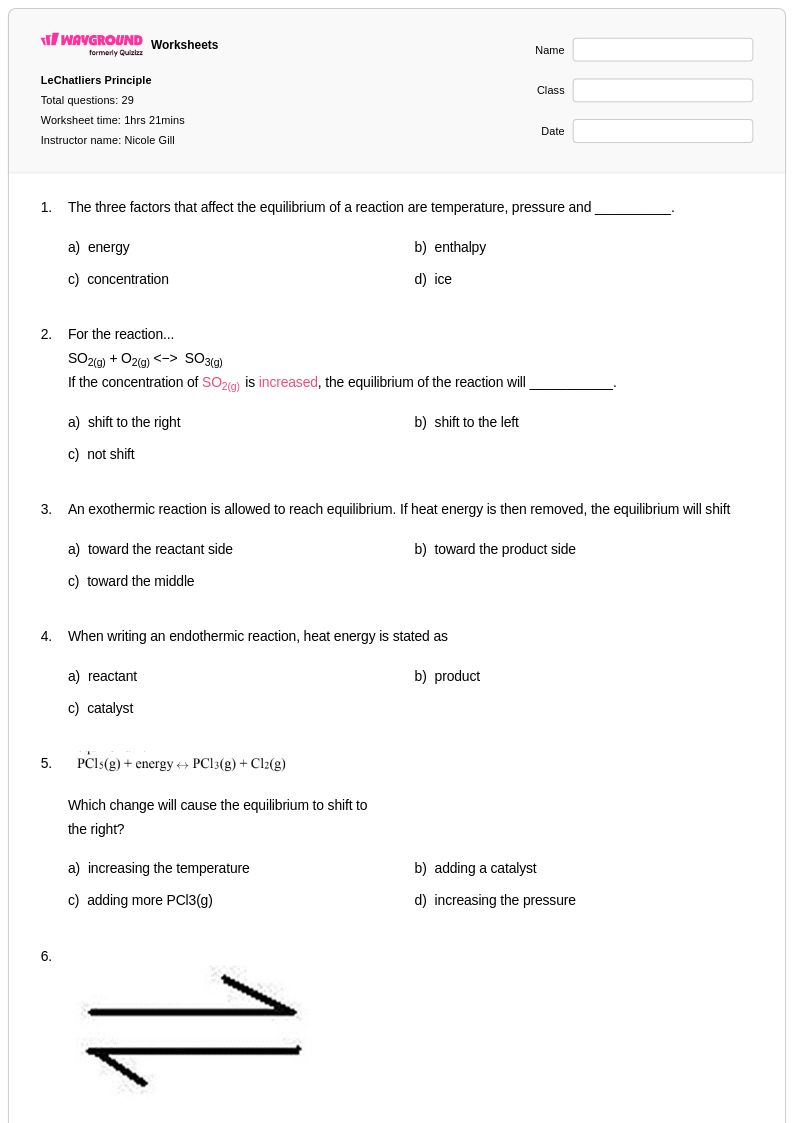
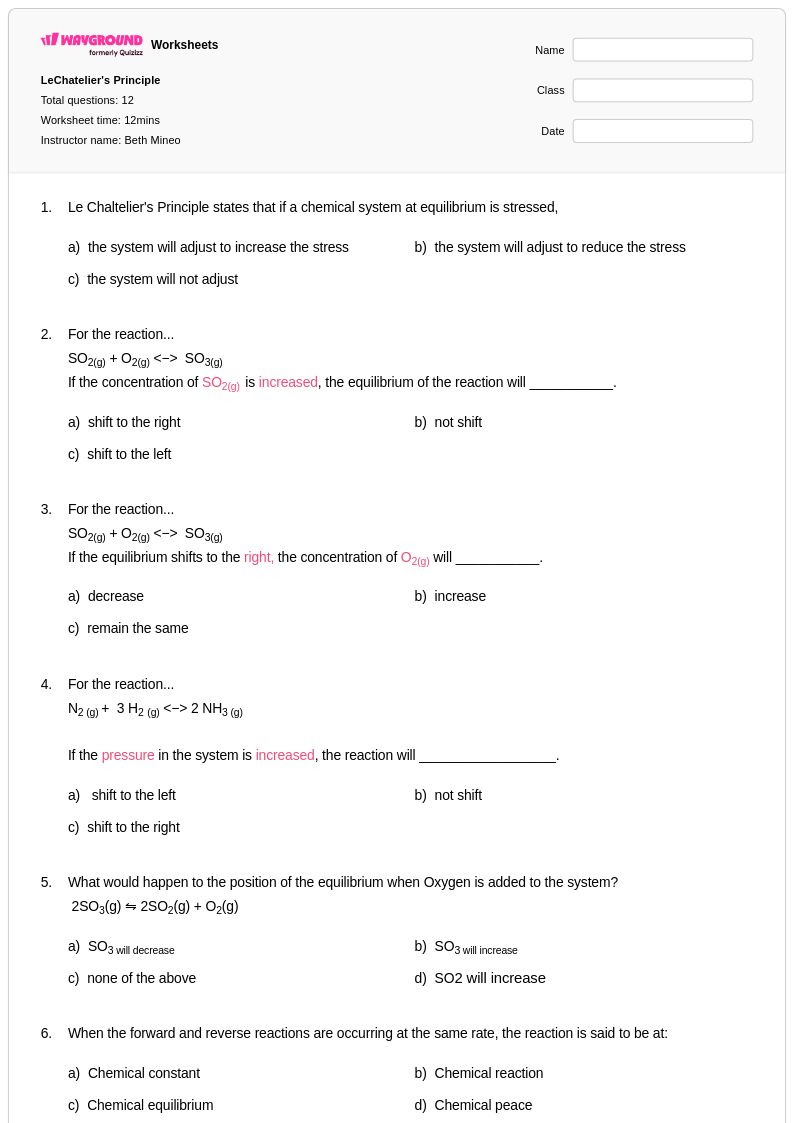
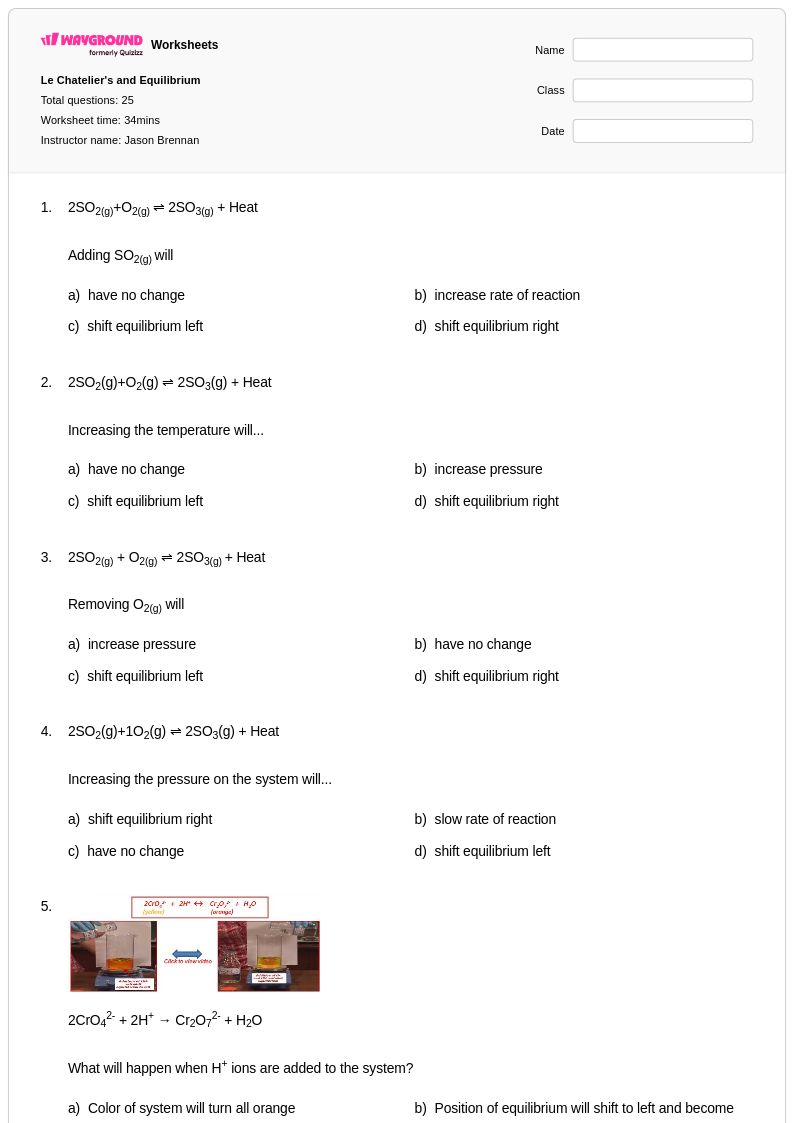
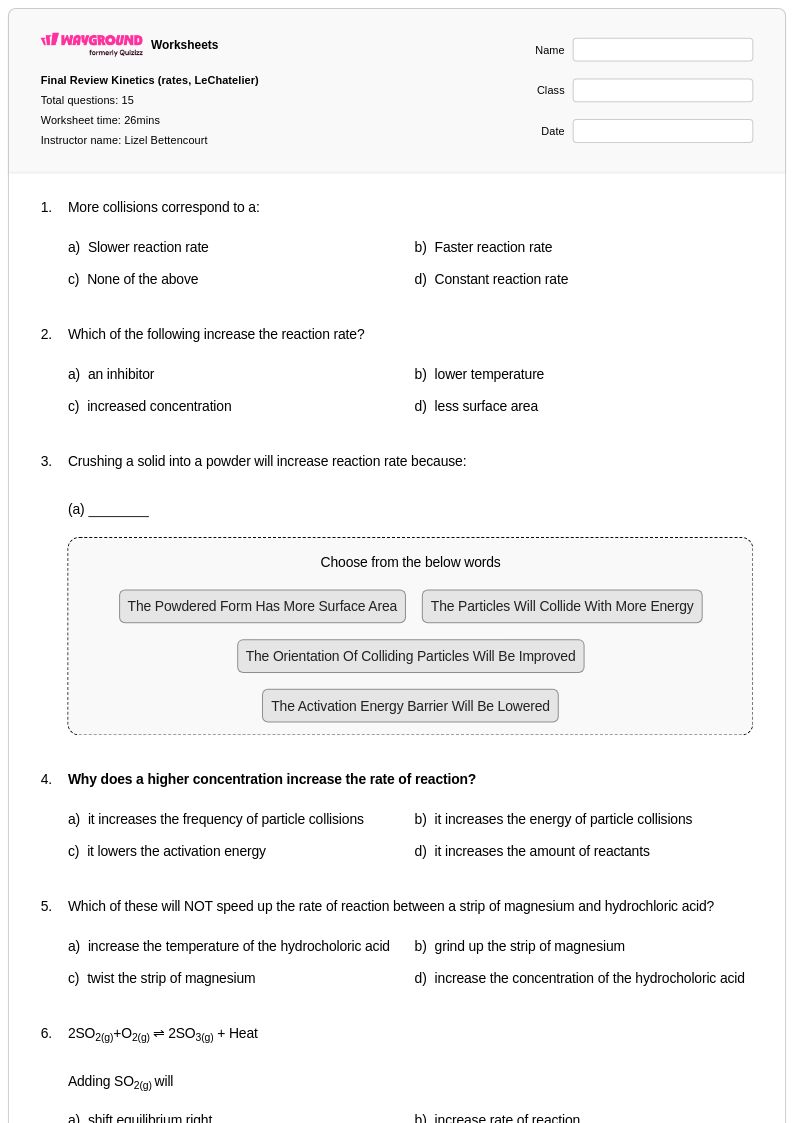
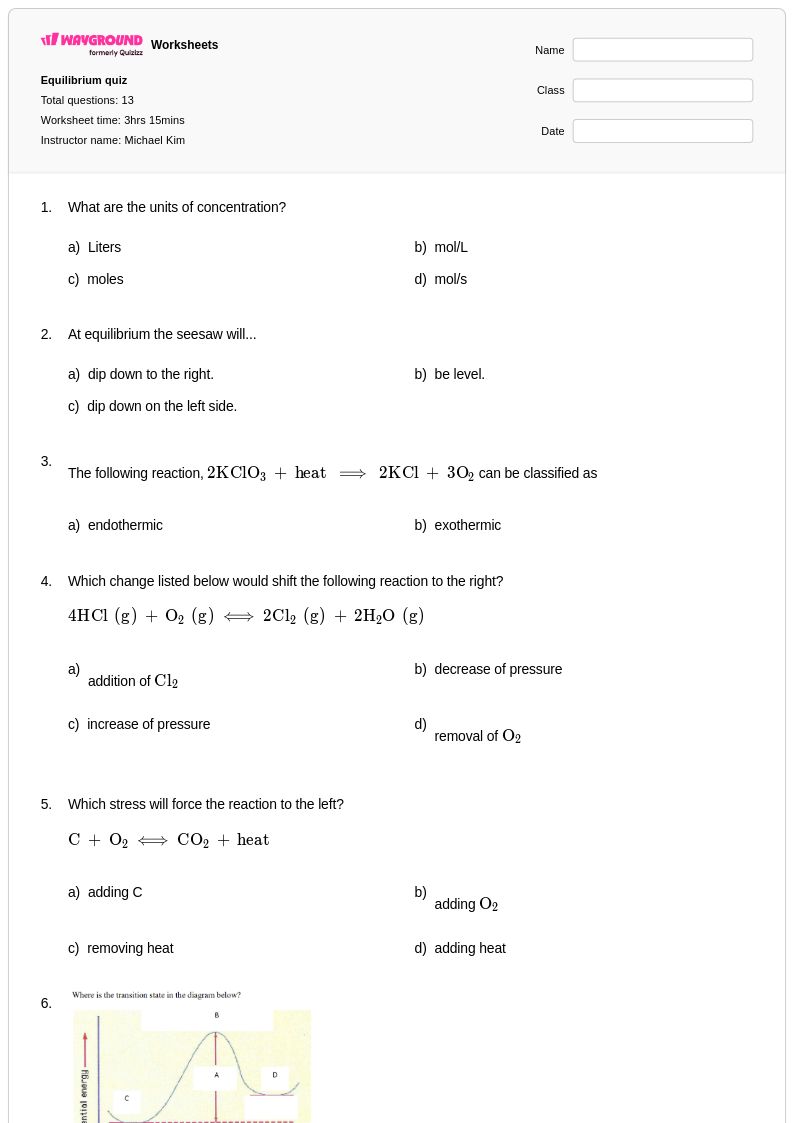
Le Chatelier's Principle worksheets available through Wayground (formerly Quizizz) provide Year 10 chemistry students with comprehensive practice in understanding how chemical equilibria respond to changes in concentration, temperature, and pressure. These carefully designed educational resources strengthen students' ability to predict and explain equilibrium shifts, interpret reaction quotients, and apply equilibrium concepts to real-world chemical processes. The worksheets feature diverse practice problems that challenge students to analyze various equilibrium scenarios, from simple acid-base reactions to complex industrial processes like the Haber synthesis. Each printable resource includes detailed answer keys that help students verify their understanding and identify areas needing additional focus, while the free pdf format ensures easy access for both classroom instruction and independent study.
Wayground (formerly Quizizz) supports chemistry educators with an extensive collection of millions of teacher-created Le Chatelier's Principle resources that streamline lesson planning and enhance student learning outcomes. The platform's robust search and filtering capabilities allow teachers to quickly locate worksheets aligned with specific chemistry standards and learning objectives, while differentiation tools enable customization for varying student skill levels within Year 10 classrooms. These versatile resources are available in both printable and digital formats, including downloadable pdf versions, making them ideal for traditional classroom instruction, hybrid learning environments, and remote education settings. Teachers can effectively use these materials for initial concept introduction, targeted remediation for struggling students, enrichment activities for advanced learners, and comprehensive skill practice throughout their equilibrium chemistry units.
FAQs
How do I teach Le Chatelier's Principle effectively in a chemistry class?
Start by establishing a solid understanding of chemical equilibrium before introducing stresses, since students need to grasp what a system is shifting away from before they can predict where it shifts to. Use concrete analogies, such as a balance responding to added weight, then move to reaction-specific examples involving concentration, temperature, pressure, and volume changes. Worked examples that walk through the Q-versus-K reasoning help students build a systematic approach rather than relying on memorization.
What practice problems best help students master Le Chatelier's Principle?
The most effective practice combines conceptual shift prediction with quantitative equilibrium calculations. Students should work through problems that require them to identify the stress, determine the direction of shift, and then explain the outcome in terms of reaction quotient and equilibrium constant. Scenarios drawn from industrial processes like the Haber synthesis or acid-base equilibria give students practice applying the principle across varied contexts, which is critical for both exam performance and genuine conceptual understanding.
What mistakes do students commonly make when applying Le Chatelier's Principle?
The most frequent error is confusing the effect of temperature changes with concentration changes — students often treat heat as just another reactant or product without understanding that temperature shifts actually change the value of the equilibrium constant, not just the position. Another common mistake is incorrectly predicting pressure and volume effects, particularly when a reaction has equal moles of gas on both sides, where no net shift occurs. Students also struggle to distinguish between a change in equilibrium position and a change in the equilibrium constant itself.
How do I use Le Chatelier's Principle worksheets in my classroom?
Le Chatelier's Principle worksheets on Wayground are available as printable PDFs for traditional classroom distribution and in digital formats for technology-integrated or remote learning environments, accommodating a range of teaching setups and student preferences. Teachers can also host the worksheets as a live quiz on Wayground, making them suitable for formative assessment or whole-class review sessions. The included answer keys provide step-by-step reasoning for each equilibrium shift, which supports self-paced independent study as well as teacher-led instruction.
How can I differentiate Le Chatelier's Principle instruction for students at different skill levels?
For students who are still building foundational understanding, focus practice on single-variable stress problems with clear conceptual explanations before introducing multi-variable or quantitative scenarios. Advanced learners can be challenged with complex gas-phase equilibria, reaction quotient calculations, and industrial application problems. On Wayground, teachers can apply accommodations such as reduced answer choices to lower cognitive load for struggling students, or enable read-aloud support for students with reading-related needs, all without signaling differences to the rest of the class.
How does Le Chatelier's Principle connect to real-world chemistry applications?
Le Chatelier's Principle is central to understanding and optimizing industrial chemical processes, with the Haber synthesis of ammonia being the most commonly studied example — engineers deliberately manipulate temperature and pressure to balance reaction rate with equilibrium yield. It also applies to biological systems, such as how the body shifts oxygen-hemoglobin equilibria in response to changing oxygen concentrations. Grounding classroom practice in these applications helps students see the principle as a practical analytical tool rather than an abstract rule.