Free Printable Intermolecular Forces Worksheets for Year 10
Year 10 intermolecular forces worksheets from Wayground help students master van der Waals forces, hydrogen bonding, and dipole interactions through comprehensive printables, practice problems, and answer keys.
Explore printable Intermolecular Forces worksheets for Year 10
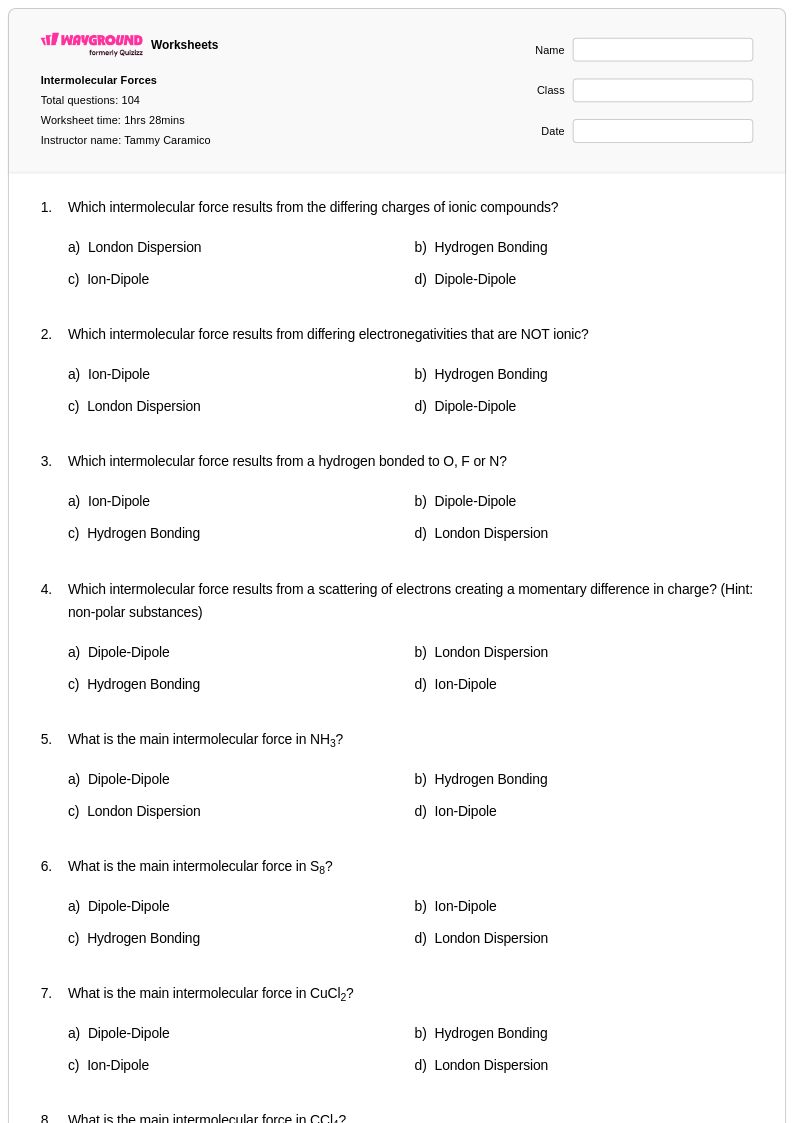
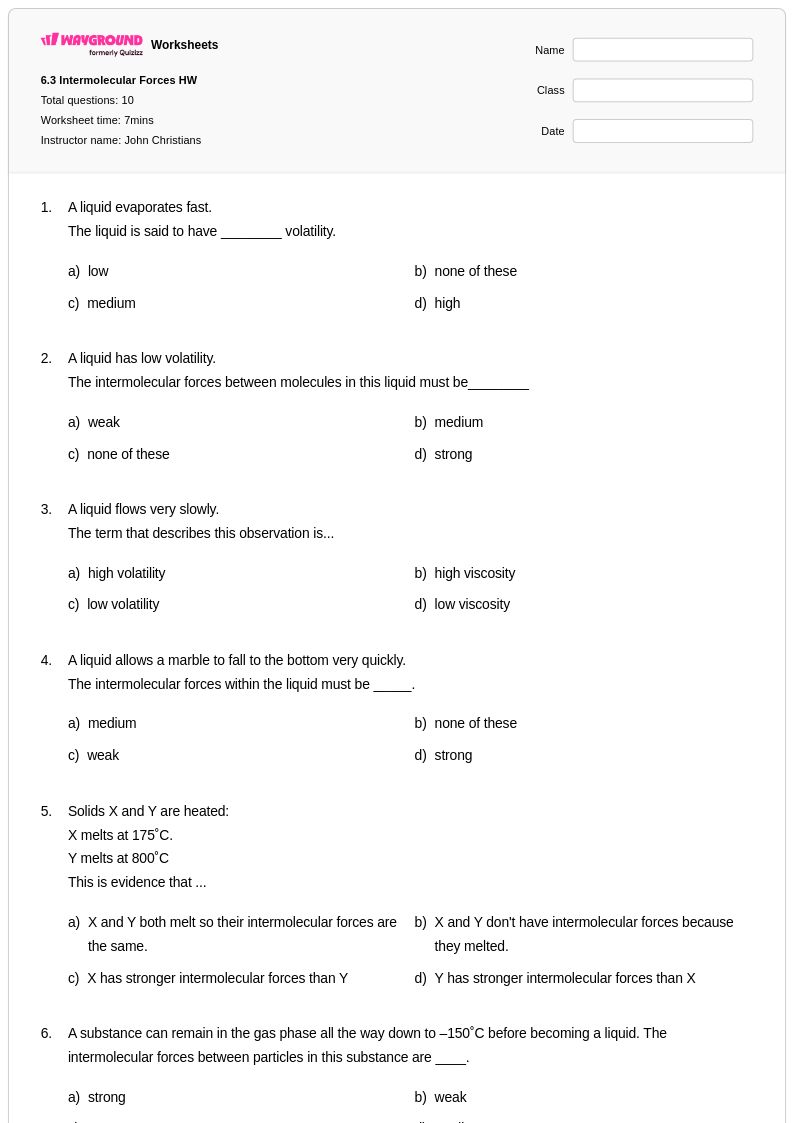
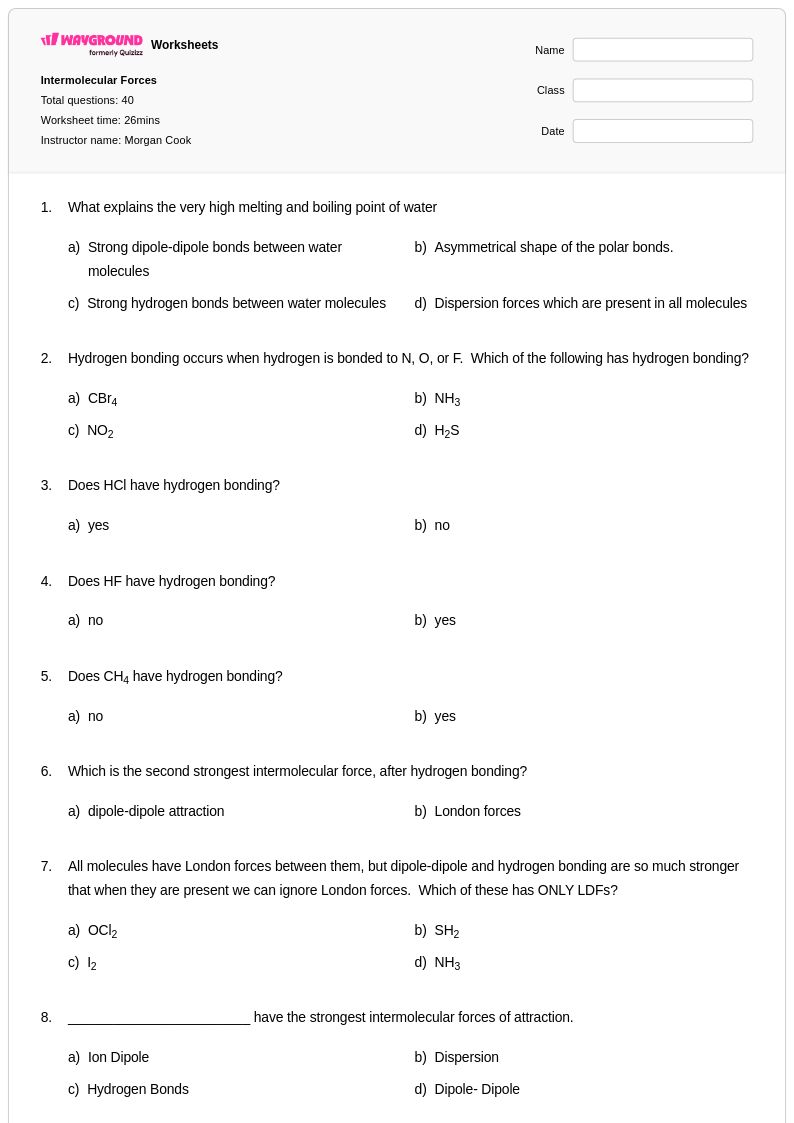
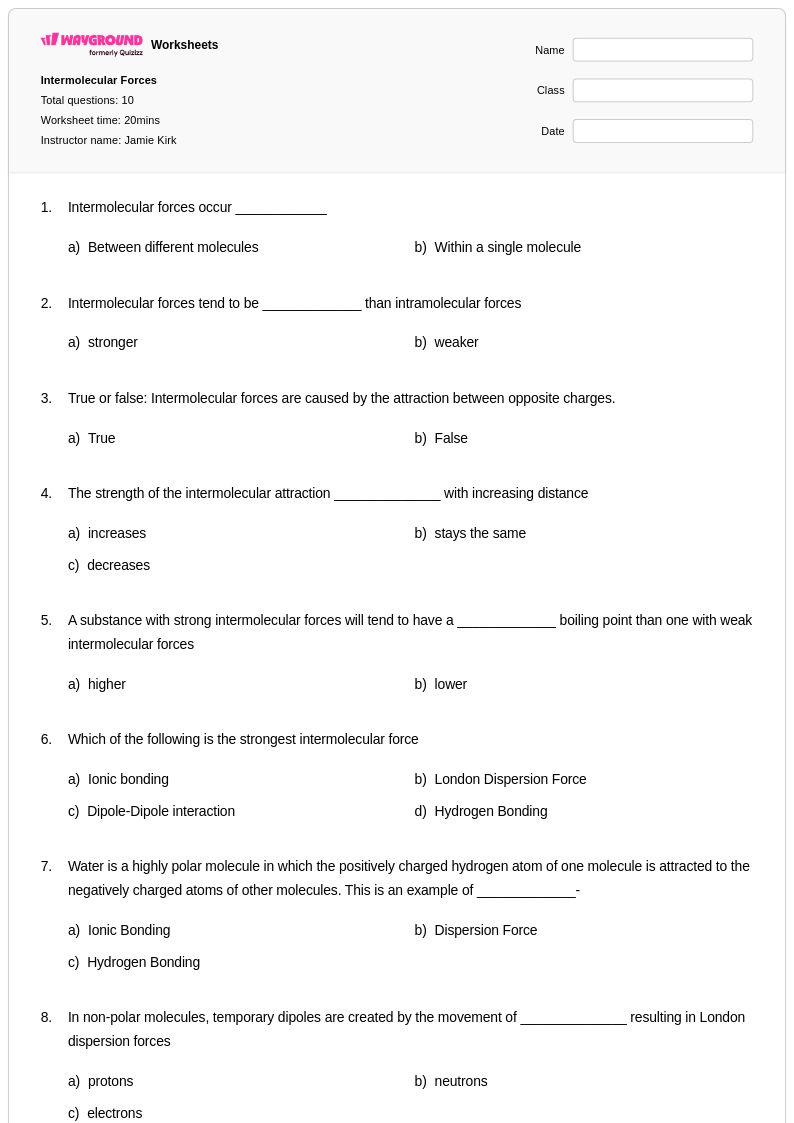
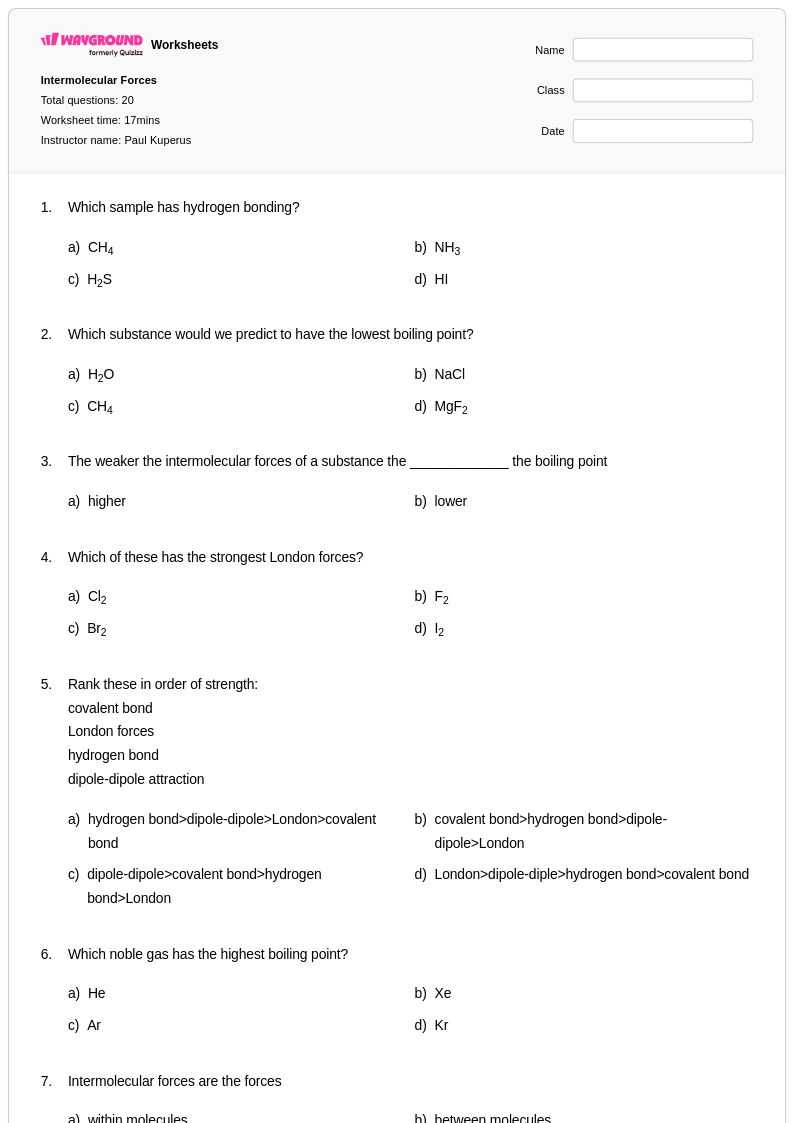
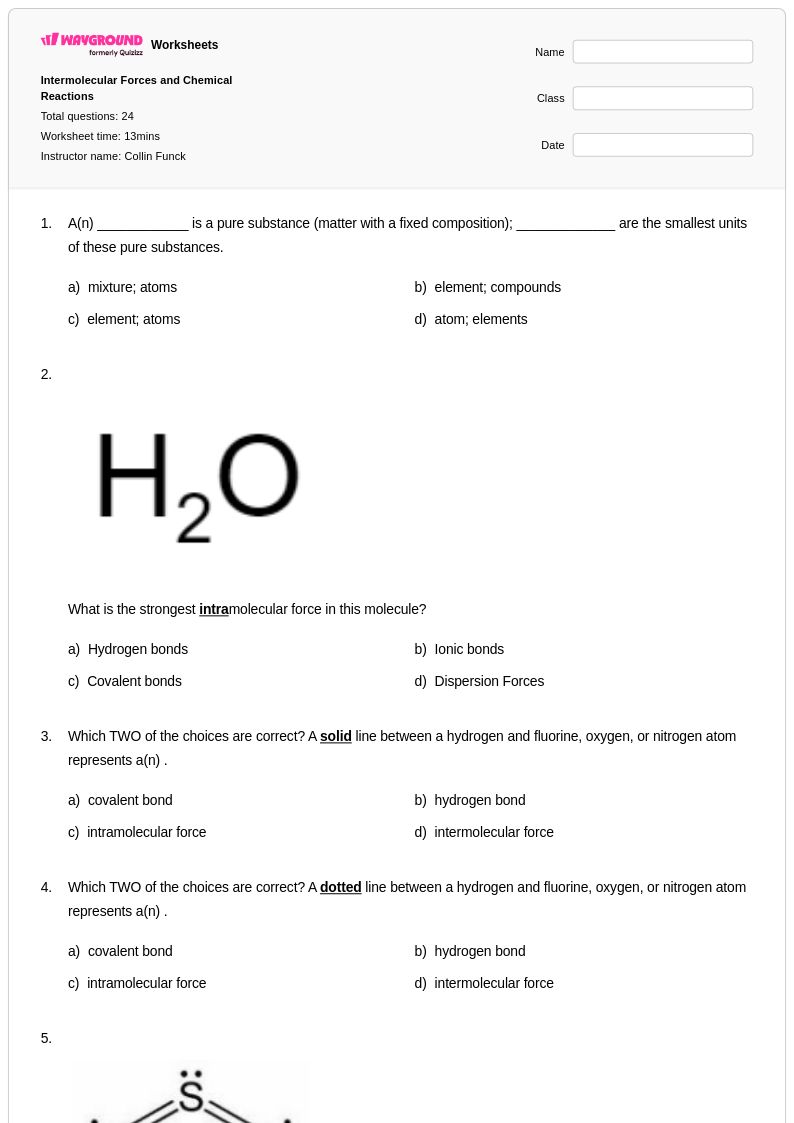
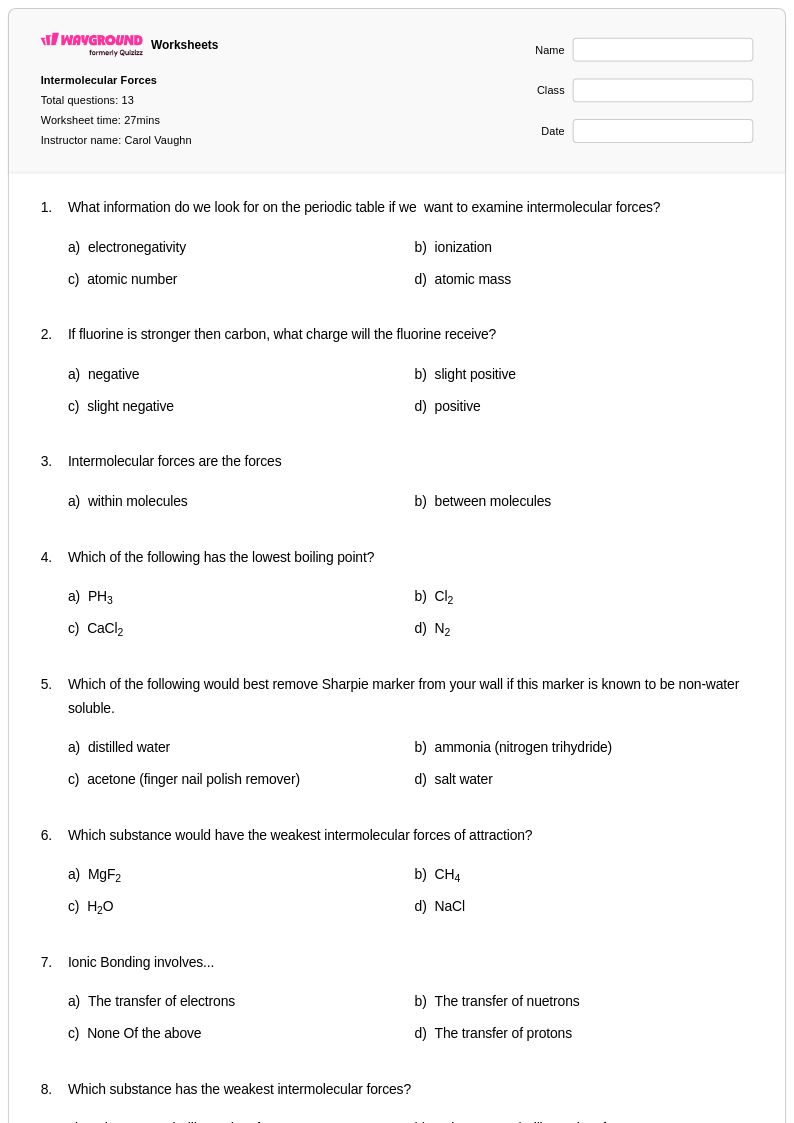
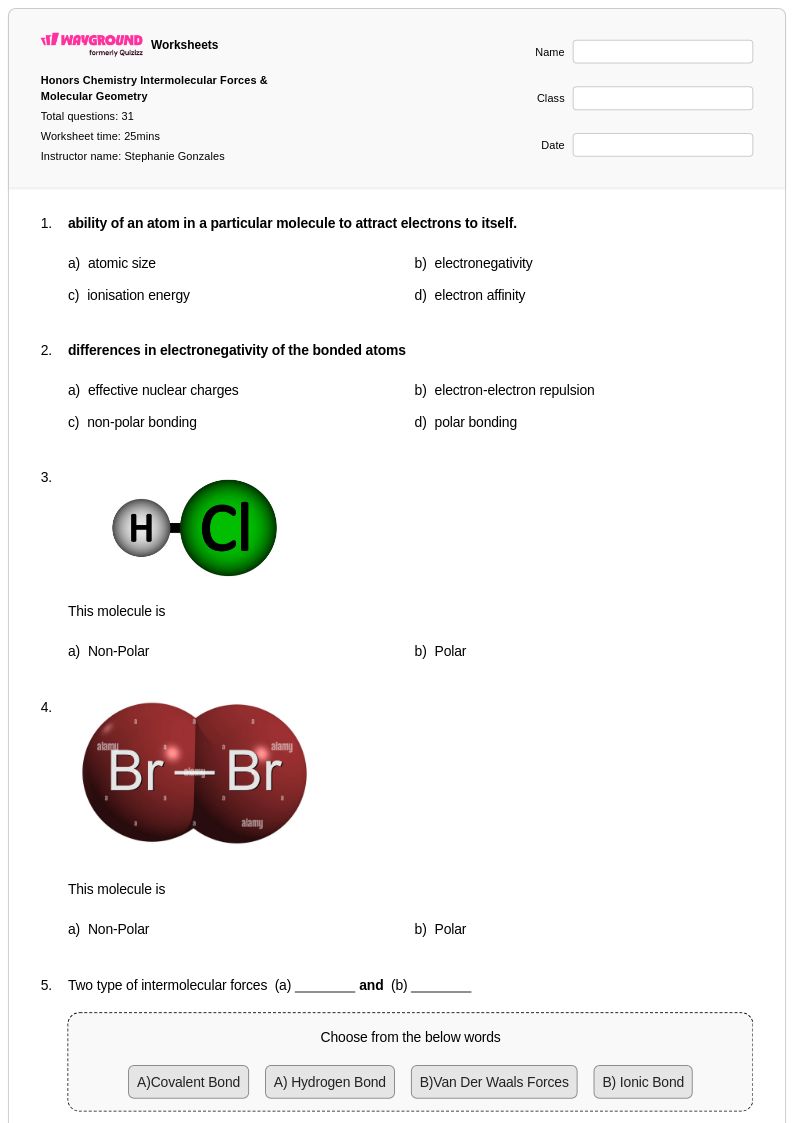
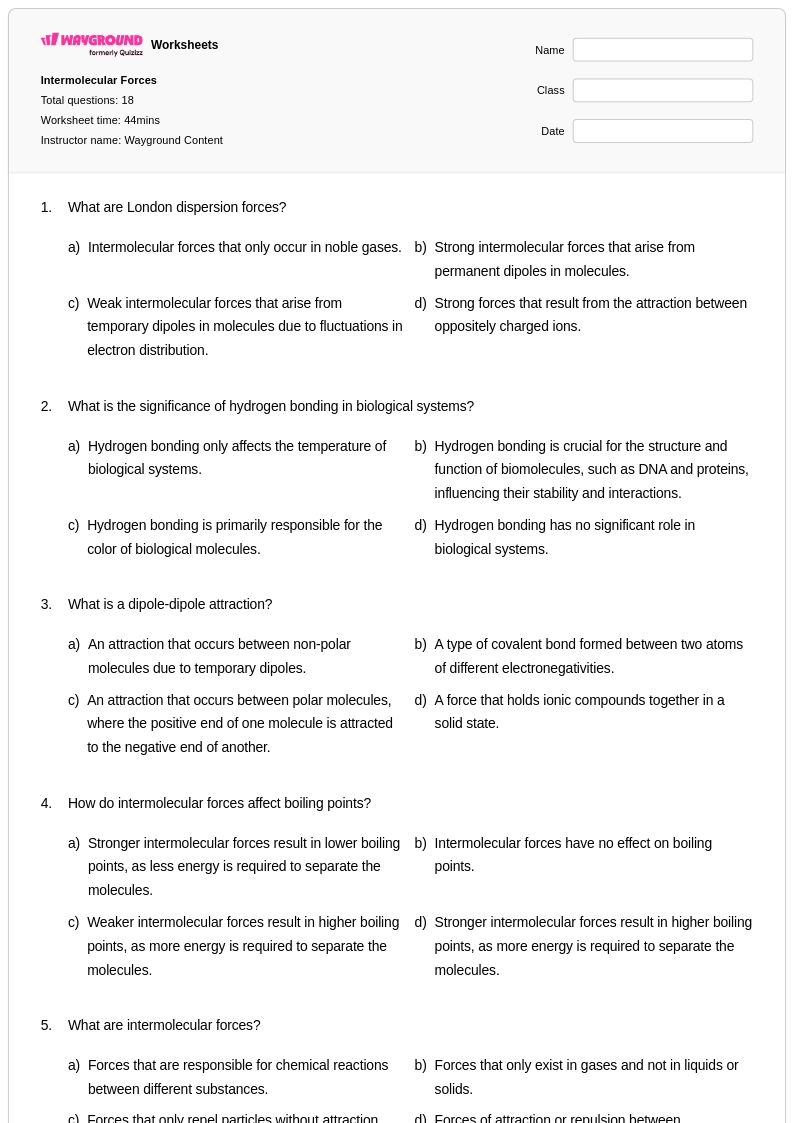
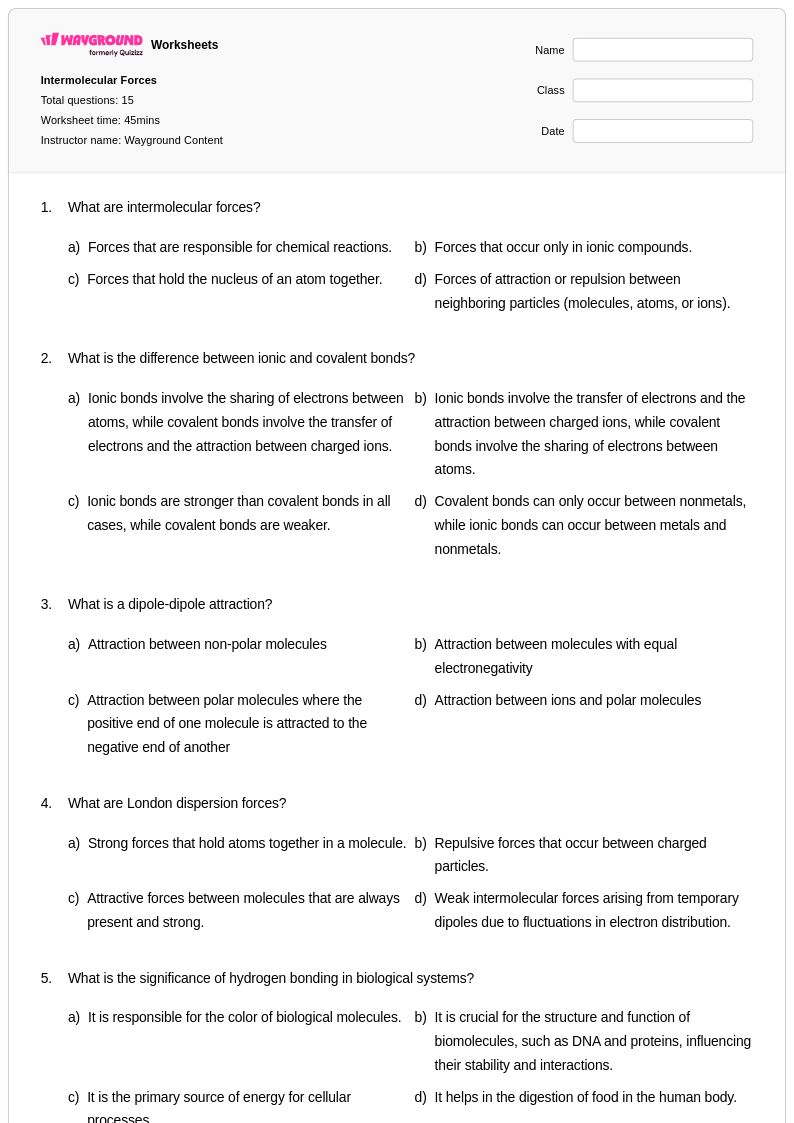
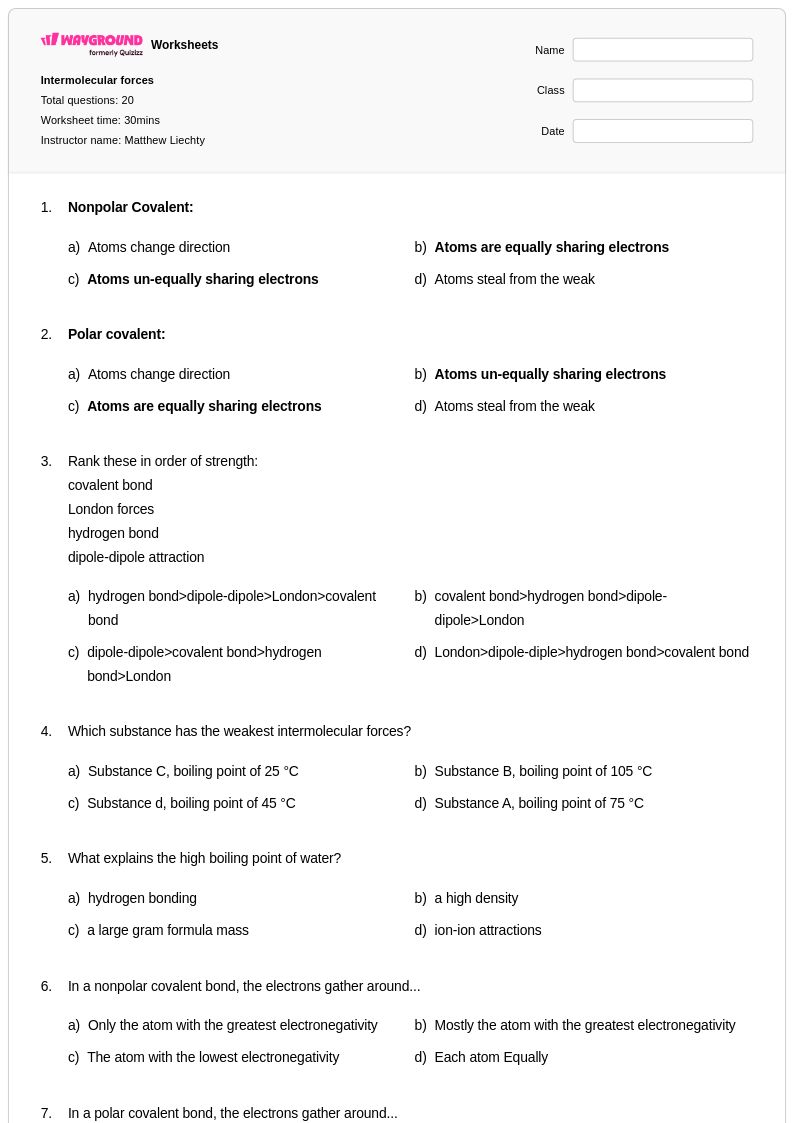
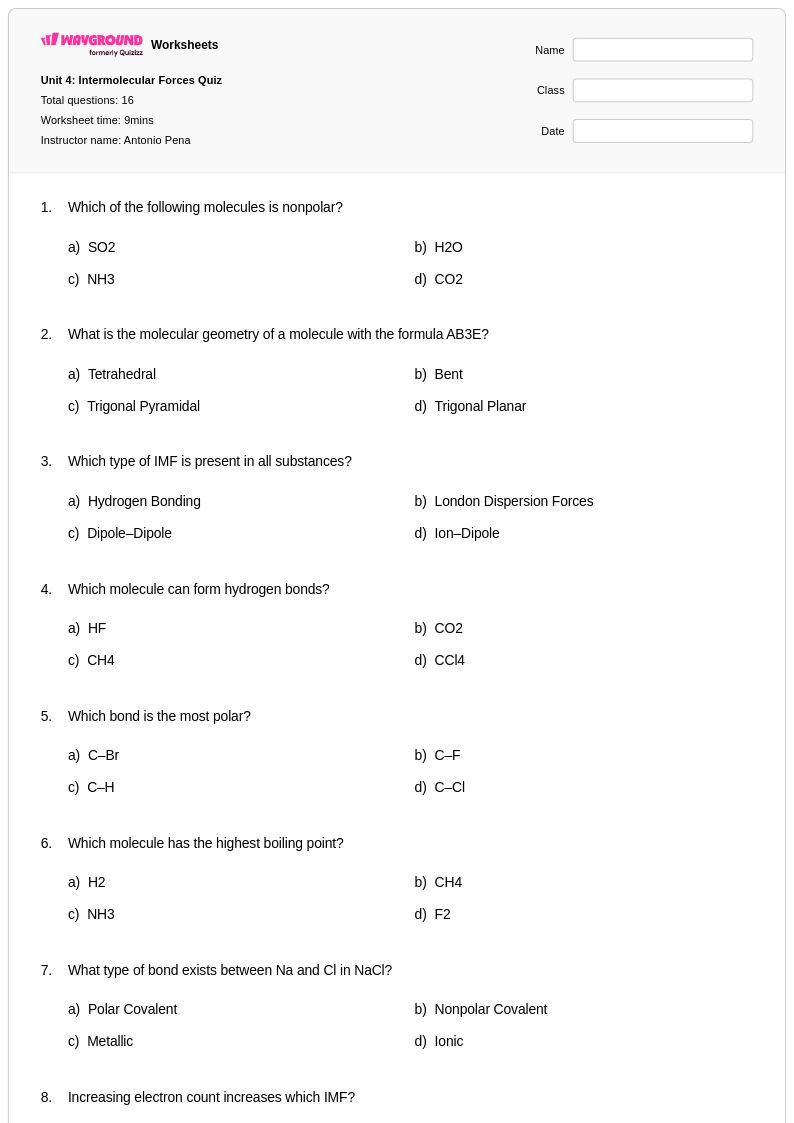
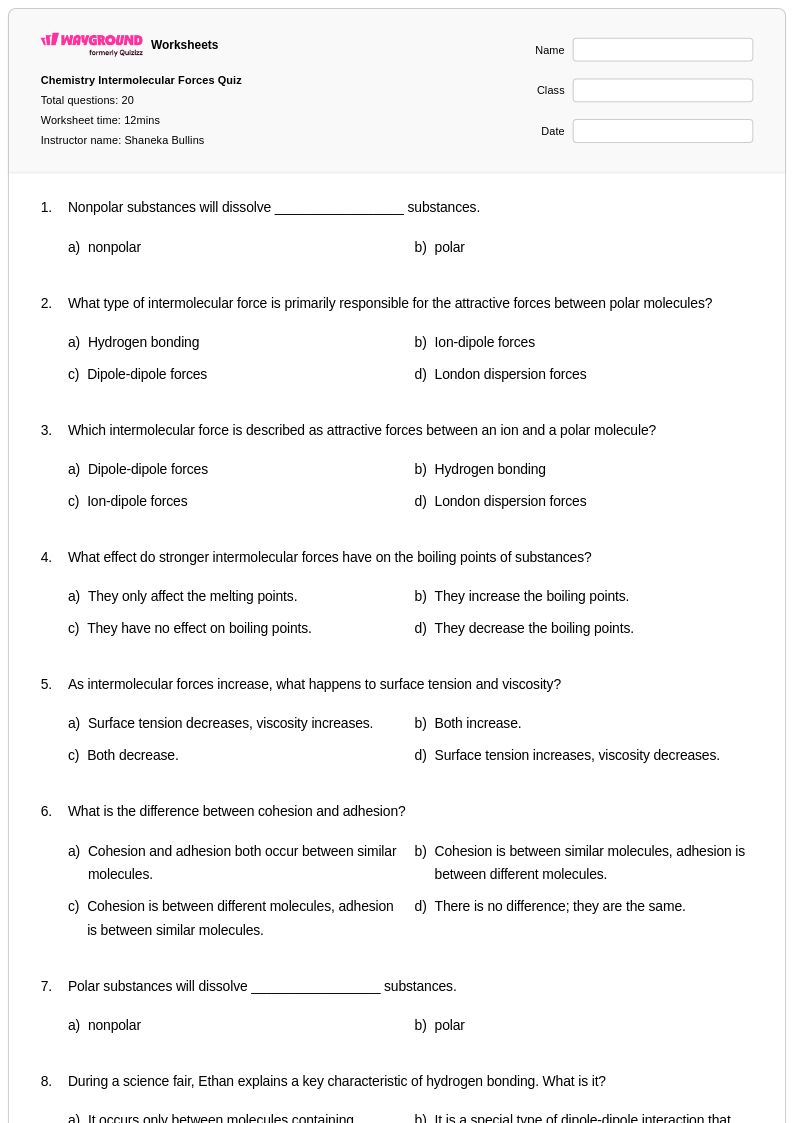
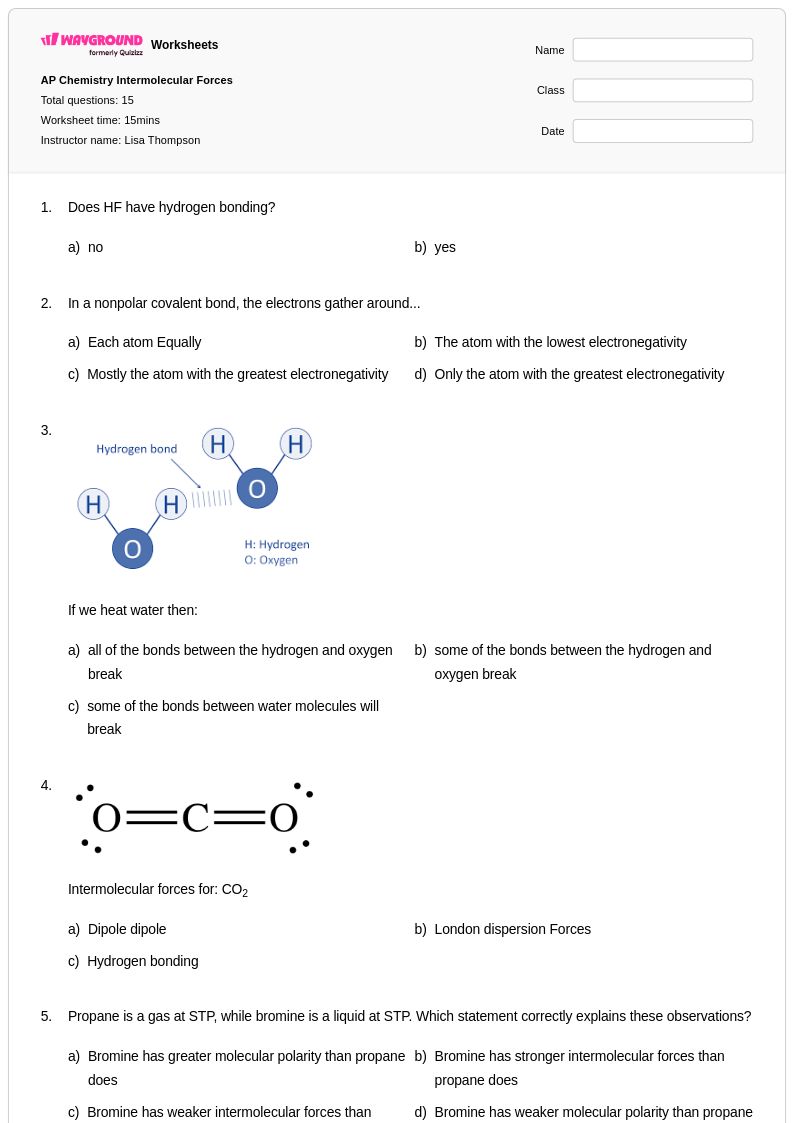
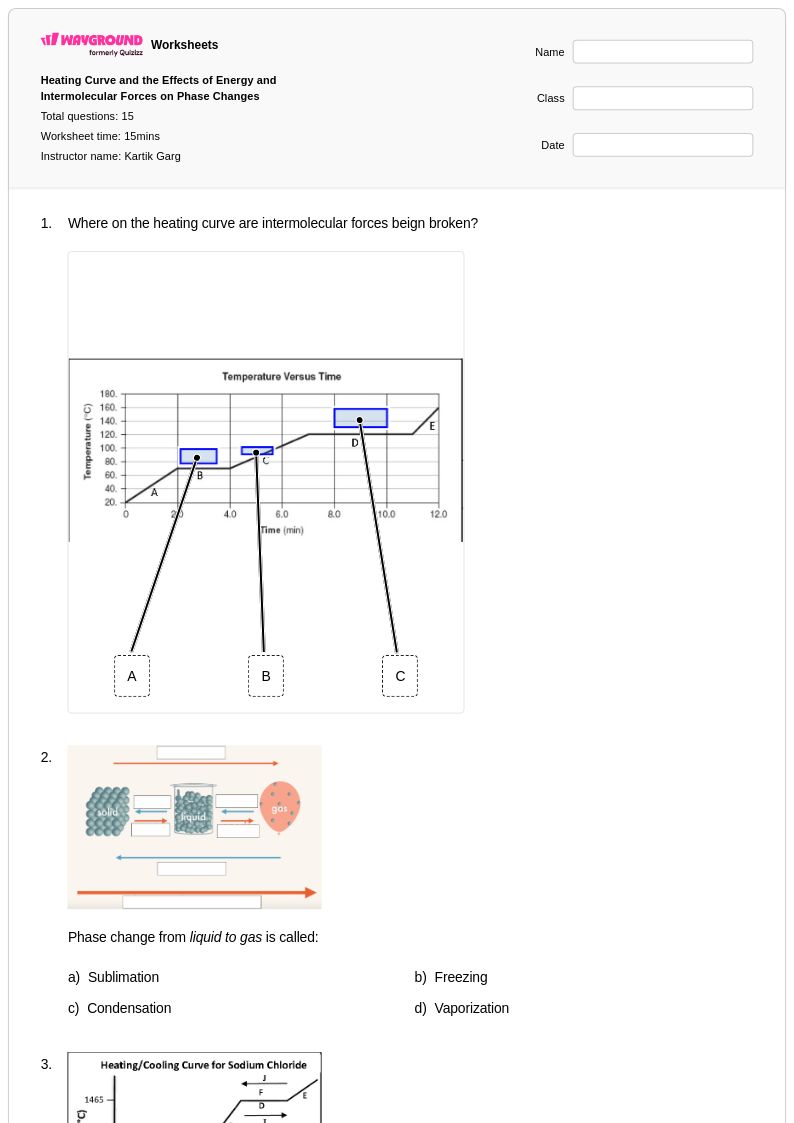
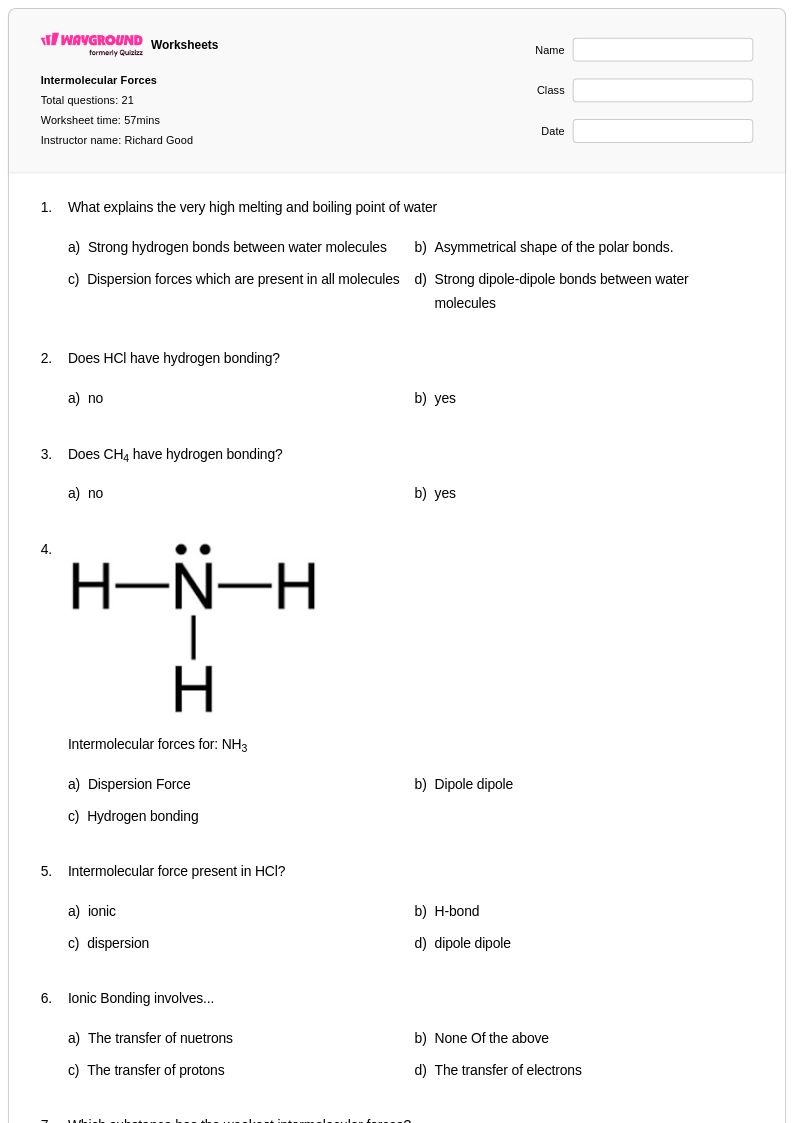
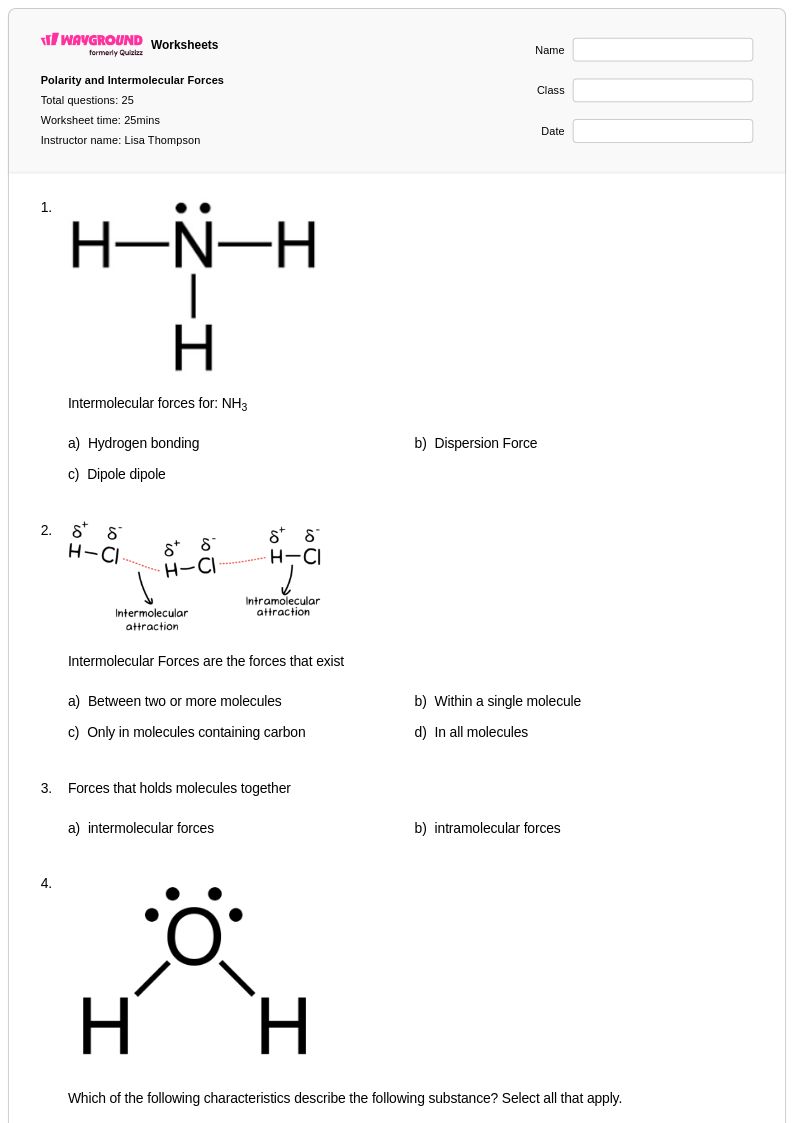
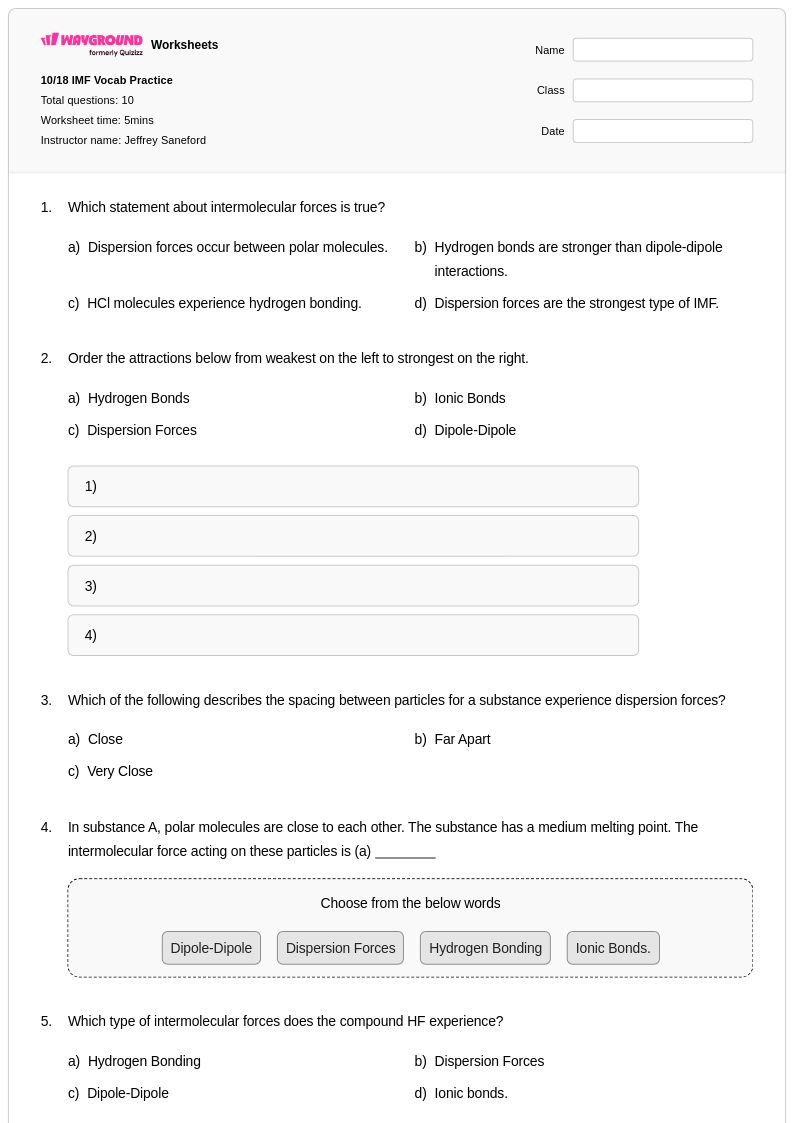
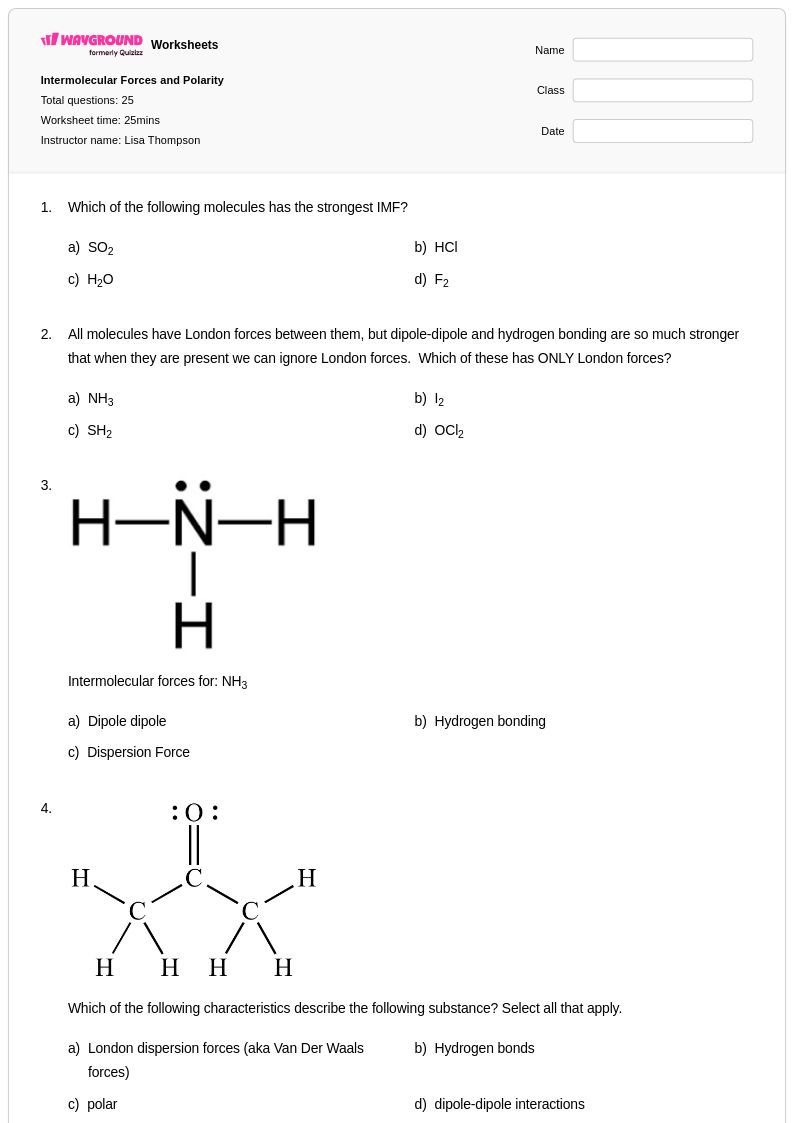
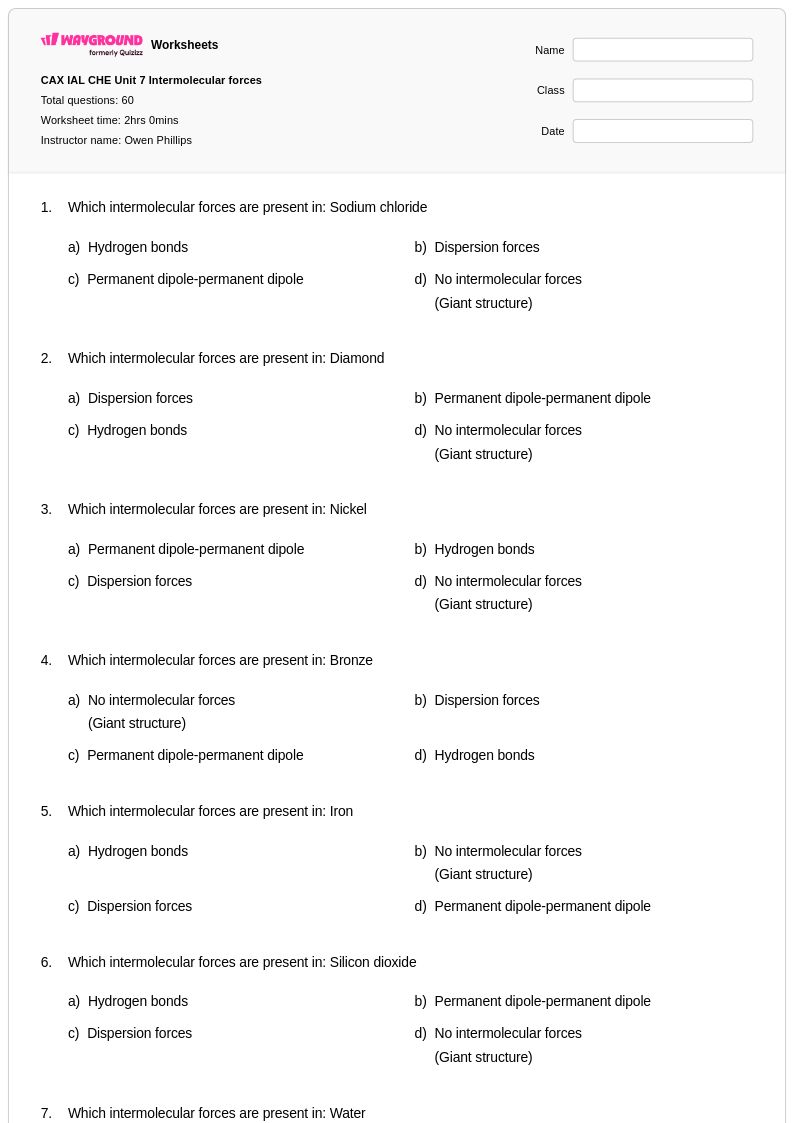
Intermolecular forces worksheets for Year 10 chemistry students available through Wayground (formerly Quizizz) provide comprehensive practice with the fundamental attractive forces that exist between molecules. These educational resources strengthen students' understanding of van der Waals forces, hydrogen bonding, dipole-dipole interactions, and London dispersion forces through carefully designed practice problems that progress from basic identification to complex comparative analysis. The worksheets include detailed answer keys that guide students through the reasoning behind molecular behavior, polarity determination, and boiling point predictions. Teachers can access these free printables in convenient pdf format, making them ideal for both classroom instruction and independent study sessions where students need additional reinforcement of these critical chemistry concepts.
Wayground (formerly Quizizz) supports chemistry educators with an extensive collection of intermolecular forces worksheets drawn from millions of teacher-created resources that have been refined through classroom use. The platform's robust search and filtering capabilities allow instructors to quickly locate materials that align with specific curriculum standards and match their students' proficiency levels. Teachers benefit from built-in differentiation tools that enable customization of worksheet difficulty, ensuring both remediation support for struggling learners and enrichment opportunities for advanced students. These resources are available in both printable and digital formats, including downloadable pdf versions, giving educators the flexibility to adapt their lesson planning and assessment strategies while providing students with consistent, high-quality practice opportunities that reinforce essential molecular interaction principles.
FAQs
How do I teach intermolecular forces to high school chemistry students?
Start by grounding students in molecular polarity and electronegativity before introducing the hierarchy of intermolecular forces: London dispersion, dipole-dipole interactions, and hydrogen bonding. Use concrete examples like comparing the boiling points of water and methane to show how force strength determines physical properties. Structured worksheets that ask students to identify force types in given molecules and then predict properties help reinforce the concept progressively, moving from recognition to application.
What types of practice problems help students understand intermolecular forces?
The most effective practice problems require students to identify the dominant intermolecular force in a molecule, rank substances by boiling point or vapor pressure, and explain solubility patterns using force type reasoning. Problems that connect force identification to observable physical properties, such as why ethanol has a higher boiling point than dimethyl ether despite similar molecular weights, push students beyond memorization into genuine analytical thinking. Guided exercises that progress from single-molecule identification to multi-compound comparison build the layered understanding students need.
What misconceptions do students commonly have about intermolecular forces?
One of the most common errors is confusing intermolecular forces with intramolecular bonds, leading students to incorrectly describe breaking hydrogen bonds as a chemical reaction. Students also frequently apply hydrogen bonding rules too broadly, assuming any molecule containing hydrogen qualifies, rather than recognizing that the hydrogen must be bonded directly to N, O, or F. A third common mistake is treating London dispersion forces as negligible, when in fact they can dominate in large nonpolar molecules and account for higher-than-expected boiling points.
How do I help students predict boiling points using intermolecular forces?
Teach students to first determine molecular polarity, then identify the strongest intermolecular force present, and finally use that force to rank boiling points. Emphasize that hydrogen bonding produces significantly higher boiling points than dipole-dipole interactions alone, and that among nonpolar molecules, larger molar mass correlates with stronger London dispersion forces and higher boiling points. Practice problems that ask students to rank a set of three to five substances and justify each ranking are particularly effective at cementing this reasoning process.
How can I use intermolecular forces worksheets from Wayground in my classroom?
Wayground's intermolecular forces worksheets are available as printable PDFs for traditional classroom use and in digital formats for technology-integrated or remote learning environments, and can also be hosted as a quiz directly on Wayground. The worksheets include detailed answer keys, making them suitable for independent practice, guided review, or self-paced remediation. Teachers can differentiate delivery by assigning digital versions with accommodations such as read aloud or reduced answer choices for students who need additional support.
How do I differentiate intermolecular forces instruction for students at different skill levels?
For students who are still developing foundational chemistry skills, begin with scaffolded identification tasks that provide molecular diagrams and ask students to label force types before moving to prediction problems. Advanced learners can be challenged with multi-step problems that require integrating polarity, molecular geometry, and force type to explain real-world phenomena like viscosity or surface tension. On Wayground, teachers can apply individual accommodations such as extended time or read aloud to specific students while the rest of the class receives standard settings, allowing seamless differentiation within a single assignment.