Free Printable Electronic Structure of Atoms Worksheets for Year 10
Explore Wayground's free Year 10 electronic structure of atoms worksheets and printables with practice problems and answer keys to help students master electron configurations, orbital diagrams, and atomic theory fundamentals.
Explore printable Electronic Structure of Atoms worksheets for Year 10
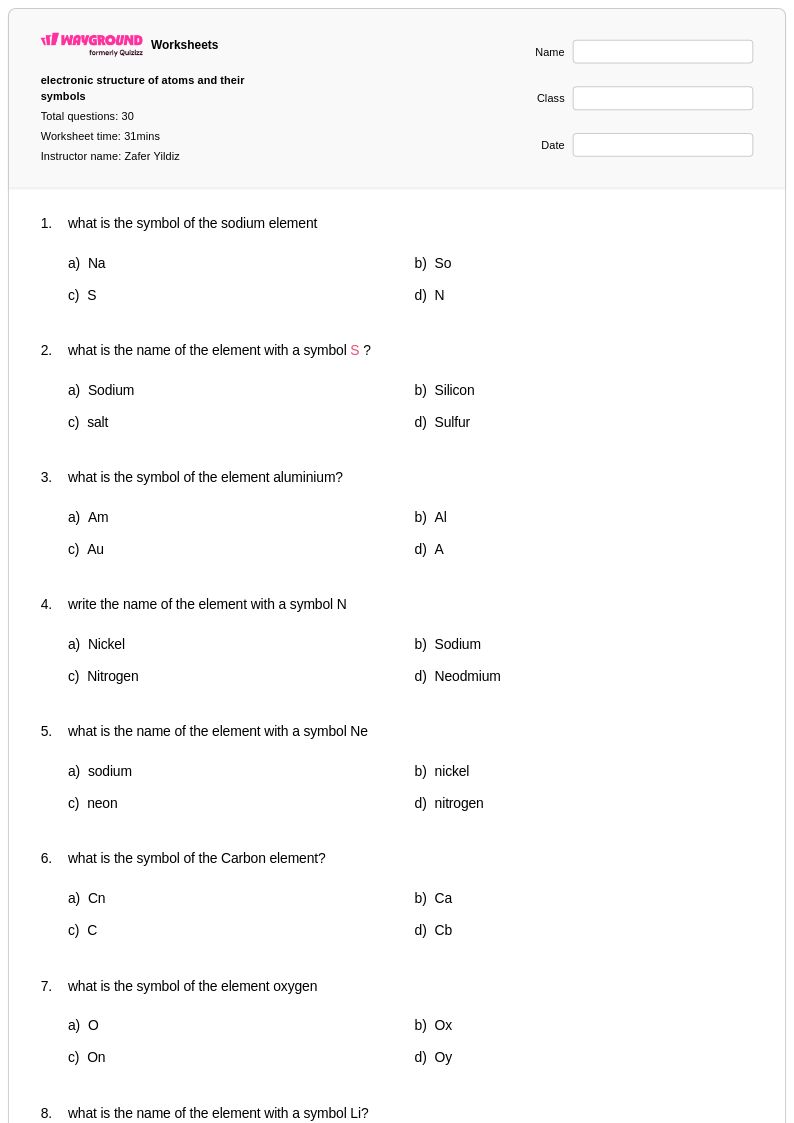
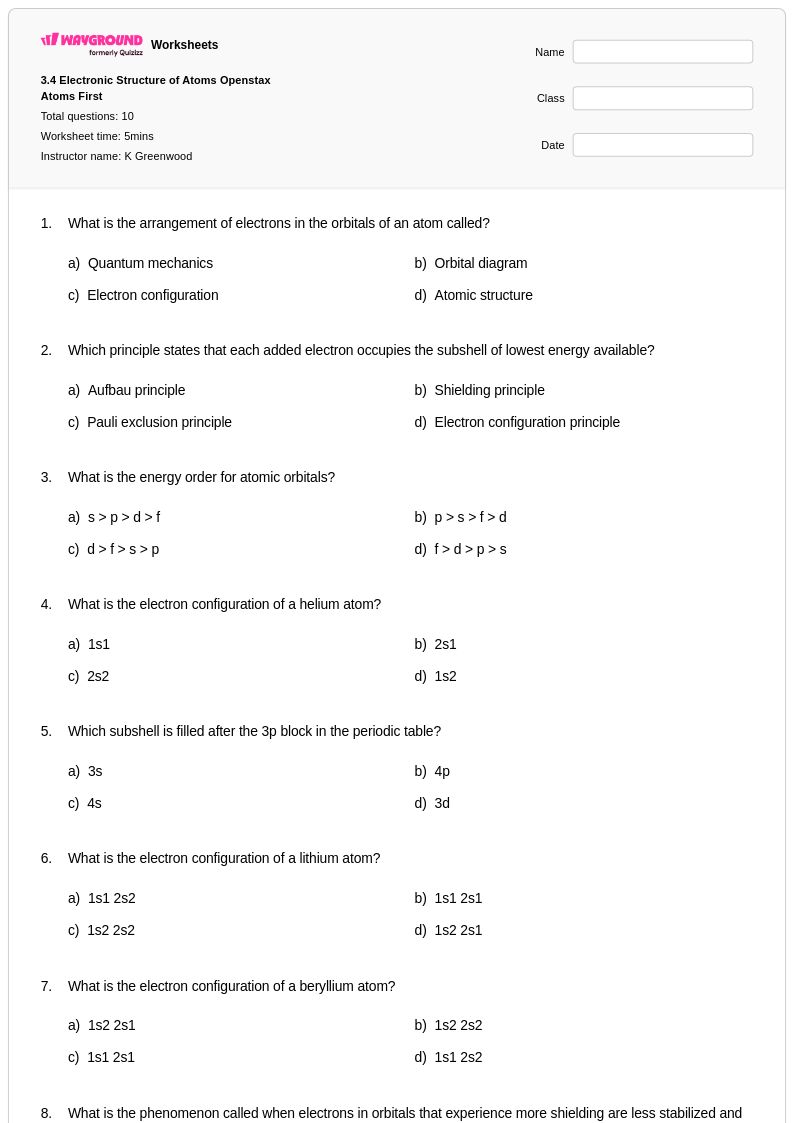
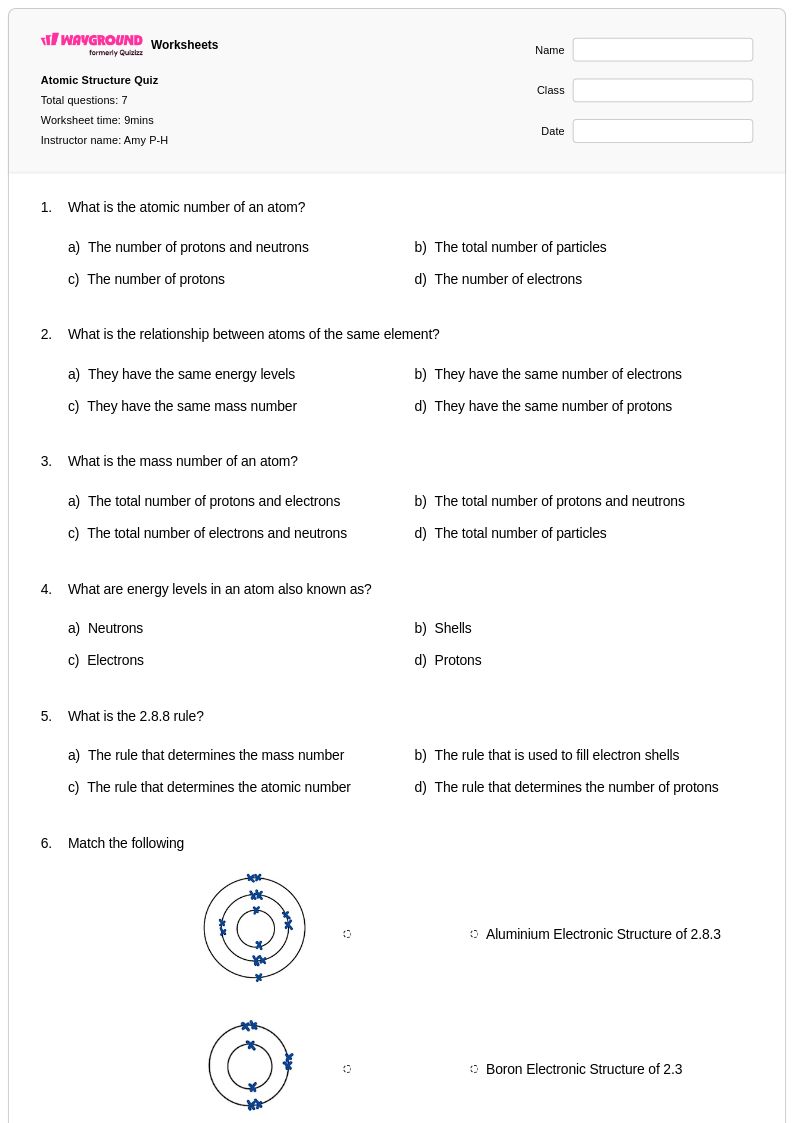
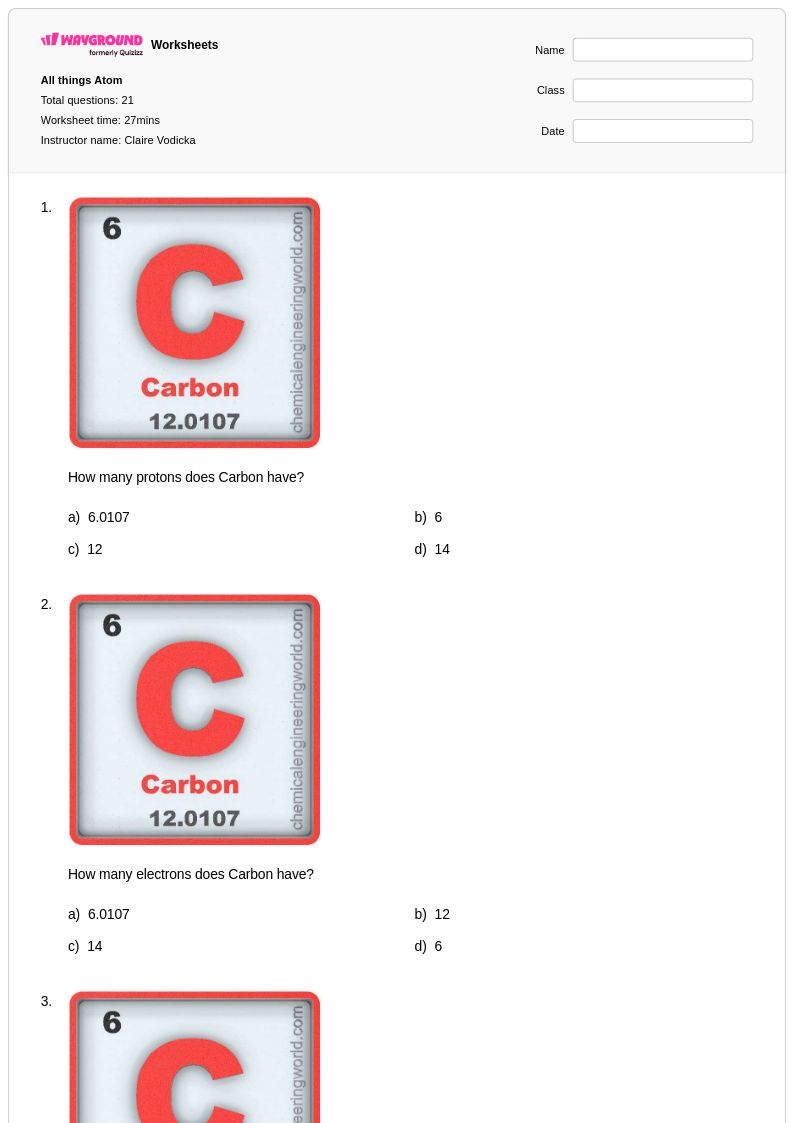
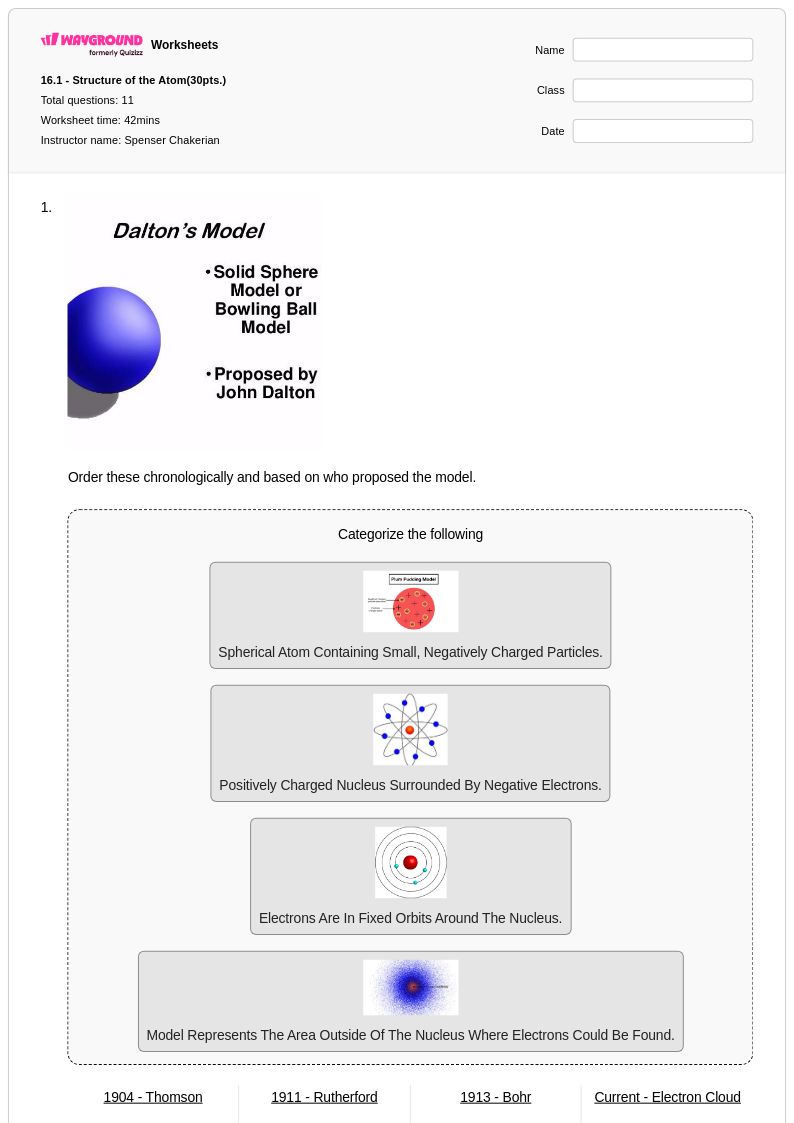
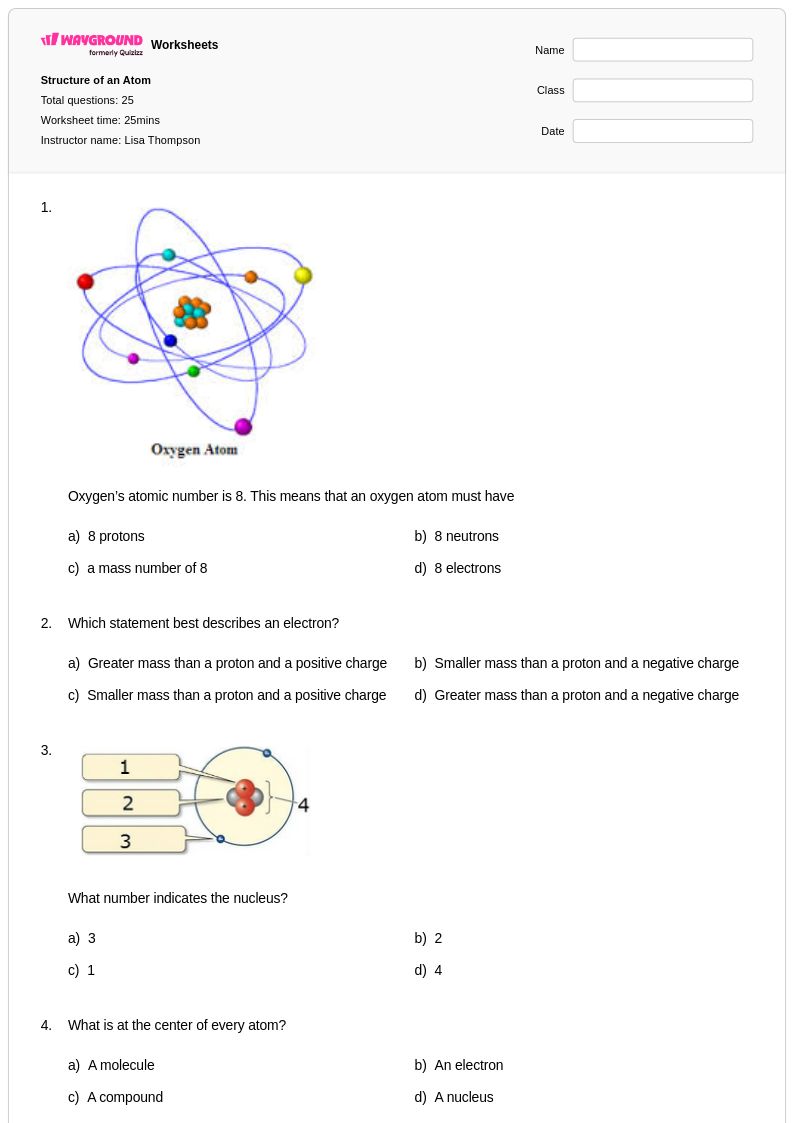
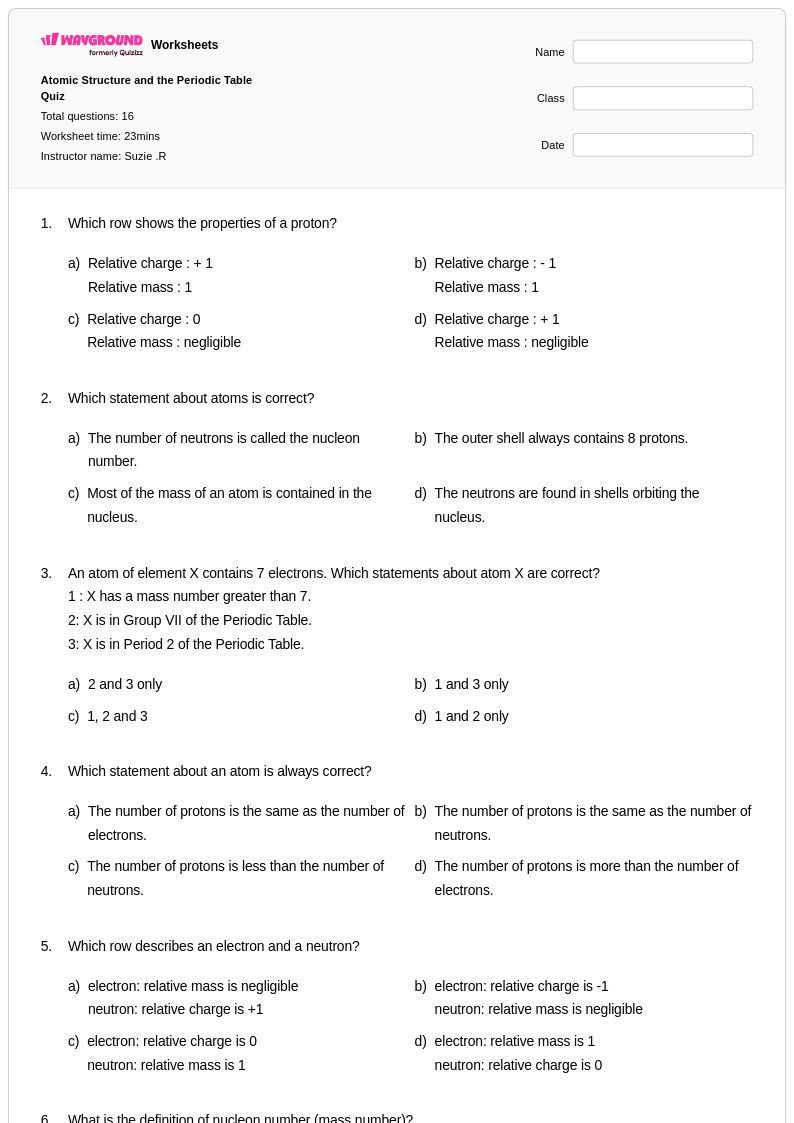
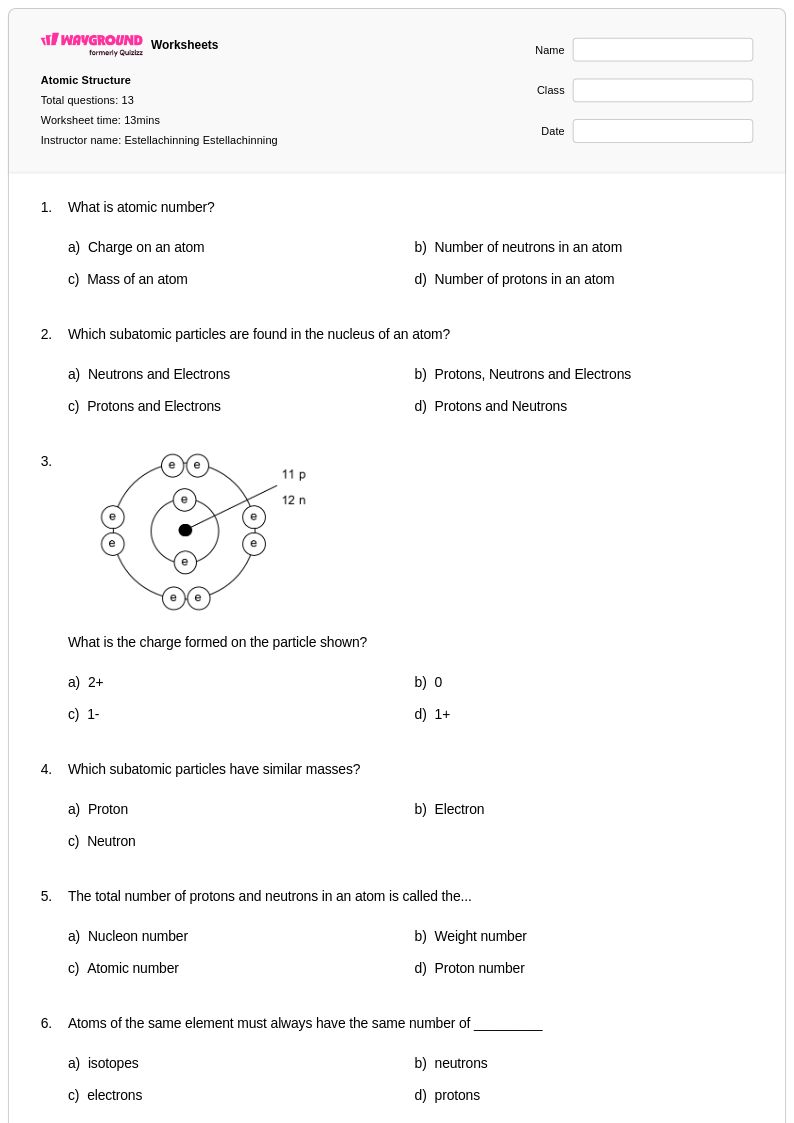
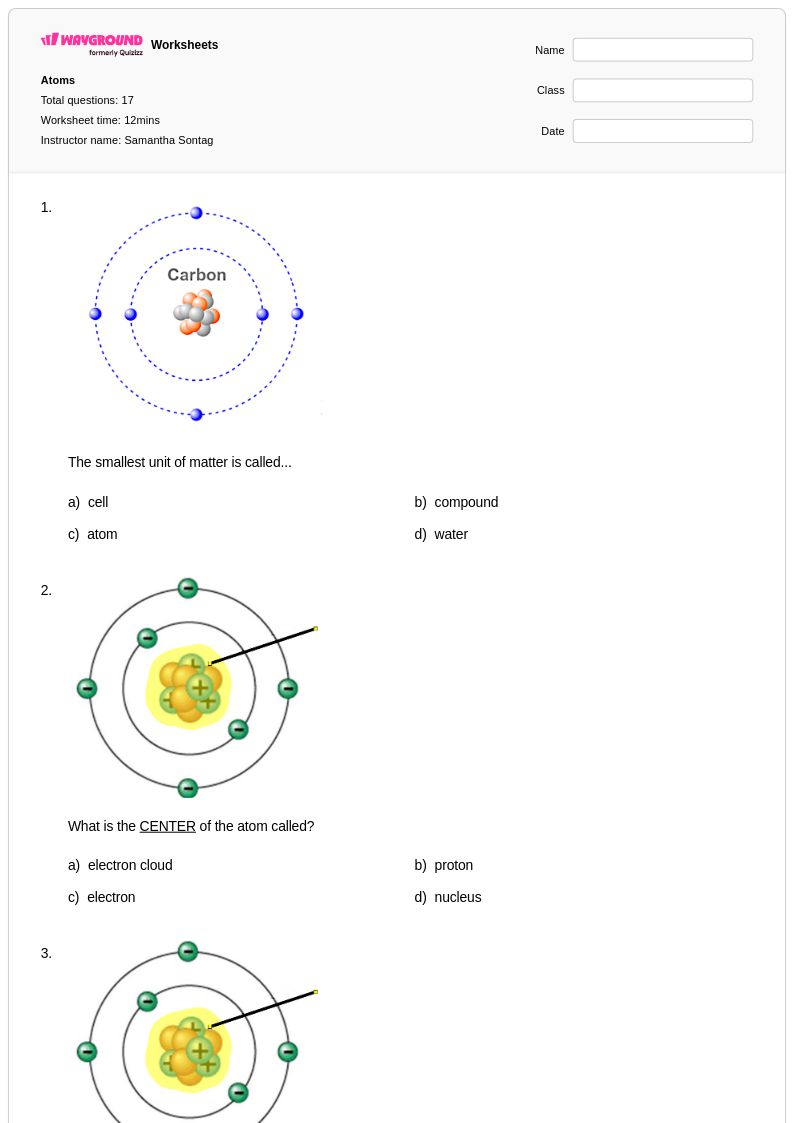
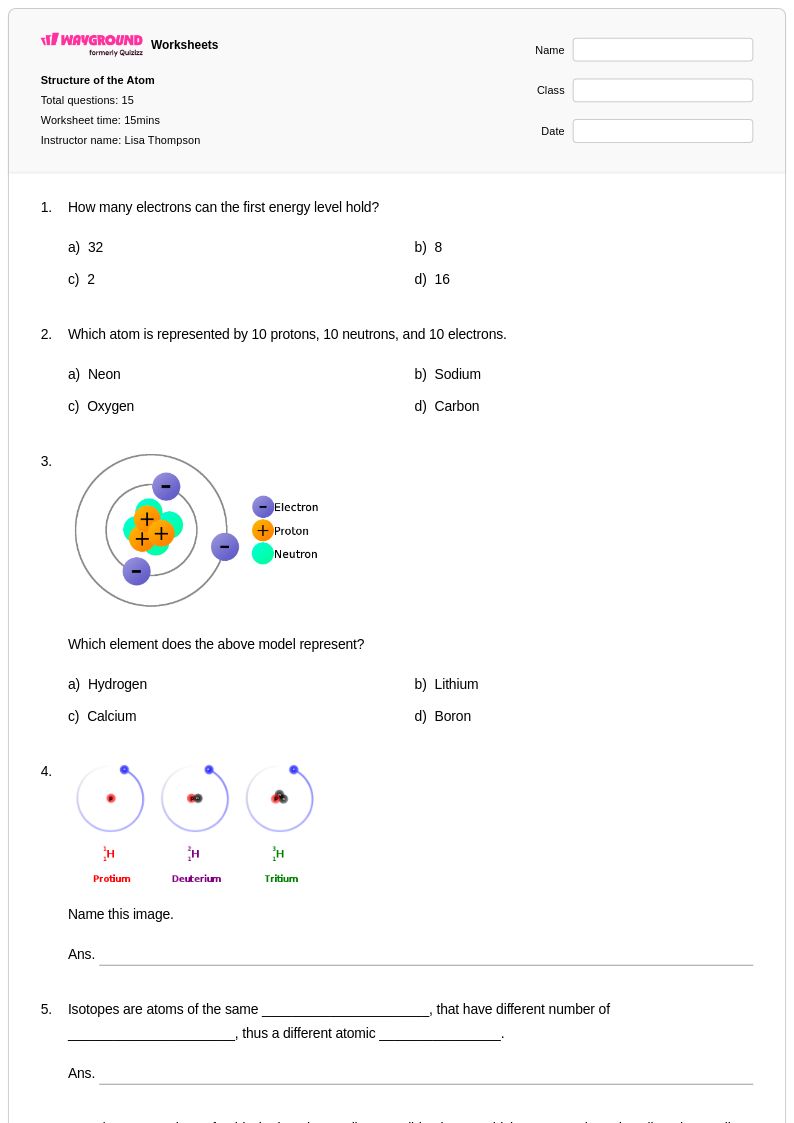
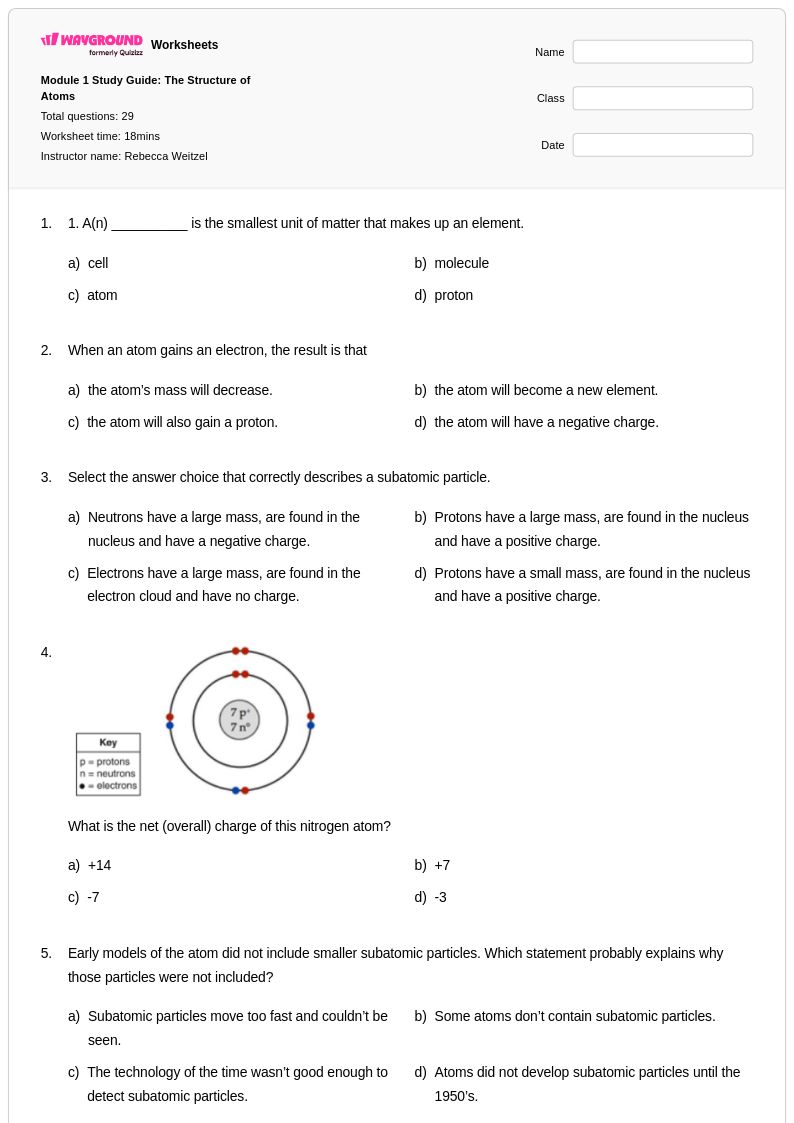
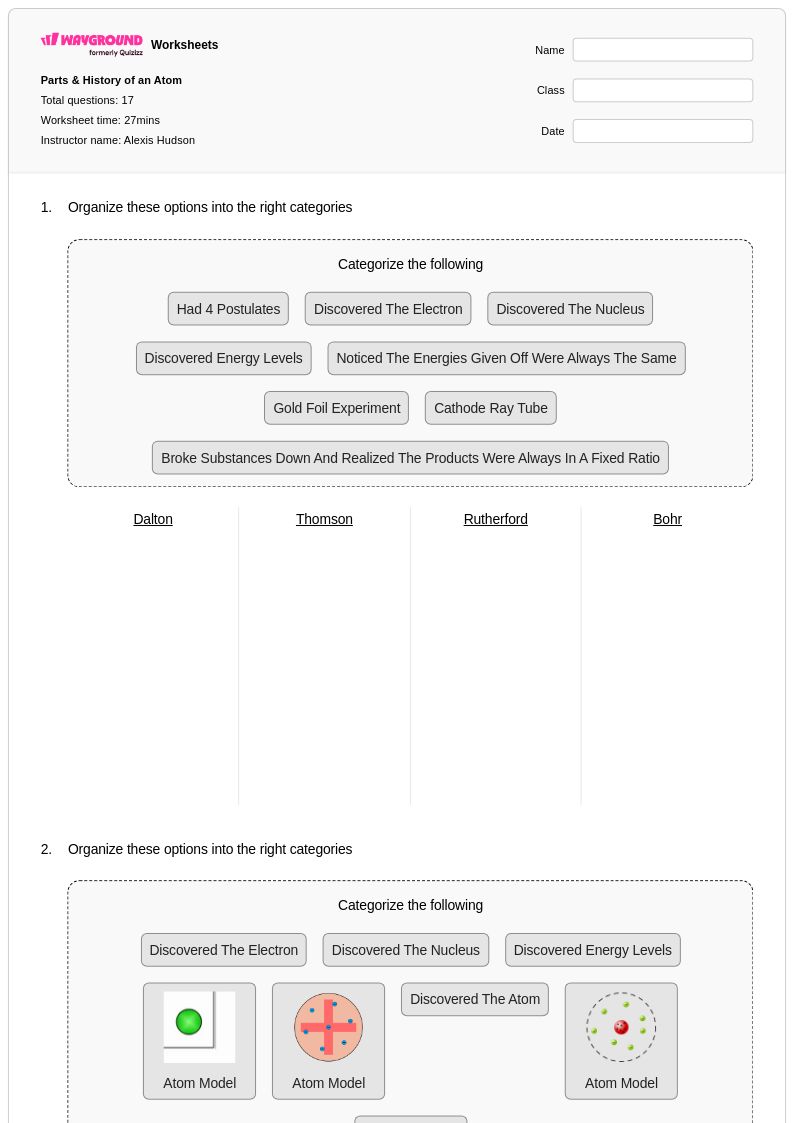
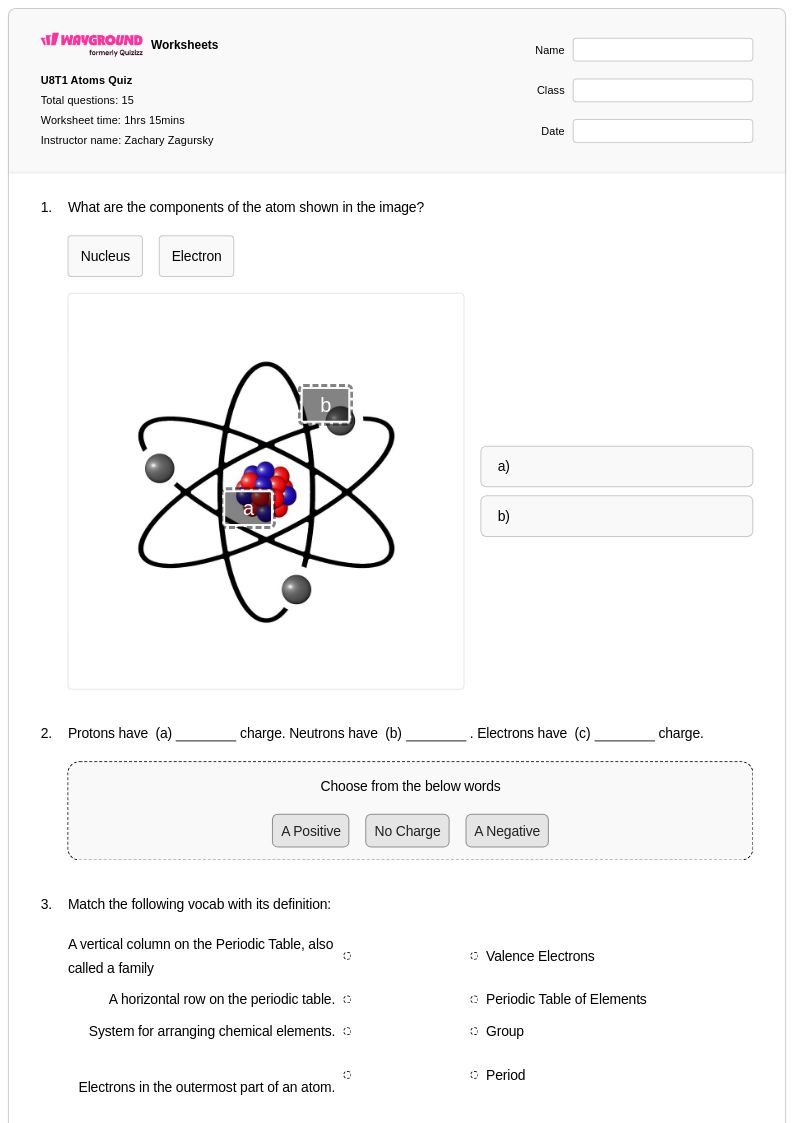
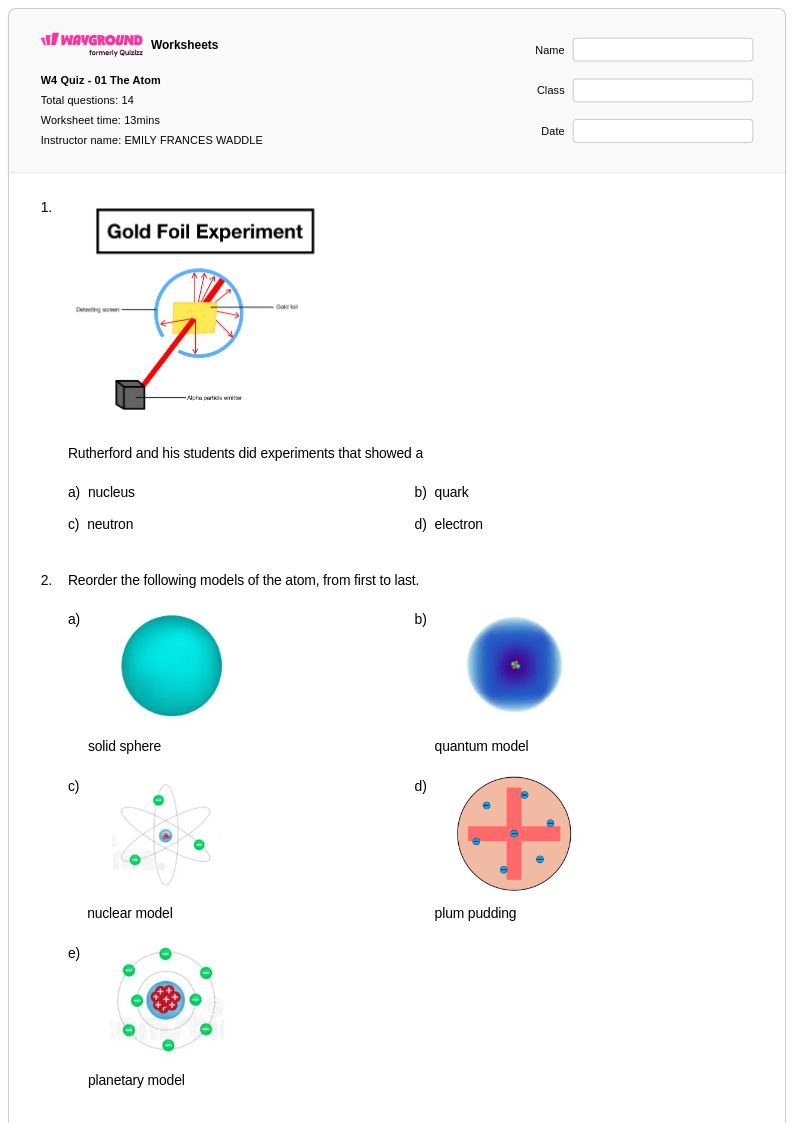
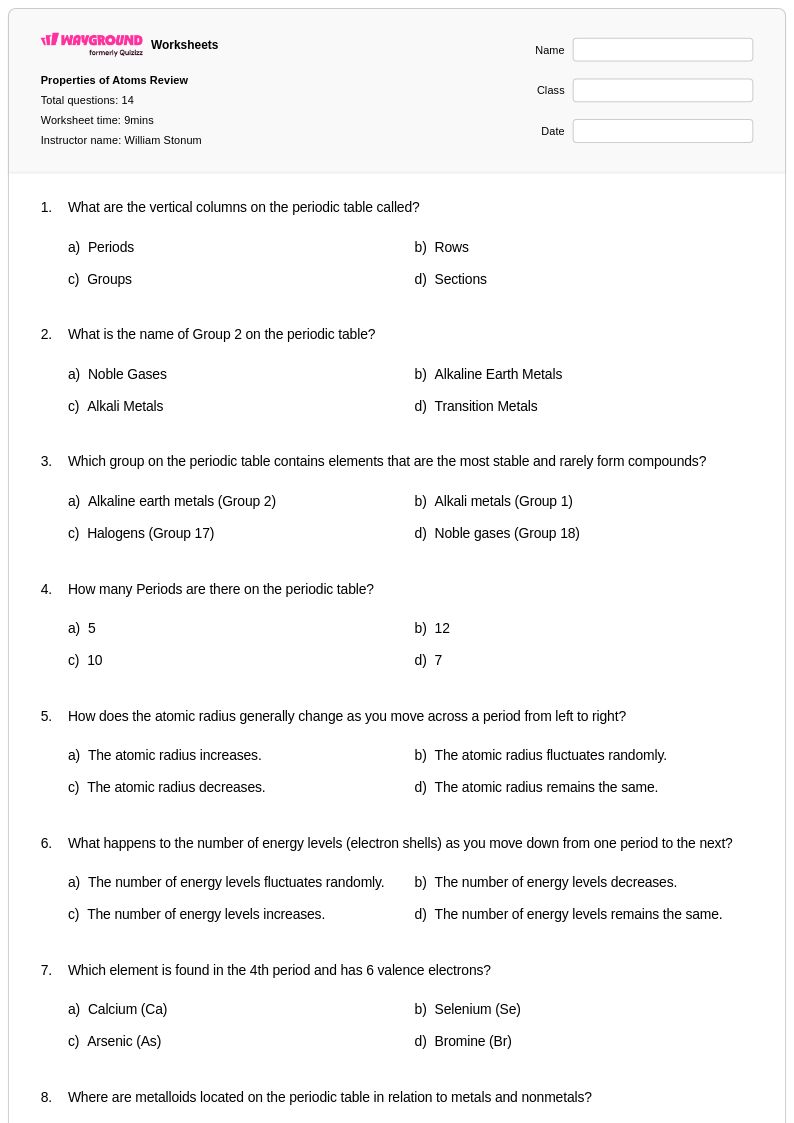
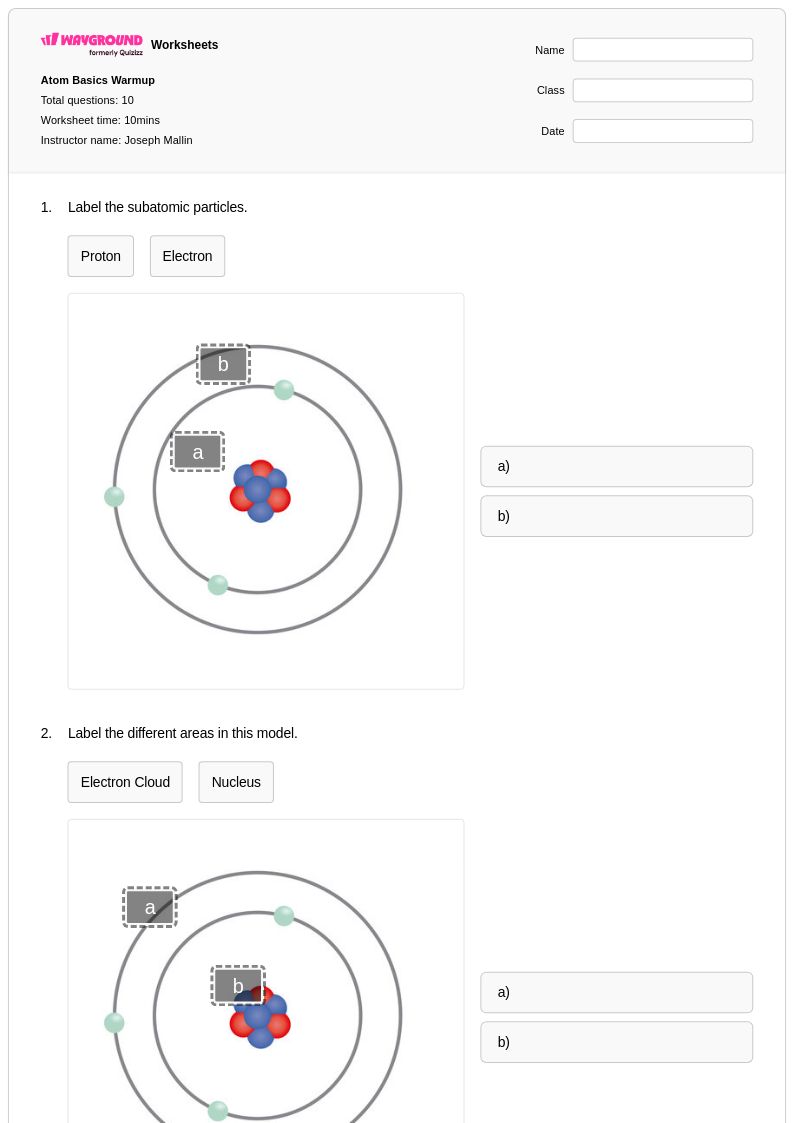
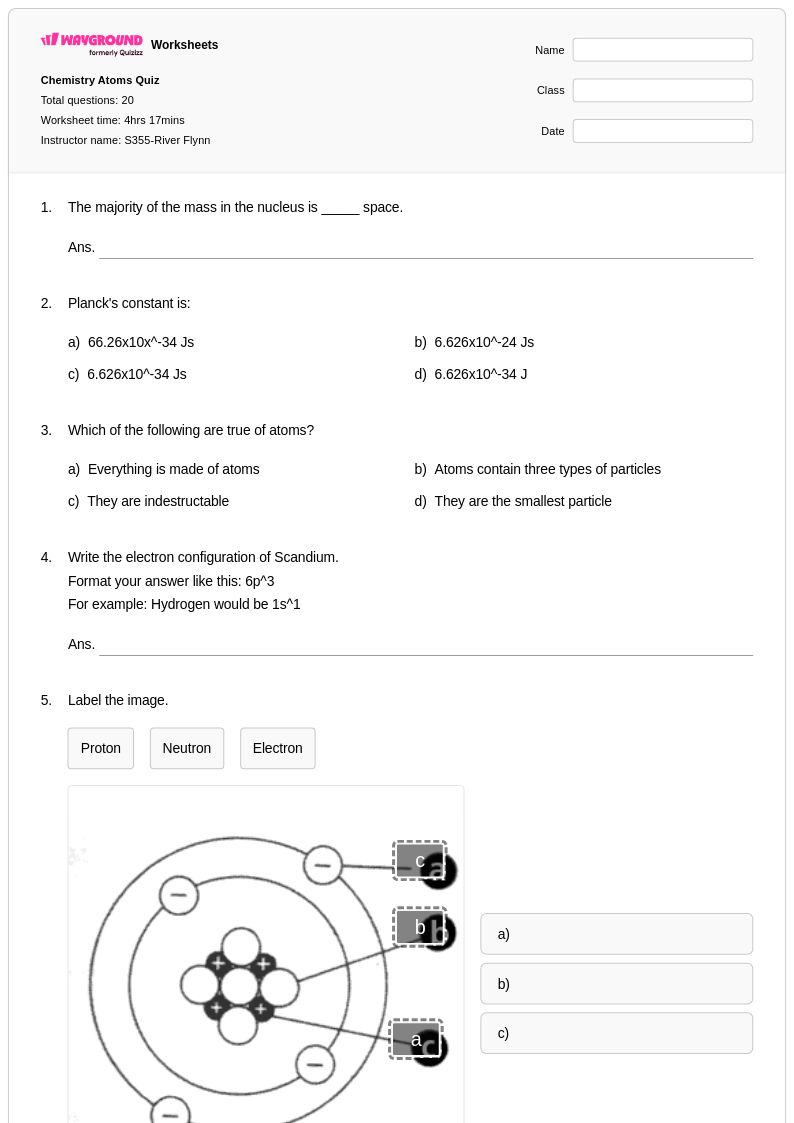
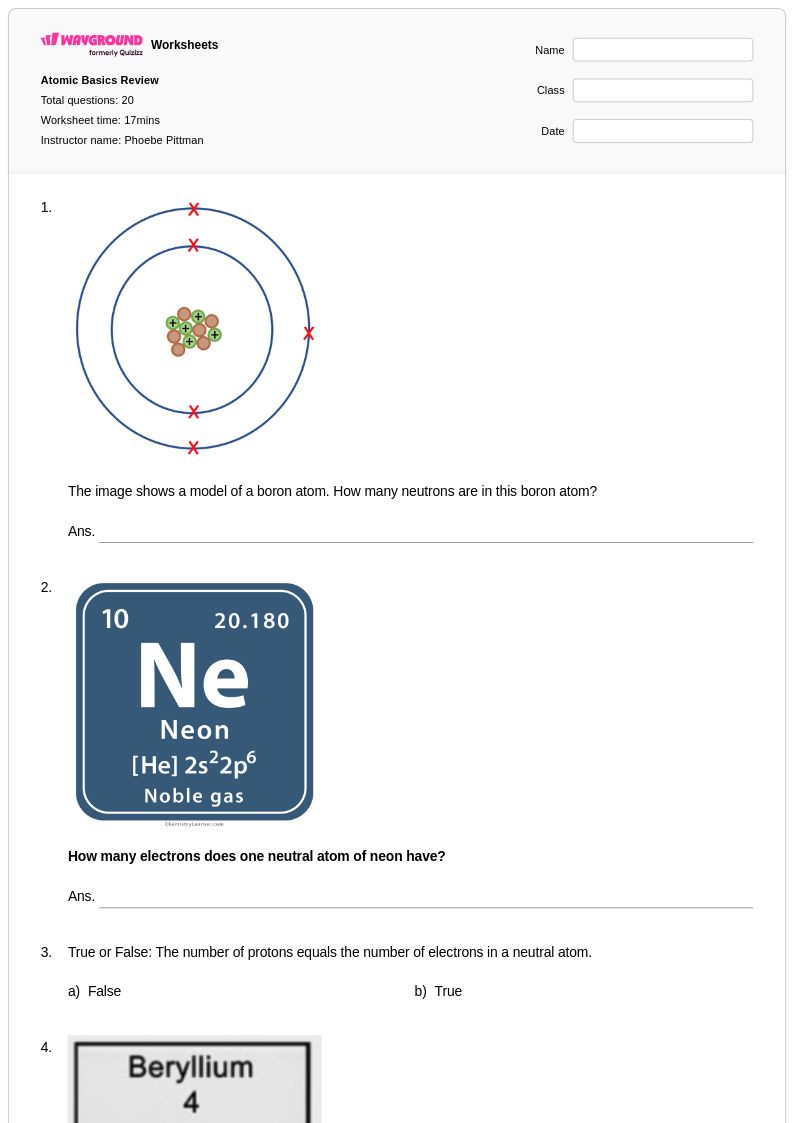
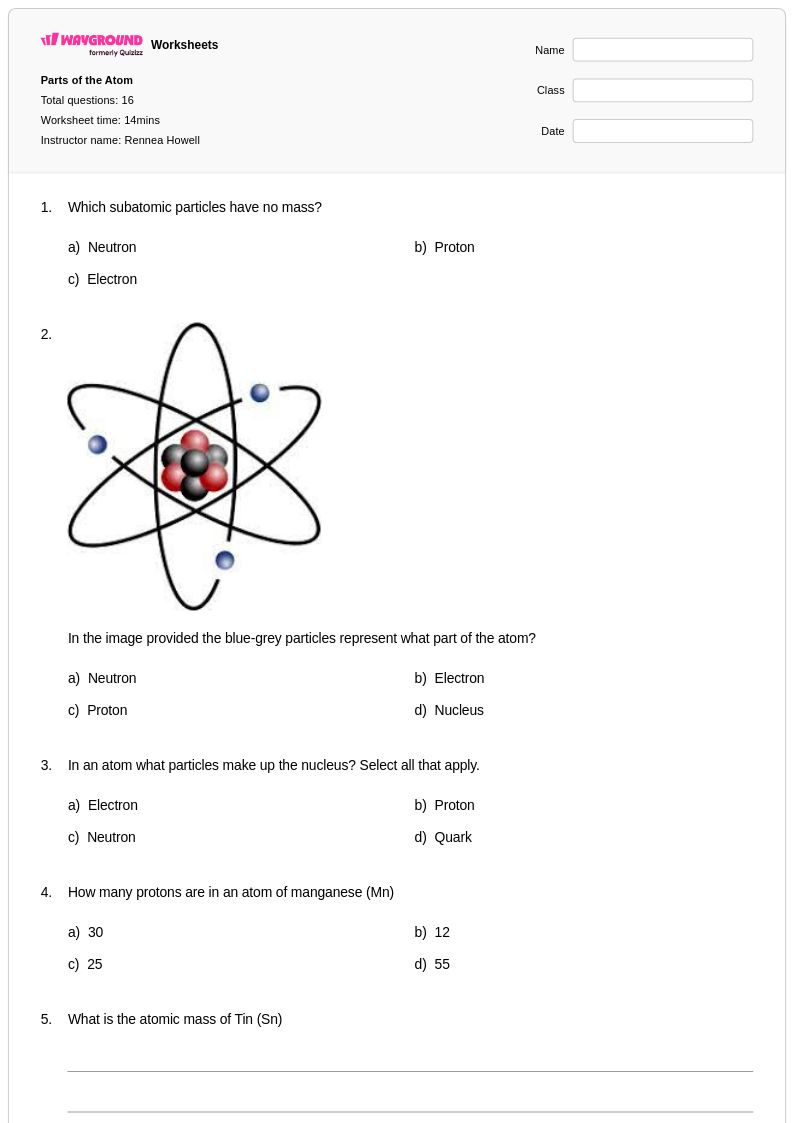
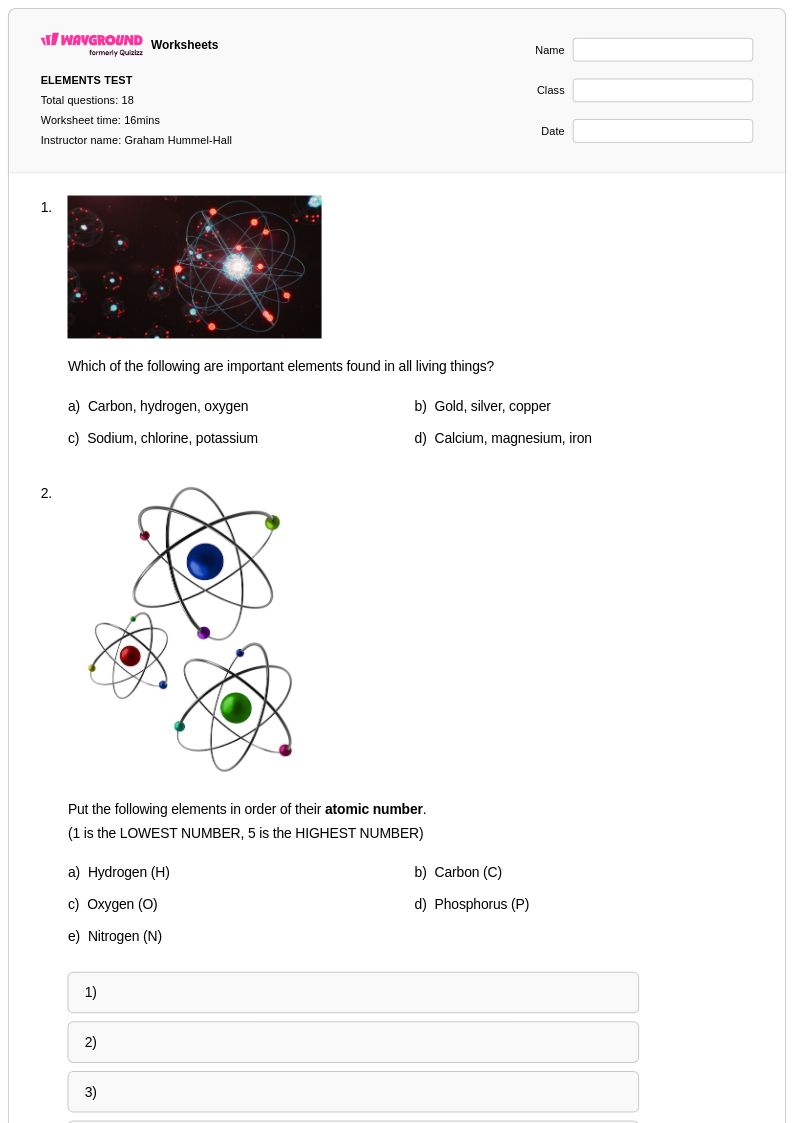
Electronic structure of atoms forms a fundamental cornerstone of Year 10 chemistry education, and Wayground's comprehensive worksheet collection provides students with essential practice materials to master this complex topic. These carefully designed worksheets guide students through electron configurations, orbital diagrams, quantum numbers, and periodic trends while building critical analytical skills needed for advanced chemistry concepts. Each worksheet includes detailed answer keys and step-by-step solutions that help students understand electron arrangement patterns, energy levels, and the relationship between atomic structure and chemical properties. Available as free printables and downloadable pdf formats, these practice problems range from basic electron configuration exercises to challenging applications involving transition metals and exceptions to standard filling orders.
Wayground's extensive library of millions of teacher-created resources empowers educators to find precisely the right electronic structure worksheets for their Year 10 chemistry classes through advanced search and filtering capabilities. Teachers can easily locate materials aligned with specific curriculum standards and differentiate instruction by selecting worksheets that match individual student needs, from foundational electron shell concepts to advanced orbital hybridization topics. The platform's flexible customization tools allow educators to modify existing worksheets or combine multiple resources for comprehensive lesson planning, while both printable and digital pdf formats support diverse classroom environments and learning preferences. These versatile resources prove invaluable for initial instruction, targeted remediation sessions, enrichment activities for advanced learners, and ongoing skill practice that reinforces understanding of atomic structure principles throughout the academic year.
FAQs
How do I teach electron configuration to high school chemistry students?
Start by grounding students in the three core rules: the Aufbau principle (fill lowest energy orbitals first), Hund's rule (maximize unpaired electrons within a subshell), and the Pauli exclusion principle (no two electrons share the same four quantum numbers). Use orbital diagrams before moving to shorthand notation so students visualize the filling process rather than memorize it abstractly. Connecting electron configuration to periodic table position helps students see patterns rather than isolated facts.
What exercises help students practice electron configuration and orbital diagrams?
Effective practice combines writing full electron configurations, drawing orbital box diagrams, and identifying valence electrons across a range of elements, including transition metals where exceptions like chromium and copper appear. Problems that ask students to work backward from a configuration to identify the element reinforce deeper understanding. Pairing configuration practice with periodic trend questions, such as ionization energy or atomic radius, helps students apply what they've learned in a broader chemical context.
What mistakes do students commonly make when writing electron configurations?
The most frequent error is misapplying the Aufbau principle by filling orbitals in the wrong energy order, particularly confusing the 3d and 4s subshells. Students also routinely violate Hund's rule by pairing electrons before all orbitals in a subshell are singly occupied. A third common mistake is forgetting the noble gas shorthand notation rules or incorrectly identifying the core configuration, which leads to cascading errors in valence electron counts.
How do I help students understand quantum numbers and what they represent?
Teach quantum numbers as an address system: the principal quantum number (n) is the floor, the angular momentum quantum number (l) is the room type, the magnetic quantum number (ml) is the specific room, and the spin quantum number (ms) is which bed. This analogy makes the Pauli exclusion principle intuitive, since no two electrons can share the same complete address. Practice should include assigning all four quantum numbers to specific electrons and identifying what set of quantum numbers is impossible.
How do I use electronic structure of atoms worksheets from Wayground in my classroom?
Wayground's electronic structure of atoms worksheets are available as printable PDFs for traditional classroom use and in digital formats for technology-integrated instruction, including the option to host them as a quiz directly on Wayground. Each worksheet includes a complete answer key, making them suitable for guided practice, independent work, or homework. For students who need additional support, Wayground's built-in accommodation tools allow teachers to enable features such as read aloud, extended time, or reduced answer choices on an individual basis without disrupting the rest of the class.
How does atomic structure relate to chemical properties and periodic trends?
An element's electron configuration, particularly its valence electron arrangement, directly determines how it interacts with other elements in chemical reactions. Periodic trends such as ionization energy, electronegativity, and atomic radius are all predictable consequences of how electrons are arranged across increasing nuclear charge. Teaching students to read chemical behavior from electron configuration rather than memorizing trends separately builds a more durable and transferable understanding of chemistry.